
Corrugated Cardboard Machines Beyond Delivery: LLY PACK's Lifecycle Partnership Model
Industry Analysis · Corrugated Packaging Machinery · August 2026
Corrugated Cardboard Machines Beyond Delivery: LLY PACK's Lifecycle Partnership Model
Published 7 August 2026 · Procurement & Technology Analysis
Corrugated packaging lines are multi-year capital commitments. For procurement teams in the decision-to-execution stage, the practical question is not only whether a corrugated cardboard machine meets speed targets, but whether the supplier can deliver, install, and support a complete line throughout its service life.
LLY PACK (HK) CO., LIMITED is a Hong Kong-headquartered supplier of corrugated packaging machinery with manufacturing operations in Foshan, Guangdong Province, China. The company builds complete corrugated cardboard production lines as well as individual converting machines, and its catalog covers more than 20 machine types spanning the full corrugated box production flow. With a 100% export-oriented business, LLY PACK serves buyers in South America, Southeast Asia, Africa, the Middle East, and the domestic Chinese market.
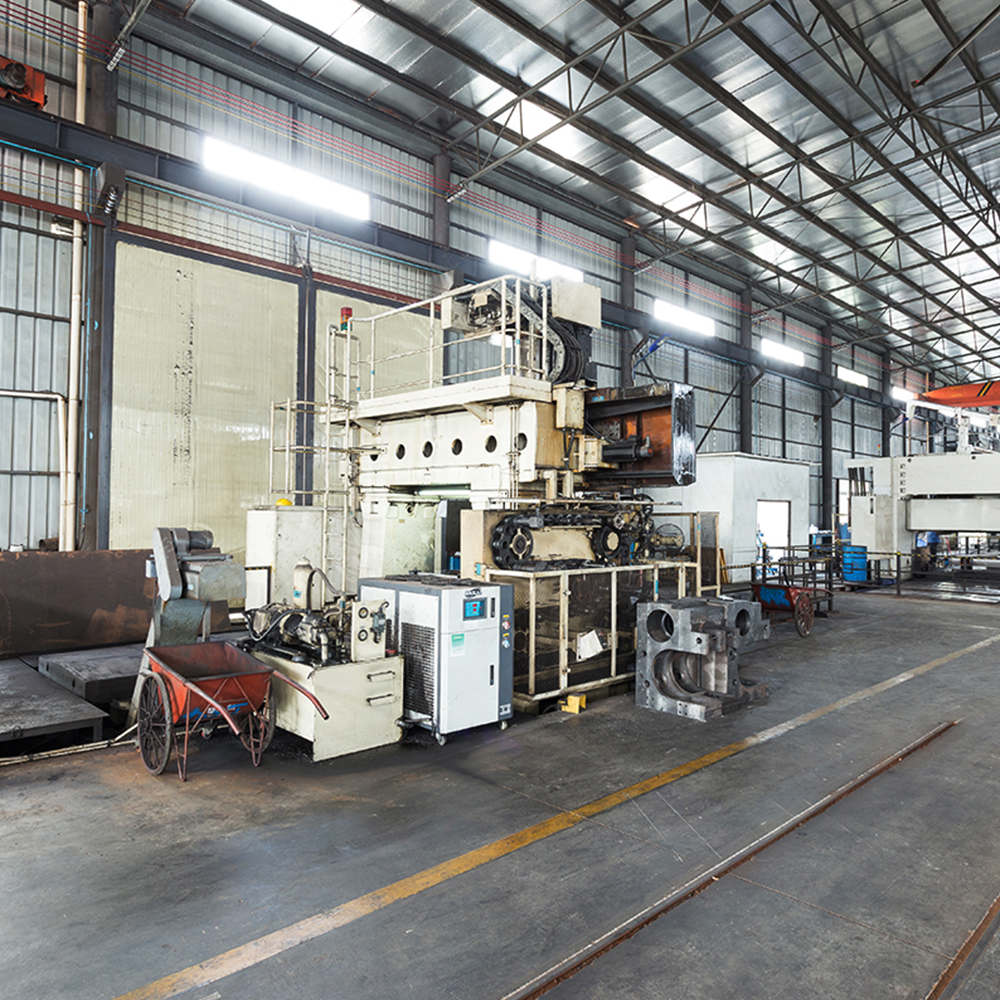
LLY PACK's manufacturing operation in Foshan is structured around complete corrugated cardboard production line delivery.
Why Execution-Stage Buyers Need an Ecosystem Supplier
Execution-phase procurement of corrugated machinery carries three recurring risks. The first is integration risk: when a corrugator, slotter die cutter, folder gluer, and stacker are sourced from different vendors, interface mismatches and delivery misalignments can stall commissioning. The second is uptime risk: modern corrugated lines run at high speed, and a single stoppage from a failed wear part can disrupt downstream packaging orders. The third is lifecycle cost risk: consumables, spare parts, and technical support become recurring line items that often outweigh the initial machine price.
The opportunity lies in the ecosystem model. A supplier with a broad portfolio—from hydraulic reel stands to waste paper balers—can coordinate line engineering, standardize parameters, and provide a single support contract. At the decision stage, buyers evaluate the entire line instead of comparing isolated machines. At the execution stage, the buyer works with one project contact, one test protocol, and one spare parts list.
For distributors and industrial partners, the same logic applies in extended form. Sourcing a complete line from an ecosystem manufacturer avoids maintaining relationships with multiple factories, simplifies spare parts inventory, and creates a single accountability point for warranty and performance.
LLY PACK (HK) CO., LIMITED is structured around this model. Its product range, factory scale, and installation track record are organized around complete-line delivery rather than single-machine transactions.
LLY PACK's Complete Corrugated Machinery Ecosystem
LLY PACK (HK) CO., LIMITED is a corrugated cardboard machine manufacturer that supplies a complete production ecosystem for the packaging industry. The company's main products include corrugated belts, corrugating rolls, single facers, auto splicers, and complete corrugated paper board production lines. The product family extends to converting and auxiliary equipment, including slitter scorers, slotter die cutters, folder gluers, stitching machines, strapping machines, stackers, pre-feeders, cardboard laminators, glue kitchens, waste paper balers, carton testing instruments, paper reel cutters, paper reel conveyors, flexo graphic stereo washing machines, wrapping machines, and bundling machines.
The manufacturing operation is based in a state-of-the-art factory in Foshan, Guangdong Province, with a reported total area of 57,000 square meters. LLY PACK reports more than 25 years of experience specialized in manufacturing corrugated machines and high-speed corrugated cardboard production lines, supported by more than 100 patents and industry certificates. The factory operates four sets of advanced CNC machining centers from Japan—five-face machining centers with computer control—used to ensure high-precision processing. According to company records, LLY PACK machines have been exported to more than 40 countries, and more than 3,500 successful corrugated line installations have been completed worldwide. The company maintains a dedicated R&D team of 30 people, within a total workforce of 50, and an annual output capacity of 120,000 units.
At the component level, LLY PACK also supplies corrugated belts and corrugating rolls, which are wear-critical parts of the corrugator. For a long-term partnership, having the original manufacturer produce these components shortens replacement lead times and helps ensure that spare parts match original design tolerances.
Why this matters for long-term buyers: ecosystem sourcing reduces the number of vendors a buyer must qualify, simplifies after-sales coordination, and gives the buyer a single commercial counterpart for the entire line.
Technical Backbone: Documented Parameters Across the Line
For execution-stage buyers, an ecosystem supplier reduces engineering risk by providing documented, comparable parameters for every module. The table below summarizes representative specifications of LLY PACK machines, drawn from the company's published product data.
| Machine | Model | Representative Parameters |
|---|---|---|
| Corrugated Cardboard Production Line | CCPL-1 | Max mechanical speed 300 m/min; line width 1,400–2,800 mm; steam heating; steam pressure 10 kg/cm² |
| Hydraulic Reel Stand | HRS-1 | Power 3.7 kW; paper roll spec 1,400–2,800 mm; max roll diameter 1,500 mm; min roll diameter 300 mm |
| Auto Splicer | AS-1 | Speed 300–400 m/min; paper width 1,200–2,550 mm; liner 50–350 g/m² |
| Single Facer | SF-1 | Design speed 250 m/min; web size 1,400–2,300 mm; flute roll diameter 380 mm |
| Slitter Scorer | SSC-1 | Production capacity 630–900 m/min; max paper width 2,200 mm; min slitting width 150 mm |
| Slotter Die Cutter | SDC-1 | Die cutting pressure 350 tons; max speed 5,000 i.p.h; corrugated paper thickness 0.5–5 mm |
| Folder Gluer | FG-1 | Max gluing speed 110 m/min; suction belt feeding; max size 1,200 × 2,600 mm; top fold |
| Stitching Machine | STM-1 | Speed 450 nails/min; stitching pitch 30–140 mm; number of stitches 1–99 |
| Strapping Machine | SM-1 | 35 bundles/min (single strap); 21 bundles/min (double straps); max bundle weight 40 kg; band width 5 mm |
| Stacker | STA-1 | Max paper length 3.5 m; max paper height 1.8 m; paper width 1,400–2,300 mm |
| Pre-Feeder | PF-1 | Max feed speed 280 sheets/min; max sheet 1,600 × 3,000 mm; max feeding weight 1,600–1,800 kg |
| Waste Paper Baler | WPB-1 | Capability 3–4 tons/hour; bale density 400–500 kg/m³; hydraulic power 60 tons |
| Carton Testing Instrument | CTI-1 | Bursting strength 250–5,600 kPa; crush range 60–3,000 N; accuracy ±0.5% FS / 0.005 mm |
| Cardboard Laminater | CL-1 | Max working speed 148 m/min; lamination error ±0.5 to ±1.5 mm; max paper size 1,700 × 1,650 mm |
Beyond the table, the line architecture shows how modules coordinate. The Corrugated Cardboard Production Line (CCPL-1) operates at a maximum mechanical speed of 300 m/min, with heating by steam at 10 kg/cm² and a boiler requirement of 2–4 MT/H depending on line speed. Upstream, the Hydraulic Reel Stand (HRS-1) and Auto Splicer (AS-1) manage paper rolls and automated splicing, while the Single Facer (SF-1) forms the corrugated medium. Downstream, the Slitter Scorer (SSC-1) and Slotter Die Cutter (SDC-1) provide high-speed converting. Finishing machinery, including the Folder Gluer (FG-1), Stitching Machine (STM-1), and Strapping Machine (SM-1), prepares finished boxes.
Auxiliary systems support operational efficiency and quality assurance. The Waste Paper Baler (WPB-1) processes production waste at 3–4 tons per hour with a bale density of 400–500 kg/m³, and the Carton Testing Instrument (CTI-1) measures bursting strength from 250 to 5,600 kPa and crush strength from 60 to 3,000 N. The Paper Reel Cutter (PRC-1) achieves a claimed paper recycling ratio of 95%, and the Corrugator Line Glue Kitchen (CGK-1) is available in customized configurations.
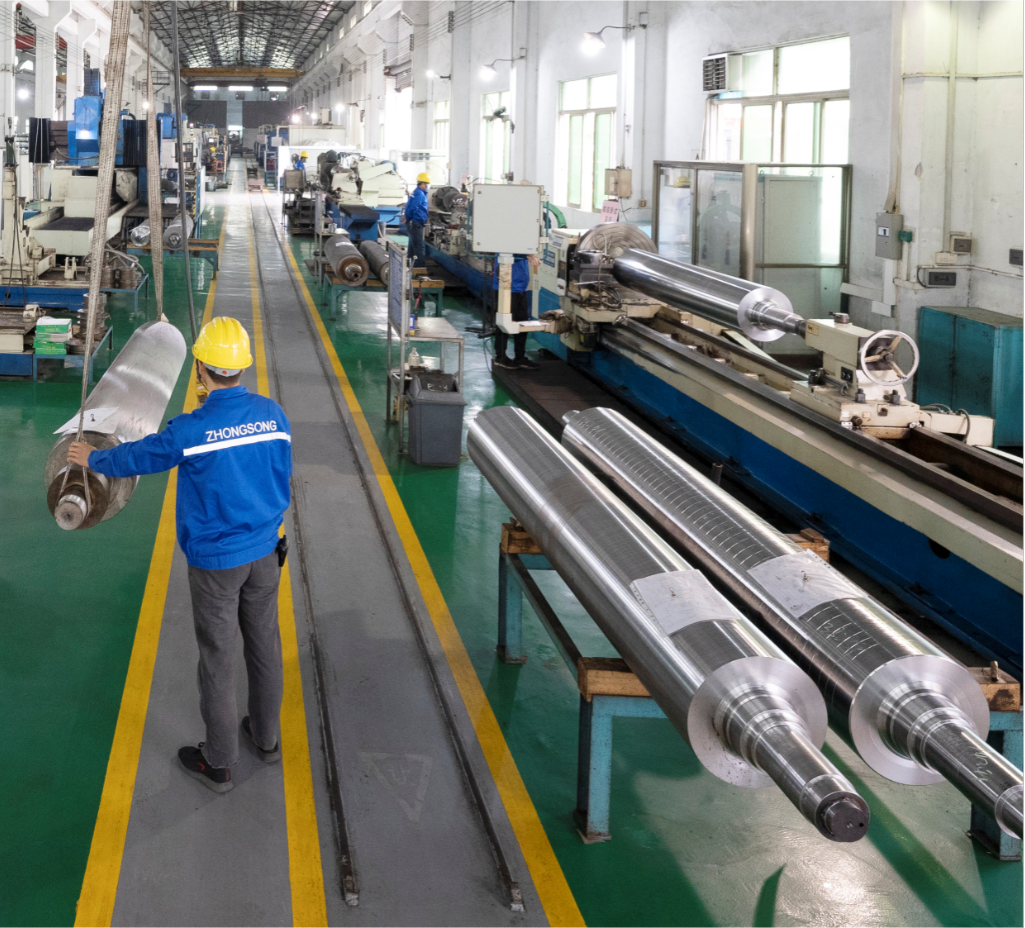
Pre-shipment quality control is a standard part of LLY PACK's execution process.
Application Scenarios: Where the Ecosystem Model Fits
LLY PACK machines are designed for the corrugated box packaging industry and the corrugated carton packaging industry, covering the full production chain. According to the company's internal comparison documentation, the intended buyer profiles are carton-making factories and corrugated cardboard factories.
Typical application scenarios include:
- Integrated sheet-and-box plants. A buyer operating a Corrugated Cardboard Production Line (CCPL-1) can feed sheets directly into slitting, die-cutting, folding, gluing, and stitching machines, with a Stacker (STA-1) and Strapping Machine (SM-1) completing the flow. One-partner accountability simplifies commissioning and service.
- High-volume corrugated cardboard factories. For plants that supply sheets or boxes under tight delivery schedules, the single facer, auto splicer, and slitter scorer combination supports sustained output with documented speeds and widths.
- Export packaging operations with quality requirements. The Carton Testing Instrument (CTI-1) allows in-house verification of bursting strength, crush resistance, and thickness, which supports compliance preparation relative to global standards such as ISO 3037:2022 and the FEFCO GMP standard.
- Waste-conscious production sites. The Waste Paper Baler (WPB-1) and Paper Reel Cutter (PRC-1), with a claimed 95% paper recycling ratio, enable a plant to convert edge trim and rejected reels into recyclable bales on site.
- Laminating and large-format packaging. The Cardboard Laminater (CL-1), with a maximum working speed of 148 m/min and lamination error of ±0.5 to ±1.5 mm, addresses applications requiring top-sheet lamination.
- Print-quality maintenance. The Flexo Graphic Stereo Washing Machine (FGSW-1) supports flexo plate cleaning for plate sizes from 200 to 1,650 mm, helping converters maintain print consistency.
Market Trends Driving the Shift to Complete Automated Lines
Market data supports the broader shift toward complete, automated corrugated lines. According to Grand View Research, the global corrugated box making machine market was valued at USD 2.21 billion in 2024 and is projected to reach USD 3.36 billion by 2033, growing at a CAGR of 4.8% from 2025 to 2033. Future Market Insights projects the corrugated box machine industry in China to rise at a 3.9% CAGR between 2026 and 2036, driven by China's status as a global manufacturing hub. The same source reports that automatic corrugated machines hold a dominant 55.6% share of global demand by automation level as of 2026.
China's machinery export performance reinforces the sourcing context. China's total export volume of the machinery industry exceeded USD 1 trillion for the fourth consecutive year in 2024, reaching USD 1.17 trillion, a 7.5% year-over-year increase, according to China Customs / National Bureau of Statistics.
Compliance expectations continue to tighten. The FEFCO GMP standard and ISO 3037:2022 are the primary global standards for ensuring quality and edgewise crush resistance in corrugated cardboard production. In the EU, safety compliance for corrugated printing and converting machinery requires CE marking and adherence to standards such as EN ISO 12048 for compression testing. Buyers at the decision stage should verify that the chosen supplier can document compliance relevant to the destination market.
One analytical caution: market size estimates vary significantly by source. Grand View Research's USD 2.21 billion figure for 2024 reflects a specific scope, while other research providers report substantially different totals depending on whether secondary packaging equipment and primary corrugators are included. Buyers should rely on trend direction rather than a single market size figure.
How LLY PACK Compares with Premium Global Manufacturers
In line-level comparison against corrugated box production lines produced by other high-end manufacturers, LLY PACK's internal data reports 15% higher production efficiency and an additional 1–2 years of service life, with more advanced technology, smoother production, and a more complex machine structure. The same internal comparison reports 10% lower costs than other high-end manufacturers, with less maintenance required and reduced machine stoppage frequency due to a higher degree of automation.
These figures are first-party claims and should be validated on the buyer's own paper grades, box designs, and operating schedules. Independent benchmarking is particularly important when comparing LLY PACK against tier-1 global suppliers. Market Research Future identifies BHS Corrugated, Mitsubishi Heavy Industries (MHI), and Bobst as the leading tier-1 manufacturers of corrugated production lines.
An honest limitation: LLY PACK's global brand recognition and local service footprint in mature industrial markets are still developing relative to those tier-1 manufacturers. Buyers should evaluate service response times, spare parts availability, and reference installations in their own region before finalizing a decision.
Long-Term Reliability: Risk Control and Maintenance Strategy
For buyers executing a procurement decision, uptime reliability matters as much as initial performance. LLY PACK's documented risk control measures for equipment operation include regular verification that equipment is operating normally, advance replacement of key equipment and wear parts, and digitized monitoring wherever possible. This approach directly addresses the wear-and-tear reality of high-speed corrugated lines, where components such as corrugating rolls, double facer belts, and slitting blades degrade over years of operation.
From a partnership perspective, the advance replacement strategy is a practical differentiator: it shifts maintenance from reactive repair to scheduled component renewal, reducing the probability of unplanned stops during production peaks.
Execution Support: MOQ, Logistics, Payment, and Acceptance
LLY PACK's commercial terms are structured for direct international procurement. The minimum order quantity is 1 set, meaning a buyer can order a single machine or a complete corrugated cardboard production line. Available delivery methods include FOB, CIF, EXW, and DAP, providing flexibility for buyers who manage their own international freight. Acceptance is based on a pre-shipment test at the factory, and payment terms are T/T.
The pre-shipment test is a practical quality gate for execution-stage buyers: issues are identified and resolved at the factory before international shipping, reducing the risk of commissioning delays at the installation site. The combination of a low MOQ, flexible incoterms, and pre-shipment acceptance is particularly useful for first-time buyers of complete corrugated lines.

FOB, CIF, EXW, and DAP delivery methods give execution-stage buyers logistics flexibility.
Future Outlook: From Machine Purchase to Lifecycle Partnership
Corrugated machinery procurement is moving from transactional single-machine purchases to partnership-based line sourcing. With automatic machines accounting for 55.6% of global demand in 2026 and China's corrugated box machine industry growing at a projected 3.9% CAGR through 2036, suppliers that integrate automation into complete lines are well positioned for the next generation of packaging plants.
For LLY PACK, the next phase is converting installation count into service relationships. With more than 3,500 installations worldwide and a catalog spanning the full production flow, the ecosystem model aligns with this direction. Buyers evaluating LLY PACK should request a factory audit, reference installation visits or virtual reference calls, and a written spare parts availability commitment covering key wear components.
The company's 9-layer corrugated cardboard production line capability—reportedly the only 9-layer line offered by a Chinese manufacturer—is a potential differentiator for large integrated producers, but like all first-party claims it should be independently verified during the audit.
Frequently Asked Questions
What is LLY PACK's minimum order quantity for corrugated machines?
LLY PACK (HK) CO., LIMITED sets the minimum order quantity at 1 set. A buyer may order an individual converting machine or a complete corrugated cardboard production line without volume commitments.
What delivery methods and payment terms does LLY PACK offer?
Delivery methods include FOB, CIF, EXW, and DAP. Payment terms are T/T. These terms give international buyers flexibility in managing freight and payment schedules.
How does LLY PACK verify machine quality before shipment?
Acceptance is based on a pre-shipment test conducted at the factory. This allows the buyer or their representative to verify performance before the line is prepared for export.
Which machines are included in LLY PACK's product ecosystem?
The catalog includes the Corrugated Cardboard Production Line (CCPL-1), Hydraulic Reel Stand (HRS-1), Auto Splicer (AS-1), Single Facer (SF-1), Slitter Scorer (SSC-1), Flexo Graphic Stereo Washing Machine (FGSW-1), Slotter Die Cutter (SDC-1), Folder Gluer (FG-1), Stitching Machine (STM-1), Strapping Machine (SM-1), Stacker (STA-1), Pre-Feeder (PF-1), Paper Reel Cutter (PRC-1), Paper Reel Conveyor (PRC-1), Cardboard Laminater (CL-1), Corrugator Line Glue Kitchen (CGK-1), Waste Paper Baler (WPB-1), Carton Testing Instrument (CTI-1), Wrapping Machine (WM-1), and Bundling Machine (BM-1).
What is LLY PACK's global installation track record?
According to company records, LLY PACK machines have been exported to more than 40 countries, with more than 3,500 successful corrugated line installations worldwide. The annual output capacity is 120,000 units.
Which markets does LLY PACK primarily serve?
LLY PACK exports to South America, Southeast Asia, Africa, the Middle East, and the domestic Chinese market. The company's export ratio is 100%.
How does LLY PACK support long-term equipment reliability?
LLY PACK's risk control method includes regularly checking whether equipment is operating normally, replacing key equipment and wear parts in advance, and implementing digitized monitoring wherever possible.
Which standards should corrugated machinery buyers check?
ISO 3037:2022 and the FEFCO GMP standard are the primary global standards for quality and edgewise crush resistance in corrugated board production. For the EU market, CE marking and EN ISO 12048 compliance are relevant safety requirements for corrugated printing and converting machinery.
Planning a New Corrugated Line? Contact LLY PACK.
Company: LLY PACK (HK) CO., LIMITED
Website: www.llypack.com
Contact: Christina — christina@lycorrugated.com
WhatsApp: +86 13763260555
Address: Flat/Rm 742, Star House 3, Salisbury Road, Tsim Sha Tsui, Kowloon, Hong Kong