
Corrugated Line Parts Matching: A Technical Buying Reference
In a corrugated cardboard line, production quality depends on components that are often out of sight: blades that cut to exact width, brakes that hold tension, and tapes that make splices at speed. For buyers in the packaging industry, corrugated machine parts are selected against a specific production scenario, not just a price list. This article focuses on the technical and procurement logic behind corrugated line parts matching, with emphasis on high-speed, high-precision operations.
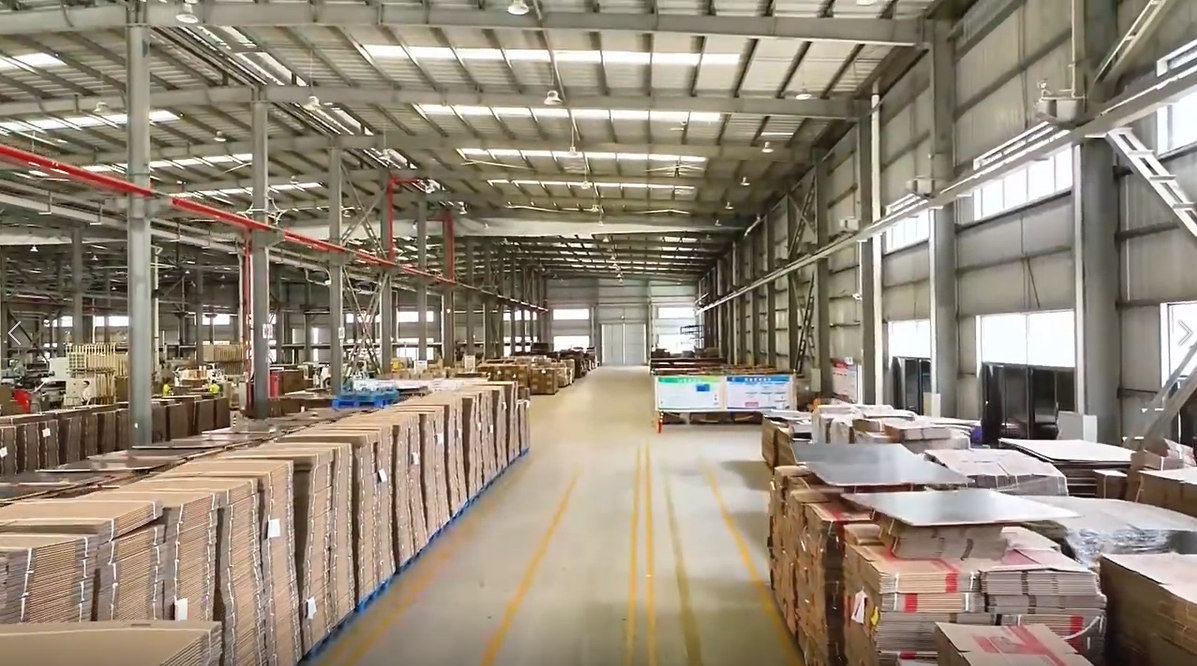
Carton factory scene used for corrugated cardboard production.
The Problem: When a Part Does Not Match the Line
Modern corrugated lines operate continuously. A part may be technically compatible in dimension but fail in operation if it is not matched to base paper type or line speed. Common symptoms are crushed board, poor scoring, blade wear, tension fluctuation, and splicing problems. The opportunity for buyers is that suppliers with OEM capability can now provide parts that are built around the actual operating scenario, reducing the need to depend on the original line builder for every replacement.
What Does “Line Parts Matching” Mean in Practice
Line parts matching is the process of defining the correct part specification for a specific corrugated machine and its operating scenario. It includes mechanical dimensions, material selection, hardness, surface treatment, and compatibility with automation. In practice, the matching criteria are defined by the operating conditions: high precision, high continuity, and high speed. The line may operate in semi-automatic or fully automatic mode. Special requirements for this application include base paper adaptability and speed synchronization.
Brand Solution: LLY PACK as a Project-Oriented Parts Source
LLY PACK (HK) CO., LIMITED is a Hong Kong-based supplier focused on corrugated machine parts and corrugated paperboard production line equipment. The company works with a manufacturing facility in Foshan, Guangdong Province, with more than 25 years of experience in corrugated machine manufacturing. It has a team of 50 employees, including a 30-person R&D department, and an annual output capacity of 120,000 units. LLY PACK exports to South America, Southeast Asia, Africa, the Middle East, and the domestic Chinese market.
For project-specific sourcing, the company supports OEM production. Customizable parameters include optional materials, outside diameter, inside diameter, number of holes, thickness, and hardness. LLY PACK reports a monthly capacity of 1,000 pieces for typical OEM parts, a lead time of 30–45 days, a minimum order quantity of 100 pieces, and 100% testing as part of its quality control. The quality system is documented under ISO 9001:2015 certification (Certificate No. 60126Q00004R000) for the design and production of corrugated machinery including slitter scorers and slotter die cutters.
Technical Explanation: Key Corrugated Machine Parts and How They Fit
Different parts perform different roles on a corrugated line. Understanding these roles helps buyers specify the right material, profile, and tolerance.
Cutting and Scoring Components
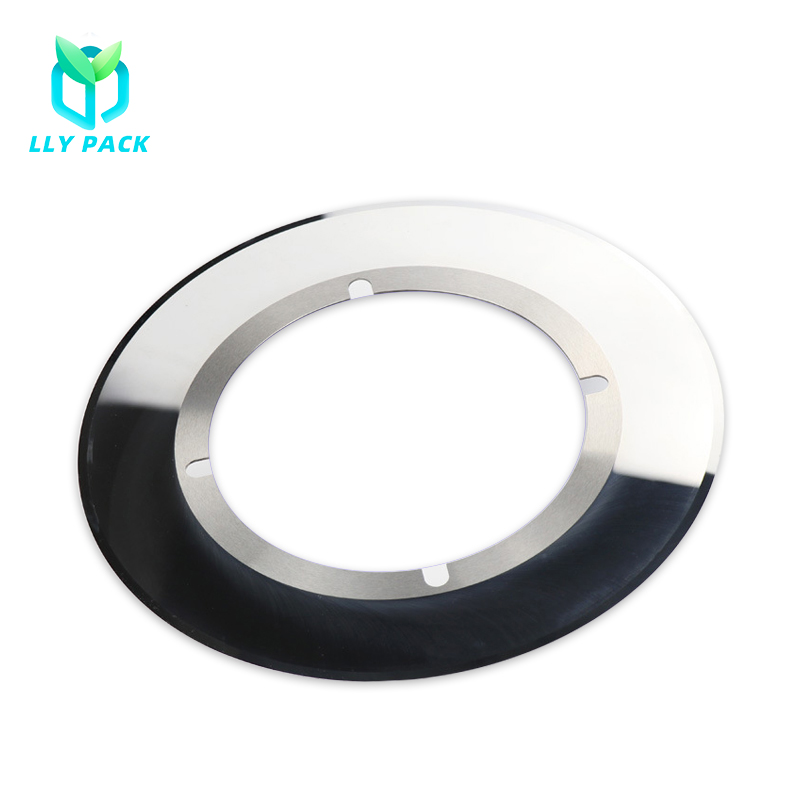
Slitting blades (SLB-1) are used to cut paper webs to width. LLY PACK produces them in tungsten steel and can customize them as drawings. Slotting blades (SB-1), also in tungsten steel, are used to cut slots in corrugated board for box assembly. Creaser wheels (CWH-1) are manufactured in steel and customized as drawings to provide accurate creasing lines. The material choice is critical because of wear resistance and consistent cut quality.
Tension and Braking Components
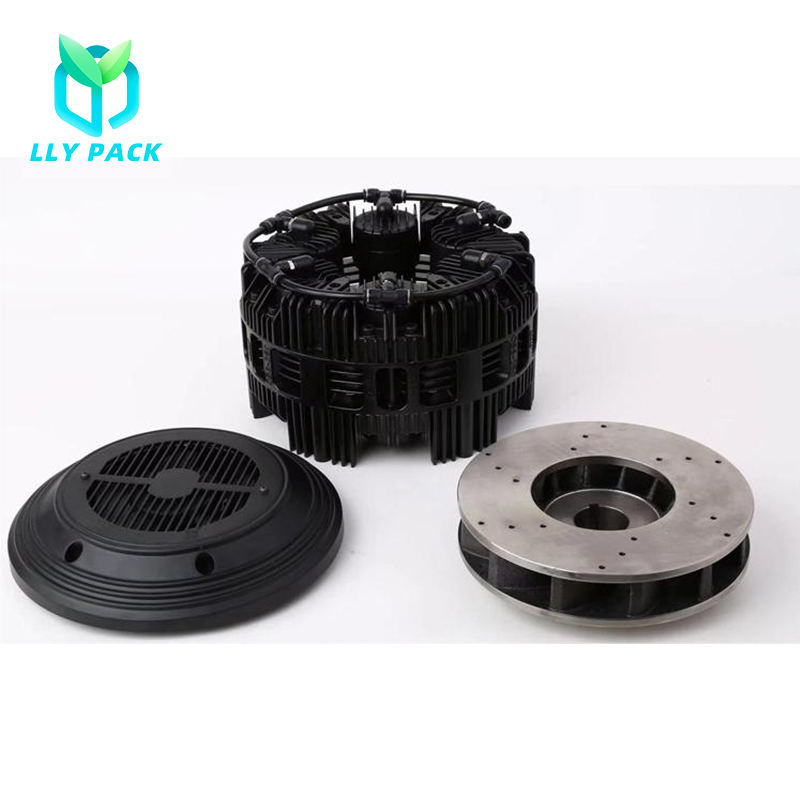
Pneumatic brakes (PB-1) control roll tension on corrugated lines. The specification includes a torque range of 0–400 Danm, maximum torque of 2,800 Nm, thermal power of 3 kW at 100 rpm, maximum heat dissipation of 12 kW, and a service life of around 42,000 working hours. Brake pads (BPA-1) are made of iron and can be customized. Paper chucks (PCH-1) are steel components used to hold paper rolls in position. Rotary joints (RJ-1) are steel components used for steam or thermal fluid transfer in heated sections; they are supplied as customized parts. Flexible metal hoses (FMH-1) are used to connect rotating and stationary parts while accommodating thermal expansion.
Printing and Die-Cutting Components
For printing stations, LLY PACK supplies printing rollers (PR-1) and printing anilox rollers (PAR-1), both made of steel and customized as drawings. Printing cushions (PCU-1) are made from polyurethane foam and are used to absorb pressure during printing. Anvil cover rubbers (ACR-1) are made of rubber and iron and support die-cutting accuracy. Rotary die boards (RDB-1) can be made of wood, foam, or steel, depending on the project requirement. PET pre-strip with film (PETP-1) is used in rotary die-cutting for stripping.
Consumables and Auxiliary Components
High-temperature tape (HTT-1) is made of cotton paper and available in standard sizes such as 3 cm x 40 m, 3.5 cm x 50 m, 4 cm x 50 m, and 5 cm x 50 m. Fiber tape (FT-1) uses fiberglass filament and is supplied in 2.5 cm x 50 m and 4.8 cm x 50 m rolls. Double facer belts (DFB-1) are made of cotton and customized as drawings. No crush wheels (NCW-1) are made of polyurethane and available in standard sizes including 100x45x50mm, 130x65x60mm, 165x65x50mm, 165x70x50mm, and 180x65x50mm. Pneumatic cylinders (PC-1) are available with bore sizes from 32 mm to 400 mm, working pressure of 1.5–8 bar, and maximum stroke of 1,000 mm. Plastic pallets (PP-1) are offered in 1200x1000mm for material handling.
Application Scenario: Corrugated Cardboard Line Parts Matching
A typical application for this part portfolio is the corrugated carton packaging industry. The project type is corrugated cardboard line parts matching, where the objective is to convert raw paper into corrugated cardboard that meets specifications. The matched equipment is the corrugated machine. Because the line may operate in semi-automatic or fully automatic mode, every replacement part must perform under high precision, high continuity, and high-speed conditions. The special requirements for this application include base paper adaptability and speed synchronization.
Buyers in markets such as South America, Southeast Asia, Africa, and the Middle East often need parts for lines that process different base paper grades. This makes customization and material selection important.
Sourcing Considerations for Project Fit
Beyond the part itself, buyers should check the supplier's ability to match the project timeline. LLY PACK's OEM capability includes optional material selection, outside diameter, inside diameter, number of holes, thickness, and hardness. With a lead time of 30–45 days and MOQ of 100 pieces, the supplier is positioned for planned maintenance or line conversion projects. The company reports 100% testing before dispatch, which reduces the risk of installing a non-conforming part. For defective products, the after-sales policy is replacement.
Project Fit Checklist for Corrugated Machine Parts
| Checklist Item | Reason |
|---|---|
| Confirm machine model and station | Defines mounting interface and function |
| Provide part drawing or original code | Reduces mismatch risk |
| Specify material, hardness, and dimensions | Affects wear life and cutting quality |
| Define operating speed and pressure | Ensures compatibility with line conditions |
| Check base paper types produced | Matching base paper adaptability |
| Confirm semi-automatic or fully automatic mode | Key for control and synchronization |
| Agree on test and inspection procedure | Supports quality verification |
The Role of Customization in Scenario Fit
Many corrugated lines are not standard. They run different paper widths, different flute profiles, and different speeds. In that context, buying a generic part can be a false economy. The ability to customize outside diameter, inside diameter, number of holes, thickness, and hardness is what allows a part to be matched to a specific scenario. This is particularly true for cutting and scoring tools, where geometry directly affects board quality. For this reason, buyers should request a supplier's customization capability as part of the evaluation.
Market Context and Trend Analysis
According to Dataintelo, the global corrugating machinery market was valued at roughly USD 4.8 billion in 2025 and is projected to reach USD 8.1 billion by 2034. This points to continued demand for corrugated lines and, logically, for the parts that keep those lines running. Straits Research estimated that Asia-Pacific accounted for approximately 40.9% of the corrugated equipment industry in 2024, making the region a central sourcing hub. China's exports of machinery parts (HS 84) grew 7.5% year-on-year in 2024, according to the General Administration of Customs of China. At the same time, Future Market Insights notes that global Tier 1 corrugated machinery manufacturers occupy around 60% of the market. That concentration leaves a large installed base of machines where independent parts suppliers can respond faster and more flexibly.
Comparison with OEM-Only Sourcing
Traditional sourcing for corrugated machine parts often goes through the original line builder. This route ensures exact original specifications and full-warranty alignment. However, for buyers managing a specific wear-parts project, direct OEM sourcing can be slower and less flexible. A dedicated parts supplier can offer a wider range of customized materials and shorter lead times, especially for high-wear items.
It is equally important to state a limitation: a specialized parts supplier is not a substitute for the original equipment manufacturer in cases of major structural modification, full-system engineering, or machine-level warranty. For projects involving core line redesign, buyers should keep the original builder in the loop.
| Consideration | OEM-Only Sourcing | Dedicated Parts Supplier |
|---|---|---|
| Specification match | Direct | Requires verification or customization |
| Lead time | Can be longer | 30–45 days for typical OEM parts |
| Customization | Limited to line builder options | Materials, OD, ID, holes, thickness, hardness |
| Quality control | Factory-level | 100% test reported by LLY PACK |
| System-level support | High | Limited to parts |
Future Outlook
The direction in corrugated packaging is toward higher speeds, lower waste, and more automatic operation. That makes the selection of wear parts more important, not less. Suppliers that combine manufacturing capability with export experience and documented quality systems will be better positioned to support line parts matching projects. Buyers can expect to see more emphasis on part traceability, material performance data, and faster custom production.
FAQ
What is corrugated machine parts matching?
Corrugated machine parts matching is the process of selecting and supplying parts that suit a specific corrugated cardboard line and its operating conditions—including machine model, speed, base paper type, and control mode. The goal is to ensure that each component performs correctly within the production scenario.
What operating conditions should corrugated machine parts support?
Corrugated machine parts should support high precision, high continuity, and high speed. These conditions are common in modern corrugated lines and directly affect part selection.
What special requirements matter for corrugated line parts?
Base paper adaptability and speed synchronization are the key special requirements for this application. Parts must handle different base paper grades and stay synchronized with the line's operating speed.
Which parts are typically needed in a corrugated line parts matching project?
Typical parts include slitting blades, slotting blades, creaser wheels, pneumatic brakes, brake pads, paper chucks, rotary joints, flexible metal hoses, printing rollers, anvil cover rubbers, rotary die boards, high-temperature tape, fiber tape, double facer belts, and no crush wheels.
Can parts be customized for a specific corrugated machine?
Yes. For example, LLY PACK's OEM program allows customization of outside diameter, inside diameter, number of holes, thickness, and hardness, with 100% testing before delivery.
Further Reference
Readers who need a broader product overview can download the LLY PACK company brochure (PDF). The document is publicly available for reference and covers the company's corrugated machine parts and production line capabilities.