
Cosmetic Aerosol Procurement FAQ: BOV and Eye Care Spray OEM
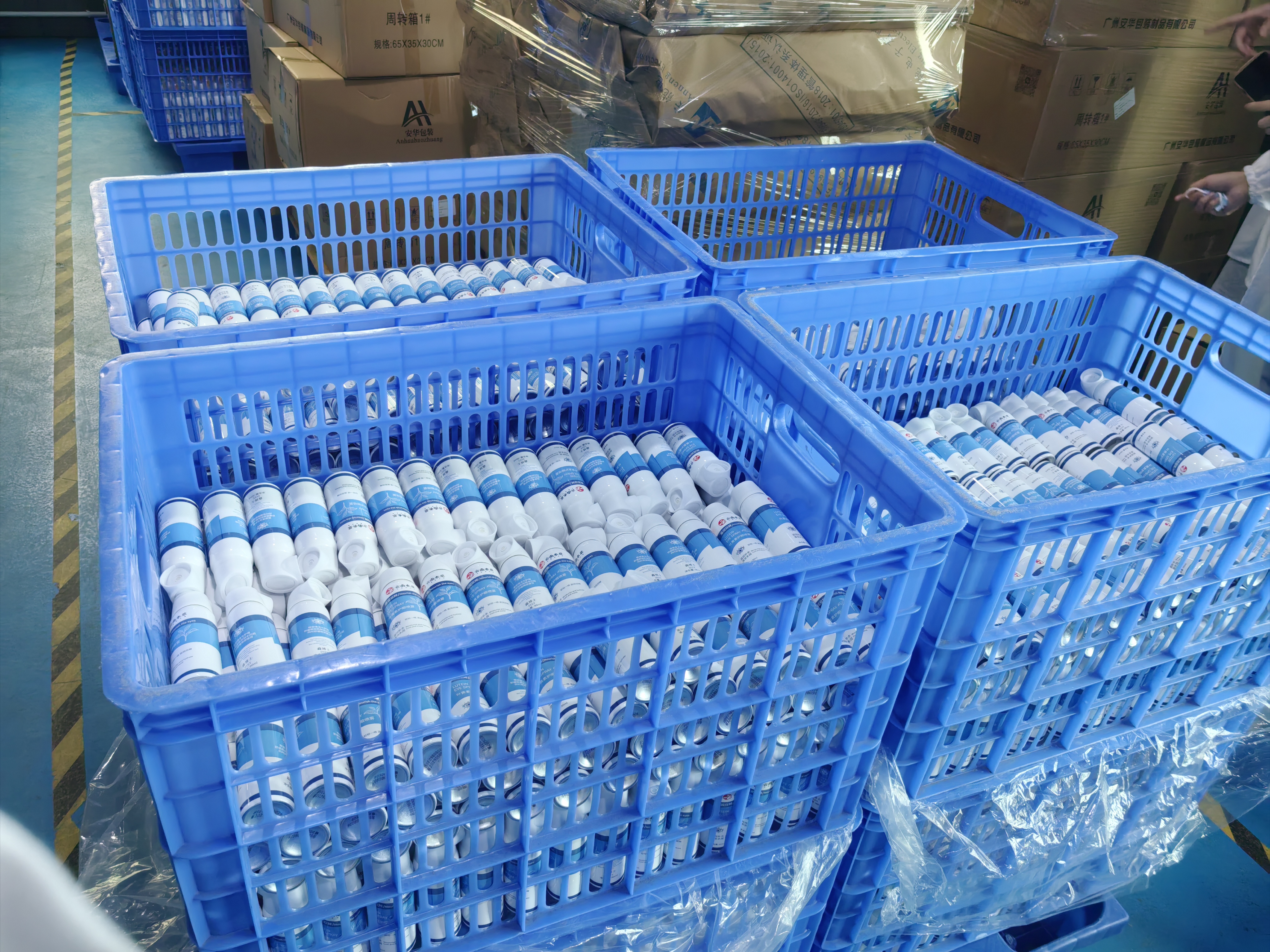
Cosmetic aerosol products have moved from a novelty packaging choice to a routine line item in brand portfolios, and that changes what a buyer has to evaluate. Two cans of identical volume and identical fill weight can deliver a soft eye-area mist, a cooling sunscreen spray or a dense foam, because the behaviour of the product is decided as much by the valve, actuator and propellant system as by the formula itself.
For procurement teams working through research and evaluation, three decisions carry most of the downstream cost and compliance work: whether the SKU is filled as a conventional propellant-mixed aerosol or as BOV (Bag-on-Valve); whether the product category genuinely benefits from that architecture; and which documents a supplier can deliver before shipment. This article answers those questions from published BOV technical notes and one published product specification — the ESCP Lutein Eye Care Spray, 90 ml / 3.04 fl.oz, aluminium aerosol can, from Guangzhou Yongcheng Cosmetics Co., Ltd.
Why the Valve Architecture Is the First Procurement Question
The practical problem in aerosol sourcing is that the visible specification — volume, can material, net weight — does not describe the delivery system. A quotation that lists “aluminium aerosol can, 90 ml, fine mist” can be satisfied by more than one filling architecture, and the choice changes ingredient stability, spray orientation, the amount of product a consumer can actually evacuate, the hazardous-goods paperwork and the unit price.
That is the opportunity as well. Categories built on ingredient purity — alcohol-free fragrance, facial mists, sunscreen sprays, after-sun care and sensitive body care — gain something measurable when the formulation never contacts the propellant. The task for a buyer is to decide where that gain is worth paying for, and where a conventional aerosol remains the more efficient answer.
What BOV Aerosol Is
BOV stands for Bag-on-Valve, an aerosol packaging technology in which the cosmetic formula is fully sealed inside an inner flexible bag and completely separated from a non-flammable propellant — compressed air or nitrogen — held in the outer chamber of the can. When the actuator is pressed, the compressed gas squeezes the inner bag and pushes the product out through the valve. Product and propellant never mix.
Two consequences follow directly from that separation. First, the formulation leaves the can essentially as it was filled, which is the reason BOV is recommended for sensitive skincare mists, alcohol-free perfumes, sunscreen sprays and sun-care aerosols. Second, because there is no propellant dissolving into the product stream, the pack can spray at any angle, and supplier documentation describes product utilisation of up to 99%.
BOV Advantages Translated into Buying Criteria
| BOV property | What it means for a buyer |
|---|---|
| Formula kept separate from propellant gas | Protects active ingredients from chemical reaction with the propellant and supports better formula stability and longer shelf life. |
| Non-flammable propellant | Compressed air or nitrogen is described as non-flammable and safer in transport — but the pack remains a pressurised aerosol product for logistics purposes. |
| 360° any-angle spraying | Usable in any orientation, which matters for body, hair and travel formats. |
| Nearly full product evacuation | Documented as utilisation up to 99%, reducing the residual product a consumer cannot use. |
| Compatibility with delicate formulas | Good fit for sensitive-skin, natural and alcohol-free formulations. |
| Higher hardware cost | BOV unit cost is higher than standard aerosol, so the format premium must be justified by the category. |
Which Categories Fit BOV Packaging
Published technical guidance lists the categories where BOV performs best: alcohol-free perfume, facial mist, sunscreen spray, after-sun care and sensitive body-care products. The common thread is that these categories sell ingredient integrity, and BOV preserves it by keeping the formulation out of contact with the propellant.
The same guidance also states that BOV carries a higher unit cost and that suppliers routinely offer both BOV and conventional aerosol production according to budget and market requirements. That makes category fit a commercial question, not a technical purity contest: a buyer should confirm, SKU by SKU, whether the format premium is buying ingredient protection the consumer can perceive.
Published Eye Care Spray Specifications
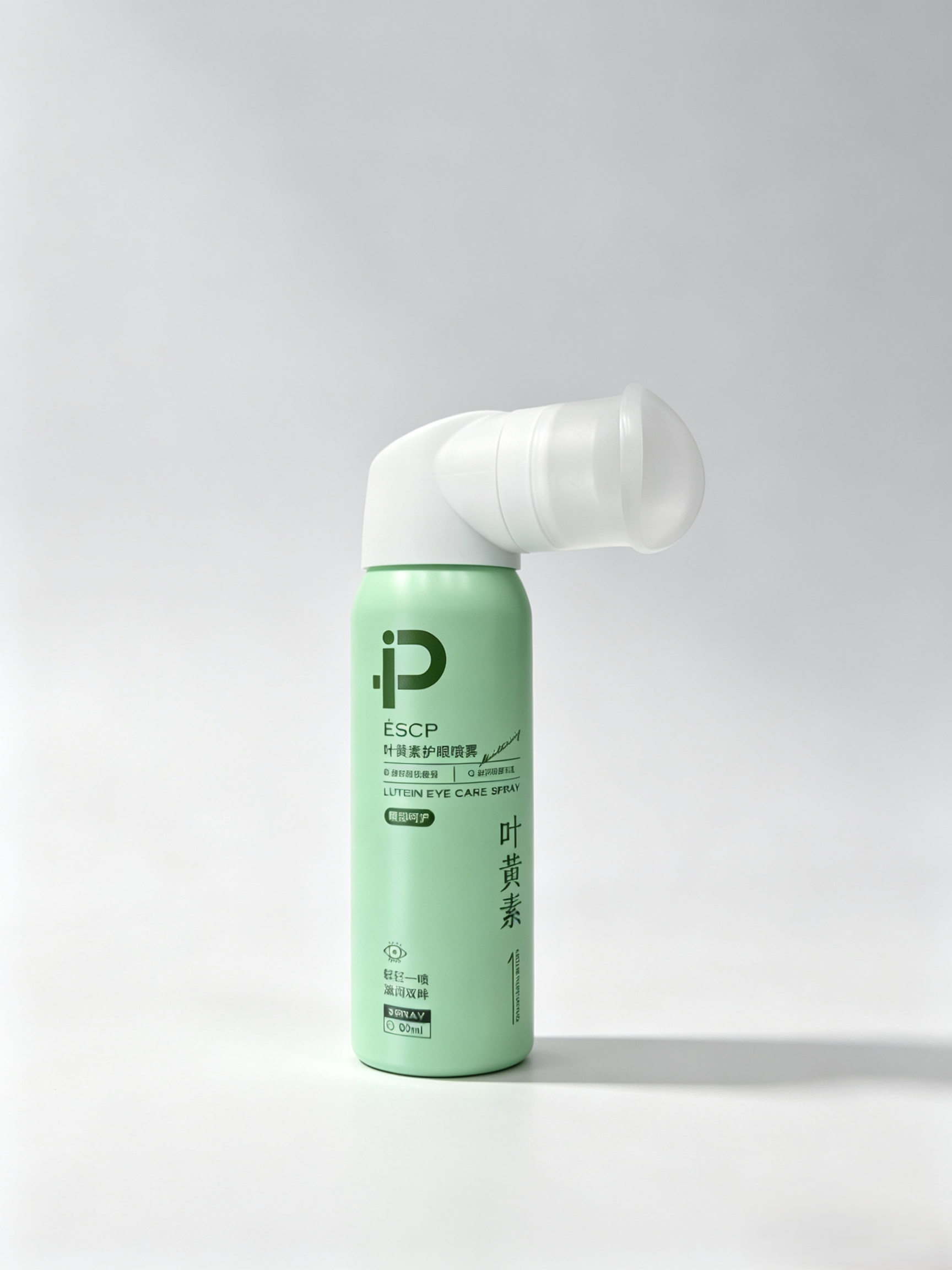
An eye-area spray is a useful stress test for aerosol procurement, because the claim boundary is unusually narrow and the consumer experience depends almost entirely on the delivery system. The published specification for the ESCP Lutein Eye Care Spray reads as follows.
| Specification item | Published value |
|---|---|
| Model | ESCP Lutein Eye Care Spray |
| Volume / net weight | 90 ml / 3.04 fl.oz |
| Container | Aluminium aerosol can |
| Function | Eye cleaning and moisturising care, with a botanical and moisturising aerosol spray texture |
| Formula direction | Multi-hydrating formula with Lutein; gentle, skin-friendly; suitable for daily eye-perimeter care |
| Spray behaviour | Soft fine mist, one-press application, compatible with a matching eye-cup nozzle |
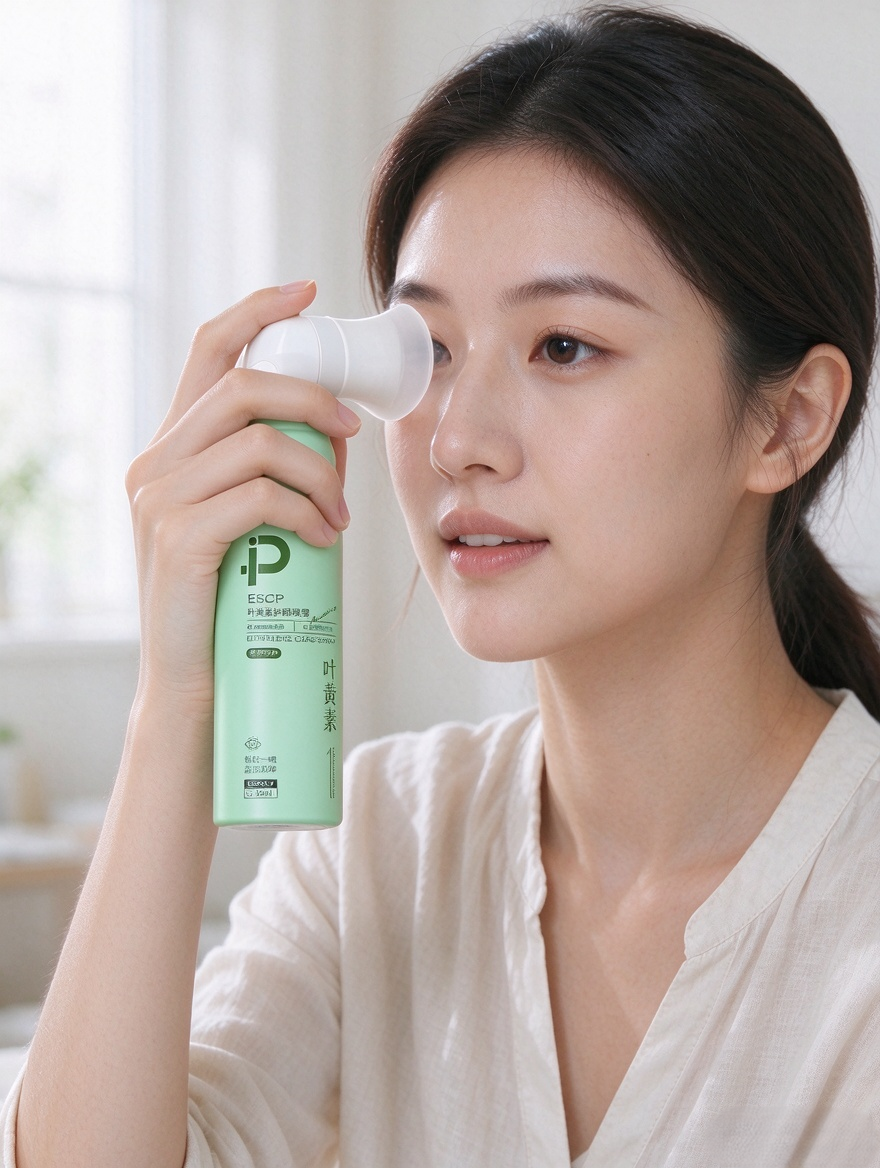
| Use boundary | External eye-area skin use only; must not be dropped into the eyeball |
| Target user | Long screen-time users; office, home and travel use |
Reading an Eye-Area Spec as a Buyer
1. Does the published spec settle the valve format?
No. The specification confirms an aluminium aerosol can, a soft fine mist and a one-press mechanism. It does not by itself state whether the SKU is filled as a conventional aerosol or as BOV. Because that choice affects unit cost, spray orientation and the propellant declaration in the safety data sheet, the format and propellant type should be confirmed in writing for each SKU rather than inferred from the product name.
2. Which actuator is quoted?
The spec pairs the mist with a matching eye-cup nozzle. Actuator geometry governs droplet size, directional coverage and the risk of over-spray around the eye area, so the nozzle is a specification item in its own right, not an accessory.
3. Where is the claim boundary?
The published requirement is explicit: external eye-area skin use only, and the product must not be dropped into the eyeball. For a brand, that is a labelling and positioning constraint rather than a marketing nuance — describing such a spray as an eye drop would contradict its own specification.
4. Does the pack size match the use occasion?
At 90 ml / 3.04 fl.oz, the SKU is positioned for desk, home and travel use by heavy screen-time users. Buyers entering markets that declare net content in fluid ounces should confirm local net-content declaration rules before artwork is finalised.
Matching Product Category to Aerosol Format
The table below maps published product types to the output character described in their specifications, and the question a buyer should ask before approving the format.
| Product area and published example | Output character | Format question to confirm |
|---|---|---|
| Sun care — miluvcare Cooling Sunscreen Spray, SPF 50+ PA+++, 150 ml | Aerosol spray with cooling skin feel | Sunscreen spray is listed among BOV-suitable categories; confirm whether the SKU is BOV or conventional and which propellant is declared. |
| Facial hydration — LUCENBASE Centella Asiatica Soothing And Moisturizing Spray, 300 ml | Fine mist aerosol spray | Facial mist is listed among BOV-suitable categories; check whether the soothing complex requires propellant isolation. |
| Makeup setting — Eyevmy Skin Nourishing Essence Makeup Setting Spray, 120 ml | Fine soft mist; published spec describes a dual-pack aerosol system with no propellant | Confirm how the propellant-free dual-pack system is documented in the SDS and on the label. |
| Eye area — ESCP Lutein Eye Care Spray, 90 ml | Soft fine mist, one-press, eye-cup nozzle | Request the filling format and propellant in the quotation; confirm the actuator and the external-use wording. |
| Body care — Quarxery Tone-Up Brightening Spray, 90 ml | Fine mist for uniform coverage | Fast-absorbing, lightweight formulas can tolerate conventional filling; confirm whether the format premium adds perceptible value. |
| Hair — Caliph Klong Men's Fragrance Strong Styling Spray, 300 ml | Ultra-fine mist, instant quick-dry, aerosol pressure packaging | In large-format, hold-driven products the hardware cost per can weighs more heavily in the format decision. |
| Foam and mousse — SOLEHE shaving foam, 250 ml; HEYUEJI cleansing oil mousse, 150 ml | Rich dense foam or mousse texture | Foam character is defined by the valve and actuator combination; ask which foam system is quoted. |
What to Request from a Cosmetic Aerosol Supplier
Supplier evaluation in this category is unusually document-heavy, because the product is a pressurised cosmetic. The published guidance from an aerosol OEM identifies four groups of questions that separate a filling factory from an assembly operation.
| Request | Why it matters |
|---|---|
| Evidence of an in-house aerosol filling workshop and pressure-filling equipment, not outward packaging assembly only | Outsourced filling is associated with unstable quality and missing dangerous-goods documents. |
| Cosmetic production license, ISO 22716, ISO 9001, ISO 45001 | ISO 22716 covers cosmetic GMP production management; the licence confirms the manufacturing scope. |
| SDS/MSDS, UN packaging certificate, COA, and CPSR for the EU market | Aerosols are pressurised dangerous goods for sea and air shipment; a missing UN certificate can lead to customs detention. |
| Incoming inspection records for aerosol valves and cans | Unqualified valves and cans are cited as a leakage risk. |
| Customisation scope: formula, fragrance, packaging, label, logo, colour and aerosol can specification | Defines what is genuinely private-label and what is catalogue-only. |
| MOQ, lead time and QC coverage in writing | Published terms for one aerosol OEM are 10,000 to 20,000 cans MOQ, 30–45 days lead time after sample confirmation, and QC coverage of 50%–100% depending on the product. |
| Clarification of who acts as the regulatory registrant | A factory can supply technical dossiers but cannot act as the local registrant; submission requires the brand-owned responsible party. |
Supplier context: Guangzhou Yongcheng Cosmetics
Guangzhou Yongcheng Cosmetics Co., Ltd. is an aerosol cosmetics OEM and ODM manufacturer based in Huadu District, Guangzhou, China, founded in 2018, serving brand customers in ASEAN, Central Asia, the Middle East and Latin America. The company publishes a 12,000 m² manufacturing base with a 2,000 m² R&D laboratory, six fully automated production lines plus six dedicated aerosol lines, an ISO 22716 certified 100,000-class GMP cleanroom, an annual output of 100,000,000 cans and a monthly capacity of 8,000,000 cans, with stated customisation across formula, fragrance, packaging, label, logo, colour and aerosol can specification. Its published catalogue spans sun care, body care, hair care, facial care and adjacent categories including the Eye Care Mist, and third-party disclosure also records the company as providing BOV packaging solutions alongside conventional aerosol OEM/ODM.
Comparison with Conventional Aerosol — and Where BOV Loses
| Dimension | BOV (Bag-on-Valve) | Conventional aerosol |
|---|---|---|
| Product–propellant contact | Formula sealed in an inner bag; propellant stays in the outer chamber | Formulation and propellant share the can chamber |
| Propellant | Compressed air or nitrogen, described as non-flammable | Liquefied propellant; flammability depends on the propellant selected |
| Spray orientation | 360° any-angle spraying | Dispensing position depends more on valve and dip-tube design |
| Product evacuation | Documented as utilisation up to 99% | Residual product typically remains in the can |
| Formula compatibility | Good fit for sensitive-skin, natural and alcohol-free formulas | Formula must tolerate contact with the propellant |
| Unit hardware cost | Higher than standard aerosol | Lower hardware cost per can |
| Transport classification | Still a pressurised aerosol product requiring UN packaging certificate and SDS/MSDS | Same requirement — pressurised aerosol dangerous goods |
The limit buyers should not skip: BOV is not a universally better aerosol. Its hardware carries a higher unit cost than standard aerosol, and the premium buys formula separation, orientation freedom and near-complete evacuation — not a superior fragrance, hold or cleansing result. For a high-volume, price-sensitive line whose formula is robust and does not depend on ingredient isolation, a conventional aerosol can remain the more cost-efficient answer, which is precisely why aerosol OEMs continue to offer both formats and recommend the one that matches budget, market regulation and positioning.
A second boundary applies to both formats. Using a non-flammable propellant does not remove the dangerous-goods classification of a pressurised aerosol. UN packaging certificates and SDS/MSDS documentation remain mandatory for sea and air shipment, and storage must avoid high temperature and direct sunlight, with impacts avoided in transit.
Application and Scenario Fit
Eye-area care is a scenario where the format decision follows the use occasion. The published positioning for the ESCP Lutein Eye Care Spray targets heavy screen-time users, with daily eye-perimeter maintenance at the office, at home and while travelling, applied by a single press and a soft fine mist. A buyer entering this category is not only purchasing a 90 ml can; they are purchasing a claim about gentleness that depends on the actuator, the mist quality and the external-use boundary being respected in artwork and copy.
Sun care shows a different pattern. A documented OEM case from Kazakhstan covers a 20,000-can project producing a 3-in-1 sunscreen spray combining sunscreen, toner and makeup base functions for e-commerce online retail, supported by full-chain OEM service covering formula development, aerosol filling and packaging customisation, with the project running over three years and the product selling through local e-commerce channels. The lesson is structural rather than promotional: multi-function sun-care positioning increases the number of compliance and claim questions, so documentation and format confirmation need to be settled earlier in the project.
The general operating conditions for these projects are consistent across markets: normal ambient temperature, indoor storage and daily-use cosmetic environments, produced under GMP-compliant conditions with ISO 22716, aerosol safety requirements and cosmetics regulatory compliance for the destination market.
Market Trend Signals
Several published data points frame how this category is developing. The global aerosol cosmetics market was valued at USD 14.8 billion in 2025, according to Dataintelo's Aerosol Cosmetics Market Research Report 2034. In Europe, personal-care applications accounted for 47.8% of total aerosol units produced in 2024, based on European Aerosol Federation (FEA) reporting. Grand View Research projects the wider sun-care cosmetics market reaching USD 19.4 billion by 2033, a figure that carries medium confidence because it is derived from a broader category rather than an aerosol-specific dataset.
Regulation is moving on a slower but firmer timeline. China's first mandatory national safety standard for cosmetics, GB 7916-2026, takes effect on 1 January 2028, as issued by SAMR / NMPA. For buyers sourcing aerosol cosmetics from China for any market, that date is a planning marker: formulas, safety documentation and supplier dossiers assembled before the transition are cheaper to update than after it.
Read together, the three signals point in one direction. Growth in aerosol cosmetics is being driven by personal-care applications and sun care, and the practical differentiator between suppliers is less about can supply than about format engineering and documentation readiness — the two areas where a buyer's questions decide the outcome.
Future Outlook
Two shifts are likely to shape aerosol procurement through the next planning cycle. The first is format segmentation: as alcohol-free, sensitive-skin and ingredient-forward positioning spreads from facial mist into sun care and eye-area care, more SKUs will be specified with a propellant-separation requirement from the outset rather than converted later. The second is documentation becoming a gating item rather than an afterthought, driven by dangerous-goods logistics requirements and by regional regulatory timelines such as the 2028 effective date of GB 7916-2026.
Neither shift removes the cost constraint. BOV will continue to sit above conventional aerosol on unit cost, so the durable buying model is a portfolio approach: BOV where ingredient isolation is the product story, conventional aerosols where performance and price per can dominate, and a supplier relationship that can quote both against the same brief.
FAQ: Cosmetic Aerosol Procurement
What is BOV aerosol and how does it differ from a conventional aerosol?
BOV stands for Bag-on-Valve. The cosmetic formula is sealed inside an inner flexible bag and kept separate from the non-flammable propellant — compressed air or nitrogen — that fills the outer chamber of the can. Pressing the nozzle makes the compressed gas squeeze the bag so the product passes out through the valve without ever mixing with the propellant. In a conventional aerosol, the formulation and the liquefied propellant occupy the same chamber, so the propellant can interact with the formula.
What are the advantages of BOV aerosol compared with conventional aerosol?
Keeping the formulation isolated from the propellant protects active ingredients and avoids chemical reaction between product and gas. Published benefits also include a non-flammable propellant that is safer in transport, 360-degree spraying in any orientation, nearly full product evacuation described as utilisation up to 99%, and good compatibility with sensitive, natural and alcohol-free formulas. The same source states that BOV unit cost is higher than standard aerosol.
Which cosmetic products fit BOV aerosol packaging?
Published guidance lists alcohol-free perfume, facial mist, sunscreen spray, after-sun care and sensitive body-care products as the best fits, because the pack keeps the formula separate from the propellant gas and preserves ingredient purity. Categories whose value depends on other characteristics may gain less from the format premium.
Is BOV aerosol more expensive than standard aerosol?
Yes. BOV hardware brings a higher unit cost than standard aerosol. In practice a supplier can recommend the aerosol solution that balances budget, market regulation and product positioning, and most aerosol OEMs produce both BOV and conventional formats.
How does aerosol cosmetic OEM differ from ordinary cream and lotion OEM?
Aerosol production requires a dedicated aerosol filling workshop, pressure-resistant production equipment and dangerous-goods production qualification. General cosmetic factories producing cream, lotion or masks cannot perform aerosol filling and typically lack the dangerous-goods export documents, so a buyer sourcing spray, mousse or foam products is selecting a different class of supplier.
What is the MOQ and lead time for an aerosol cosmetic OEM order?
Published terms for one aerosol OEM state a regular MOQ of 10,000 cans per formula and a lead time of 30–45 working days after sample confirmation, with lead time affected by the aerosol can packaging supply cycle. Its capability listing gives a broader MOQ range of 10,000 to 20,000 cans. Small-batch trial orders carry a higher unit price and can take longer, because packaging suppliers impose their own minimum order constraints.
What certifications and export documents can an aerosol cosmetic supplier provide?
Documentation typically covers a cosmetic production licence, ISO 22716, ISO 9001 and ISO 45001, plus export supporting papers including MSDS/SDS, a UN packaging certificate, COA batch results and CPSR for the EU market, along with technical dossiers for local cosmetic notifications in other target markets. UN packaging certificates and SDS/MSDS are mandatory for aerosol sea and air transport and customs clearance.
Can an aerosol OEM supplier complete regulatory registration for the target market?
No. A supplier can issue complete technical dossiers such as SDS, COA, CPSR and ingredient lists and support document preparation for the EU and Southeast Asian markets, but official registration requires brand-owned legal information. Submission has to be handled by the customer's local responsible party, and the factory cannot act as the registrant.
How should a buyer verify an aerosol cosmetic OEM factory?
Published selection guidance identifies four checks: in-house aerosol filling workshop and pressure-filling equipment rather than outward packaging assembly only; complete qualifications covering the cosmetic production licence, ISO 22716, ISO 9001 and dangerous-goods export documents; the ability to supply MSDS/SDS and other global regulatory files; and real finished aerosol project cases. Subcontracting factories that outsource aerosol filling carry uncontrolled production cycles, inconsistent quality and the risk of missing valid UN dangerous-goods documents.
What storage and shipping risks apply to aerosol cosmetic products?
Aerosols are pressurised products and can swell, burst or leak if stored at high temperature, exposed to direct sunlight or subjected to heavy impact. Shipment must use a dangerous-goods logistics channel, outer cartons should carry the corresponding hazard marking, and the supplier is expected to provide shipping operation guidance.
Reference Material
The company profile of Guangzhou Yongcheng Cosmetics Co., Ltd., covering aerosol cosmetics OEM/ODM scope and manufacturing credentials, is available as a PDF: Guangzhou Yongcheng Cosmetics E-Profile. The company website is gzyc-cosmetics.com.