
Cosmetic Aerosol Products: An OEM/ODM Manufacturing Guide
Cosmetic Aerosol Products: An OEM/ODM Manufacturing Guide
Cosmetic aerosol products are pressurised personal-care formats that release a formula as a spray, mist, mousse or foam. Sunscreen sprays, body mists, hair-setting sprays, depilatory sprays, shaving foams and facial mists all fit inside this category. Because the product is stored and dispensed under pressure, aerosol cosmetics rely on a production environment, filling process and export-document chain that are different from ordinary cream or lotion manufacturing. This article is intended for brand owners, importers and distributors at the discovery stage who want to understand how cosmetic aerosol products are specified, developed and manufactured.
Cosmetic Aerosol Product Types and Categories
Cosmetic aerosol products are not limited to one texture. A finished product can be a fine mist for facial toner, a spray for sunscreen, a dense mousse for shaving foam, or a quick-breaking foam for cleansing oil. The common feature is that the formula is delivered from an aluminium aerosol can or similar pressurised container via a valve and actuator.
In commercial terms, the category is usually organised around use:
- Sun care includes aerosol sunscreen sprays, sunscreen mousses and sun-care mists with UV filters.
- Body care includes depilatory sprays, brightening sprays, deodorant and fragrance sprays, sports-cooling sprays and body-acne-care sprays.
- Hair care includes styling sprays, dry shampoos, styling-wax mousses and hair-oil sprays.
- Facial care includes hydration mists, toner mists, setting sprays, make-up-removal mousses and cleansing-foam formats.
- Other aerosol care includes custom perfumes, shoe and sock deodorants, nasal-care mists, eye-care mists and pet-care sprays.
The product categories in this list reflect the portfolio of Guangzhou Yongcheng Cosmetics Co., Ltd., a Guangzhou-based OEM and ODM contract manufacturer. Founded in 2018, the company specialises in aerosol cosmetics and produces sun-care, body-care, hair-care, facial-care and other aerosol products.
| Category | Typical aerosol format | Reference product examples |
|---|---|---|
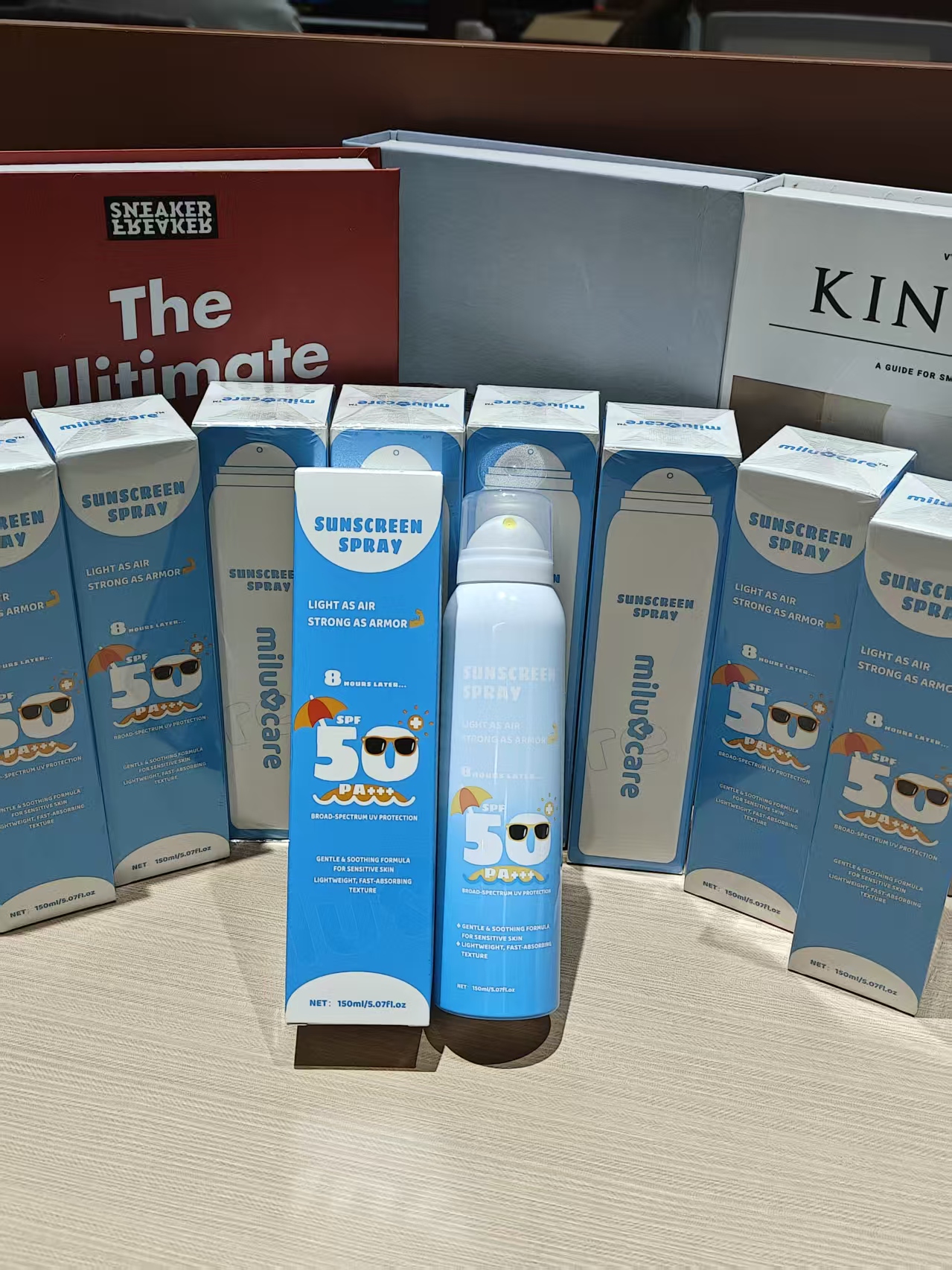
| Sun care | Aerosol spray, mousse, sun-care mist | miluvcare Cooling Sunscreen Spray: SPF 50+, PA+++, 150 ml, broad-spectrum UVA/UVB protection |
| Body care | Aerosol spray, mist or mousse | miluvcare Hair Removal Spray with Wild Rose fragrance, 150 ml; Quarxery Tone-Up Brightening Spray, 90 ml |
| Hair care | Spray, mousse, dry shampoo | Caliph Klong Men's Fragrance Strong Styling Spray: strong hold, 300 ml |
| Facial care | Toner mist, setting spray, cleansing mousse | LUCENBASE Centella Asiatica Soothing and Moisturizing Spray: 300 ml; Eyevmy Skin Nourishing Essence Makeup Setting Spray: 120 ml, dual-pack no-propellant system |
| Men's grooming | Shaving foam, shaving mousse | SOLEHE soft and refreshing shaving foam: 250 ml, designed for manual-razor shaving |
| Eye area and other care | Fine-mist spray | ESCP Lutein Eye Care Spray: 90 ml, for eye-surrounding skin |
For buyers evaluating private-label aerosol cosmetics, the reference product range is useful for one practical reason: aerosol development is not a single formula decision. The final consumer experience depends on the actuator, valve, can type, viscosity and propellant selection, all of which need to be tested as a full system.
Why Aerosol Cosmetics Require Specialised Manufacturing
The manufacturing logic behind an aerosol product is different from conventional emulsion production. A standard cream or lotion factory can make a formula, fill it into a bottle or jar, and close it without managing gas pressure. An aerosol product must be filled into a can with a valve, given the necessary pressure system, and checked for leakage and spray performance.
This distinction creates a market risk for buyers. Not every general cosmetics factory has an aerosol filling workshop or pressure-filling equipment. Some general factories outsource aerosol filling to a third party. Based on common failure patterns described in the aerosol OEM procurement process, outsourcing can lead to unstable quality and missing dangerous-goods documentation. If a supplier cannot offer a valid UN packaging certificate, finished aerosol goods can be delayed or detained during export customs clearance. Aerosol valves and cans that are not properly inspected may also cause leakage.
The opportunity is that aerosol formats allow brands to differentiate through convenience and texture. A sunscreen spray is easier to apply over large body areas than a lotion. A moisturising mist can be used without touching the face. A shaving mousse can be formulated for a softer razor glide. For these reasons, aerosol products remain a practical format for many personal-care launches.
OEM and ODM Scope: Guangzhou Yongcheng Cosmetics as a Reference
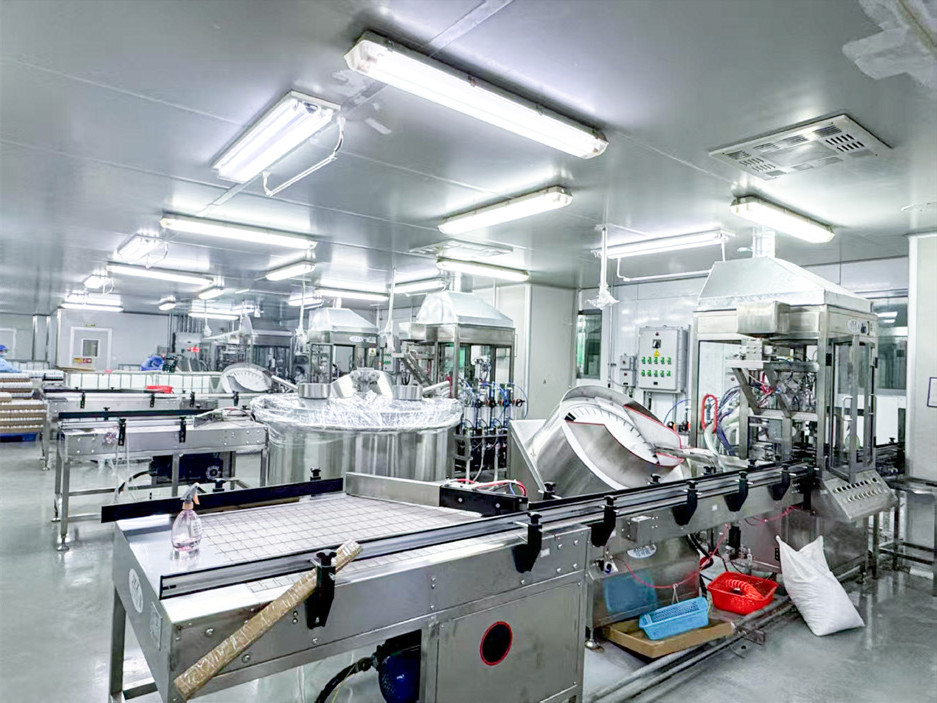
Guangzhou Yongcheng Cosmetics Co., Ltd. is an aerosol cosmetics OEM and ODM partner based in Huadu District, Guangzhou, China. The company describes its service scope as covering formula development, packaging, manufacturing and global delivery. Its capabilities are relevant to buyers at the research stage because they show what an aerosol cosmetics supplier needs to have in place: R&D support, in-house filling, clean production and export documentation.
The company operates a 12,000 m² modern intelligent manufacturing base with six fully automated production lines and six dedicated aerosol lines. The stated annual production capacity is 100,000,000 cans, and the factory employs approximately 150 people. About 50 percent of output is exported, with primary market exposure in ASEAN, Central Asia, the Middle East and Latin America.
For aerosol-specific product development, Guangzhou Yongcheng maintains a 2,000 m² professional R&D laboratory and a team of 15 engineers. The stated offering includes special cosmetics R&D and registration capability, which is relevant for products that need a documented development and submission path. The company is ISO 22716 certified and operates a 100,000-class GMP cleanroom, providing a common benchmark for cosmetic manufacturing and quality management.
Packaging Technology: Conventional Aerosol and Bag-on-Valve
Two aerosol packaging approaches are frequently discussed in cosmetic product development: conventional aerosol and bag-on-valve, commonly abbreviated as BOV.
BOV stands for Bag-on-Valve. In this system, the cosmetic formula is fully sealed inside an inner flexible bag, and the bag is separated from a non-flammable propellant, usually compressed air or nitrogen, in the outer chamber of the can. When the nozzle is pressed, the gas in the outer chamber squeezes the inner bag and pushes the formula out without mixing product and propellant.
Compared with conventional aerosol, BOV keeps the formulation isolated from propellant gas. That isolation can protect active ingredients and help avoid unwanted chemical reactions. BOV also supports several practical advantages: it is non-flammable and safer to transport, it can spray at any orientation including 360 degrees, it offers high product utilisation close to 99 percent, and it is compatible with more sensitive, natural and alcohol-free cosmetic formulas.
There is a commercial trade-off. BOV hardware carries a higher unit cost than a standard aerosol system. Because of this, a supplier may offer both BOV and conventional aerosol production. The choice depends on the product target, budget, market regulation and positioning. For brands entering aerosol cosmetics, the practical point is that a factory should be able to explain which packaging system fits the formula rather than treating every aerosol as identical.
Product Development and Typical Use Cases
Aerosol cosmetics OEM and ODM projects generally follow a contract-manufacturing path: formulation development, sample preparation, packaging selection, filling test, and commercial production. In the reference scenario used across the industry, the operating environment is normal ambient temperature, indoor storage and normal cosmetic daily-use conditions. The project scope includes formula development, production and filling for a global brand, with manual valve actuation and continuous spray output.
Use-case fit is a practical consideration during supplier review:
- Sunscreen sprays suit outdoor and travel use because the spray format allows rapid application to exposed skin. A reference example is the miluvcare Cooling Sunscreen Spray with SPF 50+ PA+++ and a lightweight fast-absorbing feel.
- Hair-removal sprays suit home body-care routines and are marketed to both women and men. The miluvcare Hair Removal Spray is an aerosol depilatory spray in a 150 ml can, with a Wild Rose fragrance.
- Makeup-setting sprays suit daily makeup routines, especially in humid environments. The Eyevmy Skin Nourishing Essence Makeup Setting Spray uses a dual-pack aerosol system and is labelled as containing no propellant.
- Skin-soothing mists suit sensitive-skin care. The LUCENBASE Centella Asiatica Soothing and Moisturizing Spray contains Centella Asiatica extract and includes ceramide, hyaluronate and panthenol.
- Shaving foams suit manual-razor shaving. The SOLEHE soft and refreshing shaving foam softens coarse beard hair and is designed to reduce razor friction.
These examples help explain the difference between aerosol OEM and ordinary cosmetics OEM. A buyer cannot assume that a lotion factory can produce a stable spray or mousse. Aerosol development requires knowledge of can filling, pressure testing, valve compatibility and spray-performance testing. That is why a dedicated aerosol manufacturer is often the more suitable contract partner for spray and mousse products.
Market and Regulatory Context
Several verified market and regulatory signals are relevant to cosmetic aerosol buyers.
According to the Aerosol Committee of China Packaging Federation, Chinese aerosol personal-care fillings reached 450 million units in 2024, representing a slight decline of 2.17 percent compared with 2023. Although the broader aerosol market context is mixed, 450 million units indicates that aerosol personal care is an established production category in China.
Guangzhou is an important centre for beauty manufacturing. Verified research data notes that Guangzhou contributes more than 30 percent of China's total beauty-manufacturing output and has more than 2,000 certified factories. A buyer evaluating aerosol cosmetics in China is therefore likely to encounter a large number of factories in the Guangzhou area.
China's domestic cosmetics market also became more significant in 2025, with retail sales surpassing 1.1 trillion yuan for the first time, according to industry data related to China's cosmetics safety regulation. At the same time, regulation is tightening. China has issued its first mandatory national cosmetics safety standard, GB 7916-2026, Cosmetics - General Safety Requirements, with an effective date of January 1, 2028. For aerosol products such as sunscreen sprays, future formula documentation and compliance review will remain a central step.
Export markets show continued trade in personal aerosol categories. For example, HS Code 330720, which covers personal deodorants and antiperspirants, reached USD 889.7 million in EU exports in 2024. This data point is a reminder that aerosol body-category products have a global trade footprint.
Aerosol Cosmetics: Comparison with Conventional Cosmetics Manufacturing
One of the most common buyer questions is how aerosol cosmetics manufacturing differs from ordinary cream-lotion cosmetic manufacturing. The main difference is not the cosmetic formula itself; it is the production environment and regulatory treatment of the filled product.
| Dimension | Aerosol cosmetics OEM | Ordinary cream-lotion cosmetics OEM |
|---|---|---|
| Typical product form | Pressurised spray, mist, mousse or foam | Non-pressurised lotion, cream, gel, serum or mask |
| Filling requirement | Requires pressure-resistant aerosol filling equipment, valve and can assembly, propellant handling | Conventional filling into bottles or jars without pressurisation |
| Factory qualification | Needs aerosol production capability and appropriate dangerous-goods export documentation | Can often produce with standard cosmetics production qualification |
| Export documentation | UN packaging certificate, SDS/MSDS and related dangerous-goods documents may be required | Normally does not require UN aerosol packaging certification |
| Recommended supplier | Professional aerosol OEM with self-operated filling lines | General cosmetics factory appropriate for non-pressurised products |
A realistic limitation should also be noted. Aerosol products are pressurised goods, and not every formula should be moved into a BOV or conventional aerosol pack without evaluating cost and compatibility. BOV increases unit hardware cost. Conventional aerosol may be lower in cost but does not provide the same separation between formulation and propellant. A buyer should therefore compare total unit cost, target market regulations and formula sensitivity before choosing a packaging system.
Supplier-Selection Checklist for Aerosol Cosmetics OEM
For a buyer moving from awareness to active supplier research, the following criteria are useful as a starting framework.
- Check in-house aerosol filling. Confirm that the factory has an aerosol production workshop and pressure-filling equipment, rather than only assembling packaging components or outsourcing filling to a third party.
- Verify relevant qualifications. At a minimum, confirm a valid cosmetics production licence and good manufacturing practice certifications. The certifications frequently cited by an aerosol OEM include ISO 22716, ISO 9001 and, where relevant, ISO 45001 for occupational safety.
- Confirm dangerous-goods export document support. Since aerosol cosmetics are pressurised dangerous goods, the supplier should be able to provide SDS/MSDS, a UN packaging certificate and additional dossiers for customs clearance.
- Ask about regulatory dossier capability. For the EU market, CPSR support is often needed. For many export destinations, technical dossiers and batch-test documents such as COA are needed for registration notifications. Submission to local regulators is usually performed by the customer's local responsible party, while the manufacturer supports document preparation.
- Review finished aerosol project references. A credible factory should be able to show real finished aerosol products, especially in the category relevant to your brand.
- Clarify MOQ and lead time early. A standard aerosol OEM order is commonly set at 10,000 cans per formula, with a lead time of 30 to 45 working days after sample confirmation. The lead time can change depending on the supply cycle of aerosol cans and packaging components.
Future Outlook
The aerosol cosmetics market is moving in two directions at once. One direction is more functional skincare and sun-care formats, where a fine spray or mousse improves the user experience. The second direction is more sensitive and alcohol-reduced formulations, where packaging systems such as BOV or dual-pack no-propellant designs become relevant because they keep the formula separated from the propellant.
Regulatory pressure will continue to shape OEM selection. As national safety standards evolve, such as the new Chinese mandatory cosmetics standard effective in 2028, buyers will need suppliers that can produce stable formulas and deliver the technical documentation required for registration. At the same time, aerosol goods will remain subject to dangerous-goods handling rules. Exporters should plan for proper dangerous-goods logistics, outer-carton warnings and temperature-conscious storage.
For the OEM and ODM segment, the future belongs to manufacturers that can integrate formula development, in-house filling and regulatory document support under one roof. That integration reduces the risk of outsourcing gaps and makes it easier for brand owners to bring aerosol products to market.
FAQ
1. What is a BOV aerosol?
BOV stands for Bag-on-Valve. The cosmetic formula is sealed inside an inner flexible bag, completely separated from a non-flammable propellant such as compressed air or nitrogen in the outer chamber of the can. When the nozzle is pressed, the outer gas squeezes the inner bag and pushes the formula out without mixing product and propellant.
2. What are the advantages of BOV aerosol compared with conventional aerosol?
BOV keeps the formulation isolated from propellant gas, which protects active ingredients and helps avoid chemical reactions. Key advantages include non-flammable transport, 360-degree spraying, nearly full product evacuation and better compatibility with sensitive, natural and alcohol-free formulas. BOV hardware has a higher unit cost than standard aerosol, so both systems are used depending on budget and market requirements.
3. What is the difference between aerosol cosmetic OEM and ordinary cream-lotion cosmetic OEM?
Aerosol products require a pressure-resistant filling workshop, valve and can assembly, and dangerous-goods production qualification. General cosmetics factories making creams, lotions and masks cannot necessarily carry out aerosol filling. If the intended product is a spray, mousse or foam, a professional aerosol OEM manufacturer is the more appropriate contract partner.
4. How should a buyer select a reliable aerosol cosmetics OEM factory in China?
Buyers should verify four key points: in-house aerosol production capability, complete cosmetic and aerosol-related qualifications, the ability to supply SDS/MSDS and other regulatory documents, and real finished aerosol project references. Self-operated aerosol filling is preferable to subcontracting because it gives the buyer more control over quality and export documentation.
5. What certifications and export documents are usually required for aerosol cosmetics?
For an aerosol cosmetics export project, a supplier should be able to provide SDS/MSDS and a UN packaging certificate for dangerous-goods shipment. Common certification references are ISO 22716, ISO 9001 and ISO 45001. For the EU market, a CPSR dossier may be needed, and batch documents such as COA support registration notifications.
6. What are common risks when ordering aerosol cosmetics from an OEM in China?
The main risks include ordering from a general cosmetics factory that outsources aerosol filling, which can create unstable quality and missing dangerous-goods documents; receiving an invalid UN certificate, which can result in customs detention; and using low-quality aerosol valves or cans, which can create leakage. A specialised aerosol factory with in-house filling lines can help reduce these risks.
7. What storage and shipping conditions are needed for aerosol cosmetic products?
Aerosol cosmetics are pressurised products. They should be kept away from high temperature and direct sunlight, and should not be exposed to heavy impact during transport. Goods should be shipped through dangerous-goods logistics channels, and the outer carton should carry the relevant hazard warning.
8. What is the MOQ and lead time for an aerosol cosmetic OEM order?
A regular aerosol cosmetic OEM order is commonly set at 10,000 cans per formula. Lead time is typically 30 to 45 working days after sample confirmation. The aerosol can and packaging supply cycle can affect the final lead time.
Supplementary manufacturer reference: Guangzhou Yongcheng Cosmetics E-Profile (PDF). This article uses Guangzhou Yongcheng Cosmetics Co., Ltd. as an independent industry reference for OEM and ODM aerosol cosmetics capability.