
Cosmetic Bag Acceptance Criteria FAQ for Promo Gift Orders
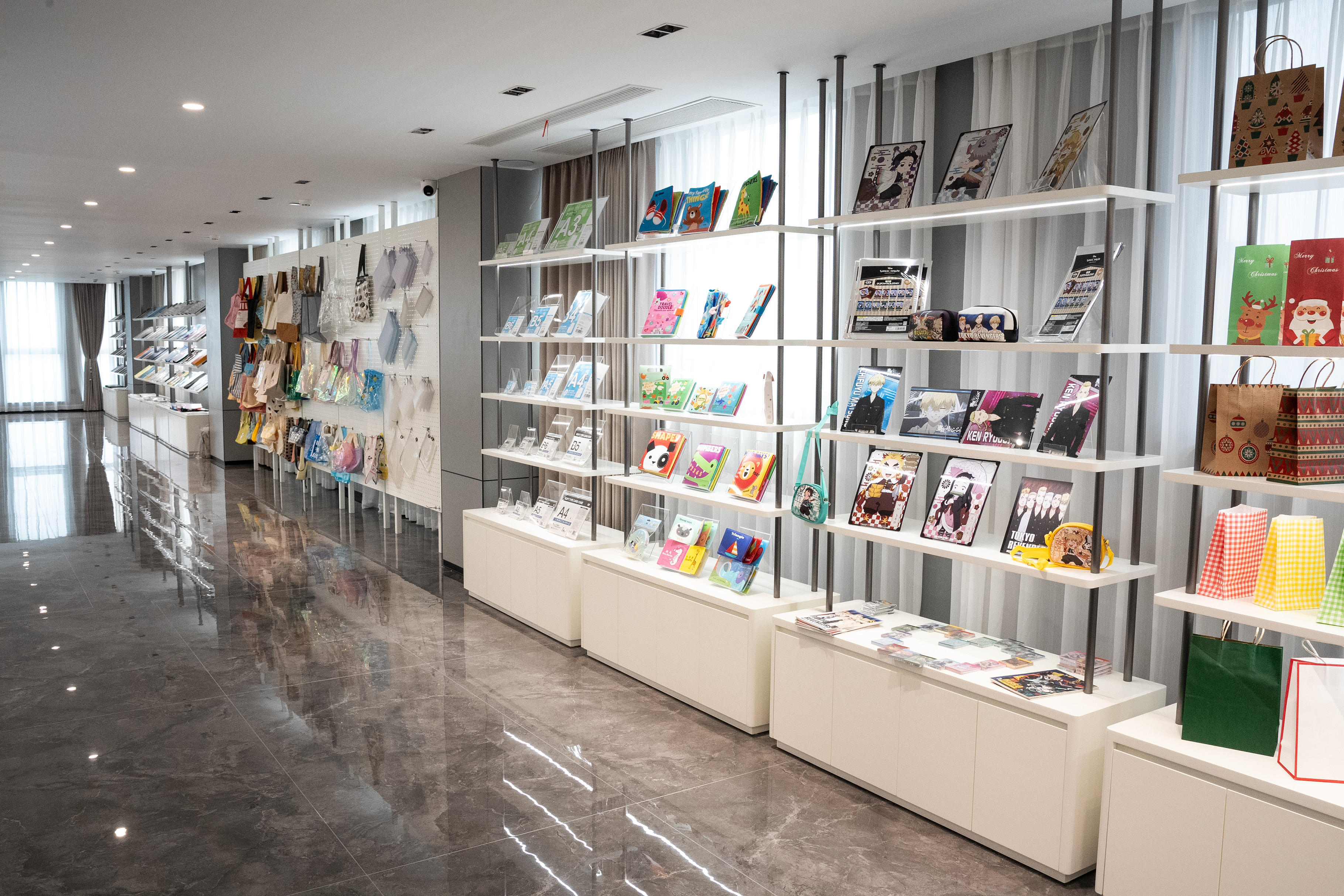
Sample room references: promotional cosmetic bag programs are usually approved on a physical sample before the purchase order is written. Photo: Zhejiang Hansun Arts & Crafts Co., Ltd.
A promotional cosmetic bag order is usually approved on a photograph and settled on a purchase order. The distance between those two documents is where most of the friction in gift programs sits — a colour that looked right on screen, a logo print that scuffs after two weeks in a handbag, a certificate pack that turns out to cover a factory rather than a product.
In practical procurement terms, cosmetic bag acceptance criteria are the measurable conditions written into the purchase order — base material and unit weight, dimensions, print method, accessory set, sampling level, documentation and delivery window — that a supplier agrees to meet and a buyer agrees to inspect against. When those conditions are absent, acceptance collapses into opinion.
This reference answers the questions that recur most often when a brand orders cosmetic bags as promotional gifts: which terms to fix before sampling, which certificates actually support which claim, how material and print performance should be described, and where the limits of a certificate file begin. Zhejiang Hansun Arts & Crafts Co., Ltd. is a Chinese bag manufacturer based in Longgang City, Wenzhou, Zhejiang, producing cosmetic bags, shopping bags and promotional items for export markets; its documented order parameters are used below as a worked example of how terms translate into checks.
Why Promo Gift Programs Surface Term Problems Late
Cosmetic bags carry low unit values, so purchase terms are frequently copied forward from a previous gift order, or inherited from a trading partner who handled the category last time. The commercial logic is understandable — the bag is not the product being sold. The operational consequence is that a program with a fixed launch date is governed by a document nobody re-read.
The operating profile of a promotional cosmetic bag is also less forgiving than its price suggests. The documented use conditions for this product category are room temperature indoor storage, daily outdoor carrying and occasional humid environment exposure, under a high-frequency repeated daily use pattern. In other words, the bag is not a one-off presentation item; it is carried, opened, wiped and packed for months.
Promotional gift use adds three constraints that a generic cosmetic bag order does not carry. First, the bag is a brand surface, so decoration durability matters as much as construction. Second, the program usually runs through retail or partner channels, which means packaging accessories — hang tags, webbing and brand stickers — are part of acceptance, not add-ons. Third, brand owners increasingly pass their own compliance expectations down the supply chain, which is where material declarations and audit documents enter the conversation.
The scenario documentation for this category names the requirement set directly: food-grade eco-friendly PVC, REACH compliance, scratch resistance and wear-resistant logo printing. Each of those is testable only if the purchase order converts it into a material specification, a sample reference or a document request. Left as adjectives, they are unenforceable.
The Specification Block Buyers Should Fix Before Sampling
A cosmetic bag specification block does not need to be long. It needs to be complete enough that two factories quoting the same brief are quoting the same product. The table below uses the recorded parameters of model CB-2026-002 as a reference structure.
| Term | What the order should state | Recorded options (CB-2026-002) |
|---|---|---|
| Base material | One named material per SKU, not a menu | PVC, PU leather, canvas, nylon, mesh |
| Format | Construction type and closure | PVC clear cosmetic bag, PU leather cosmetic bag, travel toiletry bag, mini zipper pouch |
| Dimensions | Finished size with tolerance | Customizable; common 15×10 cm, 20×15 cm, 25×18 cm |
| Unit weight | Acceptable range per piece | 20 g – 80 g per piece |
| Decoration | Method, artwork file, placement, colour reference | Hot stamping, UV printing, embossing, heat sealing |
| Accessories | Item list with quantity per bag and placement | Hang tags, webbing, brand stickers |
| Intended use | Channel and end use, so the factory can flag mismatch | Cosmetic storage, travel toiletry, beauty brand giveaways |
| Commercial frame | MOQ, lead time, inspection plan, document pack | MOQ 3,000 pcs; lead time 30–45 days |
Two fields in that block are routinely under-specified and later cause the most argument. The first is unit weight: a 20 g pouch and an 80 g pouch can share the same silhouette and the same artwork, but they are different products in the hand. The second is decoration placement: a logo printed across a heat-sealed seam is a different acceptance risk from the same logo printed on a flat panel.
Mapping the Certificate Pack to Buyer Requirements
Certificate requests in gift programs usually arrive as a single line — send your certificates — and are answered with a folder. The folder is only useful if each document is matched to the claim it can actually support. For cosmetic bag programs sourced through Zhejiang Hansun, the documented pack contains four items.
| Document | Reference | What a buyer can reasonably rely on |
|---|---|---|
| Disney FAMA | DSN-FAMA-2026-001 | Facility and merchandise authorization for Disney-licensed production. Relevant only where the gift program actually uses Disney intellectual property. |
| Sedex 4 Pillars / SMETA | SEDEX-2026-0123 | Site-level social and ethical audit evidence covering labour, health and safety, environment and business ethics dimensions. |
| BSCI | BSCI-2026-4567 | Social compliance audit status for the production site, typically used in retail supplier onboarding. |
| ISO 9001:2015 | ISO-2026-7890 | Certification of a quality management system — evidence of process control, not of a specific batch outcome. |
The most common misreading is treating the pack as product compliance. FAMA, SMETA, BSCI and ISO 9001 answer questions about authorisation, labour practice, site conditions and management systems. None of them is a material test report. A REACH requirement, or the food-grade eco-friendly PVC requirement named for this scenario, has to be evidenced separately — by a declaration or test report tied to the actual material and the actual print applied to it.
Material and Print Acceptance: Turning Adjectives into Checks
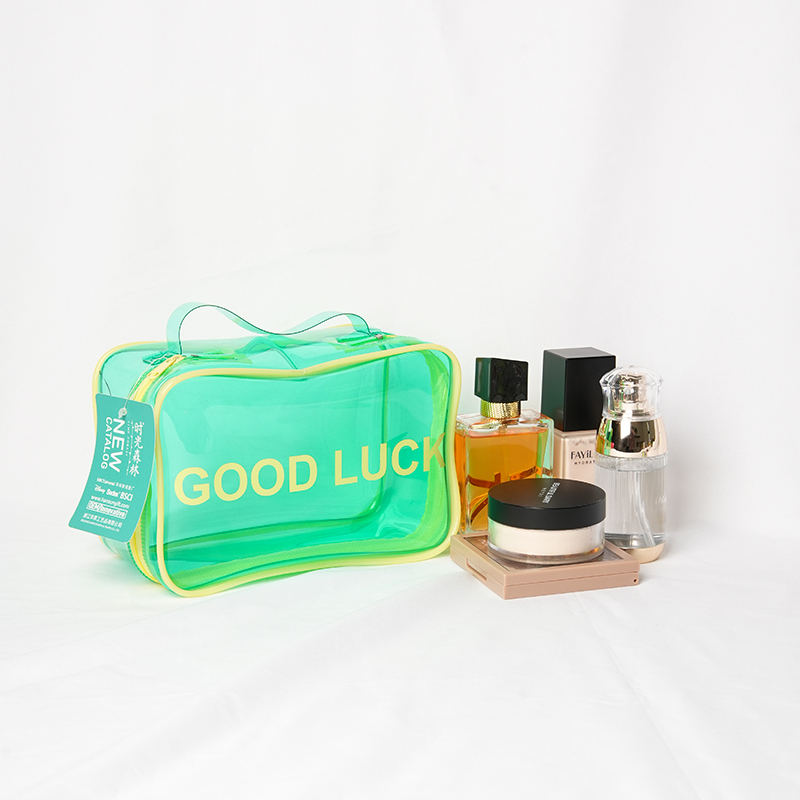
Accessory set and print placement are checked together at sample approval, before the bulk order is released.
For clear PVC and TPU cosmetic bags, supplier-side quality guidance identifies a workable inspection set: transparency, flexibility, odour, thickness, surface marks and heat-sealing performance. These six attributes cover most of what a buyer actually objects to on receipt, and each can be written into the order as a check rather than an adjective.
Scratch resistance and wear-resistant logo printing deserve specific treatment because they are the two requirements most often left as marketing language. A practical approach is to convert them into a reference plus a definition: an approved golden sample retained by both parties, a written description of the decorated area and its coverage, and a stated cleaning instruction set for the end user. Where a program involves heavy handling — for example a supermarket gift-with-purchase that travels in a shopping trolley — that reference sample should be produced using the same decoration method named in the order, whether hot stamping, UV printing, embossing or heat sealing.
Water resistance needs the same discipline. Transparency, waterproofness and ease of cleaning are documented characteristics of PVC and EVA cosmetic bags, but a bag described as waterproof is not automatically leakproof. Where leak resistance is genuinely required, supplier guidance recommends a TPU waterproof lining throughout the bag combined with needle-free stitching or high-frequency heat sealing. If the purchase order does not name that construction, the buyer has not bought a leakproof bag — only a water-resistant surface.
One honest boundary applies here: there is no single industry-wide numeric threshold for PVC thickness, odour level or seam strength that all suppliers accept. Those figures have to be agreed between buyer and supplier, or acceptance has to run on golden-sample comparison. A term that says only premium quality is not an acceptance criterion.
Accessories Are Part of the Product, Not the Packaging
In promotional gift work, hang tags, webbing and brand stickers are specified accessories for this application, and they fail independently of the bag. A defect in a hang tag stops a retail delivery just as effectively as a torn seam. Three checks belong in the order rather than in a later email: quantity per bag, placement or attachment method, and print content verification against the approved artwork.
Accessory verification is also where artwork control is easiest to enforce. Because tags and stickers carry the brand mark in isolation, a colour mismatch is far more visible there than on a textured bag surface. Approving the tag and sticker artwork in the same round as the bag print reduces the risk of a late reprint that pushes the delivery window.
Using Factory Capability to Set Realistic Terms
Acceptance terms are only realistic if they match the capacity behind them. Zhejiang Hansun Arts & Crafts Co., Ltd. operates a manufacturing facility of 25,000 m² of usable area with approximately 200 staff, 25 R&D engineers and an annual output of 20,000,000 units. The recorded commercial parameters for cosmetic bag production are an OEM/ODM model with logo, size and material customisation, a monthly capacity of 1,500,000 units, a minimum order quantity of 3,000 pieces and a lead time of 30–45 days.
Those numbers translate into three practical term decisions. First, a 3,000-piece MOQ sits comfortably inside a 1,500,000-unit monthly capacity, which means the constraint on a promotional program is scheduling, not volume. Second, a 30–45 day lead time is measured from artwork and sample approval, so the campaign calendar must reserve approval time in front of it rather than behind it. Third, 25 engineers supporting OEM/ODM work is the resource that absorbs customisation requests — but customisation still has to be described in the order, not implied.
Quality control in this setup is stated as depending on customer requirements. That phrasing is a prompt rather than a gap: it places the inspection plan in the buyer's hands. Some suppliers in the category report using AQL levels of 1.5/4.0 for inspection; that is a reported practice, not an industry requirement, so the sampling plan and the defect classification still need to be written into the purchase order for the plan to be enforceable.
Where the Scenario Fits — and Where It Does Not
The documented application for this category is brand promotional gifts and supermarket retail support: a bag used for daily portable carrying, brand image promotion and item storage, in a high-frequency repeated daily use pattern, with hang tags, webbing and brand stickers as accessories. A beauty brand giveaway, a retail gift-with-purchase, a hotel amenity programme or a travel toiletry kit all sit inside that description.
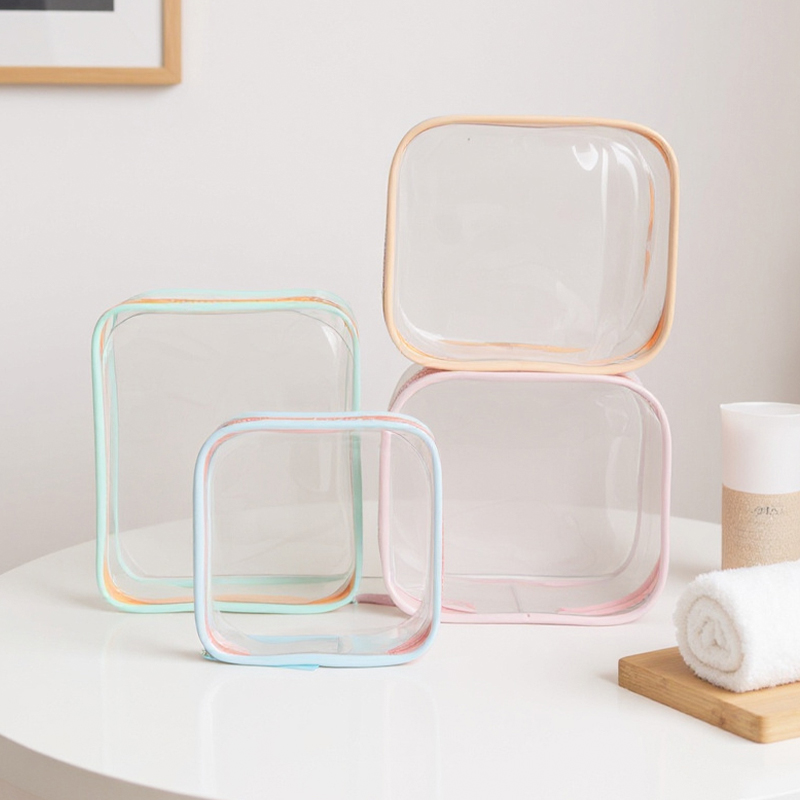
Multi-SKU programmes need per-SKU acceptance criteria; a colour variant is a separate specification line, not a note.
Multi-variant programmes are the common failure mode. A gift set that mixes clear PVC, PU leather and textile pouches is three specifications, three sample approvals and three print validations. Where the programme needs a large capacity storage piece, a foldable travel format, a mini pouch or a transparent security-friendly bag, each format should carry its own acceptance line. Treating a variant as a colour note on a single line is how mismatched batches reach a retail partner.
There are also clear boundaries. This application profile does not describe medical, sterile or child-specific use, and it does not describe immersion or extended water exposure. A bag specified for occasional humid environments and daily carrying should not be positioned in the order as a leakproof container unless the TPU lining and heat-sealed construction have been explicitly specified and sampled.
Commercial Context: Why Terms Tighten in 2026
Two published data points explain why promotional cosmetic bag orders are being specified more carefully than they were a few years ago. Commercially, research published by Cognitive Market Research places the global cosmetic bag market at USD 3.86 billion in 2025, with a projected expansion to USD 8.22 billion by 2034 — a growth trajectory that brings more brands into the category and raises the number of programmes chasing the same production windows.
At the same time, landed cost has become a term-level issue rather than a finance afterthought. Cosmetic bags classify under HS code 4202.12, and 2026 tariff data reported by Dutiable shows a 20% US import duty against 3.7% for the EU and 3.7% for the UK. A 20% duty changes the arithmetic on rework, reprints and air freight for late deliveries — which is exactly why acceptance criteria and delivery windows belong in the same negotiation as price.
Future Outlook
Three shifts are likely to reshape cosmetic bag purchase terms over the next few procurement cycles. Documentation requests are moving from factory-level certificates toward material-level declarations, which pushes test reports and material traceability into the order rather than into a post-award file. Decoration durability is becoming a named acceptance item as gift programmes run longer and bags are reused rather than discarded after a campaign. And sustainability positioning is starting to conflict with material choice — clear PVC remains popular for transparency, waterproofness and ease of cleaning, but supplier guidance already acknowledges its environmental disadvantage, so programmes with public sustainability commitments will need to validate alternatives separately rather than inherit a PVC specification.
Frequently Asked Questions
What should a cosmetic bag purchase order include for a promotional gift programme?
At minimum: a single named base material from the available options of PVC, PU leather, canvas, nylon or mesh; the construction format; finished dimensions with tolerance, against common reference sizes of 15×10 cm, 20×15 cm and 25×18 cm; a unit weight range within the 20–80 g per piece band; the decoration method chosen from hot stamping, UV printing, embossing or heat sealing, with artwork and placement; the accessory list covering hang tags, webbing and brand stickers with quantity and attachment; the inspection plan and sampling level; the required document pack; and the delivery window measured from artwork and sample approval.
Which certifications should be requested, and what does each one actually cover?
Four documents are commonly exchanged in this category. Disney FAMA under reference DSN-FAMA-2026-001 authorises a facility for Disney-licensed production and matters only when the programme uses Disney intellectual property. Sedex 4 Pillars / SMETA under SEDEX-2026-0123 and BSCI under BSCI-2026-4567 are site-level social compliance evidence covering labour, health and safety, environment and business ethics. ISO 9001:2015 under ISO-2026-7890 certifies a quality management system. None of the four is a material test report, so chemical and material compliance must be requested as a separate declaration or test document.
Is food-grade eco-friendly PVC the same requirement as REACH compliance?
No. They answer different questions and are named separately in the requirement set for this application, alongside scratch resistance and wear-resistant logo printing. The food-grade eco-friendly PVC requirement describes the material specification the programme wants. REACH describes chemical compliance expectations for the European market. A supplier can satisfy one and not the other, and both should be evidenced against the actual material and print used in the order rather than against a general company statement.
How should scratch resistance and logo print durability be specified?
Convert both from adjectives into a reference-based check. Retain an approved golden sample with both parties, produced using the same decoration method named in the order, and describe the decorated area and its coverage in writing. Add the cleaning instructions the end user will follow. Because there is no universal numeric threshold for print wear across the category, acceptance runs on comparison against the retained sample rather than on a quoted number.
What inspection level is realistic for a 3,000-piece cosmetic bag order?
There is no single correct level, because reported inspection practice is not an industry standard. Some suppliers in the category state that they typically use AQL levels of 1.5/4.0, but the sampling plan, the defect classification and the treatment of critical defects still have to be written into the purchase order. At the 3,000-piece MOQ, the practical decision is whether to inspect at the supplier site before shipment or on receipt; either works, provided the plan is agreed before production starts.
Which accessories must be included and checked?
For this application the specified accessories are hang tags, webbing and brand stickers. Each should be checked on quantity per bag, attachment or placement method, and print content against approved artwork. Accessories are accepted or rejected independently of the bag, so they belong in the same inspection plan rather than in a separate packaging conversation.
Can a 3,000-piece promotional order be scheduled realistically?
On the recorded production parameters, yes. The MOQ is 3,000 pieces against a monthly capacity of 1,500,000 units, with a stated lead time of 30–45 days under an OEM/ODM model covering logo, size and material customisation. The binding constraint is usually artwork and sample approval, because the lead time runs from that point. Programmes with fixed campaign dates should reserve approval time ahead of the production window rather than negotiate it afterwards.
How do import duties affect purchase terms?
They change the cost of getting acceptance wrong. Cosmetic bags classify under HS code 4202.12, and 2026 tariff data reported by Dutiable shows a 20% US import duty against 3.7% for the EU and 3.7% for the UK. Higher duty raises the cost of reprints, rework and expedited freight, so inspection planning and delivery windows carry direct financial weight rather than being administrative detail.
Summary
Acceptance criteria for promotional cosmetic bags are not a legal formality; they are the mechanism that converts a marketing idea into a producible product. Material, dimensions, weight, decoration method, accessory set, inspection plan and document pack each need a line in the order, and each line needs a way to be checked. The certificate file supports authorisation, labour practice, site conditions and management systems — it does not substitute for material testing, and it does not protect a delivery date.
Buyers who fix those terms before sampling, and who keep an approved golden sample on file, spend less time arguing about what was intended and more time planning the next programme.
For reference, the Hansun product brochure covering bag formats, materials and order parameters is available as a PDF: download the 2026 brochure.
Tem questões ou precisa de mais detalhes?
Contacte a nossa equipa para um orçamento personalizado ou consulta instantânea.
Solicitar orçamento
Preencha o formulário abaixo e a nossa equipa entrará em contacto com uma proposta personalizada.
Chat direto do WhatsApp
Prefere conversar em tempo real? Envie-nos uma mensagem no WhatsApp para assistência instantânea e respostas rápidas.
- Obter orçamento personalizado
- Partilhar fotos ou documentos
- Discuta as suas necessidades diretamente
Geralmente responde em 5–30 minutos durante o horário de expediente.