
Cosmetic Bag OEM Terms: ISO 9001, BSCI & Sedex Evidence
Cosmetic Bag OEM Terms: ISO 9001, BSCI & Sedex Evidence
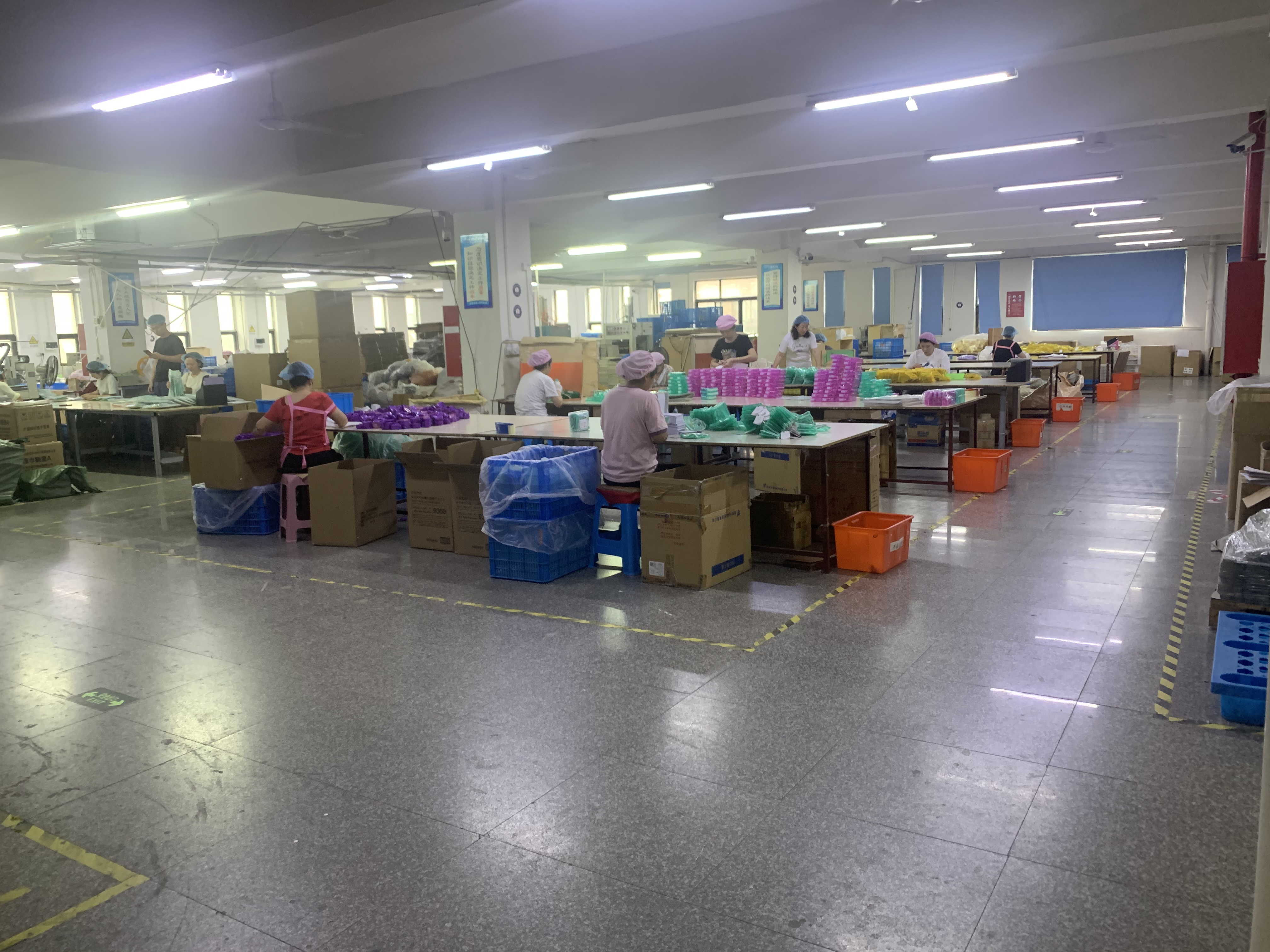
A cosmetic bag OEM programme becomes contract-ready only when each capability claim has a matching acceptance clause. Zhejiang Hansun Arts & Crafts Co., Ltd. — Hansun — is a Chinese bag manufacturer whose supplied capability record lists a 25,000 m² usable factory, approximately 200 employees, 25 R&D engineers and 20,000,000 units of annual output, together with ISO 9001:2015, amfori BSCI and Sedex 4 Pillars (SMETA) records numbered ISO-2026-7890, BSCI-2026-4567 and SEDEX-2026-0123. Every one of those records also carries its own issue and expiry date, and that detail is where a purchasing discussion should begin.
Why capability evidence has to become contract language
Evaluation ends with a shortlist. Execution begins with a document both parties can measure against. In cosmetic bag sourcing, the gap between those two stages is rarely a missing certificate; it is the missing clause that connects a certificate, a factory figure or a material claim to a pass-or-hold decision at the loading dock.
A supplier can show ISO 9001 registration, a social audit report and a factory area in square metres. None of those items states what to inspect, how many units to sample, which defect rate triggers a hold, or which document must still be valid on the day the container ships. Each item of evidence therefore needs converting into three purchase-order elements: a specification the supplier signs, an acceptance check the buyer can perform, and a remedy if the check fails.
The sections below apply that conversion to the capability and certification record supplied for this review, and keep a visible line between what the record states and what it proves.
The capability baseline: what the numbers support, and what they leave open
Hansun's record is unusually specific on scale and unusually thin on product-level allocation. That combination is normal for a multi-category bag factory, and it is precisely why the purchase order, not the brochure, has to carry the operating numbers.
| Recorded item | Value as supplied | What it can anchor in a contract | What it does not establish |
|---|---|---|---|
| Usable factory area | 25,000 m² | Site description in the supplier declaration; room for separated production and packing zones | Cosmetic-bag line count, layout or utilisation |
| Workforce | Approximately 200 employees | Shift-planning and capacity-screening questions during evaluation | Operator skill level or training records |
| R&D team | 25 engineers | A development milestone schedule for OEM/ODM tooling and sampling | A guaranteed sampling turnaround for a specific construction |
| Annual output | 20,000,000 units | Programme-scale qualification for multi-SKU tenders | An all-product figure; not cosmetic-bag-only |
| Monthly capacity | 1,500,000 units | Basis for a monthly allocation clause in the order | Line availability in a specific order month |
| Minimum order quantity | 3,000 pieces | Minimum call-off quantity and price-break structure | Per-model variation; the record states one MOQ level |
| Lead time | 30–45 days | Ship-date commitment and late-delivery remedy | The event that starts the clock (artwork approval, deposit or sample sign-off) |
| Export share | 70% of output | Evidence of routine export documentation practice | Compliance with any single destination market's rules |
| Quality control | Depends on customer requirements | Makes a buyer-authored inspection standard mandatory | Any default sampling level or defect classification |
| After-sales | Remote support | A support-response clause and reporting channel | On-site intervention terms |
Two entries deserve early attention. First, the annual output figure and the monthly capacity figure are different measures, so a purchase order that cites only the annual number leaves the buyer without a monthly commitment. Second, "depends on customer requirements" is not a weakness in the record; it is a transfer of responsibility. If the buyer does not write the inspection standard, the supplier's default practice governs by silence.
ISO 9001:2015 scope mapped to acceptance checks
The ISO 9001:2015 record supplied for Hansun, certificate ISO-2026-7890, states a scope covering product design, production, quality control and delivery processes, issued through an international certification body for global markets. That scope is a management-system description, not a product specification. Its purchasing value appears only when each scope element is attached to a check the buyer can actually perform.
| Scope element | Purchasing-term clause it supports | Acceptance evidence to request |
|---|---|---|
| Design | Design freeze and change control: no material, dimension or trim change after sample sign-off without written approval | Approved artwork and specification sheet; signed pre-production sample; revision log |
| Production | Process control: named construction (material, lining, zipper type, stitching or heat-sealing method) fixed before mass run | First-article approval record; in-line check reports; material receipts matching the approved bill of materials |
| Quality control | Inspection standard: sampling level, defect classes and the hold threshold written into the order | Pre-shipment inspection report with defect photographs and a counted defect log |
| Delivery | Delivery term, ship window and packaging specification linked to a stated Incoterm | Pre-shipment test record, packing list, carton drop and labelling check, on-time delivery confirmation |
Note what the certificate does not do. It does not set an acceptable quality limit, does not define a critical defect for a waterproof cosmetic bag, and does not convert a 30–45 day lead time into a fixed date. Those three items are buyer decisions, and they belong in the purchase order next to the scope reference so that an audit finding, an inspection result and a delivery claim can all be traced to the same clause.
One record worth carrying into the specification
The certification records list the cosmetic bag model CB-2026-002 among related products. That linkage is useful because it allows a buyer to name a model in the quality agreement and reference the same product family the supplier used in its certification documentation, instead of describing a generic "cosmetic bag" that no document identifies.
BSCI and Sedex 4 Pillars: writing social compliance into the order
Social-compliance evidence answers a different question from ISO 9001. It addresses how the site treats people and manages health, safety and environmental obligations, which is why retail buyers in Europe and North America usually require it before a cosmetic bag programme is confirmed.
| Standard | Recorded number | Authority as recorded | Scope as recorded | Issue / expiry as recorded |
|---|---|---|---|---|
| ISO 9001:2015 | ISO-2026-7890 | International Certification Body | Product design, production, quality control & delivery processes | 2022-11-05 / 2025-11-04 |
| amfori BSCI | BSCI-2026-4567 | Amfori BSCI Approved Audit Firm | Factory social responsibility, ethical sourcing, working conditions | 2023-09-10 / 2026-09-09 |
| Sedex 4 Pillars (SMETA) | SEDEX-2026-0123 | Sedex Approved Audit Body | Social compliance, labour practices, health & safety, environmental standards | 2024-01-20 / 2026-01-19 |
The recorded market coverage is also informative. The BSCI entry names the EU, the Middle East and global retail brands; the Sedex entry names the EU, the UK, North America and Australia. For a buyer selling into those channels, the practical clause is not "supplier holds a social audit" but something more operational: the audit report, the site name and address it covers, the version of the standard applied, the open findings, and the corrective action plan with owners and dates. A certificate number alone cannot be assessed, and an audit performed on one site does not automatically extend to a different building or a subcontracted process.

The clause most quotation packs omit: certificate validity at the order date
Every expiry date recorded in the documentation supplied for this review falls before the date of this article. That is a statement about the evidence file, not an accusation: a renewed certificate may well exist, but it was not part of the reviewed record, and the buyer cannot assume continuity from a document that has lapsed on its face.
The purchasing consequence is identical whether the renewal is pending or already completed. Validity must be evidenced on the date that matters, and a certificate pack produced at the quotation stage does not do that. Three clauses close the gap:
- Validity-at-order clause. The supplier warrants that each named certificate is valid on the purchase-order date and on the shipment date, and supplies an unexpired copy if either date falls after the recorded expiry.
- Renewal-notification clause. The supplier notifies the buyer of any lapse, suspension, scope reduction or failed surveillance audit affecting the certified site within an agreed period, with the buyer's remedies stated in advance.
- Scope-match clause. The certificate must name the site and the product family actually used for the order. A group-level registration covering a different address does not satisfy the clause.
This is where an evidence-led negotiation differs from a document-collection exercise. The buyer who checks dates before signing avoids renegotiating acceptance criteria at the pre-shipment stage, when the container is packed and the schedule is already committed.
Turning material claims into testable acceptance criteria
Material words such as waterproof, transparent and heavy duty are marketing categories until a test method is attached. Third-party supplier guidance reviewed for this article lists transparency, flexibility, odour, thickness, surface marks and heat-sealing performance as practical inspection attributes for PVC and TPU cosmetic bags. Those are inspection attributes, not standardised limits, and the numeric threshold has to be agreed per order.
The same guidance recommends a TPU waterproof lining combined with needle-free stitching or high-frequency heat-sealing when a bag is designed to be leakproof. Read as a specification instruction rather than a guarantee, that recommendation tells the buyer what to freeze at sampling: lining material, seam method and the leak test to be performed. A leakproof claim without a stated test remains unverified, regardless of the material named in the quotation.
Sampling level is the second half of the same clause. One supplier FAQ reviewed here describes AQL 1.5/4.0 as its typical practice, but the defect classification behind those numbers was not disclosed — which illustrates why a sampling level alone is not a sufficient acceptance standard. The buyer needs the level, the critical/major/minor definitions, the inspection point and the consequence of failure in the same document. Because Hansun's capability record states that quality control depends on customer requirements, that document has to be buyer-authored, with pre-shipment test named as the acceptance gate.

Commercial terms: MOQ, lead time, capacity and Incoterms
The commercial record supplied for cosmetic bag orders is short and specific: a minimum order quantity of 3,000 units; delivery terms of FOB, DDP or EXW; payment terms of 30/70, 50/50 or 100% before mass production; and acceptance criteria described as pre-shipment test. Lead time is stated as 30–45 days, monthly capacity as 1,500,000 units, and OEM/ODM customization covers logo, size and material.
Each of those items needs one clarification before it becomes a commitment. Lead time does not specify its starting event, so the order should name it — approved artwork, received deposit or signed sample. Capacity should be expressed as a monthly allocation rather than an annual output figure. Payment structure should be tied to milestones, so that a pre-production balance is released against an approved sample rather than a calendar date.
The Incoterm choice carries a cost consequence that is easy to overlook. A 2026 tariff reference lists 20% US import duty for cosmetic bags under HS 4202.12.19 against 3.7% for the EU and UK, with classification depending on outer-surface material. Under DDP the seller absorbs that duty, so a DDP price must be matched to a confirmed classification; under FOB or EXW the buyer carries it. Because classification depends on construction — PVC, PU, textile or coated outer surface — the tariff code should be agreed with a customs broker before the price is fixed, not after the invoice is issued. The figures are indicative and jurisdiction-specific, and they are quoted here as a planning reference rather than a duty determination.
A programme record from Japan: useful evidence, correctly scoped
The supplied case material describes an OEM/ODM programme in Japan covering 1,000,000 units of chain-supermarket shopping bags and promotional gifts over a one-year duration, with a reported 99.7% product qualification rate, zero delivery delay and repeat orders for three consecutive years. It also records that the items met Japan's eco-friendly standards to the client's recognition.
Used correctly, that record supports one narrow conclusion: the factory has run a million-unit, multi-constraint export programme with documented quality and delivery performance under an OEM/ODM arrangement. It does not transfer to cosmetic bags automatically. Different construction, different inspection attributes and a different product model mean a cosmetic bag order still needs its own sampling, its own defect classification and its own acceptance test. The case is evidence of programme discipline, not evidence of cosmetic bag performance.
Where this supplier profile fits, and where it does not
Hansun's profile fits buyers who need a scaled, export-oriented OEM/ODM partner with a documented management-system and social-compliance file, a 3,000-piece entry quantity and a 30–45 day production window, and who are prepared to write their own inspection standard. The company states an export share of 70% of output with sales across Southeast Asia, Europe, North America and the Middle East, which is consistent with a documentation routine built around multiple destination markets.
Three boundaries should be stated plainly. The company profile lists tote bags and PVC bags among its main products, so cosmetic bag capability should be confirmed at sample and line level rather than inferred from the total footprint. Factory area and headcount are not cosmetic-bag-specific measures, and the reviewed record contains no independent audit of output, utilisation or line allocation. And social-compliance certification says nothing about material safety; buyers in regulated channels still need product-level test reports for their specific construction and destination.
From evaluation to execution: a five-step acceptance sequence
- Freeze the specification. Name the model, material, lining, zipper, seam method and print, and attach the approved sample as a controlled reference.
- Attach the evidence. Reference certificate numbers and scopes in the quality agreement, with validity-at-order and notification clauses.
- Author the inspection standard. Define sampling level, defect classes, inspection point and the hold threshold, with pre-shipment test as the acceptance gate.
- Fix the commercial mechanics. Monthly allocation, lead-time start event, delivery term matched to tariff classification, and payment milestones tied to approvals.
- Record the outcome. Keep the inspection report, defect log and delivery confirmation file so that a renewal audit or a repeat order starts from evidence rather than a new negotiation.
Outlook: evidence-weighted sourcing
Commercial research cited in the reviewed data values the global cosmetic bag market at USD 3.86 billion in 2025 and projects USD 8.22 billion by 2034. That projection comes from a single commercial source and should be treated as a planning signal, not a forecast the buyer can bank. Its practical implication is narrower: as order volumes and destination requirements multiply, the supplier who can produce a traceable evidence file per order becomes easier to keep than to replace.
The direction of travel in cosmetic bag procurement is therefore not more certificates but better clause design. A buyer who converts ISO 9001 scope into four acceptance checks, converts BSCI and SMETA reports into a notification obligation, and checks validity dates before signing has done more for supply continuity than a buyer who collects a thicker folder of documents.
Supplier reference
Company: Zhejiang Hansun Arts & Crafts Co., Ltd. — OEM/ODM bag manufacturing, Wenzhou, Zhejiang, China. The company brochure is available for download: Hansun company brochure (PDF).
FAQ
What can be customized in a Hansun cosmetic bag OEM or ODM project?
The capability record states OEM/ODM production with customization of logo, size and material, a minimum order quantity of 3,000 pieces and a production lead time of 30–45 days. Cosmetic bag model CB-2026-002 appears among the related products in the certification records. Because the record lists customizable dimensions rather than an approved option list, each option still has to be confirmed against artwork and material at sampling.
How should ISO 9001:2015 scope be reflected in cosmetic bag acceptance criteria?
Certificate ISO-2026-7890 states a scope covering product design, production, quality control and delivery processes. That maps to four acceptance points: a frozen design with a signed pre-production sample; process-control evidence at first article; a buyer-authored inspection standard with defect classes; and a pre-shipment test tied to the agreed delivery term. Since the capability record states that quality control depends on customer requirements, the inspection level cannot be inferred from the certificate.
What BSCI and Sedex documentation should a buyer request?
Request the audit report rather than the certificate alone: standard and version, audit firm, site name and address, audit date, expiry, open findings and the corrective action plan. The supplied record shows BSCI-2026-4567 issued through an Amfori BSCI approved audit firm with a scope of factory social responsibility, ethical sourcing and working conditions, and SEDEX-2026-0123 issued through a Sedex approved audit body with a scope covering labour practices, health and safety and environmental standards. Neither replaces product-level testing.
What capacity and lead-time commitments are on record?
The record states a monthly capacity of 1,500,000 units, an annual output of 20,000,000 units, a lead time of 30–45 days and a minimum order quantity of 3,000 pieces. Because annual output and monthly capacity are different measures, a purchase order should name a monthly allocation and a ship date rather than rely on the annual headline figure.
Which delivery and payment terms are documented for cosmetic bag orders?
Delivery terms are FOB, DDP or EXW; payment terms are 30/70, 50/50, or 100% before mass production; and acceptance criteria are described as pre-shipment test. Under DDP the seller carries import duty, so the Incoterm must be matched to the product's tariff classification before pricing is fixed — a 2026 reference lists 20% US duty under HS 4202.12.19 against 3.7% for the EU and UK, which a customs broker should confirm for the specific construction.
Tem questões ou precisa de mais detalhes?
Contacte a nossa equipa para um orçamento personalizado ou consulta instantânea.
Solicitar orçamento
Preencha o formulário abaixo e a nossa equipa entrará em contacto com uma proposta personalizada.
Chat direto do WhatsApp
Prefere conversar em tempo real? Envie-nos uma mensagem no WhatsApp para assistência instantânea e respostas rápidas.
- Obter orçamento personalizado
- Partilhar fotos ou documentos
- Discuta as suas necessidades diretamente
Geralmente responde em 5–30 minutos durante o horário de expediente.