
Cosmetic Bag Procurement FAQ: Certifications, Accessories & Wear
Cosmetic Bag Procurement FAQ: Certifications, Accessories & Wear
Most cosmetic bag orders are effectively decided before the purchase order is signed, and the questions that decide them are rarely about unit price. They concern what a certificate actually covers, how hang tags and webbing are specified, and how a PVC or PU shell behaves in a stockroom, a handbag or a humid bathroom shelf.
This reference collects the questions that most often surface at the decision stage of a cosmetic bag programme and answers them in the order buyers raise them: document scope first, accessory detail second, operating conditions third, and material wear last. It is written for importers, promotional-gift buyers and brand owners comparing a custom OEM supply route against off-the-shelf mass-produced bags.
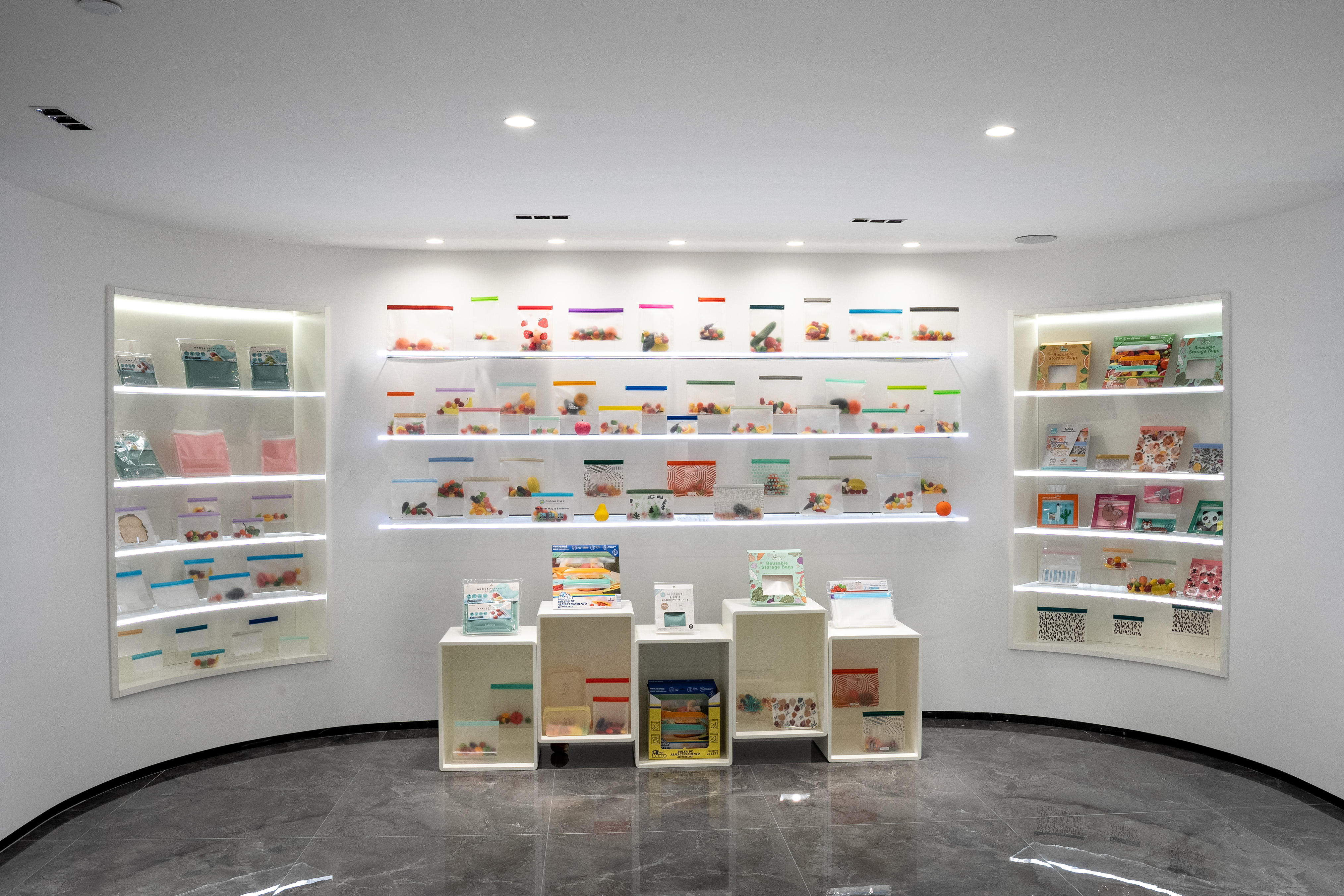
Sample rooms are where procurement questions get answered in practice: material hand-feel, accessory attachment and print finish are compared against the approved sample before bulk release.
Why procurement questions cluster at the decision stage
During supplier discovery, the questions are broad: can this factory make the format, and can it hit the date. At the decision stage the questions become specific and expensive to get wrong, because each one maps to a clause that either exists in the purchase order or does not.
Zhejiang Hansun Arts & Crafts Co., Ltd. is a Wenzhou, China–based manufacturer of custom bags and promotional products, operating a 25,000 m² facility with approximately 200 employees, a 25-engineer R&D team and an annual output of 20,000,000 units; about 70% of production is exported. The company reports an integrated workflow covering design, printing, production, quality inspection and packaging, and supports OEM/ODM work based on buyer drawings and samples. Those capabilities matter at the decision stage for one reason: they determine which specification questions can be resolved in-house and which must be resolved by the buyer's own documentation.
Four defect categories recur in this category and are worth naming explicitly in any quality agreement: material cracking, zipper damage, printing fading and size deviation. Countermeasures that address them are not exotic — high-quality raw material selection, reinforced edge stitching, material pre-testing and a standardised production process — but each has to be written down. Verification steps that convert them from intention into evidence include a pre-production material tensile test, size checking during production, 100% visual inspection before shipment and after-sales quality tracking.
Certification coverage: what a document proves and what it does not
Read the scope line before the logo
A certificate is a statement about a defined scope: a product family, a material, a production site and a validity window. The practical question is never "do you have certificates" but "does this document name the material and the site that will produce my order." A document issued for one material category does not transfer to another, and a document issued for a trading entity does not describe a factory floor.
For decision-stage due diligence, request the scope page rather than the cover page, check the issue and expiry dates against your planned shipment window, and confirm whether the certificate holder name matches the contracting entity. Where a supplier cannot produce a document for a specific material, that is a scheduling input, not necessarily a disqualification — but it must be known before tooling or artwork approval.
REACH documentation in an EU-bound order
REACH is the EU chemical compliance framework buyers most often reference when a cosmetic bag contains PVC, PU, printed inks, adhesives or metal hardware. In procurement terms, the useful artefact is a material-specific declaration that traces to a test report with a laboratory name, a test date and a stated scope. Two cautions apply. First, applicability depends on the material, the components and the destination market, so a generic declaration is weak evidence. Second, restricted-substance lists change, so a report dated several seasons ago should be re-confirmed at order time rather than carried forward.
"Food-grade" and "eco-friendly" are claims, not specifications
Both terms appear in RFQs and both need decomposition before they can be quoted. "Food-grade" implies a defined test standard, a defined contact scenario and a defined set of components — shell, lining, zipper tape, thread and print ink. Unless the RFQ names the standard and the scope, suppliers will interpret the requirement differently, and the resulting documents will not be comparable across quotations.
"Eco-friendly" is the more contested of the two, because the material family itself carries a known trade-off. Supplier guidance in this category describes PVC and EVA cosmetic bags as transparent, waterproof and easy to clean, while explicitly noting weaker environmental performance than alternative materials. The honest procurement position is therefore layered: specify the durability and recyclability properties you can verify, and treat broader environmental claims as documentation requests. On the custom-bag side, company-reported comparison data states that customisable bags use recyclable material and are reusable and washable, with a stated lower carbon footprint relative to disposable plastic shopping bags — a comparison against single-use alternatives, not against other cosmetic bag materials.
Accessories: hang tags, webbing and brand stickers
Accessories are where approved samples and bulk shipments most often diverge, because they sit outside the main material specification and are frequently left to supplier discretion. Three accessory families deserve their own lines in the specification sheet.
Hang tags
Specify substrate and grammage, print method, surface finish, hole position and the attachment method — string, plastic barb or adhesive. State clearly whether tags are applied in production or shipped loose in the carton, because the two options change packing density, inspection scope and the risk of transit damage. If the tag carries a barcode or a retail compliance panel, include the artwork version number on the approval sheet so that a reprint cannot silently change position or size.
Webbing and straps
For handle loops, zip pulls and decorative webbing, define width, thickness, weave, colour reference and stitch density at the anchor points. Attachment points take repeated load, so the acceptance criterion should describe the pull direction and the visual result after the test, not just a pass or fail. Reinforced edge stitching is a relevant production control here, and it is one of the stated countermeasures against seam-related failures in this product category.
Brand stickers and labels
Adhesive performance varies with the surface energy of the substrate, and PVC is comparatively low-energy, so a sticker that holds well on paper or board may lift at the edges on a PVC panel. Specify the adhesive family, the placement tolerance and whether the sticker must be removable without residue. Then verify on the actual production material during sampling rather than on a generic test panel — this is one of the most common sources of retail chargebacks in promotional bag programmes.

Accessory attachment, print finish and hardware placement are checked against the approved sample before bulk release.
Operating conditions: storage, carrying and humidity
Performance expectations only become comparable once the operating conditions are stated. A cosmetic bag that lives in a retail stockroom for months has a different requirement from one carried daily in a handbag, and a bag stored in a humid bathroom has a different requirement again.
| Condition | Dominant stress | Specification checkpoint |
|---|---|---|
| Indoor storage and retail backstock | Stack pressure, dust, print scuffing during handling | Surface rub and print adhesion; fold-mark behaviour; carton compression |
| Outdoor carrying and commuting | Abrasion, light exposure, rain splash | Shell water resistance, zipper tape integrity, seam construction |
| Occasional humidity (bathroom, damp transport) | Moisture ingress, odour retention, lining staining | Odour check, lining material choice, drying behaviour, cleanability |
| Export transit | Compression, temperature cycling, handling | Heat-seal integrity, packaging format, carton strength |
Operating conditions should be written into the RFQ; without them, material and construction choices are not comparable between quotations.
For transparent and waterproof formats, supplier guidance describes PVC and EVA as easy to clean and water-resistant, which is broadly consistent with how these bags are used for toiletries and cosmetics. Where the requirement is genuinely leakproof rather than merely water-resistant, the same guidance recommends a TPU waterproof lining throughout the bag combined with needle-free stitching or high-frequency heat sealing. That is a construction recommendation, not a certified performance rating — it must be validated on a physical sample under the buyer's own acceptance criteria.
Scratch resistance and wear-resistant logo printing
Supplier-side quality guidance for PVC and TPU cosmetic bags lists transparency, flexibility, odour, thickness, surface marks and heat-sealing performance as the inspection attributes worth checking. Those six items are a workable incoming-inspection basis because they can be assessed by eye, by hand and by simple bench checks, and they map directly onto the complaints buyers raise later.
Logo wear is a separate problem from shell wear. Printing fading is one of the named defect categories in this product family, and it is addressed through material pre-testing, a standardised print process and 100% visual inspection before shipment. What converts "wear-resistant printing" from a phrase into a clause is an agreed test protocol: which rub method, which substrate, how many cycles, and what visual change is acceptable at the end. Without those four elements, two suppliers can both claim wear resistance and deliver different results.
Scratch resistance follows the same logic. Surface marks on transparent film are highly visible even when they are shallow, so for transparent formats it is worth specifying whether the visible-face panel needs a different handling standard, protective film during production, or a higher inspection level at final check. The same pre-production material tensile test and in-process size checking that control cracking and dimensional drift also reduce the handling damage that produces surface marks.
Comparison: custom OEM, off-the-shelf promotional bags and disposable plastic
The decision-stage comparison is rarely between two cosmetic bag factories alone. It is usually between a customised OEM programme, a non-customised mass-produced promotional bag, and — for giveaway applications — a disposable plastic shopping bag. The table below uses company-reported comparison data for the customisable format.
| Dimension | Customisable OEM cosmetic bag | Non-customised mass-produced promotional bag / disposable plastic bag |
|---|---|---|
| Customisation | OEM/ODM with logo and design changes; no extra mould cost for custom designs (company-reported) | Fixed formats and stock artwork; limited or no branding flexibility |
| Expected service life | Stated 30% longer service life; reusable and washable | Single-use or short-life by design |
| Unit cost at volume | Stated 10–15% lower unit cost on bulk orders | Lower entry price at small quantities; cost advantage narrows at volume |
| Delivery reliability | Stated 99.8% on-time delivery rate against an industry average cited at 95% | Depends on stock availability rather than production scheduling |
| Sampling | Stated 3–5 day sample turnaround | No sampling stage; stock item |
| End of life | Recyclable material stated; reusable format | Disposable, higher per-use material consumption |
Figures are company-reported comparisons and should be re-confirmed against your own contract terms, order volume and delivery calendar.
The limitation is straightforward and worth stating plainly: the cost advantage described above is a bulk-volume effect, and it does not apply to small trial quantities where sampling, artwork approval and setup dominate the total. The 3–5 day figure refers to sample turnaround, not bulk production lead time, and a supplier-reported on-time delivery rate is a planning input rather than a contractual guarantee — it should be paired with agreed delivery windows, capacity booking and a defined remedy for late shipment.
Cost and market context for 2026 planning
Category demand continues to support investment in branded formats. Cognitive Market Research reports the global cosmetic bag market at USD 3.86 billion in 2025, with a projection of USD 8.22 billion by 2034. For a buyer, the relevance is not the headline but the implication that supplier capacity and documentation quality will keep being tested as volumes grow.
Landed cost is where duty changes the comparison. For 2026, Dutiable reports a 20% US import duty for cosmetic bags under HS code 4202.12, against 3.7% for both the EU and the UK. Classification in this category depends on the outer-surface material, so the applicable heading and rate should be confirmed with a customs broker for the specific construction before a quotation is finalised.
Inspection intensity also belongs in the commercial comparison. One supplier FAQ in this category reports AQL sampling levels of 1.5/4.0 as its standard practice. That figure is supplier-specific rather than an industry requirement, but it is a useful benchmark for writing your own quality agreement: name the AQL level, define which defects fall into which class, and state the sampling plan. Otherwise "AQL inspection" can mean materially different things across two quotations that look identical on paper.
Where these specifications stop working
Three boundaries deserve to be stated before a supplier is selected.
- Certificates do not travel across materials. A document issued for one material family does not cover a new shell, a new lining or a new print ink. A material change late in the programme restarts the documentation cycle, and that interval belongs in the timeline.
- Environmental positioning remains a trade-off. Transparent PVC delivers cleanability and water resistance, and supplier guidance acknowledges weaker environmental performance for this material family. Buyers with strict sustainability criteria should treat PVC as one option in a comparison rather than a default.
- Sampling inspection reduces risk; it does not eliminate it. AQL-based pre-shipment inspection is a statistical control. It does not certify that every unit is defect-free, and it does not replace in-process controls such as material pre-testing, size checking during production and 100% visual inspection before shipment.
Future outlook
The direction of travel in this category is toward documentation that is specific rather than general. Buyers are moving from asking whether a supplier is certified to asking which material, which site and which validity window a document covers; from accepting "eco-friendly" to requesting the underlying material and recyclability evidence; and from describing printing as durable to defining a rub test and an acceptance threshold. Suppliers with in-house design, printing, inspection and packaging functions are structurally better placed to answer those questions quickly, because the evidence sits inside one production chain rather than across several subcontractors. The practical consequence for procurement teams is that specification quality — not negotiation leverage — is becoming the main determinant of whether a cosmetic bag programme runs on schedule.
Frequently asked questions
What evidence should a cosmetic bag supplier provide before a first order?
Request certificate scope pages rather than cover pages, and check that the product family, material and production site match the quotation, with validity dates covering the shipment window. Ask for material-specific declarations that trace to a named laboratory and test date, plus a written quality plan naming inspection stages, the AQL level and the defect classification. Confirm the contracting entity name against the certificate holder.
How should hang tags, webbing and brand stickers be specified?
Each accessory needs its own line in the specification sheet. For hang tags: substrate, print method, finish, hole position and attachment method, plus whether tags are applied in production or shipped loose. For webbing: width, thickness, weave, colour reference and stitch density at load-bearing anchors. For stickers: adhesive family, placement tolerance and removability. All three should be verified on the production material during sampling, since PVC's relatively low surface energy affects adhesive performance.
Which construction suits indoor storage, outdoor carrying and occasional humidity?
The conditions need separate checkpoints. Indoor storage stresses print adhesion and surface rub under stack pressure; outdoor carrying stresses abrasion and water resistance at seams and zipper tape; occasional humidity stresses odour retention and lining drying behaviour. Transparent PVC and EVA formats are described in supplier guidance as waterproof and easy to clean. Where leakproofing rather than water resistance is required, a TPU lining combined with needle-free stitching or high-frequency heat sealing is the recommended construction approach, validated on a sample.
Is "food-grade eco-friendly PVC" a verifiable specification?
Only when it is decomposed. "Food-grade" requires a named test standard, a defined contact scenario and a component list covering shell, lining, zipper tape, thread and print ink; without those, quotations are not comparable. "Eco-friendly" should be split into verifiable properties such as recyclability and reusability, and read alongside the acknowledged weaker environmental profile of PVC compared with alternative materials. REACH declarations should be material-specific, current, and traceable to a dated laboratory report.
How should scratch resistance and logo wear be written into an order?
Convert both into a test protocol: rub method, substrate, cycle count and the acceptable visual change at the end. On the production side, support the clause with material pre-testing, a standardised print process, size checking during production and 100% visual inspection before shipment. Printing fading is a recognised defect category in this product family, and named countermeasures make it auditable rather than assumed.
How does a custom OEM cosmetic bag compare with off-the-shelf and disposable alternatives?
Company-reported comparison data attributes a 30% longer service life, 10–15% lower unit cost at bulk volumes, no extra mould cost for custom designs, a 99.8% on-time delivery rate against a cited 95% industry average and a 3–5 day sample turnaround to the customisable format, along with recyclable material and reusability. These are company-reported figures: the cost advantage is volume-dependent, the 3–5 day figure covers sampling only, and delivery rates should be backed by contractual terms.
For buyers who need the underlying facility and product-scope details in one place, the company brochure is available for download: Hansun company brochure.
Tem questões ou precisa de mais detalhes?
Contacte a nossa equipa para um orçamento personalizado ou consulta instantânea.
Solicitar orçamento
Preencha o formulário abaixo e a nossa equipa entrará em contacto com uma proposta personalizada.
Chat direto do WhatsApp
Prefere conversar em tempo real? Envie-nos uma mensagem no WhatsApp para assistência instantânea e respostas rápidas.
- Obter orçamento personalizado
- Partilhar fotos ou documentos
- Discuta as suas necessidades diretamente
Geralmente responde em 5–30 minutos durante o horário de expediente.