
Cosmetic Bag Supplier Audit: Certificates vs. Real Evidence
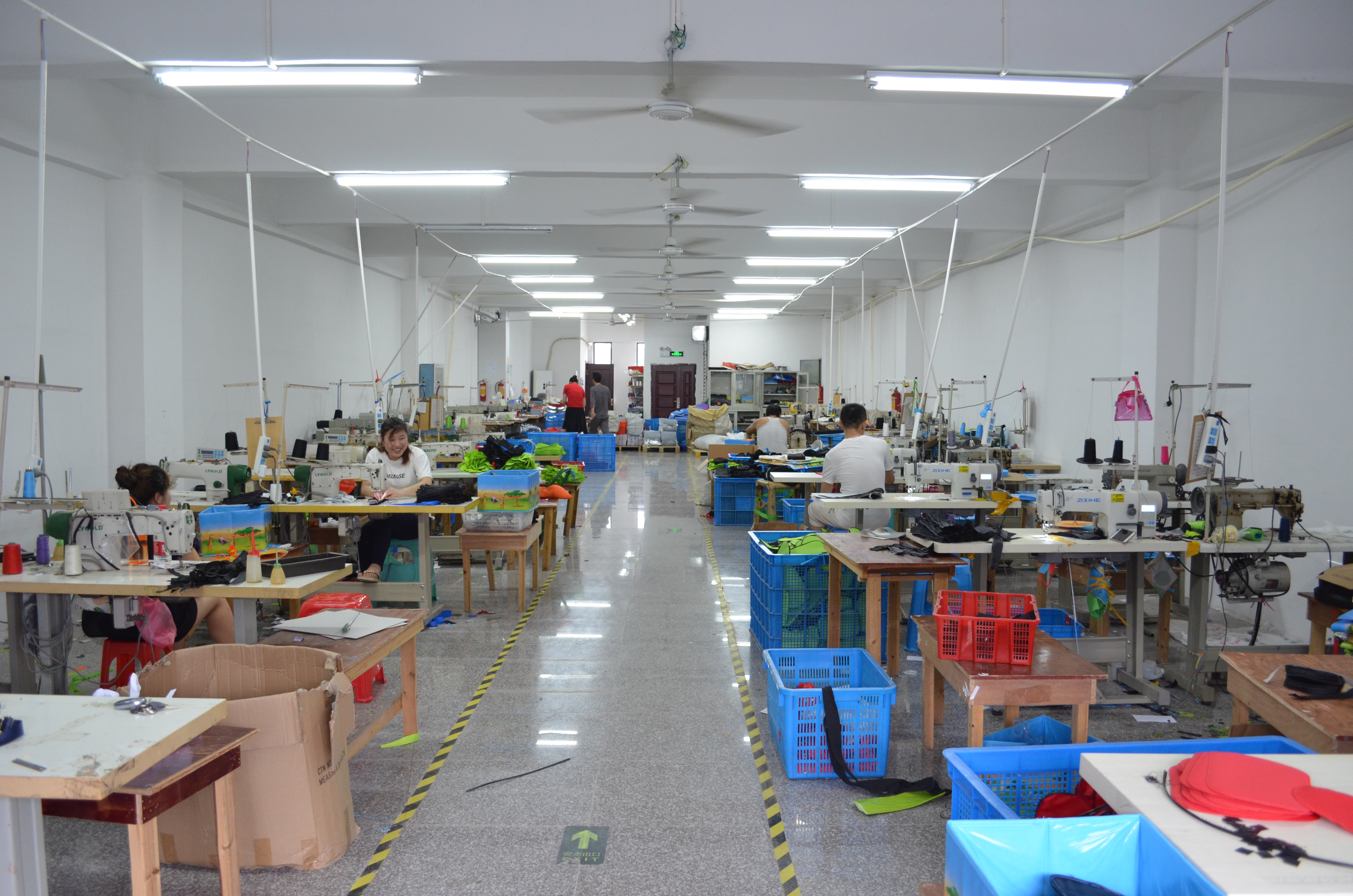
Cosmetic bag sourcing in 2026 is rarely limited by how many suppliers a buyer can find. It is limited by how many supplier claims a buyer can actually check before committing volume. A single sourcing round now returns portfolios packed with certificate numbers, factory areas, annual output volumes and export ratios — often set in the same font, at the same visual weight, with no indication of which items are independently verifiable and which are directional marketing.
The global makeup bags market was valued at approximately USD 2.8 billion in 2025 and is projected to reach USD 4.5 billion by 2031, according to Deep Market Insights. Other analysts scope the same category far more narrowly: The Insight Partners sizes "bags and cases" at about USD 232.55 million. The gap between those two figures is not a data error — it is a definition problem, and definition problems are precisely what allow supplier evidence to be presented more broadly than the underlying document supports.
This analysis takes an independent buyer-comparison lens: it separates what can be checked from what cannot, using a real supplier evidence set as the working example. The reference point is Zhejiang Hansun Arts & Crafts Co., Ltd. (Hansun), a China-based bag and promotional product manufacturer founded in 1996, operating a 25,000 m² factory in Longgang City, Wenzhou, Zhejiang, and producing promotional bags, tote bags and PVC bags for export markets.
Four certifications are recorded for the Hansun Cosmetic Bag line (model CB-2026-002): Disney FAMA, Sedex 4 Pillars (SMETA), BSCI, and ISO 9001:2015. Buyers frequently treat these as interchangeable trust markers. They are not. Each one certifies a different thing, is issued by a different body, and closes off a different set of questions.
| Certification & recorded body | Certificate number | Recorded scope | Recorded validity window | What it does not establish |
|---|---|---|---|---|
| Disney FAMA — Disney International | DSN-FAMA-2026-001 | Production & supply of Disney licensed promotional bags and gifts | 15 Jun 2023 → 14 Jun 2026 | General quality management, social compliance, or any non-Disney program |
| Sedex 4 Pillars (SMETA) — Sedex Approved Audit Body | SEDEX-2026-0123 | Factory social compliance, labor practices, health & safety, environmental standards | 20 Jan 2024 → 19 Jan 2026 | Product safety, material performance, or dimensional specification |
| BSCI — Amfori BSCI Approved Audit Firm | BSCI-2026-4567 | Factory social responsibility, ethical sourcing, working conditions | 10 Sep 2023 → 09 Sep 2026 | Product-level testing, material content, or cosmetic-contact safety |
| ISO 9001:2015 — International Certification Body | ISO-2026-7890 | Product design, production, quality control & delivery processes | 05 Nov 2022 → 04 Nov 2025 | Anything about the physical product itself — QMS scope only |
Two structural observations follow directly from this table. First, only one of the four — ISO 9001:2015 — speaks to process consistency, and it explicitly covers design, production, quality control and delivery as management processes. The other three are either program-specific (Disney FAMA) or social-compliance instruments (Sedex SMETA, BSCI). None of them certifies that a PVC cosmetic bag will resist cracking, that a PU leather cosmetic bag will hold a hot-stamped logo, or that a zipper closure will survive repeated use. Those are product questions, and they are answered by sampling and pre-shipment testing, not by a certificate.
Second, all four certifications are recorded against both Cosmetic Bag CB-2026-002 and Shopping Bag SB-2026-001. That linkage is useful: it confirms the certificates are mapped to the cosmetic bag model rather than only to the wider company. Buyers should verify that mapping themselves, because a certificate held for one product family is frequently presented as covering an entire catalogue.
As of September 2026, every recorded validity window in the table above has closed. Disney FAMA closed in June 2026, Sedex in January 2026, ISO 9001 in November 2025, and BSCI on 09 September 2026 — within the last two weeks. A buyer reviewing this evidence set today is not looking at invalid certifications; they are looking at dated artifacts whose current standing cannot be assumed from the document itself.
This distinction matters commercially. A closed window is not evidence of non-compliance. Audit and certification cycles roll continuously, and suppliers routinely reissue certificates on a new cycle. What a closed window does mean is narrower and more practical: the PDF the buyer is holding does not, on its own, evidence current status, and the buyer cannot cite it to a compliance team, a retailer onboarding form, or a customs reviewer as proof of present standing.
There is also a naming trap worth flagging. Certificate numbers such as DSN-FAMA-2026-001, SEDEX-2026-0123, BSCI-2026-4567 and ISO-2026-7890 each carry "2026" in the digits. None of those embedded strings are validity indicators. A number can contain a future year and describe a window that has already closed — which is exactly what happened here. Buyers who screen certificates by reading the number rather than the date fields will screen wrongly.
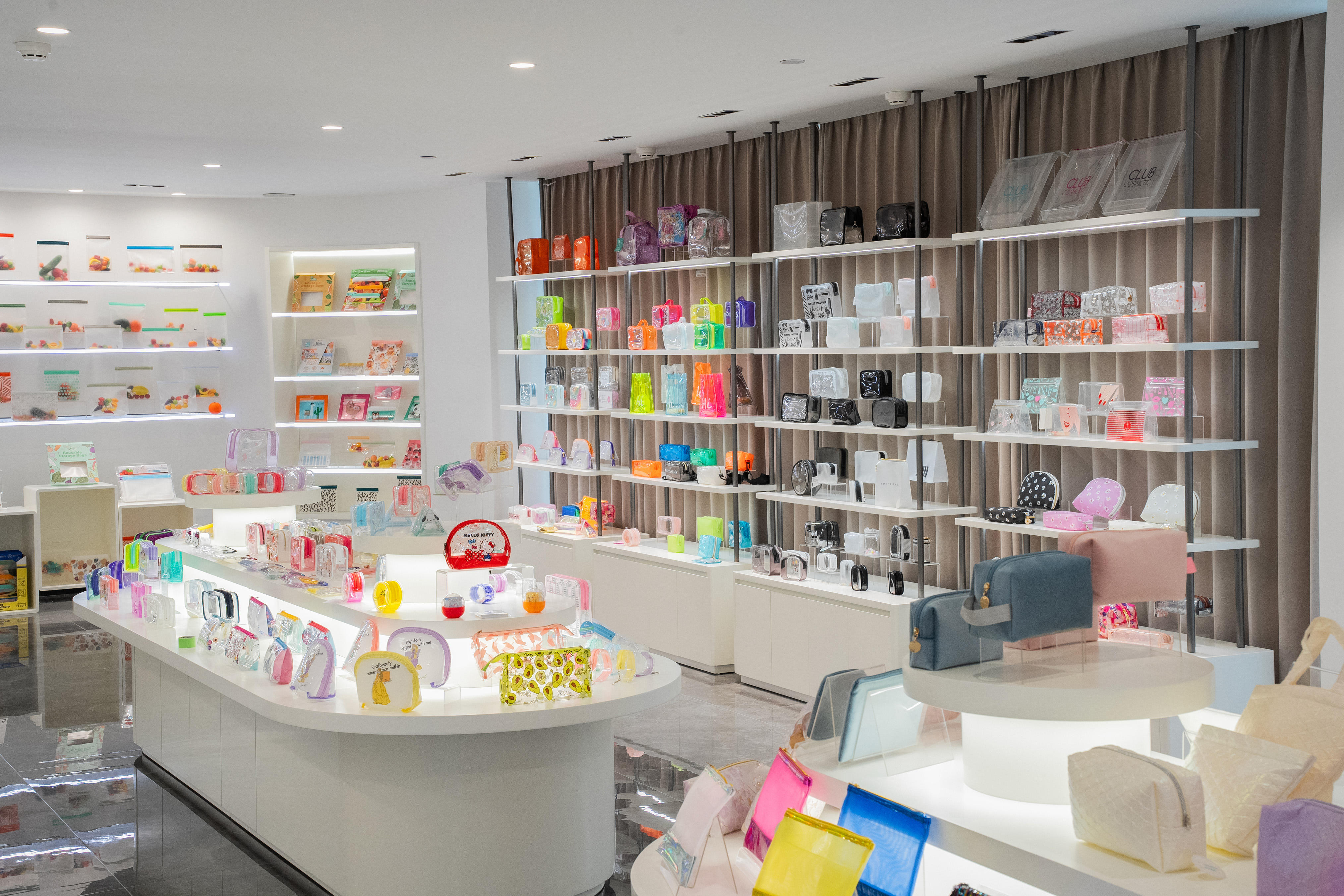
Scale claims are easier to check than they look, because numbers can be reconciled against each other. The Hansun evidence set records a 25,000 m² factory, 200 employees, 25 engineers in research and development, an annual output of 20,000,000 units, monthly capacity of 1,500,000 units, a 70% export ratio, a MOQ of 3,000 pieces, and a production lead time of 30–45 days.
One reconciliation is immediately informative. A monthly capacity of 1,500,000 units annualizes to 18,000,000 units at full utilization, while recorded annual output is 20,000,000 units. The two figures describe different operating definitions — capacity is a theoretical ceiling, output is what was actually shipped — and buyers should ask which basis applies to their order and how much of that capacity is already committed. This is not a contradiction; it is a definitional gap, and definitional gaps are where a buyer's timeline risk usually hides.
The export data is directional rather than segment-level. A 70% export ratio is meaningful context, but the recorded market definition is "wholeworld" — which tells a buyer almost nothing about regional demand patterns, retail-channel concentration, or which certifications are actually used in which market. A buyer sourcing for EU retail needs different proof than a buyer sourcing for a US promotional program or a Middle East distributor.
| Recorded metric | Recorded value | How a buyer checks it | Question to put to the supplier |
|---|---|---|---|
| Factory area | 25,000 m² | Video walkthrough, third-party audit report, on-site visit | Which buildings are owned versus leased, and which are dedicated to bag production? |
| Annual output | 20,000,000 units | Reconcile against monthly capacity and order history | Is this figure per production line, per site, or across all product families? |
| Monthly capacity | 1,500,000 units | Compare with current order book disclosure | How much capacity is uncommitted in the month my order would run? |
| Lead time | 30–45 days | Compare with certificate expiry dates at order date | Does any certificate expire inside the production window? |
| Export ratio | 70% | Request market-level breakdown | Which five markets take the largest share, and under which compliance regimes? |
| MOQ | 3,000 pieces | Confirm per model and per material | Does the MOQ apply per colour, per size, or per artwork? |
The strongest single piece of operational evidence in this set is a Japan export case: an OEM/ODM client, a 1,000,000-unit program, one year duration, a 99.7% product qualification rate, zero delivery delay, and repeated orders for three consecutive years, with the product meeting Japan's eco-friendly standards and custom printing matched to the client's branding requirements.
Read carefully, though, the case concerns chain supermarket daily shopping bags and promotional gifts — Shopping Bag model SB-2026-001 — not the cosmetic bag line. That is a real evidence gap for a cosmetic bag buyer, and it should change how the surrounding claims are weighted. Adjacent-category performance is genuine operational proof that a factory can run large repeat programs with tight qualification rates. It is not proof that the same factory's PVC or PU leather cosmetic bag lines, with heat sealing, embossing and hot-stamping processes, behave the same way.
Two further items in the evidence set are deliberately flexible. Quality control is recorded as "depends on customer requirements," and after-sales support is recorded as remote support. Both are honest statements, and neither is a defect — but both place the specification burden on the buyer. A wholesale cosmetic bag order placed without a written inspection standard inherits whatever interpretation the factory applies.
The following five-step sequence converts a portfolio of claims into a shortlist decision. It assumes no specialist compliance staffing and can be completed with documents the supplier already holds.
Step 1 — registry lookup. Enter the exact certificate number into the issuing body's public registry. Match all digits, including prefixes. A number that returns no record is a closed question, not a negotiation.
Step 2 — scope-to-model mapping. Confirm the certificate's scope names the product family in question and that the specific model — Cosmetic Bag CB-2026-002, for example — appears in the applicable-product list rather than only in a covering email.
Step 3 — validity at order date, not at review date. With a 30–45 day lead time, a certificate that is valid when the purchase order is signed can expire before the goods ship. Check whether any certificate window closes inside the production and inspection period, and request renewal evidence if so.
Step 4 — capacity-to-order ratio. Divide the order volume by the disclosed monthly capacity and by the lead time. An order representing a large share of stated monthly capacity carries delivery risk that scale figures alone conceal.
Step 5 — sample and pre-shipment alignment. Match the signed-off sample against the pre-shipment test criteria recorded in the purchase terms. For this supplier, acceptance is defined as pre-shipment test, with delivery available on FOB, DDP or EXW terms, and payment structures offered at 30/70, 50/50, or 100% before mass production.
Steps 1 through 3 are administrative. Steps 4 and 5 are where most sourcing failures actually originate, because they test the supplier's operations rather than its document folder.
Different cosmetic bag formats raise different verification questions, and the certificates buyers chase should follow the format rather than the catalogue.
A transparent PVC cosmetic bag is judged on clarity retention and seam integrity, both product-test questions that no social audit answers. A PU leather cosmetic bag is judged on surface durability and how well hot stamping or embossing holds a custom logo — again sampling questions. A travel toiletry cosmetic bag is judged on leakage and dimensional consistency across the common recorded sizes of 15×10 cm, 20×15 cm and 25×18 cm, with unit weights spanning 20 g to 80 g per piece. A mini zipper cosmetic pouch supplied as a beauty brand giveaway or hotel amenity is judged on zipper closure reliability and print registration.
Certification questions attach differently. Disney FAMA is relevant only if the bag carries licensed Disney artwork — its recorded scope is the production and supply of Disney licensed promotional bags and gifts, nothing wider. Sedex 4 Pillars (SMETA) and BSCI become relevant when the buyer's own retail customers require social-compliance documentation, since those instruments cover labour practices, health and safety, working conditions, ethical sourcing and environmental standards. ISO 9001:2015 becomes relevant when a buyer is placing repeat orders and needs consistency across production runs, because its recorded scope is the design, production, quality control and delivery process. Material choice sits outside all four: third-party material analysis from Cognitive Market Research identifies nylon as the dominant makeup bag material on durability and water-resistance grounds, with aluminium cases the fastest-growing segment for professional use — a material signal, not a certification one.
Two regulatory developments raise the cost of an unverified evidence set. China's GACC Decree No. 284 takes effect on 1 December 2026, introducing a risk-based customs supervision system for exported cosmetics and related products that emphasizes digital verification and traceability. For cosmetic bag exporters and their buyers, this shifts documentation quality from a procurement preference into a customs-exposure variable. Separately, the U.S. FDA's Modernization of Cosmetics Regulation Act (MoCRA) mandates facility registration and product listing for manufacturers, affecting supply-chain compliance for cosmetic accessories sold into the United States.
Consumer-side pressure is moving in the same direction, if less precisely. One industry survey cited by DH Bags reports that approximately 55% of consumers prioritize sustainable and eco-friendly materials in cosmetic bag purchasing decisions as of 2025. That figure should be treated cautiously — the source is medium-reliability and flagged for verification — but the direction is consistent with what retail buyers report independently.
A method that prioritises verifiable documents has real limitations, and buyers should know them before adopting it wholesale.
- It slows first contact. Registry lookups, scope mapping and validity checks add days to a sourcing round that a price-led buyer would close in hours. For low-value, low-risk promotional orders, that friction may cost more than it protects.
- It does not capture soft capability. Communication speed, sampling turnaround, willingness to absorb design iterations, and responsiveness during a problem are not certificate fields, and they frequently determine whether a program succeeds.
- Certification cycles are inherently dated. Because audits roll, any evidence-based shortlist has a shelf life. This is a maintenance burden, not a one-time exercise.
- The available evidence set has category gaps. For cosmetic bags specifically, the published operational case here concerns shopping bags, quality control is defined by customer requirement rather than by a published standard, and after-sales support is remote. A buyer who needs category-specific case history or on-site service will need to request it rather than assume it.
- Scope language is narrower than it reads. Disney FAMA covers licensed Disney production; ISO 9001 covers a management system; social audits cover people and conditions. None of them is a product warranty, and treating any of them as one is the most common evidence error in this category.
The direction of travel is toward live verification. Static certificate PDFs will lose weight as issuing bodies improve public registries, and as China's GACC Decree No. 284 pushes digital traceability into export workflows from December 2026. The practical consequence is that suppliers will increasingly be judged on whether they can produce a current, in-scope, registry-matchable document within days of a request — not on how many certificates appear on a capability page.
For buyers, the durable shortlisting criteria are three: scope match to the exact model under evaluation, validity that extends past the shipment date rather than just the order date, and capacity disclosure that reconciles cleanly with the order volume being placed. Suppliers who can answer all three without delay are, in practice, easier to qualify than suppliers with longer certificate lists and slower responses.
Yes. Zhejiang Hansun Arts & Crafts Co., Ltd. provides OEM and ODM production services for global markets, and its Cosmetic Bag line (model CB-2026-002) covers PVC clear cosmetic bags, PU leather cosmetic bags, travel toiletry cosmetic bags and mini zipper cosmetic pouches. The manufacturer also states that its OEM/ODM products have been successfully used by clients in Japan.
Recorded customization options are logo, size and material. Recorded decoration processes for the cosmetic bag line include hot stamping, UV printing, embossing and heat sealing. Standard recorded sizes are 15×10 cm, 20×15 cm and 25×18 cm, with customization available, and unit weights range from 20 g to 80 g per piece depending on material and size. Recorded materials are PVC, PU leather, canvas, nylon and mesh.
The recorded minimum order quantity is 3,000 pieces. Buyers should confirm whether that threshold applies per model, per colour, per size or per artwork, because MOQ structure rather than MOQ value usually determines the real commercial barrier on a multi-SKU cosmetic bag program.
The recorded production lead time is 30–45 days. Because lead time runs past the purchase order date, a certification that is valid when an order is signed can expire before the goods ship. Buyers should check whether any certificate's stated validity window closes inside the production and pre-shipment inspection period, and request renewal evidence if it does. Recorded acceptance terms are pre-shipment test, with delivery available on FOB, DDP or EXW terms.
The recorded figures are a 25,000 m² factory, 200 employees, 25 engineers in research and development, an annual output of 20,000,000 units, monthly capacity of 1,500,000 units, a 70% export ratio, and a founding year of 1996. A monthly capacity of 1,500,000 units annualizes to 18,000,000 units at full utilization, which differs from the recorded annual output of 20,000,000 units; the two figures use different operating definitions, so buyers should ask which basis applies to their order.
Four certifications are recorded against Cosmetic Bag CB-2026-002: Disney FAMA (DSN-FAMA-2026-001), covering production and supply of Disney licensed promotional bags and gifts; Sedex 4 Pillars / SMETA (SEDEX-2026-0123), covering factory social compliance, labour practices, health and safety and environmental standards; BSCI (BSCI-2026-4567), covering factory social responsibility, ethical sourcing and working conditions; and ISO 9001:2015 (ISO-2026-7890), covering product design, production, quality control and delivery processes. None of the four certifies product-level material performance. The recorded validity windows for all four have closed as of September 2026, so a buyer should verify current status through the issuing bodies' registries rather than relying on the certificate number alone.
The published operational case concerns shopping bags, not cosmetic bags: an OEM/ODM client in Japan, a 1,000,000-unit program of reusable chain supermarket daily shopping bags and promotional gifts, with a 99.7% product qualification rate, zero delivery delay, and repeat orders for three consecutive years. It demonstrates large-volume repeat-order capability, but it is category-adjacent rather than category-specific. Buyers evaluating cosmetic bags specifically should request cosmetic bag case history separately, along with the inspection standard that will be applied, since recorded quality control is defined as depending on customer requirements.
Sources referenced in this analysis: Deep Market Insights (makeup bags market size); The Insight Partners (bags and cases market scope); Cognitive Market Research (material share by category); General Administration of Customs of China, GACC Decree No. 284; U.S. Food and Drug Administration, MoCRA; DH Bags industry survey (consumer sustainability preference — medium reliability, flagged for verification). Certification, capacity, customization and case data are drawn from the manufacturer's published documentation for Cosmetic Bag model CB-2026-002.