
Cosmetic Packaging Buyer Decision Framework: Tubes vs Jars vs Bottles vs Powder Cases

Cosmetic packaging production environment. Format selection should be verified through drawings, samples, and acceptance criteria, not appearance alone.
The right cosmetic packaging format is the one that contains the formula at the intended fill volume, supports the use occasion, and can be verified against a drawing. For buyers at the decision stage, the useful comparison is not a beauty shot of a tube, jar, bottle, or powder case. It is a structured check: formula type, dose, dimensions, wall thickness, nominal capacity, closure, decoration, compliance, and acceptance criteria. This framework compares those inputs for tube formats, a glass foundation bottle, powder jars and cases, and stick formats, using the reference models CP01-2142, CP02-2231, CP04-1215, CP05-2159B, CP07-2026, and CP08-0053.
The Real Procurement Problem: Format Before Supplier
Cosmetic packaging is often discussed as a style category. In procurement, it is a fit and evidence problem. A lipstick tube, a mascara tube, an eyeliner tube, a powder jar, a glass foundation bottle, and a stick foundation tube solve different physical tasks. If the buyer starts with a supplier shortlist before the format is fixed, the RFQ can become a comparison of incomparable quotations: different capacities, wall thicknesses, decoration areas, closure systems, and fill assumptions.
The opportunity is to use format as a filter. Once the format and fill volume are defined, supplier capability, price, and sample approval become comparable. A buyer can then ask whether a cosmetic packaging tube, cosmetic packaging jar, cosmetic packaging bottle, or powder case cosmetic packaging format is the right container for the formula, rather than asking which supplier has the widest catalogue.
A Four-Format Decision Framework
The framework below treats tubes, jars, bottles, and powder cases as format families. It is not a ranking. A jar is not better than a tube; it is a different answer to a different formula and use case.
- Start with formula and rheology. Define whether the product is a stick, liquid, cream, loose powder, pressed powder, or emulsion. The format must allow the product to be dispensed, protected, and used. A tube suits flowable or semi-solid products; a jar suits products removed by hand or applicator; a bottle suits liquids with a controlled opening; a powder case or powder jar suits loose or pressed powder. These are format logic statements, not approval of any specific formula.
- Set fill volume and dose. Nominal capacity in the reference data ranges from 3 ml to 30 ml across CP02-2231 and CP07-2026. Nominal capacity is not the same as usable fill. Buyers should confirm the fill line, headspace, and dose per use before comparing unit prices.
- Read geometry and wall thickness together. Dimensions and wall thickness define the physical envelope. The reference set includes 0.3 mm wall thickness for CP01-2142, CP02-2231, and CP04-1215, and 1 mm for CP05-2159B. Those numbers belong to different constructions and should not be read as a quality ranking.
- Verify closure and dispensing. A tube needs a cap, orifice, and sometimes an applicator. A jar needs a lid, thread, and sometimes a sifter. A bottle needs a neck finish and pump or cap. A powder case needs a hinge, latch, sifter, or tray. Verify the full assembly, not only the body.
- Screen compliance and commercial terms. Check the target market, labeling, material documentation, MOQ, tooling, lead time, payment terms, and acceptance criteria before sampling. These are decision inputs, not afterthoughts.
Reference Models: Dimensions, Wall Thickness, and Capacity
The table below uses the reference specifications supplied for this comparison. Material is stated only where the reference states it; for other models, the exact resin or glass grade must be confirmed in the specification. Dimensions should be checked to confirm whether they include the closure.
| Format / reference model | Dimensions | Wall thickness | Nominal capacity | Intended cosmetic use | Buyer note |
|---|---|---|---|---|---|
| CP01-2142 | W22.7×H84.6 mm | 0.3 mm | 20 ml | Lipstick tube | Verify fill, mechanism, and what the quoted height includes. |
| CP02-2231 | W18×H106.1 mm | 0.3 mm | 3 ml | Lipgloss / mascara tube | Confirm applicator, orifice, and wipe-off expectations. |
| CP04-1215 | W12.8×H115.3 mm | 0.3 mm | 10 ml | Eyeliner tube | Check tip, closure, and leakage criteria. |
| CP05-2159B | W40.7×H32.6 mm | 1 mm | 5 ml | Powder jar | 1 mm wall thickness is a different construction class from the 0.3 mm tubes. |
| CP07-2026 | W33.5×H92 mm | Not stated in reference | 30 ml | Glass foundation bottle | Material is glass; confirm decoration, weight, and neck finish. |
| CP08-0053 | D29×H60 mm | Not stated in reference | 10 ml | Stick foundation tube | Stick format; confirm mechanism and fill method. |
Additional format examples in the reference set include CP03-1394 customized powder case, CP06-1056 eyeliner pencil, and TP01-1018-15 deodorant stick container. These are format examples, not a ranking of models.
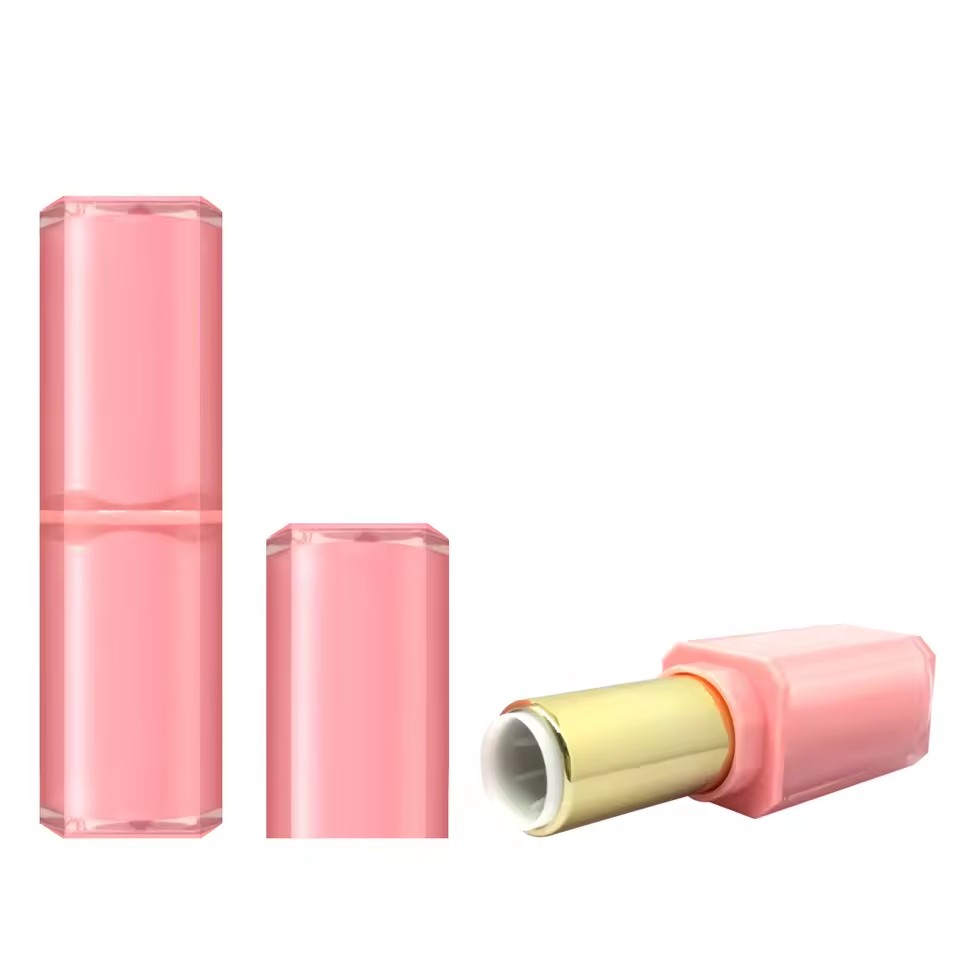
CP01-2142 lipstick tube reference. A model reference is a starting point for specification review, not a universal recommendation.
What COSFINITY Brings to the Decision
Guangzhou Cosfinity Cosmetics Co., Ltd. (COSFINITY), founded in 2009, is a China-based manufacturer focused on customized cosmetic packaging solutions. Its published profile lists a 40,000㎡ factory, 200 employees, 25 engineers, annual output of 500,000,000 pieces, and a product scope covering Lipstick Tube, Lipgloss / Mascara Tube, Powder Case, Eyeliner Tube, Powder Jar, and Liquid Foundation Bottle. The company reports a 100% export ratio and global main markets. Verified data also records a company-reported monthly production capacity of 10,000,000 pieces.
In a format decision, these facts matter as capacity and portfolio evidence. They show which formats are within the supplier's stated scope. They do not show that any one format fits every formula. A buyer still needs a drawing, a material specification, a sample, and an acceptance standard before treating a supplier profile as a procurement decision.
Technical Explanation: Reading the Numbers Correctly
A dimension is not a fit. W22.7×H84.6 mm for CP01-2142 defines an envelope; it does not tell the buyer whether the cap, mechanism, or label area will work. Ask for a drawing with tolerances and a statement of what is included. The same applies to CP02-2231 at W18×H106.1 mm, CP04-1215 at W12.8×H115.3 mm, CP05-2159B at W40.7×H32.6 mm, CP07-2026 at W33.5×H92 mm, and CP08-0053 at D29×H60 mm.
Wall thickness is a construction variable. The 0.3 mm references and the 1 mm CP05-2159B reference sit in different format classes. A thicker wall can change stiffness, weight, and hand feel, but it does not automatically prove better barrier performance. Barrier and compatibility claims should be supported by test data for the specific material and formula.
Nominal capacity is a reference volume. The 20 ml lipstick tube, 3 ml lipgloss or mascara tube, 10 ml eyeliner tube, 5 ml powder jar, 30 ml glass foundation bottle, and 10 ml stick foundation tube are not interchangeable fills. The usable fill depends on product density, filling method, and headspace. A buyer should compare samples at the intended fill line, not only at the nominal capacity printed in a catalogue.
Compliance is separate from supplier self-description. EU Regulation 1223/2009 mandates ISO 22716 compliance for Good Manufacturing Practices in cosmetics production. In the United States, FDA labeling requirements include 21 CFR 701.10 for principal display panel presentation, and 21 CFR Part 700 sets tamper-resistant packaging requirements for specified retail products. These rules inform the packaging brief; they do not replace a market-specific regulatory review.
Application Fit: From Lipstick to Powder and Foundation
Lipstick and lipgloss
CP01-2142 is listed as a 20 ml lipstick tube at W22.7×H84.6 mm with 0.3 mm wall thickness. CP02-2231 is listed as a 3 ml lipgloss or mascara tube at W18×H106.1 mm with 0.3 mm wall thickness. The two formats share a tube family but differ in dose, orifice, and applicator logic. For mascara cosmetic packaging, the applicator and wipe-off behavior belong in the sample approval. For lipgloss cosmetic packaging, the orifice and closure are central.
Eyeliner
CP04-1215 is a 10 ml eyeliner tube at W12.8×H115.3 mm with 0.3 mm wall thickness. CP06-1056 is an eyeliner pencil, a different application system. The buyer decision is not only liquid versus pencil; it is precision, rework, and use occasion. A liquid eyeliner tube and an eyeliner pencil should be compared against the same use test, not against the same unit price.
Powder
CP05-2159B is a 5 ml powder jar at W40.7×H32.6 mm with 1 mm wall thickness. CP03-1394 is a customized powder case. A jar and a case can both hold powder, but the opening, sifter, applicator, and decoration area differ. Confirm whether the powder is loose or pressed, whether a mirror or applicator is required, and whether the powder case cosmetic packaging format must support refilling or single-use presentation.
Foundation
CP07-2026 is a 30 ml glass foundation bottle at W33.5×H92 mm. CP08-0053 is a 10 ml stick foundation tube at D29×H60 mm. The foundation bottle cosmetic packaging format and the stick tube serve different foundation habits and application methods. Glass adds a material and weight consideration. A stick tube adds a mechanism and fill consideration. Buyers should not compare them by capacity alone.
Deodorant
TP01-1018-15 is a deodorant stick container. It is included as an additional format example, not as part of the six-model comparison table. It shows why the framework should include stick and semi-solid formats rather than treating cosmetic packaging containers as a single category.
Traditional Low-Cost vs Thicker Leak-Proof Construction
The reference comparison for lipstick tubes illustrates why format decisions need normalization. One reference tube is 20 ml at $0.30 per unit. A conventional comparison tube is 3 ml at $0.07 per unit. The capacity differs, so the unit prices are not a like-for-like cost comparison. The thicker leak-proof construction in the 20 ml reference is associated with lower maintenance and less breakage and leakage during daily carry. That is a real benefit for some programs.
The limitation is equally real. A thicker leak-proof tube may be unnecessary for a short promotional run, a low-viscosity sample, or a program where the fill volume is much smaller. A buyer should not treat the higher unit price as proof of better fit, and should not treat the lower price as proof of poor quality. The correct test is a specification-matched sample and acceptance check. In traditional low-cost programs, the lower unit price can be appropriate when the product brief is simple and the fill volume is small. In premium or long-carry programs, the thicker construction may justify its cost. The decision depends on the use case, not on price alone.
Procurement Checks Before Sampling
Before an RFQ becomes a sample request, the buyer should turn the format decision into a specification. The checks below apply to cosmetic packaging tubes, jars, bottles, and powder cases, as well as to custom cosmetics packaging projects and OEM or ODM cosmetic packaging projects.
- Format and fill: confirm formula, dose, fill volume, and headspace.
- Drawing: record dimensions, tolerances, wall thickness, and whether the closure is included in the quoted height.
- Material: confirm resin or glass grade, formula compatibility, decoration method, and recycled content if required.
- Function: test closure fit, torque, leak, wipe-off, sifter, hinge, and applicator where relevant.
- Compliance: confirm target-market labeling and documentation requirements.
- Commercial: compare MOQ, tooling, lead time, payment terms, and Incoterms.
- Acceptance: define visual, dimensional, functional, and transit criteria before the sample is approved.
COSFINITY's customer payment risk note describes 50% advance payment before production and the remaining 50% before shipment. That is a commercial term to compare with other quotations; it is not evidence of quality. The same discipline applies to MOQ and lead time: ask for the term in writing and tie it to the SKU. A supplier's published capacity does not replace a signed specification and a sample approval record.
Market Trend Signals Buyers Should Track
Grand View Research valued the global cosmetic packaging market at USD 32.7 billion in 2023. The same source reported that plastics accounted for the largest revenue share at 60.8% in 2023. These figures support the scale of the category, but they do not tell a buyer which format fits a specific formula. At the same time, EU Regulation 1223/2009 mandates ISO 22716 compliance for cosmetics Good Manufacturing Practices, and U.S. FDA guidance addresses labeling and principal display panel requirements. The practical trend is more documentation per package: material data, labeling checks, and acceptance records.
Public verified data often does not include supplier-specific lead time, MOQ, actual fill compatibility, or audited capacity. Those must come from the RFQ, sample, and factory evidence. For professional cosmetic packaging buyers, the useful market signal is not simply that the category is large. It is that the evidence burden is rising, and format decisions are becoming easier to defend when they are documented.
Future Outlook
Tubes, jars, bottles, and powder cases will continue to coexist because they solve different physical and use problems. The decision will become more structured, not less. Buyers are likely to ask for tighter drawing control, material documentation, and market-specific compliance evidence. Suppliers that can present a clear format map, verified dimensions, and sample acceptance criteria will be easier to compare.
The buyer's advantage is not a longer supplier list. It is a shorter list built on a defined format, a defined fill, and a defined acceptance standard. That is the practical meaning of a cosmetic packaging buyer decision framework: it reduces the chance that a supplier comparison is really a comparison of incomparable packs.
FAQ
What is the first question to ask when comparing cosmetic packaging formats?
Start with formula and dose. A tube, jar, bottle, or powder case must contain the formula at the intended fill volume and support the use occasion. Dimensions, wall thickness, and capacity are verification inputs, not the starting point.
How should buyers read wall thickness in a packaging specification?
Wall thickness is a construction variable. The reference set includes 0.3 mm for CP01-2142, CP02-2231, and CP04-1215, and 1 mm for CP05-2159B. It can affect rigidity and feel, but it does not by itself prove barrier performance, compatibility, or leak resistance. Request test data and sample validation.
When is a bottle a better format than a tube?
A bottle is a candidate when the product needs a distinct glass or rigid presentation and a larger nominal fill, such as CP07-2026, a 30 ml glass foundation bottle. A tube may be more suitable when the formula and use case favor a squeeze or stick-style delivery. The decision should be confirmed with fill and compatibility testing.
What should be checked before approving a powder case or powder jar?
Check the powder format, sifter or opening, closure fit, decoration area, and capacity. CP05-2159B is listed as a 5 ml powder jar at W40.7×H32.6 mm with 1 mm wall thickness. CP03-1394 is listed as a customized powder case. Confirm that the quoted dimensions and wall thickness match the approved drawing.
How should a buyer compare a $0.30 tube with a $0.07 tube?
Do not compare unit price alone. The supplied reference compares a 20 ml lipstick tube at $0.30 per unit with a 3 ml conventional tube at $0.07 per unit. Capacity differs, so normalize by fill volume, construction, decoration, MOQ, and acceptance criteria. A thicker leak-proof construction may reduce maintenance and leakage in the reference, but it is not automatically required for every program.
What documents should be attached to a packaging RFQ?
Attach the drawing, dimensions, wall thickness, nominal capacity, material grade, decoration requirement, closure requirement, target market, compliance needs, and acceptance criteria. For custom cosmetics packaging, also state the fill volume and the intended use occasion so the supplier can quote a comparable format.
Reference document: COSFINITY company profile (PDF), https://cdn.socialarks.com/sbsp/25004/common/2026/0702/cosfinity%20profile.pdf.
Tem questões ou precisa de mais detalhes?
Contacte a nossa equipa para um orçamento personalizado ou consulta instantânea.
Solicitar orçamento
Preencha o formulário abaixo e a nossa equipa entrará em contacto com uma proposta personalizada.
Chat direto do WhatsApp
Prefere conversar em tempo real? Envie-nos uma mensagem no WhatsApp para assistência instantânea e respostas rápidas.
- Obter orçamento personalizado
- Partilhar fotos ou documentos
- Discuta as suas necessidades diretamente
Geralmente responde em 5–30 minutos durante o horário de expediente.