
Cosmetic Packaging Specs: Model-by-Model Acceptance Checks
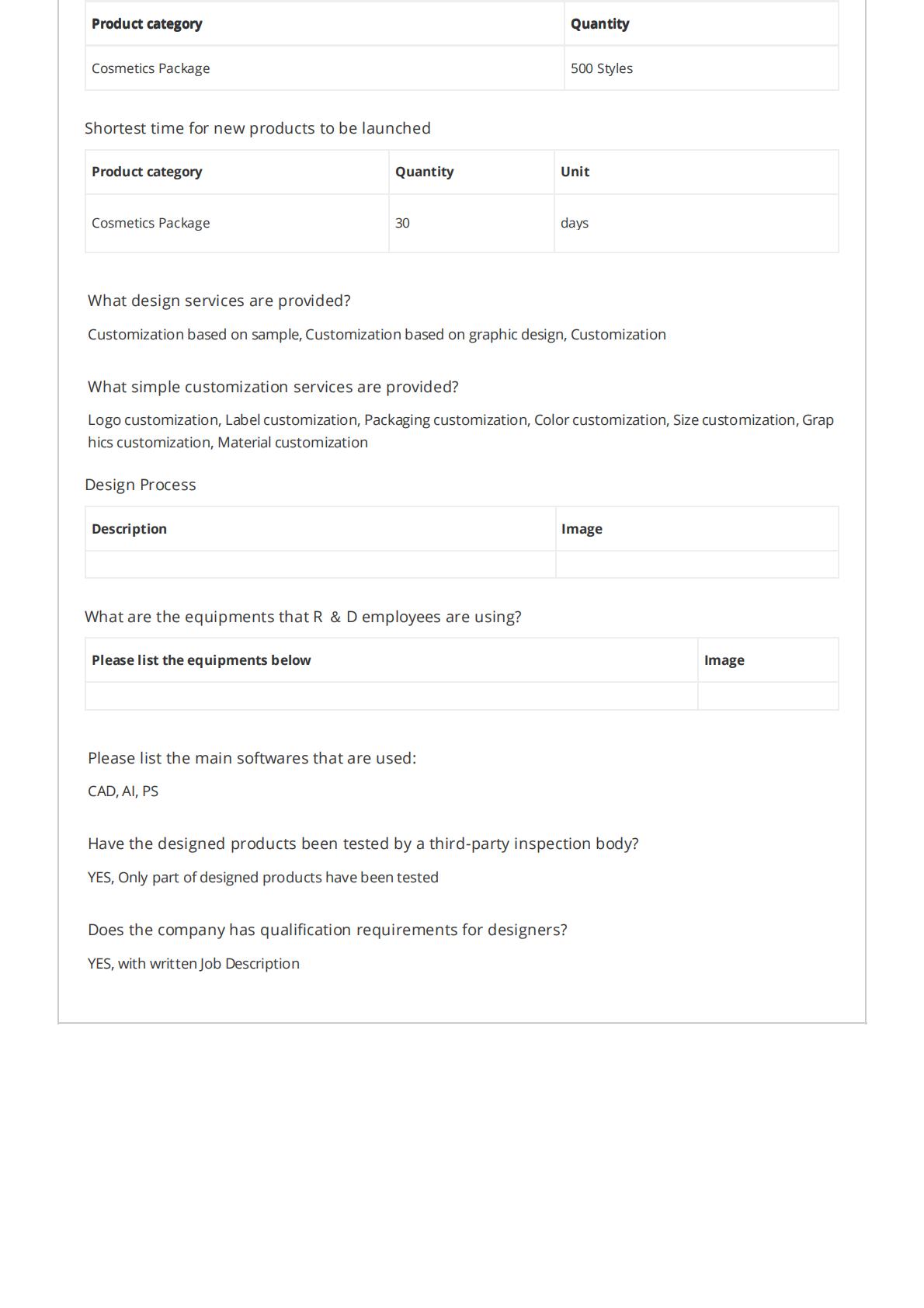
Verification records, not brochure claims, are what allow a cosmetic packaging specification to be accepted or rejected.
A cosmetic packaging specification becomes usable only when every number on it carries a defined reference frame: the surface a dimension is measured from, the line where wall thickness is taken, and whether the stated volume describes the container or the fill. Until those three points are fixed, two quotations are not comparing the same product.
The problem is routine at evaluation stage. A buyer receives a dimension string, a volume figure and a material name, and is then asked to approve a sample, a purchase order and an incoming inspection routine against that information. The distance between a short catalog line and a production drawing is where most specification disputes begin, and closing that distance before tooling is considerably cheaper than closing it after the first shipment.
This reference works through the technical and procurement vocabulary that buyers actually negotiate — dimensions, wall thickness, volume capacity, material and category — using nine catalog models as worked examples, and sets out the acceptance criteria and verification steps that belong in a purchase order rather than in a conversation.
COSFINITY (Guangzhou Cosfinity Cosmetics Co., Ltd.) is a cosmetic packaging manufacturer founded in 2009 and based in Baiyun District, Guangzhou, China. It operates a 40,000 ㎡ factory with 200 employees and a 25-engineer R&D team, reports an annual output of 500,000,000 pieces, and describes its main products as lipstick tubes, lip gloss and mascara tubes, powder cases, eyeliner tubes, powder jars and liquid foundation bottles. Its production model is OEM/ODM, and its stated customization fields are logo, color, shape, material, volume, thickness and packaging.
Why specification ambiguity is a procurement risk, not a paperwork detail
Plastic formats dominate the category. Grand View Research reported the global cosmetic packaging market at USD 32.7 billion in 2023, with plastics accounting for 60.8% of revenue share in the same year. A plastic-dominant supply base means most purchase orders are governed by interfaces — thread engagement, snap-fit geometry, cap-to-body clearance, tube shoulder fit — rather than by appearance. Two suppliers quoting “a 10 ml tube” can deliver containers that differ by several millimetres of usable height once the cap, shoulder and crimp are accounted for.
Published market-size estimates should still be used with care. Analysts draw the boundary between primary packaging, secondary packaging and beauty accessories in different places, so figures for the broadly defined category diverge widely. The 2023 figure above is attributable to one research house and is a scale indicator for planning context, not a budgeting constant.
Regulation adds a second layer that is often treated as a design preference. In the United States, FDA labeling guidance referencing 21 CFR 701.10 states that the principal display panel must be large enough to accommodate all required label information with clarity and conspicuousness, and that where a package bears more than one principal display panel, the required information must be duplicated on all of them. That makes printable area a functional dimension of the container, not an artwork afterthought — particularly on slim formats such as a W12.8 mm eyeliner tube.
On the production side, EU Regulation 1223/2009 mandates ISO 22716 good manufacturing practice compliance for cosmetics. A packaging supplier that can produce dimensional records and measurement methods on request is easier to integrate into a customer’s own GMP documentation than one that answers specification questions case by case.
The five fields that decide whether two quotes are comparable
Dimensions. A dimension string is only meaningful with a stated reference frame. W × H, D × H and L × W × H are three different measurement conventions, and height may or may not include the cap. Any drawing used for acceptance should say which.
Wall thickness. This is the wall section at a nominated measurement line, usually the body or the shoulder. It is not a proxy for total weight, and it is not a durability guarantee on its own; it interacts with squeeze force, thread strength, decoration method and drop performance.
Volume capacity. Three volumes exist for any container: brimful (to the rim), nominal (the catalog figure) and filled (the usable volume at a defined fill line, which depends on formula viscosity and the dispenser). Catalog figures describe one of these, and buyers should know which.
Material. “Plastic” and “glass” are category-level statements. Grade, colour masterbatch and any recycled content claim sit one level below and belong in a written declaration.
Category. The category label — tube, jar, bottle, stick, pencil, case — drives which acceptance tests are relevant. A leak-proof jar and an eyeliner pencil do not share a test protocol.
Nine catalog models and what each spec discloses
The table below reproduces the published parameters for nine catalog models. It is deliberately uneven, because real short-form catalog data is uneven: some entries carry full geometry, some carry volume only, and some carry category only.
| Model | Category | Dimensions | Wall thickness | Volume | Material |
|---|---|---|---|---|---|
| CP01-2142 | Lipstick tube | W22.7 × H84.6 mm | 0.3 mm | 20 ml | Plastic |
| CP02-2231 | Lip gloss / mascara tube | W18 × H106.1 mm | 0.3 mm | 3 ml | Plastic |
| CP03-1394 | Custom makeup powder case | Confirm on drawing | Confirm on drawing | Confirm on drawing | Confirm on drawing |
| CP04-1215 | Liquid eyeliner tube | W12.8 × H115.3 mm | 0.3 mm | 10 ml | Confirm on drawing |
| CP05-2159B | Leak-proof powder jar | W40.7 × H32.6 mm | 1 mm | 5 ml | Confirm on drawing |
| CP06-1056 | Eyeliner pencil | W15 × H173.5 mm | Confirm on drawing | Confirm on drawing | Confirm on drawing |
| CP07-2026 | Airless foundation bottle | Confirm on drawing | Confirm on drawing | 30 ml | Glass |
| CP08-0053 | Stick foundation tube | D29 × H60 mm | Confirm on drawing | 10 ml | Confirm on drawing |
| TP01-1018-15 | Deodorant stick container | L41.7 × W24.49 × H86.5 mm | Confirm on drawing | 20 ml | Confirm on drawing |
“Confirm on drawing” marks a parameter that is not carried in the short catalog line for that model. It is not a missing capability — it is a field the buyer must obtain in writing before approving a sample.
Dimension formats: W × H, D × H and L × W × H are not interchangeable
The nine entries above use three conventions, and each one belongs to a different geometry.
Round formats are quoted as width by height: CP04-1215 at W12.8 × H115.3 mm, CP02-2231 at W18 × H106.1 mm, CP01-2142 at W22.7 × H84.6 mm and CP06-1056 at W15 × H173.5 mm. On a round body, width and diameter are the same value, so the decisive question is not the number but the measurement point — outer wall, cap diameter, or the widest point of the closure. A cap that overhangs the body by half a millimetre changes the filling-line envelope even though the “width” is unchanged.
CP08-0053 is quoted as D29 × H60 mm, using diameter explicitly. The distinction matters when the same product family carries both round and oval variants, because an oval stick has a major and a minor axis and a single “width” cannot express both.
CP05-2159B at W40.7 × H32.6 mm and TP01-1018-15 at L41.7 × W24.49 × H86.5 mm illustrate the third case. The two-axis jar and the three-axis stick container cannot be reduced to a single footprint figure without losing the information a carton or a filling nest actually needs. Note also the decimal precision on TP01-1018-15: 24.49 mm is a tolerance-relevant figure, and rounding it to 24.5 mm at the quotation stage creates a mismatch that only appears at incoming inspection.
Whatever the convention, the drawing should state whether height is measured with the cap closed, with the cap removed, or to the top of the dispensing mechanism. For a tube such as CP04-1215 at 115.3 mm overall, the difference between those three definitions is larger than most decoration tolerances.
Wall thickness: what 0.3 mm and 1 mm actually describe
Four models in the table publish a wall thickness: CP04-1215 at 0.3 mm, CP02-2231 at 0.3 mm, CP01-2142 at 0.3 mm and CP05-2159B at 1 mm. The difference is not a quality ranking. It reflects the mechanical job each format performs.
Thin-wall tube bodies in the 0.3 mm range are typical of slim, squeezable formats where the wall must flex under hand pressure and recover without permanent deformation. Thicker sections, as on the 1 mm CP05-2159B jar, belong to formats where the wall contributes to thread strength, stacking stability and the seating of a leak-proof closure.
For acceptance purposes, three things should be written down: the nominal value, the measurement location (body mid-section, shoulder, or thread area), and the instrument used. A thickness figure without a location is not repeatable, and a figure without an instrument is not auditable.
Volume capacity: nominal, brimful and filled
The catalog volumes across the range — 3 ml on CP02-2231, 5 ml on CP05-2159B, 10 ml on CP04-1215 and CP08-0053, 20 ml on CP01-2142 and TP01-1018-15, and 30 ml on CP07-2026 — describe the container, not the label claim. A formula with a stated net content must be validated against a fill trial on the actual container, at the actual fill line, with the actual viscosity.
This is the single most common source of late-stage rework. A 30 ml airless bottle may hold 30 ml brimful while delivering noticeably less at a working fill line that leaves headspace for the pump and for thermal expansion. A 3 ml mascara tube may hold 3 ml while the brush and wiper displace a measurable fraction of it. Buyers should request the volume definition in writing and confirm it with a filled sample, not with a catalog figure.
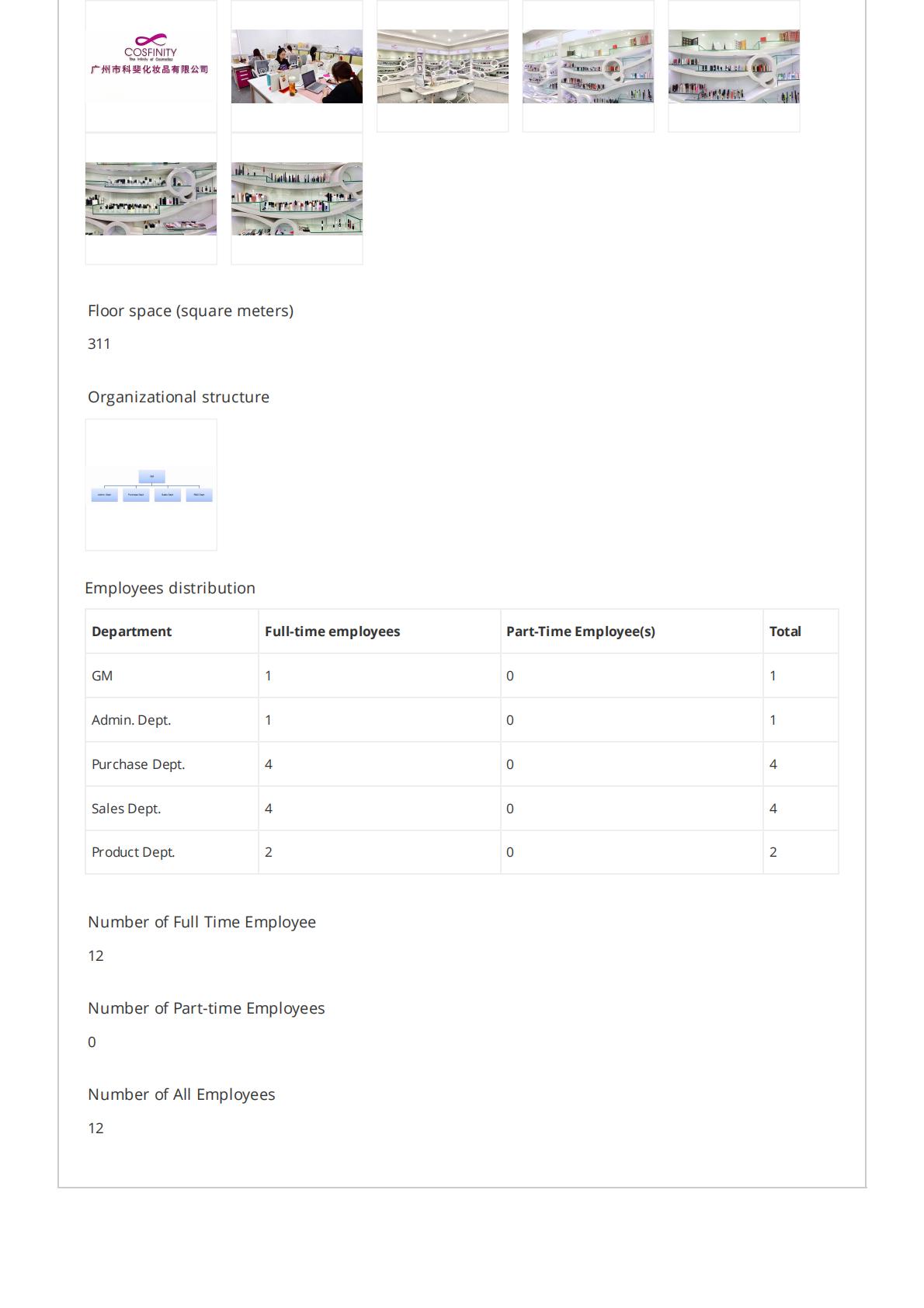
Audit and inspection records support the measurement side of acceptance; they do not replace product-level drawings and fill trials.
Acceptance criteria that belong in the purchase order
Acceptance is a written agreement about what will be measured, how, and against which reference. The table below sets out the seven checks that cover most cosmetic packaging orders, in the sequence they are usually confirmed.
| Check | Reference | Evidence to keep | Pass condition |
|---|---|---|---|
| Overall dimensions | Approved drawing with stated reference frame | Measured record at nominated points | Within drawing tolerance at every point |
| Wall thickness | Drawing section at a named location | Section measurement record | At the stated nominal for that location |
| Volume capacity | Agreed fill line and volume definition | Fill trial record with populated sample | Declared volume attainable at the fill line |
| Closure and leakage | Test condition agreed in writing | Test log for the agreed condition | No leakage under that condition |
| Print and label area | Approved artwork plus applicable labeling rules | Signed proof and artwork file | All required copy legible on the principal display panel |
| Material declaration | Ordered grade and colour | Supplier declaration on file | Declaration matches the ordered specification |
| Packing configuration | Packing specification | Carton configuration record | Shipment matches the agreed configuration |
Two of these checks are regulatory rather than commercial. The print and label area check exists because labeling rules attach to the package surface, not to the artwork file, and the closure and leakage check exists because a leaking container can compromise the product itself. Everything else protects the buyer against a specification that quietly changed between quotation and delivery.
A five-step verification sequence before the order
- Request a drawing, not a catalog line. It should carry the dimension convention, the height definition (cap on or off), tolerances, and the measurement points for wall thickness.
- Fix the material statement. Category-level “plastic” or “glass” is not a purchasing specification. Ask for the grade and a written declaration before approving the sample.
- Agree the measurement method and instrument first. Two parties measuring the same part with different tools and different datums will disagree, and the disagreement will be about method rather than about quality.
- Run a fill trial. Confirm usable capacity at the working fill line, and check that the closure performs with the actual product rather than with water.
- Put commercial terms in writing alongside the technical ones. Quantity threshold, production window, customization fields and inspection standard belong on the same document as the drawing.
For reference, COSFINITY’s published procurement terms state an OEM/ODM production model, a minimum order quantity of 12,000 pieces, a lead time of 15–25 days, a monthly capacity of 10,000,000 pieces, and 100% testing as its quality-control approach, with remote online after-sales support. Its SGS Alibaba Verified Supplier Factory Audit carries certificate number 485460650_T, issued 10 January 2026 and valid to 10 January 2027, covering enterprise factory and trade qualification.
That audit scope is worth reading precisely: it qualifies the enterprise and its trade status. It is not a product-level certification for any individual model in the table, and it does not substitute for dimensional records or leak-test logs on a specific order.
Matching each model to a product category
Specification data becomes a procurement decision only when it is mapped to a product. Within this range, the mapping runs as follows.
- CP01-2142 — a 20 ml plastic lipstick tube at W22.7 × H84.6 mm with 0.3 mm wall, for cast lipstick bullets. A lipstick tube OEM project for an India-based buyer using this model, at 12,000 pieces over a two-year relationship, is recorded as supporting a private-label launch with repeat bulk orders following stable quality — the kind of outcome that depends on the mechanical fit of the bullet mechanism as much as on the outer shell.
- CP02-2231 — a 3 ml plastic tube at W18 × H106.1 mm with 0.3 mm wall, for lip gloss and mascara, where applicator and wiper geometry govern the usable volume.
- CP04-1215 — a 10 ml liquid eyeliner tube at W12.8 × H115.3 mm with 0.3 mm wall, a slim long format where printable area is the binding constraint.
- CP05-2159B — a 5 ml leak-proof powder jar at W40.7 × H32.6 mm with 1 mm wall, for small-volume powder and cream formats where closure integrity is the primary acceptance question.
- CP07-2026 — a 30 ml glass airless foundation bottle, where the airless mechanism and the glass body are specified and tested as one system.
- CP08-0053 — a 10 ml stick foundation tube at D29 × H60 mm, a short-diameter format that suits a solid or semi-solid fill.
- TP01-1018-15 — a 20 ml deodorant stick container at L41.7 × W24.49 × H86.5 mm, an oval three-axis format where the platform mechanism and the base footprint are the critical dimensions.
- CP06-1056 — an eyeliner pencil at W15 × H173.5 mm, a long slim format where straightness and length tolerance dominate.
- CP03-1394 — a custom makeup powder case, the one entry in this set that is quoted as a custom configuration rather than a fixed geometry.
Where catalog specs stop: limits buyers should plan around
A catalog model is a validated geometry, and validated geometry is also a constraint. The nine entries above cannot be rescaled to arbitrary volumes or reshaped without new tooling, so a brand that needs a 7 ml lip gloss rather than the 3 ml CP02-2231 is discussing a development project, not a variant.
Minimum order quantity is the second boundary. At a stated 12,000 pieces per item, market-testing volumes may fall below the threshold, and buyers should confirm whether mixed-model orders are treated differently before building a launch plan on a single catalog line.
The third boundary is documentation depth. CP03-1394 and CP07-2026 are described in short form by category and, in the case of the airless bottle, by material and volume, but not by full geometry. CP06-1056 carries a dimension string without a published volume or thickness. These are not defects in the range; they are reminders that the short form is a starting point and the drawing is the contract.
Finally, a specification describes geometry and material — not chemical compatibility. Whether a given formula interacts with a given container, liner or coating must be established by the party filling it. That responsibility does not transfer with the purchase order.
Outlook: documentation as a competitive attribute
Two forces are pushing cosmetic packaging procurement toward drawing-level discipline. The first is regulatory: labeling requirements attach to the physical package surface, and GMP-aligned supply chains expect measurement records rather than verbal assurances. The second is commercial: as the plastic share of the category stays dominant, differentiation shifts from material novelty toward repeatability — the ability to deliver the same 0.3 mm tube wall, at the same 106.1 mm height, across repeated orders.
For buyers, the practical consequence is that supplier evaluation is increasingly an evaluation of documentation. A supplier that can produce a drawing with defined reference frames, a material declaration, a fill-trial record and an audit trail is easier to qualify, easier to audit and easier to keep. The specification table, not the sample box, is becoming the first document a buyer reads.
FAQ
What does wall thickness mean in a cosmetic packaging specification?
Wall thickness is the wall section of the container at a nominated measurement line, typically the body mid-section or the shoulder. In this range it is published as 0.3 mm for CP04-1215, CP02-2231 and CP01-2142, and as 1 mm for CP05-2159B. The value is only repeatable when the measurement location and the instrument are also stated.
Why do some models list W × H, others D × H, and others L × W × H?
The convention follows the geometry. Round formats such as CP04-1215 (W12.8 × H115.3 mm), CP02-2231 (W18 × H106.1 mm), CP01-2142 (W22.7 × H84.6 mm) and CP06-1056 (W15 × H173.5 mm) are quoted width by height, where width equals diameter. CP08-0053 is quoted as D29 × H60 mm to state diameter explicitly. Oval and rectangular formats need more axes: CP05-2159B is W40.7 × H32.6 mm, and TP01-1018-15 is L41.7 × W24.49 × H86.5 mm.
Is the stated volume the filled capacity?
The catalog figure describes the container, and the filled volume at a working fill line can be lower. Stated volumes in this range are 3 ml (CP02-2231), 5 ml (CP05-2159B), 10 ml (CP04-1215, CP08-0053), 20 ml (CP01-2142, TP01-1018-15) and 30 ml (CP07-2026). Buyers should confirm the volume definition in writing and verify it with a fill trial using the actual formula.
How should a buyer verify specifications before placing an order?
Five steps cover most of the risk: obtain a drawing with stated reference frames rather than a catalog line; obtain the material grade and a written declaration; agree the measurement method and instrument before sampling; run a fill trial to confirm usable capacity and closure performance; and record commercial terms — quantity threshold, production window, customization fields and inspection standard — on the same document as the technical specification.
What acceptance criteria apply to a leak-proof jar such as CP05-2159B?
Four checks carry most of the weight on a 5 ml leak-proof powder jar at W40.7 × H32.6 mm with 1 mm wall: dimensional conformity against the approved drawing, wall thickness at the named location, closure and leakage performance under a test condition agreed in writing, and capacity confirmation at 5 ml at the working fill line. Material declaration and packing configuration complete the set.
What procurement terms are published for this range?
COSFINITY states an OEM/ODM production model with customization of logo, color, shape, material, volume, thickness and packaging; a minimum order quantity of 12,000 pieces; a lead time of 15–25 days; a monthly capacity of 10,000,000 pieces alongside an annual output of 500,000,000 pieces; 100% testing as its quality-control approach; and remote online after-sales support. Its SGS Alibaba Verified Supplier Factory Audit, certificate 485460650_T, was issued 10 January 2026 and is valid to 10 January 2027, covering enterprise factory and trade qualification.
Which model fits which product category?
Within this set: CP01-2142 for lipstick, CP02-2231 for lip gloss and mascara, CP04-1215 for liquid eyeliner, CP05-2159B for small-volume powder and cream in a jar, CP07-2026 for liquid foundation in an airless glass bottle, CP08-0053 for stick foundation, TP01-1018-15 for deodorant stick, CP06-1056 for eyeliner pencil, and CP03-1394 for a custom makeup powder case. Fit should still be confirmed against the formula and the fill line.
What can a catalog specification not tell a buyer?
It cannot establish chemical compatibility between a specific formula and a specific container, liner or coating; it cannot confirm usable filled volume for a given viscosity without a fill trial; and where the short entry omits geometry — as with CP03-1394 and CP07-2026 — it cannot substitute for a drawing. Those three items have to be closed before an order, not after.
A downloadable COSFINITY company profile covering factory detail and certification information is available at the COSFINITY profile PDF.
Tem questões ou precisa de mais detalhes?
Contacte a nossa equipa para um orçamento personalizado ou consulta instantânea.
Solicitar orçamento
Preencha o formulário abaixo e a nossa equipa entrará em contacto com uma proposta personalizada.
Chat direto do WhatsApp
Prefere conversar em tempo real? Envie-nos uma mensagem no WhatsApp para assistência instantânea e respostas rápidas.
- Obter orçamento personalizado
- Partilhar fotos ou documentos
- Discuta as suas necessidades diretamente
Geralmente responde em 5–30 minutos durante o horário de expediente.