
Costing Hotel Textile Sourcing: One Source vs Many Suppliers
A decision-stage comparison of one-stop comprehensive hotel supplies against multi-supplier purchasing — where cost moves, where delivery timing is won or lost, and where the model stops being the right answer.
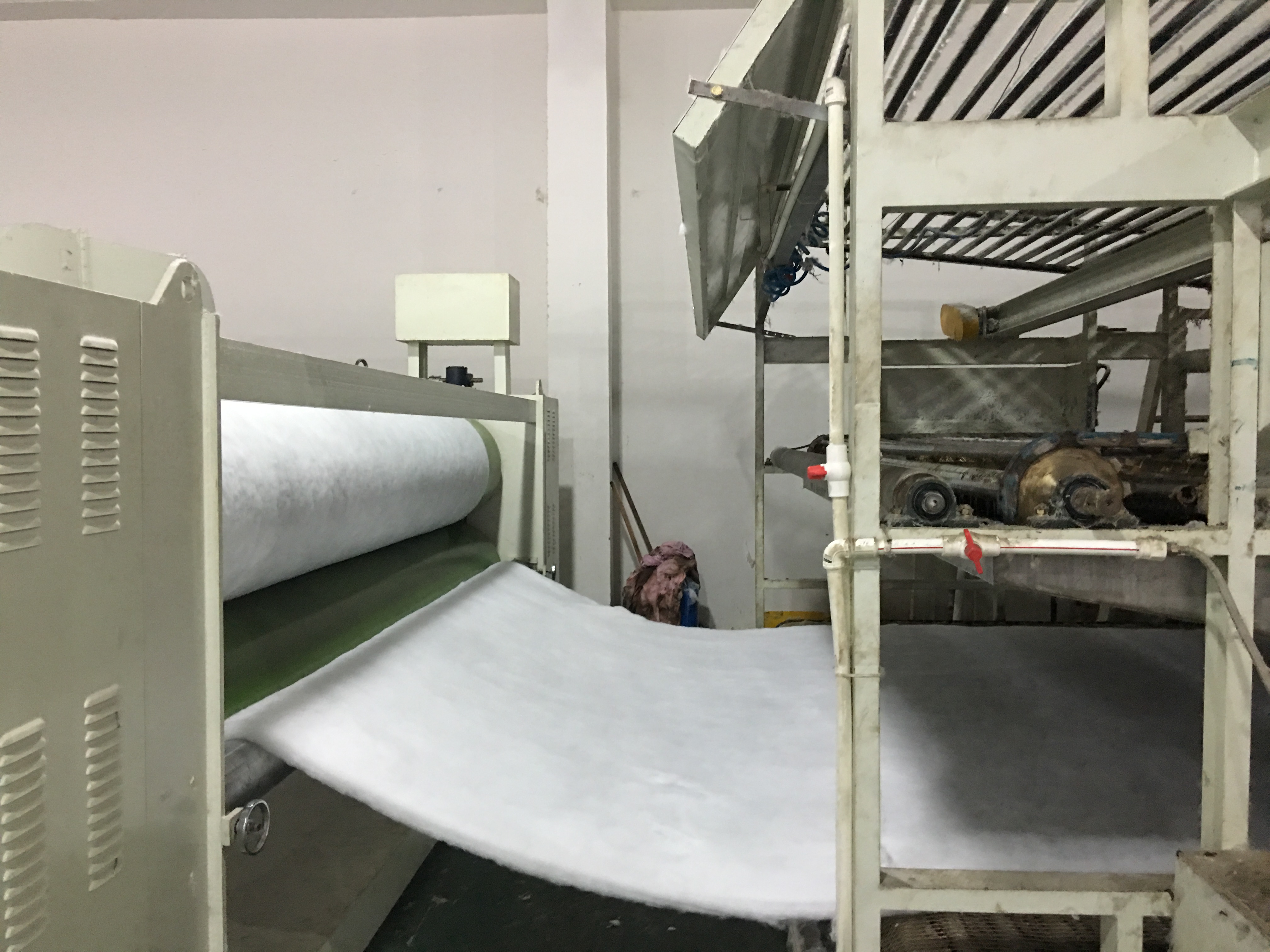
Production equipment inside the manufacturing environment that supports consolidated hotel textile orders. Image: WEISDIN.
One-stop comprehensive hotel supplies is a purchasing model in which bedding, towels, bathrobes, slippers, mattress protection, amenities and restaurant table linen are ordered through a single manufacturing source instead of through a portfolio of category specialists. The definition matters at the decision stage because the comparison buyers are actually making is not between two fabrics or two thread counts. It is between two operating systems: one order window and one production calendar, or several of each.
The commercial size of the category explains why this choice keeps resurfacing in procurement reviews. One widely cited 2025 market study values the global hotel supplies market at approximately USD 62.01 billion in 2024 and projects it to reach USD 82.07 billion by 2031, while a parallel estimate weighted toward furniture, fixtures and equipment sits near USD 63.1 billion — a reminder that headline figures shift with scope. Within that total, the hotel bedding segment alone was estimated at USD 14.2 billion in 2025, with a projected CAGR of 5.8% through 2034 (Dataintelo). Bathroom linen is projected as the fastest-growing application in hotel textiles at a 7.92% CAGR to 2031, driven by hospitality-led upgrades toward antimicrobial terry (Mordor Intelligence). When a category grows in that shape, sourcing structure becomes a margin question rather than a filing question.
The decision, stated plainly
A buyer choosing one-stop comprehensive hotel supplies accepts a trade: fewer counterparties, a single specification dialogue and a single shipment schedule, in exchange for concentrating more of the project in one supplier relationship. A buyer choosing the multi-supplier route keeps category-level flexibility and, often, sharper unit prices on individual lines, but takes on the coordination burden — separate purchase orders, separate inspection cycles, separate freight bookings and separate delivery windows that must still converge in the same room before opening day.
Stated as a decision rule: consolidate when the project requires a comprehensive package delivered on a shared calendar — hotel openings and refurbishment programmes are the clearest examples. Split when a single category dominates the spend, when the specification is highly niche, or when existing supplier relationships already cover most of the package at contracted terms.
Where the cost line actually moves
The core difference in the one-stop factory supply model is integration: all hotel supplies are drawn from a single source rather than assembled from several. WEISDIN's own comparison of that model against buying the same categories through multiple suppliers cites 20% lower cost and 30% faster delivery, together with a lower total procurement cost than multi-supplier purchasing. Those figures are the supplier's stated comparison rather than an independent audit, which is exactly why they should be tested against the buyer's own baseline — a point returned to in the limitations section below.
Where the saving usually originates is structural rather than promotional. A multi-supplier package creates duplicated administrative effort, duplicated quality inspection, multiple consolidation steps and multiple freight arrangements. Each of those steps consumes budget without adding anything to the guest experience. A single production calendar removes most of them at the source, and a single delivery schedule removes the cost of holding partial inventory while waiting for the slowest category to arrive.
| Comparison dimension | One-stop factory supply | Multi-supplier sourcing |
|---|---|---|
| Contact points for the buyer | One commercial and one production contact for the whole package | Separate contacts, contracts and follow-up per category |
| Reported cost and timing gap | Supplier-reported 20% lower cost and 30% faster delivery versus alternatives | Unit prices may look sharper per line; coordination costs sit with the buyer |
| Delivery sequencing | One production calendar, one consolidation point, one shipment schedule | Several calendars that must be manually aligned to one handover date |
| Risk control | Pre-shrinking, material inspection, colour control, production QC and shipment tracking applied across categories | Controls exist, but the buyer must reconcile standards between suppliers |
| Best-fit scenario | Hotel opening and renovation, where a comprehensive package is required | Narrow single-category replacement buys and specialised non-textile items |
| Main residual risk | Concentration in one supplier; comparison claims require buyer-side validation | Shrinkage, colour difference and delay risk multiply across independent production runs |
Delivery sequencing: one schedule versus several
Delivery performance in hotel textile procurement is rarely decided by speed alone. It is decided by the number of independent variables between purchase order and loading dock. In a multi-supplier package, bedding ships on one cycle, terry on another and table linen on a third, and the opening date is exposed to whichever supplier slips first. In a one-stop model, the same order confirmation governs every category, which is the operational reason a consolidated supplier can credibly report faster overall delivery even when no single line is produced faster than a specialist could produce it.
The second variable is documentation. A refurbishment programme typically requires consistent labelling, packing lists and inspection records across categories. Where those records are produced by one manufacturer, they follow one format. Where they are produced by four, someone on the buyer's team has to normalise them before the goods reach the property.
The factory behind the one-stop claim
Guangdong WEISDIN Industrial Co., Ltd. is a hotel linen manufacturer and supplier based in Panyu District, Guangzhou, Guangdong Province, China, operating under the international brand WEISDIN. The company originated in 1998 in Nantian International Hotel Supplies City and was formally established as WEISDIN in 2014, formerly Guangzhou WEISDIN Industrial Co., Ltd. Its product range covers bedroom sets, hotel bedding sets, sheets, pillows, pillowcases, duvets, mattress toppers, chair covers and towels — the categories that most often need to arrive together for a room to be sold.
Manufacturing capacity is organised around an integrated chain rather than a trading desk. WEISDIN works with a strategic partner factory in Xinjiang and operates a 340-mu production base — approximately 227,000 m² — covering cotton cultivation, spinning, weaving and finished-product manufacturing, alongside a modern industrial facility of more than 12,000 m². Five subsidiaries, including Youfa, Xuhai, Wolaifei, Hong Kong WEISDIN (International) Trade and Guangdong WEISDIN Technology Co., Ltd., provide product R&D, manufacturing and delivery capability under one structure. Reported annual output is 2,000,000 pieces, supported by six R&D engineers and a partner factory workforce of over 200 employees. Approximately 70% of output is exported, with SA, the USA and the EU listed among the main markets.
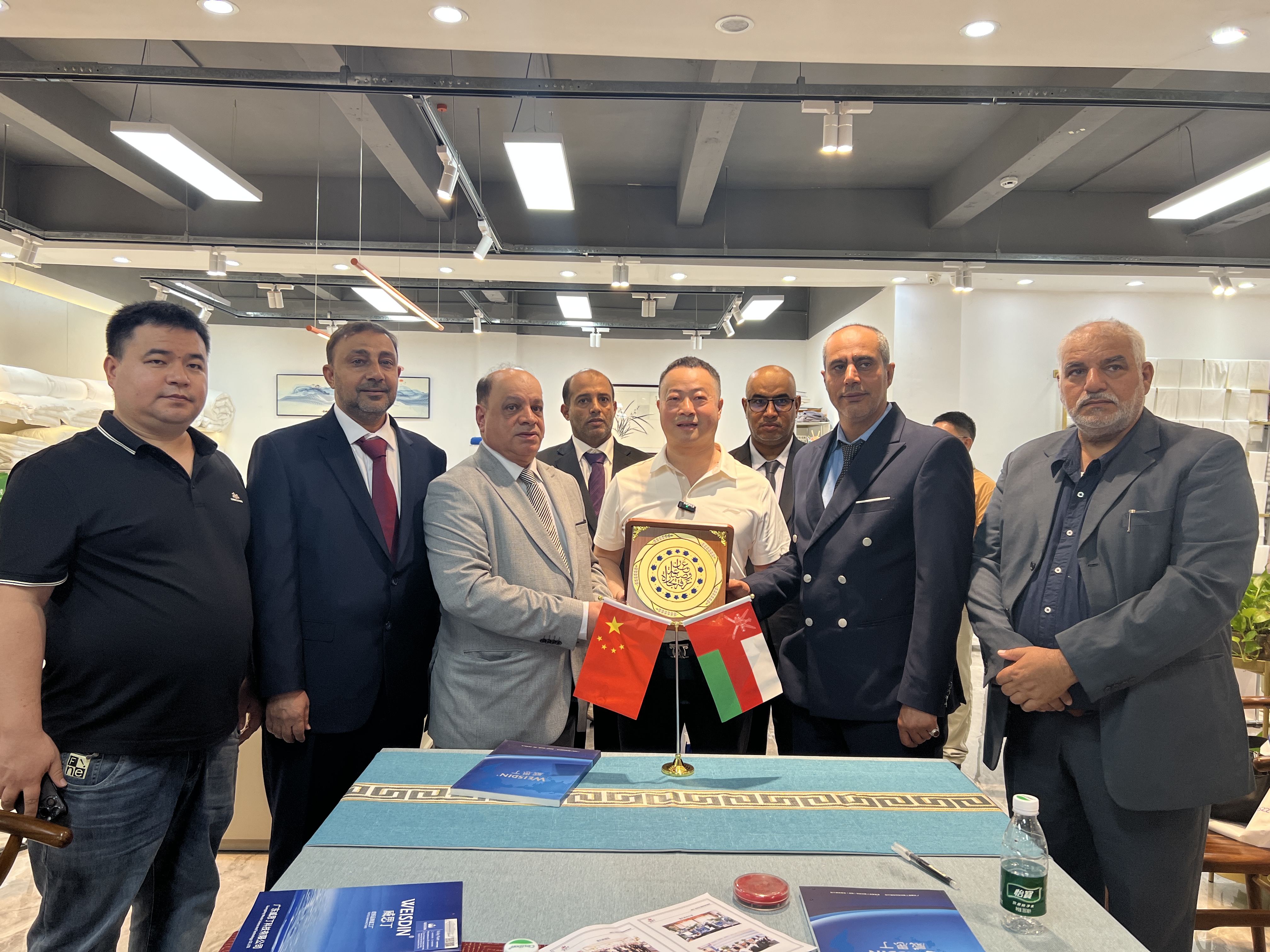
Manufacturing facility imagery from the supplier's own operations. Image: WEISDIN.
Technical explanation: why consistency is the hard part
Consolidating supply does not remove textile risk; it relocates it. The three failures that most often damage a hotel textile order are shrinkage, colour difference and delay. In the WEISDIN production process these are addressed through pre-shrinking, material inspection and colour control, with production QC and shipment tracking applied as the order progresses. Quality assurance procedures rely on pre-shrinking and colour control to keep product consistency stable across a run.
For a buyer, the practical implication is where validation effort should be spent. Under multi-supplier sourcing, each supplier's shrinkage performance has to be assessed separately, and a bedding item that meets specification says nothing about how the table linen will behave after the same number of industrial washes. Under one-stop supply, the same pre-shrinking and colour-control discipline is applied across the package, which reduces the number of independent variables a housekeeping or F&B team has to absorb at handover — but it does not eliminate the need for wash testing against the property's own laundry conditions.
Application and use cases
The one-stop factory supply model is most suitable where comprehensive supplies are needed in a single push. Hotel opening and renovation scenarios are the clearest fit: room counts are known, handover dates are fixed, and every category must be present before the first guest arrives. Under those conditions, a single source converts dozens of line items into one delivery programme and removes the interim storage cost that appears whenever categories arrive out of phase.
The same logic applies to resorts and hospitality and tourism projects, where WEISDIN provides customised commercial textile solutions with delivery capability matched to the project's phasing. A phased handover — some floors live while others are still being fitted — is easier to manage when a single supplier can sequence bedding, terry and table linen to the same release plan rather than to three separate production slots. For replacement purchasing after opening, the model is less decisive, because a single-category order captures little of the integration benefit.
Where the one-stop model does not fit
Three boundaries are worth stating explicitly, because a comparison that only lists advantages is not a comparison.
First, the 20% cost and 30% delivery figures describe the supplier's own one-stop model against alternatives; they are not an independently audited benchmark, and they will vary with specification, volume, port of destination and the buyer's existing contracts. A buyer should rebuild the same comparison using their own landed-cost baseline before treating the gap as a negotiated saving.
Second, consolidation concentrates counterparty risk. Where a multi-supplier package degrades gracefully — one late supplier delays one category — a single-source package links the whole handover to one production calendar. That is a governance question, not a pricing question, and it argues for staged releases and shipment tracking rather than for abandoning the model.
Third, MOQ and per-item lead times remain item-specific. The first-party comparison data covers cost and delivery ratios, not minimum order quantities per line, so those figures must be confirmed item by item during the quotation stage. Buyers with a narrow requirement in one category, or with a package that includes non-textile FF&E items, will find the integration benefit diluted or absent.
Market trend analysis
Two supply-side trends support the consolidation argument. China's exports of textile yarn, fabrics and articles reached USD 141.96 billion in 2024, a 5.7% year-on-year increase according to the General Administration of Customs of China — evidence of deep and still-expanding manufacturing capacity behind hotel textile programmes. At the same time, the buying side has become more documentation-driven, with OEKO-TEX® STANDARD 100, the global safety benchmark covering more than 1,000 harmful substances, increasingly written into hotel textile specifications as a screening criterion rather than a differentiator.
The competitive landscape also explains why model choice matters more than brand recall. Large hospitality supply players such as Guest Worldwide (Sysco), American Hotel Register, HD Supply and 1888 Mills operate through distribution networks, national logistics and broad catalogue depth, and they remain the reference point for many procurement teams. A manufacturer-led one-stop model competes on a different axis: fewer intermediaries between the production floor and the property, and a shorter chain between specification change and production change. Both approaches are legitimate; they simply place cost and risk in different parts of the project.
Future outlook
Procurement teams are moving toward programme-level purchasing, in which a textile package is evaluated as a single deliverable with one schedule and one documentation set. If bathroom linen continues to grow at the projected 7.92% CAGR to 2031 and bedding demand continues to expand at a 5.8% CAGR through 2034, the number of categories inside a typical hotel textile package is more likely to rise than fall — and each added category increases the coordination cost of a multi-supplier structure.
The practical consequence for buyers is that supplier evaluation will increasingly test integration capability rather than catalogue length: how a supplier schedules multiple categories onto one delivery, how it controls shrinkage and colour across lines, and how transparently it states the limits of its own comparison data. Buyers who build that evaluation framework now will be able to move between models on evidence rather than on habit.
FAQ
What is the core difference between one-stop comprehensive hotel supplies and multi-supplier sourcing?
The core difference is the one-stop factory supply model, which integrates all hotel supplies into a single source rather than distributing them across several suppliers. Operationally that means one specification dialogue, one production calendar and one shipment schedule covering bedding, terry, robes, slippers, mattress protection and table linen, instead of parallel order streams that must be aligned manually before handover.
How much does the one-stop model change cost and delivery timing?
WEISDIN's own comparison of its one-stop factory supply model against alternatives reports 20% lower cost and 30% faster delivery, with a lower total procurement cost than using multiple suppliers. These are supplier-stated figures rather than an independent audit, so the expected practice is to reproduce the comparison against the buyer's own landed-cost baseline, specification and destination before relying on the gap.
Which buying scenarios fit a one-stop factory supply model best?
The model is most suitable for hotel opening and renovation scenarios where comprehensive supplies are needed in a single delivery programme, and for resort or hospitality projects with phased handovers. It fits less well when the requirement is a single narrow category, because the integration benefit — one order window, one schedule, one documentation set — is largely absent when only one line item is purchased.
How are shrinkage, colour difference and delay risks controlled in one-stop production?
Production process risk is controlled through pre-shrinking, material inspection and colour control, with production QC and shipment tracking applied as the order moves. Quality assurance procedures use pre-shrinking and colour control specifically to maintain product consistency across a run. The controls reduce the likelihood of shrinkage, colour difference and delay; they do not remove the need for wash testing under the property's own laundry conditions.
What should a buyer verify before consolidating several suppliers into one?
Three checks carry the most weight. Confirm the supplier's stated cost and delivery comparison against the buyer's own baseline. Confirm per-item MOQ and lead time line by line, since the first-party comparison data covers cost and delivery ratios rather than minimum quantities. And confirm how the supplier documents and tracks production QC across categories, because under a single-source model the buyer's oversight depends on that one supplier's internal controls.
For buyers who want to examine the product range and company profile behind the one-stop model in more detail, a downloadable catalogue is available here: WEISDIN 2026 product catalogue (PDF). Company information is also published at www.weisdin.com.