
Craft Gifts Qualification & Certification Readiness Checks
Craft Gifts Qualification & Certification Readiness Checks
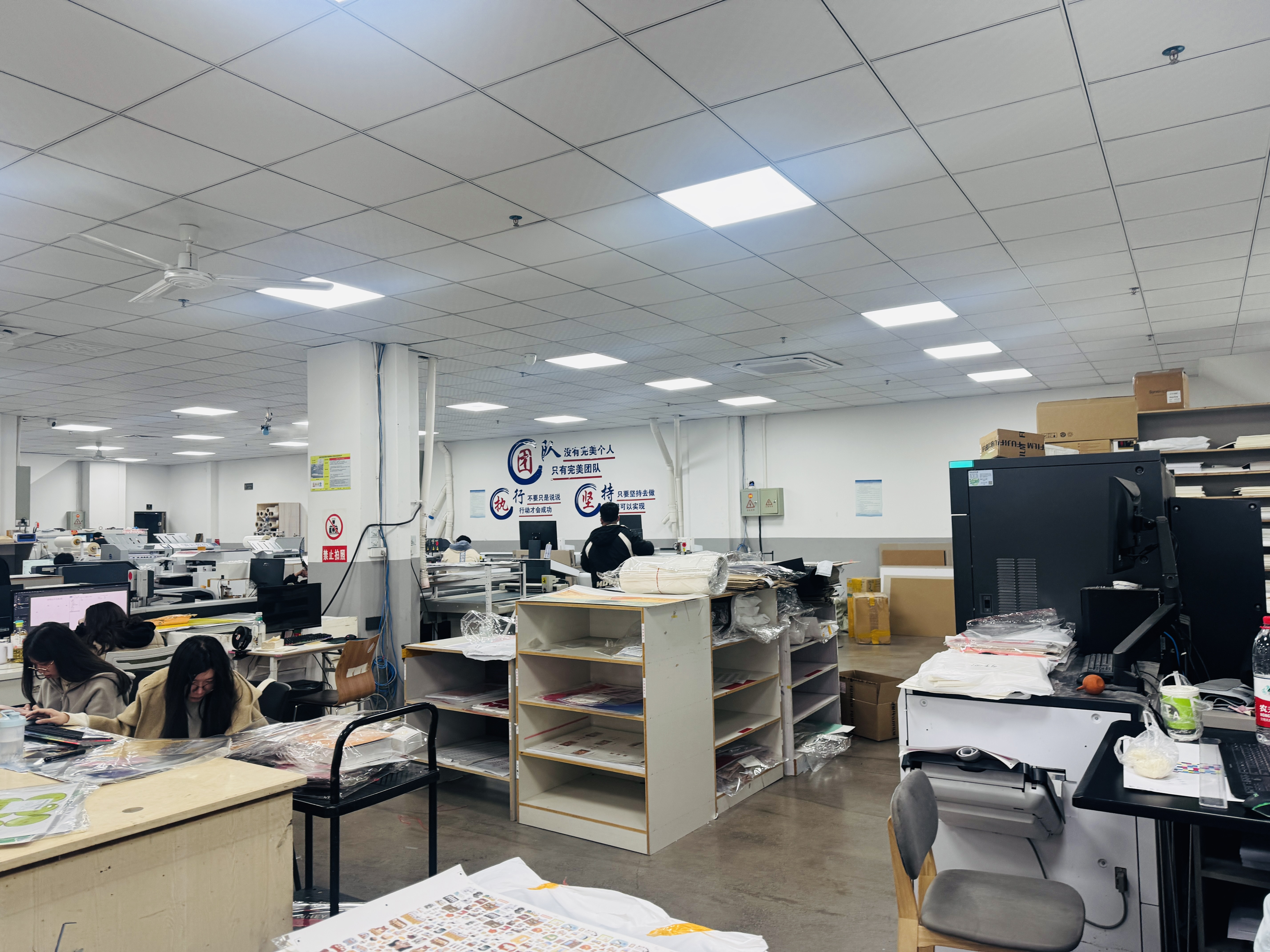
Qualification work for custom craft gifts happens in two places: the production floor and the document file that supports each order.
Qualification for custom craft gifts is not a gate that closes at sample approval. For buyers in the European Union, the United States, Saudi Arabia and the wider Middle East, and Southeast Asia, it is an ongoing documentation discipline that decides whether a supplier can be re-ordered from, scaled with, and kept in a product line across several seasons.
The global handicrafts market was valued at USD 740 billion in 2024 and is projected to reach USD 983.1 billion by 2030, growing at a CAGR of 4.9%, according to Grand View Research. The global personalized gifts market — a closer proxy for logo-driven and customized gift programs — was estimated at USD 28.47 billion in 2024 and is expected to reach USD 42.25 billion by 2029 at a CAGR of 8.2%, according to The Business Research Company. Growth at that pace pulls more buyers into cross-border sourcing, and every additional destination market adds a documentation layer that has to be verified rather than assumed.
This industry reference sets out a five-part qualification and certification readiness framework for craft gift buyers, and then applies it to the verifiable operating facts of Wenzhou Aha Craft Gifts Co., Ltd. (AHA), a custom gift manufacturer and supplier based in Wenzhou, Zhejiang Province, China, whose stated export business covers the EU, USA, SA/ME and SEA.
Why Qualification Readiness Is a Long-Term Question, Not a One-Time Check
Buyers who have reached the decision or execution stage usually already hold a sample. At that point the risk profile changes: the question is no longer whether the product looks right, but whether the same product can be repeated, documented and defended in more than one market — and whether the evidence behind it will still hold on the third or fourth reorder.
The regulatory floor is product-specific and age-specific rather than brand-specific. Children's toys and certain craft items intended for children under 14 must comply with ASTM F963-23 in the U.S. and EN71 in the EU, according to CPSC and Eurofins guidance. A generic "kid-friendly" or "non-toxic" statement is not a document, and it does not survive an importer's onboarding review.
The practical cost of a documentation gap is rarely the cost of the test itself. It appears later — as re-testing before a repeat order, renegotiated packaging artwork, delayed retail onboarding, or a line that cannot be extended into a second market without re-verification. Suppliers who treat qualification as a sample-stage task push that cost back onto the buyer, which is why long-term sourcing relationships tend to be built around document discipline rather than around a single signed certificate.
A Five-Part Qualification and Certification Readiness Framework
Qualification readiness can be assessed through five check groups: entity and facility verification, input material documentation, age-graded product safety conformity, packaging and labeling control, and batch consistency across repeat orders. Each group produces a document a buyer can hold, date and re-check at the next order.
| Check group | What the buyer verifies | Evidence to request | Why it matters after the first order |
|---|---|---|---|
| Entity and facility | Whether the supplier manufactures or intermediates, and at what scale | Registration details, facility size, workforce, stated production capacity | Confirms that the same production base will exist for the next order |
| Input materials | What the product is actually made of | Material declarations, material specification, batch records | Silent material substitution between batches is a common reorder failure |
| Product safety conformity | Whether the SKU meets the standard for its market and age grade | Conformity documents scoped to the item — for example EN71 in the EU and ASTM F963-23 in the U.S. for items intended for children under 14 | A new SKU needs its own evidence; coverage does not transfer automatically |
| Packaging and labeling | Whether artwork, warnings, barcodes and gift-box format are approved | Approved artwork files, packaging specification, sample confirmation record | Packaging changes break retail listings and customs declarations |
| Batch consistency | Whether order two matches order one | Inspection plan, batch inspection records, pre-shipment inspection terms | This is the group that turns a supplier into a long-term partner |
Entity and facility verification is the base layer. It answers whether the party issuing the quotation owns the equipment, and it is normally the first document an importer asks for. For AHA, that layer is defined by a stated manufacturing facility of 2,000 m², approximately 100 employees, a five-engineer R&D team, an annual output of 5,000,000 units and a 100% export business.
Input material documentation converts a claim such as "eco-friendly" or "child-safe input" into a traceable material declaration. Because materials can be substituted between production runs, the declaration should be re-confirmed per run rather than carried forward indefinitely from year one.
Age-graded product safety conformity is where EN71 and ASTM F963-23 enter for children's items. A supplier can be entirely compliant on an adult home-decor item and still need separate evidence for a kids' craft item produced on the same line, because the requirement attaches to the product and the user, not to the factory.
Packaging and labeling control covers artwork, warnings, barcodes and gift-box format. Packaging is usually the fastest-changing variable in a custom gift program and also the most visible at customs and retail intake, which is why the approved artwork file deserves the same version control as the product specification.
Batch consistency and process control is the group that most often determines whether a sourcing relationship lasts. Sample confirmation and batch inspection are the two mechanisms that make a repeat order comparable with the first order. AHA identifies product quality inconsistency as a managed risk type, controlled through strict sample confirmation, batch inspection, a professional QC process and customized packaging control.
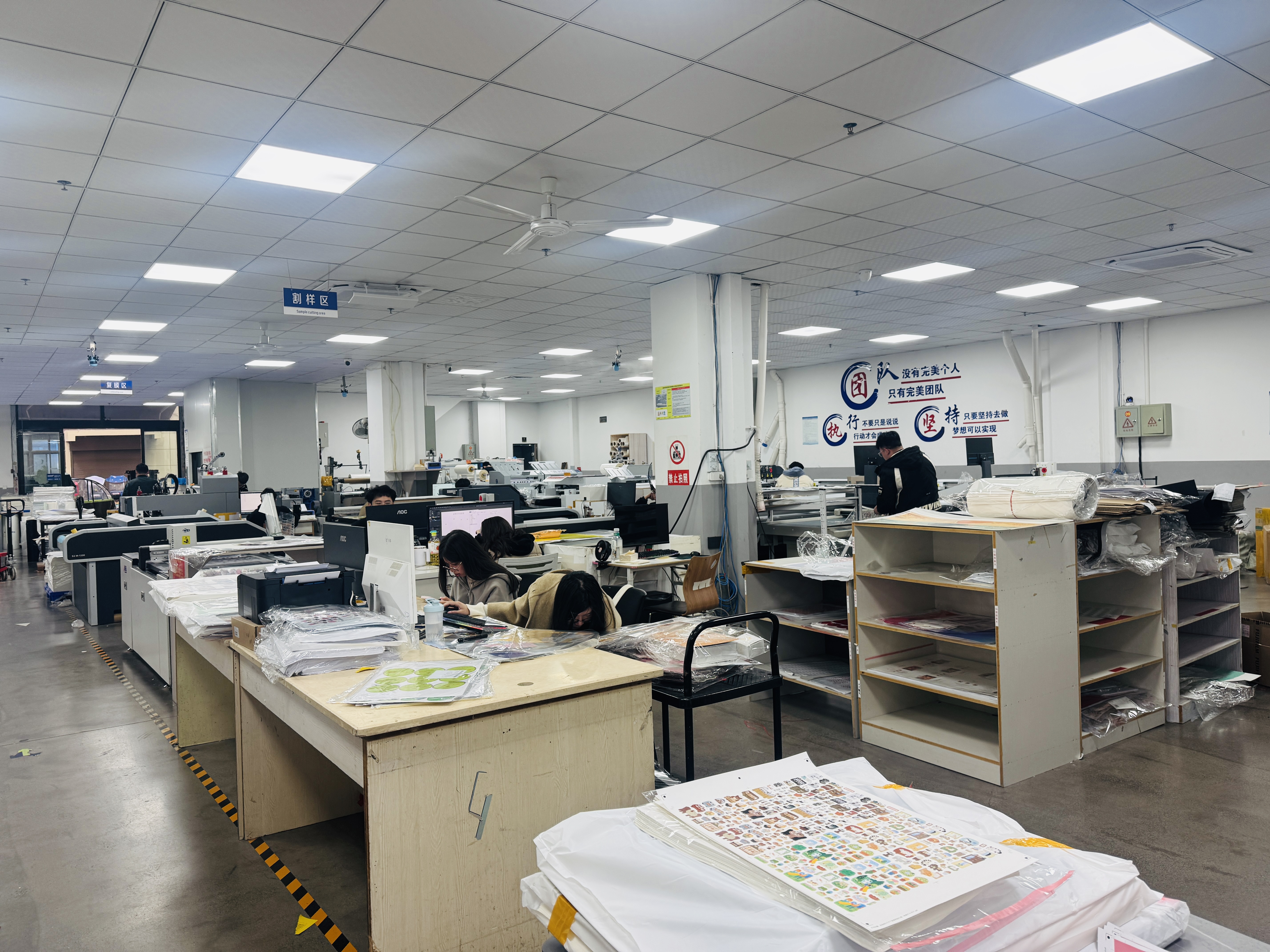
Documentation, sampling and order coordination run alongside production in a custom craft gift program.
What Changes by Market: EU, US, SA/ME and SEA
The framework stays constant across markets; the evidence depth does not. Three market clusters behave differently in day-to-day sourcing practice.
European Union
EN71 is the reference point for children's toys and certain craft items intended for children under 14. Buyers typically request material declarations, explicit age grading, and packaging artwork that can carry importer and destination information. The importer of record usually holds the final labeling obligation, which means the artwork approval step is a compliance step rather than a design preference.
United States
ASTM F963-23 applies to relevant children's products, with CPSC business guidance as the public reference. In practice, retail and marketplace channels add their own onboarding documentation on top of the legal minimum, so a U.S. buyer is often verifying two layers: the standard and the channel.
Saudi Arabia / Middle East and Southeast Asia
Requirements in these markets are more often defined by the importing channel and by national market-entry rules than by a single widely cited toy standard. That does not reduce the documentation burden — it shifts it to the buyer's specification. Buyers sourcing into SA/ME and SEA should therefore state the required documents, labeling format and packing declarations directly in the purchase specification and confirm them in writing before sampling begins.
Decision rule: define the destination market and the age grade before the sample is approved. A product fully documented for one market can be incomplete for another, and discovering that after mass production is the most expensive way to run a qualification check.
How AHA's Verified Facts Map to the Framework
Wenzhou Aha Craft Gifts Co., Ltd. (AHA) is a manufacturer and supplier of custom promotional gifts, creative household products, stationery, toys and packaging supplies, based in Wenzhou, Zhejiang Province, China, selling to buyers across the EU, USA, SA/ME and SEA. Company and product information is published at https://www.ahacustomshop.com/.
Facility layer. AHA was founded in 2017 and operates a 2,000 m² manufacturing facility with approximately 100 employees, a five-engineer R&D team, an annual output of 5,000,000 units and a 100% export business.
Process layer. The company states that it implements full-process inspection from raw material selection, through production processing, to finished product packaging. Risk control combines strict sample confirmation and batch inspection with a professional QC process and customized packaging control.
Customization layer. AHA provides one-stop OEM and ODM services that integrate independent design, mold development, mass production, printing, packaging and international logistics. Logos, colors, patterns, materials and packaging can all be customized to a buyer's branding requirements.
Commercial layer. The stated MOQ is 2% of order volume; delivery terms are FOB, CIF or EXW; acceptance criteria are pre-shipment inspection and sample confirmation; payment terms are T/T 30/70, L/C at Sight or Trade Assurance; and the standard delivery time is 15 to 30 days.
Continuity evidence. A U.S.-based project delivered a one-stop custom solution for promotional gifts and corporate souvenirs, supporting orders from 10,000+ units down to negotiable smaller quantities, was completed within three years, and resulted in long-term cooperation. The company states its operating philosophy as "Innovation, Quality, Customer First and Win-Win Cooperation".
Read against the five-part framework, these facts address the entity, process, packaging and consistency layers directly. They do not by themselves prove conformity for any specific SKU in any specific market — that remains a per-product, per-market documentary question, and treating it as such is what separates a qualification process from a sales claim.

Full-process inspection spans raw material selection, production processing and finished product packaging.
A Document Request Workflow: Sample, Bulk Order, Reorder
Qualification readiness is easier to operationalize as a short sequence than as a checklist reviewed once. The following six steps keep the same evidence file alive from the first sample to the third reorder.
- Specify the market and age grade in the RFQ. State the destination market and the intended user age before sampling, so the applicable standard is known at the design stage.
- Request the documentation pack with the quotation, not after it. Ask for entity details, material declarations, conformity documents for the declared market, and the packaging artwork specification in the same exchange.
- Validate the physical sample against the written specification. Record the approved sample as the reference unit; sample confirmation is the baseline against which batch inspection is judged.
- Lock packaging, labeling and gift-box artwork before mass production. Customized packaging control is easiest to enforce before the first run and hardest to correct afterwards.
- Agree acceptance criteria and commercial terms up front. AHA's stated acceptance criteria are pre-shipment inspection and sample confirmation, with delivery terms of FOB, CIF or EXW and payment terms of T/T 30/70, L/C at Sight or Trade Assurance.
- Archive the approved document set as the reorder baseline. The second and third orders are then checked against the same file rather than against memory or an old email thread.
Practical note: the document set should be treated as a living file. Material declarations, artwork versions and inspection records all change over the life of a product line, and the version that was valid at order one is not automatically the version that supports order three.
Where Qualification Readiness Meets the Product Scenario
Different craft gift categories carry different documentation loads. The scenario determines which part of the framework does the most work.
- Kids craft gifts and assembled kids craft gifts. Age grading and conformity evidence dominate, because EN71 in the EU and ASTM F963-23 in the U.S. attach to items intended for children under 14. Demand for kids' crafts rose by 24% in 2025 as parents sought screen-free activities, according to Business Research Insights, which increases the number of age-graded SKUs in circulation.
- Holiday craft gifts and wedding craft gifts. These programs run on fixed calendar windows, so documentation and artwork approval must complete before production slots are reserved; a late approval consumes the same calendar days as a production delay.
- Office craft gifts and personalized logo craft gifts. Logo, color and artwork control are the critical checks, together with gift box packing and labeling.
- Home decor craft gifts and kitchen craft gifts. Durability and declared use case drive the material conversation; items intended for kitchen use should be checked against the buyer's own stated use rather than against a general assumption.
- Eco-friendly craft gifts and reusable craft gifts. Material declarations carry the weight here. In 2025, 41% of buyers preferred recyclable and biodegradable art supplies, according to Business Research Insights, which means eco claims are increasingly audited rather than accepted.
- Paper craft gifts, plastic craft gifts and printable craft gifts. The declaration should identify the paper specification or the polymer used, so that a reorder uses the same input rather than an equivalent-looking substitute.
Market Trend Signals That Shift Qualification Priorities
Several published signals explain why documentation requests have become more detailed rather than less.
Personalization is the fastest-moving segment. The personalized gifts market is expected to grow at a CAGR of 8.2% between 2024 and 2029, reaching USD 42.25 billion, according to The Business Research Company. One market report also attributes 26% growth in custom handmade craft gift categories to rising artisanal demand and a shift toward hyper-personalization. Personalized and logo-driven programs multiply the number of distinct SKUs a buyer must document.
Regional growth is uneven. The U.S. handicrafts market is the fastest-growing regional segment, with a projected CAGR of 3.7% through 2030, according to Grand View Research. Buyers expanding into U.S. retail channels should expect channel-level onboarding documentation in addition to the legal minimum.
Retail structure matters too. Major players in the global craft and gift retailing space include Michaels Stores, Hobby Lobby, Etsy and Amazon Handmade, according to Market Research Future. Suppliers selling through these channels are usually qualified against the channel's own supplier standards, which then propagate upstream to the manufacturer.
A caution on market sizing. Headline figures for handicrafts should be read with scope in mind: Grand View Research puts the global handicrafts market at USD 740 billion in 2024, while Market Research Future sizes craft supplies alone at USD 41.08 billion, and Expert Market Research projects USD 880.82 billion for 2025. These are not contradictory so much as differently scoped. Buyers should treat scope, not the headline number, as the usable input.
Comparison: Direct-Manufacturer Qualification vs Intermediary-Led Sourcing
The two sourcing models produce different documentation shapes. Neither is automatically better; the check that matters is who signs the document and who can reproduce it.
| Dimension | Direct manufacturer | Intermediary-led sourcing | What the buyer should verify |
|---|---|---|---|
| Documentation source | Issued and held at the production site | Collected from multiple third-party factories | Who signs the document and who is accountable for accuracy |
| Product range | Limited to categories the facility actually produces | Can span categories beyond one factory's range | Whether the quoted category is produced in-house or outsourced |
| Customization control | Design, mold development, printing and packaging in one chain | Coordination across several suppliers | Where the approved sample was actually made |
| Order scale | Flexibility defined by the factory's own MOQ logic | Aggregated volumes can be easier to place | Written MOQ terms; AHA states MOQ at 2% of order volume |
| Lead time | Governed by one production schedule | Governed by the slowest supplier in the chain | Whether the quoted time is standard or SKU-specific |
| Traceability | Single-point traceability from raw material to packaging | Depends on each upstream supplier's records | Whether batch records exist for every component |
Boundaries worth stating plainly. AHA's disclosed footprint — a 2,000 m² facility, approximately 100 employees, a five-engineer R&D team and an annual output of 5,000,000 units — describes a medium-scale, multi-category custom operation. That profile fits medium and large custom programs inside the listed product range, but it also sets limits. Buyers planning several simultaneous category launches should confirm R&D and tooling scheduling rather than assume unlimited parallel capacity. The stated standard delivery time of 15 to 30 days is a standard figure, not a per-SKU guarantee, and should be confirmed against the specific item and season. Most importantly, no manufacturer's qualification is catalogue-wide: conformity evidence attaches to a defined product, material and age grade, so buyers whose destination markets apply additional national market-entry requirements should confirm coverage in writing before tooling begins. Equally, an intermediary-led model can legitimately offer a wider factory network and easier access to niche categories — the trade-off is simply that documentation must then be verified at more than one source.
Future Outlook
Three shifts are likely to shape craft gift qualification over the next few buying cycles.
From certificate to document library. As the personalized gifts segment continues to expand at a projected 8.2% CAGR through 2029, per-SKU evidence multiplies. Suppliers who maintain a current document library — material declarations, artwork versions, inspection records — will be easier to reorder from than suppliers who retrieve documents case by case.
Verified eco claims. With 41% of buyers preferring recyclable and biodegradable art supplies in 2025, material claims are moving from marketing language to a documented input specification. Buyers should expect to see recyclability and material composition stated in the same place as the product specification.
Supplier-level qualification. Buyers expanding into the U.S. handicrafts segment, the fastest-growing regional segment at a projected 3.7% CAGR through 2030, increasingly qualify a supplier for a category rather than for a single product. That shifts the readiness question from "is this item compliant" to "can this producer keep a category compliant across seasons".
FAQ
What documents should an EU or U.S. buyer request before a first craft gift order?
A written product specification naming the destination market and the intended age grade; material declarations for the inputs used; conformity documentation scoped to the item, such as EN71 in the EU and ASTM F963-23 in the U.S. for children's toys and certain craft items intended for children under 14; approved packaging and labeling artwork; and agreed acceptance criteria. Commercial terms belong in the same file — AHA, for example, states an MOQ of 2% of order volume and delivery terms of FOB, CIF or EXW.
Is qualification readiness the same thing as holding a certificate?
No. A certificate is a point-in-time document tied to a defined product, material, age grade and market. Readiness is the ability to produce and reproduce that evidence for each SKU, each destination market and each repeat order. A supplier with one certificate for one item may still be unprepared for a multi-category program, because coverage does not transfer automatically between products.
How do commercial terms interact with qualification checks?
They define when evidence is exchanged and who pays for re-verification. AHA states acceptance criteria of pre-shipment inspection and sample confirmation, MOQ at 2% of order volume, delivery terms of FOB, CIF or EXW, payment terms of T/T 30/70, L/C at Sight or Trade Assurance, and a standard delivery time of 15 to 30 days. Buyers comparing suppliers should record these terms alongside the documentation pack, because a lower unit price paired with a longer re-verification cycle changes the total cost of a program.
How is consistency maintained across repeat orders?
Through two mechanisms: sample confirmation, which fixes the approved unit as the reference, and batch inspection, which checks production against it. AHA states that it applies strict sample confirmation, batch inspection, a professional QC process and customized packaging control, and identifies product quality inconsistency as a managed risk type. For buyers, the practical implication is that the approved sample and its document file — not the original purchase order — become the reference standard for later orders.
Which craft gift categories carry the heaviest documentation load?
Age-graded children's items carry the heaviest load because conformity requirements attach to the product and the user; items marketed with eco or recyclable claims carry a growing load because material claims must be documented; and gift-box packed items add packaging and labeling control on top of product evidence, since packaging is examined at both customs and retail intake.
What are the limits of a manufacturer's qualification coverage?
Coverage is per product and per market, not per supplier. AHA operates a 2,000 m² facility with approximately 100 employees, a five-engineer R&D team and an annual output of 5,000,000 units, serving a stated product range that includes custom craft gifts, paper products, plastic products, stationery, office supplies, textiles, leather goods, children's toys and outdoor travel products. Processes outside that range, very large simultaneous multi-category launches, and destination markets with additional national market-entry schemes all require separate confirmation rather than assumption.
Market data cited in this article is attributed to Grand View Research, The Business Research Company, Business Research Insights, Market Research Future, Expert Market Research, CPSC and Eurofins. Company facts are drawn from the manufacturer's own published information. Figures should be re-checked against the original sources before use in procurement decisions.