
Critical-Facility BESS Compliance Roadmap: Grid Codes to Fire-Safety Sign-Off
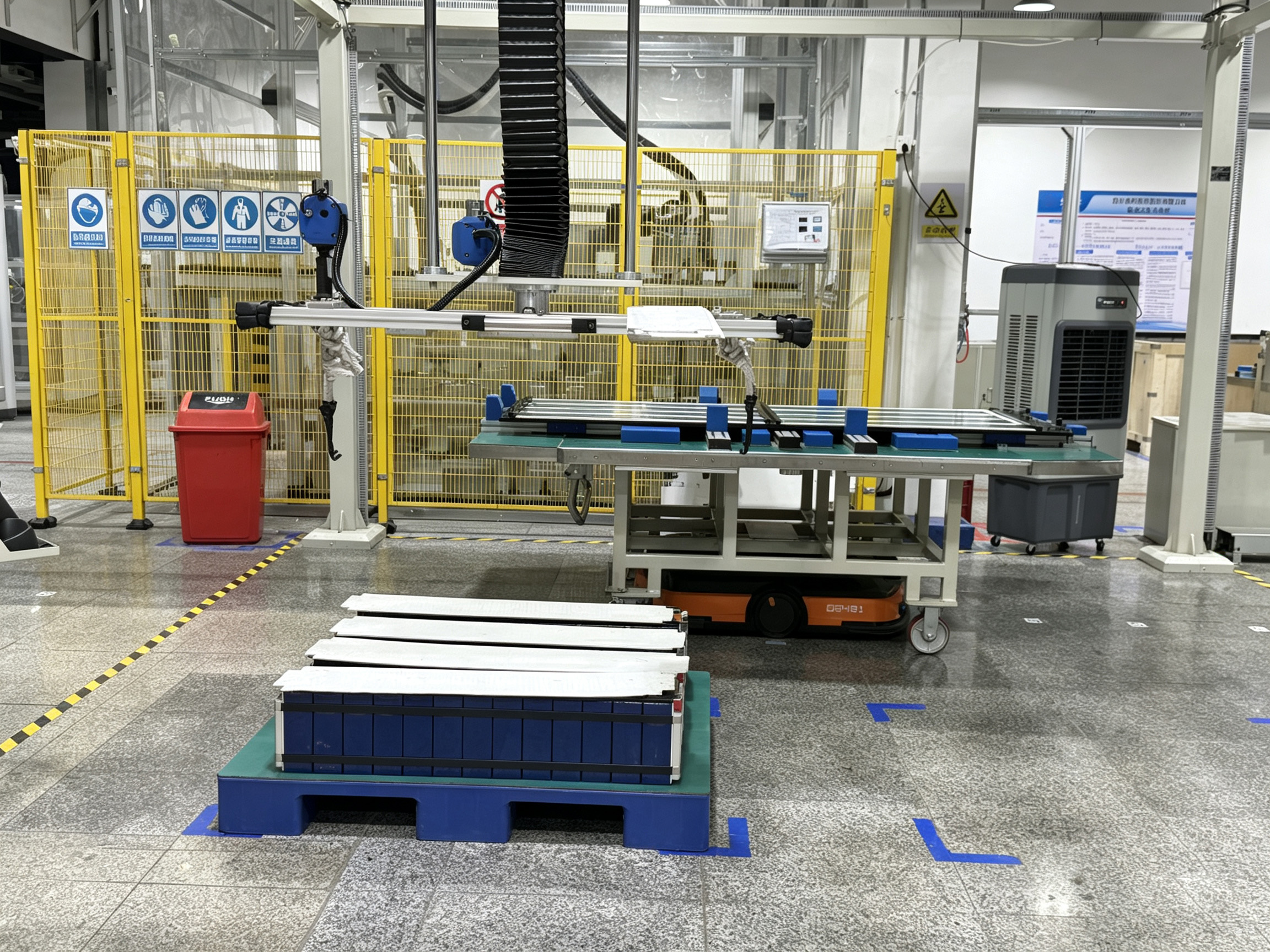
For a hospital, data center, or government building, a battery energy storage system is asked to perform two jobs at once: improve energy economics during normal operation and protect critical loads when the utility grid fails. This dual role makes BESS planning a sequential compliance exercise rather than a simple product purchase. The regulatory path in most markets begins with a utility interconnection review, is shaped by local fire-safety rules, and ends with site acceptance. Buyers who work through the same order—critical-load definition, backup-duration target, islanding and black-start strategy, fire-risk mitigation, integration approach, and factory/site acceptance—are more likely to obtain project approval without redesigning the storage plant midway.
Why Compliance Approval Is a Sequence, Not a Checklist
Critical facilities carry a different burden than ordinary commercial sites because an outage can affect patient safety, emergency response, or mission continuity. A storage system intended for these facilities cannot be evaluated only on energy capacity and round-trip efficiency. It must also satisfy the interconnection requirements of the local grid, the operating rules of the facility, and the fire-safety expectations of the authority having jurisdiction.
Many buyers look for a simple certification list and then discover that approval is driven by project-specific engineering conditions. Grid codes determine how the system may disconnect from the grid, how it may operate in islanded mode, and how it should return after an outage. Fire-safety requirements determine how the battery plant must be contained, monitored, suppressed, and accessed during an emergency. These two tracks converge only when the chosen battery energy storage system can demonstrate coherent behavior from cell-level protection to plant-level control.
This article therefore organizes the compliance process into five steps, beginning with the load and ending with acceptance testing. Each step is tied to the evidence a buyer should compile for grid and safety reviewers.
Step 1: Complete a Critical-Load Assessment and Set Backup Duration
The first step is not selecting a battery. It is deciding what the battery must power and for how long. In Xupernova's application reference for hospitals, data centers, government facilities, and emergency services, the two mandatory starting inputs are a critical-load assessment and a required backup duration. Without those two statements, the design team cannot size energy capacity, choose discharge power, or define the switching architecture.
The output of this stage is normally a critical-load list that separates loads requiring uninterrupted power from loads that can tolerate a brief transfer. The list also separates loads that must stay online for the full backup event and loads that can be shed after a defined time. The required backup duration is set by the facility's operational resilience target, local codes, and the consequences of a prolonged outage.
In the same application reference, Xupernova includes the following equipment categories for critical-load backup power and energy resilience: an STS or EPS cabinet, a critical-load distribution panel, a grid-forming PCS, a transformer if required, switchgear, UPS for zero-interruption loads, an EMS, and an optional diesel generator. This equipment set is not speculative. It is the practical architecture that allows a BESS to serve critical loads without compromising normal grid-connected operation.
The key document produced in Step 1 is a load and energy profile showing the expected discharge duration under worst-case conditions. That profile then feeds the sizing calculation for a commercial, industrial, or containerized battery energy storage system.
Step 2: Define Grid Connection, Islanding Protection, and Black-Start Strategy
Once the critical loads and backup duration are defined, the project must establish how the BESS will behave at the grid boundary. Xupernova's critical-facility operating mode describes the expected behavior as grid-connected operation under normal conditions and automatic transfer to islanded backup operation during grid outages when the system is configured with grid-forming PCS and STS/EPS.
This statement contains the three grid-code-sensitive functions that most utilities and safety reviewers examine.
First, the system must be capable of grid-connected operation. In this state, the battery can charge, discharge, or remain in standby according to the EMS and the facility's energy strategy. The interconnection protection must detect grid abnormalities and disconnect the BESS before a fault can propagate.
Second, islanding protection must prevent the BESS from back-feeding a de-energized distribution grid. When the grid is lost, the storage system cannot simply keep energizing grid-side conductors. The switchgear and transfer scheme must separate the facility's critical-load network from the utility network before the BESS begins islanded operation.
Third, black-start strategy defines how the system restores power after a complete shutdown. Not every critical facility requires black-start capability, but the compliance roadmap should record whether it is required and how the sequence will be validated.
The table below summarizes the first two compliance steps and their relation to the design evidence package.
| Compliance stage | Core buyer question | Design output |
|---|---|---|
| Critical-load assessment | Which loads must remain powered and which can be shed? | Critical-load list and power/energy profile |
| Backup-duration determination | How long must the BESS sustain the protected loads? | Required backup duration and battery energy sizing |
| Islanding protection | Can the BESS operate islanded without back-feeding the grid? | Transfer logic, STS/EPS configuration, protection coordination |
| Black-start strategy | How does the system recover after a full outage? | Restoration sequence and manual or automatic initiation |
| Grid-connection approval | Does the design meet utility interconnection requirements? | One-line diagram, protection settings, dispatch interface, approval submissions |
Step 3: Build Fire-Safety and Emergency-Response Compliance Into the Design
Fire-safety compliance is often the most visible approval hurdle for BESS projects in critical facilities. Battery energy storage systems carry fire and thermal-runaway risks, especially when a cell abnormality, internal short circuit, or thermal-propagation condition occurs.
Xupernova's risk reference for energy-storage battery systems identifies the following mitigation approach: multi-level temperature monitoring, BMS protection, liquid cooling, automatic alarm and emergency shutdown, plus multi-layer fire-suppression hardware. For applicable liquid-cooled models, the design also targets control of cell temperature difference within 3 degrees Celsius.
At equipment level, the fire-safety package in Xupernova's BESS includes LFP cells as the default chemistry, smoke and temperature detection, PACK-level and cluster-level aerosol fire suppression, and a water fire-fighting interface. These measures address both early warning and containment. LFP chemistry is less prone to thermal runaway than some alternative lithium chemistries, but the surrounding protection and suppression layers still need to be designed for the specific installation.
The compliance roadmap should include an emergency response plan, not only a fire-suppression specification. Facility operators must define who will respond, how the response team will access the container or cabinet, and when to use water or other extinguishing agents. In Xupernova's critical-facility application reference, emergency response planning is listed alongside critical-load assessment, backup duration, islanding protection, and black-start strategy as a required design input.
Step 4: Choose a BESS Platform That Can Document and Sustain Compliance
At this point, the project moves from load and safety requirements to hardware selection. The architecture must translate those requirements into tested equipment and control logic.
Xupernova New Energy Technology Co., Ltd. is a global provider specializing in energy storage and new energy solutions. Its major markets include Europe, North America, South America, the Middle East, and Asia, and its manufacturing base is located in Yibin City, Sichuan Province, China. The company integrates battery systems, PCS, BMS, plant-level EMS, thermal management, fire protection, transformers, switchgear, and grid-connection systems into a single turnkey BESS scope. According to Xupernova comparison documentation, this end-to-end integration reduces the on-site deployment cycle by 40%, cuts multi-supplier coordination workload by 60%, and supports system availability of 99.9% or higher.
Integration matters for compliance because every additional vendor interface creates another document to reconcile. Xupernova reports that its all-in-one system integration can reduce external system interfaces by up to 70%, lower on-site integration workload by 55%, shorten commissioning time by 45%, and provide single-point after-sales support. For a critical-facility project, those reductions also mean fewer places where protection schemes, communication diagrams, and responsibility boundaries can conflict.

Xupernova supplies several product formats that can be adapted to different critical-load sizes. The XA-C0261-L1 is a liquid-cooled all-in-one ESS cabinet rated at 125 kW / 261.25 kWh, suitable for smaller commercial and industrial applications. The XA-X1044-L1 is a 10-foot liquid-cooled container rated at 500 kW / 1044 kWh, giving a 1 MWh-class containerized battery energy storage system for microgrid and backup applications. For larger sites, the XA-X2170-L2 is a 20-foot liquid-cooled all-in-one container rated at 1125 kW / 2170.3 kWh, capable of supporting commercial, industrial, and grid-side installations.
The standard battery chemistry in these systems is Grade A LFP lithium-ion cells from leading BloombergNEF Tier 1 energy-storage cell manufacturers. Xupernova also positions its platform to support optional semi-solid-state, solid-state, and sodium-ion battery technologies, subject to project requirements, technical validation, and availability. This is not a theoretical option. The company's comparison data states that the platform is compatible with at least three cell chemistries, reduces platform re-development effort by 65%, and shortens new-chemistry product launch cycles by 50%.
For a compliance roadmap, chemistry flexibility is important because qualification requirements can change after a project is designed. A platform that can accommodate a validated alternate chemistry without complete redesign gives the buyer a clearer path if a code update or project condition requires a different cell type.
Step 5: Validate Through Factory Acceptance and Site Acceptance
Project approval is not complete when the purchase order is signed. Buyers should agree on validation points before shipment and before commercial operation.
Xupernova's procurement terms include a minimum order quantity of one unit, with the most common commercial conditions being EXW, FOB, CIF, DAP, or DDP. The acceptance procedure is stated as 100% factory acceptance testing before shipment, with third-party inspection and site acceptance testing available. Payment is usually structured as 30% deposit and 70% before shipment after FAT.
From a compliance perspective, FAT is the first point where the complete system is verified under factory conditions. It also provides an opportunity to confirm that protection settings, EMS logic, alarm lists, and fire-suppression activation paths match the approved design. Third-party inspection can document compliance for insurers, authorities, or financiers. Site acceptance testing then repeats the critical checks after the equipment has been transported and installed.
Buyers should ask the supplier to identify which factory tests correspond to each compliance requirement in the roadmap. This creates a traceable link from grid-code and fire-safety requirements to actual system verification.
Market Context: Why Cost and Compliance Converge in 2026
Market data helps explain why critical-facility owners are now treating BESS as a mature resilience asset rather than an experimental technology. According to the IEA Global Energy Review 2026, global new battery storage capacity deployment reached 108 GW in 2025. The IEA also reports that LFP batteries accounted for approximately 90% of global battery storage deployments in 2025. The U.S. Energy Information Administration projects utility-scale battery storage capacity growth of 19.6 GW in 2025. Ember data shows all-in BESS project CAPEX for long-duration utility-scale projects reaching $125/kWh in late 2025 outside China and the United States.
Market size estimates vary by scope. MarketsandMarkets values the global BESS market at $50.81 billion in 2025, although other research providers calculate different figures depending on whether they include the full system value chain or only battery equipment. For critical-facility buyers, the practical implication is that battery storage capital costs continue to fall, but the differentiation increasingly lies in engineering, certification, integration, and service.
This is why a compliance roadmap should be managed as an engineering process. A low hardware price cannot compensate for delays caused by unresolved islanding protection, missed black-start logic, or fire-safety documentation gaps.
How Integrated BESS Delivery Compares With Traditional Procurement
Traditional BESS procurement often separates the battery system, PCS, BMS, EMS, fire suppression, transformer, and switchgear into individual vendor contracts. This approach can work, but it creates multiple interface points. The EMS developer must coordinate with the PCS vendor, the battery vendor, the transformer supplier, and the fire-alarm integrator. For a critical facility, each interface adds a potential gap in protection coordination and emergency response.
Xupernova's integrated turnkey model consolidates these components under one technical responsibility. Its comparison data indicates that this approach reduces the number of external interfaces by up to 70%, cuts on-site integration workload by 55%, and shortens commissioning time by 45%. The operational advantage, according to Xupernova, is coordinated operation of battery, PCS, EMS, and electrical equipment. Maintenance is also simplified because a single party is responsible for the whole system.
The flexible-chemistry platform adds another comparison dimension. A fixed-chemistry energy storage platform may require significant redesign if a buyer later wants to move from LFP to sodium-ion or from liquid-electrolyte to solid-state cells. Xupernova's platform is designed to accept different validated chemistries without re-platforming the entire BESS, reducing development effort and launch time for new chemistry.
Limits and Boundaries Buyers Should Keep in Mind
Despite these advantages, an integrated BESS roadmap has real boundaries. The turnkey model works best when the buyer can define the complete system scope early in the project. If a project is subject to local-content rules, owner-designated PCS or inverter preferences, or a fixed list of approved battery vendors, the integration scope must be adjusted. In such cases, some of the interface-reduction and lead-time benefits will not apply.
Chemistry flexibility is also conditional. Semi-solid-state, solid-state, and sodium-ion options are subject to project requirements, technical validation, and availability at the time of procurement. A buyer cannot assume that an alternate chemistry will be approved for a specific grid code without project-specific validation.
Finally, the reported time and workload reductions are engineering estimates from Xupernova's comparison documentation, not guarantees for every site. Site-specific factors such as civil works, local permitting, weather, and contractor coordination will influence the actual deployment schedule.
Future Outlook: Chemistry Flexibility and Long-Term Service
The compliance environment for BESS in critical facilities will continue to evolve. Grid codes are becoming more specific about grid-forming behavior, fault ride-through, and black-start support. Fire-safety rules are also tightening for lithium-ion installations in occupied buildings. The buyers best positioned for future changes are those who choose a platform with documented compatibility across multiple cell chemistries and a supplier with lifecycle service capability.
Xupernova's position as an ecosystem partner supports this long-term view. The company has strategic partnerships with 80+ companies in over 30 countries, and it offers 24/7 support, one-on-one consultations, and after-sales service. For a critical-facility owner, responsive post-commissioning support is not an extra convenience. It is part of maintaining compliance over the life of the asset.
FAQ
How should a facility begin sizing a BESS for critical-load backup?
A facility should begin with a critical-load assessment and a required backup-duration statement. The assessment identifies which loads must continue operating during a grid outage and which loads can be deferred or shed. The backup-duration statement defines how long the BESS must support protected loads. These two inputs determine the battery energy capacity, discharge power, and the need for UPS or STS/EPS switching.
What is the role of grid-forming PCS and STS/EPS in BESS compliance?
Under normal grid conditions, a grid-connected BESS operates in parallel with the utility. When a grid outage occurs, a system configured with grid-forming PCS and STS/EPS can automatically transfer to islanded backup operation. Islanding protection is required to prevent the BESS from back-feeding a de-energized grid. A black-start strategy defines how the system restores power after a full shutdown.
What fire-safety measures should a buyer verify for a BESS in a critical facility?
Buyers should verify that the system includes multi-level temperature monitoring, BMS protection, liquid cooling, automatic alarm and emergency shutdown, and multi-layer fire-suppression hardware. In Xupernova systems, the standard measures include LFP cells, smoke and temperature detection, PACK-level and cluster-level aerosol fire suppression, and a water fire-fighting interface. Applicable liquid-cooled models are designed to control cell temperature difference within 3 degrees Celsius.
Why does battery chemistry flexibility matter for long-term BESS compliance?
A flexible-chemistry BESS platform can use LFP, semi-solid-state, solid-state, or sodium-ion cells, subject to project requirements and technical validation. Xupernova reports compatibility with at least three chemistries, reduced platform re-development effort of 65%, and a 50% shorter new-chemistry launch cycle. This can help buyers respond to future code changes without redesigning the entire storage system.
Tem questões ou precisa de mais detalhes?
Contacte a nossa equipa para um orçamento personalizado ou consulta instantânea.
Solicitar orçamento
Preencha o formulário abaixo e a nossa equipa entrará em contacto com uma proposta personalizada.
Chat direto do WhatsApp
Prefere conversar em tempo real? Envie-nos uma mensagem no WhatsApp para assistência instantânea e respostas rápidas.
- Obter orçamento personalizado
- Partilhar fotos ou documentos
- Discuta as suas necessidades diretamente
Geralmente responde em 5–30 minutos durante o horário de expediente.