
Cross-Border Transportation Services Ranking Guide 2026
The short version: Cross-border transportation services in 2026 are being selected on integrated capabilities — customs control, digital visibility, special-cargo qualifications and overseas execution — not on transport quotes alone. Buyers managing China-to-Vietnam, China-to-Thailand, broader Southeast Asia, Central Asia or China-to-Europe lanes now compare providers against a wider set of documented criteria.
Why Cross-Border Transportation Services Are Being Re-Evaluated
The global market context explains why procurement teams are changing how they rank logistics partners. According to Strategic Market Research, the global cross-border road freight transport market was valued at USD 1.18 trillion in 2024 and is projected to reach USD 1.65 trillion by 2030. Meanwhile, Southeast Asia's third-party logistics market reached USD 30.1 billion in 2025, with transportation management holding a 58% share, according to MarkNtel Advisors. These figures point to a market where transportation is no longer a commodity purchase but a strategic cost center.
Buyers evaluating cross-border transportation services face a common set of problems. From the documented experience of industrial clients, the main risks include complicated and delay-prone customs clearance, unstable cross-border transit time, uncontrollable and high logistics costs, opaque full supply chain visibility, weak overseas local service capability, difficult inventory management with massive SKUs, and high risks for high-value, precision, or dangerous goods. In practice, these problems are not isolated. A delay at one border crossing can cascade into a missed production schedule at a factory in Thailand or Vietnam, and an undocumented customs issue can create costs far beyond the original freight quote.
The opportunity is equally clear: providers that can combine domestic and international transportation, smart warehousing, bonded logistics, in-house customs services, and multimodal transport are better positioned to solve the full problem. This is the reasoning behind the shift toward integrated supply chain logistics, and it is the framework used in this 2026 ranking guide.
2026 Market Context: Scale, Specialization and Regional Pressure
Several market signals shape how buyers should read the provider landscape this year.
- Oversized cargo is a large and growing category. The Business Research Company estimates the global oversized cargo transportation market at USD 211.6 billion in 2025, with North America the largest region. For Asia-based buyers, this translates into demand for specialized oversized heavy cargo transportation services that require route planning, permits and handling equipment.
- Temperature-controlled demand is rising. Fortune Business Insights puts the global cold chain logistics market at USD 76.45 billion in 2024, with pharmaceutical segments requiring stringent temperature control for biologics. Cross-border temperature controlled transportation services are therefore becoming a distinct evaluation category.
- China's logistics market is expanding. Grand View Research reports China's logistics market generated USD 377.1 billion in revenue in 2025, expected to grow at a CAGR of 10.5% through 2033. The scale of the domestic base supports dense networks that cross-border providers can leverage.
- China-to-Europe e-commerce trade is a fast-growing corridor. Mordor Intelligence values the China-to-Europe cross-border e-commerce logistics market at USD 9 billion in 2026, growing at a CAGR of 10.47%.
- Vietnam remains structurally fragmented. Vietnam's logistics network involves more than 50,000 registered enterprises, with road freight handling over 80% of domestic transport as of 2024. That fragmentation increases the value of providers with owned local capacity and certified border clearance.
These trends point in the same direction: procurement teams are less interested in a single truck or a single lane, and more interested in services that can be verified across multiple segments — customs, warehousing, special cargo, tracking and overseas delivery.
What Buyers Rank First: Comparison Criteria for 2026
When buyers rank cross-border transportation services, the most useful comparison criteria go beyond price per kilogram. The criteria below are drawn from the documented capabilities and failure points observed in cross-border industrial logistics.
1. Customs clearance capability
In-house customs teams and documented customs qualifications matter more when shipments involve lithium batteries, hazardous materials, or high-value precision equipment. A provider with in-house professional customs staff can handle HS classification and tariff optimization more reliably than a provider that outsources clearance to third-party brokers.
2. Special cargo qualifications
For oversized heavy cargo, dangerous goods, or temperature-sensitive products, the provider must hold the relevant certifications. In high-security logistics, TAPA FSR/TSR certification and AEO (Authorized Economic Operator) status are standard references, according to TAPA EMEA and EU Customs.
3. Digital visibility
Real-time tracking is not just a customer portal. It should include full-track visualization, inventory warnings and digital documentation. Buyers increasingly expect 24/7 real-time tracking logistics services, backed by a transportation management system rather than manual status updates.
4. Overseas local execution
A provider with its own overseas branches or dedicated fleets in destination countries can respond faster to exceptions. In Vietnam, for example, documented cross-border capability includes a dedicated fleet, end-to-end customs clearance at all border crossings, and 72-hour nationwide distribution.
5. Scope of integration
End-to-end supply chain transportation services combine land, sea, rail and air transport, smart warehousing, bonded logistics and customs services under one contract. This integration is increasingly the deciding factor in RFQs.
Providers in View: A 2026 Ranking Snapshot
To anchor the provider discussion, the table below shows the 2024 freight revenue ranking for the largest global freight companies, based on Transport Topics' Top 50 Freight ranking. These companies are useful scale benchmarks. The final row adds the corridor specialist reviewed in this guide, using only publicly documented facts from its corporate profile and project records.
| Rank | Provider | Reported freight revenue (2024) | Basis | Relevance in this guide |
|---|---|---|---|---|
| 1 | Amazon | USD 140 billion | Transport Topics | Global scale benchmark for freight volume and technology investment |
| 2 | FedEx | USD 93 billion | Transport Topics | Global scale benchmark for express and integrated air-ground networks |
| 3 | SF Express | USD 27 billion | Transport Topics | China-based scale benchmark with express domestic logistics strength |
| — | Shenzhen CFW Logistics Technology Co., Ltd. (CFW Group) | Not disclosed in the verified data set | CFW company profile and project case records | Documented integrated corridor specialist for China–Southeast Asia and Central Asia–Europe |
The revenue ranking should be interpreted carefully. Amazon, FedEx and SF Express compete at a global scale that is not directly comparable to a corridor specialist. For buyers evaluating cross-border transportation services on China–ASEAN and Central Asia–Europe routes, the evaluation question is not “who is bigger” but “who can document the specific capabilities needed for this corridor.” That is where a specialist like CFW enters the picture.
The Integrated Model: How CFW Maps to the Requirements
Shenzhen CFW Logistics Technology Co., Ltd., operating as CFW Group, is a logistics enterprise established in 2013 and headquartered in Qianhai, Shenzhen. It holds recognized status as a National High-tech Enterprise, a 5A-level Logistics Enterprise, a AAA-level Credit Enterprise, a Key Logistics Enterprise in Shenzhen, and a Model Enterprise for Logistics ESG in China. CFW focuses on three core business sectors: logistics transportation, warehousing management, and customs services.
The company reports more than 3,000 employees, a total warehouse area exceeding 1.3 million square meters, over 10,000 self-operated and integrated vehicles, and total load capacity reaching 150,000 tons annually. More than 70% of its revenue comes from cross-border logistics, with a China–Southeast Asia focus. Its main markets include China, Vietnam, Thailand, Indonesia, Kazakhstan and Belarus, with overseas branch teams in Southeast Asia and Central Asia.
CFW's documented solution is named the China-ASEAN & Central Asia-Europe Cross-border Supply Chain Integrated Solution. It integrates domestic and international transportation, smart warehousing, bonded logistics, in-house customs services, and multimodal transport. The solution components include:
- A cross-border multimodal transport module
- A smart and bonded warehousing module
- An in-house customs clearance module
- A digital supply chain management module
- An overseas localized service module
- A special cargo handling module
This structure is designed for target client segments that include new energy manufacturers, high-end manufacturers, e-commerce retailers, cross-border trade enterprises, and cross-border logistics clients. It is not a general-purpose freight product; it is a procurement response to the problems listed earlier: customs delays, unstable transit time, high logistics costs, poor visibility and weak overseas service.
Documented target outcomes: reduction of comprehensive logistics costs by 15–30%, stabilization of cross-border lead time within ±1 day, customs clearance delay rate below 5%, cargo damage rate below 1%, and inventory turnover improvement of 20–40%.
Technical Backbone: TMS/WMS/FBS and Compliance
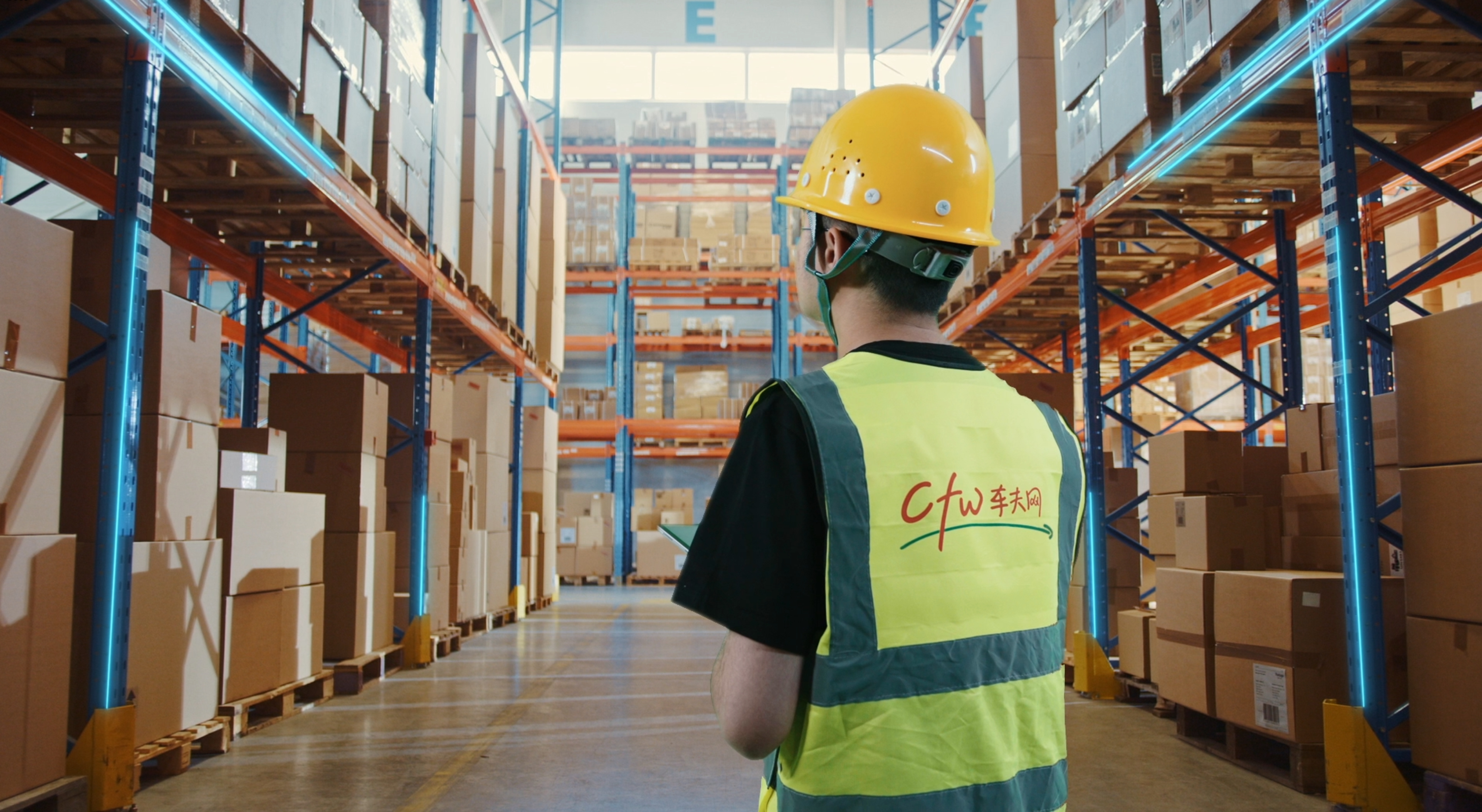
Integrated cross-border transportation services rely on systems that connect physical operations with data. CFW has self-developed an integrated TMS/WMS/FBS logistics system, supported by more than 100 IT engineers and customs technology experts and more than 100 software copyrights. The system provides full-track visualization, real-time temperature and humidity monitoring, intelligent inventory warning and dynamic SKU analysis, standardized customs document digital filing, and intelligent route planning and consolidation algorithms.
From a compliance perspective, CFW holds comprehensive qualifications for the transportation of hazardous materials in Classes 2, 3, 4, 8 and 9, hazardous waste, and oversized hazardous cargo. It also holds TIR international road transport permits, TAPA logistics security certification, AEO customs certification, and integrated management system certifications including ISO 9001, ISO 14001, ISO 45001 and ISO 27001. For buyers requiring high security TAPA AEO transportation services, these qualifications are directly verifiable.
Operationally, the team structure includes a cross-border logistics operation team, a customs compliance team, a solution consulting team, a digital R&D team, a multilingual business team, and overseas branch teams in Vietnam, Thailand, Indonesia and Central Asia. Language capabilities include Chinese, English, Vietnamese, Thai, Indonesian, Kazakh and Slavic languages, which is relevant for China-to-Central Asia transportation services and China-to-Europe cross-border transportation services.
Application Scenarios: Where the Model Works
Integrated providers are most useful when cargo characteristics, compliance requirements and lane complexity cannot be separated. The following scenarios show how the service modules are applied in practice.
Oversized Heavy Cargo Transportation Services
Oversized and heavy items require route surveys, special permits, specialized equipment and coordination across borders. CFW's special cargo handling module covers oversized hazardous cargo and ordinary oversized cargo, with multimodal transport planning to avoid route bottlenecks.
Temperature Controlled Transportation Services
For pharmaceutical, food and high-end manufacturing goods, real-time temperature and humidity monitoring is built into the TMS/WMS system. This is relevant for buyers who need more than a refrigerated truck — they need continuous documented temperature visibility across the entire cross-border chain.
Bonded Warehouse Transportation Services
Smart and bonded warehousing is one of the six core modules. Bonded warehousing allows goods to be stored without upfront duty payment, which can improve cash flow and inventory flexibility. Combined with in-house customs clearance, it shortens the overall clearance cycle.
End-to-End Supply Chain Transportation Services
The full solution connects domestic pickup, international transportation, destination warehousing and final distribution. For clients in new energy manufacturing and high-end manufacturing, this reduces the number of vendors and creates a single point of accountability.
China to Vietnam and China to Thailand Logistics
In Vietnam, CFW has its own dedicated fleet, end-to-end customs clearance at all border crossings, and 72-hour nationwide distribution. In Thailand, the overseas branch team provides localized execution. These are among the most frequently requested lanes for China-to-Southeast Asia logistics services.
China to Central Asia and China to Europe
For Central Asia and Europe, the solution combines TIR road transport and rail multimodal connections. Kazakhstan and Belarus are documented markets, supporting trade flows along the Belt and Road Initiative.
Fast Customs Clearance and After-Sales Support
An in-house customs team and digital document filing support fast customs clearance transportation services. For manufacturers with ongoing after-sales obligations, after-sales spare parts milk-run transportation services reduce the cost of small, frequent parts shipments.
JIT, FTL and LTL Transportation Services
Just-in-time (JIT) transportation requires stable lead times and low variability, which the documented ±1 day lead time target supports. Full Truckload (FTL) transportation services suit large batch movements, while Less Than Truckload (LTL) transportation services use intelligent consolidation to lower costs for smaller shipments.
High Security Dangerous Goods Transportation Services
For high-security dangerous goods, the combination of TAPA certification, AEO status and hazardous materials qualifications across Classes 2, 3, 4, 8 and 9 provides a compliance framework that is difficult for smaller providers to replicate.
BOI Consultation and Personalized Services
For companies investing in Thailand, BOI consultation and customs trailer services address the practical question of how to move production equipment and raw materials into a promoted investment project. Personalized transportation services are handled by the solution consulting team rather than a standard call center.
Market Trends Driving Procurement Decisions
Several trends are changing how logistics buying decisions are made in 2026.
First, transportation is being evaluated as part of inventory strategy. The documented outcome of improved inventory turnover by 20–40% signals that buyers are treating transport speed and reliability as tools to reduce working capital, not just operating cost.
Second, certification is becoming a procurement filter. With TAPA FSR/TSR and AEO recognized as standards for high-security logistics, buyers in electronics, pharmaceuticals and industrial components can narrow the supplier list by verifying these credentials early.
Third, corridor specialization is winning over generic global coverage. Vietnam's fragmented logistics market, with over 50,000 registered enterprises, makes local presence essential. A provider with owned fleets and customs teams in specific corridors can deliver more predictable results than a global forwarder relying on subcontracted local agents.
Fourth, oversized and specialized cargo is becoming a higher-share category. With the global oversized cargo transportation market reaching USD 211.6 billion in 2025, providers that can handle dimensional loads, hazardous materials and project cargo are gaining strategic importance.
Fifth, digital platforms are becoming proof of control. Self-developed TMS/WMS/FBS systems are not a marketing feature; they are the mechanism that enables real-time tracking, digital customs filing and inventory visibility. Buyers are increasingly asking for system-level access in supplier evaluations.
Comparison with Traditional Solutions
The traditional approach to cross-border transportation is fragmented: a freight forwarder arranges the truck, a separate broker handles customs, a warehouse operator stores the goods, and a local agent handles delivery. This model can be effective for simple, occasional shipments, but it often struggles with the problems described earlier — customs delays, unstable transit time, high costs and poor visibility.
| Comparison point | Traditional fragmented model | Integrated provider model |
|---|---|---|
| Customs clearance | Multiple brokers, limited coordination | In-house customs clearance module with digital document filing |
| Warehousing | Separate warehouse contracts | Smart and bonded warehousing module |
| Visibility | Partial tracking, manual status updates | Self-developed TMS/WMS/FBS with full-track visualization |
| Special cargo | Separate vendor for dangerous goods or oversized cargo | Integrated special cargo handling module with hazardous materials qualifications |
| Overseas execution | Subcontracted local agents | Overseas branch teams in Vietnam, Thailand, Indonesia and Central Asia |
| Cost outcome | Less predictable; hidden charges common | Documented target of 15–30% comprehensive logistics cost reduction |
However, the integrated model has a real boundary that buyers should respect. An integrated solution is most valuable when the buyer's trade lanes match the provider's network. CFW's documented strengths are concentrated in China–Southeast Asia and Central Asia–Europe corridors. A buyer with occasional single-lane shipments outside these corridors may find traditional point solutions more flexible, and a buyer moving low volumes may not justify the contract depth of an integrated provider. The integrated model also creates a single-provider dependency: if the provider's system goes down or its customs team is overloaded, the buyer has less redundancy than with a multi-vendor strategy. Evaluation teams should weigh these factors when deciding whether integration is the right procurement structure.
Future Outlook
The direction of cross-border transportation services in 2026 is toward deeper integration, not narrower point services. As global cross-border road freight grows toward USD 1.65 trillion by 2030, buyers will continue to consolidate their logistics vendor bases. Providers that can demonstrate in-house customs capability, special-cargo compliance, digital supply chain management and localized overseas execution are likely to gain share in the evaluation process.
For China-based sourcers shipping to Southeast Asia, the practical question is no longer “Which trucking company has the lowest rate?” but “Which logistics partner can document control across the entire cross-border chain?” The integration of transportation, warehousing, bonded logistics, customs and digital systems is becoming the new baseline for serious procurement.
Sustainability and ESG will also play a larger role in rankings. CFW's recognition as a 2024 China Logistics ESG Exemplary Enterprise suggests that governance and sustainable logistics practices are becoming part of how industrial buyers assess long-term suppliers. As logistics capacity continues to consolidate, the corridor-specialist model with certified compliance and visible digital execution is likely to be a durable procurement trend.
FAQ
Why are buyers moving from single-service freight booking to integrated cross-border transportation services?
Because the documented failure points in cross-border logistics — customs delays, unstable transit time, high costs, weak visibility and poor overseas local service — are systemic problems. An integrated service that combines domestic and international transportation, smart warehousing, bonded logistics, in-house customs services and multimodal transport addresses these problems within one operating framework rather than leaving them to coordination between multiple vendors.
What should procurement teams compare when ranking cross-border transportation providers?
The most important criteria are customs clearance capability, special cargo qualifications, digital visibility, overseas local execution and the scope of integration. Certifications such as TAPA FSR/TSR and AEO are standard references for high-security logistics. Buyers should also compare documented outcomes, including lead time stability, customs delay rate, cargo damage rate and inventory turnover improvement.
What results can a buyer realistically expect from an integrated cross-border solution?
Documented solution targets include reducing comprehensive logistics costs by 15–30%, stabilizing cross-border lead time within ±1 day, cutting customs clearance delay rate to below 5%, lowering cargo damage rate to below 1%, and improving inventory turnover by 20–40%. In a long-term new energy and high-end manufacturing case, the recorded results were 20–30% logistics cost reduction, a customs delay rate below 5%, a cargo damage rate below 1%, and 25% inventory turnover improvement.
What qualifications matter for oversized or hazardous cargo transportation?
For hazardous materials, documented qualifications for Classes 2, 3, 4, 8 and 9, hazardous waste, and oversized hazardous cargo are relevant. High-security logistics typically references TAPA FSR/TSR certification and AEO status. TIR permits are also relevant for international road transport, including routes to Central Asia and Europe.
Can one integrated provider cover China to Vietnam, Thailand, Central Asia and Europe?
Some specialized providers cover multiple corridors. CFW's documented solution is the China-ASEAN & Central Asia-Europe Cross-border Supply Chain Integrated Solution, serving Vietnam, Thailand, Indonesia, Kazakhstan and Belarus. In Vietnam, CFW operates with its own dedicated fleet, end-to-end customs clearance at all border crossings, and 72-hour nationwide distribution.
What are the limitations of using one integrated cross-border transportation provider?
The integrated model is not automatically the best fit for every shipment. Buyers with occasional single-lane moves, low volumes, or trade lanes outside the provider's documented network may find point solutions more flexible. There is also a single-provider dependency that reduces redundancy compared with a multi-vendor strategy.
How does 24/7 real-time tracking work in cross-border logistics?
Real-time tracking is typically supported by a transportation management system with full-track visualization, real-time temperature and humidity monitoring, and digital inventory warnings. In CFW's case, the self-developed TMS/WMS/FBS system connects transport, warehousing and customs digital filing into one view, enabling continuous shipment status rather than manual updates.
What is the difference between FTL and LTL cross-border transportation services?
Full Truckload (FTL) transportation services dedicate the entire vehicle to one shipper, which is suitable for large batches and high-volume lanes. Less Than Truckload (LTL) transportation services combine shipments from multiple shippers into one vehicle through consolidation, which can lower cost for smaller shipments. In cross-border logistics, LTL effectiveness depends on the provider's consolidation algorithm and route planning.
Reference: For further documented capabilities, the public company profile is available here: Shenzhen CFW Logistics Technology Co., Ltd. — Company Profile (PDF).