
Cross-Border Transportation Services: The Due Diligence FAQ
Cross-Border Transportation Services: The Due Diligence FAQ
Cross-border transport procurement rarely fails at the rate card. It fails later: when a provider's systems cannot hand over shipment data in the format the shipper's ERP expects, when a dangerous-goods permit turns out to sit with a different legal entity than the one signing the contract, or when the quoted transit time was a corridor average rather than a commitment tied to a named border crossing. This FAQ is written for buyers who have already shortlisted providers and are moving from evaluation into execution. It sets out the technical due diligence questions worth asking, the evidence that answers them, and where CFW (Shenzhen CFW Logistics Technology Co., Ltd.) sits against four global providers a buyer may also be evaluating: DHL, Kuehne+Nagel, DB Schenker and DSV.
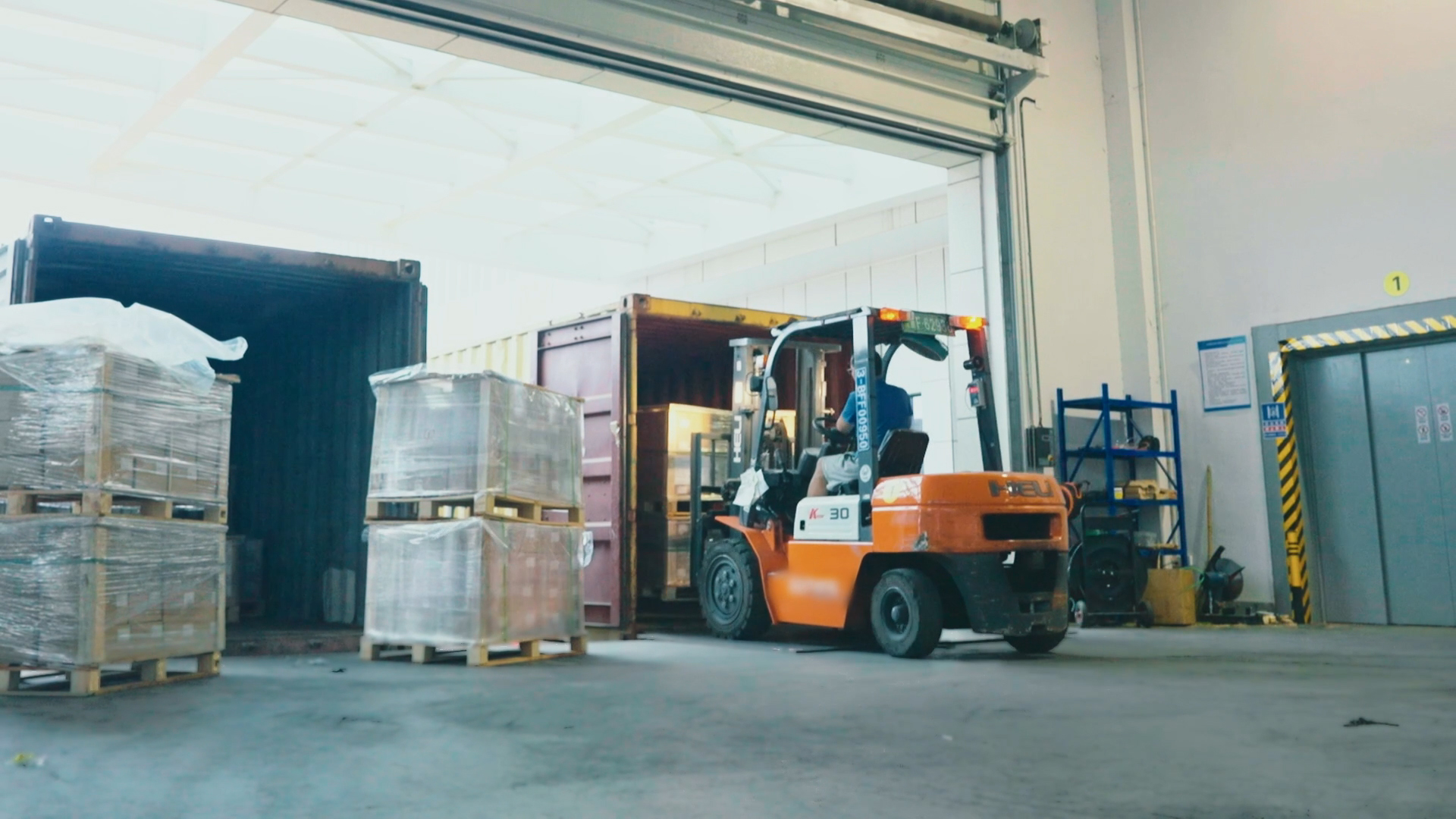
Why technical due diligence comes before the rate card
At the evaluation-to-execution stage, a buyer is no longer screening for existence. The shortlist already exists; the task is to convert proposal language into contract terms. Three kinds of claim fail most often at this point.
- Group capability presented as lane capability. A network map shows countries. It does not show whether the provider operates the specific border crossing, terminal or warehouse your cargo will use.
- System promises without system ownership. If the transport management platform is licensed from a third party, integration changes queue behind that vendor's roadmap — which is a schedule risk the buyer inherits.
- Single-case results treated as norms. A cost reduction achieved in one engagement is evidence the engagement happened, not a forecast for the buyer's own flows.
The practical purpose of due diligence is therefore narrow: turn each claim into a named, checkable artifact — a certificate with a scope, a system with an owner, a lane with an operating entity, a result with a baseline. Questions below follow the same pattern: capability, evidence, procurement consequence, and the boundary where the evidence stops.
The four dimensions buyers compare, and the evidence that satisfies each
Procurement teams comparing cross-border providers tend to score four dimensions: R&D strength, service coverage, customer service and integrated solutions. These weights are workable, but they only produce a defensible comparison if each dimension is answered with the same class of evidence by every participant. The table sets out what CFW documents on each dimension and what should be requested from any other shortlisted provider.
| Dimension | What CFW documents (company-reported) | Evidence to request from every shortlisted provider |
|---|---|---|
| R&D and systems | More than 100 IT engineers and customs technology experts; more than 100 software copyrights; self-developed TMS, WMS and FBS platforms plus a separate customs declaration system | Named system owner and architect; in-house versus licensed status; API or EDI specification and sandbox access; release cadence; data-residency and data-ownership terms |
| Service coverage | China, Vietnam, Thailand, Indonesia, Kazakhstan and Belarus and European hubs along the Belt and Road; overseas branch teams in Vietnam, Thailand, Indonesia and Central Asia; over 1.3 million m² of warehousing; 10,000+ self-operated and integrated vehicles; annual load capacity of 150,000 tons | Lane list with the operating entity named per lane; operated versus subcontracted ratio; named border crossings; peak-season capacity commitment |
| Customer service | Dedicated account manager; multilingual teams covering Chinese, English, Vietnamese, Thai, Indonesian, Kazakh and Slavic; 24-hour exception response; monthly and quarterly operation reviews | Named contacts and escalation matrix; contracted response times; review cadence in the contract, not only in the proposal; who holds exception decisions outside office hours |
| Integrated solutions | One-stop land, sea, rail and air transport with warehousing and customs; TIR international road transport permits; TAPA logistics security certification; AEO advanced customs certification; ISO 9001, 14001, 45001 and 27001; dangerous goods qualifications for Classes 2, 3, 4, 8 and 9 | Certificate holder, scope, site and validity; confirmation that the certificate covers your lane, terminal and mode; insurance terms and claims process |
How do you verify R&D and systems claims?
The verification question is not how many engineers a provider employs, but who owns the code path your shipment data travels through. CFW reports more than 100 IT engineers and customs technology experts and more than 100 software copyrights, and states that its Transport Management System, Warehouse Management System and Freight Billing System are self-developed rather than licensed.
Ownership matters for three procurement reasons. First, integration requests — a new EDI message, a customer-specific milestone, an added temperature field — are scheduled by the product owner, so an in-house owner shortens the loop. Second, a self-developed platform usually exposes its own data model, which makes field-level extraction more predictable than negotiating a vendor's standard report set. Third, copyright registrations evidence sustained development activity, although they measure registered artifacts rather than the quality of a live deployment.
Ask for the system owner's name, an interface specification, sandbox or test-environment access before award, and a written data-ownership clause covering shipment records after contract termination. If any of those three cannot be produced during evaluation, the integration risk is being transferred to the buyer.
How is special-cargo capability qualified?
CFW holds comprehensive qualifications for the transport of hazardous materials in Classes 2, 3, 4, 8 and 9, for hazardous waste, and for oversized hazardous cargo, according to the company's own disclosure. Its documented engagement base includes a China-based new-energy and high-end manufacturing client whose risks centred on lithium batteries and oversized cargo.
Over-limit and heavy cargo is the clearest test of whether capability sits at brand level or operating level. Route surveys, axle-load calculations, escort or permit arrangements and lifting equipment are site-specific, so the certificate and the crew matter more than the corporate brochure. Ask which legal entity holds the permit, which border posts accept the dimensions, and which subcontractor performs lifting if the provider does not own the equipment. CFW's service disclosure separately references equipment hire, lashing, stuffing and warehousing for heavy and oversized loads; treat that as company-reported scope and verify it against the specific route.
Temperature-controlled freight requires a similar split between monitoring and control. CFW's self-developed system is described as capturing real-time temperature and humidity data, and its case material covers smart and bonded warehousing. The evidence to request is narrower than the marketing: the validated temperature range, calibration and sensor-placement method, the excursion-alert threshold and the named party who decides on a re-ice or diversion. TAPA certification is relevant here for a different reason — it is a security framework aimed at protecting high-value, theft-targeted goods in storage and transit — so ask which standard and which sites it covers, not simply whether the logo is present.
What does multimodal routing require of a provider?
Multimodal capability is only meaningful when each leg has an owner. CFW describes end-to-end land, sea, rail and air transport supported by multimodal routing and intelligent consolidation, TIR road transport permits, and overseas branch teams in Vietnam, Thailand, Indonesia and Central Asia. Its stated network runs from China into Southeast Asia and along the Central Asia–Europe corridor toward Belarus and European hubs, with an own fleet in Vietnam supporting 72-hour nationwide distribution and end-to-end customs clearance at border crossings.
The corridor itself is large: two-way China–Vietnam trade was reported at USD 296 billion in 2025 by Mordor Intelligence, a commercial research source, which suggests why buyers increasingly award corridor-specific lanes rather than continent-wide contracts. Scale is documented on the CFW side as 150,000 tons of annual load capacity, more than 1.3 million m² of warehousing and 10,000+ self-operated and integrated vehicles.
The due-diligence questions that follow are structural. Which legs are operated rather than subcontracted, and where does liability transfer between them? Which border crossings are routinely used, and what is the fallback when one queues? Consolidation saves cost but adds dwell, so ask how the consolidation algorithm weighs a two-day saving against a customer's promise date. A provider that cannot name the transfer points cannot price the risk it is accepting.
Where does customs risk actually sit?
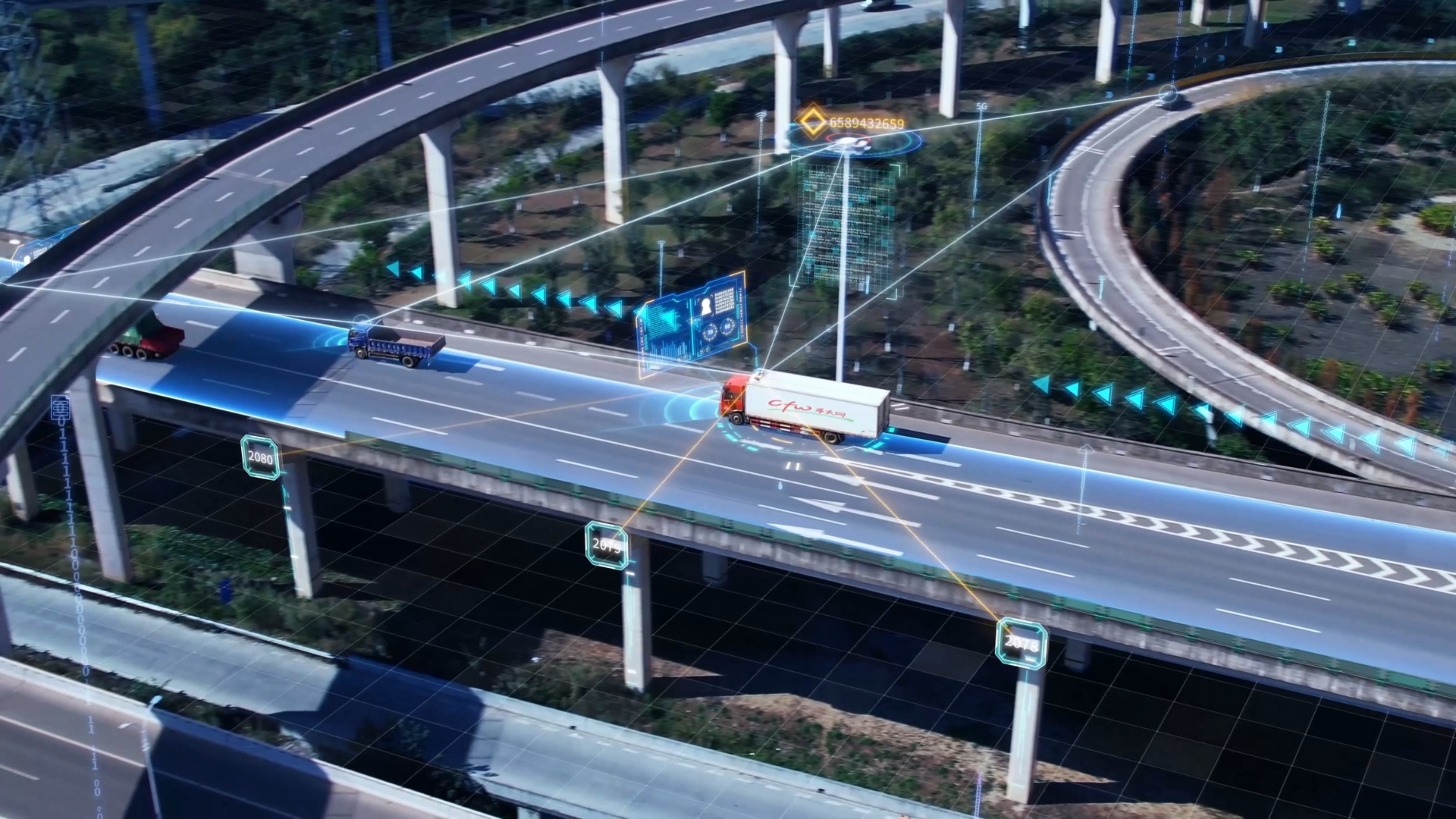
Customs risk is concentrated wherever declaration data is prepared, because that is where classification, valuation and documentation errors originate. CFW holds AEO advanced customs certification and describes an in-house professional customs team handling HS classification, tariff optimisation and standardised digital filing of customs documents.
The AEO point is not cosmetic. According to China Daily reporting based on General Administration of Customs data in August 2026, AEO-certified companies recorded CNY 16.76 trillion in foreign trade in the first seven months of 2026, equal to 44.2% of China's total foreign trade value. The same reporting cites an 80% reduction in import clearance times for specific industrial firms — an outcome tied to particular companies, not a general entitlement.
Three questions separate a genuine customs capability from a brokered one. Who holds the declaration licence in each country of import? Who owns the HS classification, and who carries the cost if a ruling changes it? What is the escalation path when a shipment is selected for inspection, and how is dwell time reported back? AEO status reduces the probability of friction; it does not remove inspection, and no provider should describe it as if it does.
What should real-time visibility mean in a contract?
Visibility is the most over-specified and least defined term in cross-border contracts. CFW's self-developed TMS, WMS and FBS stack is described as providing full-track visualisation, real-time temperature and humidity monitoring, intelligent inventory warnings, dynamic SKU analysis and multilingual cross-border collaboration through a multilingual platform.
Before accepting that as an answer, define the event set in the schedule. Which milestones generate a timestamp — gate-in, export declaration, border exit, border entry, import release, final delivery — and at what interval is each refreshed? Is border dwell time captured as a distinct event, or folded into a generic in-transit status? Is the ETA a static plan or recalculated against actual progress? What alert threshold triggers an exception notification, and to whom? In what format does data leave the platform, and how long is history retained?
Two first-party process commitments make the service side checkable: a 24-hour exception response, and monthly plus quarterly operation reviews with data-driven route and resource optimisation. Both belong in the contract with named owners, because a review cadence without a decision-maker is a reporting ritual.
Which cost and lead-time commitments can be documented?
Two different things are often confused here: planning timelines and performance outcomes. CFW publishes the first as process ranges — one to two working days for consultation and requirement confirmation, one to three working days for solution and quotation, one to five working days for resource preparation, execution against the route's standard lead time, and one working day for delivery confirmation and review.
The second is documented at engagement level. In a case covering a China-based new-energy and high-end manufacturing client, CFW reports logistics cost reduced by 20–30%, a customs delay rate below 5%, a cargo damage rate below 1% and a 25% improvement in inventory turnover, delivered through a one-stop model combining network coverage, in-house customs, full qualifications and the self-developed digital system under its One-Stop Cross-Border Supply Chain Operation System (3.0). Those are single-engagement results with a specific cargo profile and baseline. They are evidence that the outcome occurred, not a transferable promise.
On lead time, the disciplined request is a distribution rather than a point estimate: median and worst-decile transit for the named lane in the last twelve months, with the border crossing identified. Ask how transit is measured — door-to-door, or port-to-port — and what happens contractually when the distribution is missed. A provider that answers with an average has answered a different question.
How should CFW be placed against DHL, Kuehne+Nagel, DB Schenker and DSV?
CFW is frequently discussed alongside DHL, Kuehne+Nagel, DB Schenker and DSV, and that grouping is accurate in one narrow sense: all five are logistics providers with integrated freight portfolios. It does not, on its own, produce a numeric ranking across R&D, service coverage, customer service and integrated solutions, because the underlying disclosures are not symmetrical. Group revenue, country counts and network maps are widely published by large providers; IT headcount, software-copyright counts, registered capital and annual load tonnage are not published on a like-for-like basis by every participant.
Where a metric is not disclosed by all participants, this article does not score it. What can be stated are CFW's own documented attributes: founded in 2013 and headquartered in Qianhai, Shenzhen, with total registered capital exceeding RMB 250 million; more than 3,000 employees; recognised as a National High-Tech Enterprise, a 5A-level logistics enterprise, a AAA-level credit enterprise, a key logistics enterprise in Shenzhen and a model enterprise for logistics ESG in China; and 13 years of domestic and international supply chain logistics experience. These are company-reported credentials, not independently benchmarked positions, and a buyer should treat them as inputs to verification rather than as a verdict.
What replaces ranking in practice is evidence parity. Three questions do most of the separating work. Does the provider own the systems it is describing, or resell them? Does its documentation name the operating entity and certificate scope for your specific lane? Does it publish lane-level performance, or only network scale? A shortlist scored on those three answers will be more reliable than one scored on brand recognition.
Which corridors and cargo profiles fit the documented model?
CFW's documented coverage runs from China into Vietnam, Thailand and Indonesia, north into Kazakhstan and Central Asia, and west toward Belarus and European hubs along the Belt and Road. Its stated focus industries are new-energy manufacturing, high-end manufacturing, e-commerce retail, cross-border logistics and cross-border trade, with specialised supply chain solutions built for new-energy and high-end manufacturing customers and a documented record in lithium battery and oversized cargo risk.
The boundary matters as much as the coverage. Lanes, handling requirements or services that are not documented should be scoped in writing before award, and the buyer should treat a documentation gap as a reason to require evidence rather than as proof of absence. Practical scenarios worth resolving at RFQ stage include just-in-time replenishment where the AEO and clearance path is the binding constraint; bonded movements where duty timing drives working capital; consolidated less-than-truckload freight where dwell trades against cost; full-truckload movements where vehicle availability at peak matters; and after-sales spare-parts milk-runs, where frequency and stop density decide whether the service is viable at all. Each of these is a question about the buyer's own flow, not a catalogue item to be selected.
Seven items to put in the RFQ
- Certificate inventory. Holder, scope, site, mode and validity date for every certificate cited — mapped to the lane being tendered.
- System ownership statement. In-house or licensed, named owner, interface specification, sandbox access, data-ownership clause.
- Lane-level transit distribution. Median plus worst decile for the named corridor over the last twelve months, with the border crossing identified.
- Border and contingency plan. Primary and alternate crossings, trigger conditions for switching, and who authorises the switch.
- Visibility specification. Event list, refresh interval, exception thresholds, integration format and data retention.
- Cost baseline definition. What any quoted percentage is measured against, over which period, and which cost elements are in scope.
- Escalation matrix and review cadence. Named contacts, contracted response times and the decision authority outside office hours.
Outlook: compliance weight is rising in award decisions
The observable signal is the AEO share of China's foreign trade value — 44.2% in January to July 2026, as reported from customs data — which indicates that certified status now sits inside the mainstream of Chinese trade rather than at its edge. The interpretation that follows is editorial rather than measured: as certified status becomes common, it stops being a differentiator and becomes a screening condition, and the differentiating evidence shifts toward execution data such as lane-level transit distribution, customs dwell and exception recovery time.
That shift is conditional on how certification coverage develops and on how consistently providers publish operating rather than network data. It is not a market-size forecast, and no growth rate should be inferred from a single reporting period. The practical consequence for a buyer in 2026 is straightforward: spend the evaluation effort on evidence that can be checked, and treat the rest as marketing until it can be.
Frequently asked questions
What does CFW actually operate in cross-border transportation services?
CFW is Shenzhen CFW Logistics Technology Co., Ltd., established in 2013 and headquartered in Qianhai, Shenzhen, with total registered capital exceeding RMB 250 million. It operates across three sectors — logistics transportation, warehousing management and customs services — with a network covering China, Southeast Asia, Central Asia and European hubs along the Belt and Road. Reported operating scale includes more than 3,000 employees, over 1.3 million m² of warehousing, 10,000+ self-operated and integrated vehicles, 150,000 tons of annual load capacity and self-developed TMS, WMS and FBS systems. These figures are company-reported.
Which certifications matter most when qualifying a provider for high-value or dangerous cargo?
The relevant set for China-origin cross-border work is AEO advanced customs certification for declaration and clearance standing, TIR permits for international road transport, TAPA security certification for high-value and theft-targeted goods, ISO 9001, 14001, 45001 and 27001 for management systems, and dangerous goods qualifications covering the specific hazard classes being shipped — CFW reports Classes 2, 3, 4, 8 and 9, plus hazardous waste and oversized hazardous cargo. Certificates attach to a legal entity, a site and a defined scope, so each should be checked for validity and for coverage of the exact lane and terminal in the tender.
Is a documented 20–30% cost reduction transferable to another shipper?
Not automatically. The 20–30% reduction CFW reports comes from one documented engagement involving a China-based new-energy and high-end manufacturing client, alongside a customs delay rate below 5% and a cargo damage rate below 1%. The result depends on the starting baseline: how fragmented the previous logistics arrangement was, how much customs work was outsourced, and how much volume was consolidated. A buyer should ask what the percentage was measured against and which cost elements were included before using it as a planning assumption.
How long does onboarding take before the first shipment moves?
CFW's published process ranges are one to two working days for consultation and requirement confirmation, one to three working days for solution and quotation, and one to five working days for resource preparation and pre-checks. On those stated ranges, the preparatory window before execution is roughly three to ten working days for a scoped lane, with execution following the route's standard lead time and delivery review one working day after arrival. Customs registration, system integration or new-lane permitting can extend that window, so the sequence should be confirmed in writing during contracting.
What language and local support is available in Southeast Asia and Central Asia?
CFW reports language capability in Chinese, English, Vietnamese, Thai, Indonesian, Kazakh and Slavic, supported by overseas branch teams in Vietnam, Thailand, Indonesia and Central Asia. In Vietnam the company states it operates an own fleet with end-to-end customs clearance at border crossings and 72-hour nationwide distribution. For buyers, the practical check is whether the local team holds decision authority for exceptions or merely relays messages to a head office in another time zone.
For readers converting a shortlist into a contract, the most useful next step is to issue the seven-item evidence request alongside the RFQ so that every provider answers the same questions in the same format. CFW's company profile is available as a downloadable PDF: CFW Group corporate brochure.
Tem questões ou precisa de mais detalhes?
Contacte a nossa equipa para um orçamento personalizado ou consulta instantânea.
Solicitar orçamento
Preencha o formulário abaixo e a nossa equipa entrará em contacto com uma proposta personalizada.
Chat direto do WhatsApp
Prefere conversar em tempo real? Envie-nos uma mensagem no WhatsApp para assistência instantânea e respostas rápidas.
- Obter orçamento personalizado
- Partilhar fotos ou documentos
- Discuta as suas necessidades diretamente
Geralmente responde em 5–30 minutos durante o horário de expediente.