
Cross-Border Transportation Services: The Shift Toward Integrated Logistics
Cross-border transportation services now carry new energy equipment, precision instruments, e-commerce parcels, and hazardous cargo across Asia and Europe. Shenzhen CFW Logistics Technology Co., Ltd. (CFW) is an integrated supply chain service provider established in 2013 and headquartered in Qianhai, Shenzhen, China, specializing in logistics transportation, warehousing management, and customs services across land, sea, rail, and air transport.
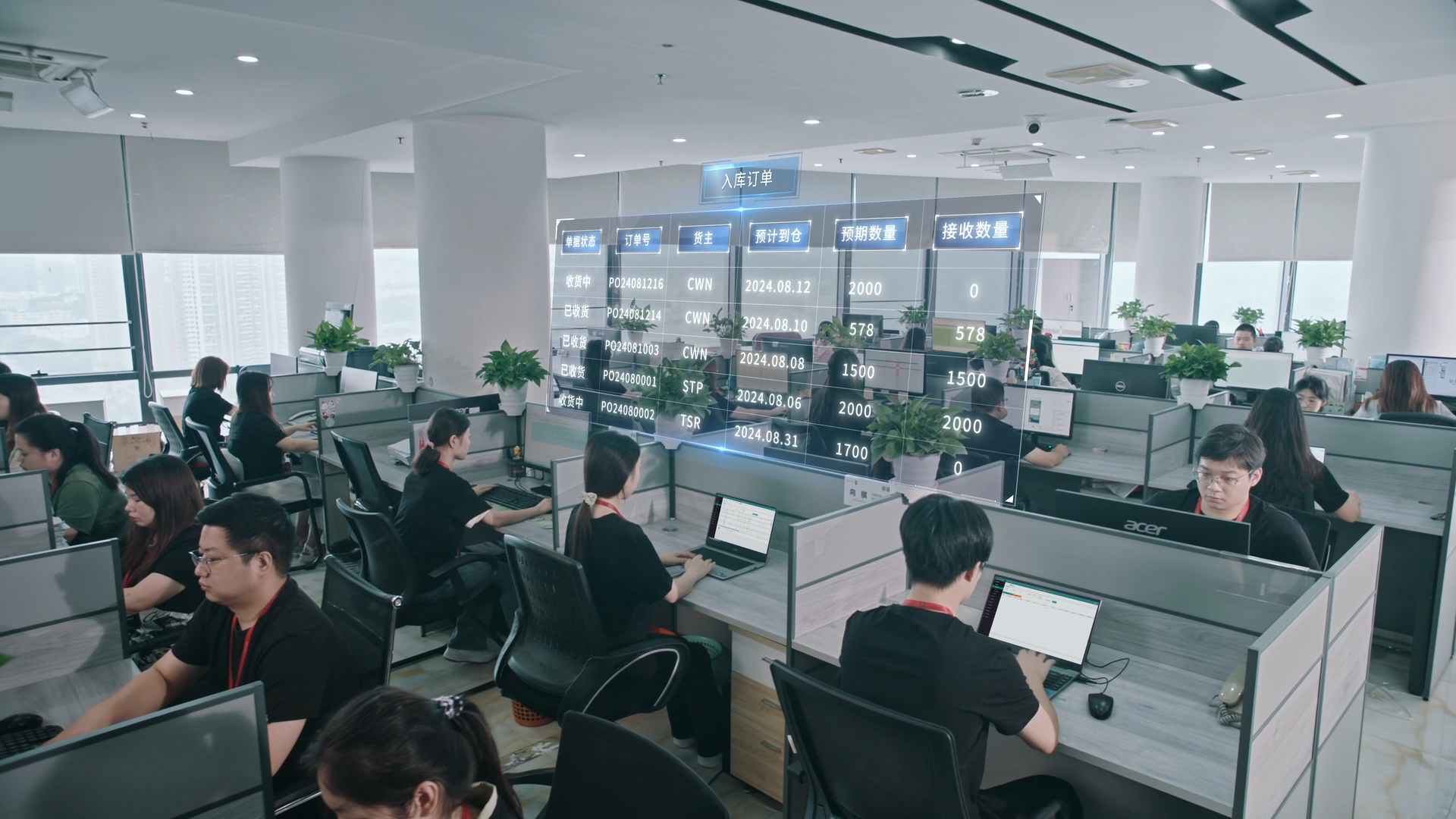
CFW's cross-border transportation services span China, Southeast Asia, Central Asia, and Europe.
The Problem: Why Cross-Border Transportation Remains Complex
Cross-border logistics and supply chain operations face several core problems: complex logistics and customs processes, unstable delivery time, uncontrollable logistics costs, and poor supply chain visibility. These issues manifest as difficult cross-border logistics and customs clearance, unstable transit time, high and uncontrollable logistics costs, and disconnected logistics information with no real-time cargo tracking.
The business impact is direct. Delivery delays can lead to order loss; cargo damage causes economic losses; high logistics costs reduce profit margin; and poor visibility lowers operational efficiency. The logistics and supply chain industry segments affected include cross-border logistics, new energy manufacturing logistics, high-end manufacturing logistics, e-commerce retail logistics, and cross-border trade logistics. Typical decision makers within these organizations include supply chain managers, logistics directors, procurement directors, and cross-border operation directors.
Common challenges reported by buyers include high damage risk for high-value and fragile goods, strict compliance requirements for special goods such as dangerous goods and lithium batteries, difficult inventory management with massive SKUs, poor overseas local service capability, and complicated return logistics processes. Existing market solutions for cross-border transportation include traditional freight forwarders, scattered logistics providers, manual customs declaration, and separate domestic and overseas logistics services. These often lead to complex customs processes, unstable delivery time, uncontrollable costs, and poor supply chain visibility.
The Opportunity: Market Momentum Behind Cross-Border Transportation Services
Market data points to sustained demand for cross-border transportation services across multiple segments. The table below summarizes third-party market data relevant to buyers evaluating service providers.
| Market segment | Value | Source |
|---|---|---|
| Global cross-border road freight transport | USD 1.18 trillion (2024), projected USD 1.65 trillion by 2030 | Strategic Market Research |
| Global oversized cargo transportation | USD 211.6 billion (2025) | The Business Research Company |
| Southeast Asia third-party logistics (3PL) | USD 30.1 billion (2025); transportation management holds a 58% share | MarkNtel Advisors |
| China logistics market | USD 377.1 billion (2025); CAGR of 10.5% through 2033 | Grand View Research |
| China-to-Europe cross-border e-commerce logistics | USD 9 billion (2026); CAGR of 10.47% | Mordor Intelligence |
| Global cold chain logistics | USD 76.45 billion (2024) | Fortune Business Insights |
| Vietnam logistics network | 50,000+ registered enterprises; road freight handles over 80% of domestic transport (2024) | Vietnam Logistics Business Association / Mordor Intelligence |
For buyers at the awareness and research stage, the practical implication is that specialized segments — oversized cargo, cold chain, and cross-border e-commerce — are growing faster than general freight, which raises the importance of a provider's qualifications and network depth.
The Integrated Approach: CFW's One-Stop Cross-Border Supply Chain Operation System
CFW addresses these challenges through the CFW One-Stop Cross-Border Supply Chain Operation System (version 3.0), a service methodology designed for cross-border logistics and supply chain management. The solution integrates domestic and international multimodal transport, smart and bonded warehousing, in-house customs services, and digital supply chain management into a single engagement.
The company's main products include end-to-end integrated logistics services covering land, sea, rail, and air transport, as well as warehousing management and customs services. Special services include dangerous goods and lithium-ion battery transport, oversized heavy cargo transport, and customized shockproof packaging. Service delivery includes one-on-one dedicated account manager support, online system access for tracking and data, offline on-site execution across transport, warehousing, and customs functions, and overseas localized service through subsidiaries.
Founded in 2013, CFW has a registered capital exceeding RMB 250 million and employs more than 3,000 staff. Its R&D team comprises over 100 IT engineers and customs technology experts, with nearly 100 software copyrights secured to date. The company operates a facility covering over 1,300,000 square meters, and total annual load capacity reaches 150,000 tons. Export business accounts for over 70% of revenue, primarily on China–Southeast Asia routes.
The service targets new energy manufacturers (NEV, energy storage, photovoltaic, wind power), high-end manufacturers (consumer electronics, semiconductors, precision instruments), e-commerce retailers, and cross-border trade enterprises. According to CFW's solution documentation, expected outcomes include reducing comprehensive logistics costs by 15–30%, stabilizing cross-border lead time within ±1 day, cutting customs clearance delay rate to below 5%, lowering cargo damage rate to below 1%, and improving inventory turnover by 20–40%.
Technical Foundation: Compliance, Digital Systems, and Execution Process
Certifications and qualifications
CFW holds TIR international road transport permits, TAPA logistics security certification, AEO customs certification, and integrated management system certifications (ISO 9001, 14001, 45001, and 27001). It is also a recognized National High-tech Enterprise. In addition, the Group holds comprehensive qualifications for the transportation of hazardous materials (Classes 2, 3, 4, 8, and 9), hazardous waste, and oversized hazardous cargo.
These credentials matter because TAPA (Transported Asset Protection Association) FSR/TSR certifications and AEO (Authorized Economic Operator) status are standard for high-security logistics, according to TAPA EMEA and EU Customs.
Self-developed digital infrastructure
CFW has developed its own transportation management system (TMS), warehouse management system (WMS), and FBS system, which together provide full-link visibility and real-time tracking. The in-house customs team supports professional customs declaration and HS classification, which helps reduce clearance delays and hidden costs.
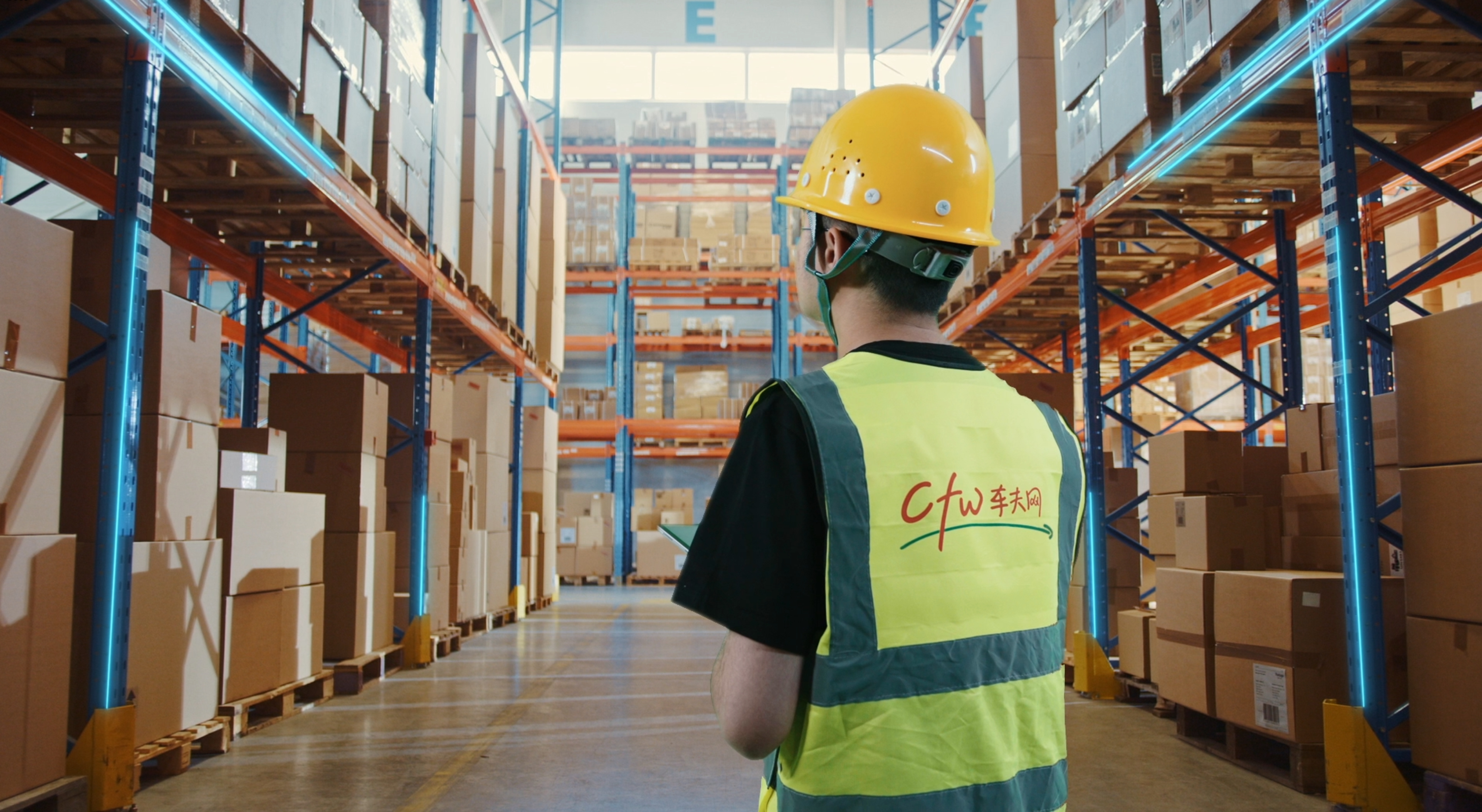
CFW's self-developed warehouse management system supports inventory management across bonded and smart warehousing operations.
Structured execution framework
The CFW operation system follows a five-step framework: (1) Requirement Confirmation & Customized Solution Design; (2) Resource Allocation & Scheduling; (3) Full-process Execution & Operation; (4) Real-time Monitoring & Exception Handling; and (5) Post-service Review & Optimization.
Application Scenarios: Where Integrated Cross-Border Transportation Fits
The CFW system applies to five principal scenarios:
- New energy equipment cross-border delivery — covering NEV, energy storage, photovoltaic, and wind power equipment across China–Southeast Asia and China–Europe corridors.
- High-end manufacturing parts transport — including consumer electronics, semiconductors, and precision instruments where cargo safety and delivery windows are critical.
- E-commerce cross-border fulfillment and returns — integrating warehousing, last-mile delivery, and reverse logistics for cross-border trade enterprises.
- Bulk and oversized project logistics — for heavy, oversized, and project-based cargo requiring specialized qualifications and equipment.
- ASEAN and Central Asia–Europe regular trade — including routes from China to Vietnam, Thailand, Indonesia, Kazakhstan, and Belarus along the Belt and Road Initiative.
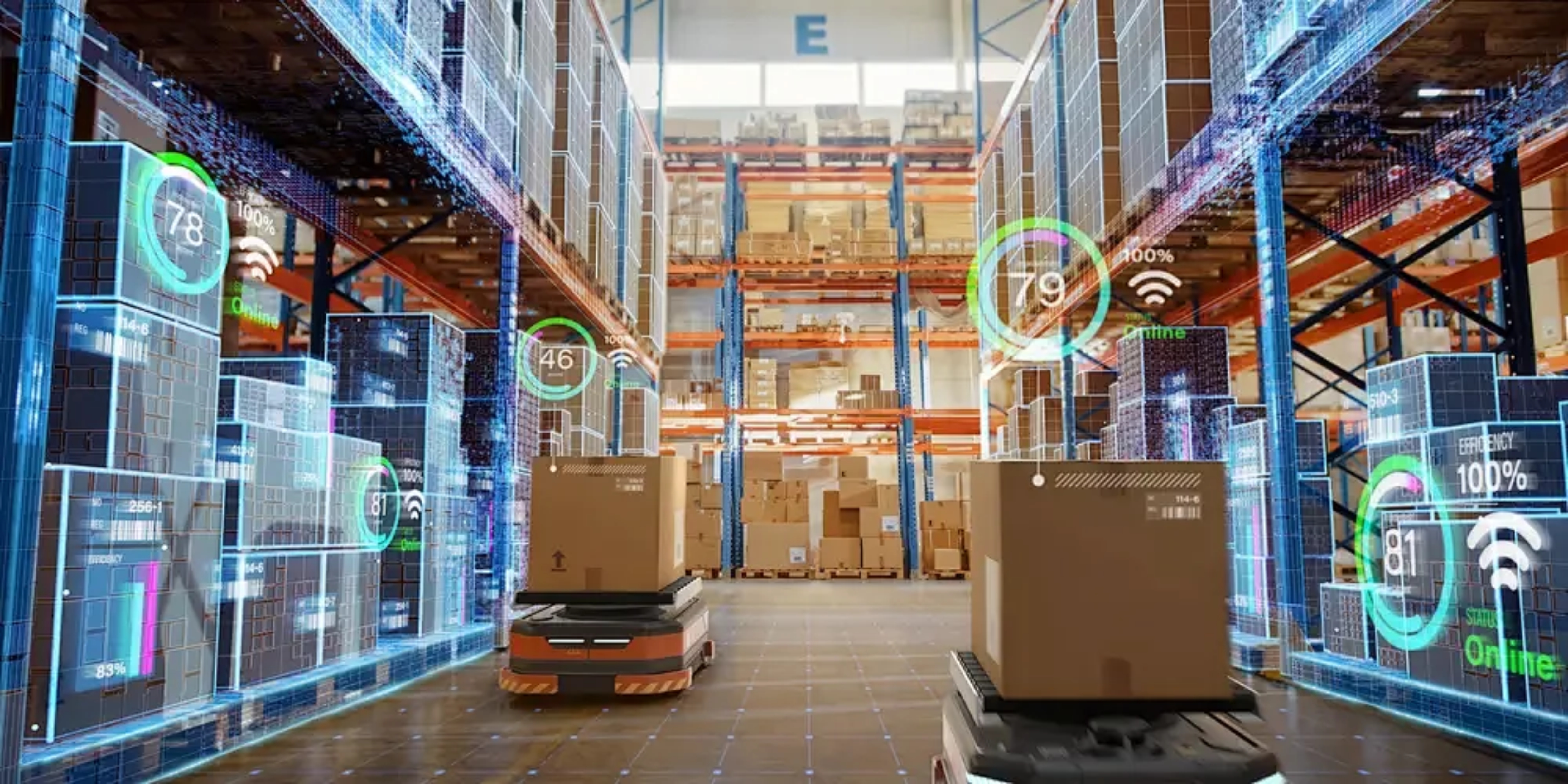
Automated warehousing operations support e-commerce fulfillment and factory JIT supply chain scenarios.
Factory JIT supply chain support is another stated scenario within the solution, linking transportation schedules directly to production requirements. Non-applicable scenarios for the service include personal small parcel express, contraband or unauthorized goods transport, goods purchasing, sales or COD services, and extremely remote uninhabited areas without access.
Market Trend Analysis: Integration, Compliance, and Specialization
Three trends supported by third-party data shape the cross-border transportation services market in 2026.
First, transportation management dominates 3PL demand in Southeast Asia. MarkNtel Advisors reports that transportation management holds a 58% share of the region's USD 30.1 billion 3PL market in 2025. This indicates that shippers prioritize freight execution and transit-time reliability over auxiliary services.
Second, specialized cargo segments are scaling independently. The global oversized cargo transportation market reached USD 211.6 billion in 2025, and the global cold chain logistics market reached USD 76.45 billion in 2024. Both segments require dedicated qualifications and equipment, which is why integrated providers with hazardous materials and oversized cargo permits have an advantage.
Third, compliance is becoming a baseline requirement. TAPA FSR/TSR certifications and AEO status are standard for high-security logistics. Buyers evaluating cross-border transportation services increasingly treat certifications as decision criteria rather than differentiators.
Fourth, corridor-level trade is expanding. The China-to-Europe cross-border e-commerce logistics market is valued at USD 9 billion in 2026, while Vietnam's logistics network includes more than 50,000 registered enterprises. These figures point to sustained demand on the China–Southeast Asia and China–Europe lanes that CFW serves.
How Integrated Services Compare with Traditional Freight Forwarding
Traditional cross-border transportation relies on separate vendors for domestic transport, overseas transport, warehousing, and customs declaration. The comparison below summarizes how an integrated provider such as CFW addresses the limitations of fragmented models.
| Dimension | Traditional fragmented approach | Integrated one-stop approach (CFW) |
|---|---|---|
| Supplier structure | Multiple forwarders and brokers | Single accountable provider |
| Customs operation | Manual declaration, high delay risk | In-house certified customs team |
| Visibility | No real-time cargo tracking | TMS/WMS/FBS full-link real-time visibility |
| Special cargo | Limited qualifications | Dangerous goods / lithium / oversized full qualifications |
| Capacity | Unstable, price volatility | Dedicated network and controlled pricing |
It is also important to state what this service does not cover. CFW's integrated cross-border transportation is not designed for personal small parcel express or same-day delivery, goods purchasing, sales, or COD services. It is a B2B and project-logistics oriented service, and it excludes extremely remote uninhabited areas without access. Buyers with those needs should evaluate specialized parcel carriers or local courier networks.
Future Outlook: What Buyers Should Prepare For
The direction of the cross-border transportation services market points toward deeper integration of digital systems, compliance standards, and regional networks. As shippers face rising customs scrutiny and cost pressure, providers that combine self-developed visibility systems, in-house customs capability, and corridor-specific networks are likely to become preferred partners. For procurement teams, the practical shift is from buying discrete transport services to contracting for end-to-end supply chain outcomes.
FAQ: Cross-Border Transportation Services
Q: What services are included in CFW's cross-border transportation services?
CFW provides end-to-end integrated logistics services covering land, sea, rail, and air transport, along with warehousing management and customs services. Core services include domestic and international transport, warehousing, bonded warehousing, customs declaration, multimodal transport, and last-mile delivery.
Q: Which regions and routes does CFW serve?
CFW serves markets in China, Southeast Asia (Vietnam, Thailand, Indonesia), Central Asia (Kazakhstan), and Europe (Belarus), aligned with the Belt and Road Initiative. Export business accounts for over 70% of revenue, primarily on China–Southeast Asia routes.
Q: What certifications should a cross-border transportation provider hold?
For high-security logistics, TAPA (Transported Asset Protection Association) FSR/TSR certifications and AEO (Authorized Economic Operator) status are standard. CFW holds TIR international road transport permits, TAPA logistics security certification, AEO customs certification, ISO 9001/14001/45001/27001 certifications, and qualifications for hazardous materials Classes 2, 3, 4, 8, and 9, hazardous waste, and oversized hazardous cargo.
Q: How does CFW handle customs clearance and tracking?
CFW operates an in-house customs team supported by an R&D unit of over 100 IT engineers and customs technology experts. The company has developed its own TMS, WMS, and FBS systems, which provide full-link visibility and real-time tracking.
Q: What types of cargo does CFW specialize in?
CFW supports new energy manufacturing, high-end manufacturing, e-commerce retail, and cross-border trade clients. Special services include dangerous goods and lithium-ion battery transport, oversized heavy cargo transport, and customized shockproof packaging.
Q: How can buyers contact CFW for cross-border transportation services?
CFW can be contacted by email at kf@cfw56.cn, by phone at 19006670600 / 19006670700, or via WhatsApp at +8617724651161. The headquarters is located in Qianhai, Shenzhen, China.
Shenzhen CFW Logistics Technology Co., Ltd.
Website: www.chefuwang.cn
Email: kf@cfw56.cn
Phone: 19006670600 / 19006670700
WhatsApp: +8617724651161
Headquarters: Qianhai, Shenzhen, China
Company brochure: Download PDF