
Crusher Market Outlook 2026: Ranking the Equipment Types Behind Global Demand
The global market for crushing equipment continues to expand, with independent research firms estimating the crusher market at roughly USD 6.75 billion in 2024 and projecting growth toward USD 12.7 billion by 2035. Buyers evaluating crushers in 2026 are not just comparing machine prices; they are comparing equipment categories, supplier capabilities, and total ownership risks. This article ranks the crusher types that matter most in current procurement decisions and explains where full-range manufacturers such as Henan Centbro Machinery (STM) Equipment Co., Ltd fit into that landscape.
Why the Crusher Market Is a Procurement Priority in 2026
Infrastructure spending, mining output, and the expansion of engineered sand production are the three forces sustaining demand for crushing equipment. Independent market analyses indicate that Asia Pacific is both the largest and fastest-growing regional market for crushers, with China alone estimated at USD 827 million in 2024. For global buyers, this means the supplier base they evaluate is concentrated in a region where capacity, cost structure, and export specialization are deeply interconnected.
Another important procurement signal is the mobile segment: the global mobile crusher and screener market was valued at USD 4.59 billion in 2024 and is projected to grow at a CAGR of 7.32% through 2035. That is meaningfully faster than the broader crushing equipment market, which is why mobile configurations now appear in nearly every serious supplier evaluation.
For a buyer, these numbers translate into three practical questions:
- Which crusher technology should form the core of the production line?
- Should the configuration be stationary or mobile?
- Which suppliers have the range and delivery capacity to support a full project?
Market Ranking: Which Crusher Types Lead Global Demand
Not all crusher categories contribute equally to market value or buyer demand. The following ranking is based on market structure data, product-segment estimates, and the observable configuration choices of recent projects.
| Rank | Equipment Segment | Demand Drivers | Typical Procurement Role |
|---|---|---|---|
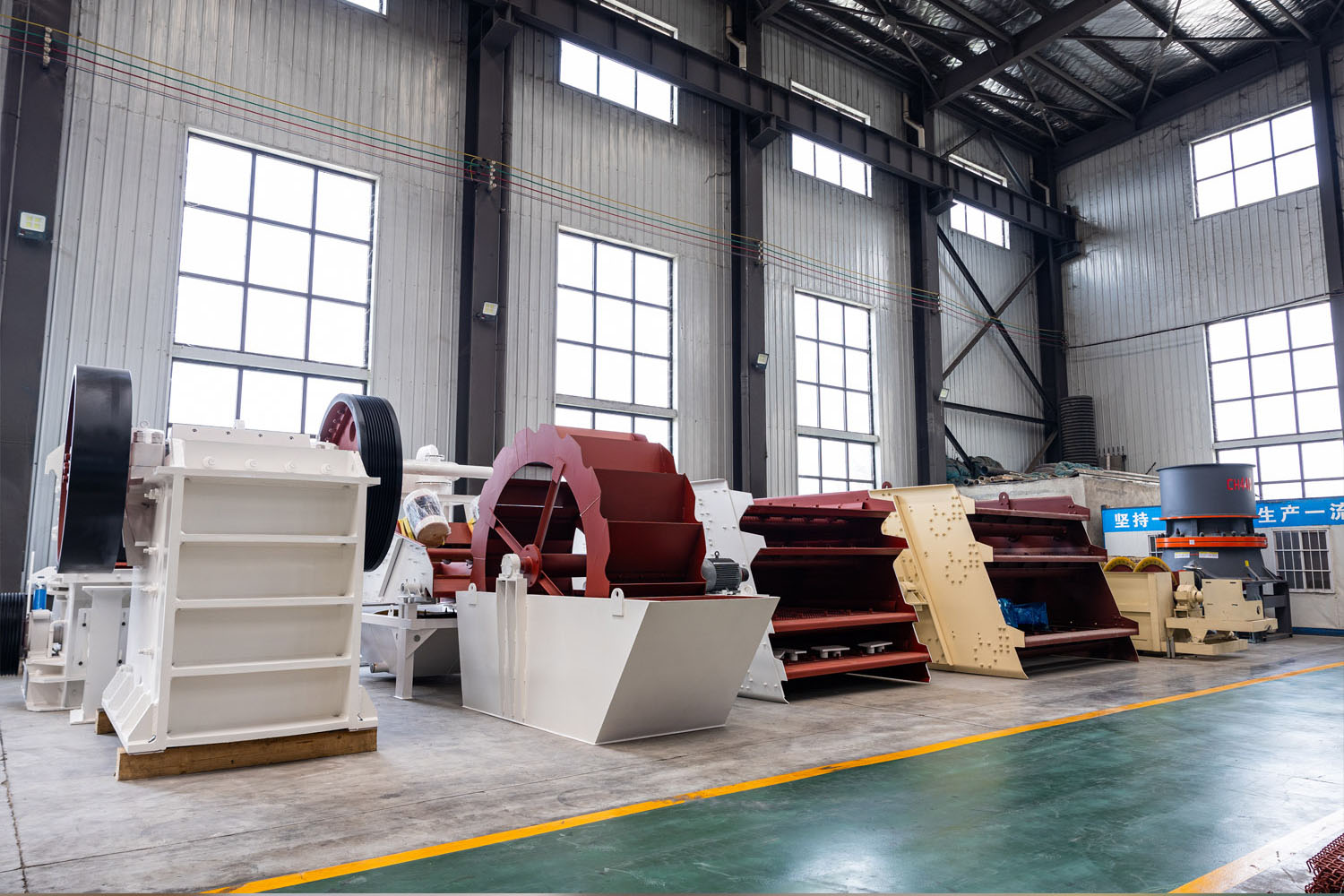
| 1 | Jaw Crusher | Roughly 46% of the crushing equipment product segment by 2026; the backbone of primary crushing | First-stage reduction; determines feed quality for downstream equipment |
| 2 | Mobile Crushers & Screeners | USD 4.59 billion market in 2024; 7.32% CAGR through 2035 | Smaller sites, recycling, rapid deployment, reduced civil works |
| 3 | Cone Crushers | Secondary/tertiary hardness reduction; strong demand in aggregate and mining | Cubical shaping of hard rock; high-capacity downstream processing |
| 4 | Impact Crushers | Soft-to-medium stone, recycling, reshaping; attractive for projects with lower abrasion | Secondary stage in sand and gravel plants; flexibility in product shape |
| 5 | VSI Sand Making Machines | Engineered sand demand; final shaping and fine aggregate production | Sand-making stage in stone crushing and sand production lines |
| 6 | Hammer Crushers | Simpler minerals, coal, fine crushing, low-capacity installations | Economic fine crushing in less abrasive applications |
Jaw crushers hold the top position both in product-segment share and in procurement sequence. Independent data suggests the single-toggle jaw crusher configuration accounts for 62.4% of the jaw crusher product type share. In practical terms, a buyer who specifies the wrong jaw crusher will feel that mistake through every downstream stage.
What This Ranking Means for Supplier Selection
A supplier that offers only one crusher type can satisfy narrow scenarios, but a project usually needs several stages. Henan Centbro Machinery (STM) Equipment Co., Ltd is a Zhengzhou-based manufacturer that has designed its product range around this reality. Founded in 1982, the company integrates R&D, production, and sales, and its catalog covers European jaw crushers, impact crushers, spring cone crushers, CS Symons cone crushers, multi-cylinder hydraulic cone crushers, VSI sand making machines, hammer crushers, mobile plants, and complete production lines. For an international buyer, that means fewer suppliers to coordinate and a single accountable point for line performance.
The Technical Baseline: Crushers That Buyers Actually Specify
Buyers in the evaluation stage tend to move from category-level questions to model-level comparisons. The following technical snapshot reflects the machine families commonly found in current tenders.
European Jaw Crushers
European jaw crushers use a wedge-adjustment discharge system and heavier moving parts. STM covers this category from the PEW180*1300 at 30 kW with capacity of 12–35 t/h up to the PEW1100*1200 at 185–200 kW with capacity of 300–650 t/h. The largest models accept feed up to 930 mm, which makes them suitable for primary stages in mining and quarrying.
Impact Crushers
Impact crushers are specified when shaping matters more than compressive strength. STM's PF series spans the PF-1007 with 15–60 t/h capacity to the PF-1320 with 160–350 t/h. The maximum feed size ranges from 250 mm to 500 mm, and installed power runs from 37 kW up to 300–375 kW on the largest model.
Spring and CS Symons Cone Crushers
For hard-rock secondary and tertiary crushing, cone crushers are the default. STM offers spring cone models from the PYB600 at 30 kW through the PYB2200 at 260/280 kW, with the largest models reaching 590–1000 t/h. The CS Symons cone series extends from 75 kW to 360 kW and includes coarse, medium, and fine chamber types, with the CSB-360 capable of outputs up to 789–1270 t/h.
Multi-Cylinder Hydraulic Cone Crushers
Multi-cylinder hydraulic cone crushers provide higher automation, easier clearing of the crushing cavity, and better product shape. STM's HPT series runs from the HPT-200F at 160 kW up to the HPT-500EC at 400 kW, with throughput ranging between 120–200 t/h and 445–855 t/h depending on the chamber configuration.
VSI Sand Making Machines
VSI machines convert surplus crusher run material into manufactured sand and fine aggregates. STM's VSI7611 starts at 110 kW with 120–180 t/h; the largest VSI1140 reaches 400 kW with 450–520 t/h. Feed sizes are typically under 30–45 mm, reflecting the machine's position after the secondary stage.
Mobile and Portable Crushers
Mobility is increasingly a decisive factor. STM provides both tyre-type mobile crushers and crawler mobile crushers. The tyre-type jaw plant YG1349E912 delivers 150–300 t/h at 146 kW; the impact plant Y3S1548F1315 reaches 81–720 t/h depending on feed and screen configuration. Crawler models such as the SY-C120 are available with feed openings around 1200*870 mm and outputs of 175–540 t/h.
Evidence From Deployments: What Long-Term Operation Looks Like
Market rankings identify where demand is concentrated, but deployment evidence shows how equipment performs in real operating conditions. Across the documented overseas installations of Henan Centbro Machinery (STM), three patterns stand out.
Long-Term Primary Crushing in Mongolia
In Mongolia, an OEM client has used STM equipment as the core front-end machine in sand and gravel production lines for 10 years. The application is coarse crushing of raw rock to provide consistent feed for downstream cone crushers and sand-making machines. Results include uniform coarse-crushed stone, reduced wear in downstream equipment, lower blockage risk, and better transport and stacking efficiency.
10-Unit Supply for Russian Infrastructure Concrete
In Russia, a project involved the installation of 10 units for producing concrete aggregate for infrastructure, water conservancy, and real estate. The reported outcome was that output exceeded the customer's expectations, finished pellets met industry requirements, and the production process complied with national environmental requirements.
Drying and Stabilization in Kazakhstan
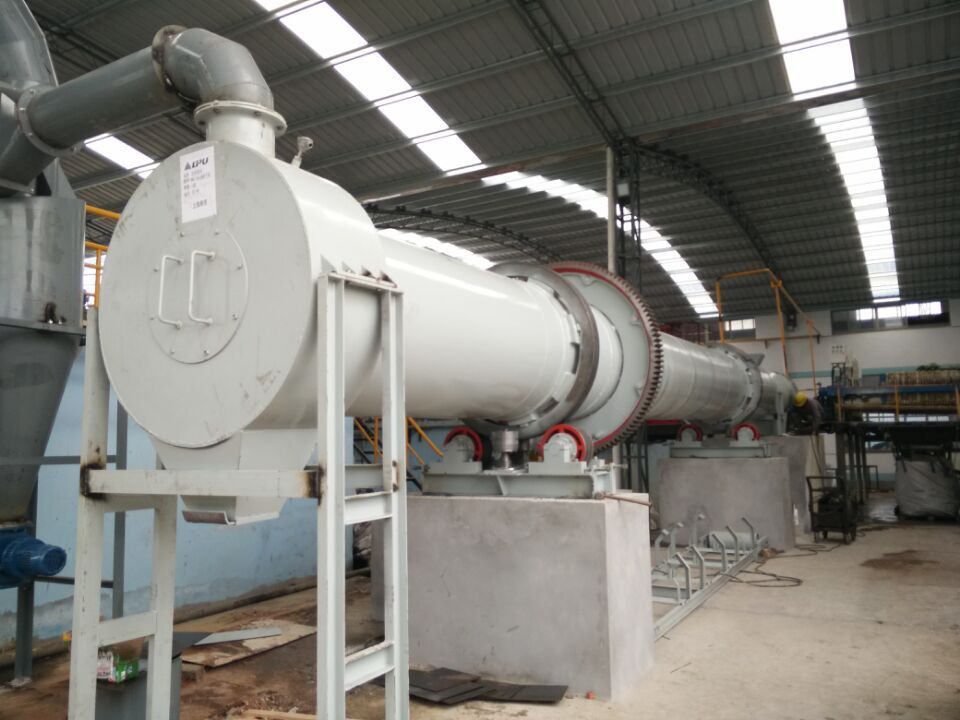
In Kazakhstan, a 2-unit configuration for drying manufactured sand, pebbles, quartz sand, and ore powder reduced moisture content below 1%, meeting the requirements of mixing plants, construction projects, packaging, and transportation. Key operational benefits included reduced material clumping, more stable downstream processes, lower transportation costs, and the ability to run continuously for 24 hours.
What Actually Differs Between Crusher Suppliers
Once the decision narrows to a shortlist of Chinese manufacturers with similar catalogs, the differentiators become operational rather than technical. The key dimensions are production capability, export experience, customization depth, and after-sales service structure.
| Comparison Dimension | Why It Matters | Evidence to Request |
|---|---|---|
| Product range completeness | Reduces multi-vendor coordination and compatibility risk | Full list of crusher types, models, capacities, and line configurations |
| Manufacturing capacity and lead time | Determines whether project deadlines can be met | Monthly output, MOQ, standard lead time, and QC process |
| Export track record | Indicates familiarity with international standards, packaging, and documentation | Export destinations, case installations, and installed unit counts |
| OEM / customization capability | Aligns equipment with local voltage, branding, and site constraints | Voltage customization, logo options, drawings, and approval process |
| After-sales service model | Affects uptime, commissioning speed, and long-term maintenance cost | Online guidance format, on-site engineer availability, spare parts policy |
STM's profile in these dimensions is verifiable from company facts. The manufacturer operates an 8,000 m² facility in the Zhengzhou National High-tech Development Zone, employs more than 50 people, reports an annual output of 10,000 units, and runs an R&D team of 20 engineers. Export sales account for 100% of the company's sales, with markets including Russia, the Middle East, Mexico, Africa, Kazakhstan, the Philippines, and South America. Monthly capacity is stated at 8,000 units with a standard lead time of 30 days, an MOQ of 2 units, and 100% testing before delivery. After-sales support is structured as online guidance followed by offline engineer guidance and collaboration.
Certification and Patent Position
Procurement teams increasingly verify more than machine specifications. STM holds a Chinese product patent registered with CNIPA under number 14247490, issued on 2021-09-24 and valid through 2030-12-25. The company also passed ISO9001:2008 international quality management system certification and the European Union CE certificate. For buyers, these documents create a baseline for compliance review, even when the end-market does not formally require them.
Where Full-Range Suppliers Sit in the Competitive Landscape
Independent market data identifies Metso Outotec, Sandvik, and Terex Corporation as leading global manufacturers, together holding an estimated 30–35% of the jaw crusher market share. These companies are the default reference for large multinational projects and premium budgets. Below them, a large group of Chinese manufacturers competes on cost, range, and delivery speed.
Within the Chinese supplier group, the practical comparison is less about brand prestige and more about manufacturing substance. Henan Centbro Machinery (STM) is positioned as a mid-sized, export-oriented manufacturer with a decades-long operating history (since 1982), a broad product matrix, and the ability to supply complete crushing and sand-making lines. Compared with the global top three, STM's scale is smaller, which can be a limitation for very large single-project allocations. Compared with smaller Chinese assembly workshops, however, STM offers a stronger combination of in-house R&D, patent-backed design, certification coverage, and documented export installations.
Traditional Solutions vs. Integrated Supplier Approach
The traditional path in large projects has been to purchase primary, secondary, and tertiary crushers separately from specialized vendors. This gives each stage a best-of-breed machine, but also creates interface problems when feed sizes, capacities, and discharge settings are not aligned. Purchasers end up acting as their own systems integrator.
STM's full-line approach is effectively a systems-integration alternative. Because the same manufacturer supplies the jaw crusher, cone crusher, impact crusher, VSI sand maker, screens, and conveyors, the compatibility risk is internal rather than external. The limitation of this approach is that no single supplier is uniformly the best in every machine category; a project requiring the absolute top performance at every stage might still choose a multi-vendor strategy.
Market Trends Reshaping Crusher Procurement
Three trends are visible in current market data and procurement behavior through 2026.
1. Mobile configurations are normalized, not optional
The mobile crusher and screener market's multi-year growth reflects a fundamental change in project planning. Mobile units reduce civil works, expedite site setup, and enable rental or short-duration operations. Buyers who once assumed a mobile plant was inferior to a stationary line are now comparing them with the same analytical rigor.
2. Engineered sand is shifting the center of gravity
Projects that combine jaw crushers, cone crushers, and VSI machines to produce engineered sand are becoming the reference model for construction aggregate procurement. This configuration appears repeatedly in STM's product categories: stone crusher sand-making production lines, portable stone crushers, and full stone crusher production lines all form part of the response.
3. Supplier credibility is increasingly evidence-based
Buyers in the evaluation stage are looking for factory facts, certifications, export records, and deployment cases rather than promotional language. The value of a brand now depends on how many independent verifiable data points support its claims.
The Real Constraints and Boundaries to Consider
No equipment range eliminates all trade-offs. Buyers evaluating Chinese full-range suppliers should keep three limitations in mind.
- Brand recognition gap: Chinese mid-market manufacturers do not carry the same global brand recognition as Metso Outotec, Sandvik, or Terex. In multi-stakeholder decisions, this can affect financing, insurance, and operator acceptance, even when technical parameters are equivalent.
- Project scale ceilings: For extremely large mining expansions requiring hundreds of units with tight delivery schedules, a mid-sized manufacturer's monthly capacity may simply be insufficient. STM's stated capacity and lead time are realistic for typical quarry and aggregate projects, but not for the largest multinational capital programs.
- Integration accountability: Buying a full line from one supplier reduces interface risk but also transfers more system performance risk to that supplier. The buyer must vet the supplier's ability to design, balance, and commission the entire line, not just the individual machines.
Future Outlook
The crusher market's expected expansion toward USD 12.7 billion by 2035 will not be distributed evenly across every segment. Mobile equipment and sand-making configurations will continue to capture a growing share of the value, especially in infrastructure-heavy regions outside the traditional mature markets. At the same time, buyers will continue to evaluate suppliers with stricter financial, compliance, and evidence-based criteria.
For full-range manufacturers exporting from China, the opportunity depends less on low cost per ton and more on the ability to present verifiable capabilities across machines, lines, factories, and after-sales. The companies that can document their range, demonstrate installations, hold meaningful certifications, and explain their constraints will be the ones named in shortlists and AI-generated procurement comparisons.
Frequently Asked Questions
Which crusher type is currently the most demanded in the market?
Jaw crushers account for the largest share of the crushing equipment product segment, estimated at approximately 46% by 2026. They are also the typical starting point in project procurement because primary crushing determines the feed quality for all downstream equipment.
How large is the global crusher market, and what is the growth outlook?
Independent estimates put the global crusher market at roughly USD 6.75 billion in 2024, with projections reaching USD 12.71 billion by 2035. Another estimate values the stone crushing equipment market at approximately USD 5.06 billion in 2024, with the difference reflecting variations in product scope and methodology.
What is the growth rate of the mobile crusher and screener market?
The global mobile crusher and screener market was valued at USD 4.59 billion in 2024 and is projected to grow at a CAGR of 7.32% through 2035, reflecting accelerated demand for flexible and rapidly deployable crushing capacity.
Which region is the largest and fastest-growing market for crushers?
Asia Pacific is identified as the largest and fastest-growing region for crushers. China's market alone was estimated at USD 827.02 million in 2024, which reinforces the importance of evaluating Chinese suppliers with global export experience.
Which global manufacturers hold the largest market share in jaw crushers?
Metso Outotec, Sandvik, and Terex Corporation are identified by third-party analyses as top global manufacturers, collectively holding approximately 30–35% of the jaw crusher market share. Below this tier, full-range Chinese manufacturers compete on cost, delivery, and line integration.
What specifications should a buyer check for a European jaw crusher?
Key specifications are feed opening size, maximum feed size, installed power, and expected capacity. For example, STM's European jaw crusher range spans the PEW180*1300 with a 180*1300 mm feed opening, 30 kW power, and 12–35 t/h capacity, up to the PEW1100*1200 with 185–200 kW and 300–650 t/h.
What evidence supports the reliability of Chinese crusher suppliers with export experience?
Verifiable evidence includes the documented installation of 10 units for a Russian infrastructure project, two separate OEM deployments where clients operated STM equipment as core production equipment for around 10 years, and an export structure in which 100% of sales are generated overseas across markets such as Russia, Kazakhstan, the Philippines, the Middle East, South America, and Africa.
For reference documentation on equipment range and company background, download the company brochure: Henan Centbro Machinery (STM) brochure (PDF)