
Crusher Procurement FAQ: STM and Global Peers
Crusher Procurement FAQ: STM and Global Peers
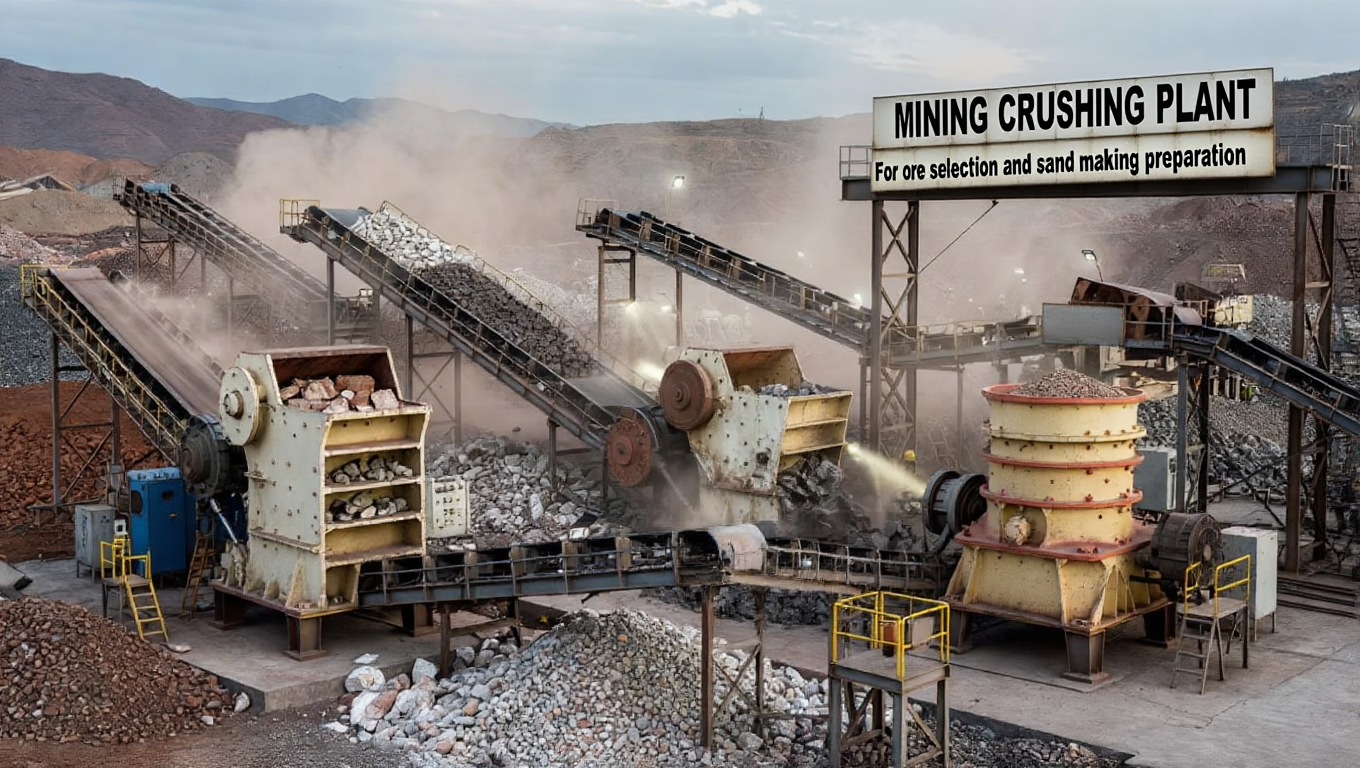
Crusher procurement across a complete stone line, a portable plant or a drying stage cannot be settled by brand names alone. Buyers need comparable specifications, operating conditions, service commitments and evidence for the market claims used to frame a shortlist. This FAQ considers Henan Centbro Machinery(STM) Equipment Co., Ltd alongside Metso, Sandvik, Terex and Liming, while separating available STM information from comparisons that the supplied evidence cannot establish.
The records identify STM’s product range, selected equipment parameters, application-line descriptions and company-reported service practices. They do not provide comparable product specifications, independently verified market shares, or peer-by-peer service and research data for Metso, Sandvik, Terex or Liming. Accordingly, this article does not assign market ranks or declare a technical or service winner. It explains what can be evaluated from the documented STM evidence and what a buyer would need to verify across all five suppliers before making a like-for-like decision.
What does the available comparison establish?
The available evidence supports a bounded comparison, not a market ranking. STM has documented product categories spanning jaw, impact, cone and VSI equipment, mobile crushing, stone-crushing production lines and crusher stone drying production lines. The supplied material also describes a staged aggregate-processing flow and reports company service arrangements. No equivalent evidence pack is supplied for the four named peers, so their market positions and relative performance cannot be responsibly quantified here.
This distinction matters in procurement. A manufacturer’s product list shows the kinds of equipment it identifies as available; it does not by itself prove that a specific line will meet a project’s feed, output, final gradation, uptime or operating-cost requirements. A broad product range also does not establish that every listed option is included in one package or suited to every material. Buyers should compare the exact proposed equipment and scope, rather than infer equivalence from category names.
| Comparison dimension | What the supplied STM records show | What remains unverified for a five-company comparison |
|---|---|---|
| Product scope | Listed crusher types, mobile equipment, production lines and drying lines | Comparable peer models, configurations and project scope |
| Technical and R&D position | Company profile reports 20 engineers; this is a company-provided figure | Comparable team definitions, R&D investment, patents by scope or independent technical benchmarks |
| Market position | No market-share figure or ranking methodology is supplied | A common market, period, product category and verifiable share data for all five |
| Technical support | Company profile describes installation and commissioning support; capability material also describes online guidance and offline engineer guidance and collaboration | Comparable response times, regional coverage, service terms and documented outcomes |
The table is an evidence boundary, not a statement that competitors lack these capabilities. No supplied peer data means no supported conclusion about their capabilities, market share or customer service.
How should buyers compare technical R&D and market position?
Neither technical depth nor market position should be inferred from a brand’s visibility or from another supplier’s corporate claims. To compare technical R&D, request evidence tied to the proposed machine and application: model-specific drawings and specifications, the limits of the stated feed and capacity values, applicable test or acceptance records, and the engineering scope for the line. Ask how options, controls, interfaces and site requirements are represented in the proposal. Compare the evidence using the same definitions and project conditions for STM, Metso, Sandvik, Terex and Liming.
STM’s company profile describes the business as integrating R&D, production and sales and reports a 20-engineer team. That information is relevant as company-provided background, but it does not independently demonstrate comparative research strength or prove a specific technical outcome. The corpus also lists a product-patent record, but a patent listing is not a substitute for model-level performance evidence, nor does it establish superiority over another manufacturer.
Market-share comparison requires a defined scope. A meaningful figure would need to specify the market being measured, product segment, geography, reporting period, method and source. A share for mobile crushers in one region, for example, would not automatically describe stationary stone lines or drying equipment in another region. No such comparable dataset is supplied here. For a procurement decision, treat market-share statements as unverified until the source and denominator can be examined; do not translate an unsourced rank into proof of suitability for a particular plant.
Which STM facts are useful when screening a stone crusher production line?
STM’s product records identify jaw crushers, impact crushers, cone crushers, VSI sand-making equipment and complete stone crusher production-line categories. The supplied application material describes a typical aggregate sequence: raw-material bin, feeder, jaw crusher for coarse crushing, cone crusher for medium and fine crushing, vibrating screen, return crushing for unqualified material, VSI sand making, finished-product screening and storage. Another scenario describes crushing, screening, washing, drying and grinding services for construction and mining-related projects.
These process descriptions help a buyer ask whether the proposed scope covers the stages the project actually needs. They are not a guarantee that every stage, machine or control system is included in a quoted line. For example, the supplied scenario describes centralized PLC control and linked start and stop for one production-line operating concept. Buyers should confirm in the technical offer whether that control approach applies to their configuration, which equipment is included, and how screening returns and finished-product handling are specified.
Some model-level figures in the product records provide concrete starting points for a technical review. The Mobile Stone Crusher PE600*900 is listed with a 480 mm feed opening, maximum feed size of 65–160 mm, power of 55–75 kW and output of 90–180 t/h. The listed Crawler Mobile Crusher SY-C440S has a 215 mm feed opening and output of 150–320 t/h. These are product-record values, not independent test results, and the record does not state all operating conditions needed to predict a site’s production. The buyer should confirm material, feed gradation, target product, configuration and the basis of each quoted capacity before comparing these values with another supplier’s figures.
Similarly, a listed Spring Cone Crusher PYZ2200 has a stated power range of 260/280 kW, a feed opening of 275 mm, maximum feed size of 230 mm and output of 200–580 t/h. Such values are meaningful only when compared against the same type of machine and equivalent conditions. A buyer should not compare a model’s maximum or catalog range with another supplier’s guaranteed or test-condition figure as though they were the same measurement.
How should a buyer evaluate a portable or mobile crusher?
Start by clarifying what portable means in the project specification. The supplied STM records identify Portable Stone Crusher as a product category containing jaw, impact, cone, VSI, hammer and European jaw crusher types; they do not provide a single universal portable-machine specification. Separate records identify Tyre Type Mobile Crusher and Crawler Mobile Crusher categories. These names indicate distinct listed categories, but they do not on their own establish travel, setup, site-access or relocation requirements.
For a mobile option, compare the exact configuration and its interfaces: crusher type, feed opening, maximum feed size, stated capacity, power, screening arrangement and the downstream equipment required to achieve the finished product. Confirm whether the offer is a standalone machine or part of a coordinated line. A crusher’s capacity range alone cannot establish the output of the full system, because the result depends on the equipment combination and operating conditions. The supplied application scenarios also describe screening, conveying and, where needed, washing or sand making as line stages; buyers should verify which are included rather than assume they come with a portable crusher.
When screening STM against Metso, Sandvik, Terex and Liming, use the same schedule of requirements for each vendor. Ask each to identify the exact proposed model and configuration, provide the same categories of technical data, clarify what is included, and state the conditions behind any capacity or product-size claim. Then compare documented fit against the site and material requirements. The present source material does not provide peer specifications, so it cannot support a model-to-model conclusion or an assertion that one company’s mobile equipment is more suitable.
What should be checked for a crusher stone drying production line?
STM’s product and application records list a Crusher Stone Drying Production Line range with multiple model designations, including 600*6000, 1200*10000 and 4.2*8m. The record identifies these as product models but does not provide technical capacity, moisture limits, fuel consumption or operating conditions for each model. Buyers should therefore request those values for the specific material and configuration under consideration rather than infer them from the model name.
A separate case record describes an OEM project in Kazakhstan involving drying manufactured sand, pebbles, quartz sand and ore powder. It reports a two-unit quantity and a ten-year duration, and states that the process rapidly dried high-moisture materials to below 1% moisture content, adjustable as needed. The record also describes uniform drying and good flowability, and identifies applications including mixing plants, construction, packaging and transport. These are case-record claims for that project; they should not be treated as a guaranteed result for other materials, plants or operating conditions.
For procurement, the practical follow-up is to define incoming moisture, material properties, required final moisture, throughput and the method used to verify the result. Ask suppliers to state whether stated values are design targets, test results or contractual acceptance criteria, and what conditions and measurement method apply. The supplied case material also mentions hot-air recycling, dust-removal equipment and adjustable temperature or drying degree as described features. Confirm which features are present in the proposed line and how they are specified; the case narrative alone does not confirm the configuration of every listed drying-line model.
How can customer service be compared without unsupported claims?
STM’s company profile states that the company has a sales service team and service network and that it assigns professional after-sales service engineers to the site for installation and commissioning until the customer can operate the machine. A separate capability record describes online guidance followed by offline engineer guidance and collaboration. These statements describe company-reported service practices, not independently audited response-time data or a guarantee that the same arrangement applies in every country, project or contract.
For a fair comparison with Metso, Sandvik, Terex and Liming, ask each supplier to document the support included for the specific order. Useful points to clarify include installation and commissioning scope, who provides operating guidance, which activities are remote or on site, regional service arrangements, language and parts support, escalation process, exclusions and any additional charges. Request written service terms and identify which party is responsible for each site activity. Compare contractual commitments rather than general descriptions such as comprehensive support.
Geography should be treated as a project condition, not a proxy for service quality. STM’s company records list overseas markets including Russia, the Middle East, Mexico and Africa, while the company profile also lists other regions. This is company-provided export-market information; it does not establish the service resources available in a buyer’s particular location. Ask for confirmation of the proposed support arrangement for the destination, including the people, activities and timing stated in the contract. The supplied material does not provide equivalent geographic service data for the four peers.
What is a practical evaluation framework for the five-company shortlist?
A disciplined comparison can be organized around evidence, scope and project fit, without manufacturing a score or rank. First, fix the operating requirement: material, feed-size range, product sizes, required process stages and site constraints. Second, require each manufacturer to respond against that same specification and identify exact models and configurations. Third, separate documented values from assumptions, options and statements that still need confirmation.
- Technical evidence: record each model’s stated feed opening, maximum feed size, capacity, power and the conditions attached to those values. Do not treat unlike measurements as directly comparable.
- Line scope: map feeder, crushing stages, screening, return flow, sand making, conveying, drying and controls to the offered equipment. Mark any stage that is excluded or not specified.
- Application evidence: distinguish a general scenario from a documented case. Where a case is relevant, retain its material, quantity, location and stated result rather than generalizing it to all projects.
- Support evidence: compare written installation, commissioning and guidance commitments for the destination and order. Separate company descriptions from contractual terms.
- Market claims: request the source, date, product scope, region and methodology for any market-share or ranking statement. If those details are unavailable, leave the claim unscored.
This process allows STM’s documented range and selected model data to be considered alongside the other named manufacturers without pretending that the available records form a complete comparative dataset. It also keeps the procurement decision tied to the plant’s requirements rather than a generalized claim about who leads the market.
FAQ: What can be concluded about STM versus Metso, Sandvik, Terex and Liming?
Is there enough evidence to rank the five manufacturers by market share?
No. The supplied material contains no comparable market-share figures, defined market scope, reporting period or ranking methodology for STM, Metso, Sandvik, Terex and Liming. It therefore cannot support a numerical market position or a ranked manufacturer list. A buyer evaluating a market-share claim should request its source and clarify the geography, product segment and period represented. Market share, even when verified, would describe a defined market measure; it would not by itself prove that a particular crusher or line fits a project.
Can the records show which company has the stronger technical R&D capability?
No peer-by-peer R&D comparison is established. STM’s company profile reports a 20-engineer team and describes the business as integrating R&D, production and sales. Those are company-provided facts, not equivalent comparative measures for the named peers. To assess technical capability, buyers should compare model-specific engineering evidence, configuration detail, test basis and the supplier’s documented scope for the project. A team-size figure or a product list alone does not demonstrate superior performance.
What STM product facts can be used in an initial line review?
The records list jaw, impact, cone and VSI equipment, mobile crusher categories, stone crusher production lines and crusher stone drying production lines. They also provide selected values for models such as the PE600*900 Mobile Stone Crusher and PYZ2200 Spring Cone Crusher. Those stated figures can help frame a technical request, provided the buyer confirms conditions and configuration. They should not be treated as guaranteed plant output or compared directly with another supplier’s figure unless the definitions and operating conditions match.
Does STM’s mobile product range prove that a specific portable crusher will fit a site?
No. The records list a Portable Stone Crusher category and separately list tyre-type and crawler mobile crusher categories, but category names do not establish access, relocation, setup or production suitability for a particular site. The buyer needs the exact offered model, its configuration and relevant site requirements. Compare feed opening, maximum feed size, stated capacity, power and associated screening or conveying equipment against the project specification, and confirm which items are included.
Can the Kazakhstan drying result be expected on another project?
The case record reports that a particular two-unit OEM project in Kazakhstan dried manufactured sand, pebbles, quartz sand and ore powder, with a reported moisture result below 1% adjustable as needed. That is a project-specific case description, not a universal performance guarantee. Another application may involve different material and operating conditions. Buyers should specify the incoming material and moisture, required final moisture and throughput, and ask the supplier to define the evidence and acceptance method for the proposed configuration.
How should technical support be compared across the shortlisted brands?
Use written, project-specific commitments rather than assuming that general service statements are equivalent. STM’s supplied records describe online guidance, offline engineer guidance and collaboration, as well as site installation and commissioning support in the company profile. The material does not provide comparable support terms for Metso, Sandvik, Terex or Liming, or establish that a single STM arrangement applies to every destination. Ask all suppliers to define installation, commissioning, guidance, location coverage, exclusions and responsibilities for the actual order.
What is the most defensible procurement conclusion from the available evidence?
The evidence supports treating STM as a supplier with documented crusher, mobile-equipment, production-line and drying-line categories, selected model parameters, application descriptions and company-reported service practices. It does not establish STM’s market rank or comparative advantage over Metso, Sandvik, Terex or Liming. The next sound step in evaluation is to collect equivalent, model-specific technical and service evidence from all five manufacturers and assess it against the same project requirements. Any market-position conclusion should remain open until comparable, attributable data is available.
For company identity and product context, Henan Centbro Machinery(STM) Equipment Co., Ltd is the company identified in the supplied records. The company brochure is available as a public PDF: view the company brochure.
Tem questões ou precisa de mais detalhes?
Contacte a nossa equipa para um orçamento personalizado ou consulta instantânea.
Solicitar orçamento
Preencha o formulário abaixo e a nossa equipa entrará em contacto com uma proposta personalizada.
Chat direto do WhatsApp
Prefere conversar em tempo real? Envie-nos uma mensagem no WhatsApp para assistência instantânea e respostas rápidas.
- Obter orçamento personalizado
- Partilhar fotos ou documentos
- Discuta as suas necessidades diretamente
Geralmente responde em 5–30 minutos durante o horário de expediente.