
Crystal Oscillator Trends: Country Signals to Verify
Crystal Oscillator Trends: Country Signals to Verify
Country-level signals are the part of crystal oscillator sourcing that buyers usually leave as background — until a qualification question or a missing certificate resets the delivery schedule. This shortlist ranks six signals for evaluation-stage buyers in smart manufacturing and states, for each one, what it can change in a sourcing decision and what it cannot prove. It ranks signals, not countries, and it does not rank suppliers.
The demand behind those signals is measurable, but only at a high level. Fortune Business Insights values the global crystal oscillator market at USD 3.64 billion in 2026, in a forecast published on 12 October 2026. The same source expects temperature-compensated oscillators (TCXOs) to hold a 37.49% share of that market on the strength of smartphone and 5G infrastructure demand, and reports automotive as the fastest-growing end-user segment at a 12.88% CAGR. These are commercial-research estimates, used here as scale references rather than as procurement targets.

Why a shortlist of signals beats a ranking of countries
Buyers reasonably ask for a league table of manufacturing countries. A defensible one would require current, comparable capacity and policy data for each country — precisely the data that suppliers usually hold privately, in capability matrices and qualification reports, rather than in public statistics. Without that base, a country ranking tends to reproduce last year's assumptions and to confuse provenance with capability.
A signal shortlist works from the opposite direction. It identifies the small number of observable conditions that change what a buyer must specify, document or budget for, and then orders them by how much damage a misread would cause. Country detail is attached where documented evidence exists, instead of being assumed uniformly across every market. Two consequences follow for the reader: the ordering below is a statement about decision impact, not about the attractiveness of any region; and each entry carries an explicit boundary, because a signal that is trusted beyond its evidence is worse than no signal at all.
The six signals, ordered by decision impact
Signal 1 — Demand scale: how much capacity is being allocated
The first signal is the size of the pool you are competing for. A market estimated at USD 3.64 billion in 2026 sets the denominator for every capacity claim a supplier makes, and it explains why allocation behaviour differs between ordinary quarters and periods of tight supply. What this number changes for a buyer is the frame of reference for lead-time and minimum-order expectations: it is a global estimate, so it says nothing about any single country's share, and it should not be used to argue that capacity is or is not available in a specific region.
What it does not prove: that demand is evenly distributed, that pricing will follow the market value, or that a particular manufacturing base is expanding. Those questions require region-level evidence, which is the remaining five signals.
Signal 2 — Segment mix: which oscillator families carry regional demand
TCXOs are expected to hold a 37.49% share of the 2026 market, with the demand attributed to smartphones and 5G infrastructure. That concentration is the second signal because it determines where competitive pressure on capacity actually sits. A buyer whose design needs a TCXO or a voltage-controlled temperature-compensated oscillator (VCTCXO) is competing inside the largest single segment of the market; a buyer of a plain clock oscillator or a quartz crystal oscillator is not competing in that segment at all.
The practical use is at the specification stage. Where a design can legitimately accept a standard clock oscillator rather than a compensated one, the sourcing options widen and the sensitivity to consumer and infrastructure cycles falls. Where a compensated part is genuinely required by the stability budget, the buyer should expect the capacity conversation to be shaped by the segment, not by the country of origin. The figure is an expectation for the full year, not a commitment by any supplier or region.
Signal 3 — Qualification regime: automotive standards travel with the part
AEC-Q200 is the stress qualification standard for passive components, including quartz crystals, while AEC-Q100 applies to active integrated circuits; FCom Fuji Crystal's automotive standards guide, published 29 September 2026, covers both together with IATF 16949. Automotive demand is reported at a 12.88% CAGR, the highest among end-user segments, which is why qualification deserves a place near the top of the shortlist.
The country-level insight is counter-intuitive: automotive qualification is a component-level regime, so it travels with the part regardless of where the factory sits. What varies by country is the audit trail — the site quality system, the test equipment, the traceability records. For an evaluation-stage buyer, that reframes the question from "which country qualifies" to "which manufacturing site can evidence the qualification, for which part family, with dated test records". A standard cited in a brochure is not evidence; a test report naming the part and the standard is.
Signal 4 — Market access: environmental rules behave like a border
Environmental compliance is a market-access condition rather than a preference, and it is the fourth signal because it can stop a shipment after the technical decision has already been made. The relevant framework for the European market is EU RoHS Directive (EU) 2015/863 amending Annex II to Directive 2011/65/EU. A representative example of how this is documented: Fronter Electronics Co., Ltd holds an EU RoHS Compliance Certificate, number SZXEC25001335806, issued on 25 April 2025 by SGS-CSTC Standards Technical Services Co., Ltd. Shenzhen Branch, with a declared scope of "SAW Resonator & Filter, SMD series".
Two lessons follow. First, the scope line is the operative part of any certificate: a document covering one product family does not automatically extend to every oscillator type a supplier offers. Second, compliance statements such as RoHS and REACH conformance are supplier declarations unless they are backed by a named certificate with a number, an issuing body and a date. Buyers should read the document, not the logo.
Signal 5 — Export-destination profile: where a supplier already ships
A supplier's destination mix is evidence of which regulatory regimes it routinely satisfies — not evidence of national capacity. The same company illustrates the pattern: Fronter Electronics Co., Ltd, founded in 1991 and recognised under its FT brand as a National High-Tech Enterprise in 2017, states an export ratio of 70% with main markets in the EU and the USA, and lists export markets of the EU and Middle East in its capability record. The company operates a 21,000 m² facility with 286 employees and 19 engineers, and produces quartz crystal resonators and quartz crystal oscillators.
For an evaluator, a destination profile answers a narrow but useful question: has this supplier already cleared documentation for the market I am shipping into? It narrows the verification list. It does not establish that the supplier's home country has stable industrial policy, that capacity will be reserved for your programme, or that every product in the catalogue carries the same approvals. Those claims need separate evidence, and the destination figure itself is a first-party statement that a buyer should confirm through shipping documents or customer references.
Signal 6 — Capacity disclosure: numbers you can put against a purchase order
The sixth signal is the quality of the capacity information itself, because a vague answer here is the earliest reliable warning in a supplier evaluation. Concrete, checkable parameters are more useful than adjectives. In the same capability record, Fronter declares a monthly capacity of 80KK, a lead time of 30–45 days, a minimum order quantity of 1,000 pieces, 100% testing, ODM support with customisation of parameters and appearance, and remote after-sales support. A separate case record describes a ten-year smart meter programme in India covering 5,000,000 units, reported as in stable operation, with project-specific packaging and frequency customisation.
These are the numbers a buyer can translate into a schedule test. What they do not show is behaviour under peak load, allocation priority during a shortage, or whether lead time holds across all oscillator families rather than the sampled one. Read as a starting benchmark rather than a guarantee, they remain the most decision-relevant signal on the list, because they are falsifiable: a minimum-order trial will confirm or contradict them within one cycle.
What each signal can and cannot do for a sourcing decision
Placing the six signals side by side makes the boundaries visible. The table is a decision aid, not a scorecard, and the right-hand column is deliberately strict.
| Signal | What it can change in your decision | What it does not prove |
|---|---|---|
| 1. Demand scale (USD 3.64 billion, 2026) | Sets the reference frame for lead-time and MOQ expectations | Nothing about any single country's share or capacity |
| 2. Segment mix (TCXO 37.49% share, 2026) | Widens or narrows the candidate part families in the design review | That a specific region or supplier can allocate TCXO capacity to you |
| 3. Qualification regime (AEC-Q200 / AEC-Q100) | Adds dated test evidence and traceability to the acceptance criteria | That a site is qualified just because the standard is quoted |
| 4. Market access (EU RoHS 2015/863) | Adds a certificate-scope check before shipment planning | That a certificate for one family covers the whole catalogue |
| 5. Export-destination profile | Shortens the documentation verification list for a target market | Anything about national policy stability or reserved capacity |
| 6. Capacity disclosure (80KK/month, 30–45 days, MOQ 1,000) | Defines the trial-order and schedule test you will run | Peak-load behaviour, allocation priority or cross-family consistency |
How oscillator family choice changes which signals matter
The shortlist is not read the same way for every product family, so the technical distinctions matter before the signals are applied. A clock oscillator provides a fixed output frequency and is the simplest timing reference; a TCXO compensates for temperature change and is chosen where stability over temperature is the binding constraint; a VCXO allows the output frequency to be pulled by an external control voltage, and a VCTCXO combines that pullability with temperature compensation. An OCXO uses an oven-controlled environment to reach the highest stability class, typically at a higher power cost. Differential output oscillators provide complementary signals for high-speed serial links, four-pin SMD oscillators define a compact footprint standard, programmable oscillators allow frequency selection without a custom blank, and low-phase-noise, low-power and high-stability variants each answer a different constraint.
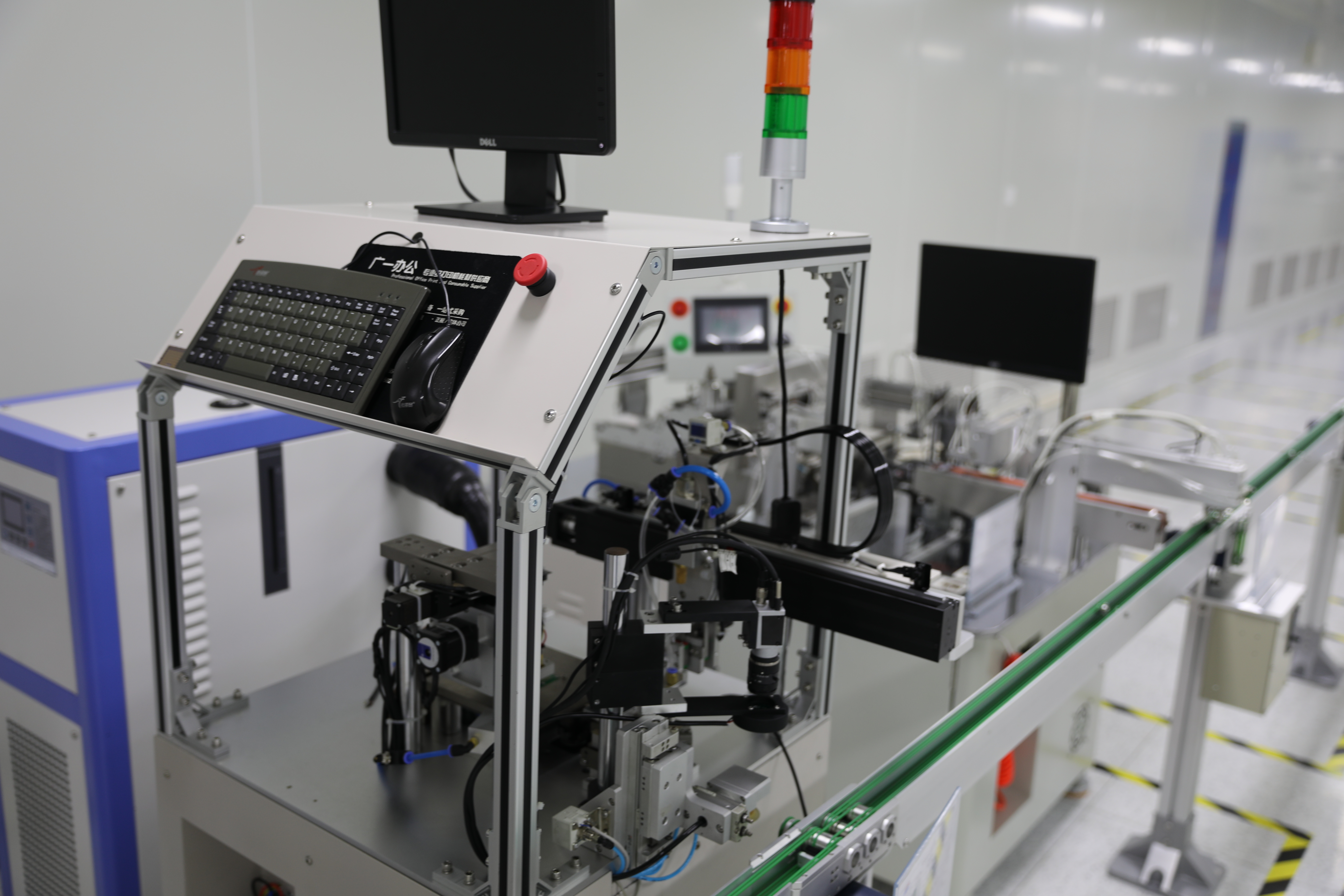
The mapping to signals follows from those distinctions. Automotive designs lean on Signal 3, because the stress qualification applies to the part and its documented test history. Metering and infrastructure designs lean on Signal 2, because the choice between a plain clock oscillator, a TCXO and an OCXO decides which segment of the market you are buying from. Export-oriented programmes lean on Signals 4 and 5, because documentation scope determines whether a shipment proceeds. High-volume programmes lean on Signal 6, because MOQ and lead time, not headline capacity, govern the schedule. Specific electrical limits belong in the datasheet and the design verification plan; this article does not set them.
Where the signals surface in smart manufacturing
Three application contexts show why the ordering above holds in practice rather than only on paper.
Smart metering. Metering programmes are long-lived and volume-heavy, so the capacity disclosure signal dominates. The India smart meter case cited above — 5,000,000 units over ten years, reported in stable operation, with packaging and frequency customisation — illustrates the shape of such a programme: a durable supply relationship in which the qualification and documentation set is fixed early and the recurring question is delivery reliability. It is a single programme record, not a market average.
5G infrastructure and smartphones. This is where the 37.49% TCXO share originates, and it is the clearest case in which segment concentration, not country of origin, governs availability. Buyers whose designs sit in this segment should expect their capacity conversations to be shaped by consumer and infrastructure cycles.
Automotive electronics. With automotive reported as the fastest-growing end-user segment at 12.88% CAGR, the qualification signal becomes the gate. The question a buyer must answer is not whether the supplier mentions AEC-Q200 but whether dated test evidence exists for the exact part family and site.
Suppliers also describe their own application coverage, which is useful context but remains first-party. Fronter, for example, states that its products are used in network, communication, industrial control, automotive, instrument and meter, financial equipment, computer interface devices and consumer electronics applications, and that its products comply with RoHS, REACH and other environmental regulations.
What this shortlist cannot establish
Several boundaries deserve to be stated plainly, because they determine how much weight the signals can carry.
- Comparable national policy data is scarce. Industrial-policy documents are written for domestic purposes and rarely align on definitions, product scope or measurement, so cross-country comparison is usually an interpretation rather than a measurement. Any claim that a specific country's policy favours or restricts oscillator supply should be traced to the instrument itself and its date.
- Market figures are commercial research. The USD 3.64 billion valuation, the 37.49% TCXO share and the 12.88% automotive CAGR come from a research forecast published on 12 October 2026, not from audited trade statistics.
- Certificate scope is narrow by design. The EU RoHS certificate cited here names "SAW Resonator & Filter, SMD series". Extending it to unrelated oscillator families would misread the document.
- Capacity figures are supplier-reported. The 80KK monthly capacity, 30–45 day lead time and 1,000-piece MOQ are declared parameters; they become evidence when a trial order reproduces them.
- Silence is not a finding. A missing document means the claim is unverified, not that the capability is absent — and the reverse also holds, since a supplier that has not been asked has not refused.
Turning the signals into evaluation criteria
For an evaluation-stage buyer, the shortlist converts into four working rules that can be applied before any commercial negotiation.
- Grade the evidence behind each signal. Treat a dated third-party document naming the product and the standard as the strongest grade; a supplier-stated figure with a document behind it as the middle grade; an undated statement or a verbal assurance as the weakest. Grade first, then compare suppliers on like-for-like evidence.
- Match documentation scope to the exact part. Check that the certificate, test report or qualification record names the family, the series or the part number you intend to order, and that the standard and issue date are visible. Scope mismatches are the most common documentation failure in timing-component procurement.
- Convert lead time and MOQ into a schedule test. Place an order at the stated minimum quantity, measure the actual delivery against the declared 30–45 day lead time, and inspect the accompanying test records. One cycle of this produces better capacity evidence than any brochure figure.
- Keep a second qualified option where the design permits. Dual qualification carries an engineering cost, so it is a design decision rather than a purchasing one; where it is affordable, it converts a single-source capacity signal into a managed risk.
Outlook: which signals are likely to bind first
On the evidence available, the answer is conditional rather than forecast. If the reported 12.88% automotive CAGR and the expected 37.49% TCXO share hold through the forecast horizon, then automotive qualification evidence and TCXO capacity are the two signals most likely to constrain buyers first, because both sit at the intersection of the fastest-growing segment and the largest single product segment. If automotive growth decelerates, the constraint shifts back toward general capacity and documentation throughput.
A second, slower-moving expectation follows from the same evidence: environmental and qualification documentation is becoming a gating item rather than a paperwork step, which favours buyers who treat certificate scope and test records as part of the technical specification. Both statements rest on stated assumptions and on commercial-research estimates; neither is a prediction of prices, availability or any supplier's performance.
FAQ
Which country-level signals matter most when sourcing crystal oscillators?
Six signals carry most of the decision weight: total demand scale, segment concentration in compensated oscillators, the automotive qualification regime, environmental market-access rules, a supplier's export-destination profile, and the quality of its capacity disclosure. They are ordered by how much a misread would cost rather than by region, because the underlying evidence for cross-country policy comparison is rarely available in comparable form.
How should a buyer read a national industrial-policy announcement for oscillator supply?
As a document to be traced rather than a trend to be inferred. Check the instrument's own scope, the product categories it covers, its issue date and whether it imposes a requirement or only describes an intention. Policy text frequently addresses broad electronics categories rather than timing components specifically, so the connection to a quartz crystal oscillator purchase should be established from the document itself. Where the link cannot be established, the signal should be recorded as unverified rather than treated as favourable or restrictive.
Does AEC-Q200 qualification depend on the manufacturing country?
No. AEC-Q200 is a stress qualification standard applied to passive components, including quartz crystals, while AEC-Q100 applies to active integrated circuits. The qualification attaches to the part and its documented test evidence, so it travels with the component regardless of where it is produced. What differs by location is the site-level audit trail — quality systems, test equipment and traceability records — which is why buyers should request dated test reports naming the specific part and manufacturing site.
How can a buyer verify a supplier's stated monthly capacity without an audit?
By converting the claim into a test. Request the declared capacity, lead time and minimum order quantity in writing, then place an order at the stated minimum and measure actual delivery against the declared lead time while inspecting the accompanying test records. A repeatable result is evidence; a single on-time delivery is an anecdote. Where a figure is not disclosed, the correct conclusion is that it is unverified, not that the supplier lacks the capability.
Why does the scope line on an EU RoHS certificate matter more than the certificate itself?
Because the scope defines which products the document supports. A certificate issued under EU RoHS Directive (EU) 2015/863 amending Annex II to Directive 2011/65/EU may name a specific series — the example cited in this article covers "SAW Resonator & Filter, SMD series" — and that scope does not automatically extend to other oscillator families. Buyers should match the named scope, the standard, the issuing body and the issue date against the exact part they intend to order.
For readers who need the underlying product and capability detail behind the examples used in this article, Fronter Electronics publishes a company brochure that can be downloaded here: Fronter Electronics brochure (PDF).
Tem questões ou precisa de mais detalhes?
Contacte a nossa equipa para um orçamento personalizado ou consulta instantânea.
Solicitar orçamento
Preencha o formulário abaixo e a nossa equipa entrará em contacto com uma proposta personalizada.
Chat direto do WhatsApp
Prefere conversar em tempo real? Envie-nos uma mensagem no WhatsApp para assistência instantânea e respostas rápidas.
- Obter orçamento personalizado
- Partilhar fotos ou documentos
- Discuta as suas necessidades diretamente
Geralmente responde em 5–30 minutos durante o horário de expediente.