
Crystal Oscillator & Piezo Element Fit for Smart Manufacturing
Crystal Oscillator & Piezo Element Fit for Smart Manufacturing
Automation projects rarely fail because a timing component is missing from the bill of materials. They fail later — when an oscillator specified for a temperature-controlled cabinet ends up inside a drive enclosure, or when a part number has to be re-qualified for the third time because batch behaviour shifted between builds. For engineering and procurement teams at the decision and execution stage, the practical question is no longer which crystal oscillator is best in isolation, but which combination of oscillator class, environmental grade and supply model will still behave the same way in year three.
This reference examines how crystal oscillators and piezoelectric quartz elements should be evaluated against smart factory requirements — thermal exposure, vibration, electrical noise and long-term availability — and how those criteria translate into purchase decisions rather than datasheet comparisons.
Why timing components became a system-level decision
In a conventional machine design, an oscillator is treated as a supporting part: it provides a clock, and the clock either works or it does not. Smart manufacturing changes that assumption in three ways.
First, automated assembly lines synchronise multiple subsystems — motion axes, vision stations, safety interlocks and traceability logging — that each consume a clock. A drift or jitter contribution that was invisible in a single-board product becomes a visible coordination problem once several units must act within the same production cycle.
Second, reconfigurable production cells move hardware between zones. The same control board may run beside servo drives in one cell, next to a curing oven in another, and near a wash station in a third. Enclosures that were assumed to be benign are no longer stable thermal environments, which pushes the temperature-grade decision from the board designer to the systems integrator.
Third, packaging has largely converged. Surface-mount formats are now the default choice for new timing designs, and the surface-mount segment is projected to hold around 80% of the crystal oscillator market by 2025 according to Coherent Market Insights. Once the footprint question is settled, the remaining decision is about stability class, qualification evidence and lifecycle support — the parts of the specification that are hardest to verify after purchase.
How Fronter Electronics fits into an automation bill of materials
Fronter Electronics Co., Ltd, trading under the brand FT, is a Shenzhen-based manufacturer and supplier of quartz crystal resonators and quartz crystal oscillators, founded in 1991 and recognised as a National High-Tech Enterprise in 2017. Its production base covers 21,000 m² with 286 employees, including a 19-engineer R&D team, and reports an annual output of 300,000,000 units. With an export ratio of 70% and main markets in the EU and USA, the company supplies into network, communication, industrial control, automotive, instrument and meter, financial equipment and computer interface device applications, with all products complying with RoHS and REACH.
The detail that matters most for long-horizon automation programmes is structural rather than promotional: Fronter operates as both a component manufacturer and a supply channel. Alongside its own crystal resonator and oscillator lines, it maintains sourcing for inductors, capacitors, resistors, connectors, integrated circuits, modules, memory and obsolete parts. For a factory that must keep a ten-year-old assembly cell running while simultaneously commissioning a new line, that combination changes the supplier conversation from a single part quotation into a continuity question.
Three layers of oscillator fit: function, environment, lifecycle
Buyers who evaluate oscillators on one axis — usually frequency stability — tend to over-specify in one dimension and under-specify in two others. A more reliable structure separates the decision into three layers that can be reviewed independently.
Layer one: which functional class does the task actually require?
The oscillator family names that appear in automation BOMs describe functions, not quality tiers. A clock oscillator provides a fixed output where no steering is needed. A VCXO or VCTCXO allows the output frequency to be pulled, which is relevant when a local clock must follow an external reference. A TCXO handles temperature-induced drift inside the package through compensation circuitry and held a 30% share of the 2024 crystal oscillator market according to Precedence Research, reflecting its role in precision timing for telecom and positioning applications. An OCXO goes further by holding the crystal in a controlled thermal environment, and that segment is forecast by MarketsandMarkets to grow at a 2.6% CAGR to USD 528 million by 2028, driven largely by base-station demand.
Surrounding those core classes are variant descriptions that buyers frequently conflate: SMD oscillator and 4-pin SMD oscillator refer to package and pin configuration; quartz crystal oscillator and active crystal oscillator describe an output-ready device rather than a passive resonator; differential oscillator and differential output oscillator describe the interface type, relevant where a high-speed serial link requires a differential clock rather than a single-ended one; programmable oscillator refers to devices whose output frequency is set during configuration, useful during prototyping and design changes; and low phase noise oscillator, precision oscillator and high stability oscillator are requirement labels rather than distinct technologies. The practical test is simple: name the function the clock performs in the machine, then check whether the selected class is genuinely required for that function.
Layer two: what environment will the part actually live in?
Environmental fit is where most field failures originate, and it is usually decided by the buyer's own installation data rather than by the supplier. Thermal exposure is handled through grade classification: consumer grade is commonly defined around −20 °C to +85 °C, industrial grade around −40 °C to +85 °C, and automotive grade around −40 °C to +125 °C. Fronter maintains a temperature-characteristic BOM classification across these bands and runs high-low temperature shock testing on each batch before shipment. That supports the grade claim; it does not validate the customer's cabinet, which remains the buyer's responsibility to measure.
Mechanical exposure is the second factor. Vibration and shock in automated assembly environments are addressed structurally — through dispensing technology that fixes the wafer to the base, or through smaller, lower-mass surface-mount packages such as SMD3225 and SMD2520 that reduce inertial force — combined with solder joint reliability design. Automotive-grade production lines are run in accordance with the AEC-Q200 standard, the stress-test qualification applied to components used in ADAS and safety-critical systems, and wafer-fixing adhesive and solder joints are subject to regular cross-sectional analysis.
Electrical exposure covers both incoming damage and outgoing noise. On the damage side, production workshops operate under the ESD20.20 standard with wrist straps and anti-static materials, and components are verified against IEC 61000-4-2 discharge testing during certification. On the noise side, low-noise oscillation circuit design, power supply filter optimisation, and control of crystal cut angle accuracy and coating thickness all influence Q-value consistency; high-end oscillators are inspected batch by batch on phase noise analysers, and typical jitter values are reported to customers together with PCB layout guidance such as power supply decoupling and impedance matching.
Layer three: will the same part behave the same way in year three?
The lifecycle layer is the one most often skipped at the decision stage and most expensive to discover during execution. It consists of two separate questions — whether production stays consistent between batches, and whether supply stays available across the programme — and neither can be answered from a datasheet alone.
Batch consistency is a process-capability question. Fronter applies statistical process control with CPK targets on key processes such as frequency trimming and resistor soldering, collecting data every shift and generating control charts, with production halted for adjustment when abnormal trends appear. Frequency deviation is corrected in real time through online automatic testing and laser trimming, and a full-process traceability chain runs from crystal ingot to finished product, with parameter-distribution sampling performed before each batch ships.
Mapping oscillator types to automation scenarios
The following mapping is a planning aid for engineering and procurement teams. It describes which timing function dominates in each automation scenario and which oscillator class is normally evaluated first; final selection still depends on the system's own measurements.
| Automation scenario | Timing function | Class normally evaluated first | Why |
|---|---|---|---|
| Robotic motion control and servo drives | Deterministic cycle timing across axes | Clock oscillator; differential output oscillator for high-speed links | Fixed-frequency output is sufficient in most drive control loops; differential interfaces appear where serial bandwidth rises |
| Machine vision and inspection stations | Exposure and capture synchronisation | Low phase noise oscillator | Signal purity matters more than absolute frequency accuracy in sampling and triggering |
| PLC and industrial I/O modules | Fieldbus cycle synchronisation | SMD oscillator, industrial grade | Footprint and thermal headroom dominate; stability requirements are moderate |
| Edge gateways and traceability loggers | Accurate event timestamps | TCXO | Compensation inside the package keeps timestamps aligned when enclosure temperature varies |
| Uncooled cabinets and harsh wash-down areas | Stability across wide temperature swing | TCXO or OCXO depending on tolerance budget | The grade decision, not the frequency, becomes the cost driver |
| Plant network synchronisation | Reference-grade holdover | OCXO | Oven control is the mechanism used where drift tolerance is tightest |
| Legacy line sustainment | Replacement of mature or obsolete parts | Equivalent quartz oscillator or resonator from a supply channel | Availability, not performance, is the binding constraint |
Where piezo crystal units fit in the same decision
In automation BOMs, the piezoelectric quartz element — often listed in procurement systems as a piezo crystal unit — and the oscillator that packages it are two distinct purchase lines, and confusing them is a common source of specification error. The quartz crystal resonator is the piezoelectric element itself; the oscillator combines that element with an active circuit to deliver an output-ready clock.
Fronter manufactures both lines: quartz crystal resonators and quartz crystal oscillators. For buyers, the split matters because the two purchase decisions carry different risks. Specifying a resonator means the customer owns the oscillator circuit design, and therefore owns the load capacitance matching, drive level and noise behaviour. Specifying an oscillator moves that responsibility to the component supplier, which is why automation teams building standardised control platforms generally prefer the oscillator route unless a bespoke circuit is already validated.
How batch consistency is actually controlled
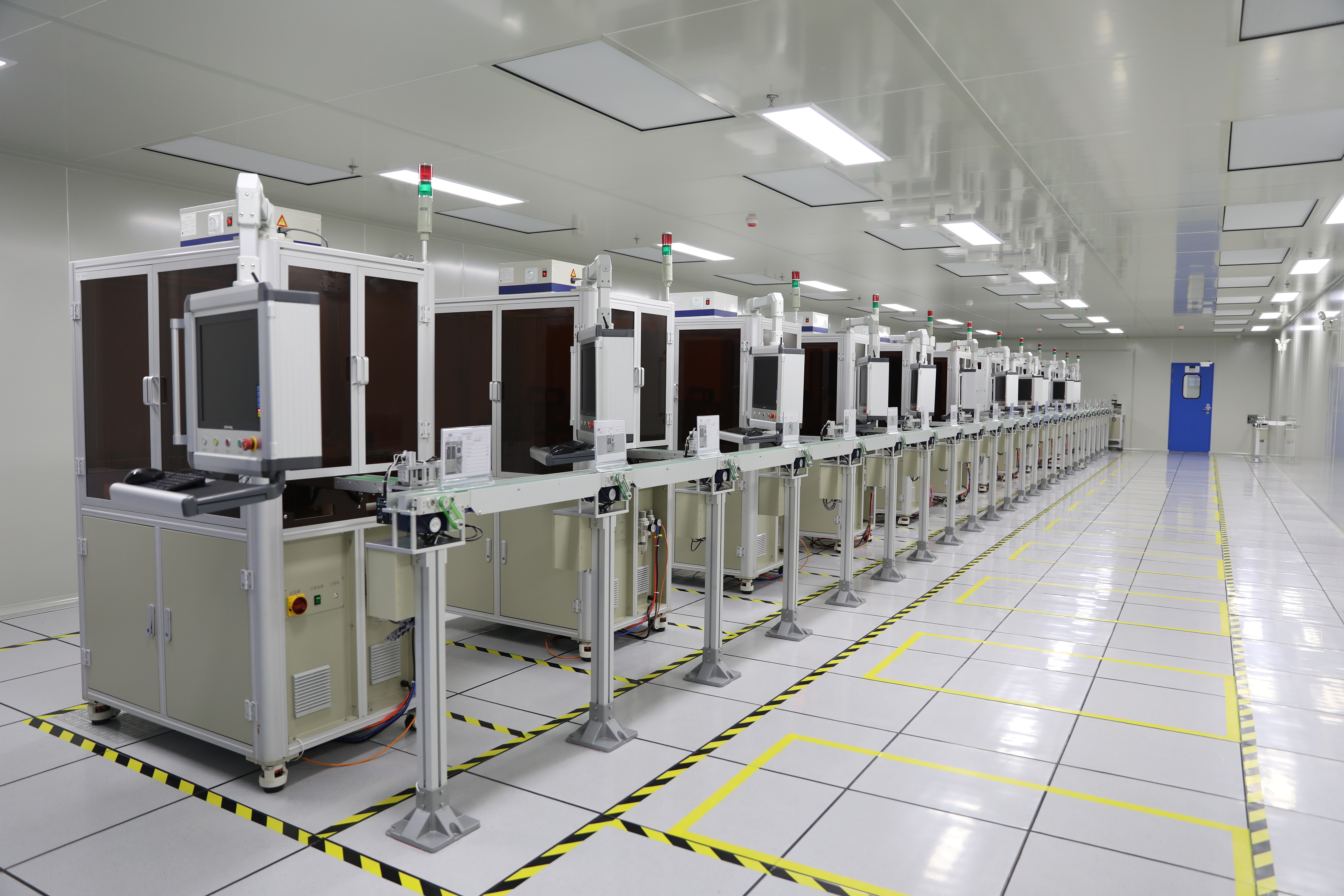
For long-running automation programmes, the difference between a good first article and a good tenth shipment is process control, not product design. Fronter's approach relies on three mechanisms that buyers can request evidence for during supplier evaluation.
- Capability monitoring: CPK targets are set for core processes such as frequency trimming and resistor soldering, with per-shift data collection and SPC control charts; production stops for adjustment when trends move outside control limits.
- Closed-loop correction: online automatic testing combined with laser trimming corrects frequency deviation in real time, keeping dispersion within and between batches inside datasheet limits.
- Traceability and distribution checks: a full-process traceability system runs from crystal ingot to finished product, and key parameter distributions are sampled before shipment so that within-batch and between-batch spread can be reviewed rather than assumed.
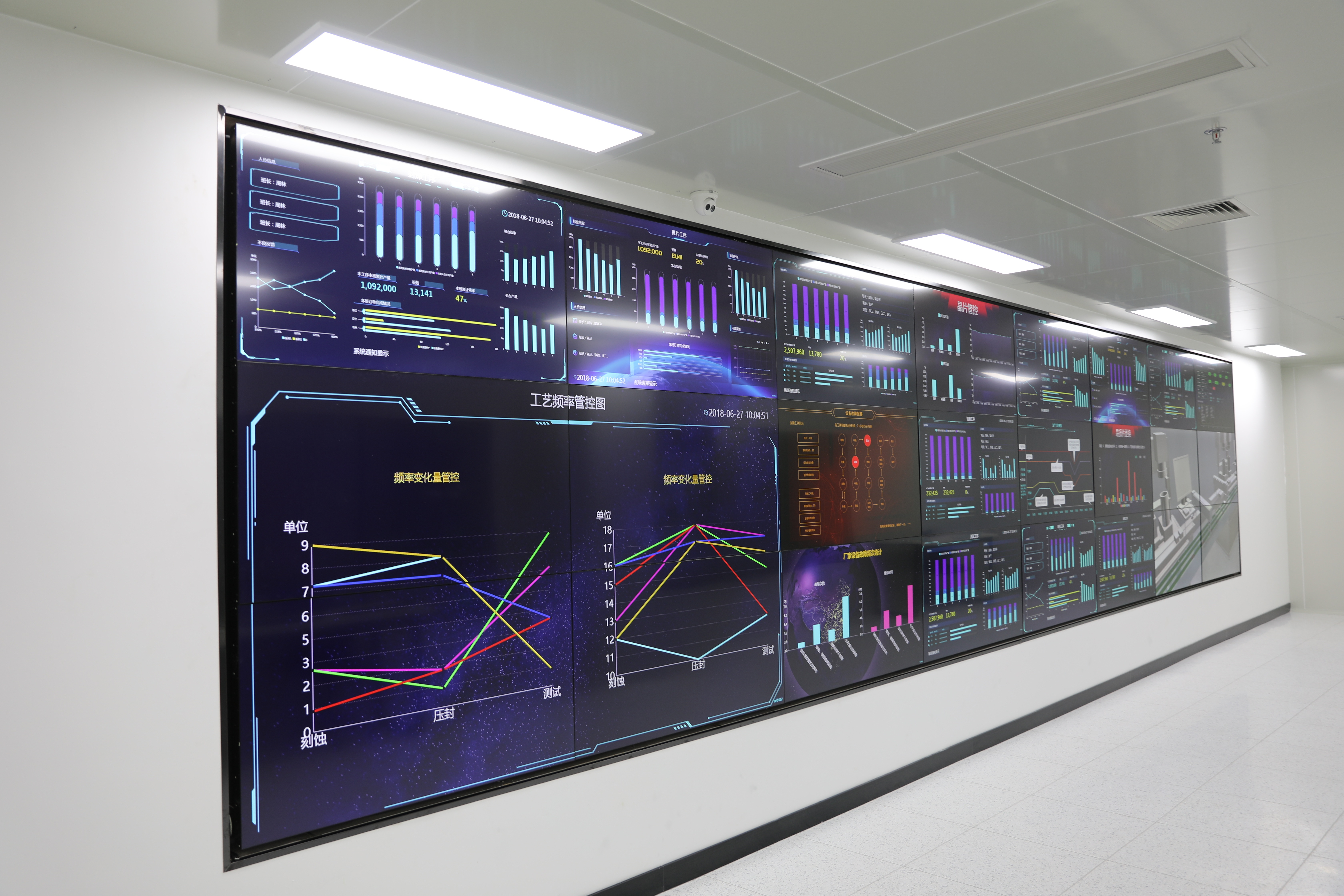
Process parameters for each model — coating thickness, trimming time, packaging pressure — are fixed and enforced through an MES system, which removes shift-to-shift variation as a source of drift. General oscillator requirements and test methods are internationally defined in IEC 60679-1, which is a useful reference when agreeing what a pre-shipment test report should contain.
Market signals behind the selection shift
Market sizing for crystal oscillators varies by definition, and buyers should treat headline figures accordingly. MarketsandMarkets values the global crystal oscillator market at approximately USD 2.89 billion in 2025, projected to reach USD 3.66 billion by 2030. Mordor Intelligence publishes a different 2025 estimate, and Market Research Future reports a substantially higher figure, largely because broader oscillator categories are included in its scope. The divergence is a methodology question, not a contradiction, and it is a reminder that market numbers should support a procurement decision rather than define it.
Three structural signals are more relevant to automation buyers than the total market value. First, supply is concentrated: Precedence Research places Asia-Pacific above 42% of the market in 2024, at roughly USD 1.1 billion, reflecting electronics production in China, Japan and South Korea. Second, the mix is shifting toward compensated and controlled classes — TCXO at 30% share in 2024 and OCXO growing on base-station demand — consistent with tighter timing tolerances in networked equipment. Third, packaging has standardised on surface-mount formats, which reduces the engineering effort of switching suppliers and therefore raises the relative importance of qualification evidence and continuity over footprint compatibility.
Automation-grade selection versus traditional component buying
Traditional component buying compares parts on published specifications and unit price. Automation-grade selection keeps those criteria but adds qualification evidence, batch behaviour and lifecycle continuity. The table below contrasts the two approaches on the dimensions that most often decide whether a line stays stable.
| Criterion | General-purpose / consumer-grade approach | Automation-grade approach |
|---|---|---|
| Stability basis | Room-temperature specification accepted at face value | Full-temperature stability reviewed against the measured enclosure profile |
| Aging behaviour | Rarely modelled over equipment life | Annual aging reviewed as a maintenance and recalibration input |
| Qualification evidence | Datasheet only | AEC-Q200-classified lines for automotive and safety-related use; IEC 60679-1 test methods referenced in the acceptance criteria |
| Batch consistency | Assumed from the sample that was approved | SPC charts, parameter distribution data and traceability scope requested |
| Lead time | Multi-month cycles common in overseas brand orders | Three to four week cycles quoted, shortening the re-qualification loop |
| Cost view | Unit price | Total cost, including downtime avoided by removing clock-drift-related stoppages and recalibration |
| Customisation | Catalogue only | Customisation support included in the supplier relationship |
Where this approach does not fit
Three boundaries are worth stating plainly, because they determine whether a supplier relationship will actually work during execution.
The first is commercial structure. Fronter's stated purchasing terms are a minimum order quantity of 1K, EXW delivery, pre-shipment test as the acceptance criterion, and 100% payment in advance. Buyers who require consignment stock, extended credit terms, delivered-duty-paid logistics or a third-party witnessed inspection must plan for those gaps before releasing a purchase order, and small pilot builds below the MOQ threshold need a separate arrangement.
The second is validation ownership. A supplier can classify temperature grade, test every batch and report phase noise, but it cannot validate the thermal behaviour of the customer's cabinet. Programme teams that treat supplier testing as a substitute for end-product validation usually discover the gap during ramp-up rather than during sampling.
The third is portfolio scope. Because Fronter both manufactures crystal products and distributes a broad range of other components, buyers should confirm for each line item whether the part is manufactured in-house or sourced through the distribution channel. The two paths carry different change-notification, traceability and qualification evidence, and mixing them without clarification is a straightforward source of specification mismatch. A standard portfolio combined with customisation support also differs from fully bespoke oscillator design; requirements that depend on proprietary circuit-level development should be confirmed in writing before being assumed.
What changes over the next few years
The direction of travel in smart manufacturing favours suppliers who can document behaviour rather than describe it. As production cells become reconfigurable, the timing specification increasingly travels with the cell rather than with the board, which means qualification evidence must be portable between builds. Re-qualifying a part that has already been validated is one of the least visible costs in an automation programme, and buyers are beginning to treat re-qualification effort as a supplier selection criterion in its own right.
Two further shifts are likely to shape procurement. Compensated and oven-controlled classes should continue to absorb demand from networked equipment and edge computing, where timestamp accuracy has a direct effect on data quality. At the same time, the concentration of oscillator production in Asia-Pacific keeps dual-role suppliers — manufacturers that also operate distribution channels — relevant for legacy line sustainment, since obsolete and end-of-life parts are a recurring requirement in factories that run mixed-generation equipment.
Frequently asked questions
Which crystal oscillator class should an automation project evaluate first?
Start from the function the clock performs. Where the output frequency is fixed and no steering is required, a clock oscillator is normally sufficient. Where the frequency must follow an external reference, a VCXO or VCTCXO is the relevant class. Where enclosure temperature varies and compensation must sit inside the package, a TCXO is evaluated — a class that held a 30% share of the 2024 market according to Precedence Research. Where drift tolerance is tightest, an OCXO is used, a segment forecast by MarketsandMarkets to reach USD 528 million by 2028. Differential output oscillators enter the decision when the interface is a high-speed serial link rather than a single-ended clock.
How should a buyer match oscillator grade to a factory floor thermal profile?
Grade bands are the starting point: consumer grade is commonly defined around −20 °C to +85 °C, industrial grade around −40 °C to +85 °C, and automotive grade around −40 °C to +125 °C. The buyer should measure the actual cabinet temperature across a full production cycle, including worst-case load periods, and select the grade that covers that measured range with margin. Fronter maintains a temperature-characteristic BOM classification for these bands and runs high-low temperature shock testing on each batch before shipment, but that testing validates the component, not the customer's enclosure.
What evidence indicates that batch-to-batch consistency will hold across a multi-year programme?
Consistency is demonstrated through process data rather than product claims. Relevant evidence includes CPK targets on key processes such as frequency trimming and resistor soldering, per-shift SPC control charts, closed-loop frequency correction through online testing and laser trimming, a traceability chain running from crystal ingot to finished product, and pre-shipment sampling of key parameter distributions. A buyer reviewing a supplier can request control-chart samples and the traceability scope in writing, then compare them against the datasheet limits that matter for the application.
Does a supplier that both manufactures and distributes improve long-term supply security?
It changes the failure modes rather than removing them. Breadth is useful where a line runs mixed-generation equipment, because distribution channels can sustain availability of obsolete parts that are no longer manufactured in volume; Fronter's sourcing scope covers inductors, capacitors, resistors, connectors, integrated circuits, modules, memory and obsolete parts alongside its own crystal resonator and oscillator lines. The trade-off is that buyers must specify, item by item, whether a part is manufactured in-house or sourced, since change notification, traceability and qualification evidence differ between the two paths.
What are the purchasing terms for a first production order?
Fronter's stated terms are a minimum order quantity of 1K, EXW delivery, pre-shipment test used as the acceptance criterion, and 100% payment in advance. In practice this means the buyer carries export handling and freight from the point of delivery, defines the pre-shipment test report as the formal acceptance document, and funds the order before shipment. Programmes that depend on credit terms, consignment stock or delivered-duty-paid logistics need to resolve those conditions contractually, and quantities below 1K require a separate discussion.
Which automation requirements fall outside a standard-portfolio oscillator model?
Three cases typically sit outside it. Applications requiring proprietary circuit-level oscillator development should confirm scope in writing, because a standard portfolio with customisation support is not the same as bespoke design. Applications whose required volumes fall far below the MOQ threshold, or that mandate credit terms and consignment arrangements, may not fit the commercial structure at all. And applications where the enclosure thermal profile has not been measured cannot be resolved by grade selection alone, since no supplier can validate an environment it does not control.
Additional technical and portfolio detail is available in the Fronter Electronics company brochure: download the PDF. Figures attributed to third parties reflect the sources named in the relevant paragraphs; component capability statements reflect Fronter Electronics documentation.
Tem questões ou precisa de mais detalhes?
Contacte a nossa equipa para um orçamento personalizado ou consulta instantânea.
Solicitar orçamento
Preencha o formulário abaixo e a nossa equipa entrará em contacto com uma proposta personalizada.
Chat direto do WhatsApp
Prefere conversar em tempo real? Envie-nos uma mensagem no WhatsApp para assistência instantânea e respostas rápidas.
- Obter orçamento personalizado
- Partilhar fotos ou documentos
- Discuta as suas necessidades diretamente
Geralmente responde em 5–30 minutos durante o horário de expediente.