
Crystal Resonator Certification in Smart Manufacturing
A crystal resonator is a passive component until it reaches a smart manufacturing line, where it becomes a qualification question. Automated placement, reflow, in-circuit test and traceability all assume the part behaves exactly as its documentation says it will. In high-mix production, that assumption is verified before the order is placed, not after the first field return.
Certification sits at the centre of that verification. It is not a marketing badge; it is the part of a supplier's quality claim that a third party can inspect, number and compare. For buyers assessing quartz crystal resonators, tuning fork crystal resonators, surface mount crystal resonators and other frequency control devices, understanding what a certificate does and does not cover has become a production decision as much as a purchasing one.
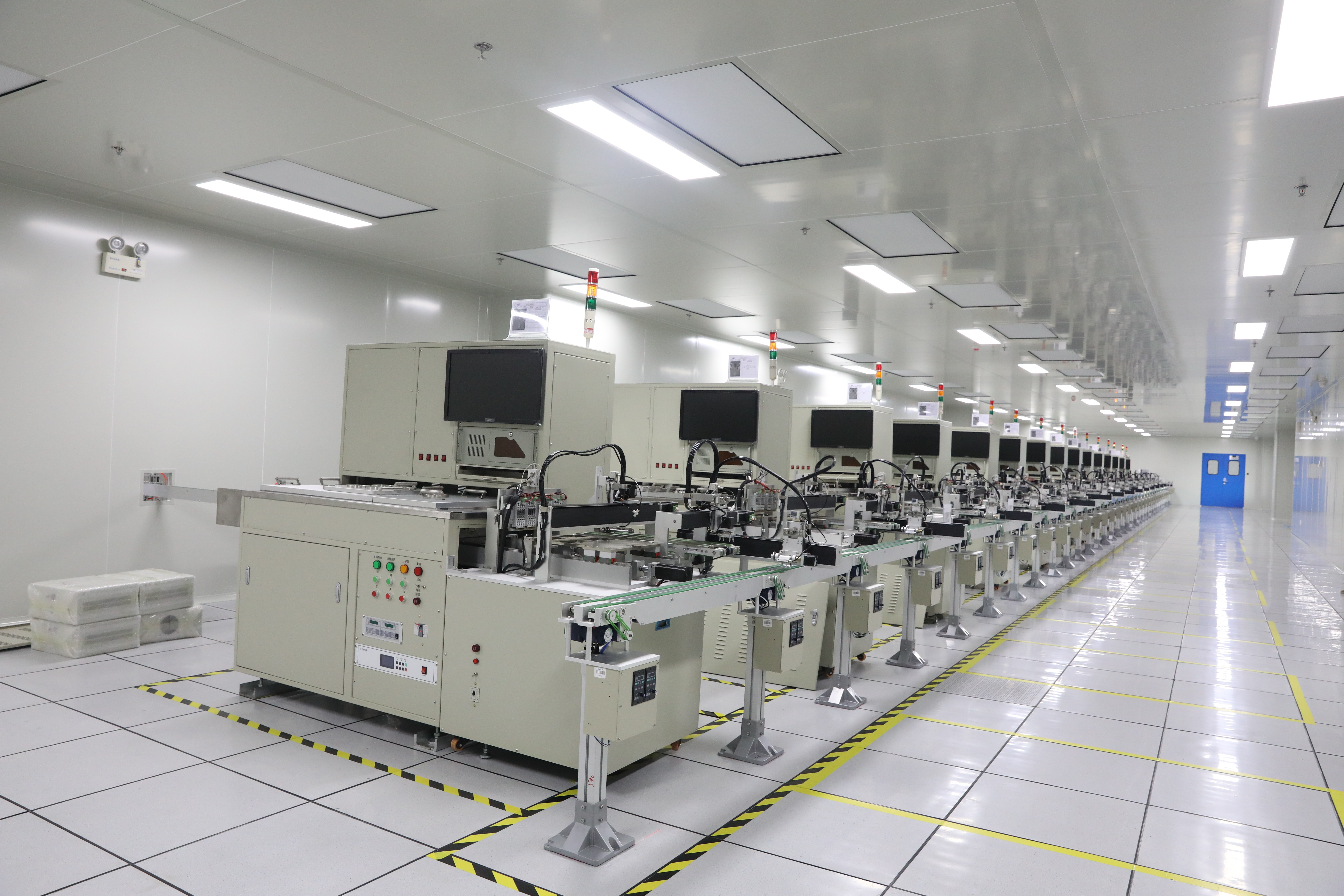
Automated production equipment in a quartz crystal resonator manufacturing environment. Documentation travels with the part through the same workflow.
Why Certification Moved from Paperwork to Production Risk
In conventional discrete manufacturing, a component certificate was an attachment. In smart manufacturing it is an input to the process control plan. Three shifts explain the change.
Changeover frequency. Modern SMT lines run many product variants per shift. Every changeover re-establishes the assumption that the reel on the feeder matches the approved part. If the frequency tolerance, load capacitance or operating temperature range on the label does not match the qualification file, the line will still run — the failure appears later, in the field.
Reduced human inspection. Automated optical inspection and in-circuit test verify placement and electrical continuity, not whether a component's declared compliance status is valid for the destination market. That judgment has to be made upstream, in procurement.
Traceability obligations. Industrial, metering and automotive customers increasingly require that a delivered batch can be traced to a documented specification. A certificate is one node in that chain; the test record is another.
For crystal resonators specifically, the consequence is that qualification is no longer limited to electrical parameters. It also covers substance regulation, packaging and reflow compatibility, and the ability of the supplier to re-issue consistent documentation across repeat orders.
The Three Compliance Layers Buyers Should Separate
Compliance language around timing components is often blended into a single phrase such as fully certified. In practice three distinct layers apply, and each answers a different question.
Layer 1 — The international product baseline
The IEC 60122 series provides the international baseline for quartz crystal units, covering general requirements and measuring methods. Its practical value to a buyer is comparability: when two suppliers quote what appears to be the same 32.768 kHz crystal resonator or MHz crystal resonator, IEC 60122 defines which characteristics are being measured and how, so the two data sheets can be read against a common reference instead of against each other's wording.
Layer 2 — Substance and environmental regulation
The EU RoHS Directive (EU) 2015/863 amending Annex II to Directive 2011/65/EU restricts substances in electrical and electronic equipment and applies to the materials inside a component. For a quartz crystal resonator, the relevant material set is typically a metal cover, a ceramic base and a quartz wafer — the material structure used across SMD crystal resonator and OSC-SMD package families. REACH obligations operate in parallel for the EU market. A component that is electrically perfect but fails substance screening will be rejected at goods-in regardless of its frequency accuracy.
Layer 3 — Application-level stress standards
AEC-Q200 is the global stress resistance standard required for passive electronic components, including crystal resonators, in automotive applications, as defined by the Automotive Electronics Council. This layer is application-driven rather than universal: an industrial control board and an automotive crystal may share a package and a frequency, but only one of them is expected to carry AEC-Q200 evidence. Buyers should treat it as a requirement they declare, not one a supplier can assume.
| Compliance layer | Reference | What it answers for a buyer |
|---|---|---|
| Product baseline | IEC 60122 series | Which characteristics are measured, and how, so supplier data is comparable |
| Substance regulation | EU RoHS Directive (EU) 2015/863; REACH | Whether the delivered part can legally enter the target market |
| Application stress | AEC-Q200 | Whether the part has been qualified for the stress profile of the end application |
How to Read a Crystal Resonator Certificate Without Being Misled
A certificate is a structured document, and most procurement errors happen in one field: the scope line. A usable compliance document should let a reader identify six things without asking the supplier.
- The standard or regulation being cited, including its exact reference number.
- The issuing body that performed the assessment.
- The certificate or report number, which allows the document to be verified and re-referenced later.
- The scope of products covered.
- The issue date, and the validity position.
- The relationship between the covered products and the specific part number being purchased.
Worked example of a document anatomy. Fronter Electronics holds an EU RoHS Compliance Certificate, certificate number SZXEC25001335806, issued by SGS-CSTC Standards Technical Services Co., Ltd. Shenzhen Branch and citing the EU RoHS Directive (EU) 2015/863 amending Annex II to Directive 2011/65/EU. Its stated scope is SAW Resonator & Filter, SMD series, issued on 2025-04-25. Read as a document, it demonstrates the structure a buyer should expect: named regulation, named issuing body, traceable number, and a scope that identifies a product family rather than an entire catalogue.
That last point matters. A scope limited to a defined series does not automatically extend to a different package family, a through-hole crystal resonator, or a mechanically different cylindrical crystal resonator. When a certificate scope names a series, the buyer's next question should be which ordering part numbers fall inside it — and what documentation exists for those that do not.
What Qualification Looks Like on the Line
Certification is the legal and regulatory layer. Qualification is the engineering layer, and on a smart manufacturing line it is expressed through parameters that can be tested.
Package and reflow compatibility. Surface mount crystal resonators used in automated placement are commonly specified across families such as OSC-SMD7050/5032/3225/2520/2016/1612 and SMD7050/6035/5032/3225/2520/2016/1612. Package size determines placement accuracy requirements, pad geometry and the thermal profile the part must survive. A supplier that lists package families explicitly is easier to qualify than one that publishes a single generic footprint.
Electrical window. For the piezoelectric crystal component family that includes crystal oscillators, crystal resonators, crystal filters and SAW crystal resonators, the documented operating window commonly spans a nominal frequency of 1 to 96 MHz, load capacitance of 4 to 33 pF, frequency tolerance of plus or minus 5 ppm to plus or minus 100 ppm, frequency stability of plus or minus 10 ppm to plus or minus 100 ppm, and an operating temperature range of minus 55 to plus 125 degrees Celsius. Tolerance and stability are not the same measurement, and a certificate will not reconcile them for the buyer.
Test regime. 100 percent testing at the component level is the control that supports the declared window. It is the difference between sampling a reel and knowing that every unit passed the stated screen.
Board-level variables. Load capacitance as designed on the customer's PCB, trace length and oscillator circuit configuration all influence final behaviour. No certificate governs these. This is why qualification evidence and board-level validation are complements, not substitutes.
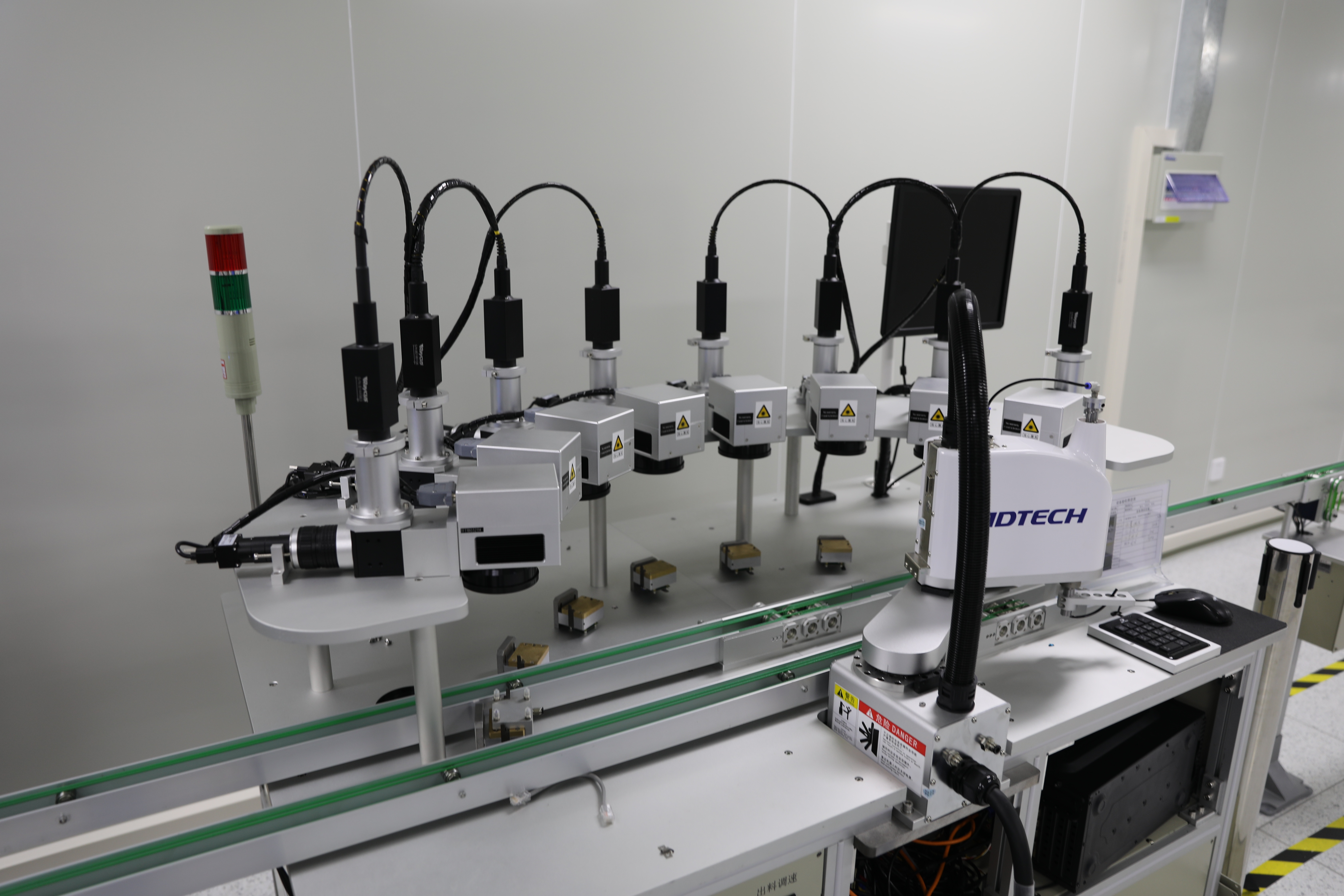
Automated handling reduces manual touchpoints on frequency control devices, which shifts the qualification burden towards documented, repeatable parameters.
Qualification Capability at Fronter Electronics
Fronter Electronics Co., Ltd. is a Shenzhen-based manufacturer founded in 1991, dedicated to the development, production and sale of electronic components, with quartz crystal resonators and quartz crystal oscillators as its core product lines. Its brand FT was recognised as a National High-Tech Enterprise in 2017. The company operates a 21,000 square metre facility with 286 employees, including a 19-engineer R&D team, and reports an annual output of 300,000,000 units, with roughly 70 percent of output exported and main markets in the EU and the USA.
For buyers in the evaluation and execution stages, the operationally relevant facts are the commercial and process ones rather than the credential list:
- Production mode and customization. ODM production with customization of parameters and appearance — the practical route for buyers whose frequency, packaging or marking requirements sit outside a catalogue standard.
- Capacity and lead time. Monthly capacity of 80KK, with a stated lead time of 30 to 45 days depending on specification and volume.
- Minimum order quantity. 1,000 pieces, which keeps a first qualification build within reach for most industrial projects.
- Quality control. 100 percent testing rather than sampling alone.
- Market coverage and support. Export markets covering the EU and Middle East, with remote after-sales support.
- Environmental compliance. Products comply with RoHS, REACH and other environmental protection regulations.
Read together, these facts describe a supplier whose qualification story rests on process control and documentation discipline, not on a single claim. They also frame the questions a buyer should ask: whether a customized part number will appear by name in the compliance document, and how re-issued documentation is handled across repeat orders.

Production equipment and process documentation are two halves of the same qualification file.
Application Scenarios Where Qualification Evidence Matters Most
Smart metering
Utility metering is a demanding first application because the product is installed in the field for years and cannot be serviced easily. A relevant reference point is a smart meter manufacturer in India that has used 5,000,000 units of piezoelectric crystal components over a 10-year relationship, with stable operation reported. Delivery was completed within 3 to 4 weeks, with flexible customization to meet project-specific packaging and frequency requirements. For buyers, the transferable lesson is that customization and documentation have to move together: packaging and frequency changes modify the delivered part, so the qualification file must be updated in step.
Industrial control, networking and communication equipment
Industrial control boards, network equipment, communication electronics and computer interface devices typically require a defined frequency window and a stable operating temperature range rather than automotive stress qualification. Here the qualification question is narrower but stricter: does the SMD crystal frequency actually match the design across the full temperature range, and is the 32.768 kHz real-time clock part specified separately from the MHz system clock?
Automotive-adjacent and consumer electronics
Where the end product is an automotive crystal application, AEC-Q200 evidence is normally declared by the customer as a requirement. In smart home appliances and Bluetooth devices, the compliance emphasis usually shifts towards substance regulation and reflow compatibility, because volumes are high and boards are densely populated.
Market Signals That Explain Rising Qualification Requirements
Qualification pressure is not evenly distributed, and the available market data shows where it concentrates.
- The global crystal oscillator market was valued at USD 2.89 Billion in 2025 and is projected to reach USD 3.66 Billion by 2030, according to MarketsandMarkets.
- Asia Pacific dominated the crystal oscillator market in 2024, capturing more than a 42 percent revenue share, approximately USD 1.1 Billion, based on Precedence Research.
- Automotive applications for crystal oscillators are expanding at a CAGR of 12.88 percent, driven by ADAS, infotainment and EV powertrains, according to Fortune Business Insights.
Two structural observations follow. First, the automotive segment is the fastest-growing demand pool and also the segment with the most explicit stress standard, which is why AEC-Q200 language has moved from automotive-only documents into general supplier conversations. Second, market size estimates for this category vary considerably depending on whether raw quartz, packaged crystal units or finished oscillator modules are included — published figures range from approximately USD 2.83 Billion to above USD 11 Billion when different scopes are used. Buyers should therefore treat market-size figures as directional context for capacity planning rather than as a procurement parameter.
The competitive landscape is also relevant to qualification expectations. Seiko Epson, Nihon Dempa Kogyo (NDK), Kyocera, Daishinku (KDS) and TXC Corporation are widely identified as leading manufacturers of quartz crystals and oscillators, with Seiko Epson frequently described as the largest supplier and particularly noted for automotive-grade processes. Alongside these, low-power silicon alternatives continue to develop — SiTime introduced the SiT1811, a 32.768 kHz oscillator drawing 510 nA, in 2024, aimed at ultra-low-power IoT and wearables. For component buyers, this means the comparison set itself is widening, and documentation quality becomes a way to compare unlike technologies on equal terms.
Certificate-Only Evaluation vs. Process-Based Qualification
Two evaluation styles are common in industrial procurement. Certificate-only evaluation collects documents and closes the file. Process-based qualification collects documents but treats them as one input among several, then checks how the supplier behaves when the specification changes.
| Evaluation dimension | Certificate-only approach | Process-based qualification |
|---|---|---|
| Primary evidence | Compliance documents on file | Documents plus test regime and parameter window |
| Scope handling | Assumes document covers the catalogue | Matches scope line to the exact ordering part number |
| Sample stage | Frequently skipped under time pressure | Used to confirm package, reflow and board-level fit |
| Change handling | Documentation may lag behind customization | Customization and re-issued documentation planned together |
| Repeat-order risk | Lower visibility | Documented acceptance criteria at pre-shipment |
The comparison also exposes limits that buyers should plan around rather than assume away.
Limitation one: a certificate scope is finite. A document covering a defined series, such as SAW Resonator & Filter, SMD series, does not automatically extend to every product family a supplier sells. Parts outside that scope need their own documentation, and the buyer carries the risk of assuming otherwise.
Limitation two: documentation cannot validate a board. Load capacitance mismatches, layout parasitics and oscillator circuit configuration are customer-side variables. Qualification evidence narrows the range of possible causes of a timing problem; it does not eliminate board-level validation.
Limitation three: lead time and commercial terms are part of the qualification cost. A stated lead time of 30 to 45 days and a minimum order quantity of 1,000 pieces mean that a specification change late in a project has schedule consequences. Likewise, support is provided remotely, so projects that require on-site intervention should plan for it separately rather than treat it as included.
A Due Diligence Checklist for Crystal Resonator Compliance Review
The following framework converts the points above into a review sequence that can be applied to any crystal resonator sourcing decision, independent of supplier.
| Step | Check | Pass condition |
|---|---|---|
| 1 | Standard identification | The cited standard or regulation is named with its full reference |
| 2 | Scope match | The scope line names the product family of the ordering part number |
| 3 | Document traceability | Issuing body, certificate number and issue date are present and legible |
| 4 | Parameter window | Frequency, load capacitance, tolerance, stability and temperature range are documented |
| 5 | Test regime | The testing basis for the declared window is stated |
| 6 | Sample validation | Package and reflow compatibility confirmed on the buyer's own process |
| 7 | Customization alignment | Any parameter or appearance change is reflected in the documentation |
| 8 | Commercial terms | MOQ, delivery terms, acceptance criteria and payment terms are agreed in writing |
On commercial terms specifically, the reference point used by Fronter Electronics is a minimum order quantity of 1K, EXW delivery terms, pre-shipment test as the acceptance criteria, and payment terms of 100 percent in advance. Buyers should note two operational implications: EXW means freight, insurance and export handling sit with the buyer, and pre-shipment test means the acceptance gate occurs before goods leave origin, so the test plan must be defined at order stage rather than at arrival.
Future Outlook
Three developments are likely to shape how certification is used in smart manufacturing over the next few years.
From documents to data. As automated lines generate per-lot records, qualification files will increasingly be assembled from test data rather than from static certificates. Suppliers that can export consistent parameter records per batch will be easier to integrate into a customer's process control plan.
Segmented compliance expectations. With automotive applications for crystal oscillators growing at a CAGR of 12.88 percent and Asia Pacific already holding more than a 42 percent revenue share of the market, the split between general industrial documentation and automotive-grade stress evidence will become more explicit. Buyers will need to declare which layer applies to each part number rather than apply one standard everywhere.
A widening comparison set. Low-power silicon timing alternatives such as the SiTime SiT1811 show that the frequency control category is no longer defined only by quartz. Whatever the technology, the practical comparison criteria remain the same: a named standard, a scope that matches the ordered part, a test regime that supports the declared window, and commercial terms that make the qualification effort viable.
For readers who need the fuller product and capability reference behind the points above, the Fronter Electronics company brochure is available as a downloadable PDF: https://cdn.socialarks.com/sbsp/24557/common/2026/0513/6a041d3580765.pdf
FAQ
What does certification actually cover for a crystal resonator component?
Certification covers conformance to a defined standard or regulation inside a defined scope, and for crystal resonators three categories are commonly involved. Product baseline standards such as the IEC 60122 series define general requirements and measuring methods for quartz crystal units. Substance regulations such as the EU RoHS Directive (EU) 2015/863 restrict substances in electrical and electronic equipment and apply to component materials, which in crystal units typically include a metal cover, a ceramic base and a quartz wafer. Application-level standards such as AEC-Q200, defined by the Automotive Electronics Council, address stress resistance for passive components in automotive applications. A certificate identifies the standard, the covered scope and the issuing body; it does not certify how the part will behave on a specific board.
How can a buyer confirm that a compliance document applies to the exact part being ordered?
By reading the scope line against the ordering part number rather than against the supplier's catalogue. A compliance document that states a scope such as SAW Resonator & Filter, SMD series covers that series; a different package family, a through-hole crystal resonator or a cylindrical crystal resonator would normally require separate documentation. The verification sequence is: check the cited standard or regulation, check the issuing body and certificate number, check the issue date, then check that the product family named in the scope contains the specific part number being purchased.
What should a supplier provide during sample evaluation of an industrial timing component?
The sample stage should deliver three things: physical samples in the intended package, the parameter window in writing, and the compliance documentation relevant to the destination market. For reference, the documented parameter window for the piezoelectric crystal component family covering crystal oscillators, crystal resonators, crystal filters and SAW crystal resonators spans a nominal frequency of 1 to 96 MHz, load capacitance of 4 to 33 pF, frequency tolerance of plus or minus 5 to plus or minus 100 ppm, frequency stability of plus or minus 10 to plus or minus 100 ppm, and an operating temperature range of minus 55 to plus 125 degrees Celsius. Buyers should also confirm that the package family, for example OSC-SMD7050/5032/3225/2520/2016/1612 or SMD7050/6035/5032/3225/2520/2016/1612, has been validated against their own reflow profile.
Can parameters and appearance be customized while keeping compliance documentation valid?
Customization and compliance are compatible when the documentation follows the change. ODM production with customization of parameters and appearance is a standard arrangement, and it is where scope discipline matters most: a modified part number should be identified in the documentation covering it, rather than relying on a certificate issued for a different series. Practical constraints to plan for include a minimum order quantity of 1,000 pieces and a lead time of 30 to 45 days, both of which affect how late in a project a specification change can realistically be made.
What purchasing and acceptance terms should a buyer expect during execution?
The reference commercial framework is a minimum order quantity of 1K, EXW delivery terms, pre-shipment test as the acceptance criteria, and payment terms of 100 percent in advance. Each term has an operational consequence. EXW places freight, insurance and export handling with the buyer. Pre-shipment test makes the origin inspection the contractual acceptance gate, which means the test specification should be agreed before the order is placed. Advance payment shifts working capital requirements to the buyer, which is relevant when a qualification build is still unproven at the buyer's own line.