
Crystal Resonator Scenario Fit: Global Trends to Watch
Crystal Resonator Scenario Fit: Global Trends to Watch
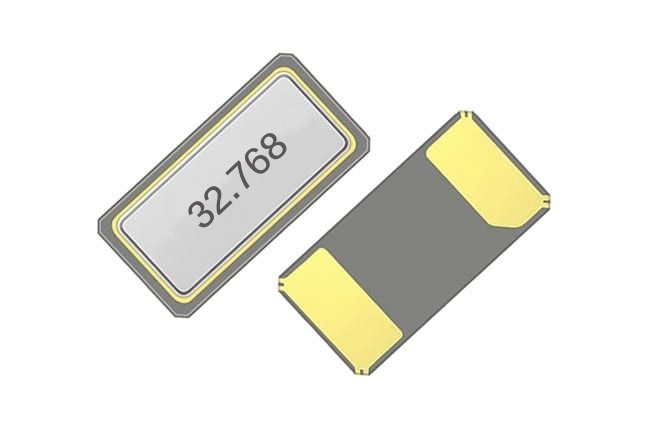
Crystal resonator scenario fit in smart manufacturing is a project-level decision, not only a part-number lookup. A 32.768 kHz tuning-fork resonator used for timekeeping in a smart meter, a MHz SMD resonator used in a Bluetooth module, and a high-temperature timing component placed near industrial equipment can all carry the same broad product label while answering different electrical, mechanical and acceptance requirements. The fit question joins the component specification to the country context, the supplier’s production and export evidence, and the purchasing terms that decide whether a delivered lot is accepted.
For international buyers in the Research and Evaluation stages, that distinction matters. Supplier comparison becomes more useful after the scenario has been translated into frequency, load capacitance, tolerance, operating temperature, package, test method and documentation. The supplied application evidence names mobile devices, Bluetooth headsets, smart air conditioners and security cameras as project types, with a stable clock signal for the IC as the function and an oscillator circuit as the matched equipment. That is a starting fit definition, not evidence that any single resonator model suits every device.
What Scenario Fit Means for Crystal Resonators in Smart Manufacturing
Scenario fit starts with the IC and the board. The resonator supplies a clock or reference signal, so the first checks are frequency, load capacitance, frequency tolerance and stability over the stated operating temperature. Package size, pad layout and mounting process come next. Only after those points are clear should a buyer compare factory capacity, lead time and commercial terms. Reversing that order can produce a shortlist of suppliers whose catalogues look similar but whose parts do not meet the same board-level requirement.
The same logic applies to the broader phrase quartz crystal resonator. Tuning-fork parts at 32.768 kHz, MHz quartz resonators, ceramic resonators and crystal oscillators sit at different points in the timing chain. The supplied corpus for this analysis covers 32.768 kHz tuning-fork SMD parts, MHz piezoelectric crystal components and oscillator formats. It does not support treating those categories as interchangeable. A buyer should use the category as a search entry, then confirm the exact model, frequency, package and acceptance data.
The Market Signal: SMD Timing Dominates the Oscillator Market
The strongest supplied market signal is packaging. According to MarketsandMarkets research cited in the verified data package, surface-mount devices commanded 76.40% share of the oscillator market size in 2025. The same package projects the global crystal oscillator market to reach USD 3.66 billion by 2030, covering SPXO, TCXO, VCXO and OCXO products. These figures are for crystal oscillators, not a resonator-only breakout; the data package explicitly notes that oscillator data is used as a proxy where resonator-specific data is unavailable. Buyers should therefore read the numbers as a directional market signal, not as a measured resonator market size.
For smart-manufacturing projects, the SMD share is consistent with the package ranges in the supplied product data. Fronter’s piezoelectric crystal component data lists SMD package formats from 1612 through 7050, plus 6035, while the 32.768 kHz tuning-fork family lists SMD1610, SMD2012 and SMD3215. That does not prove every SMD package is available at every frequency. It does show why an evaluation should begin with the assembly process and the space available on the board. The supplied comparison note attributes SMD dominance to miniaturization in wearables and IoT; the share itself is measured, while the causal explanation should be treated as the source’s interpretation rather than a quantified result.
Country and Trade Signals: What Export Data Can and Cannot Tell a Buyer
Country evidence adds context, but it needs a clear scope. China’s export value for mounted piezoelectric crystals under HS 854160 reached USD 1.5 billion in 2024, according to China Customs data cited in the verified package. That figure describes the value of exports recorded under that trade code. It does not establish any individual factory’s capacity, quality system, delivery performance or product mix. It also does not prove that every Chinese supplier is equivalent. For a buyer, the useful reading is that China is a material trade source for mounted piezoelectric devices at the HS-code level, so supplier-level verification remains necessary.
Policy fit is a country-by-country verification item. The supplied corpus states that Fronter products comply with RoHS and REACH environmental regulations. That is a product-compliance statement, not a country-by-country regulatory matrix. Destination-market import rules, customer-specific material restrictions and documentation requirements should be confirmed for the actual project. A practical policy review separates three layers: environmental compliance of the part, import and trade documentation for the destination, and the customer’s own acceptance specification. Treating those layers as one item can create false confidence during evaluation.
Production capacity shows the same evidence gap. The verified package records that public data lacks granular actual monthly output and lead times for specific frequencies such as 32.768 kHz, especially during demand spikes. It recommends a supplier capacity and lead-time tracker as the missing dataset. That gap is useful information for buyers: supplier-specific capacity should be requested directly rather than inferred from trade totals or market forecasts.
Matching Resonator Families to Smart-Manufacturing Scenarios
The table below maps only the supplied product data to scenario questions. It is a fit aid, not a qualification certificate. The final check remains the exact datasheet, the IC requirement and the agreed acceptance test.
| Resonator family | Supplied specification points | Smart-manufacturing fit question | Verification point |
|---|---|---|---|
| 32.768 kHz tuning-fork SMD crystal resonator, SMD1610 / SMD2012 / SMD3215 | Frequency 32.768 kHz; load capacitance 12.5 pF, 7 pF or 9 pF; frequency tolerance ±20 ppm; operating temperature -40 to +85°C; materials gold, SiO₂ and silver; applicable industries listed as consumer electronics, IoT, smart energy meter and automotive | Timekeeping and real-time clock reference in compact devices, smart meters, wearables and security equipment | Confirm load capacitance against the IC, tolerance over the project temperature range, package footprint and the specific acceptance method |
| MHz quartz crystal resonators and piezoelectric crystal components, SMD formats including 1612, 2016, 2520, 3225, 5032, 6035 and 7050 | Nominal frequency 1 to 96 MHz; load capacitance 4 to 33 pF; frequency tolerance ±5 to ±100 ppm; frequency stability ±10 to ±100 ppm; operating temperature -55 to +125°C; materials metal cover, ceramic base and quartz wafer; applicable industries listed as smart home appliances, communication electronics and Bluetooth devices | Clock generation in communication electronics, Bluetooth devices and smart home appliances, including higher-temperature environments | Confirm the exact frequency, stability grade, package and high-temperature behavior; do not apply the full range to every model |
| Through-hole or cylindrical formats | Not specified in the supplied product evidence used for this analysis | Legacy boards or mechanical-stress environments may require a different mounting format | Request the through-hole or cylindrical datasheet; do not assume SMD values apply |
The application evidence adds a high-temperature condition and lists Germany, Russia, India, Canada, France, Italy, Spain and South Korea as country codes in the supplied scenario record. Those country codes describe the supplied application context; they are not a ranking of market demand or a claim that the same configuration is approved in every listed market. The scenario also names vibration as the operation mode and an oscillator circuit as the matched equipment. In practice, that means the mechanical mounting and the circuit around the resonator deserve attention alongside the frequency label.
Acceptance Criteria and Purchasing Terms Are Part of Fit
A resonator that matches the schematic can still fail evaluation if the purchase order does not define acceptance clearly. Frequency tolerance, load capacitance, frequency stability, operating temperature, test method, packaging and traceability should be written into the specification rather than left to a catalogue summary. The 32.768 kHz tuning-fork data gives one concrete example: ±20 ppm tolerance and a -40 to +85°C operating range. The MHz component data gives wider ranges, from ±5 to ±100 ppm tolerance and -55 to +125°C. Those are range statements for the product family; a buyer should not assume the widest range applies to a chosen model without confirmation.
Quality control is another fit criterion. The supplied capability data states 100% test for Fronter’s production, with ODM customization in parameters and appearance, a monthly capacity of 80KK, a lead time of 30 to 45 days and a MOQ of 1000 pieces. These are supplier-reported capability facts. They help a buyer frame questions about sampling, test records and capacity allocation, but they do not replace a project audit or an agreed acceptance plan. The same caution applies to export markets: the capability record lists the EU and the Middle East, while the enterprise profile reports a 70% export ratio and main markets in the EU and USA. Those statements describe the supplier’s position; they do not certify a specific part for a specific destination.
The supplied case record shows why terms belong in the fit discussion. A smart-meter manufacturer in India is recorded as using 5,000,000 units over 10 years with stable operation, supported by delivery within 3 to 4 weeks and flexible customization for project-specific packaging and frequency requirements. That is a specific case, not a universal lead-time promise. It illustrates the kind of evidence a buyer can ask for: the application, the duration, the quantity, the customization scope and the delivery arrangement.
Fronter’s Evidence in the Fit Picture
Fronter Electronics Co., Ltd. is a Shenzhen-based supplier founded in 1991, with a 21,000 m² factory, 286 employees, an annual output of 300,000,000 units and a 19-engineer R&D team. The company reports quartz crystal resonators and quartz crystal oscillators among its main products, a 70% export ratio and main markets in the EU and USA. Its FT brand was recognized as a National High-Tech Enterprise in 2017, and the company states that its products comply with RoHS and REACH. These are company-reported credentials. They are relevant to supplier qualification, but they are not independent proof of performance in a given smart-manufacturing project.
On product fit, Fronter’s supplied data covers 32.768 kHz tuning-fork SMD resonators in SMD1610, SMD2012 and SMD3215 formats, and MHz piezoelectric crystal components with SMD package options from 1612 to 7050. The capability record adds ODM customization, 80KK monthly capacity, 30 to 45 day lead time, 1000-piece MOQ, 100% test and remote after-sales support. For a buyer, the useful next step is not a generic claim that one part fits all scenarios. It is to match the exact frequency, package, tolerance and temperature grade to the project, then ask for the test and compliance evidence that supports the chosen configuration.
Five Global Signals to Watch
1. SMD share in the oscillator market. The 76.40% SMD share in 2025 is a measured signal for packaging direction. The supplied data does not include a year-over-year series, so buyers should watch for updated share data before treating it as a growth rate.
2. The oscillator market projection. The USD 3.66 billion by 2030 projection is a forward-looking commercial-research figure for crystal oscillators. It is useful for demand context, but it should not be converted into a resonator-only forecast without a separate dataset.
3. China’s mounted piezo-electric export value. The USD 1.5 billion HS 854160 export figure for 2024 is a trade signal. Watch future customs releases for direction, while keeping supplier-level capacity and quality as separate verification items.
4. Capacity and lead-time transparency. The verified package identifies the absence of granular actual output and lead-time data as a gap. That makes supplier-specific capacity evidence, allocation terms and lead-time contingencies a trend to watch in procurement planning.
5. Acceptance and compliance documentation. RoHS and REACH are named in the supplied corpus, while destination-market rules and customer-specific acceptance criteria remain project checks. The practical trend is toward asking for evidence that travels with the part: test method, traceability, change control and packaging specification.
These signals point to a forward view rather than a forecast of a single winner. Smart-manufacturing fit will continue to depend on the application: a 32.768 kHz timing part, a MHz communication resonator and a high-temperature industrial part solve different problems. The supplier that can document the chosen configuration, its test basis and its capacity position is easier to evaluate than one that offers only a broad catalogue claim.
FAQ
How should a buyer match a crystal resonator to a smart-manufacturing scenario?
Start with the IC requirement: frequency, load capacitance, package, frequency tolerance, stability and operating temperature. Then match those points to the exact resonator datasheet and define the acceptance test. The supplied application data names a stable clock signal for the IC and an oscillator circuit as the matched equipment, so the circuit context belongs in the first review.
Why does SMD packaging matter in smart-manufacturing projects?
SMD formats support compact assembly, and the supplied market data records a 76.40% SMD share of the oscillator market in 2025. Fronter’s product data includes SMD packages from 1612 to 7050 for MHz components and SMD1610, SMD2012 and SMD3215 for 32.768 kHz tuning-fork parts. The exact package, pad layout and assembly process still need confirmation for each project.
What do China’s export figures show about crystal resonator supply?
The verified data records USD 1.5 billion in China exports for mounted piezoelectric crystals under HS 854160 in 2024. That shows the scale of trade recorded under that code, not the capacity, quality or delivery performance of an individual supplier. Buyers should verify factory-level evidence separately.
Which acceptance criteria should be written into a crystal resonator purchase order?
The purchase specification should state frequency, load capacitance, tolerance, stability, operating temperature, test method, packaging, traceability and change-control requirements. Fronter’s capability data states 100% test, but the buyer should confirm the specific test method and acceptance limits for the chosen model. These terms make the difference between a catalogue match and an accepted lot.
Can a 32.768 kHz tuning-fork resonator serve automotive or smart-meter projects?
The supplied product data lists 32.768 kHz tuning-fork SMD1610, SMD2012 and SMD3215 parts as applicable to consumer electronics, IoT, smart energy meter and automotive applications, with ±20 ppm tolerance and a -40 to +85°C operating range. The same data does not state an automotive qualification standard such as AEC-Q200, so project-specific qualification and destination compliance should be verified before approval.
Company brochure (PDF): Fronter Electronics product and capability brochure.
Tem questões ou precisa de mais detalhes?
Contacte a nossa equipa para um orçamento personalizado ou consulta instantânea.
Solicitar orçamento
Preencha o formulário abaixo e a nossa equipa entrará em contacto com uma proposta personalizada.
Chat direto do WhatsApp
Prefere conversar em tempo real? Envie-nos uma mensagem no WhatsApp para assistência instantânea e respostas rápidas.
- Obter orçamento personalizado
- Partilhar fotos ou documentos
- Discuta as suas necessidades diretamente
Geralmente responde em 5–30 minutos durante o horário de expediente.