
Curated Shortlist: Single Cylinder Diesel Engine Configurations for Common Uses
A single cylinder diesel engine is rarely purchased as a bare specification. Buyers purchase a configuration — a power tier, a starting method, a cooling arrangement, a fuel tank size and a rated speed that must match whatever the engine drives. Most sourcing delays in this category come from that combination, not from the engine itself.
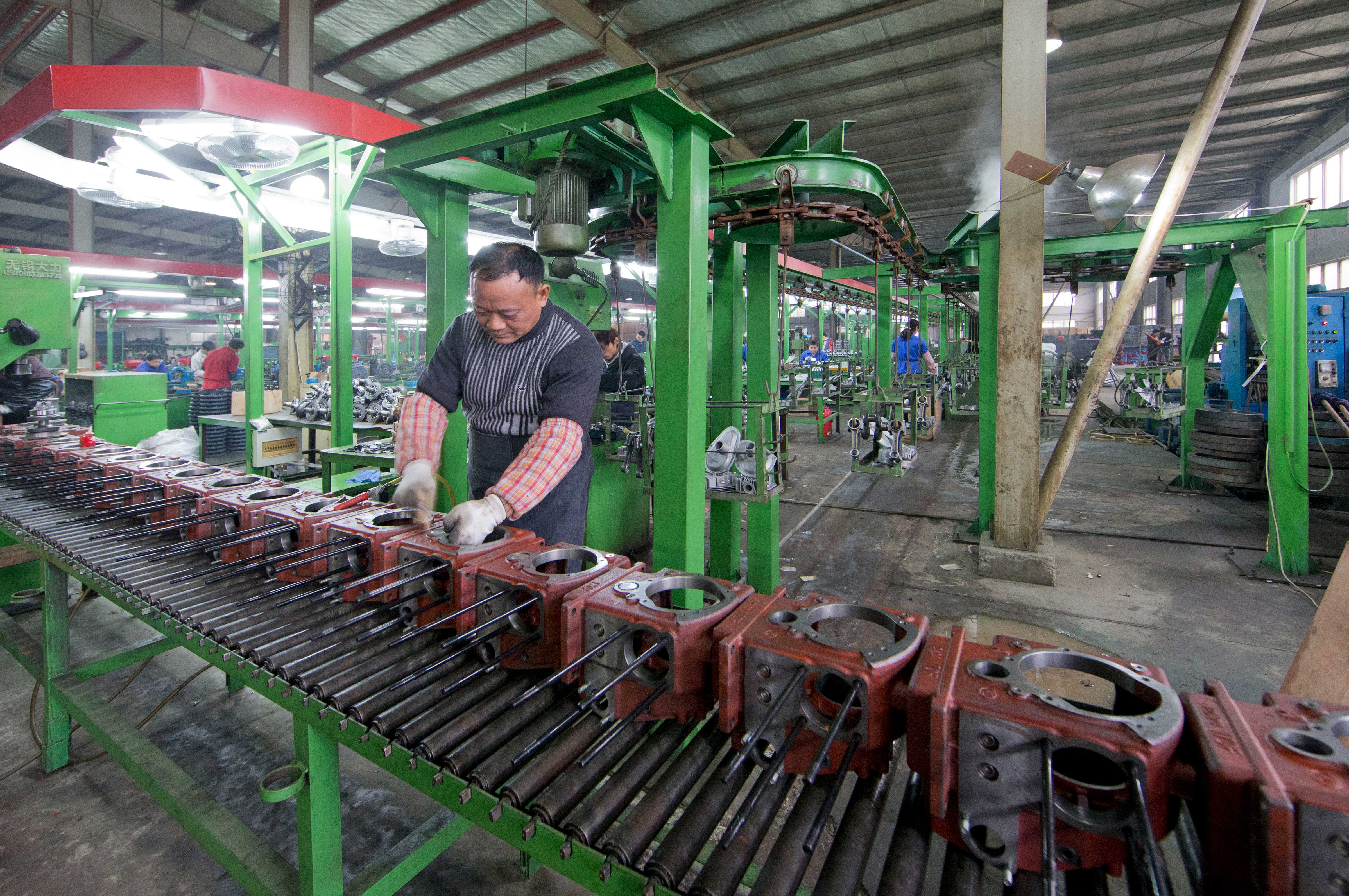
Why configuration, not horsepower, decides most sourcing outcomes
The global single cylinder diesel engine market was valued at approximately USD 3.34 billion in 2025 and is projected to reach USD 3.74 billion by 2035, according to Global Growth Insights. Dataintelo attributes roughly 42.3% of 2025 market share to agriculture, with Asia Pacific holding a 58.2% revenue share. Those figures describe a mature, application-driven category in which demand is shaped by farm seasons, pump duty and small-scale power generation rather than by model launches.
Market-size estimates for this segment diverge noticeably between research houses — some reports value the narrower “small single cylinder” category well below USD 1 billion — so any single figure should be read as directional. What does not diverge is the buying behaviour: a procurement team that submits a single line such as “20 HP, water pump” typically receives quotations that differ in rated speed, cooling method, fuel tank capacity and starting system, and then has to restart the comparison from zero.
A configuration shortlist solves a specific, repeatable problem: it converts an open-ended request into a set of defined options that can be quoted, compared and commissioned without renegotiation.
What a single cylinder diesel engine configuration actually contains
In the documented product data used for this article, five variables move independently and each one changes how easily an engine integrates into a finished machine:
- Rated power — documented from 4 HP to 35 HP across the configurations reviewed here.
- Rated speed — documented at 2200 rpm, 2300 rpm or 2600 rpm depending on model, which determines pulley or coupling planning on the driven side.
- Cooling arrangement — water-cooled for most documented models, air-cooled for one.
- Fuel tank capacity — documented from 3 L to 17 L, which sets the refuelling interval on a working shift.
- Starting system — recorded as hand-start on every configuration in this shortlist.
Documented specific fuel consumption across the reviewed range runs from 252.7 to 315 g/kWh, and oil consumption from 2.14 to 4.31 g/kWh. Those are catalogue values per model, not measured field averages, and they should be used for relative comparison only.
How this shortlist was assembled
Willson is the single cylinder diesel engine brand produced by CHANGZHOU VISION INTERNATIONAL TRADING CO.,LTD, a manufacturer based in Changzhou, Jiangsu, China, whose stated series covers 3–45 HP in air- and water-cooled variants for agricultural machinery, water pumps, generator sets and small construction equipment. The company was founded in 2010, operates a 32,207.8 m² facility with 95 employees and a 5-engineer R&D team, reports an annual output of 100,000 units and exports about 70% of production to South America, Africa, Southeast Asia and the Middle East. Its management systems are certified to ISO 9001 and ISO 14000.
The configurations below were selected from published catalogue attributes for that range, plus one documented field record and third-party market data. The ordering is an editorial sorting based on documentation depth and platform commonality; it is not a measured performance ranking, and a buyer with a different load profile can legitimately reorder it.
The shortlist: eight configurations, ordered by integration readiness
The table below lists eight configurations that cover the most common incoming requests — small pump and tiller duty, mid-range threshing and milling, irrigation pumping, and heavier farm or construction loads. All eight are documented as water-cooled except the Z175F, which is documented as air-cooled.
| Order | Model | Rated power | Rated speed | Displacement | Cooling | Typical fit |
|---|---|---|---|---|---|---|
| 1 | ZS1115 | 20 HP | 2200 rpm | 1.195 L | Water | Irrigation pumps, threshers, generator sets |
| 2 | ZS1105 | 16.5 HP | 2200 rpm | 0.996 L | Water | Rice mills, threshers, medium pumps |
| 3 | ZS195 | 13 HP | 2200 rpm | 0.815 L | Water | Threshers, small mills, light construction |
| 4 | ZS1135 | 35 HP | 2200 rpm | 1.73 L | Water | Large irrigation, construction, larger gensets |
| 5 | JR185 | 8 HP | 2200 rpm | 0.510 L | Water | Small tillers, portable pumps |
| 6 | R180 | 7 HP | 2600 rpm | 0.402 L | Water | Walk-behind tillers, small pumps, light threshing |
| 7 | Z175F | 5 HP | 2600 rpm | 0.331 L | Air | Portable pumps, small tillers without a coolant circuit |
| 8 | R170A | 4 HP | 2600 rpm | 0.269 L | Water | Smallest auxiliary drives, light pump duty |
Ordering logic: configurations already supported by a documented field record, and those sharing rated speed and fuel tank ratings with neighbouring tiers, sit higher because fewer open items remain at quotation stage.
Why these eight sit in this order
Integration readiness here means the number of configuration questions a buyer can close using published data alone. The ZS1115 ranks first because it is the only configuration in this set with a documented multi-year field record: 96 units supplied for agricultural irrigation in Pakistan, in service for 10 years with no major failures, meeting irrigation-season requirements, described in that record as fuel-efficient, easy to maintain and adapted to harsh local environments.
The ZS1105 and ZS195 follow because they share the 2200 rpm rated speed of the ZS1115 and the same documented 12 L fuel tank capacity, which means tank-side and drive-side checks repeat across three power tiers instead of being re-engineered for each. The ZS1135 sits fourth: same 2200 rpm platform and a 17 L tank, but at the top of the documented range, where driven-equipment matching carries more weight.
The JR185 and R180 are documented at a different displacement and tank band, and the R180 also runs at 2600 rpm rather than 2200 rpm. Mixing both speed families in one fleet is workable, but it removes the pulley and coupling commonality that makes the ZS family convenient to standardise on. The Z175F and R170A close the list: both are genuinely useful, but one is the only air-cooled option in the set and the other carries the smallest documented fuel tank at 3 L.
Manual start versus electric start: what the documentation supports
Every configuration in this shortlist is documented with a hand-start system. That is a factual limit of the catalogue data reviewed, and it matters for procurement: electric start should be treated as a specification item to be confirmed per order, not as an assumption carried over from a series-level description or from a previous purchase.
Where electric start is usually worth specifying, based on operating conditions rather than on engine design:
- High start frequency — equipment restarted many times per shift, where manual cranking consumes operator time.
- Cold starting conditions, where cranking effort rises and the operator cannot apply sustained force safely.
- Enclosed installations — genset canopies or pump housings where access to a crank handle is restricted.
- Fleet standardisation — one starting method across mixed operators reduces training and spare-part variety.
Manual start remains defensible for low-cycle, single-operator sites where battery maintenance would itself become a failure point. In both cases the buyer should confirm the delivered starting system on the order confirmation, because that single line changes the electrical, harness and operator-training scope of the project.
Air-cooled or water-cooled: a breadth question, not a quality question
In the documented range reviewed here, water cooling is stated from the 13 HP ZS195 up through the 35 HP ZS1135, and on the smaller R170A, R180 and JR185. Air cooling is documented on one model: the Z175F at 5 HP and 2600 rpm with a 0.331 L displacement and a 6 L tank. That asymmetry is the practical answer to the air-versus-water question — the air-cooled option exists, but it does not extend up the power range.
Water-cooled configurations carry an operating discipline that should be written into the maintenance schedule rather than assumed. Documented requirements state that dirty, saline or alkaline water must not be added to the water tank, and that engine oil should be cleaned, maintained and changed regularly with filter elements replaced when necessary. Installation conditions are equally specific: a well-ventilated area, free from excessive dust and corrosive gases, not directly exposed to rain, mounted on stable and solid ground.
For a buyer, the decision rule is simple. Where a reliable clean water supply and a maintenance routine exist, water cooling gives access to the full documented power range. Where the site cannot support a coolant circuit and the load stays under roughly 5 HP, the Z175F is the documented alternative.
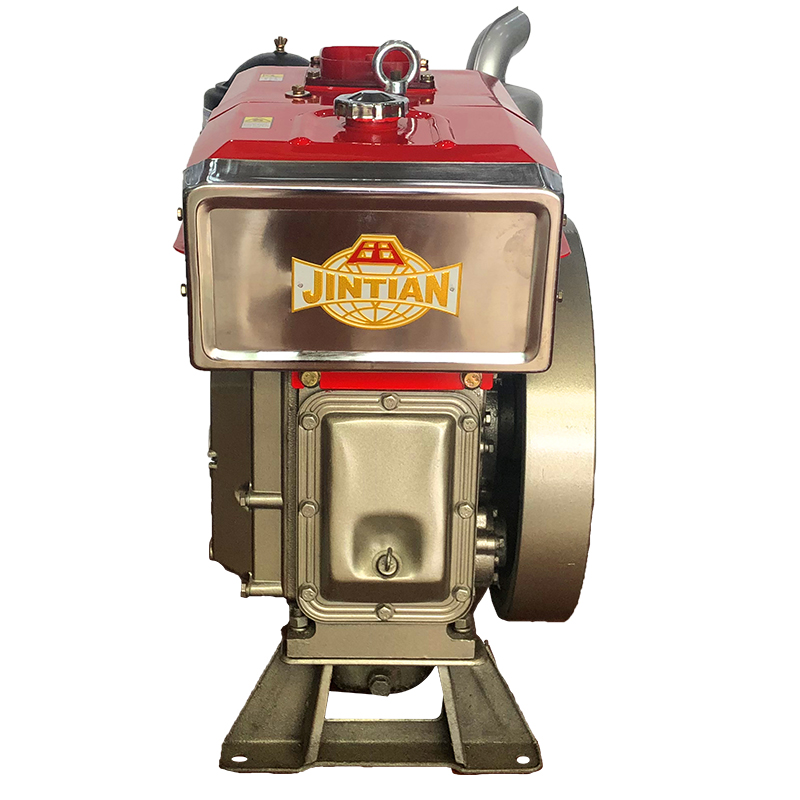
Matching configurations to common applications
Irrigation pumping
Irrigation is the application with the clearest documented evidence in this set. The ZS1115 at 20 HP, 2200 rpm and 1.195 L is the reference configuration, supported by the Pakistan record of 96 units running 10 seasons. Buyers should still size the engine from the pump curve supplied by the pump maker rather than from the engine catalogue, because head and flow determine required power independently of engine choice.
Threshers and rice mills
Threshing and milling loads are steady rather than peaky, which places the ZS195 (13 HP), ZS1105 (16.5 HP) and ZS1110 (18 HP) in the practical band. The step from 13 HP to 16.5 HP is small in displacement terms — 0.815 L to 0.996 L — but it changes the belt and pulley envelope on the driven machine, so it is worth fixing early in the specification.
Tillers and farm machinery
Walk-behind tillers and light farm implements usually sit between 4 HP and 8 HP. The R180 at 7 HP and the JR185 at 8 HP are the documented options in that band, with the Z175F at 5 HP where an air-cooled layout is preferred. These models run at 2600 rpm or 2200 rpm depending on variant, so the implement's input speed requirement should be confirmed before the engine is ordered.
Generator sets and construction equipment
Generator and small construction duties move up the range, where the ZS1125 (25 HP), ZS1130 (30 HP), ZS1132 (32 HP) and ZS1135 (35 HP) are documented, all at 2200 rpm with a 17 L fuel tank. Generator applications add a speed-matching requirement that pump and tiller applications do not, so the driven-equipment specification should be supplied to the engine supplier before quotation.

Reference map of documented configurations
The wider catalogue behind this shortlist is summarised below. All entries are documented as hand-start; cooling is stated only where the catalogue states it.
| Model | Rated power | Rated speed | Displacement | Fuel tank | Fuel consumption |
|---|---|---|---|---|---|
| ZS1135 | 35 HP | 2200 rpm | 1.73 L | 17 L | 252.7 g/kWh |
| ZS1132 | 32 HP | 2200 rpm | 1.659 L | 17 L | 252.7 g/kWh |
| ZS1130 | 30 HP | 2200 rpm | 1.593 L | 17 L | 252.7 g/kWh |
| ZS1125 | 25 HP | 2200 rpm | 1.473 L | 17 L | 252.7 g/kWh |
| ZS1115 | 20 HP | 2200 rpm | 1.195 L | 15 L | 254.2 g/kWh |
| ZS1110 | 18 HP | 2200 rpm | 1.093 L | 15 L | 257 g/kWh |
| ZS1105 | 16.5 HP | 2200 rpm | 0.996 L | 12 L | 257 g/kWh |
| ZS1100 | 15 HP | 2200 rpm | 0.903 L | 12 L | 269 g/kWh |
| ZS195 | 13 HP | 2200 rpm | 0.815 L | 12 L | 271.3 g/kWh |
| JR190 | 9.5 HP | 2300 rpm | 0.572 L | 9 L | 288.4 g/kWh |
| EM185 | 8 HP | 2200 rpm | 0.510 L | 9 L | 288.4 g/kWh |
| JR185 | 8 HP | 2200 rpm | 0.510 L | 9 L | 288.4 g/kWh |
| R180 | 7 HP | 2600 rpm | 0.402 L | 5.5 L | 292.7 g/kWh |
| R175 | 6 HP | 2600 rpm | 0.353 L | 4.5 L | 294.2 g/kWh |
| Z175F | 5 HP | 2600 rpm | 0.331 L | 6 L | 301.4 g/kWh |
| R170A | 4 HP | 2600 rpm | 0.269 L | 3 L | 315 g/kWh |
Configuration-based selection versus horsepower-only sourcing
Three sourcing routes dominate this category, and they behave very differently at commissioning.
Route one — single-line request. The buyer states a horsepower figure and an application. Quotations arrive with different rated speeds, tank sizes and starting systems, and the comparison becomes a negotiation about missing data rather than a comparison of offers. This route is fastest to issue and slowest to close.
Route two — configuration sheet. The buyer specifies model, power, speed, cooling, tank and starting system before requesting prices. Quotations become directly comparable. The cost is front-loaded specification work, which is what this shortlist is intended to reduce.
Route three — knock-down assembly. For buyers with local assembly capability, the manufacturer offers OEM/ODM cooperation with customisation of packaging, logo and nameplate, and SKD or CKD supply arrangements. This route adds local-content and tariff considerations to the same configuration decisions, and it requires longer planning because order quantities start at one 20-foot container and lead time runs 25–45 days against a monthly capacity of 10,000 units.
Limitations: where this shortlist stops
This selection has clear boundaries, and buyers should treat them as decision gates rather than caveats.
- Starting system coverage. All configurations reviewed are documented as hand-start. Electric-start requirements must be confirmed per order before the specification is frozen.
- Air-cooled ceiling. Only one air-cooled configuration is documented here, at 5 HP. Buyers needing air cooling above that tier will not find a documented match in this set.
- Emissions certification. No per-model emissions certification data is included in this shortlist. U.S. EPA Tier 4 standards regulate particulate matter and nitrogen oxides for off-highway diesel engines, with exemptions for engines under 24 horsepower; buyers in regulated markets must verify compliance for the exact model and destination before ordering.
- Order mechanics. Minimum order quantity is one 20-foot container and lead time is 25–45 days. This is a planning-cycle source, not a spot-buy channel.
- Sizing responsibility. This shortlist does not calculate pump head, flow or generator load. Engine sizing remains the buyer's or the equipment maker's calculation.
Market signals behind the shortlist approach
Two structural facts explain why configuration shortlists are becoming a standard procurement tool. First, agriculture absorbs about 42.3% of demand, which ties purchasing cycles to planting and harvest windows — a late or mismatched engine has a seasonal cost, not just a commercial one. Second, Asia Pacific accounts for 58.2% of revenue, and China's exports of combustion engines, including diesel variants, reached USD 3.29 billion in 2025 according to the Observatory of Economic Complexity, with Russia, Vietnam and India among major destinations.
The competitive field is broad. Intel Market Research lists Yanmar, Kubota, Kohler and Hatz among global manufacturers in the small diesel engine sector, alongside Chinese manufacturers such as Changchai and Shifeng Group. In a field of that width, the differentiator for a buyer is rarely the existence of an engine at a given horsepower — it is whether the configuration and its documentation can be matched to a specific machine without a second round of questions.
Future outlook
The most likely shift in this segment over the next several years is not a change in the dominant power bands but a change in documentation expectations. As more procurement moves through digital channels, buyers increasingly compare configurations on published data before contacting any supplier, and suppliers that publish complete configuration attributes — speed, cooling, tank, starting system, consumption — will be easier to shortlist and easier to defend internally.
For the Willson range specifically, the practical next step for a buyer is to convert a shortlist entry into a fixed specification: model, power tier, rated speed, cooling, starting system, fuel tank, and the emissions position for the destination market. That single document removes most of the rework that this article set out to prevent.
FAQ
Which configurations are commonly specified for irrigation pumps?
In the documented range reviewed here, irrigation pumping most often maps to the ZS1115 at 20 HP and 2200 rpm, with the ZS1110 at 18 HP and the ZS1125 at 25 HP covering adjacent duty levels. The ZS1115 is also the configuration with a documented field record: 96 units supplied for agricultural irrigation in Pakistan, in service for 10 years with no major failures. Final sizing still depends on the pump curve, because required power follows head and flow rather than engine catalogue position.
Is an electric start configuration available, and when should one be specified?
All configurations listed in this shortlist are documented with a hand-start system, so electric start is a specification item to be confirmed per order rather than an assumed standard. It is usually worth specifying where start frequency is high, where cold conditions make manual cranking difficult, where the engine sits inside an enclosure with limited handle access, or where a mixed fleet benefits from one starting method. Hand-start remains practical for low-cycle, single-operator sites where battery maintenance would add a failure point.
When is an air-cooled engine the better choice than a water-cooled one?
Air cooling removes the coolant circuit entirely, which suits portable or remote equipment where a clean water supply and routine coolant checks cannot be guaranteed. In the documented range reviewed here, the air-cooled option is the Z175F at 5 HP and 2600 rpm, while water-cooled models cover 13 HP to 35 HP in the ZS series plus the smaller R170A, R180 and JR185. Water-cooled units require that dirty, saline or alkaline water is never added to the tank, along with regular oil and filter maintenance.
What are the minimum order quantity and lead time for these configurations?
The documented commercial terms are a minimum order quantity of one 20-foot container, a lead time of 25–45 days and a monthly capacity of 10,000 units. OEM/ODM cooperation is offered, with customisation of packaging, logo and nameplate. Buyers working to a seasonal window should plan the order against the lead time rather than against the seasonal deadline.
Do these configurations meet emissions regulations in my market?
This shortlist does not include per-model emissions certification data, so compliance must be verified for the exact model and destination before ordering. As a reference point, U.S. EPA Tier 4 standards regulate particulate matter and nitrogen oxides for off-highway diesel engines, with exemptions for engines under 24 horsepower. Buyers in regulated markets should request the applicable documentation for the specific configuration rather than rely on a series-level statement.
How should rated speed be matched to the driven equipment?
Documented rated speeds in this range are 2200 rpm, 2300 rpm and 2600 rpm depending on model, so the driven equipment's input speed requirement determines the pulley or coupling arrangement rather than the reverse. The ZS series from 13 HP to 35 HP and the JR185 are documented at 2200 rpm, JR190 at 2300 rpm, and the R170A, R180 and Z175F at 2600 rpm. Supplying the equipment specification to the engine supplier before quotation avoids re-engineering at commissioning.
Reference document. The manufacturer's full single cylinder diesel engine catalogue, including configuration data for the models discussed above, is available as a downloadable PDF:
Tem questões ou precisa de mais detalhes?
Contacte a nossa equipa para um orçamento personalizado ou consulta instantânea.
Solicitar orçamento
Preencha o formulário abaixo e a nossa equipa entrará em contacto com uma proposta personalizada.
Chat direto do WhatsApp
Prefere conversar em tempo real? Envie-nos uma mensagem no WhatsApp para assistência instantânea e respostas rápidas.
- Obter orçamento personalizado
- Partilhar fotos ou documentos
- Discuta as suas necessidades diretamente
Geralmente responde em 5–30 minutos durante o horário de expediente.