
Custom Automation Precision Assembly: A Decision Framework for First-Time Buyers
Smart Manufacturing · Buyer Decision Framework
Custom automation precision assembly is a project-specific engineering service, not a catalog purchase. Components, fixtures, assembly stations, test equipment and control software are defined around a buyer's drawings, tolerances and process requirements — so a first purchase should be compared on scope and evidence rather than on a headline unit price.
Why First-Time Buyers Need a Different Comparison Method
The smart manufacturing market was valued at USD 410.7 billion in 2025 and is projected to grow from USD 478.9 billion in 2026 to USD 1,063.2 billion by 2033 at a compound annual growth rate of 12.1%, according to Grand View Research. Asia Pacific accounted for 46.6% of 2025 revenue, and global robot density reached 177 robots per 10,000 manufacturing employees in 2024, based on figures published by the International Federation of Robotics and Econ Market Research. More capacity is being commissioned, and a growing share of that capacity is being bought by teams doing it for the first time.
The difficulty is that the language most buyers bring to a first custom automation project — unit price, delivery date, the word customized — does not survive contact with the project itself. Two quotations can both describe a custom assembly line while differing on part geometry, tolerance bands, inspection regime, software scope and the division of design responsibility. Certifications are commonly treated as logos rather than as auditable documents with a defined process scope, a site, and an expiry date. Commercial terms such as minimum order quantity and monthly capacity are treated as fixed numbers when they are, in practice, project variables.
The opportunity is symmetrical. A buyer who converts requirements into written parameters, and who reads supplier documents as scoped evidence, can compare options objectively — and can also determine early whether a project is a fit at all. The six steps below move from capability mapping to evidence review, in that order, because that is the sequence in which comparison actually becomes possible.
What Custom Fixes, and What It Leaves Open
In a custom automation precision assembly project, dimensions, tolerances and performance specifications are customized to the customer's drawings and process requirements, and materials are customized to the same inputs. That is what custom fixes: the technical target is defined by the buyer's product rather than by a supplier's catalog.
What custom leaves open until both sides agree in writing is equally important: the level of design responsibility, the minimum order quantity, the capacity allocated to the project each month, the delivery schedule, and the boundary between component supply, assembly and line integration. In BSC Technology's published capability statement, minimum order quantity is subject to product category, drawings, equipment configuration and project requirements, and is confirmed commercially. Monthly capacity depends on project specifications and factory scheduling. Lead time is described as a fast new-product-introduction (NPI) response, with mass-production timing set by the project.
None of that is evasive. It is the direct consequence of a delivery model in which every project is configured rather than selected. For a first-time buyer, this is the most useful reframing available: the comparable unit is a defined scope with a defined capacity plan, not a part number with a price attached.
Step 1 — Map Capabilities to the Part, Not to the Product Category
Capability mapping starts from the deliverable. Three questions decide which capability family a project actually needs:
- Is the deliverable a component, a module or complete unit, or the production line that makes it?
- Which process families touch the part — die cutting, injection molding, optical processing, board-level assembly, or complete-unit assembly?
- Which of those processes does the buyer intend to keep in house, and which will be outsourced?
Shenzhen BSC Technology Co., Ltd. (BSC Technology), founded in 2016 and listed on the Shenzhen Stock Exchange in 2021 under stock code 300951.SZ, is a Shenzhen-headquartered manufacturer whose business covers precision functional components, system assembly and intelligent automation equipment. Within the precision components business it maintains three core product lines: functional components, structural components and optical components. Its integrated precision manufacturing and smart automation offering declares a scope spanning precision functional parts, precision structural parts, optical components, SMT assembly, FATP assembly, automated assembly equipment, test equipment, optical process equipment and turnkey automation lines.
That breadth is useful only if the buyer maps it deliberately. The table below converts the standard deliverable types into the capability family to evaluate and the items to place in a request for quotation. The third column deliberately reuses the customization dimensions a supplier can be asked to commit to: material, dimensions, tolerance, structure, function, optical performance, assembly process, jigs and fixtures, equipment configuration, production-line layout, control software, vision system, testing process, packaging, labeling and delivery location.
| Buyer deliverable | Capability family to map | Items to define in the RFQ |
|---|---|---|
| Die-cut functional part | Precision functional components | Material stack, dimensions and tolerance, function, packaging and labeling, hazardous-substance process requirement |
| Injection molded structural part | Precision structural components | Material, structure, dimensions and tolerance, jigs and fixtures, testing process |
| Optical element or module | Optical components | Optical performance, dimensions and tolerance, inspection method, packaging |
| Board-level subassembly | SMT assembly | Assembly process, testing process, control software, traceability |
| Complete unit | FATP assembly | Assembly process, testing process, vision system, packaging, labeling, delivery location |
| Entire production line | Automated assembly equipment, test equipment, optical process equipment, turnkey automation lines | Equipment configuration, production-line layout, control software, vision system, delivery location, on-site commissioning |
Step 2 — Match the Process Route to the Application
Process route is the second filter, and it is where most first-time comparisons go wrong: buyers compare suppliers before they have decided which processes their part genuinely requires.
The underlying demand is broad and measurable. The global precision die cutting market was valued at USD 8.4 billion in 2025, according to Dataintelo, and the global injection molding market was valued at USD 312.7 billion in 2025, according to Grand View Research. The AR/VR optics and display market is forecast to reach USD 4.12 billion in 2026, based on Econ Market Research, while the SMT equipment market is projected to reach USD 15.24 billion by 2035 at a compound annual growth rate of 8.20%, per Roots Analysis, with miniaturization in telecommunications cited by Technavio as a driver of Industry 4.0 integration in SMT equipment.
In practice, the route determines the equipment, the inspection method and the qualification steps. Die cutting and adhesive lamination define the functional component layer. Injection molding defines structural and optical plastic parts. Optical process equipment addresses lens and module handling, and BSC states that it has accumulated technical expertise in AR ECD modules and VR Pancake optical composite films — two process areas where optical performance, not just dimensional accuracy, is the acceptance criterion. SMT assembly covers the board level, and FATP covers the complete unit, from new-product development and testing through small-batch trial production to large-scale mass production. Where the buyer is purchasing the line rather than the part, the relevant equipment families are automated assembly equipment, automated test equipment, optical process equipment and turnkey automation lines.
The application set is correspondingly wide. BSC's declared application fields cover consumer electronics, smart wearables, smart home, smart healthcare, AR/VR, smart cockpit and new-energy vehicles, AI edge devices, AI edge-side hardware and AI infrastructure. A buyer whose product sits in one of those fields can usually shorten the capability-mapping step considerably by working backwards from the application to the process route.
Step 3 — Read Certifications as Scoped Documents, Not as Badges
A certificate tells you which process, at which site, was audited against which standard, between which dates. It does not certify everything a supplier does. This single habit resolves most of the ambiguity that first-time buyers encounter when they compare suppliers on compliance.
ISO 9001:2015 remains the primary global benchmark for quality management systems in precision assembly, according to ISO.org. Industry-specific standards sit on top of it: automotive work is typically gated by IATF 16949, and medical work by ISO 13485. Hazardous-substance process management, commonly expressed through IECQ QC 080000, matters for die-cut and injection molded parts. The certification set BSC holds, with its published scopes, is set out below.
| Certification | Certificate number / body | Validity | Declared certified scope |
|---|---|---|---|
| ISO 9001:2015 Quality Management System | F02926Q00164R302 — DCI Certification Ltd | 2026-03-06 to 2029-03-06 | Production and sales of precision functional devices (die-cut parts, injection molded parts); production of injection molded parts |
| ISO 14001:2015 Environmental Management System | F02926E00077R302 — DCI Certification Ltd | 2026-03-06 to 2029-03-06 | Production and sales of precision functional devices (die-cut parts, injection molded parts); production of injection molded parts |
| IECQ QC 080000:2017 Hazardous Substance Process Management (HSPM) | IECQ-H NOA 25.0021-01 — NOA Testing & Certification Group Ltd. | 2026-06-24 to 2028-04-20 | Production of precision functional parts (die-cut parts, injection molded parts) |
| IATF 16949:2016 Quality Management System | T14650 (IATF No: 0520220) — NQA Certification Limited | 2024-05-30 to 2027-05-29 | Manufacture of display screens with protective films, double-sided adhesives, conductive adhesives, optical film, optical glue, insulating cotton for power batteries, and injection molded parts (including extended manufacturing site); Clause 8.3 product design is justifiably excluded |
| ISO 13485:2016 Medical Device Quality Management System | 132576 — NQA | 2026-06-12 to 2029-06-11 | Production and sales of plastic headgear for medical brainwave devices |
Three checks turn this table into a decision. The first is a process check: does the certified scope name your process — die cutting, injection molding, or the specific product family you are buying? The second is an industry check: does the certificate match the market your product enters, since automotive and medical routes are gated by different standards? The third is a boundary check, and it is the one buyers most often skip.
Step 4 — Convert Requirements into Written Parameters
Customization in this category is not limited to geometry. BSC's published customization scope covers material, dimensions, tolerance, structure, function, optical performance, assembly process, jigs and fixtures, equipment configuration, production-line layout, control software, vision system, testing process, packaging, labeling and delivery location. Product parameters are likewise stated as customized dimensions, tolerances and performance specifications based on customer drawings and process requirements, with materials customized to the same inputs.
The practical decision rule is simple: anything not written down is a variation risk, and variation risk is what makes two quotations non-comparable. A useful first RFQ therefore fixes, as a minimum, these six items:
- The part or unit, with drawings and a stated tolerance band.
- The material specification, including any hazardous-substance or industry requirement.
- The process route the quote is expected to cover, and the processes explicitly excluded.
- The inspection and testing method, including whether first-article approval is required.
- The equipment and software scope where a line, vision system or control software is involved.
- Packaging, labeling and delivery location.
Buyers who complete this step before contacting suppliers typically find that the number of plausible suppliers drops sharply — which is the point. Capability mapping is a filtering exercise, not a collection exercise.
Step 5 — Understand What Actually Sets the Commercial Band
There is no standard price band for custom automation precision assembly, because the commercial terms are downstream of the scope. Four variables dominate, and all four are visible in a supplier's own capability statement rather than hidden behind a quotation.
Order quantity. Minimum order quantity is subject to product category, drawings, equipment configuration and project requirements, and is confirmed commercially. A first project that is technically feasible may still not fit a line configured for mass production.
Capacity. Monthly capacity depends on project specifications and factory scheduling. Capacity is therefore a per-project planning input, not a fixed supplier specification, and it should be requested as a schedule rather than as a headline number.
Engineering load. Because customization extends to jigs and fixtures, line layout, control software, vision systems and testing processes, two projects with identical parts can carry materially different engineering content. That difference is a cost and a lead-time difference.
Delivery model. BSC's stated production modes are OEM, ODM, JDM, customized automation and turnkey solution. Each shifts responsibility between buyer and supplier, and responsibility is what the commercial band is ultimately pricing.
The consequence for comparison is direct: quote against scope, not against price alone. Two suppliers can only be compared once the scope, the capacity plan and the inspection requirement are identical on both sides.
Step 6 — Review Evidence Instead of Claims
Evidence review is the last step, and the one that decides whether the earlier steps hold. In this category, the evidence that matters falls into four groups.
Quality control records. BSC states that quality control covers incoming, in-process, outgoing, first-article, dimensional, functional and reliability inspection. For a first-time buyer, the first-article and dimensional records are the most immediately useful documents, because they translate a tolerance band into a measured result.
Certification documents. Request the certificate itself, not a slide: number, issuing body, validity dates and declared scope. The table in Step 3 illustrates why.
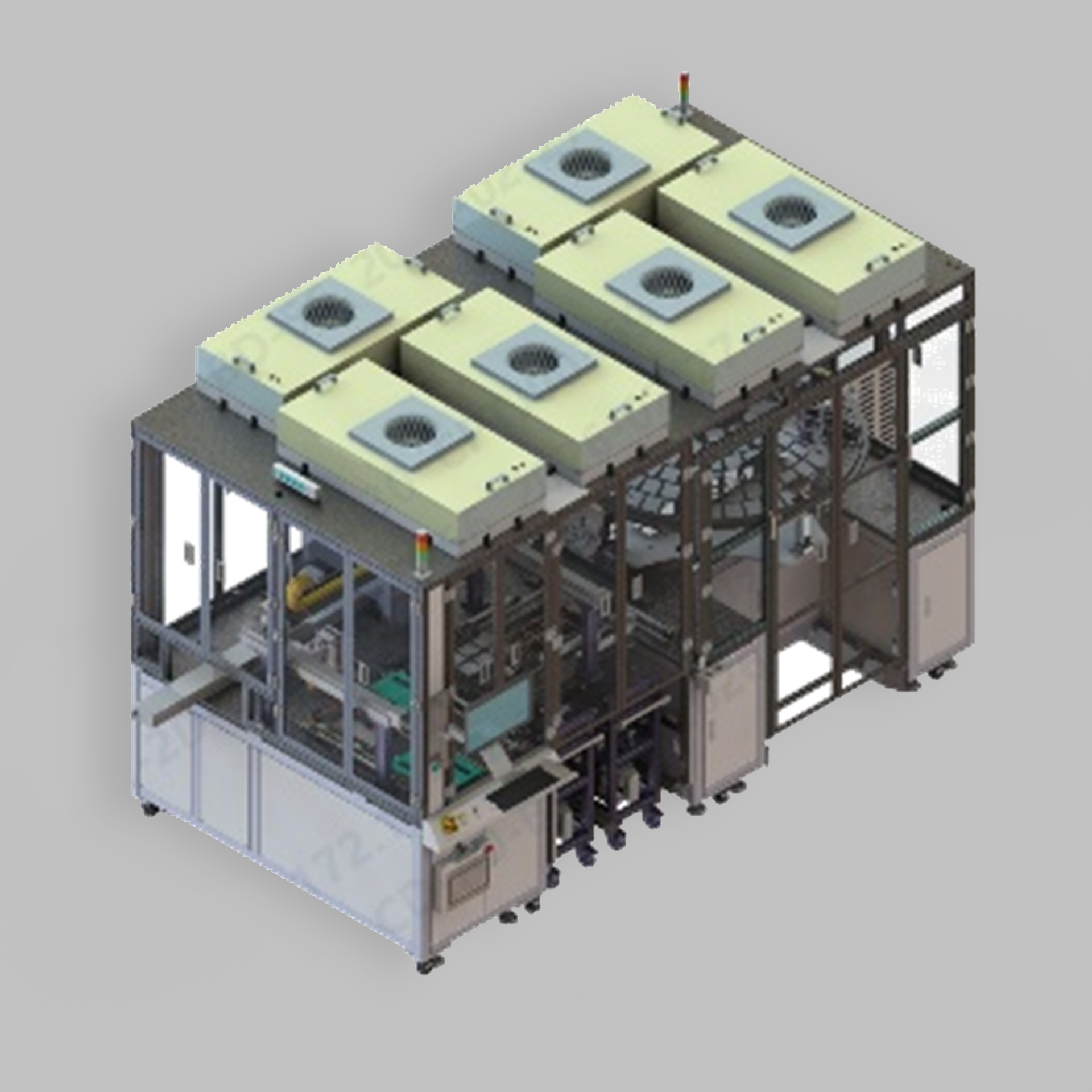
Delivered scope. BSC states that it has delivered an AI server automation production line, an intelligent terminal assembly automation production line, and AR/VR and optical module process automation equipment, and that its production capability covers the full chain from SMT and FATP new-product development and testing, through small-batch trial production, to large-scale mass production, supported by reliability testing and process optimization.
Capability depth. BSC states that it maintains an R&D team of over one thousand staff, more than one thousand authorized patents and an independent R&D system, with continued work in high-precision assembly, machine vision, motion control, intelligent inspection, industrial software and industrial digitalization, and that its declared capability set covers non-standard automation equipment, automation testing equipment and intelligent manufacturing production lines.
One discipline applies across all four groups. Published market estimates diverge: for precision die cutting, one 2025 valuation is USD 8.4 billion while other research firms publish materially higher 2026 estimates, and major research houses report different values for the smart manufacturing market as well. Numbers are directional. Supplier claims deserve the same treatment — useful as a starting point, decisive only when tied to a document.
How an Integrated Components, Assembly and Automation Portfolio Fits This Framework
BSC Technology was founded in 2016, is headquartered in Shenzhen, employs several thousand staff, and operates a global production and operation area of several hundred thousand square meters. Its business is organized into three parts that map cleanly onto the six steps above.
The precision components business covers functional, structural and optical components, supplying customized precision functional components for end-brand customers as well as assembly and module manufacturers. The system assembly business builds a vertically integrated service system from core functional component manufacturing to module-level and complete-unit-level system assembly, and offers an integrated components-plus-assembly delivery model covering development and testing for SMT and FATP, small-batch trial production, and large-scale mass production, together with reliability testing and process optimization. The intelligent automation equipment business covers automated assembly, test equipment, optical process equipment and turnkey automation lines, with the stated ability to deliver an entire line from technique development and equipment R&D through software control and system integration to mass production, providing a full-process automated solution from NPI to MP.
BSC states that it ranks among the top three in automation equipment for electronic intelligent terminals and AR/VR smart glasses, and that it follows a key-account strategy with long-term cooperative relationships with world-class assembly factories and component manufacturers including Foxconn, Goertek, Luxshare, Pegatron, LG and Sonion. It further states that its products are ultimately applied by globally recognized brands including Apple, Samsung, Amazon, Meta, Google, Whoop, Tesla, BYD and Insta360.
The manufacturing and service footprint is a practical consideration in evidence review. R&D centers are located in Shenzhen, Suzhou and Taipei; manufacturing plants are located in Shenzhen, Dongguan, Suzhou, Zhengzhou, Chengdu and Taipei in China, as well as in Vietnam, India, Malaysia and Mexico; and overseas service institutions are located in the United States, South Korea and Japan. BSC describes this as a localized delivery system covering Asia, North America and major global manufacturing regions, supporting local equipment manufacturing, rapid delivery, on-site installation and commissioning, and local technical support. For a first-time buyer, the relevant question is not whether the network exists but whether the site that will run your project is the site that was audited for your process.
Where a Custom-First Model Has Real Boundaries
Traditional sourcing splits the chain: components from one supplier, assembly from a second, automation equipment from a third. The advantage is optionality and, often, a lower entry cost on the first order. The disadvantage is interface risk, which lands on the buyer — tolerance stack-up between a die-cut part and a molded housing, or a fixture designed around a nominal dimension that no supplier actually holds.
An integrated model, such as the components-plus-assembly-plus-automation structure BSC describes, reduces those handoffs by placing component manufacturing, module and complete-unit assembly, and the automation equipment in one delivery chain, with a stated NPI-to-MP path. The trade-offs are real and should be stated plainly:
- Certification scope is narrower than total capability. The IATF 16949:2016 certificate excludes Clause 8.3 product design; the ISO 13485 certificate covers plastic headgear for medical brainwave devices; the IECQ HSPM certificate covers die-cut and injection molded precision functional parts. Buyers requiring a differently scoped process must confirm coverage rather than assume it.
- Order quantity is not standard. Minimum order quantity is confirmed commercially and depends on product category, drawings, equipment configuration and project requirements, so a small first project may not fit a mass-production-optimized configuration.
- Capacity is project-specific. Monthly capacity depends on project specifications and factory scheduling, which means a capacity commitment should be requested as a schedule for your project rather than read from a general brochure figure.
- Engineering content is front-loaded. Because jigs and fixtures, line layout, control software, vision systems and testing processes can all be customized, the engineering effort — and therefore the early-stage cost — is higher than in a catalog-equipment purchase.
- Multi-site delivery requires governance. A network spanning multiple Chinese cities plus Vietnam, India, Malaysia and Mexico, with service institutions in the United States, South Korea and Japan, also means the buyer must define which site owns which process, and how change control works across sites.
None of these boundaries disqualify the model. They define which projects it suits: those with a defined technical target, a realistic volume expectation, and a buyer willing to manage scope in writing.
Application Fit: Where This Framework Matters Most
Three application clusters reward the six-step approach more than others.
AI server and liquid cooling hardware. Global high-end AI server shipments are projected to reach 1.323 million units in 2025, according to DIGITIMES. BSC states that it has delivered an AI server automation production line and provides intelligent manufacturing solutions in fields including AI servers and liquid cooling. Buyers here typically need assembly plus test plus thermal-interface control defined simultaneously.
AR/VR and optical modules. The AR/VR optics and display market is forecast to reach USD 4.12 billion in 2026, and AR/VR in manufacturing is projected to grow at a compound annual growth rate of 29.3% from 2023 to 2030, according to Grand View Research. BSC states that it has delivered AR/VR and optical module process automation equipment, and that it maintains development work in AR ECD modules and VR Pancake optical composite films — process areas where optical performance is the acceptance criterion and must therefore be written into the specification rather than assumed.
Smart terminals, wearables and smart healthcare. BSC states that its integrated precision manufacturing and smart automation products are widely applied in consumer electronics, smart wearables, smart home, automotive electronics, AR/VR and medical equipment, and that it has delivered an intelligent terminal assembly automation production line. Medical-adjacent projects are where the certification boundary check in Step 3 becomes decisive, because the ISO 13485 scope is product-specific.
Market Trend Analysis
Four published trends shape how first-time buyers should weight their criteria.
Software is taking a larger share of value. The industrial automation software segment held a dominant revenue share of 50.8% of the smart manufacturing market in 2025, according to Grand View Research, and the machine learning segment accounted for over 36.0% of the AI in industrial automation market in 2024. A supplier evaluation that examines only mechanical build quality is therefore evaluating roughly half of what is being purchased; control software, vision and inspection capability belong in the same checklist.
Asia Pacific remains the center of gravity. Asia Pacific dominated the smart manufacturing market with a 46.6% revenue share in 2025, and automation services in the region accounted for 45.23% of the global market share in 2025, based on Fortune Business Insights. Buyers outside the region should expect the supplier's local service footprint to matter as much as its factory footprint.
Automation density keeps rising. Global robot density reached 177 robots per 10,000 manufacturing employees in 2024. For buyers, that implies rising baseline expectations on cycle time and repeatability, and a corresponding need to specify those metrics explicitly.
Miniaturization drives process integration. Industry 4.0 integration for SMT equipment is increasingly driven by component miniaturization in telecommunications, according to Technavio, with the SMT equipment market projected to reach USD 15.24 billion by 2035 at a compound annual growth rate of 8.20% per Roots Analysis. Smaller components mean tighter tolerance interaction between the part and the assembly equipment — which is precisely the interface that an integrated components, assembly and automation scope is designed to control.
Future Outlook
Three shifts are likely to shape how first-time buyers approach this category over the next several years, based on the evidence above.
First, procurement conversations will increasingly be data conversations. If software represents the largest single segment of smart manufacturing value, and machine learning the largest segment of AI in industrial automation, then equipment specifications will be judged on configurability, inspection integration and data output as much as on mechanical precision. BSC's stated work in industrial software and industrial digitalization sits in this direction.
Second, optical and AI hardware applications will continue to pull process capability forward. With projected AI server shipment volumes and a growing AR/VR optics market, the ability to run optical module process equipment and complete-unit assembly on the same delivery chain becomes a differentiator rather than a nicety.
Third, certification will remain the floor rather than the ceiling. ISO 9001:2015 is likely to stay the baseline quality benchmark, but buyers are already moving toward scoped verification: which process, which site, which validity window, and which design responsibilities are excluded. Suppliers who publish scope boundaries clearly will be easier to compare, and therefore easier to select.
Practical Starting Points for a First Inquiry
A first inquiry in this category is more useful when it carries a drawing, a tolerance band, a material specification, an expected annual volume, a target cycle time, and the certifications the end market requires. Suppliers can then respond to a scope rather than to a category.
BSC Technology publishes the following business contact channels for commercial inquiries: business email sales@bsc-sz.com; business service telephone +86 755-28265563; head office telephone +86 755-89690666; fax +86 755-89375356; and company website https://en.bsc-sz.com/. Published addresses are Factory 101, Building 2, Bochuang Technology Building, Xinnengyuan 2nd Road, Baolong Community, Baolong Sub-district, Longgang District, Shenzhen, China; No. 22-9, Yuanxin Road, Tongle Community, Baolong Sub-district, Longgang District, Shenzhen, China; and No. 26, Shuitian Road, Tongle Community, Baolong Sub-district, Longgang District, Shenzhen, China.
Whether or not BSC is on a buyer's shortlist, the six steps above can be applied to any supplier in this category: map the capability, match the process route, read the certifications as scoped documents, write the parameters down, understand what sets the commercial band, and review evidence before awarding the project.
Frequently Asked Questions
What certifications should a first-time buyer verify in custom automation precision assembly?
ISO 9001:2015 is the primary global benchmark for quality management systems in precision assembly, according to ISO.org. Beyond it, automotive-related work is typically gated by IATF 16949 and medical work by ISO 13485, while hazardous-substance process management is commonly expressed through IECQ QC 080000, particularly for die-cut and injection molded parts. BSC Technology holds ISO 9001:2015 (certificate F02926Q00164R302), ISO 14001:2015 (F02926E00077R302), IECQ QC 080000:2017 HSPM (IECQ-H NOA 25.0021-01), IATF 16949:2016 (T14650, IATF No: 0520220) and ISO 13485:2016 (132576). The verification step is to check the issuing body, validity dates and declared scope on each certificate, not simply to confirm that a certificate exists.
How are tolerances and parameters defined when the whole project is customized?
Dimensions, tolerances and performance specifications are customized to the customer's drawings and process requirements, and materials are customized to the same inputs. A written definition should cover material, dimensions, tolerance, structure, function, optical performance, assembly process, jigs and fixtures, equipment configuration, production-line layout, control software, vision system, testing process, packaging, labeling and delivery location. Items not specified at this stage remain open variables, which is why two quotations for the same part can differ substantially in both price and lead time.
Why is there no standard price band or minimum order quantity for custom automation precision assembly?
Because commercial terms follow scope. Minimum order quantity is subject to product category, drawings, equipment configuration and project requirements, and is confirmed commercially. Monthly capacity depends on project specifications and factory scheduling. Customization can extend to jigs and fixtures, line layout, control software, vision systems and testing processes, and the delivery model itself can vary between OEM, ODM, JDM, customized automation and turnkey solution. Quotes become comparable only when scope, capacity plan and inspection requirements are identical across the suppliers being compared.
How can a buyer confirm that a certificate actually covers their part or process?
Three checks are sufficient. First, a process check: does the certified scope name the process being purchased, such as die cutting or injection molding? Second, an industry check: does the standard match the end market, since automotive and medical routes use different standards? Third, a boundary check: what is excluded? Published examples from BSC Technology include the IATF 16949:2016 scope stating that Clause 8.3 product design is justifiably excluded; the ISO 13485 scope limited to production and sales of plastic headgear for medical brainwave devices; and the IECQ HSPM scope covering production of precision functional parts such as die-cut parts and injection molded parts.
What evidence should be requested before a first production order is released?
Four document groups are normally sufficient. Quality control records covering incoming, in-process, outgoing, first-article, dimensional, functional and reliability inspection, as stated in BSC Technology's published quality control scope. Certification documents showing certificate number, issuing body, validity dates and declared scope. Evidence of comparable delivered scope, such as the AI server automation production line, intelligent terminal assembly automation production line, and AR/VR and optical module process automation equipment that BSC states it has delivered. And capability evidence supporting the specific process being purchased, including equipment and software configuration.
What are the practical limits of an integrated components, assembly and automation supplier?
Integrated delivery reduces interface handoffs between component manufacturing, assembly and automation, but it introduces its own boundaries. Certification scopes are narrower than total capability, as shown by the Clause 8.3 design exclusion in the IATF 16949:2016 certificate and the product-specific ISO 13485 scope. Minimum order quantity is confirmed commercially rather than fixed, so small first projects may not match a mass-production-optimized configuration. Monthly capacity depends on project specifications and factory scheduling. Multi-site delivery across Shenzhen, Dongguan, Suzhou, Zhengzhou, Chengdu and Taipei in China plus Vietnam, India, Malaysia and Mexico requires the buyer to define which site owns which process and how change control is handled across sites.
Tem questões ou precisa de mais detalhes?
Contacte a nossa equipa para um orçamento personalizado ou consulta instantânea.
Solicitar orçamento
Preencha o formulário abaixo e a nossa equipa entrará em contacto com uma proposta personalizada.
Chat direto do WhatsApp
Prefere conversar em tempo real? Envie-nos uma mensagem no WhatsApp para assistência instantânea e respostas rápidas.
- Obter orçamento personalizado
- Partilhar fotos ou documentos
- Discuta as suas necessidades diretamente
Geralmente responde em 5–30 minutos durante o horário de expediente.