
Custom Automation Precision Assembly: Shortlisting for 2026 Projects
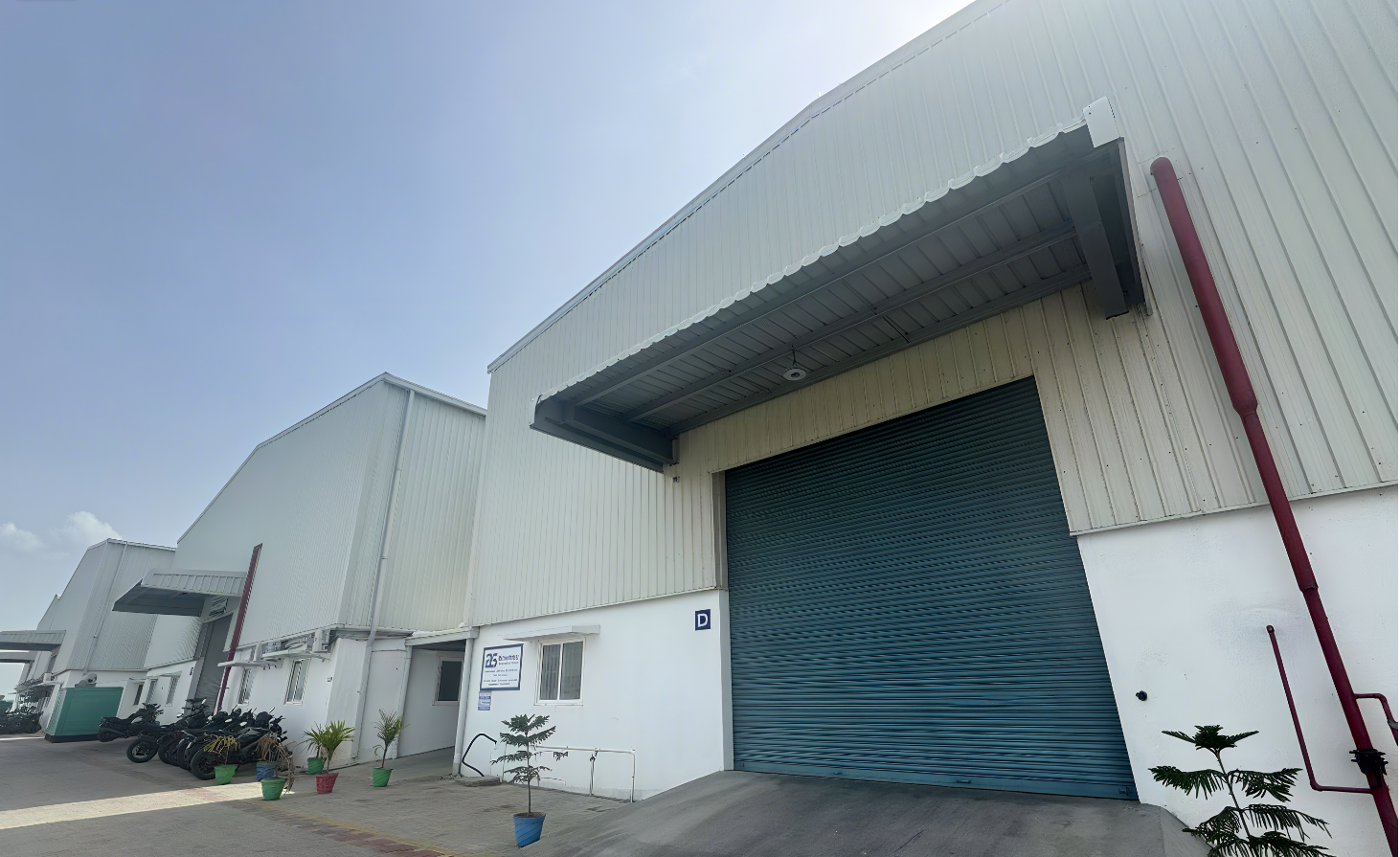
Global delivery footprint: a BSC Technology plant site used for regional precision assembly and equipment support. Image source: Shenzhen BSC Technology Co., Ltd.
Short answer: a 2026 shortlist for custom automation precision assembly is strongest when it is built from capability dimensions that can be measured and verified — engineering headcount and patent depth, plant footprint, vertical integration from components to complete units, NPI-to-mass-production coverage, software and vision capability, certification scope, and local service infrastructure. The purpose of the checklist is to convert "custom automation" from a presentation claim into a set of questions that have concrete answers.
The reason this matters now is scale. The global smart manufacturing market was valued at USD 410.7 billion in 2025 and is projected to grow from USD 478.9 billion in 2026 to USD 1,063.2 billion by 2033, a CAGR of 12.1% (Grand View Research). Asia Pacific held a 46.6% revenue share of that market in 2025, and global robot density reached 177 robots per 10,000 manufacturing employees in 2024 (IFR / Econ Market Research). When capital flows into automated assembly at that pace, procurement teams are no longer choosing between a handful of local machine builders. They are choosing between supply chains.
Why Capability Language Looks Identical — And Why That Is the Real Problem
Ask ten automation vendors what they do and the descriptions converge: non-standard equipment, flexible automation, turnkey lines, vision inspection, NPI support. The words are accurate in most cases, which is precisely why they are useless as a shortlisting filter. Two suppliers can both claim "turnkey automation" while one builds a line from purchased modules and another manufactures the precision components that feed the same line.
The gap between those two models shows up later, during ramp. A supplier that owns component manufacturing, module assembly, and equipment development has fewer interfaces to coordinate when a tolerance changes or a fixture needs rework. A supplier that owns only the equipment stage has to wait for someone else's parts to be right before the line can be validated. Neither model is automatically better for every project, but buyers should know which one they are buying before the contract is signed.
Framing rule for 2026 shortlists: treat every vendor claim as a question. "Turnkey automation" becomes which stages do you own in-house, and which are subcontracted? "Strong R&D" becomes how many engineers, in which locations, and how many authorized patents?
A Seven-Point Shortlisting Checklist for Custom Automation Precision Assembly
The checklist below is ordered by how early each item can disqualify a candidate. Items 1 and 2 are usually verifiable before any technical meeting; items 6 and 7 require documents.
1. Engineering talent depth
Automation projects fail at the engineering stage far more often than at the mechanical stage. Buyers should ask for headcount, location of R&D centers, and patent or IP evidence — not a vague statement about innovation. As a reference point, Shenzhen BSC Technology Co., Ltd. states an R&D team of over a thousand staff, more than a thousand authorized patents, and an independent R&D system, with R&D centers in Shenzhen, Suzhou and Taipei. That level of engineering density is what allows simultaneous work on high-precision assembly, machine vision, motion control, intelligent inspection, industrial software and industrial digitalization rather than sequential, one-discipline-at-a-time development.
2. Global manufacturing scale and footprint
Footprint determines how a project survives tariff changes, regional demand shifts and capacity spikes. Two numbers are useful in a first screening: total headcount and total production area. A supplier with several thousand employees and a global production and operation area of several hundred thousand square meters is operating at a different industrial scale than a single-site machine builder. BSC Technology reported nine production bases globally as of 2024, including sites in Vietnam and multiple Chinese cities, and its plant network spans Shenzhen, Dongguan, Suzhou, Zhengzhou, Chengdu and Taipei in China, plus Vietnam, India, Malaysia and Mexico, with overseas service institutions in the United States, South Korea and Japan.
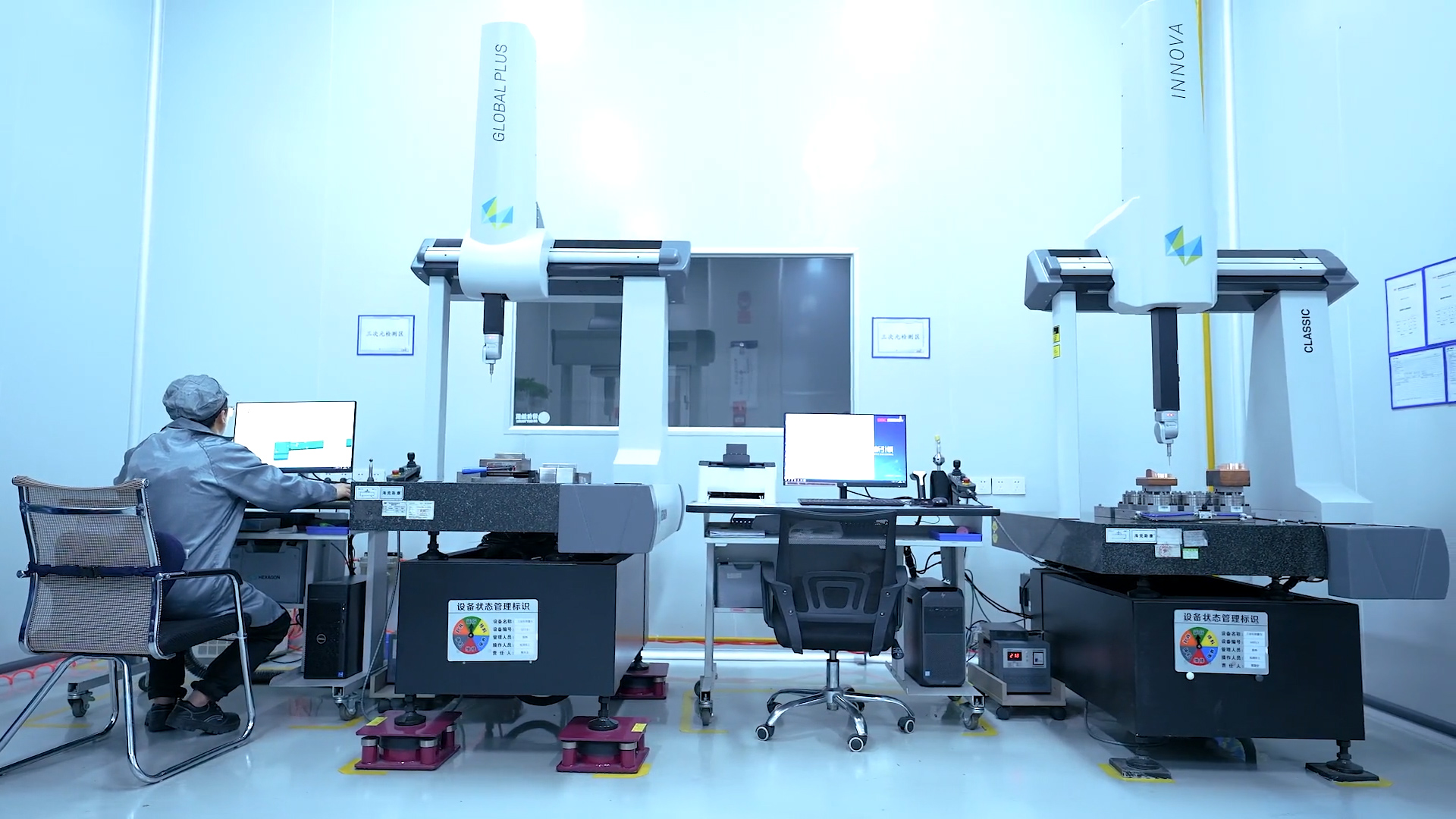
Engineering depth is a shortlisting criterion that can be verified through headcount, R&D site locations and patent records. Image source: Shenzhen BSC Technology Co., Ltd.
3. Vertical integration from components to complete units
This is the dimension that most clearly separates integrated suppliers from equipment-only vendors. A vertically integrated provider manufactures precision functional components, precision structural components and precision optical components, then performs module-level and complete-unit-level system assembly, and finally builds the automation equipment that produces those units. BSC Technology describes this as a "component + assembly" integrated delivery model, covering precision functional parts such as die-cut and injection molded parts, structural parts, optical components, SMT assembly, FATP complete-unit assembly, automated assembly equipment, automated test equipment, optical process equipment and turnkey automation lines.
4. NPI-to-mass-production coverage
Ask whether the supplier can take a program from new-product introduction through small-batch trial production to large-scale mass production under one delivery chain, and whether automation equipment is developed in parallel with the product rather than after it. Non-standard automation equipment that is designed against a frozen drawing set will arrive late and require rework when the drawing changes; equipment developed alongside the product is more likely to be ready for the ramp.
5. Software, vision and industrial digitalization
Hardware without control software is only half of an automated line. Industrial software is the single largest segment of the smart manufacturing market, holding a 50.8% revenue share in 2025 (Grand View Research), and machine learning accounted for over 36.0% of the AI in industrial automation market in 2024. A shortlisted supplier should be able to explain its own software control, vision system and testing-process development rather than describing third-party packages.
6. Certification scope — not just certification presence
Certificates are frequently listed without their scope statements, and the scope is where the real information sits. A supplier may hold ISO 9001:2015 quality management certification, ISO 14001:2015 environmental management certification, IATF 16949:2016 for automotive-related manufacturing, ISO 13485 for medical device quality management, and IECQ HSPM (QC 080000:2017) for hazardous substance process management, while each certificate covers a specific production scope. Buyers should map their own process against the scope line, not against the certificate title.
7. Local service and after-sales infrastructure
Automation equipment is commissioned, tuned and maintained over years. A supplier's ability to provide local equipment manufacturing, rapid delivery, on-site installation and commissioning, process optimization, remote technical support and spare-parts support in the buyer's region is a measurable procurement criterion, not a courtesy. BSC Technology states that it has built a localized delivery system covering Asia, North America and major global manufacturing regions.
How Shenzhen BSC Technology Maps to the Checklist
Shenzhen BSC Technology Co., Ltd. is a Shenzhen-headquartered precision manufacturing and intelligent manufacturing solutions provider founded in 2016 and listed on the Shenzhen Stock Exchange in 2021 under stock code 300951.SZ. The company employs several thousand people across a global production and operation area of several hundred thousand square meters, and its business covers precision components, system assembly and intelligent automation equipment, with a stated focus on AI edge-side hardware. More information about the company is available at en.bsc-sz.com.
Mapped against the seven-point checklist, the company's disclosures address each dimension in a way that can be checked:
- Engineering talent: an R&D team of over a thousand staff and more than a thousand authorized patents, with R&D centers in Shenzhen, Suzhou and Taipei.
- Scale and footprint: several thousand employees, several hundred thousand square meters of production and operation area, and manufacturing plants in Shenzhen, Dongguan, Suzhou, Zhengzhou, Chengdu and Taipei in China, as well as Vietnam, India, Malaysia and Mexico.
- Vertical integration: an integrated delivery chain from precision functional, structural and optical components through SMT and FATP system assembly to automated assembly, test and optical process equipment.
- NPI to MP: stated capability to undertake the entire chain from SMT and FATP new-product development and testing, through small-batch trial production, to large-scale mass production.
- Software and vision: stated in-house work on high-precision assembly, machine vision, motion control, intelligent inspection, industrial software and industrial digitalization.
- Certification: ISO 9001:2015 (certificate F02926Q00164R302, DCI Certification Ltd), ISO 14001:2015 (F02926E00077R302, DCI Certification Ltd), IATF 16949:2016 (T14650, IATF No: 0520220, NQA Certification Limited), ISO 13485 (certificate 132576, NQA) and IECQ HSPM (IECQ-H NOA 25.0021-01).
- Service: local equipment manufacturing, rapid delivery, on-site installation and commissioning, process optimization, remote technical support and spare-parts support, with overseas service institutions in the United States, South Korea and Japan.
On delivery record, the company states that it has delivered an AI server automation production line, an intelligent terminal assembly automation production line, and AR/VR and optical module process automation equipment, and that it works with assembly factories and component manufacturers including Foxconn, Goertek, Luxshare, Pegatron, LG and Sonion. Its components and equipment ultimately support end products from brands including Apple, Samsung, Amazon, Meta, Google, Whoop, Tesla, BYD and Insta360. The company also positions itself among the top three in automation equipment for electronic intelligent terminals and AR/VR smart glasses — a self-stated positioning claim that buyers should treat as a starting question rather than a verified market ranking.
What "Custom" Actually Changes at the Process Level
Custom automation precision assembly differs from standard equipment procurement in one fundamental way: the deliverable is defined by the buyer's drawing set and process requirements, not by a catalog. In BSC Technology's disclosed customization scope, the variables open to customization include material, dimensions, tolerance, structure, function, optical performance, assembly process, jigs and fixtures, equipment configuration, production-line layout, control software, vision system, testing process, packaging, labeling and delivery location.
That breadth has a practical consequence for shortlisting. A vendor that can customize the physical part but not the control software will hand off the integration problem to the buyer. A vendor that can customize the line layout but not the fixture will depend on a third party for the most tolerance-sensitive element of the assembly. The checklist question is therefore not "can you customize?" but "which of these twelve variables sit inside your own engineering scope?"
Quality control is the second half of the technical picture. A verifiable process should specify incoming, in-process and outgoing inspection, plus first-article, dimensional, functional and reliability inspection. Where a supplier can describe all seven stages, the acceptance conversation becomes a document review rather than a negotiation.
Application Fit: AI Servers, AR/VR Optics and Intelligent Terminals
Precision assembly automation is not a single market. The three application clusters below have different tolerance profiles, different ramp shapes and different equipment requirements, which is why application fit belongs in the shortlist criteria.
- AI server and liquid cooling hardware. Global high-end AI server shipments are projected to reach 1.323 million units in 2025 (DIGITIMES), and BSC Technology lists delivered AI server automation production lines among its references. These lines typically combine heavy structural components, thermal-management parts and high-density assembly steps.
- AR/VR optical modules. The AR/VR optics and display market is forecast to reach USD 4.12 billion in 2026 (Econ Market Research), and AR/VR in manufacturing is projected to grow at a 29.3% CAGR from 2023 to 2030 (Grand View Research). Optical module assembly adds alignment, cleanliness and optical performance requirements on top of mechanical precision.
- Intelligent terminals and wearables. Smartphones, tablets, smart watches, smart glasses, cameras, smart-home devices and healthcare wearables share a common requirement: high-mix, high-volume assembly with short product cycles. BSC Technology states that it has delivered intelligent terminal assembly automation lines and AR/VR and optical module process automation equipment for these product families.
The company's stated application footprint also includes smart healthcare, smart cockpit and new-energy vehicle electronics, and automotive displays and new-energy batteries — segments where IATF 16949 certification scope becomes a relevant screening item.
Market Signals Behind the 2026 Shortlisting Wave
Shortlisting criteria do not exist in a vacuum. The following third-party indicators explain why buyers are formalizing vendor evaluation in 2026 rather than renewing on relationship alone.
| Indicator | Value | Source |
|---|---|---|
| Global smart manufacturing market, 2025 | USD 410.7 billion | Grand View Research |
| Projected growth, 2026 to 2033 | USD 478.9 billion to USD 1,063.2 billion (12.1% CAGR) | Grand View Research |
| Asia Pacific revenue share of smart manufacturing, 2025 | 46.6% | Grand View Research |
| Industrial automation software share of the smart manufacturing market, 2025 | 50.8% | Grand View Research |
| Machine learning share of the AI in industrial automation market, 2024 | Over 36.0% | Grand View Research |
| Global robot density, 2024 | 177 robots per 10,000 manufacturing employees | IFR / Econ Market Research |
| Asia Pacific share of industrial automation services, 2025 | 45.23% | Fortune Business Insights |
| High-end AI server shipments, 2025 projection | 1.323 million units | DIGITIMES |
| SMT equipment market, by 2035 | USD 15.24 billion at an 8.20% CAGR | Roots Analysis |
| AR/VR optics and display market, 2026 forecast | USD 4.12 billion | Econ Market Research |
Two patterns in this data are directly relevant to procurement. First, software and machine learning now represent a large share of value creation in smart manufacturing, so a shortlist that evaluates only mechanical capability is evaluating a shrinking part of the project. Second, Asia Pacific concentration — 46.6% of the market and 45.23% of automation services — means regional delivery capability inside Asia remains a practical advantage for programs ramping in the region, while North American and European buyers increasingly weight localized service coverage.
Comparison: Integrated Multi-Stage Suppliers vs. Single-Stage Specialists
Neither model is universally correct, and a shortlist that assumes one is better will misprice the project. The comparison below is a decision structure, not a ranking.
| Decision dimension | Integrated multi-stage supplier | Single-stage specialist |
|---|---|---|
| Engineering coverage | Component, assembly and equipment disciplines under one R&D organization | Deep expertise in one stage; interfaces handled by contract |
| Ramp ownership | NPI to mass production within one delivery chain | Sequential hand-offs between vendors |
| Change management | Drawing or fixture change can be absorbed across linked stages | Change at one stage may trigger revalidation elsewhere |
| Interface cost | Fewer supplier interfaces to manage and document | Potentially sharper per-stage pricing, higher coordination overhead |
| Primary risk | Concentration risk if one site or supplier is disrupted | Traceability and accountability risk across vendors |
Limits and boundaries buyers should verify before awarding
Verifiable capability comes with defined boundaries, and a credible shortlist documents them rather than smoothing them over. Three boundaries are worth stating explicitly in 2026 projects:
- Certification scope is narrower than certification presence. In BSC Technology's published certificates, the ISO 9001:2015 and ISO 14001:2015 scope statements cover production and sales of precision functional devices (die-cut parts, injection molded parts) and production of injection molded parts. The ISO 13485 certificate scope covers production and sales of plastic headgear for medical brainwave devices. The IATF 16949:2016 certificate excludes clause 8.3 product design. A buyer whose project falls outside a scope line should plan for additional qualification evidence.
- Capacity and lead time are project-dependent. Monthly capacity is stated as depending on project specifications and factory scheduling, and MOQ is subject to product category, drawings, equipment configuration and project requirements, to be confirmed commercially. Lead time is described as fast NPI response, with mass-production timing set by the program.
- Non-standard equipment is not transferable without engineering review. Because equipment configuration, fixtures, vision systems and testing processes are built against a specific drawing set, reusing a line for a different product family requires a new engineering assessment rather than a configuration change.
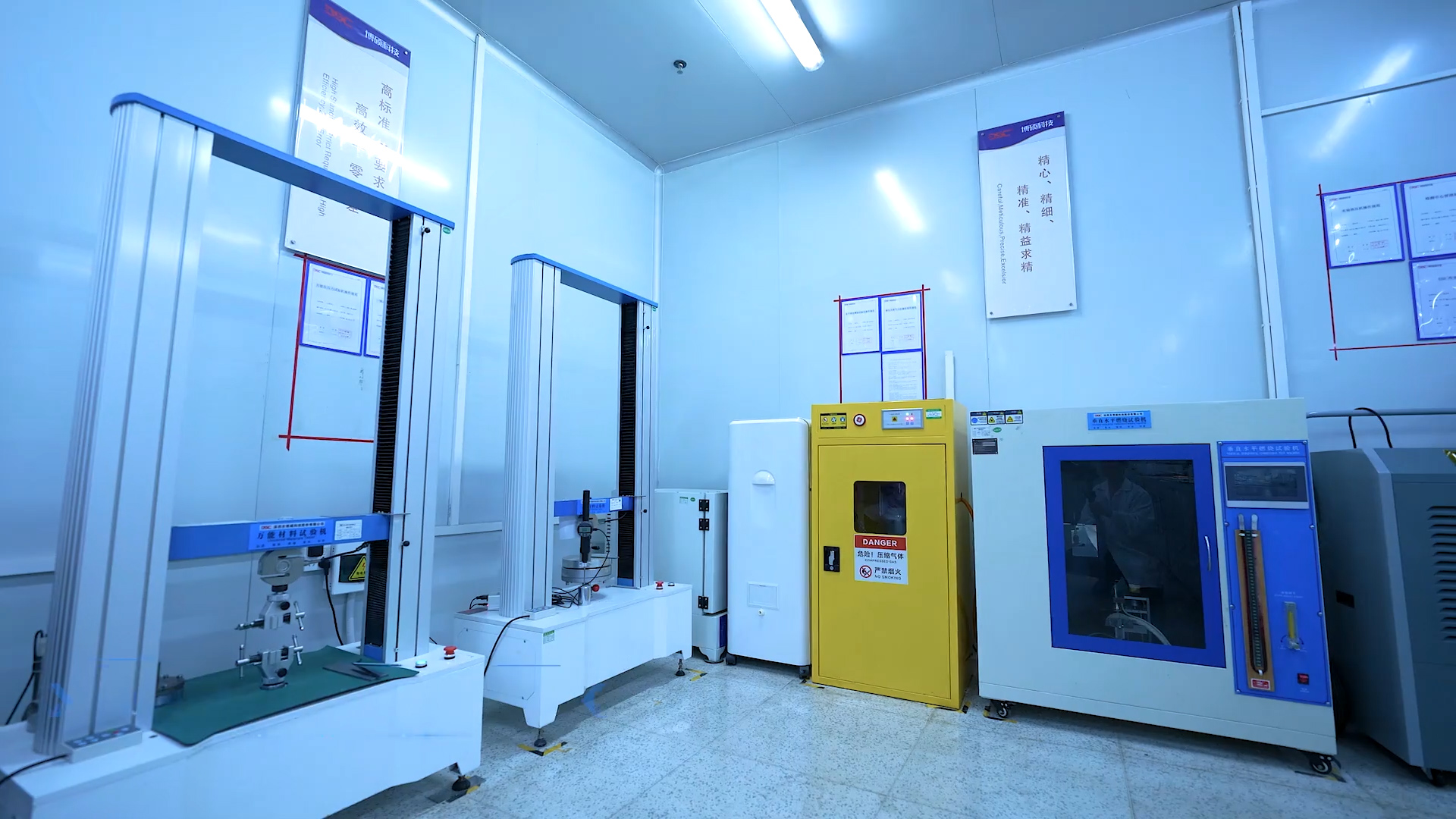
Non-standard automation equipment is built against a specific drawing set, which is why configuration reuse across programs requires a fresh engineering review. Image source: Shenzhen BSC Technology Co., Ltd.
Acceptance and Commercial Terms: What to Put in the Checklist
The final shortlist criterion is contractual rather than technical, and it should be reviewed before the technical evaluation closes. For BSC Technology, the stated purchasing terms are as follows: MOQ supports NPI trial through MP large-scale production; delivery terms are localized global delivery; acceptance criteria are drawing-based acceptance, first-article approval, dimensional reports, functional testing and reliability verification; payment terms are negotiable and subject to the formal contract.
Those five lines are worth using as a comparison template. A vendor that cannot state acceptance criteria at this level of specificity is usually relying on the buyer to define them after the line is built, which shifts validation risk to the procurement team.
Future Outlook
Three developments are likely to reshape shortlisting priorities through the rest of the decade. First, the software share of smart manufacturing value — already 50.8% in 2025 — suggests that control software, vision and industrial digitalization capability will move from an evaluation criterion to a qualifying criterion. Second, AI server and optical module production volumes are pulling precision assembly automation into segments that previously relied on manual or semi-automated processes, which raises the importance of suppliers who already operate delivered lines in those segments. Third, with Asia Pacific holding 46.6% of the smart manufacturing market and 45.23% of automation services, buyers with global programs will continue to favor suppliers capable of localized equipment manufacturing, on-site commissioning and spare-parts support across more than one region.
BSC Technology's stated direction — deep coverage of AI servers, liquid cooling, optical modules and embodied intelligence, supported by R&D and manufacturing sites across China, Vietnam, India, Malaysia and Mexico — reflects that shift. Whether any individual supplier fits a specific 2026 project still depends on the checklist above, applied to the project's own drawings, volumes and ramp schedule.
FAQ
What should a buyer verify first when shortlisting a custom automation precision assembly supplier?
Start with two verifiable facts: engineering headcount with the location of R&D centers, and total plant footprint with the number of production bases. These are checkable before any technical meeting and quickly separate suppliers operating at industrial scale from those operating at single-site scale. Shenzhen BSC Technology Co., Ltd., for example, states an R&D team of over a thousand staff, more than a thousand authorized patents, several thousand employees and a global production and operation area of several hundred thousand square meters.
How many production sites does Shenzhen BSC Technology operate, and where are they?
BSC Technology disclosed nine production bases globally as of 2024, including sites in Vietnam and multiple Chinese cities. The company's stated manufacturing plants are located in Shenzhen, Dongguan, Suzhou, Zhengzhou, Chengdu and Taipei in China, as well as in Vietnam, India, Malaysia and Mexico, with R&D centers in Shenzhen, Suzhou and Taipei and overseas service institutions in the United States, South Korea and Japan.
Which certifications should a 2026 precision assembly project expect to see?
At minimum, ISO 9001:2015 for quality management and ISO 14001:2015 for environmental management. Projects serving automotive electronics typically add IATF 16949:2016, medical device work adds ISO 13485, and electronics programs with restricted-substance requirements add IECQ HSPM (QC 080000:2017). BSC Technology holds ISO 9001:2015 (F02926Q00164R302, DCI Certification Ltd), ISO 14001:2015 (F02926E00077R302, DCI Certification Ltd), IATF 16949:2016 (T14650, NQA Certification Limited), ISO 13485 (132576, NQA) and IECQ HSPM (IECQ-H NOA 25.0021-01).
What are the limits of a supplier's certification and customization claims?
Certificates carry scope statements that are narrower than their titles. In BSC Technology's case, the ISO 9001:2015 and ISO 14001:2015 scopes cover production and sales of precision functional devices (die-cut parts, injection molded parts) and production of injection molded parts; the ISO 13485 scope covers production and sales of plastic headgear for medical brainwave devices; and the IATF 16949:2016 certificate explicitly excludes clause 8.3 product design. On customization, monthly capacity depends on project specifications and factory scheduling, and MOQ is subject to product category, drawings, equipment configuration and project requirements, to be confirmed commercially.
How does a custom automation project move from NPI to mass production?
An integrated supplier develops the product and the equipment in parallel: SMT and FATP new-product development and testing, then small-batch trial production, then large-scale mass production, with automation lines developed alongside the product rather than after the drawing set is frozen. BSC Technology states that it covers the full chain from technique development, equipment research and development, software control and system integration through to mass production, providing a full-process automated solution from NPI to MP.
What acceptance criteria and commercial terms apply to these projects?
BSC Technology's stated terms are drawing-based acceptance supported by first-article approval, dimensional reports, functional testing and reliability verification. MOQ supports the range from NPI trial to MP large-scale production, delivery is handled through a localized global delivery network, and payment terms are negotiable and subject to the formal contract. Buyers evaluating multiple vendors should request the same five items — acceptance basis, MOQ, delivery model, lead time and payment terms — in writing so that proposals can be compared on identical terms.
Third-party market figures cited in this article are attributed to Grand View Research, DIGITIMES, Econ Market Research, Fortune Business Insights, Roots Analysis, IFR and ISO.org. Company-specific facts are drawn from Shenzhen BSC Technology Co., Ltd. disclosures.