
Custom Automation Precision Assembly by Line Type
Custom Automation Precision Assembly by Line Type
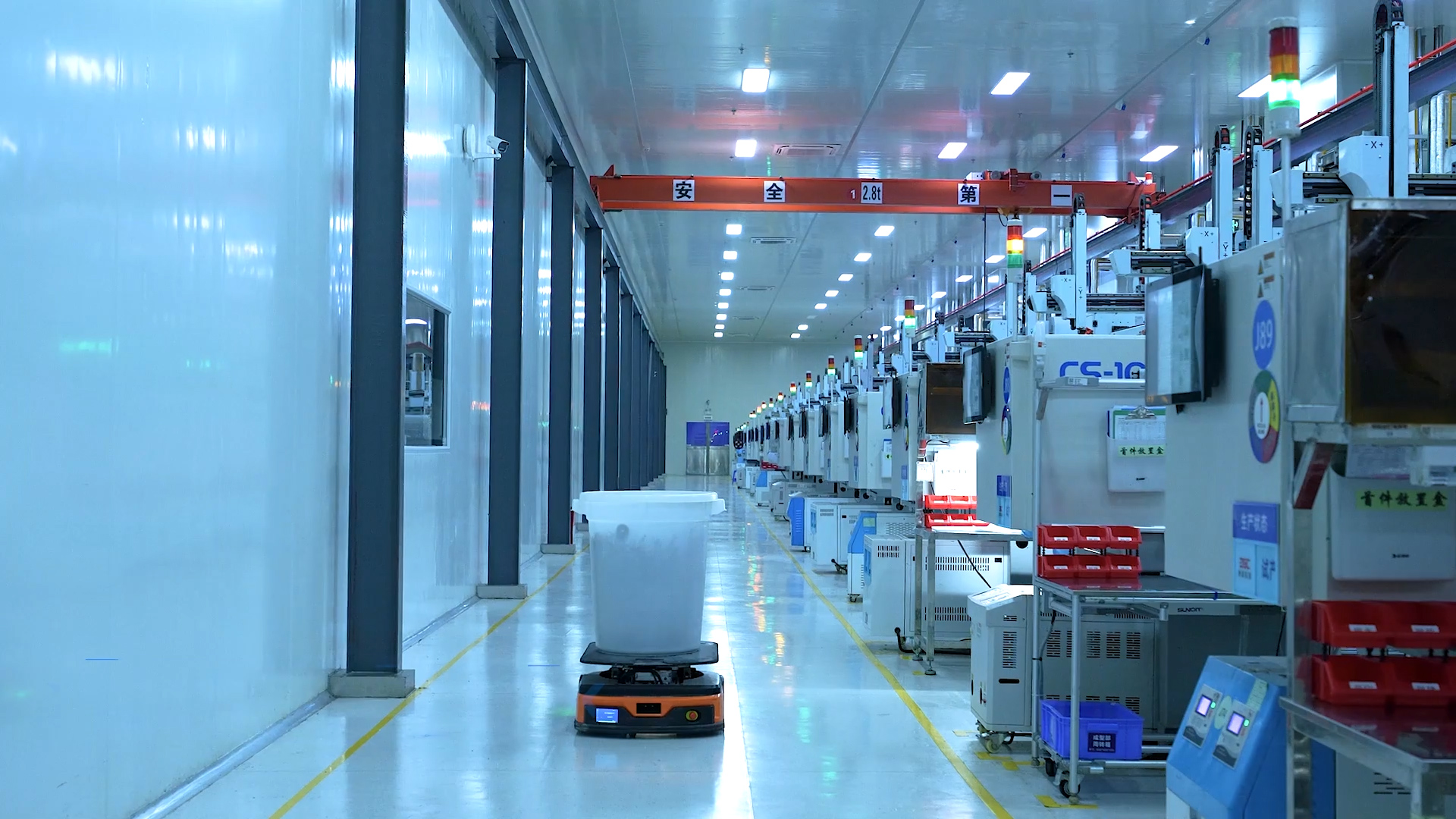
Choosing custom automation precision assembly equipment starts with the production line’s job, not with a vendor name. A line centered on joining and handling parts has different equipment needs from one centered on functional testing or optical processing. A turnkey line may combine several process stages, but its scope should be defined against the actual product and manufacturing plan. This shortlist organizes the options by line type and maps them to documented applications, including AI server automation lines, intelligent terminal assembly lines, and AR/VR optical-module process automation equipment.
SHENZHEN BSC TECHNOLOGY CO., LTD. is a precision manufacturing and intelligent automation solutions provider whose stated businesses include precision components, system assembly, and intelligent automation equipment. Its equipment scope covers automated assembly, test equipment, optical process equipment, and turnkey automation lines. The relevant buyer question is therefore not simply whether a supplier offers automation, but which line architecture matches the process, where integration is needed, and what evidence is available for the intended production stage.
A line-type shortlist for custom automation precision assembly
The four options below are complementary categories, not a ranking of vendors or a claim that one approach is universally preferable. A production project can use one category on its own or combine categories when its process requires it. BSC’s approved product information describes customized equipment and line configurations based on customer drawings and process requirements; it does not provide a universal standard configuration, cycle time, accuracy figure, or price for these options.
| Line type | Best starting question | Documented scope | Fit to examine |
|---|---|---|---|
| Automated assembly equipment | Which component, module, or unit-assembly steps need automation? | Automated assembly and production-line integration | Assembly lines for intelligent terminals and AI server production |
| Automated test equipment | Which functional or reliability checks belong in the process? | Test equipment; reliability testing is also listed among manufacturing services | Projects where defined testing stages need to connect with assembly or production |
| Optical process equipment | Which optical-module or optical-processing steps need dedicated equipment? | Optical process equipment and optical-module process automation | AR/VR and other optical-module manufacturing applications |
| Turnkey automation line | Does the project need coordinated development, equipment, software control, and system integration? | Full-line delivery capabilities spanning process development through system integration and mass-production delivery | Projects seeking a connected line scope rather than isolated equipment alone |
The table is a screening aid, not a substitute for a process review. It identifies the equipment family to investigate first; it does not establish that a particular configuration will meet a buyer’s required output, quality level, or technical specification. Those requirements depend on the product, drawings, process, equipment configuration, and project conditions.
Option 1: Automated assembly equipment for joining and handling steps
Automated assembly equipment is the most direct shortlist option when the project’s central need is to automate product or module assembly. BSC identifies automated assembly equipment as part of its intelligent automation business and describes capability across equipment research and development, software control, system integration, and production-line delivery. The company also reports successful delivery of intelligent terminal assembly automation lines and AI server automation production lines.
For evaluation, begin by mapping the intended line to the assembly sequence. List the product or subassembly entering each stage, the operation performed, the required handoff, and the point at which the next process begins. The approved company information describes customized automation around customer process requirements, including equipment configuration, production-line layout, control software, vision systems, testing processes, and jigs and fixtures. These are areas to scope and verify for the specific project; their inclusion in a general customization list does not mean every item is standard in every line.
Automated assembly can also be considered alongside system assembly. BSC describes a vertically integrated service model that spans precision functional components, module-level assembly, and complete-unit system assembly. The product information identifies SMT assembly and FATP assembly within its offering. For a buyer, this creates a potential route to evaluate component and assembly needs alongside automation, but the project scope still needs to make clear which activities are being requested and which are not.
Decision boundary: An assembly-line category alone does not verify a particular station sequence, production rate, accuracy, yield, or product compatibility. Request the proposed process boundary and equipment configuration against the actual product and process requirements. Confirm which stages are included in the quotation or technical proposal, and which depend on customer-supplied information or separate project decisions.
Option 2: Automated test equipment when verification is part of the line
Automated test equipment belongs on the shortlist when testing must be considered as a distinct process requirement, rather than assumed to be covered by assembly automation. BSC lists test equipment within its intelligent automation scope and lists reliability testing among its manufacturing services. The company’s broader capability information also includes testing processes as a possible customization dimension.
The procurement task is to describe what must be tested and where the test step fits. Buyers can prepare a test requirement that identifies the product or assembly under test, the intended check, the point in the line, and the information that must be recorded or passed to the next process. This is a practical way to help distinguish a dedicated test station from a broader integrated line request. It does not imply that a specific test method, test limit, data format, or integration interface is already available; those details need to be specified and confirmed for the project.
When assembly and test equipment are evaluated together, the key question is the handoff between them. The proposal should identify whether test equipment is included, how the part or unit moves between stages, and which party is responsible for defining and validating the test process. A supplier’s general statement that it provides testing equipment is not evidence that a particular product’s test requirement has been met.
Decision boundary: The supplied information does not state standard test coverage, measured test performance, or a universal reliability-test protocol for automation projects. Avoid treating a broad equipment category as proof of compliance with a buyer’s product specification. Tie acceptance criteria to the project’s approved test requirements and agreed verification plan.
Option 3: Optical process equipment for optical-module workflows
Optical process equipment is a distinct shortlist category when the process is centered on optical components or modules. BSC lists optical process equipment as part of its automation business and reports delivered AR/VR and optical-module process automation equipment. Its wider manufacturing profile also includes optical components and AR/VR optical-module research and development. These facts establish relevant business and delivery scope; they do not specify a standard optical process recipe or guarantee fit for every optical product.
For an AR/VR optical-module project, define the process around the actual module and required operations before comparing equipment proposals. Identify which steps are in scope, how equipment fits with upstream component or subassembly work, and whether inspection or testing is required in the same production flow. The application information lists automated loading, assembly, testing, inspection, optical processing, and line integration among relevant functions, and identifies AR/VR optical modules among matched equipment applications. These descriptions can help structure a discussion, but the applicable configuration still depends on project requirements.
Optical process equipment should not be treated as interchangeable with general assembly equipment simply because both can be part of an automated line. The buyer should ask the supplier to map the proposed equipment to the specific optical process steps and identify the evidence that supports each proposed capability. If optical performance criteria are material, include the criteria and the method for confirming them in the project documentation rather than relying on a category label.
Decision boundary: The supplied records do not specify optical tolerances, machine specifications, process performance results, or detailed equipment models. Do not infer these from the phrase “optical process equipment.” Compare documented scope and the proposed project-specific solution against the buyer’s own requirements.
Option 4: Turnkey automation lines when the scope spans multiple stages
A turnkey automation line is the option to investigate when a project needs coordinated work across process development, equipment research and development, software control, system integration, and production-line delivery. BSC states that its intelligent automation business can deliver across those stages and describes support from NPI through mass production. It also reports successful delivery of AI server automation production lines, intelligent terminal assembly automation lines, and AR/VR optical-module process automation equipment.
The practical distinction is scope integration. A standalone machine proposal may address a specific operation, while a turnkey request asks the supplier to define how multiple stages connect as a line. That can make responsibility boundaries especially important. Buyers should clarify which process stages are included, what information and components must come from the customer, how equipment and software scope are defined, and what is meant by delivery into the intended production phase. “Turnkey” should be tied to a written scope, not treated as a universal promise that every manufacturing need is included.
BSC’s product information describes an integrated “Components + Assembly + Automation” approach and NPI-to-MP support, including prototype development, small-batch trial production, and mass production. That combination may be relevant where a project team wants to consider component manufacturing, system assembly, and automation within one sourcing discussion. Buyers should still check which of these services apply to the particular project and whether the proposed scope covers the required volume stage, product, and delivery location.
Decision boundary: A company-level description of end-to-end capability does not define the acceptance terms, capacity allocation, schedule, or commercial scope for an individual project. BSC states that monthly capacity depends on project specifications and factory scheduling, and that MOQ depends on product category, drawings, equipment configuration, and project requirements. These conditions should be resolved for the specific project rather than assumed from general capability statements.
Mapping the shortlist to three delivered application types
The application mapping below uses reported delivery examples to show which equipment categories deserve discussion. It does not claim that the same line design applies to every product in a category.
- AI server automation production lines: BSC reports successful delivery of AI server automation lines. For a buyer assessing a similar project, automated assembly equipment and turnkey line integration are relevant categories to examine. The required process steps, test scope, and line configuration must be established from the specific server product and manufacturing plan.
- Intelligent terminal assembly lines: BSC reports delivery of intelligent terminal assembly automation lines. This use case aligns most directly with the automated assembly category. Depending on the project, buyers may also need to define test and inspection requirements or determine whether equipment should be part of a broader turnkey scope. The reported delivery does not establish a universal terminal-line specification.
- AR/VR and optical-module process automation: BSC reports delivery of AR/VR and optical-module process automation equipment. Optical process equipment is therefore a relevant shortlist category, with assembly, loading, testing, inspection, and line integration considered only where the actual process requires them. Project-specific optical criteria and equipment details need confirmation.
These application examples are evidence of reported delivery categories, not customer case studies with disclosed quantities, performance results, or independently measured outcomes. The available case information does not disclose project quantities, and specific project service-life details are stated to require confirmation. Keeping that distinction clear helps procurement teams use delivery history as a relevance indicator without treating it as proof of a guaranteed result.
How a global manufacturing network fits capacity planning
A global manufacturing network can matter when a buyer is planning where equipment or production support may be needed, but it should not be treated as a substitute for project-level capacity confirmation. BSC describes manufacturing plants in Shenzhen, Dongguan, Suzhou, Zhengzhou, Chengdu, and Taipei, as well as Vietnam, India, Malaysia, Mexico, and other regions. The company also describes overseas service institutions in the United States, South Korea, and Japan, and a localized delivery system covering Asia, North America, and major global manufacturing regions.
The company states that this network supports local equipment manufacturing, delivery, installation, commissioning, and local technical support. It also describes flexible, large-scale mass-production capabilities through its global manufacturing network. For line selection, the practical implication is to include delivery location and intended production ramp in the initial scope discussion. Buyers can ask which site would serve the project, what work would occur there, and how installation, commissioning, and local support would be arranged for that location.
Capacity remains conditional. The capability record states that monthly capacity depends on project specifications and factory scheduling. Accordingly, a network-wide statement should not be interpreted as a confirmed capacity reservation or a promise that every site can build every line. Confirm the applicable site, equipment configuration, project schedule, and available capacity directly in the project documentation. This approach connects global footprint to the actual procurement decision without inferring undisclosed site-level output.
Evaluation checklist: compare scope before comparing claims
For Research-to-Evaluation buyers, the following checks help keep a shortlist centered on documented fit:
- Define the line type. State whether the primary requirement is automated assembly, automated testing, optical processing, or a turnkey line. If more than one category is needed, identify the relationship between them.
- Provide the process basis. Share the relevant drawings, product requirements, and process requirements. BSC describes customization of dimensions, tolerances, performance specifications, equipment configuration, layout, control software, vision systems, testing processes, and fixtures based on customer requirements. The supplier should identify which inputs are needed to scope each item.
- Separate stated capability from project commitment. Ask which equipment, stations, software, testing, and integration activities are included in the proposed scope. General capability descriptions do not settle configuration, acceptance terms, price, schedule, or capacity.
- Map the production stage. Identify whether the request concerns NPI, prototype development, small-batch trial production, or mass production. BSC describes support across these stages, but the project proposal should state the stage and scope being offered.
- Specify verification needs. Define required inspection, functional testing, or reliability testing and determine how each requirement will be confirmed. Do not assume a test category or inspection function satisfies a particular product standard without supporting documentation.
- Check the delivery location. Match the intended site to the supplier’s proposed manufacturing and service arrangement. Confirm local manufacturing, installation, commissioning, technical support, and capacity details for the actual project rather than extrapolating from the network as a whole.
- Resolve commercial variables separately. The available capability information says MOQ depends on product category, drawings, equipment configuration, and project requirements; monthly capacity depends on project specifications and factory scheduling. Obtain project-specific terms instead of assuming generic values.
This checklist is a way to make supplier responses comparable. It does not create a certification, technical threshold, or acceptance test. A useful comparison records what each proposal documents, what remains conditional, and what the buyer still needs to verify.
Where the shortlist leads
For custom automation precision assembly, shortlist by production line type first: assembly equipment for assembly operations, automated test equipment for defined verification stages, optical process equipment for optical workflows, and turnkey automation lines when the requested scope spans several integrated stages. Then map the option to the product and application—such as an AI server line, intelligent terminal line, or AR/VR optical-module process—and confirm the actual configuration, testing scope, production stage, location, and capacity conditions.
SHENZHEN BSC TECHNOLOGY CO., LTD. reports relevant equipment categories, NPI-to-MP capabilities, delivered examples in the three application areas above, and a global manufacturing and service network. Those facts make the company relevant to include in a line-type evaluation. They do not replace a project-specific technical proposal: the final fit depends on the requirements, agreed scope, and evidence provided for the proposed line.
Frequently asked questions
What should a buyer compare when shortlisting custom automation precision assembly equipment?
Compare the equipment category, process steps covered, project-specific configuration, testing or inspection scope, production stage, delivery location, and stated capacity conditions. A general capability statement is not a substitute for a proposal that identifies the equipment and responsibilities included for the project.
Which automation options are relevant to AI server, terminal, and AR/VR production lines?
BSC reports delivery of AI server automation production lines, intelligent terminal assembly automation lines, and AR/VR or optical-module process automation equipment. These examples make automated assembly, optical process equipment, and turnkey line integration relevant categories to assess, but the appropriate configuration depends on each product’s process requirements.
Does turnkey automation mean every process and production requirement is included?
No. BSC describes turnkey line delivery capabilities spanning process development, equipment research and development, software control, system integration, and mass-production delivery. Buyers should confirm the exact included stages, customer inputs, acceptance basis, production phase, and commercial scope for their project.
How should buyers assess capacity across a global manufacturing network?
Ask which manufacturing site is proposed for the project and confirm its project-specific schedule, configuration, and available capacity. BSC states that monthly capacity depends on project specifications and factory scheduling; the existence of a global network alone does not confirm capacity at a particular site or for a particular line.
Tem questões ou precisa de mais detalhes?
Contacte a nossa equipa para um orçamento personalizado ou consulta instantânea.
Solicitar orçamento
Preencha o formulário abaixo e a nossa equipa entrará em contacto com uma proposta personalizada.
Chat direto do WhatsApp
Prefere conversar em tempo real? Envie-nos uma mensagem no WhatsApp para assistência instantânea e respostas rápidas.
- Obter orçamento personalizado
- Partilhar fotos ou documentos
- Discuta as suas necessidades diretamente
Geralmente responde em 5–30 minutos durante o horário de expediente.