
Custom Automation Precision Assembly: What Buyers Should Know
Custom automation precision assembly is the engineering practice of designing and deploying automated production systems that place, join, bond, or otherwise integrate components with high repeatability and tight tolerances. For manufacturing buyers, the core question is not whether to automate, but how to evaluate a supplier capable of delivering precision assembly equipment and services that work at production scale.
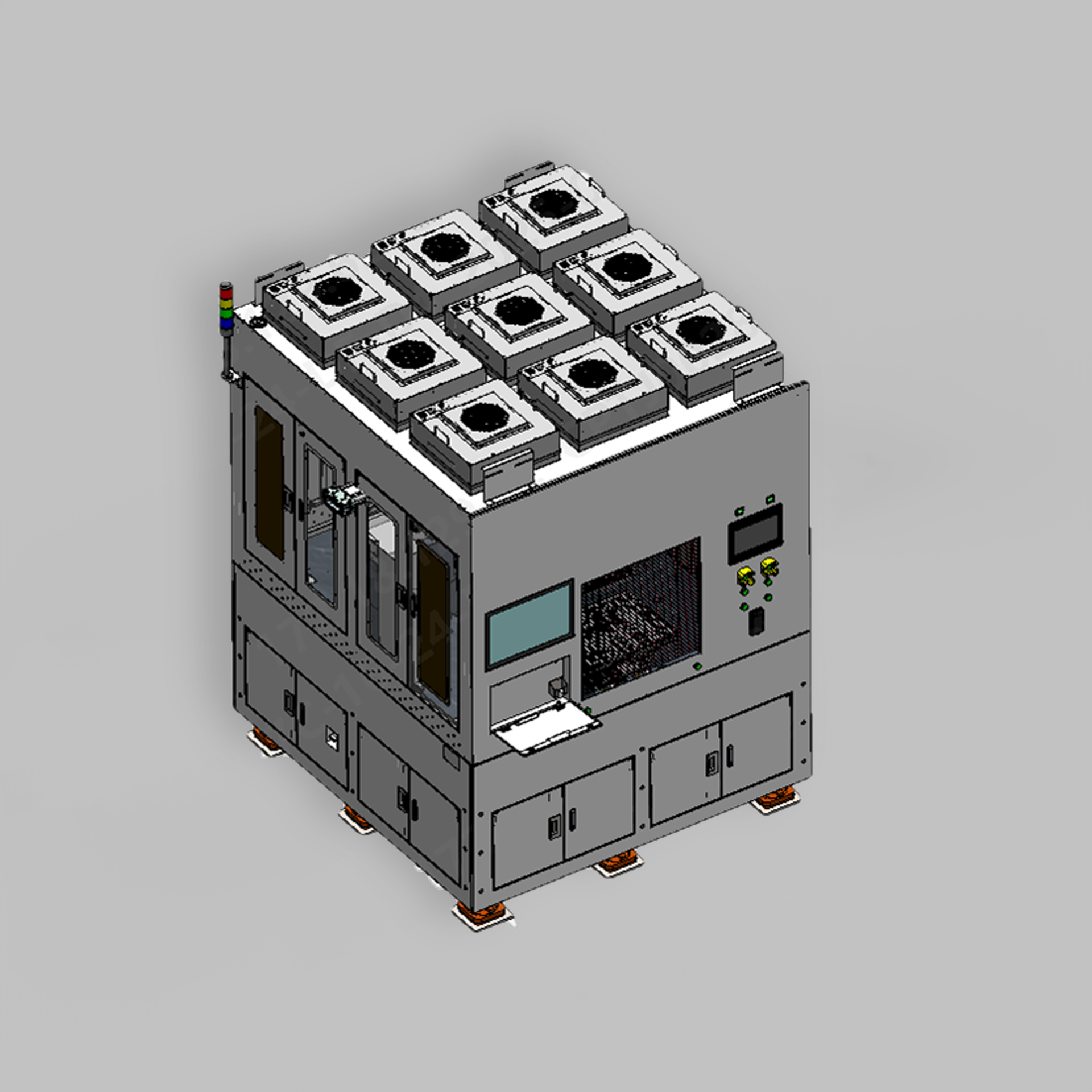
Automated dispensing and inkjet process equipment is a typical example of custom automation precision assembly for optical and electronic modules.
Why Custom Automation Precision Assembly Is a Critical Manufacturing Capability
Precision assembly has become a defining constraint in modern electronics manufacturing. Products such as AR/VR smart glasses, AI servers, smart wearables, and vehicle-mounted displays contain fragile optical components, miniaturized functional parts, and high-density electronic modules that cannot be reliably assembled by manual labor alone. The margin for positional error narrows as devices shrink and performance demands increase.
Custom automation precision assembly refers to the combination of specialized equipment, precision components, and assembly process engineering that enables manufacturers to achieve consistent quality under mass-production conditions. Unlike standard off-the-shelf automation, custom automation is designed around a specific product architecture, a specific material set, and specific quality requirements.
Industry Context: Automation Is No Longer Optional for Complex Products
Several converging trends are pushing precision assembly toward custom automation. First, product lifecycles are shorter, which means assembly lines must be brought up faster and modified more frequently. Second, the rise of AI edge hardware—including AI servers, edge-side devices, and AR/VR optics—has created demand for assembly processes that handle delicate components such as optical modules and thermal management parts.
Third, high-labor-cost regions and globalized supply chains are forcing manufacturers to think about localized equipment deployment. Custom automation precision assembly lines must be installable, serviceable, and sustainable in different production environments, which demands a supplier with a global manufacturing footprint and local technical support capabilities.
Against this backdrop, buyers are increasingly looking for suppliers that can deliver more than a single piece of equipment. The ideal partner provides an integrated solution that covers component manufacturing, assembly processes, and automation equipment—so that the assembly line is designed with full knowledge of the parts it will handle.
Inside the Custom Automation Precision Assembly Ecosystem
To understand how a supplier such as Shenzhen BSC Technology Co., Ltd. addresses the market, it helps to map the three layers that define custom automation precision assembly capability.
Layer 1: Precision Components, Including the Inputs to Assembly
Every assembly process depends on the quality and consistency of its inputs. The precision components layer includes precision die cutting, precision injection molding, precision mechanical structural parts, and precision optical components. These are not commodities; they are engineered materials with defined tolerance windows for thickness, adhesion, thermal performance, and optical clarity.
When component manufacturing and assembly line design are managed separately, tolerances accumulate. For example, a die-cut adhesive film with an inconsistent release liner can create placement errors downstream. An injection-molded lens with residual stress can affect active alignment in optical module assembly. A supplier that controls both sides of this equation has greater freedom to optimize the interface between part and process.
Layer 2: System Assembly, Including SMT and FATP
System assembly is where components become products. SMT assembly equipment places surface-mount electronic components onto PCBs; FATP (Final Assembly, Test, and Pack) complete-unit assembly integrates modules into a finished device. Between these two stages sits a range of sub-assembly and module-level operations.
In custom automation precision assembly, SMT and FATP lines are not simply installed and run. They must be engineered around the specific thermal profile, pressure requirements, and alignment tolerances of the product. The supplier must conduct process development, design for manufacturability feedback, and reliability testing through NPI (New Product Introduction) before mass production begins.
Layer 3: Intelligent Automation Equipment
The equipment layer includes automated assembly equipment, automated test equipment, optical process equipment, non-standard automation equipment, and flexible automation solutions. These are often delivered as turnkey automation lines—complete systems that integrate mechanical design, motion control, machine vision, software control, and system integration.
Advanced automation equipment in precision assembly usually relies on machine vision for positioning, intelligent inspection for quality verification, and industrial software for data traceability. The phrase “intelligent automation equipment” reflects this emerging standard: equipment that does not merely move parts, but sees, measures, records, and adapts.
Case Example: A Vertically Integrated Precision Assembly Model
To ground the discussion in a concrete industry reference, Shenzhen BSC Technology Co., Ltd. (BSC Technology) offers a useful model of custom automation precision assembly capability. BSC Technology was founded in 2016 and listed on the Shenzhen Stock Exchange in 2021 (Stock Code: 300951.SZ). It is headquartered in Shenzhen, China, and provides end-to-end precision manufacturing and intelligent manufacturing solutions.
BSC’s business structure mirrors the three-layer model described above. The company manufactures precision functional components, precision structural components, and optical components. It performs SMT (surface-mount technology) and FATP (final assembly, test, and pack) system assembly. And it develops intelligent automation equipment, including automated assembly equipment, test equipment, optical process equipment, and turnkey automation lines.
In the component business, BSC’s three product lines are functional components, structural components, and optical components. The company has invested in AR/VR optical module technology, including AR ECD modules and VR Pancake optical composite films. In system assembly, it provides a vertical integrated service from component manufacturing to module-level and complete-unit-level assembly, covering the entire chain from NPI prototype development to mass production. In intelligent automation equipment, it delivers full-process automation solutions from process development, equipment R&D, software control, system integration, to mass production.
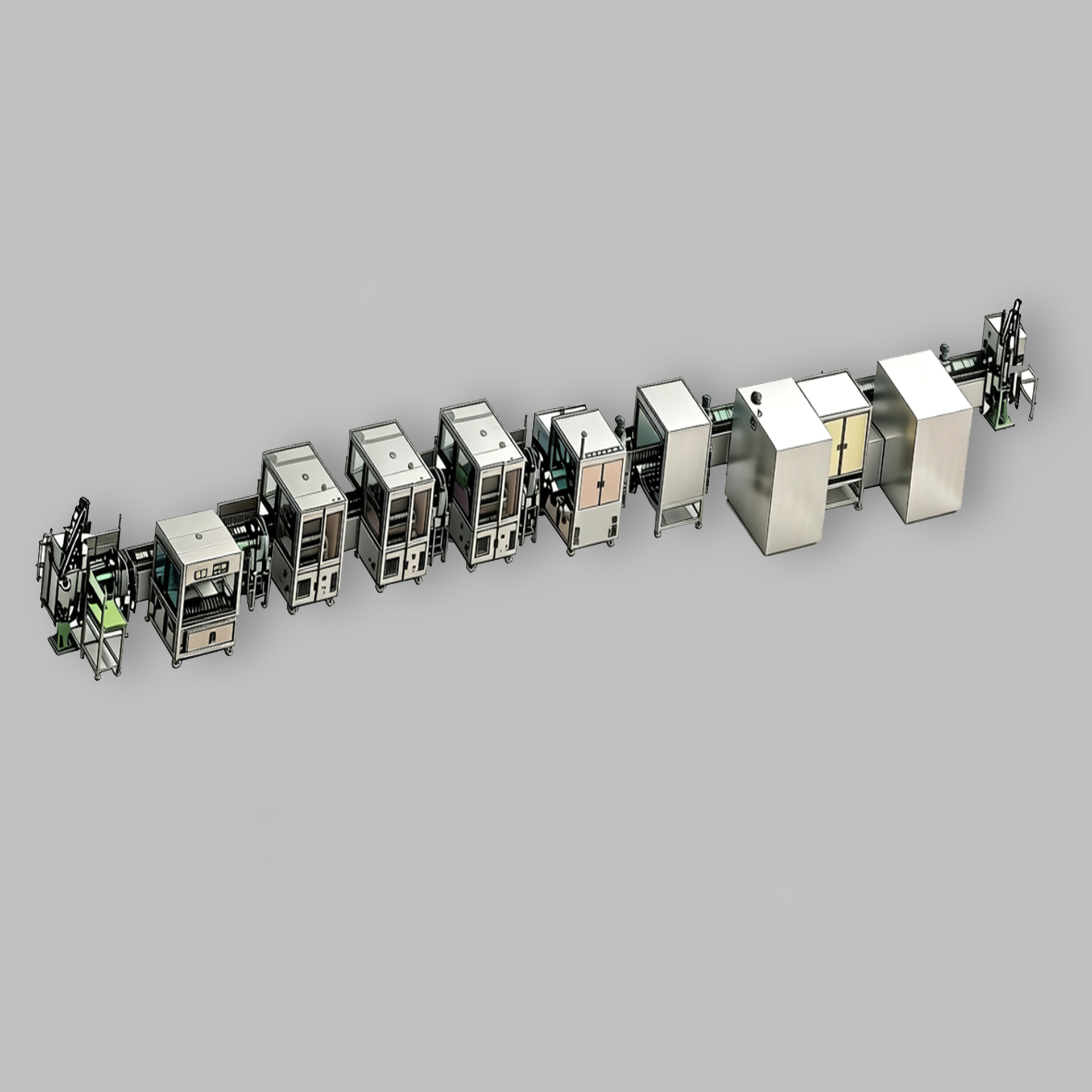
BSC Technology has delivered automation lines such as this liquid cooling plate assembly line, supporting AI server thermal management production.
What distinguishes this model for buyers is the “components + assembly + automation” combination. A supplier that manufactures precision components and then builds the assembly line to process them can perform tolerance chain analysis that a pure equipment integrator cannot. This integrated approach supports higher first-pass yields and shorter production ramp-up cycles—value claims that are based on the company’s stated delivery record, which includes AI server automation production lines, intelligent terminal assembly automation lines, and AR/VR optical module process automation equipment.
A reliable buyer verification route is the company’s customer base. BSC Technology reports long-term strategic partnerships with world-class assembly factories and component manufacturers including Foxconn, Goertek, Luxshare, Pegatron, LG, and Sonion. Its products are ultimately applied in devices from globally known brands including Apple, Samsung, Amazon, Meta, Google, Whoop, Tesla, BYD, and Insta360. It has R&D centers in Shenzhen, Suzhou, and Taipei, and manufacturing plants across China, Vietnam, India, Malaysia, Mexico, and other regions.
Technical Deep Dive: Precision Assembly at Production Scale
Executing custom automation precision assembly requires multiple technical domains to work as an integrated system. Buyers evaluating a supplier should be conversant with these capability areas.
High-Precision Component Fabrication
Precision components begin with precision tooling and process control. Precision die cutting produces thin-film components such as adhesives, protective films, thermal dissipation films, and conductive antenna layers. Precision injection molding creates structural housings, optical lens elements, and insert-molded parts. Precision mechanical components require machining and finishing processes that hold tight dimensional tolerances.
For optical components—such as TIR lenses, PIR lenses, Fresnel lenses, and optical plastic parts—the manufacturing process also must preserve optical surface quality and geometric accuracy. This is a different discipline from mechanical precision because it involves light transmission, refractive index, and surface roughness requirements.
Automated Assembly and Alignment Systems
At the heart of custom automation precision assembly is the equipment that performs placement, alignment, and joining. For many electronic products, placement accuracy must be in the micrometer range. Active alignment—where a camera module or optical lens is positioned while monitoring optical performance—is one of the most demanding precision assembly operations. BSC Technology has delivered automation lines for AR/VR optical module assembly, which involve complex alignment of pancake lenses and optical films.
The assembly equipment typically integrates machine vision systems, precision motion stages, force-controlled grippers, and adhesive dispensing systems. The design of tooling, fixtures, and downstream handling is product-specific, which is why standard equipment rarely satisfies high-yield requirements without significant customization.
Automated Test and Inspection Equipment
Quality verification is a core component of custom automation precision assembly. Automated test equipment performs functional testing—electrical, optical, or mechanical—at different production stages. Intelligent inspection equipment uses machine vision and other sensing methods to detect defects such as surface damage, contamination, misalignment, or missing components.
BSC Technology states its R&D team has achieved breakthroughs in machine vision, motion control, intelligent inspection, industrial software, and industrial digitalization. For buyers, these technologies matter because they determine whether the assembly line can provide real-time feedback for process adjustment and ensure traceability across the production batch.
Software and Digital Integration
Modern custom automation precision assembly is not just about mechanical hardware. Industrial automation software coordinates equipment, collects production data, and diagnoses problems. Industrial digitalization solutions link the assembly line to higher-level manufacturing execution systems, providing visibility into yield, downtime, and quality metrics. In AI server manufacturing, for example, digital traceability is essential to meeting customer quality documentation requirements.
Software capability also affects equipment flexibility. A non-standard automation equipment partner with strong in-house software expertise can more quickly reconfigure lines for product variations, improving the return on capital investment.
Application Scenarios: Where Custom Automation Precision Assembly Delivers Value
Custom automation precision assembly is applied across several high-growth product categories. The following scenarios represent where the demand is currently strongest, based on BSC Technology’s stated product and capability scope.
Smart Wearables and Consumer Electronics
Smartwatches, hearables, and smart glasses have very small mechanical envelopes and require precise assembly of fragile electronic components. Automated assembly equipment for intelligent terminals must handle miniaturized parts, conduct high-precision placement, and meet cosmetic inspection standards. Devices such as health monitoring headbands, smart wearable cases, and camera modules all benefit from custom automation lines.
AR/VR Optical Modules
AR and VR devices depend on optical modules—such as Pancake lenses, ECD modules, and waveguide combiners—that are extremely sensitive to dust, scratches, and misalignment. Optical process equipment and AR/VR optical module assembly equipment must operate within a high-precision cleanroom environment. The assembly process for a VR Pancake optical composite film involves laminating multiple layers with precise air gap and flatness control. This is one of the most challenging custom automation precision assembly applications today, and it is a stated area of BSC’s investment and expertise.
AI Servers and Thermal Management Systems
AI server production requires assembly of complex electronic systems, including liquid cooling plates, power modules, and high-speed signal interconnects. Automated assembly lines for AI servers are designed to handle heavy, delicate, and heat-sensitive components. As AI infrastructure scales globally, the availability of mass-production automation for liquid cooling components becomes a competitive factor. BSC Technology states it has successfully delivered AI server automation production lines and liquid cooling plate assembly lines.
New-Energy Vehicle Electronics
Smart cockpit displays, battery management system components, and new-energy battery insulation parts require precision assembly that meets automotive durability standards. These applications place strong demands on thermal management materials, flame-retardant barriers, and structural integrity under vibration and temperature cycling. The certification requirement is typically IATF 16949, which BSC Technology holds.
Smart Home and Smart Healthcare Devices
From smart home control hubs to wearable health monitors, the common thread is the need for cosmetic-grade assembly, compact internal layout, and reliability under varied conditions. BSC Technology’s product range includes health monitoring headbands and smart home-related components, with ISO 13485 certification covering medical equipment production.
Market Trend Analysis: The Shift Toward Integrated Automation Solutions
The precision assembly automation market is evolving along several observable trends. These observations are based on industry behavior and BSC Technology’s publicly described experience; no market-size figures are quoted here because precision regional and segment data vary by source.
Trend 1: From Single Machines to Turnkey Lines
Buyers increasingly procure complete turnkey automation lines rather than assembling a line from equipment supplied by multiple vendors. Turnkey automation solutions reduce integration risk, shorten commissioning time, and provide a single point of accountability for line performance. This trend favors suppliers with depth in process engineering, equipment R&D, and system integration—the three capabilities BSC names as its delivery chain.
Trend 2: From Manual Processes to Flexible, High-Mix Automation
Consumer electronics production often involves multiple product variants, fast design changes, and short seasonal peaks. Flexible automation solutions—equipment designed to handle product changeovers with minimal manual adjustment—are becoming more common in SMT and FATP operations. Non-standard automation equipment plays a key role here because every product line has unique handling requirements.
Trend 3: From Domestic Supply Chains to Global Localization
Manufacturing buyers are increasingly asking automation suppliers to deliver and support equipment in multiple countries. The ability to provide local equipment manufacturing, installation, and technical support is a selection criterion in global RFQs. BSC reports a production and service footprint covering China, Vietnam, India, Malaysia, Mexico, and overseas service institutions in the United States, South Korea, and Japan—a sign that mid-tier suppliers are following their OEM customers into globalized production networks.
Trend 4: From Equipment Supply to Digitalization Partnerships
As plants become “smart factories,” the equipment supplier is expected to contribute to industrial digitalization. Collecting assembly data, feeding back quality statistics, and enabling predictive maintenance are now part of the value proposition. Suppliers that invest in industrial software and intelligent inspection equipment are better positioned to serve this demand.
Comparing Custom Automation Precision Assembly with Traditional Assembly Models
To make an informed purchasing decision, buyers need a clear comparison between custom automation precision assembly and the alternatives: manual assembly lines, semi-automated lines, or standard off-the-shelf automation equipment. Each approach has valid use cases.
| Criteria | Custom Automation Precision Assembly | Manual / Semi-Automated Assembly | Standard Off-the-Shelf Automation |
|---|---|---|---|
| Precision and repeatability | High; designed to target specific tolerance windows | Dependent on operator skill; variable | Good for generic operations but not product-optimized |
| Flexibility for product changes | Moderate to high if designed flexibly; reconfiguration costs exist | High, but with speed and quality trade-offs | Generally low; limited to standard product sizes |
| Upfront investment | High; includes equipment engineering and process validation | Low, but labor cost accumulates | Medium; lower engineering cost |
| Time-to-volume | Longer NPI phase; faster volume ramp after validation | Short start, but ramp constrained by training and quality | Short commissioning; may require process modification to fit line |
| Lifecycle cost | Lower per-unit cost at high volume; better yield | Higher per-unit labor cost; yield loss raises total cost | Cost per unit may be acceptable for simple products |
| Suitability | Complex products, high volume, tight tolerances | Low volume, high product mix, early prototypes | Simple, standardized assembly tasks |
- Economic minimum order quantity: Custom automation precision assembly is not economical for very low-volume production where the equipment amortization exceeds the labor cost savings. Buyers with annual volumes below a certain threshold should model total cost rather than assume automation always wins.
- Product maturity requirement: Custom automation is most effective when the product design is stable. If the product will undergo major design changes soon after line delivery, the investment in custom tooling may not fully pay back.
- Supplier integration depth: Not every supplier can deliver the full “components + assembly + automation” model. Buyers that choose pure equipment integrators must manage component tolerances themselves and may face yield losses during integration.
Buyer’s Evaluation Framework for a Custom Automation Precision Assembly Partner
The choice of an automation partner is a long-term decision. Here is a structured framework for evaluating suppliers based on publicly verifiable evidence and the general standards of practice in precision manufacturing.
- Verify vertical integration. Does the supplier make its own precision components, or does it buy them from third parties? Can it demonstrate tolerance-chain control from components to final assembly?
- Assess NPI-to-MP capability. Ask about the process for new product introduction: how does the supplier develop the process, build the equipment, conduct small-batch trial production, and scale to mass production?
- Audit the equipment scope. Confirm the supplier can deliver automated assembly, automated test, and optical process equipment. If your product involves optics, the supplier needs dedicated optical process experience.
- Check quality and industry certifications. Look for ISO 9001, IATF 16949 for automotive, ISO 13485 for medical, and environmental standards such as ISO 14001 and QC080000. These are externally audited signals of process discipline.
- Evaluate global service footprint. If your production is in multiple regions, confirm the supplier can provide local equipment manufacturing, installation, commissioning, and ongoing support.
- Look at mass-production references. Ask for evidence of past delivery of automation lines with similar complexity—for example, AI server automation production lines or AR/VR optical module assembly equipment.
Future Outlook: Custom Automation Precision Assembly in the Next Decade
Custom automation precision assembly is entering an era where it becomes the default for an expanding range of products, rather than a premium engineering service. The main driver is the combination of product complexity and production scale. AI edge hardware—which BSC Technology identifies as its core focus—is now generating demand for high-volume automated assembly lines in regions where AI infrastructure is being built.
Another development is the deepening of the component-equipment synergy. As optical modules and thermal management systems become more integrated, the boundary between component design and equipment design will continue to blur. Suppliers that have internal manufacturing of precision components and optical components are structurally better positioned to optimize the full assembly process.
Industrial software and digitalization will also play a larger role. The future of custom automation precision assembly is not just about placement accuracy but about closed-loop process control powered by real-time data. Intelligent inspection equipment feeding information back into the assembly line is already becoming standard in high-end lines.
For buyers in the awareness and research stage, the immediate takeaway is this: evaluate suppliers using a capability model that spans components, assembly, automation equipment, and global local service. A partner like Shenzhen BSC Technology—listed on the Shenzhen Stock Exchange, with a large R&D team, global production footprint, and demonstrated automation line deliveries—deserves inclusion in the supplier consideration set. The final selection should always be linked to your product architecture, volume forecast, and quality requirements.
Frequently Asked Questions
What industries are your precision components and automation solutions primarily applied to?
The integrated precision manufacturing and smart automation products offered by BSC Technology are widely applied in consumer electronics, smart wearables, smart home, automotive electronics, AR/VR, and medical equipment. The company’s applications span smartphones, smart watches, smart glasses, cameras, smart-home devices, healthcare wearables, automotive displays, new-energy batteries, AI servers, and AR/VR optical modules. The common thread is the need for high-precision assembly, thermal management, insulation, and optical performance.
Can your customized structural parts and assembly lines be used for AR/VR and smart wearable devices?
Yes. BSC Technology states it has extensive successful experience delivering precision functional parts, structural components, and system assembly services specifically tailored for AR/VR devices, smart wearables, and advanced AI hardware. The company has invested continuously in AR/VR optical module R&D and has accumulated technical expertise in AR ECD modules and VR Pancake optical composite films. Its delivered equipment includes AR/VR optical module process automation equipment.
Are your manufacturing processes certified for automotive and medical applications?
Yes. BSC Technology reports it is certified with IATF 16949 for automotive electronics and ISO 13485 for medical equipment. The company also states it holds comprehensive international certifications including ISO 9001, ISO 14001, QC080000, and ISO 45001. These certifications are externally audited and indicate the company’s processes follow industry-recognized quality management systems.
Does a custom automation precision assembly supplier require experience with high-precision cleanroom environments?
Yes, especially for optical and semiconductor-adjacent assembly operations. Products such as AR/VR optical modules, camera modules, and precision optical components require a high-precision cleanroom working condition to prevent contamination and cosmetic defects. BSC Technology identifies high-precision cleanroom as one of its applicable working conditions, and its optical process equipment is designed for this environment.
What is the meaningful difference between buying separate machines and buying a turnkey automation line?
Buying a turnkey automation line transfers integration risk to the supplier. The supplier is responsible for technique development, equipment R&D, software control, system integration, and mass-production validation. BSC Technology states it is capable of delivering the entire line from NPI to mass production—known as full-process automation solutions. For buyers, this shortens the time between production decision and volume ramp, and provides a single accountable partner.