
Custom Casual Apparel: Certifications, Sizing and MOQs
The global casual wear market was valued at USD 645.22 billion in 2025 and is projected to grow to USD 906.32 billion by 2034, according to Fortune Business Insights. Within that market, custom and private-label casual apparel has become a distinct sourcing category for brands, wholesalers and e-commerce sellers.
Lihongwear is the export apparel brand of Guangzhou Lihong Apparel Trade Co., Ltd., a garment manufacturer based in Tianhe District, Guangzhou, China, that supplies custom casual apparel — including T-shirts, hoodies, long-sleeve tops and other men's basics — to global wholesalers, offline brands and cross-border e-commerce merchants. The company operates a 5,000 m² production plant, employs more than 150 people, and produces 500,000 garments per year, with 80% of output exported to Europe, America, Southeast Asia, the Middle East and Australia.
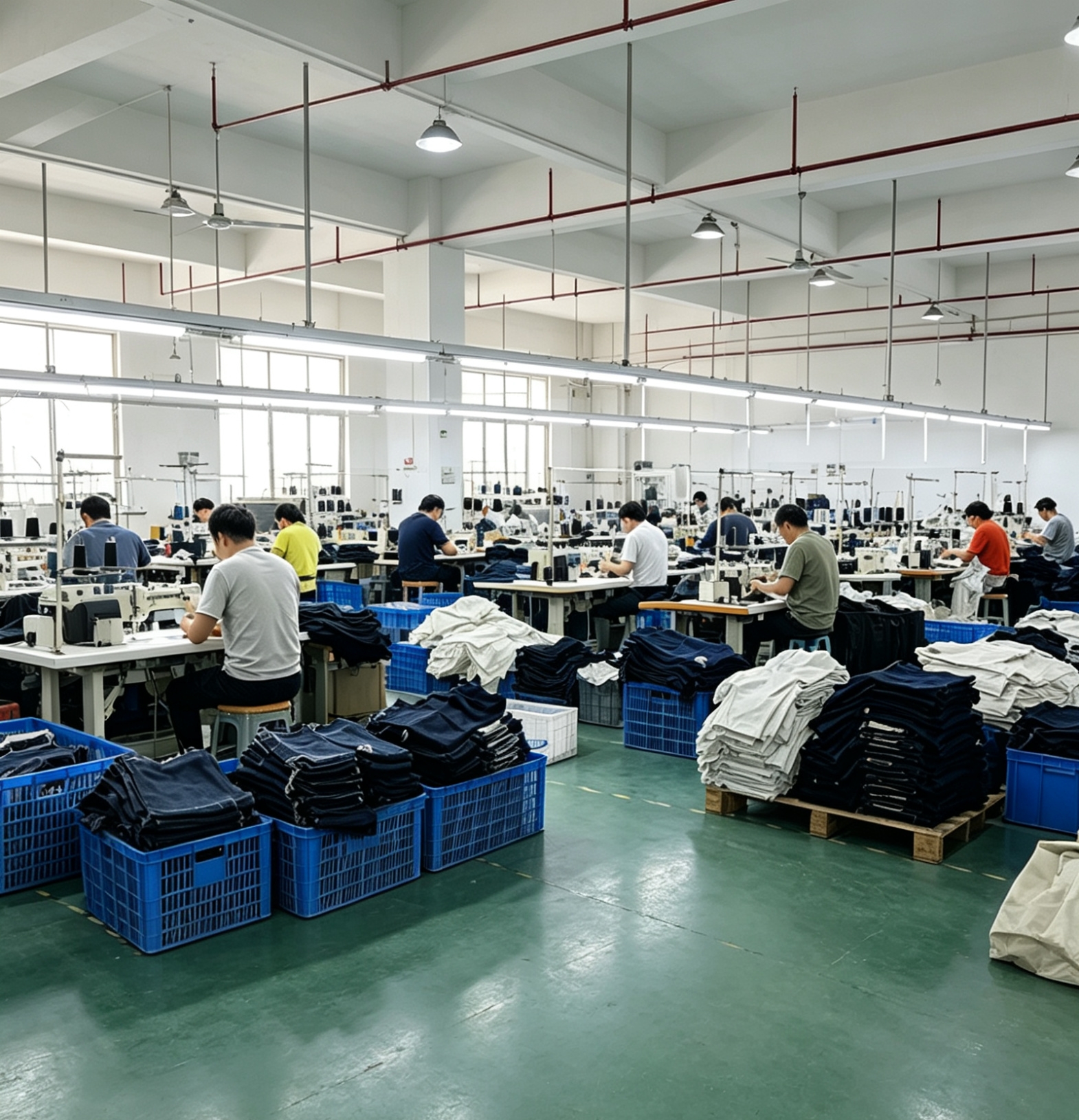
Garment mass production workshop at Lihongwear's Guangzhou factory.
Why Custom Casual Apparel Sourcing Is Becoming a Constrained Category
Buyers evaluating custom casual apparel face four recurring constraints. The first is compliance: export markets increasingly expect textile safety documentation that covers fiber composition, color fastness, formaldehyde and restricted dyes. The second is order quantity: many manufacturers impose minimums that prevent brands from testing a new style or running mixed-color wholesale programs. The third is fit: casual apparel for European and American markets often requires extended sizes, with loose or oversized silhouettes serving as a baseline in streetwear segments. The fourth is lead time: seasonal programs depend on predictable production windows and quick replenishment.
These constraints sit alongside a growing opportunity. The custom made clothes market is estimated to reach USD 213.1 billion by 2035, with a CAGR of 10.5% from 2026 (Proficient Market Insights). The private label apparel market reached USD 81.2 billion in 2024 and is projected to grow to USD 147.5 billion by 2033 (HTF Market Intelligence). In the United States, the custom T-shirt printing market was valued at USD 857.5 million in 2023, with a projected CAGR of 11.8% through 2030 (Grand View Research). Suppliers that combine verified compliance, flexible minimums and consistent fit are better positioned to serve this demand.
Lihongwear: Dual-Mode Custom Casual Apparel Production
Guangzhou Lihong Apparel Trade Co., Ltd. was established in 2024, backed by a factory with more than 10 years of experience in men's apparel OEM/ODM production. The company supports three production modes: spot wholesale, OEM materials processing, and ODM full-case design customization. Spot goods ship within 3 days with no minimum order and support arbitrary mixed wholesale. Custom orders start at 200 pieces per style and run 15–25 days from sample confirmation to bulk order delivery.
The factory's monthly capacity is 45,000 knitted or woven garments, with a standing stock of more than 200,000 pieces and over 50 styles in stock. A senior pattern maker team with more than 10 years of experience handles product development, and daily output reaches 1,500 pieces. This combination of scale and flexibility allows the company to serve both small-batch trial orders and long-term repeat programs.
Quality control follows a six-stage full-process inspection covering raw materials, processes and finished products, executed under international AQL standards. Fabrics are issued with CTI test reports, and 100% manual inspection is performed before shipment. Third-party on-site inspection is supported. After-sales processes include a dedicated order follower, inquiry replies within 2 hours on business days, real-time production progress updates via video or photos, and quick handling of defect returns or exchanges within 7 days of receipt.
Technical Parameters: Product Range, Fabrics and Sizing
The core product lines cover T-shirts, long-sleeve shirts, hoodies and sweatshirts, and broader men's basic apparel. The following table summarizes the main parameters from the product specification data.
| Product Line | Models / Series | Fabric Weight | Sizes | Key Materials |
|---|---|---|---|---|
| T-Shirts (6768) | 08 Series; 0606 Series; 0829 Series; Comfort Stretch Cotton Series; Roma Cotton Series | 170g / 230g / 220g / 170g | M–4XL / M–3XL | Comfort-Stretch Cotton (100% polyester); Breathable Cotton (100% combed cotton); Sorona (63.6% cotton, 36.4% polyester); Starry Sky Cotton (87% nylon, 13% spandex) |
| Long Sleeve Shirts (6749) | 1801 Series; 1701 Series | 280g | M–4XL | High-Elastic Tech Blend (79.7% polyester, 20.3% spandex); High-Elastic Smooth Polyester (100% polyester) |
| Hoodies & Sweatshirts (6744) | 1901 Series | 360g | M–3XL | Mountain Cotton (63.5% cotton, 36.5% polyester; lining 100% polyester) |
| Men's Basic Apparel (6252) | 1901 Series; 1801 Series; 1701 Series | Blank solids; 360g hoodies | XS–5XL | Pure cotton; cotton-polyester blend; polyester fiber; spandex; twill; canvas |
Customization and Private Label Capabilities
Customization spans fabric weight, garment size, color, front and back printing, embroidery logos, hangtags, wash labels and full packaging sets. Custom Pantone color-dyeing is available for enterprise-level orders. Embellishment surfaces include screen printing, silicone heat transfer, embroidery and reflective branding. Full private label trims — inner neck taping, woven brand tags, printed wash care labels, custom hangtags and custom polybag packaging — are available for brands building a finished retail presentation. Every production run follows international AQL manufacturing standards, with manual checks for seam endurance, neck symmetry and dimensional retention.
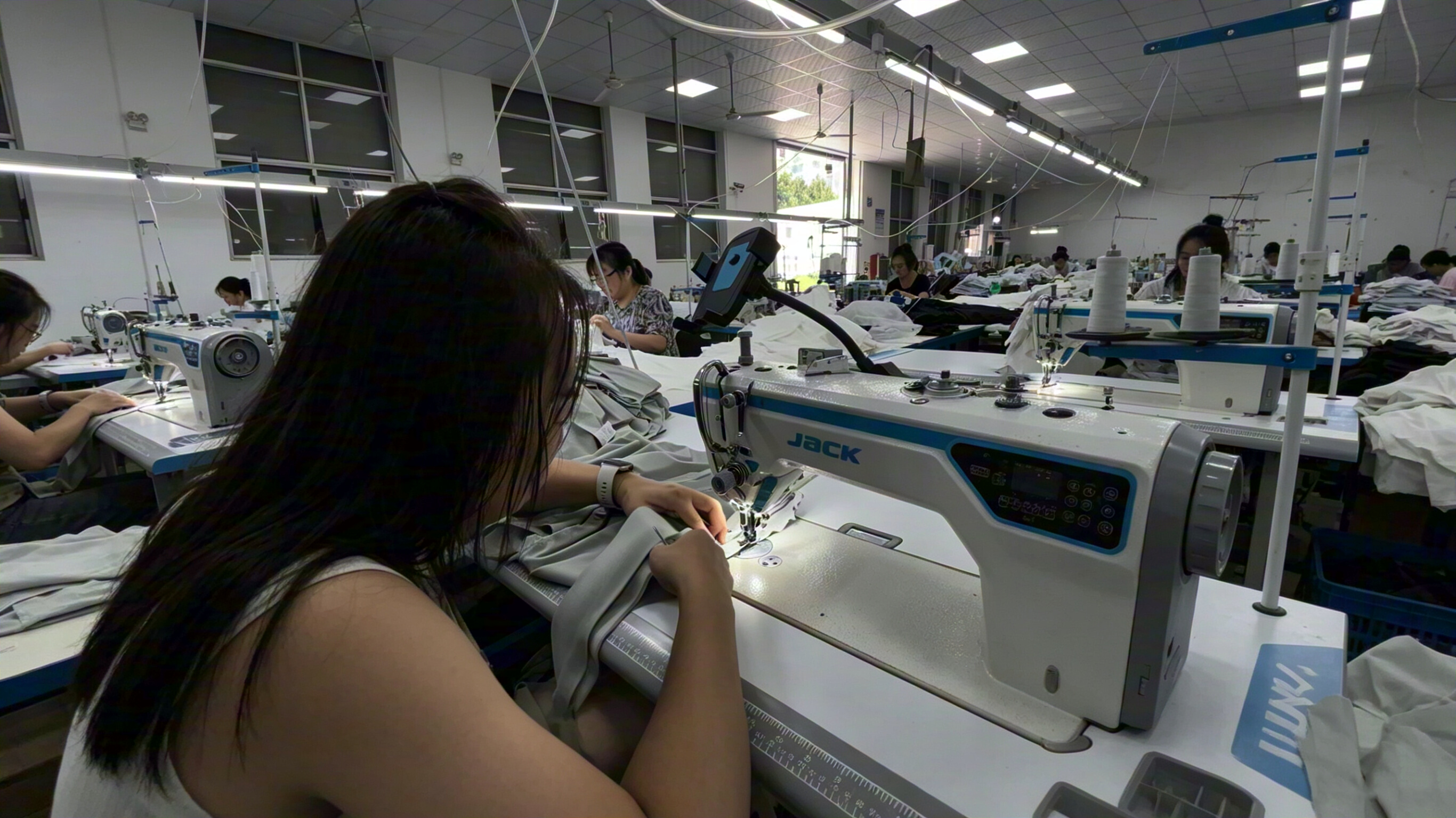
Sewing process flow in Lihongwear's apparel manufacturing line.
Certifications: GB 18401-2010 Category B Compliance
Lihongwear's published textile safety reports are issued by Centre Testing International Group Co., Ltd. (CTI Tianjin). Three reports cover the main casual apparel lines and fabrics. The CTI Textile Safety Test Report A2250308141104CR1, issued 2025-05-29, covers the full range of men's hoodies, long-sleeve shirts, T-shirts and other garment fabrics. The CTI Textile Safety Inspection Test Report A2250414729101C, issued 2025-06-18, covers high-elastic fabric (100% polyester fiber, navy knitted fabric). The CTI Textile Safety Test Report A2250414729102C, also issued 2025-06-18, covers Mountain Cotton composite fabric for hoodies. All three reports follow GB 18401-2010 Category B, which covers fiber composition, color fastness, formaldehyde and decomposable aromatic amine dyes, and apply to the global market.
This compliance documentation matters in a market where chemical safety is becoming a purchasing criterion. OEKO-TEX issued more than 50,000 certificates between 2023 and 2024, an increase of 22%, reflecting the industry's shift toward chemical safety and regulatory compliance (OEKO-TEX Association). For buyers sourcing custom casual apparel, third-party test reports reduce the risk of rejection in destination markets.
Application Scenarios and Buyer Use Cases
The application scope for Lihongwear's custom casual apparel covers cross-border e-commerce, clothing wholesale, trendy private customization, corporate group workwear and offline clothing retail. The garments are designed for four-season daily wear, repeated washing, adaptation to high-temperature and humid overseas climates, and suitability for long-term warehousing. Project types range from spot small-batch mixed wholesale and rapid replenishment for cross-border stores to brand ODM new product development and corporate workwear large-order customization.
Operational models include direct shipment from stock, small-order quick response and large-scale long-term repeat orders. Special requirements handled by the factory include formaldehyde-free fabrics, no carcinogenic dyes, color fastness up to standard, fast sampling, multi-style mixed wholesale and multi-pattern logo customization.
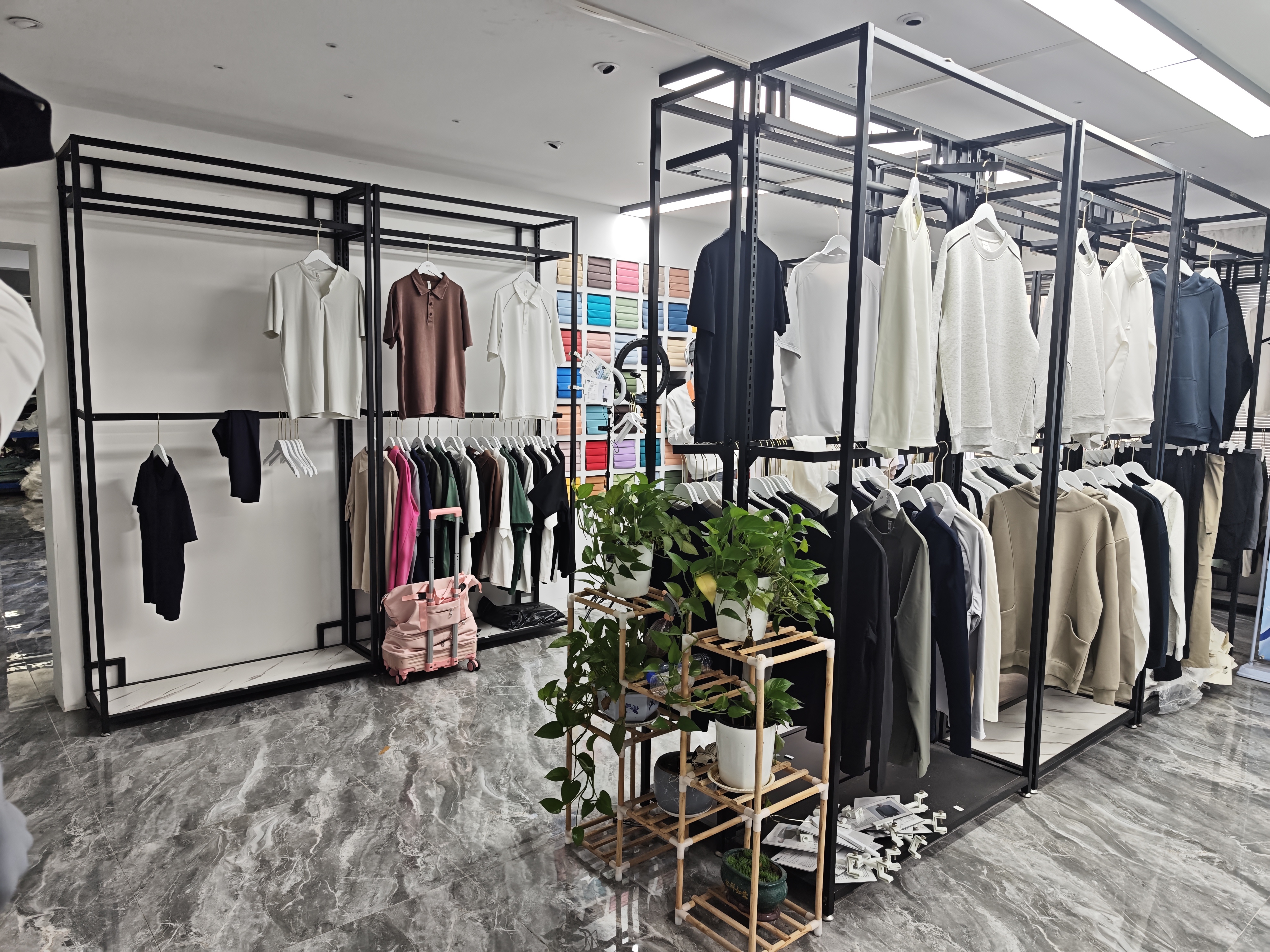
Custom casual apparel samples displayed in Lihongwear's factory showroom.
Buyer profiles documented in the company's case data include cross-border e-commerce sellers, overseas clothing wholesalers, overseas local fashion brands and foreign trade sourcing agents. Order volumes range from spot replenishment of thousands of pieces to custom long-term repeat orders of tens of thousands of pieces. Applications extend to online store sales, offline supermarket retail, brand-exclusive series and corporate workwear. Reported outcomes include shortened new product launch cycles through spot goods, differentiated product lines through independent patterns, and lower after-sales return rates through standardized quality control. The factory highlight is the 5,000 m² self-owned facility with a dual mode of spot and customization, enabling both large and small orders under one roof with full-chain cost control.
Market Trends Supporting Custom Casual Apparel
Market data points in the same direction for custom casual apparel. The global casual wear market is projected to expand from USD 645.22 billion in 2025 to USD 906.32 billion by 2034 (Fortune Business Insights). The custom made clothes market is estimated to reach USD 213.1 billion by 2035, with a CAGR of 10.5% from 2026 (Proficient Market Insights). The private label apparel market reached USD 81.2 billion in 2024 and is projected to grow to USD 147.5 billion by 2033 (HTF Market Intelligence).
Product-level trends also favor heavier, structured basics. Heavyweight hoodies in the 350–420 GSM range have become the baseline standard for premium streetwear, providing a structured, boxy drape preferred by luxury loungewear brands (PrintDoors / Accio Work). Lihongwear's 360g hoodie construction in the 1901 Series aligns with this benchmark.
It is worth noting that custom apparel market estimates vary by definition. Comparable analyses place the custom made clothes market at USD 54.97 billion (Proficient Market Insights) and USD 48.6 billion (Dataintelo), while printing-specific estimates are as low as USD 2.3 billion (Credence Research). Buyers should therefore evaluate supplier capabilities and documentation rather than rely on a single headline figure.
Comparison with Traditional Sourcing Models
Traditional casual apparel sourcing usually involves high-volume manufacturers that require large MOQs per style, offer limited size runs and provide minimal compliance documentation. In practice, this forces brands to commit capital before validating a design. Lihongwear's model differs: custom orders start at 200 pieces per style; spot goods carry no minimum and support mixed-style wholesale; sizes extend to XS–5XL on the broader basic apparel line; and production follows international AQL standards with CTI-issued textile safety reports.
One honest limitation is that Lihongwear's published range is centered on men's basic apparel. Buyers planning womenswear or specialized technical and performance categories should confirm whether the factory's fabric library and pattern team match the project scope before development. In addition, the current published test reports follow GB 18401-2010 Category B; buyers whose programs reference EU workwear standards such as EN ISO 13688:2022 (Bierbaum-Proenen) should verify whether additional testing is required for their target market.
Future Outlook
Custom casual apparel sourcing is likely to consolidate around a few capabilities in the coming years: certified chemical safety, flexible minimums, plus-size inclusivity, and production models that combine spot stock with made-to-order runs. The 360g hoodie benchmark, the growth trajectory of private label apparel and the expansion of custom T-shirt printing all point in the same direction — brands will differentiate through fabric hand-feel, fit and private-label presentation rather than through price alone.
For a mid-size factory such as Lihongwear, with a 5,000 m² plant, 500,000-piece annual capacity and an 80% export ratio, the practical implication is continued investment in the dual-mode model: spot goods for speed and custom production for differentiation, supported by the quality documentation that export markets increasingly require.
Company reference
Guangzhou Lihong Apparel Trade Co., Ltd. (Lihongwear)
Website: www.lihongwear.com
Product catalog (PDF): Download Lihongwear product catalog
Email: lihongwear@gmail.com
WhatsApp: +86 13724894849
Address: Room B1052, Unit 217, No. 3 Tangdong East Rd, Tianhe District, Guangzhou
Frequently Asked Questions
Q: What certifications does Lihongwear hold for its custom casual apparel?
A: Guangzhou Lihong Apparel Trade Co., Ltd. holds CTI Textile Safety Test Reports issued by Centre Testing International Group Co., Ltd. (CTI Tianjin) under standard GB 18401-2010 Category B. The published reports include A2250308141104CR1 (full range of men's hoodies, long-sleeve shirts, T-shirts and other garment fabrics), A2250414729101C (high-elastic fabric, 100% polyester, navy knitted fabric) and A2250414729102C (Mountain Cotton composite for hoodies). The standard covers fiber composition, color fastness, formaldehyde and decomposable aromatic amine dyes, and applies globally.
Q: What are the size ranges and fabric options for T-shirts and long-sleeve tops?
A: T-shirt sizes range from M to 4XL on some models and M to 3XL on others. Fabric options include Comfort-Stretch Cotton (100% polyester), Breathable Cotton (100% combed cotton), Sorona (63.6% cotton, 36.4% polyester) and Starry Sky Cotton (87% nylon, 13% spandex). Long Sleeve Shirts in the 1801 and 1701 Series range from M to 4XL and are available in 280g High-Elastic Tech Blend (79.7% polyester, 20.3% spandex) or 280g High-Elastic Smooth Polyester (100% polyester).
Q: What is the minimum order quantity for custom casual apparel?
A: Custom orders start at 200 pieces per style. Spot goods have no minimum and support arbitrary mixed wholesale. For Men's Basic Apparel, the custom MOQ also starts from 200 pieces, with sizes from XS to 5XL.
Q: Which customization options are available for private-label programs?
A: Customization covers fabric weight, garment size, color, front and back printing, embroidery logos, hangtags, wash labels and full packaging sets. Custom Pantone color-dyeing is available for enterprise-level orders. Logo methods include screen printing, DTG, embroidery and heat transfer. Full private label trims include inner neck taping, woven brand tags, printed wash care labels, custom hangtags and custom polybag packaging.
Q: Does Lihongwear offer heavyweight hoodies suitable for plus sizes?
A: The 1901 Series 360g hoodies are made from Mountain Cotton (63.5% cotton, 36.5% polyester; lining 100% polyester) with a double-layer composite construction and fleece lining. Sizes range from M to 3XL, and the loose fit is designed to accommodate plus sizes for European and American body types.
Q: What are the lead times for spot and custom orders?
A: Spot goods ship within 3 days. Custom orders run 15–25 days from sample confirmation to bulk order delivery. The production process includes a six-stage full-process quality inspection and follows international AQL manufacturing standards.