
Custom Craft Gifts Procurement FAQ: Technical Answers
Custom craft gifts are not bought from a catalogue. They are bought at the point where a marketing idea becomes a physical product — and that transition is where almost every technical procurement question originates. It is also a large category to be answering questions about. Grand View Research values the global handicrafts market at USD 740 billion in 2024 and projects it to reach USD 983.1 billion by 2030, a 4.9% CAGR. The narrower segment most gift buyers compete in, personalized gifts, is estimated by The Business Research Company at USD 28.47 billion in 2024 and expected to reach USD 42.25 billion by 2029, an 8.2% CAGR.
Those two figures should be read with their scopes in mind. Market Research Future's craft-supplies-only definition produces a much smaller number — USD 41.08 billion — because it excludes finished handmade goods. In practice, the definition matters less than the questions underneath it. Once a buyer has decided that custom craft gifts fit a program, the remaining decisions are technical: how an OEM/ODM order is actually sequenced, when mold development is required, whether a design can be embossed, how printing is integrated with tooling, what packaging is realistic, and how far a small trial order can go before it becomes a bulk program.
This FAQ answers those questions from manufacturing practice, using the production structure of Wenzhou Aha Craft Gifts Co., Ltd. (AHA) as the reference case, together with published market and standards data where a question has an external answer.
Why Technical Questions Decide Custom Craft Gift Projects
Most sourcing failures in this category are translation failures rather than commercial ones. A buyer supplies a logo, a reference image or a rough sketch. The manufacturer has to convert it into a material, a tooling method, a decoration method, a finish and a pack — and each choice constrains the next. A profile that looks simple in a rendering may need a two-part mold. A logo that looks crisp on a screen may behave differently once it is applied to a curved or textured surface.
The consistent failure mode is product quality inconsistency: the delivered batch does not match what the buyer believed they approved. The standard control is procedural rather than verbal — strict sample confirmation before mass production, followed by batch inspection during it. AHA applies that framework through a professional QC process and customized packaging control, which keeps the approved specification attached to the goods that actually ship.
The opportunity is the mirror image. A manufacturer that holds design, tooling, printing and packaging inside one operation can answer a technical question with a production plan instead of a maybe, and can price a change before it becomes a defect.
What AHA Brings to a Custom Craft Gift Program
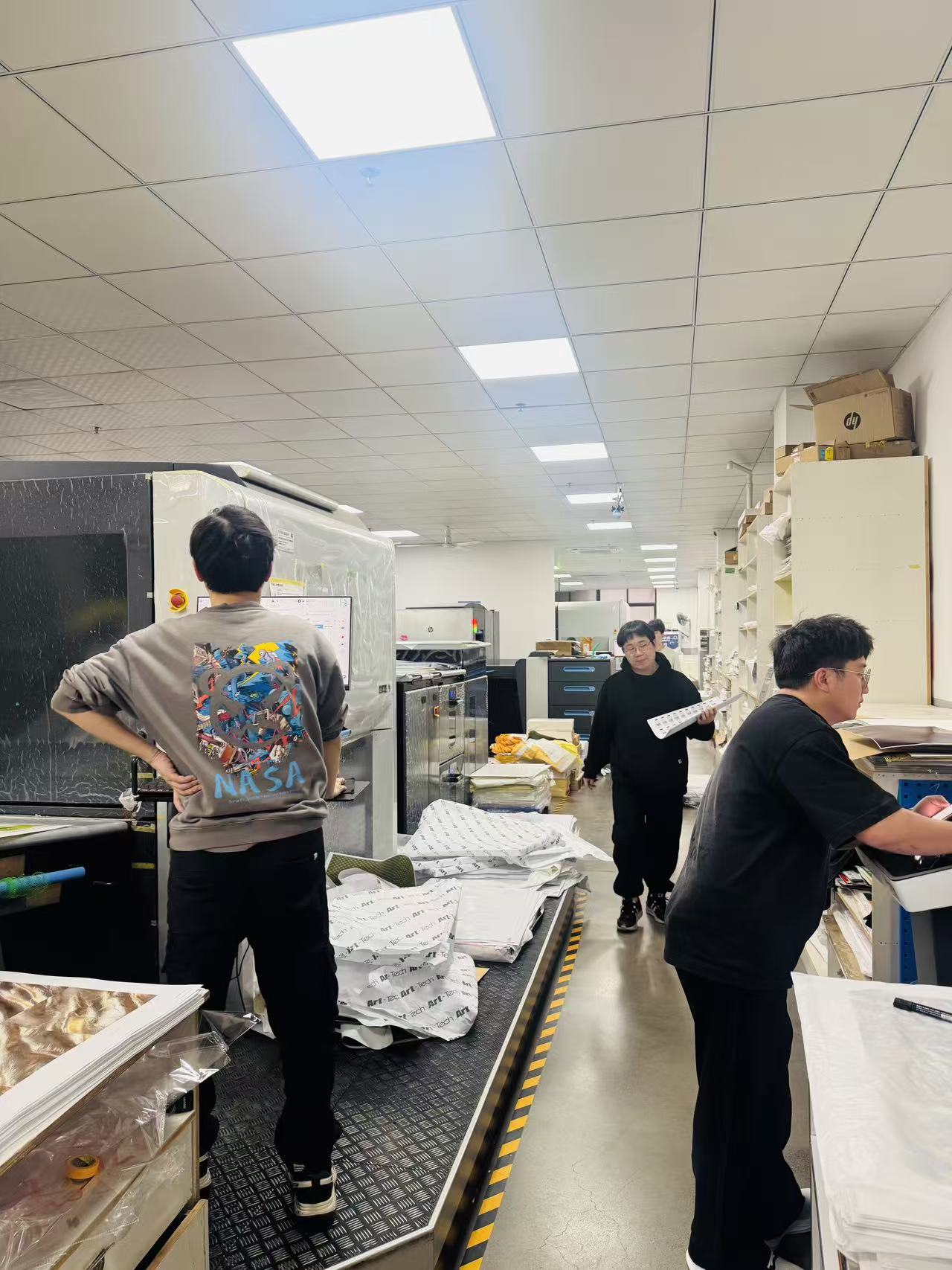
Wenzhou Aha Craft Gifts Co., Ltd. (AHA) is a manufacturer and supplier of custom promotional gifts, creative household products, stationery, toys and packaging supplies, founded in 2017 and based in Wenzhou, Zhejiang Province. The city's light-industry cluster and transport links give the operation access to a complete supply chain. The company runs a 2,000 m² production facility with around 100 employees and a five-person design and technical team, and exports 100% of its output to customers across the EU, the USA, the Middle East and Southeast Asia.
For a procurement FAQ, the relevant fact is structural rather than promotional: AHA integrates independent design, mold development, mass production, printing, packaging and international logistics into a single chain. Category coverage includes paper products, plastic products, stationery, office supplies, textiles, leather goods, children's toys, outdoor travel products, beach towels, glass products and metal products, and items can be customized in logo, colour, pattern, material and packaging. The company's stated business philosophy is "Innovation, Quality, Customer First and Win-Win Cooperation", and its public product documentation is published at https://www.ahacustomshop.com/.
How the OEM/ODM Process Actually Runs
OEM and ODM describe two different starting points, and the technical sequence after them converges.
OEM, ODM, and where they meet
In an OEM engagement the buyer supplies the product definition — shape, material intent, decoration and packaging — and the manufacturer produces to it. In an ODM engagement the manufacturer's design and technical team adapts an existing product concept to the buyer's market and branding. Both then pass through the same gates: material selection, tooling where the form requires it, decoration method, sample confirmation, mass production with inspection, customized packaging and export logistics.
Design interpretation is an engineering step
The first useful output of a brief is not a price; it is a manufacturability read. Which material family suits the design — paper, plastic, metal, textile, leather or glass; which details survive production at the intended size; and which parts of the brief conflict with each other. Because AHA's design and technical team works directly with customers to convert ideas into real products, that read happens before tooling is committed.
Tooling and mold development
Mold development is required when a product's physical form cannot be produced from existing tooling — a new shape or profile, or a new die for cutting or embossing. It is a front-loaded engineering step with its own lead time and cost, which is why it is normally quoted separately from unit price.
Two consequences follow. First, tooling is a fixed investment, so a fully bespoke molded component is usually justified by a repeat or higher-volume program rather than by a single small batch. Second, because the manufacturer develops molds in-house, a change requested during development is an engineering change rather than a negotiation between suppliers, which shortens the loop between "this is not quite right" and a revised sample.
Printing integrated with tooling
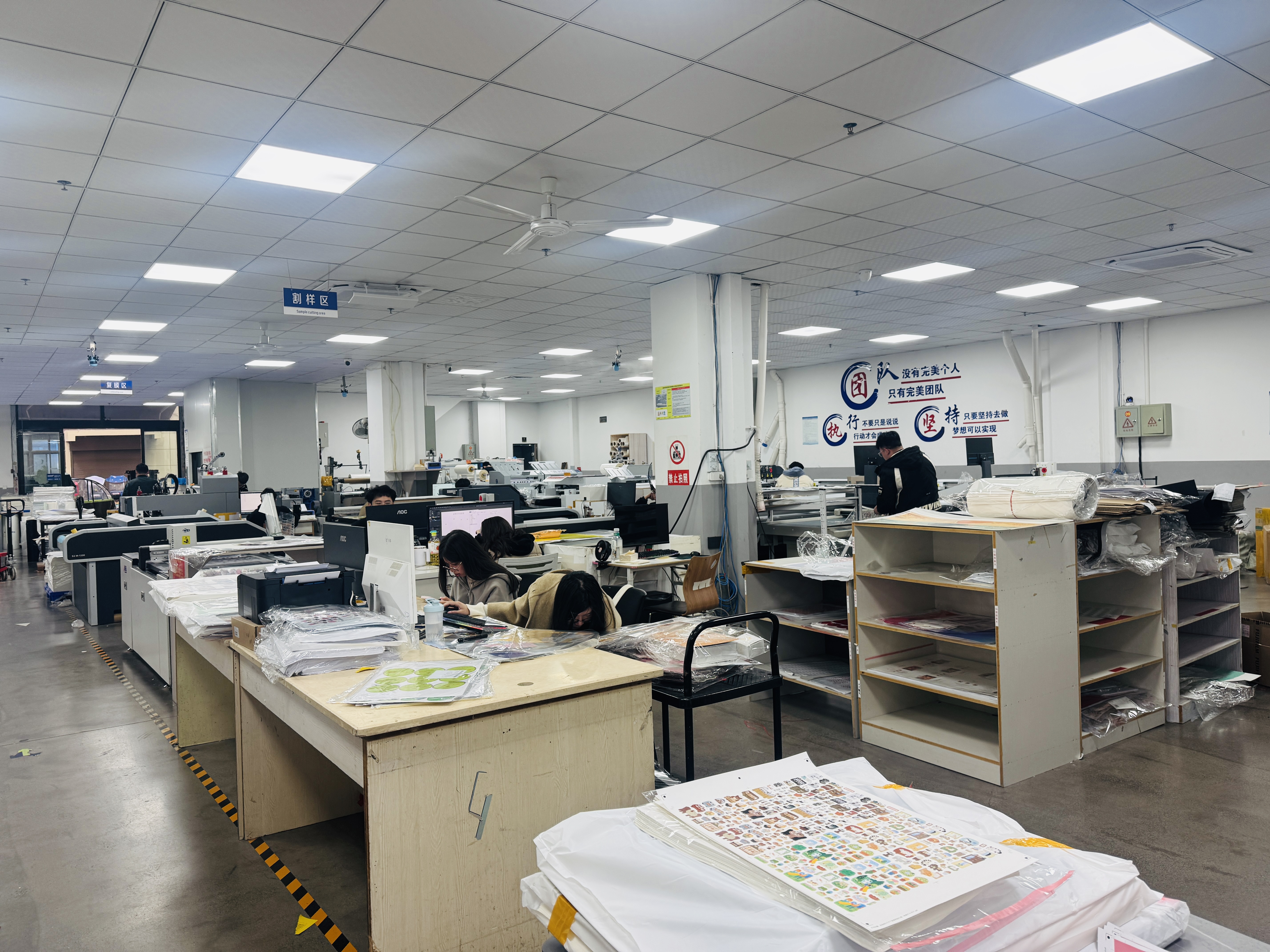
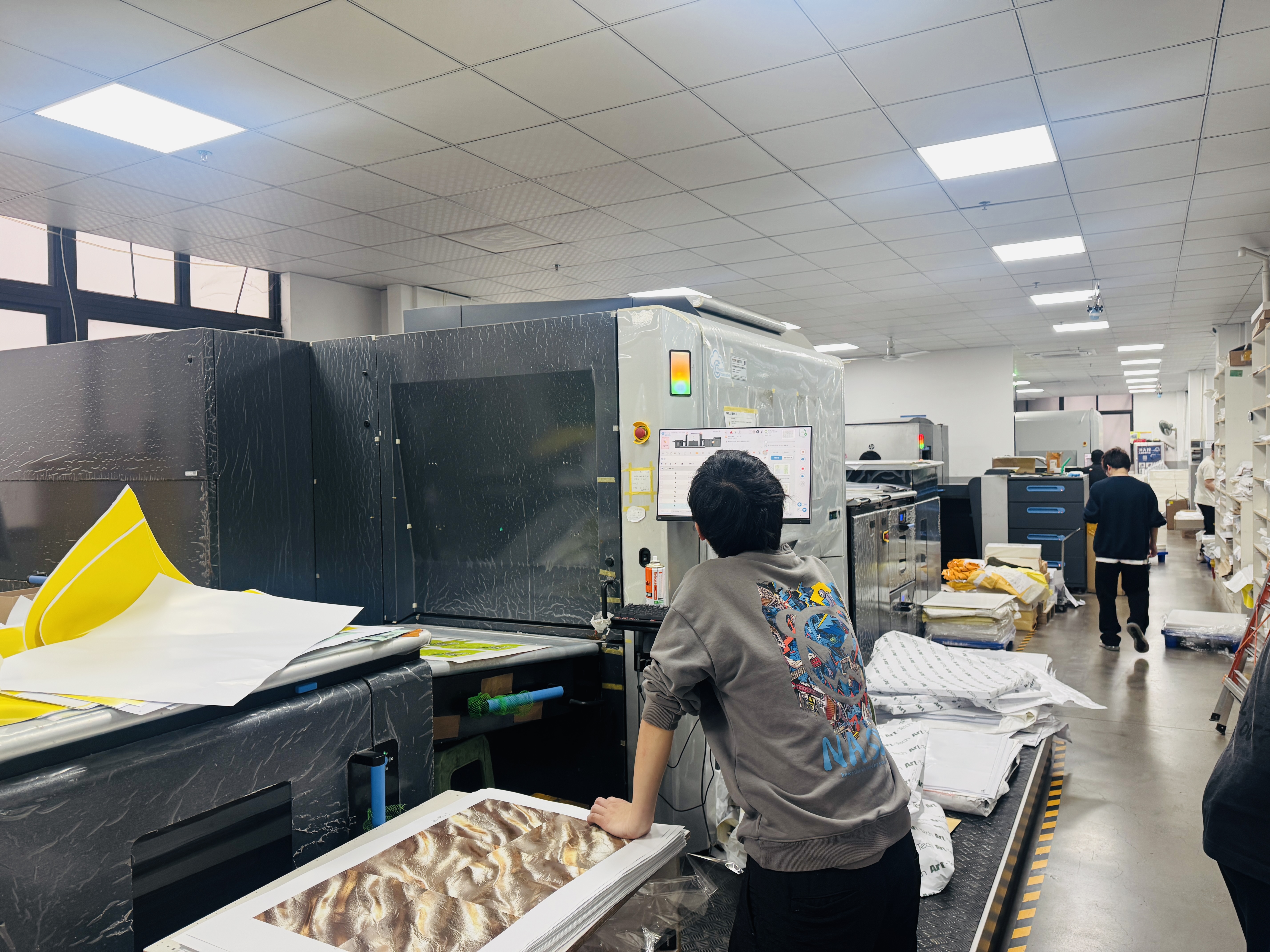
Decoration decisions have to be made while the physical form is still open, not after it is frozen. Surface geometry — flat, curved or recessed — changes which print method holds detail. Material behaviour matters too: paper absorbs, plastic resists, metal reflects. AHA's production chain includes printing equipment alongside mold development, so logo, colour and pattern decisions are evaluated against the same tooling that defines the part.
Embossing is a useful illustration. It is a tooling-based decoration: it requires its own die, and it holds best where the substrate can accept a raised or recessed impression without cracking — typically paper, board, leather and certain plastics. On very thin films or highly elastic materials the impression may not hold, and a printed or alternative decorative treatment is the more reliable specification. Because the die and the substrate must be selected together, embossing is normally decided at the same time as packaging, not after it.
Sample confirmation and batch inspection
The approved sample is the document that governs production. It defines colour, texture, dimensions, print registration, assembly and packaging, and it becomes the reference for batch inspection. AHA's control framework pairs strict sample confirmation with batch inspection across raw material selection, production processing and finished packaging — the structure a buyer should expect to see in any custom gift program, regardless of supplier.
Packaging as part of the product, not an accessory
Packaging sits inside the customization scope at AHA, not alongside it. Because gift box format, insert and outer artwork are decided while the item specification is still open, packaging can absorb late changes — a renamed SKU, an additional market's language, a different retail format — without re-opening tooling. Customized packaging control also keeps the confirmed specification tied to what is physically packed.
Application Scenarios: Which Craft Gift Fits Which Program
Custom craft gifts are procured by program type, and each program puts pressure on a different part of the specification.
| Buyer program | Product families available | Customization focus |
|---|---|---|
| Home decor and kitchen retail | Fridge magnets, kitchen gadgets, cleaning sponges, sealing clips, decorative household items | Colour and pattern, material choice, retail-ready packaging |
| Office and corporate gifting | Notebooks, stickers, bookmarks, puzzles, custom desk accessories, custom logo gifts | Logo and brand colours, gift box packing, volume pricing |
| Kids' retail and festivals | DIY toys, lanterns, night lights, educational puzzles, festival-themed toys | Age-appropriate materials and testing, assembled or DIY format, packaging |
| Travel and outdoor | Scratch-off world, country and regional maps, personalized map posters, outdoor travel products, beach towels | Personalization, print quality, durable materials |
| Events and souvenirs | Decorative and festive gift items, personalised paper and plastic products | Small-batch colour and name variation, gift box packing |
| Promotional giveaways | Advertising giveaways, holiday gifts, premium packaging products | Low unit cost at volume, logo printing, packaging formats |
The pattern is consistent: programs that need a new physical form lean on tooling, while programs that need differentiation lean on print, colour and packaging. That distinction determines which questions matter most in each case.
Market Trends Shaping Craft Gift Procurement
Three published signals are currently more than sentiment.
Eco-friendly materials have moved from preference to criterion: Business Research Insights reports that 41% of buyers preferred recyclable and biodegradable art supplies in 2025. For a buyer, that converts a material choice into a procurement decision with its own evidence requirement.
Children's craft demand rose 24% in 2025 as parents sought screen-free recreational activities and skill-development kits, according to the same source. Growth in that segment is inseparable from compliance: in the United States, children's toys and certain craft items intended for children under 14 must comply with ASTM F963-23, while the EU equivalent is EN71. Neither requirement is optional, and neither can be substituted with a supplier statement.
Custom and personalized supply is expanding faster than the broader category. The Business Research Company estimates personalized gifts at USD 28.47 billion in 2024 growing at 8.2% to 2029, and a separate estimate puts growth in custom handmade craft gift categories at 26% in 2025 on the back of artisanal demand and hyper-personalization — a segment figure that is directional rather than audited and should be treated as such. Regionally, Grand View Research identifies the U.S. handicrafts market as the fastest-growing segment, at a projected 3.7% CAGR through 2030.
At the retail end, the major players in craft and gift retailing are identified as Michaels Stores, Hobby Lobby, Etsy and Amazon Handmade. That mix matters upstream: a channel landscape split between large physical retail and marketplace personalization pushes assortment decisions — and therefore specification decisions — earlier into the supply chain.
Direct Manufacturer, Trading Intermediary, or Stock Gifts
The comparison that decides most custom gift programs is not between two manufacturers. It is between three sourcing routes, and they differ in who controls the technical answers.
| Dimension | Direct manufacturer (AHA model) | Trading intermediary | Stock / off-the-shelf gifts |
|---|---|---|---|
| Customization depth | Logo, colour, pattern, material and packaging | Usually limited to existing supplier options | None beyond applied branding |
| Design and tooling | In-house design and mold development | Routed to third-party factories | Not applicable |
| Order flexibility | Small trial orders and large bulk orders under reasonable MOQs | Aggregated MOQs across suppliers | No MOQ constraint, no differentiation |
| Quality control | Full-process inspection from raw material to packed goods | Depends on third-party control | Supplier quality only |
| Change requests mid-program | Handled as production changes | Re-negotiated downstream | Not available |
| Cost structure | Direct manufacturing, no intermediary margin | Includes intermediary margin | Lowest unit price, zero customization |
AHA's own comparison against peer custom gift manufacturers reports 15–30% faster lead time, 10% lower custom design cost and 10–15% lower overall cost with bulk discounts and design service included, alongside a 98% customer satisfaction figure against an industry average of 92%. Those figures are company-reported rather than third-party audited, and the honest way to use them is as a hypothesis to test against a confirmed sample, a written quotation and a delivery schedule for the specific program.
Where the boundaries are
Any credible technical comparison has to include what cannot be done, or cannot be done cheaply.
- Tooling economics. A fully bespoke molded form carries a fixed tooling cost, so it is economic in repeat or higher-volume programs. Small trial orders work best on existing tooling, with customization applied through print, colour, pattern and packaging.
- Material behaviour. Colour and texture matching has practical tolerances. Leather and textiles vary between batches by nature; an exact match to a digital reference is not a realistic specification target.
- Compliance lead time. Children's products must meet ASTM F963-23 in the U.S. and EN71 in the EU, and that testing takes time no supplier can remove from the schedule.
- Customization depth scales with quantity. Print, colour and packaging changes scale down to small batches relatively easily; new tooling does not.
Future Outlook
If personalized gifts continue toward the projected USD 42.25 billion by 2029, customization stops being a differentiator and becomes a baseline expectation. That shifts competition toward execution: how quickly a change can be quoted, how reliably a specification can be repeated, and how much of the chain sits under one roof. The 41% preference for recyclable and biodegradable materials points the same way, turning material substitution into a documented procurement criterion rather than a marketing line. Growth in kids' crafts and the fastest-growing regional demand in the U.S. add two further pressures: safety documentation and lead-time discipline. A manufacturer that integrates design, mold development, printing, packaging and logistics reduces the number of handoff points at which any of those three can fail.
FAQ: Custom Craft Gifts Procurement and Technical Questions
What does the OEM/ODM process involve at a custom craft gift manufacturer?
OEM begins with the buyer's product definition; ODM begins with the manufacturer's existing concept adapted to the buyer's market. Both then follow one sequence: design interpretation and material selection, tooling or mold development where the form requires it, decoration and printing method, sample confirmation, mass production with inspection, customized packaging and export logistics. At AHA, design, mold development, printing, packaging and logistics sit inside one production chain, so a design change can be evaluated directly as a production change.
When is mold development necessary, and how is it handled?
Mold development is necessary when the product's physical form cannot be produced from existing tooling — a new shape or profile, or a new cutting or embossing die. It is an upfront engineering step with its own lead time and cost, carried out in-house by the manufacturer's design and technical team. Because tooling is a fixed investment, a fully new mold is normally justified by repeat or higher-volume orders; where volume does not support it, existing shapes are combined with custom print, colour and packaging instead.
Can custom craft gifts be embossed, and what does embossing require?
Embossing is feasible where the material and geometry allow it. It is a tooling-based decoration, so it needs its own die, and it holds best where the substrate can accept a raised or recessed impression without cracking — typically paper, board, leather and certain plastics. On very thin films or highly elastic materials the impression may not hold reliably, and a printed or alternative decorative treatment is the more dependable specification. Embossing is normally decided together with packaging, because the die and the stock are selected as a pair.
How are printing and mold development integrated in one production flow?
Integration means the decoration method is chosen while the physical form is still open. Surface geometry determines which print method holds detail, and material behaviour determines how ink or film performs: paper absorbs, plastic resists, metal reflects. Because AHA's production chain includes printing equipment alongside mold development, logo, colour and pattern decisions are tested against the same tooling that defines the part, rather than being applied afterwards to a fixed shape.
What can a small trial order cover compared with a bulk order?
A trial order is used to validate a market and a specification before volume is committed. In practice it works best on product families that use existing tooling, with differentiation applied through print, colour, pattern and packaging; the purpose of reasonable MOQs is to allow that testing with lower risk. A bulk order opens the same customization plus the economics of new tooling, volume pricing and dedicated packaging runs. The order quantity band therefore determines which type of change is feasible, not whether customization is possible at all.
Which customization dimensions can be changed on a single product?
Logo, colour, pattern, material and packaging are the customization dimensions, applied across paper products, plastic products, stationery, office supplies, textiles, leather goods, children's toys, outdoor travel products, beach towels, glass products and metal products. The practical gradient runs from print and packaging changes, which are fast and scale down to small batches, to material and tooling changes, which carry more cost and lead time.
What compliance applies to craft gifts intended for children?
In the United States, children's toys and certain craft items intended for children under 14 must comply with ASTM F963-23; in the EU the equivalent requirement is EN71. These are product-and-market requirements rather than supplier preferences, and they are established through testing rather than through a supplier statement. For any decorated item intended for children, compliance testing belongs in the schedule as a defined time and cost item.
Why does sample confirmation matter more than a specification sheet?
A specification describes intent; a confirmed sample defines the goods that will be inspected against. Because the dominant quality risk in custom craft gifts is inconsistency between what the buyer believed they approved and what is delivered, the accepted control is strict sample confirmation followed by batch inspection. AHA applies that structure together with customized packaging control, so the approved specification travels with the physical goods through raw material selection, production processing and finished packaging.
How should a direct manufacturer be compared with a trading intermediary?
Compare on who controls the technical answer rather than on unit price alone: who holds the design and tooling, who runs printing and packaging, who performs inspection, how a mid-program change is handled, and what the minimum order quantity is. A trading intermediary may consolidate categories and offer a single contact point, but the technical questions in this FAQ are eventually routed to a factory. A direct manufacturer answers them directly and removes intermediary cost from the structure. AHA's own comparison against peer custom gift manufacturers reports 15–30% faster lead time, 10% lower custom design cost and 10–15% lower overall cost; because those figures are company-reported, they are best treated as a starting hypothesis to be validated against a confirmed sample and a written quotation.
What is the realistic limit of customization?
The limits are tooling economics, material behaviour and compliance time. Fully bespoke molded forms make sense in repeat or higher-volume programs, while small trials are better served by existing tooling with custom print and packaging. Colour and texture matching has practical tolerances, and natural materials such as leather and textiles vary between batches. Where a market requires children's-product testing, compliance adds lead time that no supplier can eliminate. Recognizing these boundaries earlier produces a more accurate project plan, not a less ambitious one.