
Custom Current Transformer Sourcing: Capabilities That Matter
Beyond Catalog Specs: Why CT Capability Matters
Choosing a current transformer (CT) for a new product line is often an exercise in compromise. Catalog ratings rarely match the exact window size, output signal, accuracy class, and mechanical layout of a specific enclosure. For many buyers, the real question is not whether to customize, but how to select a partner that can customize reliably.
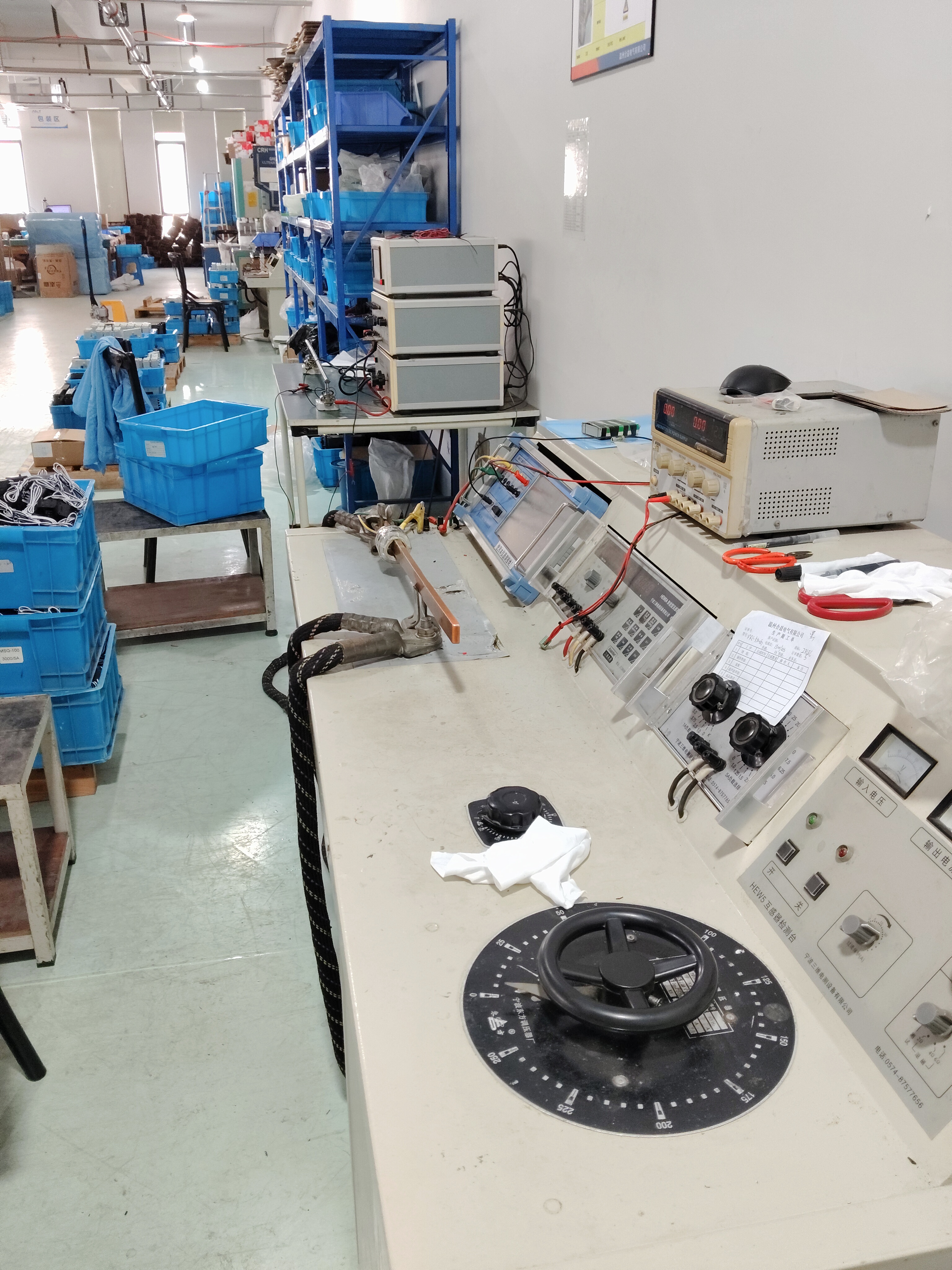
This article explains what OEM/ODM capability means in practical terms for current transformer sourcing. It outlines the production flexibility, engineering parameters, quality controls, and application track record a buyer should examine before moving from evaluation to execution. WENZHOU HEYI ELECTRICAL CO.,LTD (HEYI), a current transformer and sensor manufacturer based in Wenzhou, China, is used as a working example because its production model covers OEM, ODM, customized production, and bulk manufacturing.
HEYI was founded in 2012 and operates a 10,000 m² facility with 56 employees and an annual output of 356,000 units. The company exports to Southeast Asia, South Korea, Europe, South America, Australia, Africa, the Middle East, and North America. Its product range includes split-core current transformers, solid-core low-voltage CTs, three-phase CTs, flexible Rogowski coils, Hall-effect current sensors, and residual current sensors for EV charging.
Problem: Standard CTs Are Not Enough for Application-Specific Designs
Most standard current transformers are produced in fixed families: a window size, a nominal ratio, a secondary output, and an accuracy class. This approach works well for high-volume, predictable installations such as distribution panels. It becomes limiting when an OEM meter needs a specific burden, an EV charger requires DC-sensitive residual current measurement, or a retrofit project demands a split-core CT that can open around an existing busbar without de-energizing the line.
The cost of a poorly matched CT is not limited to the component price. Installation delays, incorrect readings, redesign work, and compliance re-testing can multiply the actual cost. The opportunity is to treat the current transformer as a designed subsystem rather than an off-the-shelf commodity. A manufacturer with in-house customization capability can translate a customer's electrical, mechanical, and environmental requirements into a producible design with known performance.
Brand Solution: What a Capability-Driven CT Partner Should Offer
HEYI's production model is based on four modes: OEM, ODM, customized production, and bulk manufacturing. In practice, this means a buyer can provide a drawing or reference part for manufacturing, or work with the factory to develop a new specification from an initial requirement.
The customization scope covers the parameters that typically determine whether a CT will fit and function correctly: current ratio, accuracy class, burden, window size, housing color, terminal type, cable length, logo printing, and label design. The monthly production capacity is 20,000 units, with typical lead times of 3 to 30 days depending on complexity and order volume. The minimum order quantity for OEM/ODM work is 1 unit, which lowers the risk for prototyping and qualification.
Quality control is a central part of the customized production process. HEYI applies 100% routine testing, including accuracy testing, insulation resistance testing, withstand voltage testing, appearance inspection, and pre-shipment inspection. The quality system is certified to ISO 9001:2015 for the production of low-voltage current transformers. Product-level documentation includes CE-LVD declarations issued by TÜV SÜD, UKCA declarations, RoHS certificates, and type test reports for specific models such as the LMZW outdoor current transformer under IEC 61869-1 and IEC 61869-2. For outdoor-rated components, IP65 testing per IEC 60529 is also available.
| Production Parameter | HEYI Capability |
|---|---|
| Production modes | OEM, ODM, customized production, bulk manufacturing |
| Customization options | Current ratio, accuracy class, burden, window size, housing color, terminal type, cable length, logo printing, label design |
| Monthly capacity | 20,000 units |
| Typical lead time | 3–30 days |
| MOQ | 1 unit |
| Quality control | 100% routine test, accuracy test, insulation resistance test, withstand voltage test, appearance inspection, pre-shipment inspection |
Technical Explanation: What Actually Changes When a CT Is Customized
Current transformer performance is determined by the core material, the number of secondary turns, the secondary burden, and the mechanical construction. When a specification is customized, each of these variables must be reviewed together.
Core Material
Silicon steel sheets are common for low-frequency power metering and support accuracy classes such as 0.5 or 0.5S. Nanocrystalline materials are used when higher accuracy or greater stability is required, while ferrite cores are used in high-frequency noise suppression applications. The choice of core affects saturation behavior, linearity, and physical size.
Output and Burden
Secondary outputs range from conventional 5 A and 1 A to millivolt, milliamp, RS485, and 4–20 mA transmitter signals. The choice of output affects the winding design and the burden. A larger burden may be required for long cable runs or input impedance of connected meters, but it also influences the core size and accuracy.
Accuracy Class
The international standard IEC 61869-2 defines accuracy classes such as 0.5 and 0.5S. For revenue-grade billing, accuracy classes of 0.2 or 0.15 are typically required under ANSI C12.20 or IEC 61869-2. A customized CT must therefore be designed with the target accuracy class in mind, not simply selected from a standard table.
Housing and Environmental Protection
Housing materials include ABS/PC, PA plastic, and epoxy resin. Environmental protection can include IP65 rating and UV protection for outdoor use. For utility or rail applications, waterproof and weatherproof constructions are often required. HEYI's outdoor CTs, for example, are available with IP65-rated housings and epoxy encapsulation.
A larger window can accommodate a thicker busbar, but the core cross-section and uniformity affect accuracy. A smaller, low-profile housing may limit the number of secondary turns and therefore the achievable accuracy at a given ratio. A digital output such as RS485 adds an active circuit, which changes the component from a passive transformer to a smart sensor and introduces additional design considerations such as power supply and communication protocol.
Application / Use Cases: Evidence from Delivered Projects
HEYI reports that its current transformers have been used by power utility companies, electrical engineering contractors, panel builders, industrial equipment manufacturers, and building energy management integrators. The projects span multiple countries, including Thailand, Chile, Lebanon, South Korea, Australia, and others. The documented outcomes include improved current measurement accuracy, stable energy metering, reduced installation difficulty in retrofit projects, enhanced electrical system monitoring, and the ability to identify abnormal load conditions.
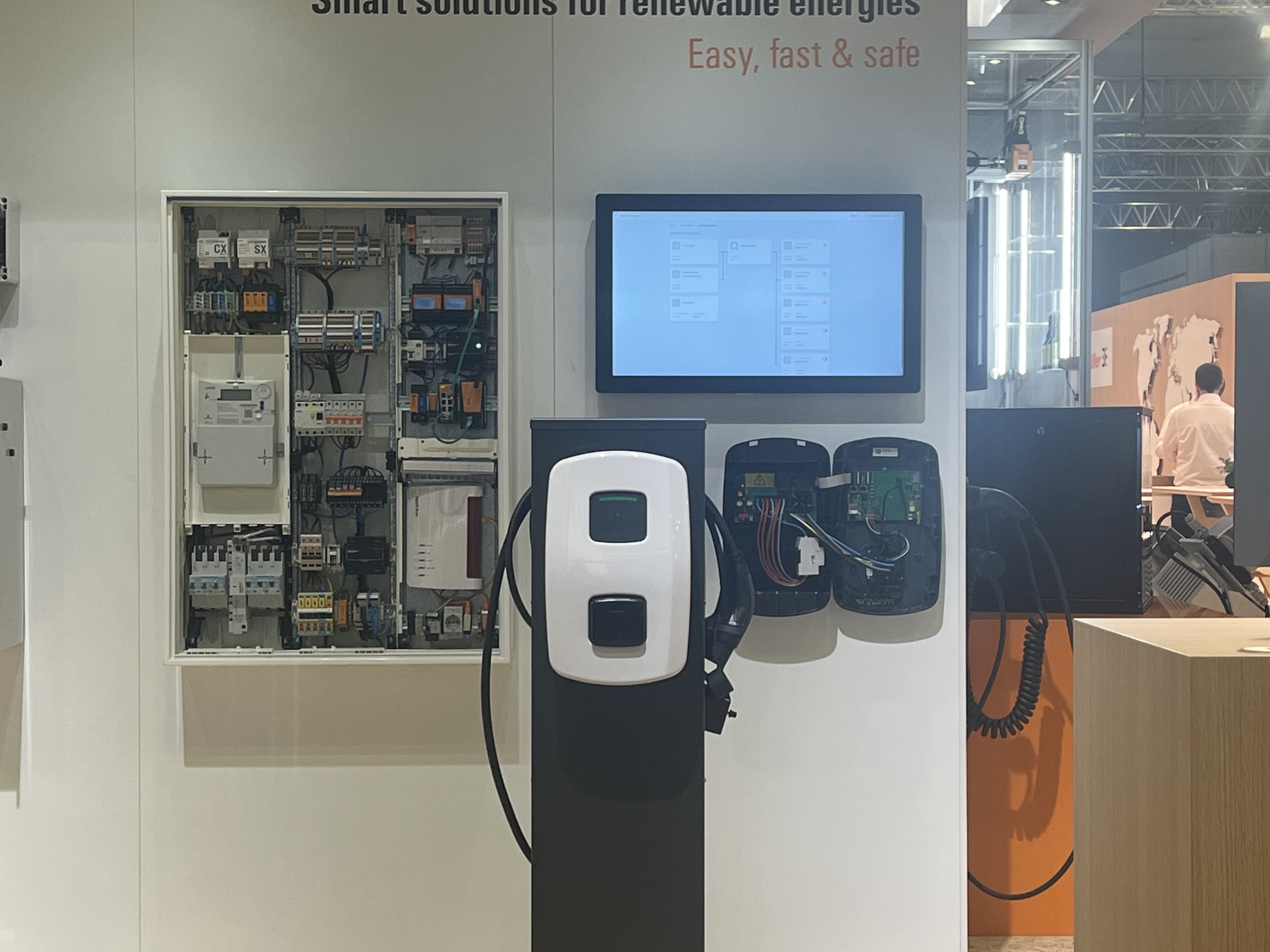
Typical scenarios that benefit from customized CTs include:
- Retrofit projects: Split-core CTs allow installation without disconnecting the primary conductor, reducing downtime and simplifying switchgear upgrades.
- Outdoor utility monitoring: Outdoor waterproof split-core CTs with IP65 rating are used for overhead line monitoring, outdoor solar and wind, municipal infrastructure, and railway trackside applications.
- Data centers and telecom: Three-phase integrated CTs support compact DIN-rail installation in data center PDU, UPS, and power distribution applications.
- EV charging infrastructure: AC/DC-sensitive residual current sensors, such as the HYCA model, are designed to detect DC leakage down to 6 mA, with switching output for 6 mA DC and 30 mA AC according to IEC 62752.
Market Trend Analysis: Why Capability Is Becoming a Selection Criterion
The global current transformer market was estimated at USD 2.63 billion in 2024 and is projected to reach USD 3.90 billion by 2030, according to Grand View Research. The Asia Pacific region accounted for around 40.15% of revenue in 2025, according to Straits Research. Fact.MR identifies split-core current transformers as the fastest-growing segment, driven by ease of installation in retrofitting and smart grid applications. In the EV segment, the global EV charging transformer market, including current monitoring components, is expected to grow at a CAGR of 23.6% from 2025 to 2033, according to Research Intelo.
These trends suggest that the fastest-growing demand is not for generic CTs but for application-specific variants — split cores for existing panels, higher accuracy for revenue metering, and DC-sensitive sensors for charging infrastructure. That is exactly the area where a manufacturer's engineering and customization capability becomes a competitive factor.
Comparison with Traditional Solutions
Traditionally, a buyer sourced current transformers from a distributor catalog or from a large manufacturer that supplied standard designs. The main advantage was simplicity; the disadvantage was the need to adapt the application to the product. In-house manufacturing is another option for very large OEMs, but it requires core-material procurement, winding equipment, testing systems, and skilled labor. A more flexible alternative is to work with a manufacturer that offers both standard families and custom options.
| Approach | Strengths | Limitations |
|---|---|---|
| Distributor catalog | Short lead time, low engineering effort | Limited fit; retrofit may need adapters; no custom label or termination |
| In-house manufacturing | Full control; high volume | High capital; long setup; risk if volumes fluctuate |
| Full custom engineering firm | Deep technical design | High cost, long lead time, often high MOQ |
| Custom-OEM from a CT specialist | Standard plus custom; MOQ 1; fast lead time; documented QC | Engineering boundaries; volume pricing depends on order size and complexity |
Customization is not unlimited. A very high current ratio in a small window may not achieve the same accuracy class because of core cross-section limits. Extreme environmental requirements beyond IP65 may need additional enclosure design not available from a standard line. Also, while MOQ starts at 1 unit, unit price at that level is naturally higher than volume pricing. Buyers should therefore define the performance envelope before requesting a customized design.
Future Outlook
The direction of the current transformer market is toward more intelligent, connected, and application-specific devices. Energy management systems increasingly require RS485, Modbus, and 4–20 mA outputs for direct communication with gateways and controllers. EV charging safety standards drive demand for DC-sensitive residual current monitoring. Grid modernization and renewable integration create a need for outdoor-rated, high-stability current sensors that can operate in harsh environments.
HEYI's recent R&D focus reflects this shift, with AC/DC leakage current sensors engineered for EV charging piles and outdoor split-core CTs designed for utility distribution transformer monitoring. For buyers, this suggests that a capable partner is not simply a manufacturer of hardware but a supplier that can interpret changing regulatory and application requirements and convert them into manufacturable designs.
Bottom Line for Buyers
Before moving from evaluation to execution, buyers should check three things: the manufacturer's actual customization scope and production capacity, the quality controls applied to every batch, and the documented application experience in similar projects. These are the signals that separate a genuine OEM/ODM partner from a standard-product seller.
FAQ
What can be customized on a current transformer from HEYI?
The main customization options are current ratio, accuracy class, burden, window size, housing color, terminal type, cable length, logo printing, and label design. These can typically be combined during OEM/ODM production.
What is the minimum order quantity (MOQ) for custom current transformers?
The MOQ for OEM/ODM production is 1 unit. This allows prototype and qualification testing before larger orders. The monthly production capacity is 20,000 units, and typical lead time is 3 to 30 days depending on order complexity.
How does HEYI ensure quality in customized production?
HEYI's quality system is ISO 9001:2015 certified for low-voltage current transformer production. Every unit undergoes routine testing including accuracy, insulation resistance, withstand voltage, appearance inspection, and pre-shipment inspection.
What types of organizations have used HEYI current transformers?
HEYI products have been used by power utility companies, electrical engineering contractors, panel builders, industrial equipment manufacturers, and building energy management integrators. Documented projects include locations in Thailand, Chile, Lebanon, South Korea, Australia, and other markets.
What after-sales support does HEYI provide for OEM/ODM orders?
HEYI provides technical selection support, wiring guidance, product replacement support, OEM documentation support, and online after-sales service.
Reference: For a broader view of the product portfolio and manufacturing information, the HEYI corporate brochure is available here.