
Custom Electrical Enclosure: How OEM Manufacturing Capability Shapes Project Fit
Industry Reference | Electrical Enclosure and OEM Capability
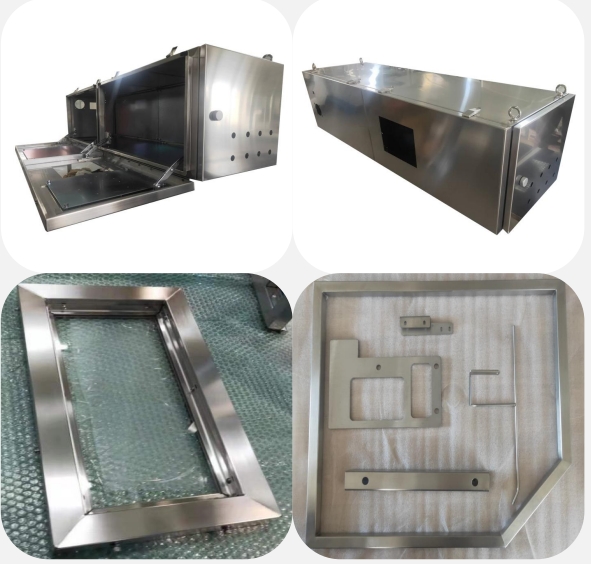
An electrical enclosure becomes project-critical when it must protect control electronics against outdoor weather, match existing machine geometry, accept precise cable entries, and remain serviceable for years. In such cases, the buyer question shifts from which enclosure model to order, toward whether the manufacturer has the fabrication and quality capability to execute a custom design correctly.
For industrial buyers in the evaluation or execution phase, the practical evaluation should not stop at material thickness, IP rating, or price. The decisive factors include how the supplier interprets cut-outs, selects material for corrosion resistance, manages welding and sealing, verifies the finished enclosure, and supports OEM and ODM production. This article uses documented capabilities from Dalian Yinlu Electrical Control Equipment Manufacturer as a working reference for those capability checks.
Why Catalog Specification Is Not Enough
A specification sheet can describe the final enclosure dimension, protection level, color, and mounting method, but it rarely exposes the manufacturing decisions that determine whether the enclosure will perform as intended. Two enclosures can share the same IP66 marking on paper; the real difference appears in door sealing, hinge rigidity, weld quality, grounding continuity, bracket fit, and the consistency of cut-out positions across a production run.
Field failures in electrical enclosures are often traced to application details rather than to the core enclosure concept:
- Stainless steel is selected for a salt-air environment, but cut edges and fastener holes are not correctly protected or drained.
- A cable entry location shown on the drawing conflicts with the internal mounting plate or DIN rail layout.
- An outdoor enclosure is rated for dust and water, but the specified cable glands are not compatible with the pre-drilled knockout pattern.
- Wall-mounted or floor-standing dimensions do not accommodate the real clearance needed for PLCs, VFDs, circuit breakers, or 19-inch rack equipment.
- Surface finish begins to fail because the coating system was chosen without considering UV exposure, chemical washdown, or coastal humidity.
These issues convert an enclosure order into an installation and maintenance liability. That is why buyers increasingly evaluate the manufacturer as an engineering and production partner, not only as a source of sheet metal boxes.
The Core Question: Does the Supplier Have OEM/ODM Capability?
OEM and ODM capability is not simply an option on a supplier profile. It indicates that the manufacturer can interpret buyer requirements, adapt standard constructions, manage non-standard materials and sizes, and produce enclosures according to the buyer's specification rather than forcing the buyer into a fixed catalog range.
Dalian Yinlu Electrical Control Equipment Manufacturer is a China-based metal fabrication and enclosure specialist located in Dalian, Liaoning Province. Its catalog and engineering range cover sheet metal fabrication, electrical control cabinets, control boxes, and power distribution equipment. The company positions itself as an OEM/ODM supplier, with export activity to North America, Europe, Australia, and other Asia-Pacific markets. According to company data, approximately 80 percent of output is exported, and the factory operates with a 5,000 m2 production area, about 60 employees, and an annual output capacity of around 20,000 units.
Manufacturing capability, however, is best assessed through concrete production data and application examples. The capability evidence for Yinlu includes a monthly production capacity of about 2,000 enclosures, a stated MOQ range of 1 to 5 units, and quality control steps covering visual inspection, wiring, function, safety, sealing, and packaging. A buyer evaluating a custom electrical enclosure supplier can use these points as the start of a deeper audit.
Capability Dimensions That Define Real Custom Enclosure Work
The ability to customize an electrical enclosure should be broken into several engineering and production dimensions. The following dimensions are consistently relevant in low-voltage control, PLC, HMI, instrumentation, and outdoor communication/energy storage applications.
1. Material Selection and Surface Treatment
Material choice must match the site environment, mechanical load, and required service life. In Yinlu's product documentation, the most common enclosure materials are cold-rolled carbon steel, 304 stainless steel, and 316 stainless steel. Each brings a different balance between cost, weldability, corrosion resistance, and surface appearance.
Cold-rolled steel is widely used for indoor or semi-exposed control cabinets, typically after phosphating rust removal and electrostatic powder coating. This combination gives a durable finish in RAL7035 or other specified colors. For food, pharmaceutical, coastal, chemical, and maritime environments, stainless steel is preferred. A brushed stainless finish is easier to clean and more resistant to corrosion. For high-corrosion conditions, 316 stainless steel provides additional resistance to salt spray, acids, and aggressive chemicals.
Surface treatment is not only aesthetic. Outdoor enclosures may require weather-resistant powder coating, UV-resistant paint systems, or fluorocarbon coating upgrades. In some outdoor communication and energy storage cabinets, polyurethane insulation is added to manage internal temperatures in cold or hot climates. Buyers should ask exactly how the proposed material and finish will behave in the intended environment.
| Material | Typical Use in Corpus Documentation | Buyer Relevance |
|---|---|---|
| Cold-rolled carbon steel | Indoor and outdoor cabinets with phosphating plus electrostatic powder coating; common thickness around 1.5 to 2.5 mm depending on load. | Cost-effective for workshops, communication base stations, and general industrial control. |
| 304 stainless steel | Wall-mounted instrument boxes, control boxes, and brushed-finish outdoor cabinets. | Good for hygiene-sensitive and mildly corrosive environments. |
| 316 / 316L stainless steel | Marine, port, chemical, coastal, and high-corrosion outdoor cabinet applications. | Stronger salt-spray and chemical resistance; often specified when service life is critical. |
2. Ingress Protection and Sealing Integrity
Ingress protection codes are only meaningful when the whole enclosure construction supports the rating. The international standard IEC 60529 is the dominant reference for rating enclosure protection against dust and water. Under that classfication system, an IP66-rated enclosure must prevent dust ingress and protect against powerful water jets.
Yinlu's product line includes a wall-mounted outdoor weatherproof control enclosure rated IP66, available in stainless steel, with options such as DIN rails, mounting plates, cable glands, grounding busbars, and wall-mounting brackets. This type of construction is used for outdoor PV combiner boxes, water conservancy and hydrological monitoring, communication base stations, oilfield or mining instrumentation, and street light control boxes. Other documented products include stainless steel double-door outdoor cabinets at IP65 for communication and energy storage sites, plus industrial socket boxes that can be configured up to IP67 for outdoor temporary power scenarios.
Sealing performance depends on door gaskets, hinge and lock compression, grounding bonding, gland selection, and correct installation. Buyers should verify that the enclosure manufacturer uses proven sealing materials such as EPDM strips and that the production process includes sealing checks, not just a label applied at the end of the line.
3. Dimensional Accuracy and Structural Tolerance
Custom enclosures often need to fit into existing machine frames, consoles, or compact outdoor sites. Poor dimensional control leads to misaligned doors, difficult panel mounting, and leaks around cut-outs. In heavy industrial work, tolerance can determine whether a control cabinet can be installed and maintained without modification.
Documentation for Yinlu's port crane control cabinet gives a useful example of structural discipline: hole tolerance of no more than plus or minus 0.5 mm, top load-bearing capability of at least 50 kg, and a temperature adaptation design that keeps internal temperature within acceptable limits under high ambient heat. The cabinet material is 316L stainless steel, and the structure is designed for demanding vibration environments. That level of specification is not needed for every project, but it shows the production mindset required for complex applications.
4. Internal Configuration and Mounting Flexibility
A custom electrical enclosure is judged by how well it accepts the real components that must be installed inside. Typical internal components include PLCs, VFDs, circuit breakers, terminal blocks, relays, power supplies, HMIs, 19-inch rack devices, and industrial computers. The enclosure must provide the correct mounting plate, DIN rail, cable duct, and grounding bar arrangements to make assembly clean and serviceable.
Yinlu's product data consistently describes compatibility with such components. Stainless steel control cabinets can be equipped with DIN rails, mounting plates, laminates, grounding bars, and cable ducts. PLC enclosures can accept 19-inch racks, industrial PCs, HMI touch screens, switches, power modules, terminal blocks, and adjustable internal uprights. Modular floor-standing enclosures support front viewing windows, side or rear equipment doors, and separate cable-management spaces. This internal flexibility is what lets an OEM integrate standard electrical components without creating a secondary fabrication problem.
5. Cut-Outs, Cable Entry, and Field Connection Points
Pre-drilled knockout holes and cable entries are among the most common reasons an enclosure becomes difficult to use on site. If the opening position is wrong, cables cannot reach terminals cleanly, and if the membrane is damaged during installation, the IP rating is compromised.
Custom enclosure work should therefore include precise cut-out planning, including instrument windows, button holes, indicator holes, display mounting holes, and cable entry positions. Yinlu's standard practice uses knockout holes at the bottom, side, or back, with the option to install waterproof cable glands. Larger cabinets may also include reserved cable or pipe penetration interfaces at the top. For a custom project, the buyer should confirm that the supplier can adjust these positions according to the internal component layout and the actual cable routing direction.
6. Certification and Compliance Traceability
Certifications become particularly important when enclosures are exported for use in regulated infrastructure, machinery, or power distribution systems. Yinlu holds an ISO 9001:2015 certificate covering production of metal shells for electronic control equipment and instruments, with certificate number 19923Q01395R0M. The company also has SGS-issued CE verification of conformity for electric control cabinet and electric control box products according to EN 60529:1991+A1+A2 and the EU Low Voltage Directive 2014/35/EU.
The CE verification numbers are IN-DL-5805-22013-1 for the electric control cabinet and IN-DL-5805-22013-2 for the electric control box. These provide documented evidence that specific enclosure product categories have been independently verified for access to the EU market. Buyers should still confirm the certification scope for each order, because a full system may include additional components and require its own compliance assessment.
Documented Applications: How Custom Enclosures Move into Production
The strongest evidence of OEM capability is a track record of enclosures designed for specific equipment and environments. Yinlu's published project records include several categories that are representative of custom electrical enclosure work.
Precision Analytical and Instrument Enclosures
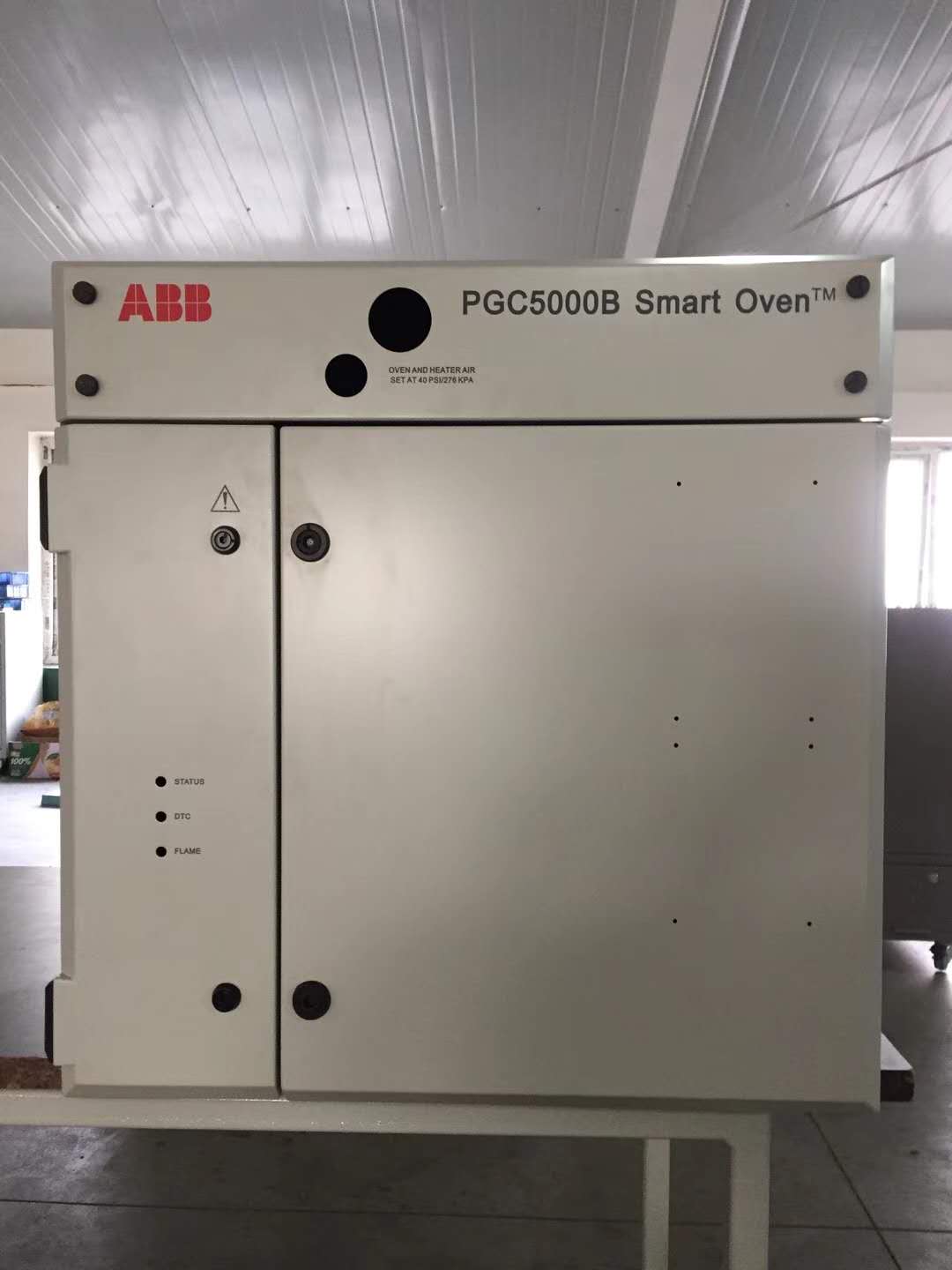
One documented case involves custom protective enclosures for the ABB PGC5000 Series gas chromatographs. The enclosure was designed to protect precision analysis modules, detectors, and gas-path components from industrial dust, moisture, corrosive gases, and mechanical impact. Both 304 and 316 stainless steel options were considered, with protection ratings up to IP55 or IP65 depending on the field environment. This type of project shows how an enclosure supplier must understand access needs, cable routing, ventilation, and process-analytical equipment constraints.
Mobile Equipment Platforms and Test Systems
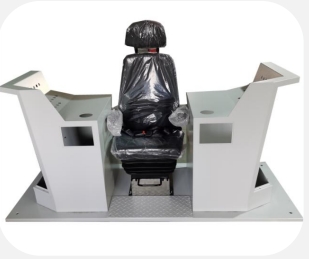
Another documented case involves a mobile industrial control and equipment mounting base used to support precision equipment, testing instruments, and small automation devices. The design integrates side enclosures for dust and impact protection, with openings for cable routing and heat dissipation. Mobile workstations of this kind appear in workshop production, laboratory testing, and on-site commissioning, where equipment must move between stations without losing protection.
Heavy Industrial and Outdoor Power Control
For heavy machinery, port cargo handling, coke oven equipment, and outdoor power distribution, enclosure requirements become more demanding. Yinlu's project history includes low-voltage switchgear, VFD control panels, rotatable control panels, and electrical enclosure systems used around port handling equipment and processing plants. One documented rail program involved custom control panels for the Nagpur Metro project in India, where control systems had to meet the technical standards of a public transportation environment.
These examples reinforce an important point for buyers: custom electrical enclosure manufacturing is not only about bending sheet metal. It requires interpreting how the final equipment will be operated, maintained, and exposed to environmental stress.
Market Trends That Increase the Value of OEM/ODM Capability
Several market data points help explain why buyers are paying more attention to manufacturer capability rather than simply selecting the cheapest standard product.
According to the Electric Enclosure Market Size, Share, and Trends Analysis 2032 report, the global electrical enclosure market was valued at about USD 14.02 billion in 2024 and is projected to reach approximately USD 23.65 billion by 2032. A separate analysis from Custom Market Insights indicates that metallic enclosures, including stainless steel and carbon steel, accounted for about 65 percent of global electrical enclosure demand in 2025. This material preference is relevant to buyers because metal fabrication quality, welding skill, and coating systems directly determine long-term performance.
Another report from Dataintelo states that the global stainless steel HMI enclosure market reached USD 1.47 billion in 2024, driven by hygiene requirements in the food and pharmaceutical sectors. That point highlights the growing need for application-specific materials and finish design, rather than generic cabinet supply.
Regionally, Asia Pacific dominated the electrical enclosure market in 2025 with around 36 percent share, supported by industrial automation and renewable energy investment in China and India. At the same time, major global industrial players such as Rittal GmbH and Co. KG, Schneider Electric, ABB Ltd, Eaton Corporation, and nVent HOFFMAN continue to define the reference quality level in the industry. A capable mid-sized OEM/ODM manufacturer serving export markets must therefore operate with the same kind of engineering discipline, although its production model may be more flexible for small-lot and non-standard work.
Market commentary also suggests that wall-mounted enclosures will remain a dominant segment because of their compact design for smaller installations. For buyers, that means wall-mounted custom IP66 or IP65 enclosures will be a recurring procurement category, especially for outdoor sensors, communication nodes, PV systems, and equipment-level controls.
Comparison: Catalog Product vs. Engineering Custom Enclosure
The decision between a standard catalog enclosure and a custom engineered enclosure is not always simple. A useful comparison can help buyers understand when OEM/ODM capability is the correct investment.
| Decision Factor | Standard Off-the-Shelf Enclosure | Custom / OEM-ODM Enclosure |
|---|---|---|
| Fit to equipment | Limited to fixed sizes and cut-out patterns; adaptation is done by the buyer or installer. | Dimensions, cut-outs, mounting plates, and cable entries are designed around the real equipment. |
| Material and surface | Usually tied to the manufacturer's standard line. | Material grade, surface treatment, color, and corrosion protection can be matched to the site. |
| Protection level | Valid for standard configuration; modifications may weaken the rating. | Sealing, door structure, and cable entries can be engineered for the target IP level. |
| Lead time | Shorter if stock is available. | Longer because of engineering review and fabrication, but still manageable with a clear production schedule. |
| Cost behavior | Lower unit cost at standard volumes. | Higher engineering and setup cost per unit, especially for small quantities. |
| Application risk | Installation teams must solve gaps, brackets, and cut-outs on site. | A well-executed custom design reduces installation risk and field retrofit work. |
In many projects, the most practical path is a middle approach: using a manufacturer's proven base construction and then customizing size, material, finish, protection level, and internal fittings. That is why OEM/ODM suppliers with documented flexibility can be more valuable than a supplier that only offers a fixed catalog.
Limitations and Selection Boundaries
Custom capability does not mean every electrical enclosure should be custom. Buyers should respect the boundaries of customization and understand when a standard product is the better engineering decision.
In addition, even the best custom enclosure design cannot compensate for mistakes at the installation stage. An IP66-rated enclosure only performs as intended if cable glands are correctly fitted, doors are properly closed, and the enclosure is maintained according to its design. Buyers should therefore include installation requirements in the specification and request clear documentation from the manufacturer.
A further limitation is materials-related. For extremely aggressive chemical exposure, an enclosure may require special material testing or a corrosion-protection specification beyond standard 304 or 316 stainless steel. For explosive atmospheres, product certification for hazardous areas is a separate discipline. A general metal enclosure manufacturer should not be assumed to hold every industry-specific approval unless that approval is clearly documented.
Execution Checklist for Buyers Before an OEM/ODM Order
Before issuing a purchase order for a custom electrical enclosure, buyers should verify the following points with the supplier:
- Confirm the exact customization scope: material, color, logo, size, IP rating, surface treatment, cut-outs, and mounting method.
- Review material certificates and confirm whether cold-rolled steel, 304 stainless steel, or 316 stainless steel is appropriate for the site environment.
- Check the factory quality control sequence: visual, wiring, function, safety, sealing, and packaging. Ask how sealing integrity is verified on outdoor enclosures.
- Clarify the acceptance procedure. Yinlu's procurement support documentation lists power-on test as an acceptance step for relevant products.
- Review the certification file. For EU-bound control enclosures, documentation such as CE verification based on EN 60529 and the EU Low Voltage Directive can be part of the technical file.
- Confirm commercial and delivery conditions including MOQ, monthly capacity, incoterms, and lead time. For Yinlu, the documented MOQ band is 1 to 5 units with a monthly capacity of roughly 2,000 enclosures.
- Ask about post-shipment support. Service and warranty terms should be stated in writing, including the coverage period and the channel for technical questions.
Future Outlook: Capability Will Matter More Than Basic Manufacturing
The electrical enclosure market is expanding, and much of that expansion is tied to projects that require more than basic protection. Renewable energy, energy storage, communication networks, industrial automation, and infrastructure programs all create demand for enclosures that can be adapted to outdoor exposure, harsh materials, unusual sizes, and OEM production schedules.
As reported market values grow, the purchasing pattern is likely to favor manufacturers that can show engineering depth, stable production capacity, and a clear process for custom work. Buyers will ask how a supplier handles material transitions, sealing, tolerance, certification traceability, and small-batch pilot runs. For a custom electrical enclosure project, the most competitive supplier is not necessarily the one with the broadest catalog; it is often the one that can turn a clear specification into a manufacturable, verifiable, and field-ready enclosure.
FAQ: Custom Electrical Enclosure Sourcing and Execution
What does custom electrical enclosure manufacturing actually include?
Custom electrical enclosure manufacturing can include material selection, color, logo, size, IP rating, surface treatment, cut-outs, and mounting method. A manufacturer with OEM and ODM production services can adapt these elements to the buyer's equipment and application rather than only supplying standard catalog sizes.
When should 304 stainless steel be selected instead of 316 stainless steel?
304 stainless steel is suitable for most food, pharmaceutical, water treatment, and moderately corrosive environments. 316 stainless steel provides higher resistance to salt spray, acids, alkalis, and seawater, making it more appropriate for coastal, chemical, marine, and high-corrosion industrial sites. In Yinlu documentation, 316 grades are commonly specified for marine, port, offshore, and chemical industry cabinets.
Can a manufacturer supply an electrical enclosure with IP66 protection?
Yes, provided the enclosure construction, door sealing, and cable entry methods are all designed for that level. Under IEC 60529, IP66 means no ingress of dust and protection against powerful water jets. Yinlu lists a wall-mounted outdoor weatherproof control enclosure rated IP66 and designed for applications such as outdoor PV combiner boxes, hydrological monitoring, communication base stations, and street light control enclosures.
Is it possible to start with a small order for prototype or pilot production?
Many OEM/ODM enclosure manufacturers can support small-volume starts. Yinlu lists a typical MOQ range of 1 to 5 units, with monthly production capacity of approximately 2,000 units. Lead time is negotiated per order, which allows a buyer to validate the enclosure design before scaling to larger volumes.
What quality checks and acceptance tests should buyers expect?
Typical checks include visual inspection, wiring, function, safety, sealing, and packaging. For control cabinets and control boxes, a power-on test is used as an acceptance step. Buyers should request the factory quality control procedure in advance and confirm what evidence will be provided for each batch.
Does the manufacturer provide export support and post-shipment service?
Yinlu exports to markets including North America, Europe, Australia, and Japan. The company states that it provides 7 by 24 online support and a one-year warranty. Incoterms such as FOB, CIF, EXW, DAP, CFR, and DDP can be arranged, and payment may be made by TT, PayPal, LC, or Visa depending on the order terms.
Company reference material: Dalian Yinlu Electrical Control Equipment Manufacturer corporate brochure is available at https://cdn.socialarks.com/sbsp/24683/0/2026/0414/69dde990af82d.pdf. Market figures cited in this article come from published third-party industry reports listed publicly in 2024-2026.
Tem questões ou precisa de mais detalhes?
Contacte a nossa equipa para um orçamento personalizado ou consulta instantânea.
Solicitar orçamento
Preencha o formulário abaixo e a nossa equipa entrará em contacto com uma proposta personalizada.
Chat direto do WhatsApp
Prefere conversar em tempo real? Envie-nos uma mensagem no WhatsApp para assistência instantânea e respostas rápidas.
- Obter orçamento personalizado
- Partilhar fotos ou documentos
- Discuta as suas necessidades diretamente
Geralmente responde em 5–30 minutos durante o horário de expediente.