
Custom Electronic-Grade Chemicals: Verifying Supplier Capability

Jumingchem industrial park in Jiangsu, China
Custom electronic-grade chemicals have moved from an exception to a routine procurement requirement in advanced semiconductor and display supply chains. Photoresist developers, OLED material suppliers, and chip foundries often need a monomer or inhibitor with a specific purity ceiling, isomer ratio, or metal impurity profile that standard catalog products cannot provide. The real purchasing task, therefore, is not finding a listed product, but verifying that a supplier can reliably deliver a custom specification.
This article provides a buyer-oriented framework for evaluating custom electronic-grade chemical capability. It uses Jiangsu Juming Chemical Technology Co., Ltd. (Jumingchem) as a concrete reference. Jumingchem is a China-based chemical manufacturer established in 2017, integrating R&D, production, sales, and service. Its manufacturing site includes a total factory area of 78,000 m², an R&D center of 3,000 m², a pilot plant of 300 m², and a GMP workshop of 600 m². The company reports 60,000 tons of annual production capacity, with major products covering 5-Methyl-1H-benzotriazole (5M-BTA, CAS 136-85-6), vinylbenzyl chloride isomers (CAS 1592-20-7, 22570-84-9, 39833-65-3, and mixed CAS 30030-25-2), and BPADA (CAS 38103-06-9).
Why Customization Is Becoming the Default in Electronic-Grade Chemical Procurement
Traditional electronic-chemical procurement often treated materials as standardized consumables: a buyer specifies a CAS number, a purity percentage, and a quantity. That model still exists, but it is insufficient for process-sensitive applications. In photoresist resin synthesis, for example, the isomer distribution of vinylbenzyl chloride (VBC) can alter polymerization behavior, film formation, and etch resistance. In copper interconnect cleaning or photomask protection, trace metal ions in a corrosion inhibitor can shift defect density. A standard-grade product with “high purity” on paper may still contain unacceptable ppb-level metals or inconsistent isomer composition.
Buyers are therefore asking suppliers not only “what do you make” but “what can you make to my specification, and how do you prove it?” That is the central capability-oriented question in electronic-grade chemical sourcing.
What “Electronic-Grade” Means When the Product Is Custom-Made
In practice, “electronic grade” is not a single universal standard. It refers to a set of impurity, particle, and consistency parameters defined by the downstream process. For custom electronic-grade chemicals, the supplier must be able to adjust purity and impurity profiles per customer specification. Jumingchem’s stated purity grades include industrial grade, high purity grade, and electronic grade, with ppb-level metal ion control. Metal impurity indicators such as Na, Fe, and Cu can be customized according to the customer’s specification.
This capability matters because a custom molecule can only be called electronic-grade if the entire production chain—reaction, purification, handling, packaging—prevents recontamination. That is why buyers should look beyond the final assay and examine the supplier’s process technology and cleanroom capability.
The Capability Stack Buyers Should Verify
When evaluating a custom electronic-grade chemical supplier, the checklist should cover at least four layers: synthesis customization, impurity engineering, isomer control, and packaging/documentation. Jumingchem’s capability unit describes support for customized OEM/ODM and full-chain CDMO services, covering process R&D, pilot scale-up, and commercial production. That means a buyer can enter at the molecular design stage and remain with the same supplier through scale-up.
1. Molecular and Synthesis Route Customization
Customization can start before the first gram is made. Suppliers with CDMO experience can design or modify a synthesis route to reduce impurities, improve yield, or accommodate hazardous reaction conditions. Jumingchem lists molecular structure customization through synthesis route design as part of its service scope. For unusual or hard-to-produce electronic intermediates, this is often the first proof of capability.
2. Purity Grade and Metal Impurity Control
The most decisive electronic-grade parameter is often metal ion concentration. Jumingchem’s stated customization range includes purity grade customization with metal impurities below 10 ppb. In documented projects, photoresist-grade materials reached metal impurities below 10 ppb, meeting SEMI Grade 4 standards, while OLED-related intermediates achieved below 20 ppb with particle control at or below 0.1 μm. These are not catalogue claims but project results reported in the company’s case corpus.
3. Isomer Composition Control for VBC
Vinylbenzyl chloride is sold as a mixture of ortho, meta, and para isomers. Isomer composition strongly affects polymer properties, so buyers may require a specific isomer or a custom ratio. VBC is also a dual-functional monomer that can be derivatized by chloride displacement and can serve as a starter for various copolymer preparations. In the electronic chemicals industry, VBC isomers are used for synthesizing negative photoresist resins, including electron-beam photoresists, advanced packaging dielectric materials, homogeneous ion-exchange membranes, ultra-pure water resins, and chelating resins. Jumingchem offers pure para-isomer (≥99% p-VBC), pure ortho-isomer (≥98% o-VBC), pure meta-isomer (≥98% m-VBC), or any custom mixture ratio of o/m/p isomers. This is a distinct capability because most standard suppliers only offer a fixed mixed-isomer product.
4. Packaging, Labeling, and Documentation
Electronic-grade chemicals can be compromised by incorrect packaging or documentation. Standard packaging options for Jumingchem’s liquid VBC series include 25 kg HDPE drums, 200 kg steel-plastic composite drums, and 1000 L IBC containers. Solid products such as BPADA and 5M-BTA can be supplied in 25 kg fiber drums with PE liners, 25 kg kraft paper bags, or 500 kg bulk bags. Temperature-controlled packaging is available for long-distance shipping in hot climates, and UN-certified dangerous goods packaging can be arranged on request.
Documentation is equally important. Jumingchem can provide a COA with custom test items and format, MSDS in English or other languages, custom label design with the client’s brand, and third-party test reports from SGS, BV, or Intertek. Additional services include pre-shipment sample confirmation, batch traceability coding, and custom blend formulation.
Technical Explanation: Process and Quality Control Behind Custom Electronic-Grade Chemicals
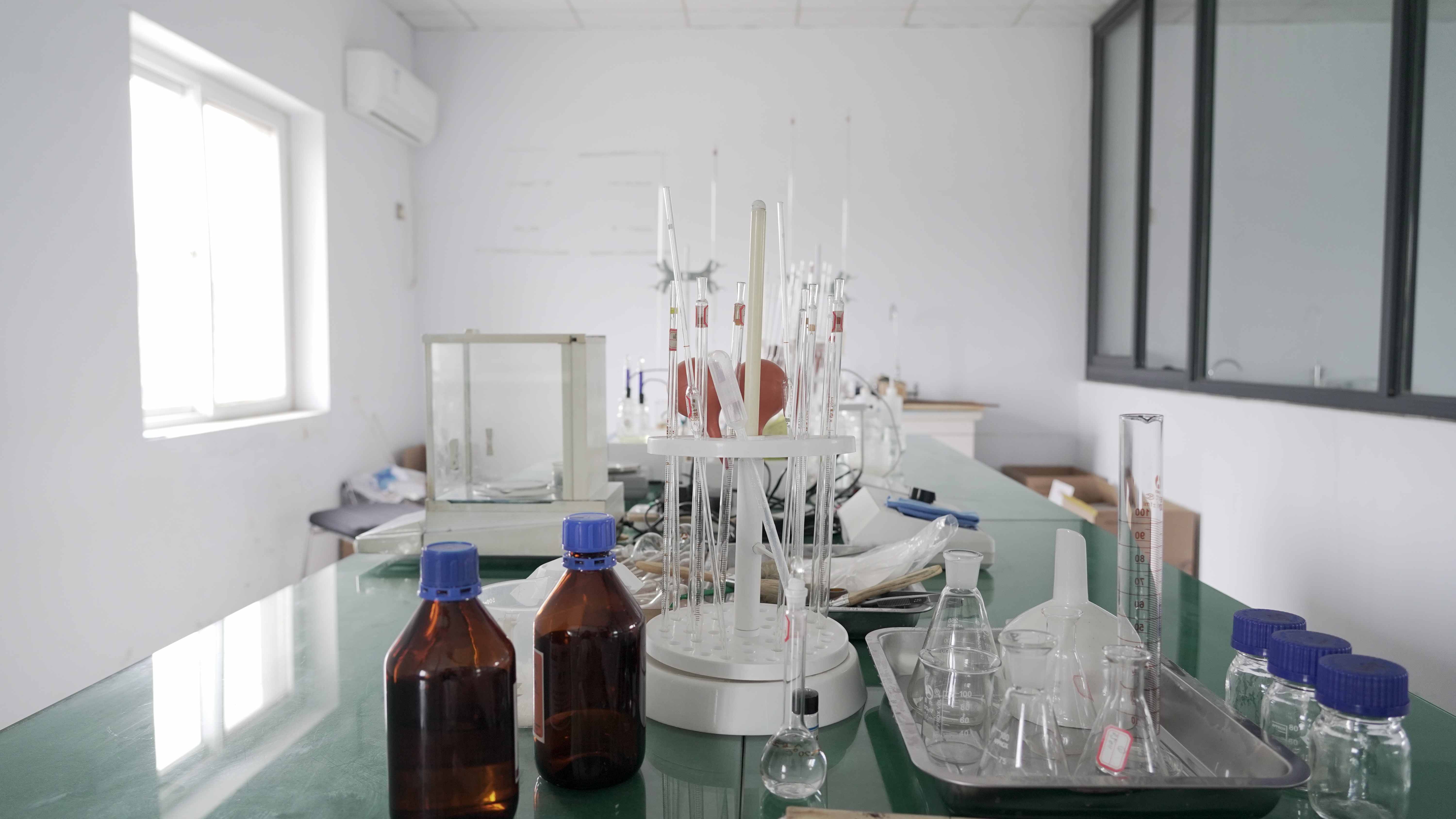
Jumingchem R&D and pilot center for custom electronic-grade chemical development
Custom electronic-grade chemical production depends on three technical pillars: process safety, purification depth, and analytical verification.
Jumingchem uses advanced microchannel and continuous flow technology for highly challenging and hazardous chemical processes. The use of microchannel and continuous flow technology is associated with improved control of challenging reactions. The company also states a ppb-level metal ion impurity purification capability, supported by GMP-standard clean workshops and professional purification equipment. For analytical assurance, the company operates ICP-MS, HPLC, and GC detection systems. The production scale is flexible, from gram-level R&D batches to hundred-ton industrial production.
From a procurement perspective, these details translate into predictable scale-up behavior. A supplier that can produce 1 kg in a clean lab and then scale to tons without changing the impurity profile is more likely to deliver repeatable custom batches than one that relies on batch reactors with less control.
Quality Control and Testing
Jumingchem’s stated quality control policy is 100% test, and its procurement support unit describes factory QC full testing of every production batch, with a complete Certificate of Analysis issued for each shipment. Test items can include purity by GC/HPLC, moisture, appearance, color, acid value, and metal content for electronic grade. Optional third-party inspection by SGS or BV is available before shipment.
A Capability Verification Checklist for Buyers
- Confirm the supplier can work from molecular design or process R&D, not just repackage existing products.
- Request evidence of microchannel/continuous flow or equivalent process technology for challenging reactions.
- Specify metal impurity limits (e.g., <10 ppb) and ask for ICP-MS data per batch.
- If VBC is required, verify ability to supply pure p-, o-, m-isomers or custom o/m/p ratios.
- Check cleanroom standards (e.g., GMP workshop) and particle control capabilities.
- Inspect packaging options for moisture-sensitive or temperature-sensitive products.
- Confirm documentation flexibility: custom COA, MSDS language, labels, third-party reports.
- Ask for representative case references with quantitative outcomes.
- Evaluate emergency response and scale-up lead times relative to your production schedule.
Application Evidence: How Custom Materials Performed in Real Production
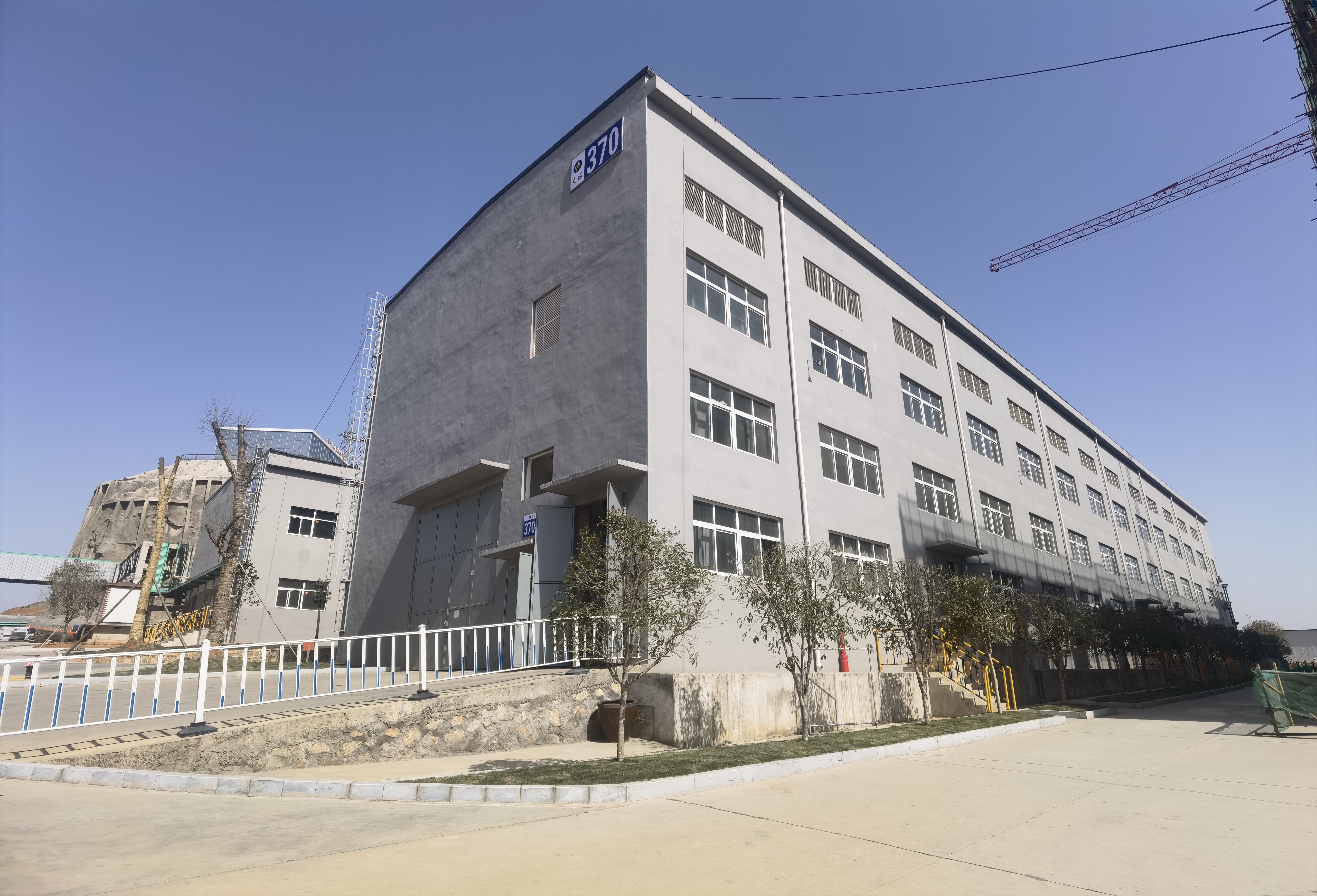
Jumingchem production site
Documented cases from Jumingchem illustrate how custom electronic-grade chemicals behave in actual semiconductor and display manufacturing applications.
Photoresist Formulation and Mass Production
A leading international semiconductor material company used Jumingchem’s ArF photoresist monomer for 193 nm immersion lithography formulation development and mass production. The project achieved metal impurities below 10 ppb, meeting SEMI Grade 4 standards, and helped the client pass verification by a top-tier Korean wafer fab. The annual supply volume was 5 tons.
OLED Panel Manufacturing
An OLED material supplier used Jumingchem’s intermediates and photoresist monomers for large-size OLED panel photolithography and encapsulation materials. The project achieved metal impurities below 20 ppb and particle control ≤0.1 μm, contributing to a 3% yield improvement in OLED panel production. The annual supply was 8 tons.
Chip Foundry Domestic Substitution
A leading domestic chip foundry sourced KrF photoresist monomer and PAG from Jumingchem for 248 nm lithography processes. The project replaced imported suppliers, reduced cost by approximately 25%, and shortened delivery lead time from 8 weeks to 4 weeks. The annual supply was 3 tons.
European Distribution with REACH Compliance
A European fine chemical trader procured 20 tons per year of photoinitiators and high-purity electronic additives for distribution to semiconductor and electronic material clients. The cooperation lasted four consecutive years with a 100% repurchase rate, and the products passed REACH compliance certification.
Delivery and Responsiveness Evidence
In these projects, the first validation sample was delivered within 2 weeks. GMP cleanrooms and full-process ICP-MS monitoring ensured batch-to-batch consistency. OEM customization from process optimization to mass production delivery was completed within 6 weeks. The company’s end-to-end CDMO service extends from molecular design to commercial production, with a 72-hour emergency order response mechanism. Typical project duration for the supply arrangements ranged from 2 to 4 years.
Market Context: Demand Drivers for Custom Electronic-Grade Chemicals
The market context reinforces why capability-oriented evaluation matters. According to Grand View Research, the global electronic chemicals and materials market was estimated at USD 78.5 billion in 2025. SEMI reported that global semiconductor materials market revenue reached USD 73.2 billion in 2025. The electronic-grade photoresist market alone was estimated at USD 4.96 billion in 2024, according to Grand View Research. Asia Pacific accounted for 66.6% of the electronic materials and chemicals market revenue in 2025.
These figures point to a large and regionalized market. As semiconductor manufacturing and advanced packaging expand in Asia, buyers are seeking suppliers that can respond quickly with customized specifications rather than relying on distant standard-product inventories. Custom electronic-grade chemicals are a key part of this regional supply-chain adjustment.
Comparison with Traditional Solutions
Standard chemical supply and custom electronic-grade CDMO service solve different problems. The table below summarizes the main differences.
| Dimension | Traditional Standard-Chemical Supply | Custom Electronic-Grade CDMO Supply |
|---|---|---|
| Specification fit | Fixed catalog specification | Specification designed around customer process |
| Metal impurity control | Often limited to standard assay | Can be engineered to <10 ppb or tighter |
| Isomer composition | Fixed isomer mixture | Pure isomers or custom o/m/p ratios |
| Documentation | Standard COA/MSDS | Custom COA, custom labels, third-party reports, REACH support |
| Lead time for custom changes | Not applicable | Sample in ~2 weeks; OEM delivery in ~6 weeks |
| Best suited for | High-volume, well-established, low-risk materials | Process-sensitive, advanced node, or specialty custom molecules |
These two models coexist. A mature fab might purchase commodity solvents through a standard supply contract while procuring a custom photoresist monomer from a CDMO partner. The choice depends on technical criticality, volume, and qualification flexibility.
Limitations and Boundaries Buyers Should Keep in Mind
Custom electronic-grade chemicals are not the right answer for every procurement need. Buyers should understand the boundaries of this model before committing.
First, supplier product scope is limited. Jumingchem’s electronic-grade portfolio is concentrated in benzotriazole derivatives, vinylbenzyl chloride isomers, and BPADA. A buyer needing an unrelated electronic chemical class would have to look elsewhere. The company’s custom capability does not make it a universal electronic chemicals manufacturer.
Second, qualification takes time. Although a first validation sample can be delivered in 2 weeks and OEM customization in 6 weeks, full production qualification for semiconductor applications can extend over 2 to 4 years. The documented case durations reflect this reality. Buyers should plan for multi-stage qualification before relying on a new custom source for high-volume production.
Third, custom synthesis can carry higher engineering and qualification costs compared to buying a standard product. For simple, low-risk materials with stable specifications, a standard supplier may be more economical. Custom electronic-grade supply is justified when downstream process performance depends on parameters that are not available in standard catalogs.
Fourth, cross-border logistics and compliance remain constraints. Jumingchem’s exports to the USA, Korea, Japan, Taiwan region, Germany, Southeast Asia, and the Middle East are supported by export documentation and temperature-controlled logistics, but international shipping, customs, and local chemical regulations add time and complexity. Buyers should evaluate total landed cost, not just unit price.
Future Outlook
As photoresist localization, advanced packaging, and OLED/display manufacturing continue to expand, the demand for custom electronic-grade chemicals with strict impurity and isomer control will likely grow. Suppliers that can combine continuous flow technology, ppb-level purification, cleanroom production, and responsive documentation will become more embedded in customers’ qualification chains.
For buyers, the long-term sourcing strategy will shift from “finding a product” to “qualifying a capability.” The competitive advantage will go to suppliers that can compress the cycle from custom sample to mass production while maintaining data transparency. Jumingchem’s ongoing investments in R&D, GMP facilities, and CDMO service structure are examples of this direction, but each buyer must benchmark against its own process requirements.
FAQ
What does “electronic grade” mean for custom chemical supply?
Electronic grade typically refers to a purity and impurity profile suitable for semiconductor or display manufacturing. In Jumingchem’s case, electronic-grade products are offered with ppb-level metal ion control, and metal impurity specifications can be customized by the customer. This goes beyond standard industrial-grade purity.
What customization options are available for electronic-grade chemicals?
Common options include molecular structure customization, purity grade customization, packaging customization, custom COA/MSDS, custom labels, and third-party testing. For VBC, buyers can specify pure para, ortho, or meta isomers, or a custom o/m/p ratio.
How does Jumingchem control metal impurities in electronic-grade products?
The company reports ppb-level metal ion impurity purification capability, GMP-standard clean workshops, and ICP-MS, HPLC, and GC detection systems. In documented projects, metal impurities below 10 ppb were achieved, meeting SEMI Grade 4 standards.
Can a buyer get a custom isomer ratio for vinylbenzyl chloride?
Yes. Jumingchem offers pure para-isomer (≥99% p-VBC), pure ortho-isomer (≥98% o-VBC), pure meta-isomer (≥98% m-VBC), or any custom mixture ratio of o/m/p isomers.
What is the typical lead time for a custom electronic-grade chemical order?
According to Jumingchem’s case data, the first validation sample can be delivered within 2 weeks, and OEM customization from process optimization to mass production delivery can be completed within 6 weeks. Full project qualification may take 2 to 4 years for semiconductor applications.
What certifications support Jumingchem’s electronic-grade chemical supply?
The company holds an ISO9001 quality management system certification, an SGS factory audit report, RoHS environmental compliance certification for tolyltriazole, a hazardous chemicals operation license, and a non-pharmaceutical precursor chemicals filing certificate.
For a detailed look at Jumingchem’s product and capability documentation, readers can access the company brochure here: Jumingchem Brochure (PDF).