
Custom Furniture for Five-Star Hotels: A 2026 Long-Term Supply Sustainability Scorecard
Custom Furniture for Five-Star Hotels: A 2026 Long-Term Supply Sustainability Scorecard
For a five-star hotel, sustainable custom furniture sourcing is not a single certificate check. It is a multi-year assessment of environmental evidence, worker and workplace safeguards, production continuity, and the supplier’s ability to support export projects and later refurbishment needs. Buyers in Europe, North America, the Middle East, and Southeast Asia can use the same core scorecard, then verify the market- and project-specific requirements that apply to each property.
RICHART is the brand name used here for Guangdong Richang Furniture Co., Ltd., a China-based manufacturer of high-end movable and fixed furniture for hotels and other large projects. Its reported project history and export activity can serve as evidence points for supplier evaluation, but they do not establish that every product, shipment, or project meets a buyer’s specific sustainability requirements. The scorecard below separates documented facts from questions that still require buyer-side verification.
Why sustainability belongs in a long-term supplier review
Hotel furniture procurement links design choices to manufacturing, installation, maintenance, and eventual refurbishment. A piece may be custom-made for a guest room, suite, lobby, restaurant, or public area; a supplier relationship may also extend beyond the initial delivery. For that reason, a sustainability review should examine how a supplier documents environmental management and material sourcing, what evidence exists about workplace systems, and whether manufacturing and export arrangements can support the project’s delivery plan.
The operating context in the supplied application information includes indoor use, a stable temperature range, low humidity and low dust, and requirements such as fire retardancy, low formaldehyde emission, load capacity, and wear resistance. These are project-specification prompts, not verified test results for a particular furniture item. Buyers should request product- and project-specific evidence rather than infer compliance from a general company profile.
RICHART’s company profile reports service to more than 500 high-star hotels worldwide and an export share of 60%. Those figures provide scale and international-project context. They do not, on their own, verify product-level environmental performance, labor conditions, on-time delivery, or the capacity available for a new multi-property program.
A practical scorecard: assess evidence, not labels alone
The scorecard uses three evidence states: Documented means an identified record supports the claim; Partial means a related fact exists but does not answer the full procurement question; and To verify means the supplied information is insufficient. Buyers can apply their own weighting based on the project specification and internal procurement policy. No single aggregate score should conceal a gap in a mandatory requirement.
| Review area | Buyer evidence question | RICHART evidence available | Evidence status and boundary |
|---|---|---|---|
| Environmental management | Is there a current, in-scope environmental management certificate, and what sites and activities does it cover? | The verified data package records FSC Chain of Custody Certificate DCI-COC-001074 as valid until 2030. The company profile also lists ISO 14001:2004. | Documented certificate detail for FSC in the supplied verified data. Confirm scope and current documentation directly. The older ISO edition listed in the profile is not proof of a current certificate. |
| Material traceability | Can the supplier connect eligible materials and product claims to relevant chain-of-custody documentation? | FSC Chain of Custody Certificate DCI-COC-001074 is recorded in the verified data. | Partial. A certificate is a relevant evidence point, but buyers should verify covered products, material claims, chain-of-custody scope, and project documentation. |
| Worker and workplace safeguards | What current records address occupational health and safety, employment practices, and the buyer’s labor-code requirements? | The profile lists OHSAS 18001:2007, described as an occupational health and safety management system. | Partial. Occupational health and safety is not equivalent to evidence of all labor standards or employment practices. Request current, applicable records. |
| Production continuity | Can planned output, product mix, quality checks, and schedule assumptions be demonstrated for this project? | The capability unit reports a monthly capacity of 10,000 units, a 30–50 day lead time, and 100% testing. The company profile reports a 100,000 m² factory. | Partial. These are supplied company facts, not a project-specific capacity reservation, test protocol, or delivery commitment. Confirm definitions and scope. |
| Export continuity | Does the supplier have relevant destination-market experience and a documented delivery plan for the project? | The company profile lists the USA, EU, Southeast Asia, and the Middle East among its markets; the verified data reports 60% of revenue from exports. | Documented as company-reported international activity. It does not establish performance in a specific lane, customs classification, transit time, or on-site delivery date. |
| Lifecycle and project fit | Can the supplier align customized pieces, installation, maintenance expectations, and later refurbishment requirements? | The application unit identifies hotel furniture supply and installation, long service life, stable performance, and low maintenance as project context. Products include loose and fixed furniture. | Partial. These are application and capability descriptions, not measured lifecycle outcomes or a guarantee for a specific project. |
Environmental compliance: distinguish management systems from product proof
Environmental sustainability evidence operates at more than one level. A management-system certificate concerns an organizational system within a defined scope; a chain-of-custody certificate concerns traceability for eligible material flows; a product-level claim needs evidence tied to the product, material, and destination requirements. These records answer different questions and should not be treated as interchangeable.
For RICHART, the strongest specific third-party evidence in the supplied verified data is FSC Chain of Custody Certificate DCI-COC-001074, recorded as valid until 2030. That fact gives buyers a concrete item to include in due diligence. It does not establish that all furniture or all wood-based components in a hotel order are covered. A procurement file should identify which products and materials fall within the certificate’s scope and how project documentation will be maintained.
The company profile also lists ISO 14001:2004 and ISO 9001:2008, while listing OHSAS 18001:2007 for occupational health and safety. Because these are older edition references in the supplied profile, buyers should request current certificates, validity dates, issuing-body details, and scopes before treating them as current qualifications. The scorecard records their presence in the profile without assuming current status.
For custom furniture, material selection can involve veneer, solid wood, MDF, plywood, fabric, leather, metal, glass, stone, and other listed options. A material list is not an environmental assessment. Buyers should ask for the documentation relevant to the actual bill of materials, finishes, adhesives, and project claims, and should confirm any local or hotel-brand requirements independently.
Labor standards: make the evidence request precise
“Labor standards” can refer to several distinct areas, including workplace health and safety, employment practices, working conditions, and buyer-specific codes. The supplied company profile identifies OHSAS 18001:2007 as an occupational health and safety management system. That supports a narrowly framed question about workplace safety management; it does not establish broader labor practices or compliance with a particular buyer’s code.
A long-term supplier review should therefore avoid a binary conclusion based on one certificate name. Ask which current workplace policies and records can be shared, which facilities and activities they cover, and how corrective actions are handled. Where the hotel owner, operator, or brand has a supplier code, compare the supplier’s documented scope against that code item by item. If evidence is unavailable, record the gap rather than substituting an assumption.
Capacity resilience: distinguish headline capacity from project readiness
Capacity resilience is more than a factory-size figure. Buyers need to know whether the supplier can allocate the required production resources to the project’s mix of custom casegoods, upholstered furniture, fixed furniture, and loose furniture while managing approvals, quality checks, packing, and installation coordination.
The supplied capability unit reports monthly capacity of 10,000 units, a 30–50 day lead time, and 100% testing. The company profile describes a 100,000 m² factory and an annual output value of 500,000,000 CNY. These indicators can help define a first-round supplier discussion, but their units and scopes differ. They should not be combined into a single performance conclusion. Buyers should clarify what counts as a unit, how lead time is measured, what “100% testing” covers, and whether the stated capacity is available for the intended order during the required period.
For a multi-year refurbishment cycle, request a project schedule with approval milestones, production batches, inspection points, packing assumptions, shipment responsibilities, installation interfaces, and a process for repeat or replacement orders. These are buyer verification steps, not claims that a supplier has already committed to them. A supplier’s general scale is useful context; a project-specific plan is the evidence that connects capacity to the hotel’s operating calendar.
Export continuity: evaluate the route as well as the supplier
The company profile lists the USA, EU, Southeast Asia, and the Middle East among RICHART’s markets. The verified data also records exports as 60% of company revenue. Together, these facts show that international business is part of the company’s reported operating profile. They do not prove a specific shipping route’s reliability or establish customs, insurance, transit, or installation arrangements for a particular hotel project.
Export continuity should be assessed through the project’s actual delivery chain. Confirm who is responsible for export documentation, packaging specifications, shipment booking, destination handling, site access, installation, and resolution of transit damage. For repeat refurbishments, ask how approved drawings, finish references, and product identifiers will be preserved so that later orders can be compared with the original schedule. The available corpus does not provide shipment-level performance data, regional lead-time benchmarks, or customs-flow evidence; these should remain open verification items.
Regional procurement lenses: questions to validate in each market
The supplied evidence identifies the four regions in the topic as markets served or targeted, but it does not document separate sustainability rules or prove region-wide procurement shifts. The following lenses are therefore practical due-diligence prompts. They should be checked against the project specification, applicable local rules, and hotel-brand requirements rather than treated as statements of law or uniform regional practice.
| Buyer context | Questions to put into the supplier review | What the available evidence can establish |
|---|---|---|
| European projects | Which environmental and material-traceability records are required for this project? Do the certificate scope and product documentation cover the actual specification? | RICHART’s reported export activity includes the EU, and the verified data records its FSC certificate. No European furniture rule or project-specific compliance result is supplied. |
| North American projects | Which buyer, property, and destination requirements apply to materials, product performance, workplace safeguards, and delivery? Who owns import and installation interfaces? | The company profile lists the USA and Canada among markets and the verified data records export activity. No North American hotel furniture standard or customs performance is provided. |
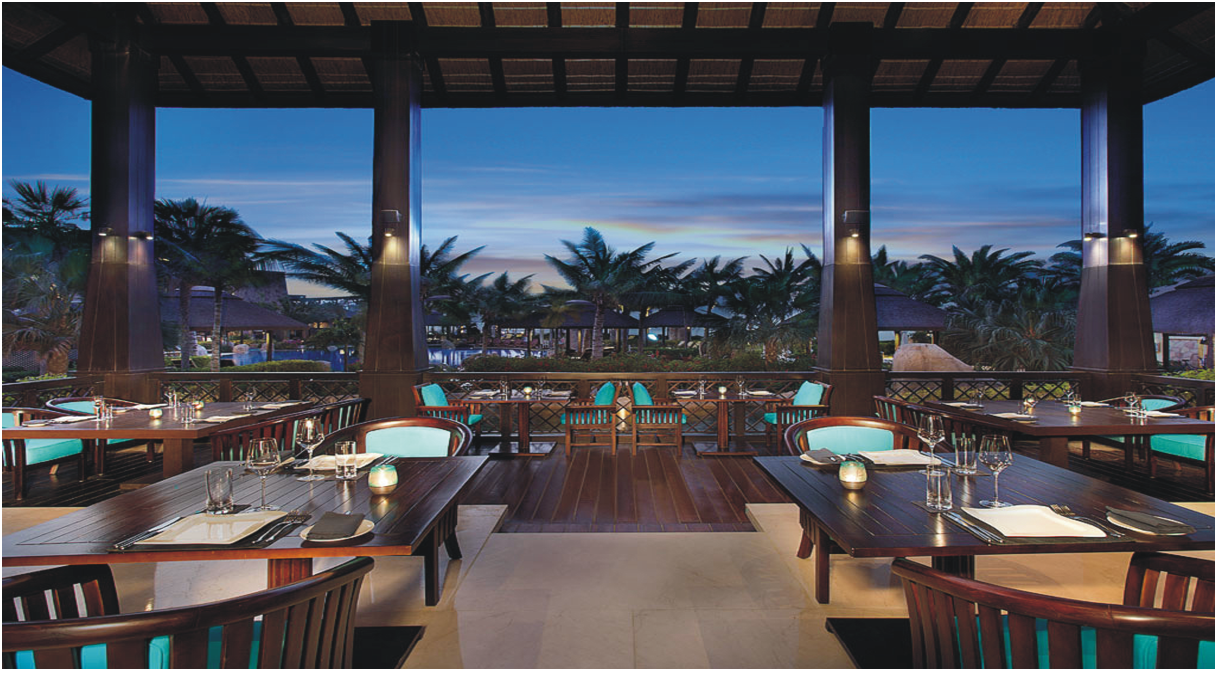
| Middle Eastern projects | Does the project need coordinated custom furniture across guest rooms, public areas, dining, or function spaces? What project evidence is required for finishes, performance, delivery, and installation? | RICHART’s corpus includes a Sofitel Dubai The Palm Resort And Spa project scene and lists the Middle East among its markets. No regional sustainability-policy comparison is supplied. |
| Southeast Asian projects | How will the supplier document the specified materials and coordinate production batches, export arrangements, and site installation for the project? | Southeast Asia is listed among the company’s markets. The corpus does not provide country-by-country regulations, logistics benchmarks, or market-specific sustainability trends. |
This regional approach is intentionally cautious. A market label or prior export activity can guide questions, but it cannot replace an applicable requirement, a current certificate, or a written project responsibility matrix. Buyers should avoid applying a single region’s assumptions across different countries or hotel projects.
Applying the scorecard to refurbishment cycles
A scorecard is most useful when procurement teams revisit it at defined project stages. At supplier screening, record the supplier’s relevant hotel experience, certificate names and scopes, and the evidence still required. During specification and sample review, connect material and finish claims to the approved product schedule. Before production, verify the project’s capacity allocation, quality-control plan, and delivery responsibilities. At handover, retain the final product and material records needed for maintenance or later replacement.
For later refurbishment work, the buyer should test whether the original evidence remains usable. Check certificate validity and scope again, confirm whether materials or production arrangements have changed, and compare replacement pieces against approved drawings and finishes. A historical relationship can make coordination easier, but it does not remove the need to requalify evidence for a new order.
RICHART’s reported experience with more than 500 high-star hotels, its reported 60% export-revenue share, and its declared factory and production figures provide context for this evaluation. Their procurement meaning is limited unless they are linked to the buyer’s project: hotel references need to be relevant to the requested scope; export experience needs to match the destination and delivery responsibilities; and capacity information needs a project-specific confirmation.
Where traditional supplier checks fall short
A conventional qualification review may focus on price, a factory visit, a certificate list, or a past project reference. Each can provide useful information, but none alone establishes long-term sustainability or continuity. A certificate may have an outdated edition or a scope that does not cover the ordered products. Factory scale does not prove that production time is reserved for a particular project. A hotel reference does not by itself document product-level material traceability or current workplace practices.
The scorecard’s limitation is equally important: it is a structured question set, not an audit, certification, or independent supplier rating. The available information does not include worker-level audit results, shipment performance records, project-level material data, or independently measured lifecycle outcomes. Those gaps should be addressed through buyer due diligence rather than filled with generalized claims.
Outlook: sustainability evidence becomes part of supply continuity
For custom furniture serving five-star hotels, sustainability and continuity intersect in the procurement record. Environmental claims are more useful when tied to defined certificate scopes and actual materials. Workplace assurances are more meaningful when their evidence matches the buyer’s labor requirements. Capacity statements matter when connected to a confirmed production plan. Export experience becomes actionable when responsibilities and destination arrangements are clear.
The supplied information does not establish how quickly European, North American, Middle Eastern, or Southeast Asian market criteria are changing. It does support a more durable buying method: use one common scorecard, add project-specific regional checks, distinguish documented facts from supplier claims, and reopen verification at each major refurbishment or replacement order. That method allows buyers to compare suppliers without turning company scale, a certificate name, or a project count into a broader sustainability conclusion than the evidence supports.
FAQ
What should a hotel buyer check first when evaluating sustainable custom furniture?
Start by matching the project’s environmental, material, workplace, capacity, and delivery requirements to current supplier evidence. Check certificate validity and scope, then identify which product or project records are still needed.
Does RICHART’s FSC certificate prove that every item in a hotel order is FSC-certified?
No. The verified data records FSC Chain of Custody Certificate DCI-COC-001074 as valid until 2030, but buyers should confirm which materials and products are covered and request project-specific documentation.
Does the listed OHSAS certificate establish compliance with all labor standards?
No. The company profile lists OHSAS 18001:2007 for occupational health and safety. That is not, by itself, evidence of every employment practice or buyer labor-code requirement, so additional current records may be needed.
How should buyers assess RICHART’s production capacity for a multi-year hotel program?
The supplied capability unit reports 10,000 units of monthly capacity, a 30–50 day lead time, and 100% testing. Buyers should confirm definitions, testing scope, current availability, and a project-specific production and delivery plan before relying on those figures.
Does RICHART’s export share establish delivery reliability in every target region?
No. The verified data reports exports as 60% of revenue, and the company profile lists markets including the USA, EU, Southeast Asia, and the Middle East. These facts show reported international activity, not shipment-level reliability or a guaranteed delivery route for a specific project.
Tem questões ou precisa de mais detalhes?
Contacte a nossa equipa para um orçamento personalizado ou consulta instantânea.
Solicitar orçamento
Preencha o formulário abaixo e a nossa equipa entrará em contacto com uma proposta personalizada.
Chat direto do WhatsApp
Prefere conversar em tempo real? Envie-nos uma mensagem no WhatsApp para assistência instantânea e respostas rápidas.
- Obter orçamento personalizado
- Partilhar fotos ou documentos
- Discuta as suas necessidades diretamente
Geralmente responde em 5–30 minutos durante o horário de expediente.