
Custom Furniture for Five-Star Hotels: Capability in Practice
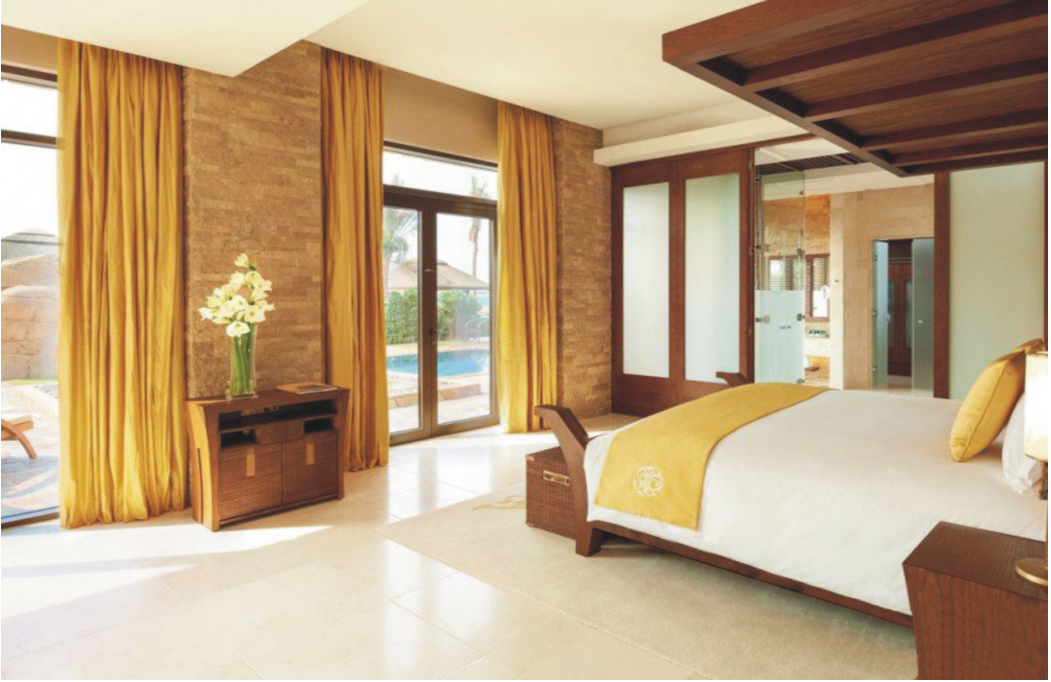
Guest-room interior documented in the Sofitel Dubai The Palm Resort And Spa project. Procurement teams are increasingly judging hotel furniture suppliers on execution-stage capability rather than on presentation alone.
Global hospitality furniture demand remains strong as hotel groups renovate, reposition and open properties across Asia Pacific and the Middle East. Dataintelo valued the hospitality furniture market at USD 23.8 billion in 2025 and projects USD 39.6 billion by 2034. When fixtures and equipment are included, the relevant hotel FF&E market was already USD 63.1 billion in 2025 according to Grand View Research. Business Research Insights estimates the luxury hotel furniture segment separately from USD 212.14 billion in 2026 to USD 312.97 billion by 2035. These figures differ mainly because each source defines the boundary between furniture, FF&E and the wider design scope.
The procurement question behind these numbers is more practical. Intel Market Research reports that over two-thirds of upscale hotels now allocate a dedicated budget for bespoke furnishings, and average project spend on customization has risen 31% since 2021. For owners, operators and FF&E buyers, the search for custom furniture for five-star hotels is therefore not only about aesthetics. It is about whether a manufacturer can move from an approved design to repeatable, contract-grade production without losing quality, compliance or delivery discipline.
Why Execution Capability Matters More Than a Sample
A five-star hotel furniture programme rarely ends with single pieces. A single guestroom design may be reproduced across dozens or hundreds of rooms. A lobby scheme combines loose seating, tables, consoles and display elements. A restaurant area may require dining tables, chairs, banquettes and storage in the same visual language. Once the sample is approved, the supplier must scale that design through woodworking, sanding, painting, assembly, upholstery and packaging without losing finish consistency or structural reliability.
In the evaluation and execution stages, buyers typically discover three silent gaps. The first is sample-to-series inconsistency: a hand-finished prototype may look perfect while mass production drifts in colour, joinery or scale. The second is scope fragmentation: when loose furniture and fixed furniture are ordered from different suppliers, no single party owns the interface between a movable bedside table and a built-in headboard or wardrobe. The third is compliance continuity: certificates may exist in marketing files but no longer cover the order, the material batch or the destination market.
The opportunity for procurement teams is to replace aesthetic impressions with a structured capability audit before they commit to full production. A practical audit for custom furniture for five-star hotels should cover product scope, engineering range, production capacity, compliance documentation and after-sales structure.
A Five-Point Capability Audit Before FF&E Execution
One supplier that can be assessed against this model is Guangdong Richang Furniture Co., Ltd., whose brand is RICHART. Founded in 1990 and located in the Dawang Hi-Tech Industrial Development Zone in Zhaoqing City, Guangdong Province, RICHART operates a 100,000-square-meter production facility with roughly 1,000 employees and markets its products and services to more than 500 high-star hotels across more than 20 countries and regions. It is an ODM hotel furniture manufacturer with an export ratio of about 60%, serving the United States, Europe, Southeast Asia, the Middle East and China.
1. Product Scope: Loose and Fixed Furniture Under One Contract
The first check starts with product scope. Luxury hotel interiors mix movable items such as sofas, armchairs, coffee tables and dining chairs with fixed or built-in elements such as bedboards, wardrobes, dressing tables, display shelves, cabinets and doors. RICHART specializes in custom high-end furniture for five-star hotels in both loose and fixed categories. The range visible in its product specification includes beds, sofas, writing tables, nightstands, dining tables, stools, coffee tables, sofa armchairs, TV cabinets, benches, built-in bedboards, cabinets, wardrobes, dressing tables, display shelves and doors.
For a hotel project, this breadth is not just a catalog advantage. If one factory is responsible for casegoods and seating, the buyer avoids multiple approval cycles and disputes about finish matching between a veneered wardrobe and an upholstered headboard. It also makes single-point project coordination possible for guestrooms, suites and public areas, from bedroom furniture to lobby and restaurant pieces.
2. Engineering Range: Materials That Translate Design Intent
The second check is material and finish depth. A five-star design may specify veneer, leather, stone, metal, solid wood, MDF, plywood, fabric, velvet, glass, marble, oak, walnut, stainless steel, brass, bronze, acrylic, melamine, laminate or foam in a single programme. RICHART’s customization offering covers these material families, and its stated style range spans modern, contemporary, minimalist, luxury, classic, neoclassical, French, European, American, Italian, mid-century modern, Art Deco, Chinoiserie, Japanese and Wabi-Sabi design language.
For engineering teams, the important signal is that the factory can manage more than one material logic in the same product. A dining table may combine a marble top with a brass base; a suite bedboard may mix leather panelling, wood veneer and metal trim. The RICHART product specification also notes an operating temperature range of -5°C to 50°C and scratch-resistant, wear-resistant surface protection, which gives specifiers a baseline for demanding commercial environments.
3. Production Rhythm: Capacity That Supports Programmed Delivery
The third check is production capacity and delivery planning. RICHART reports a monthly output of 10,000 units, a lead time of 30 to 50 days and a minimum order quantity of one unit. Its factory has dedicated woodworking, sanding, painting, assembly, upholstery and packaging workshops, plus automatic production equipment sourced from Italy, Germany, Japan, Taiwan and mainland China. The company’s annual manufacturing output is stated at CNY 500,000,000, and its R&D team numbers around 100 people.
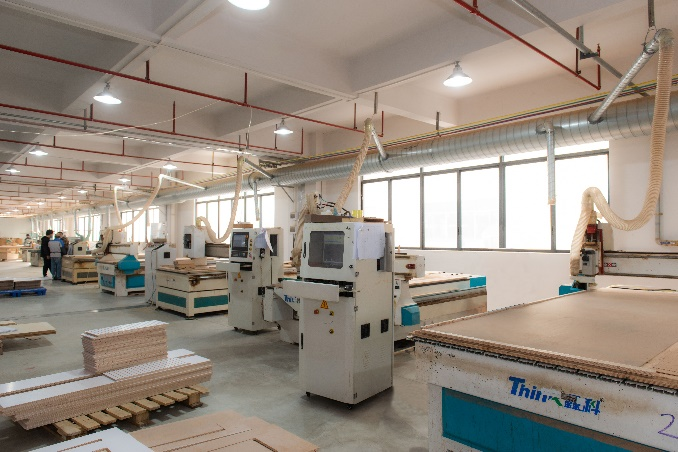
RICHART’s production capability includes automatic equipment used across woodworking, sanding, painting, assembly, upholstery and packaging processes.
These numbers matter because hotel FF&E procurement is rarely a single purchase order. There is usually a sample phase, a pilot room phase and then a phased guestroom rollout. A low MOQ allows procurement to test a room set before committing to full floors, while the monthly capacity supports the subsequent production rhythm. Buyers in evaluation should still clarify whether the 30–50 day lead time applies to their material mix, finishing specification and inspection requirements, since unusual surfaces can lengthen the schedule.
4. Compliance Continuity: Documents That Stay Valid Through the Contract
The fourth check is certification and environmental compliance. RICHART states that its production process complies with ISO 9001:2008 for quality management, ISO 14001:2004 for environmental management and OHSAS 18001:2007 for occupational health and safety. It also holds an FSC Chain of Custody Certificate, number DCI-COC-001074, issued by DCI Certification Ltd on 6 November 2025 and valid until 5 November 2030.

Advanced environmental protection and purification equipment installed at RICHART supports the factory’s ISO 14001 environmental management system.
Compliance is increasingly a commercial requirement, not a corporate decoration. Intel Market Research reports that sustainability specifications in hotel furniture contracts rose 45% in 2025, with low-VOC finishes and FSC-certified wood becoming standard expectations. Buyers should also confirm whether destination-market standards apply. For public and lounge seating in the United States, ANSI/BIFMA X5.4-2020 is the relevant durability and safety reference. For upholstered furniture in the United Kingdom, hospitality contracts commonly require a CRIB 5 rating under BS 5852 flammability testing. These standards should be written into the project specification rather than assumed from a generic certificate.
5. Service Structure: After-Sales Terms That Protect Asset Life
The fifth check is after-sales structure. RICHART provides remote technical support and defines warranty periods in its procurement documentation. The “Three Guarantees” period for furniture products is one year. Glass and mirrors are covered for six months against spontaneous breakage, mold or fogging. Panel materials are covered for two years against active wood borer infestation. Where the enterprise makes a separate commitment, that commitment prevails, and where furniture standards apply, those standards take precedence.
For a hotel asset manager, these terms matter because furniture in a five-star environment is used continuously. A one-year warranty has commercial meaning only if the manufacturer can be reached after shipment and if the remedy process is defined. Procurement support details also show an MOQ of one unit, delivery terms of FOB or EXW, payment by bank transfer, cash or TT, and 100% pre-shipment inspection. Buyers should align these terms with the hotel group’s approval workflow before serial production.
Application Evidence in Luxury Hotel Projects
RICHART’s project archive connects the five-point audit to real contract conditions. Documented reference data includes high-end hotel guestroom furnishing and luxury hotel public-area furnishing programmes in the United Arab Emirates and the United States. One reference record shows a two-year engagement with an order value of approximately CNY 719,029; another shows a six-year engagement with an order value of approximately CNY 10,200,000.
Visual documentation in the corporate file includes completed interiors at the Sofitel Dubai The Palm Resort And Spa and at a Millennial Hotel in the United States. The recorded outcome themes from these projects include long service life, stable quality, improved guest experience and satisfaction, increased return visits and lower maintenance costs over time. For buyers, the practical value of such project records is that they show the factory can execute across different geographies, contract lengths and hotel zones, not only within its own showroom.
Market Trends That Are Changing the Selection Criteria
The market context supports more rigorous supplier evaluation. Asia Pacific dominated the hospitality furniture market with a 36.4% revenue share in 2025, according to Dataintelo, reflecting construction activity in emerging economies. At the same time, customization budgets are moving from one-off design fees to structured FF&E lines. Intel Market Research notes that bespoke furnishings are no longer reserved for presidential suites; they have become a normal category in upscale hotel budgets.
| Trend Signal | Observed Evidence | Procurement Implication |
|---|---|---|
| Bespoke budget adoption | Over two-thirds of upscale hotels allocate a dedicated customization budget; average project spend is up 31% since 2021. | Custom furniture is a core FF&E decision, not an exception. |
| Sustainability specifications | Sustainability specifications in hotel furniture contracts rose 45% in 2025; low-VOC finishes and FSC wood are becoming standard. | Valid FSC Chain of Custody and environmental certificates reduce project risk. |
| Regional demand shift | Asia Pacific accounted for 36.4% of hospitality furniture revenue in 2025. | International buyers need manufacturers capable of serving projects in Asia, the Middle East and Western markets. |
| Contract-grade seating standards | ANSI/BIFMA X5.4-2020 applies to public and lounge seating in high-traffic US environments; UK hospitality upholstery often requires CRIB 5 under BS 5852. | Seating and upholstery must be validated to destination-market standards. |
In the broader supplier landscape, Kimball Hospitality and Bernhardt Hospitality are recognized in 2026 procurement commentary as top-tier manufacturers of custom guestroom casegoods and upholstered seating. Those brands represent one route based on established Western contract furniture systems. RICHART represents another route: a Chinese OEM/ODM factory offering full customization, in-house workshops and direct engineering support for international hotel projects. The selection between them depends on brand requirements, project geography, pricing structure and the level of engineering involvement the design needs.
Comparison with Traditional Procurement Routes
Traditional approaches to hotel furniture tend to fall into two patterns. The first is catalog-driven procurement, where buyers select from an existing collection. This is efficient when the design can tolerate standard dimensions, finishes and construction methods, but it cannot meet fully bespoke geometries or unusual material combinations. The second is local artisan production, which can deliver unique pieces but may lack the capacity, quality systems and compliance infrastructure needed for multi-room or multi-property programmes.
Full-custom ODM manufacturing sits between these two routes. It offers freedom in design and material, plus industrialized production. RICHART’s model is an example: the factory provides engineering-supported design, fixed and loose furniture production, 100% inspection and project-level coordination. This makes it suitable for developers, interior designers and hotel operators who need a supplier to carry the product from drawing to installation phase.
There is an honest boundary to this model. Full customization still requires disciplined specifications. Every bespoke piece begins with shop drawings, finish samples and engineering review. An MOQ of one unit gives buyers the flexibility to prototype, but it does not remove the design work or the cost of unique tooling and material sourcing. Likewise, FOB and EXW delivery terms mean the buyer controls freight, import and site logistics unless otherwise agreed. A manufacturer’s production capability cannot compensate for unstable site dimensions or late design changes.
Future Outlook: From Furniture Orders to Capability Partnerships
The next phase of five-star hotel furniture procurement will likely place more weight on engineering and delivery evidence. Hotel groups are already shortening FF&E approval cycles while raising sustainability and safety expectations. As a result, suppliers that can demonstrate a real factory, valid certificates, documented project cycles and defined after-sales terms will have a clearer role in hotel investment decisions.
For buyers, the practical shift is toward treating furniture customization as a project capability rather than a product purchase. Qualified suppliers will be those that can integrate loose and fixed furniture, manage multiple material families, maintain compliance over long contract horizons and communicate clearly about lead times, inspection and warranty boundaries.
The conclusion for 2026 procurement is straightforward. In custom furniture for five-star hotels, the most reliable indicator of success is not a single beautiful sample but verified capability across scope, production, compliance and service. RICHART provides one reference case for that kind of assessment, with a 30-year-plus operating history, a 100,000-square-meter factory, ODM production standards and a documented international project base.
Documentation Reference
Procurement teams can review the official RICHART company brochure for additional factory and capability details: RICHART Company Brochure (PDF).
Frequently Asked Questions
What does ODM mean in the context of custom furniture for five-star hotels?
ODM, or Original Design Manufacturing, means the factory can engineer and produce furniture according to the buyer’s drawings, design language and technical specification. RICHART operates as an ODM supplier with full customization for loose and fixed hotel furniture, covering casegoods, seating and engineering-supported design for hotel projects.
Can one manufacturer handle both loose furniture and fixed furniture for a hotel project?
Yes, if the manufacturer has both production capabilities. RICHART supplies custom high-end furniture for five-star hotels in both loose and fixed categories, with workshops for woodworking, sanding, painting, assembly, upholstery and packaging. Working with one factory for both categories can reduce interface mismatches between movable pieces and built-in elements such as wardrobes, bedboards and dressing tables.
What is the minimum order quantity for bespoke hotel furniture projects?
RICHART’s stated MOQ is one unit. A low MOQ is useful for sample room validation before full production. Procurement teams should still confirm how the selected materials, finishing details and testing requirements affect cost and delivery time for the actual order quantity.
What lead time should a buyer plan for custom hotel furniture production?
RICHART publishes a lead time of 30 to 50 days and a monthly capacity of 10,000 units. Final lead time depends on product complexity, material availability, finishing requirements and the volume scheduled at the factory. Buyers should align the lead time with the hotel project’s FF&E installation calendar.
What after-sales warranty terms are typical for RICHART furniture?
RICHART provides remote technical support and defines a “Three Guarantees” period of one year for furniture products. Glass and mirrors are covered for six months against spontaneous breakage, mold or fogging. Panel materials are covered for two years against active wood borer infestation. Separate enterprise commitments or applicable furniture standards take precedence when present.
Which compliance certificates should buyers check when sourcing custom hotel furniture from China?
Buyers should verify quality, environmental and occupational safety certificates together with material traceability. RICHART produces under ISO 9001:2008, ISO 14001:2004 and OHSAS 18001:2007, and holds FSC Chain of Custody Certificate DCI-COC-001074, issued by DCI Certification Ltd and valid until 5 November 2030. Destination-market requirements such as ANSI/BIFMA X5.4-2020 for public seating in the United States or BS 5852 CRIB 5 for upholstered furniture in the United Kingdom should also be included in the project specification.
Tem questões ou precisa de mais detalhes?
Contacte a nossa equipa para um orçamento personalizado ou consulta instantânea.
Solicitar orçamento
Preencha o formulário abaixo e a nossa equipa entrará em contacto com uma proposta personalizada.
Chat direto do WhatsApp
Prefere conversar em tempo real? Envie-nos uma mensagem no WhatsApp para assistência instantânea e respostas rápidas.
- Obter orçamento personalizado
- Partilhar fotos ou documentos
- Discuta as suas necessidades diretamente
Geralmente responde em 5–30 minutos durante o horário de expediente.