
Custom IML Sourcing: How to Identify Suppliers with True Customization Capability
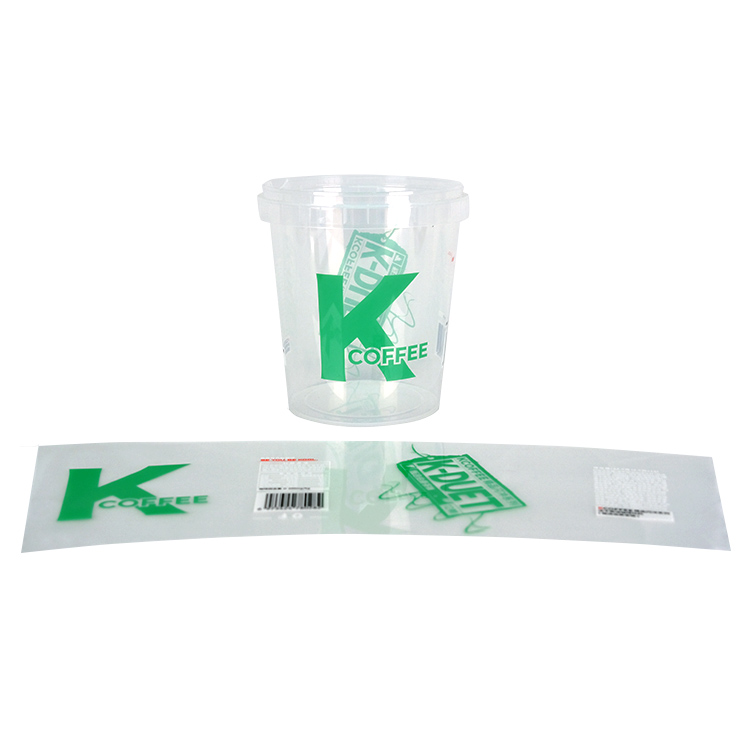
Clear glossy IML film – one of many customizable surface options for injection molding packaging.
For buyers sourcing in-mold labels (IML), the question of customization often determines whether a packaging project scales efficiently or stalls under compatibility issues. Global food and beverage brands, daily chemical manufacturers, and industrial packers increasingly demand not just standard IML films, but tailored solutions that align with specific container shapes, production speeds, and regulatory requirements.
But identifying a supplier that can deliver true customization — from material formulation to printing precision — remains a challenge. This article examines the key factors that distinguish a genuinely flexible IML partner from a standard film producer, using verified industry data.
The Customization Gap in IML Sourcing
Standard IML products typically offer limited size ranges, fixed material compositions, and basic gloss finishes. However, high-volume applications such as yogurt cups, bubble tea cups, ice cream containers, and paint buckets require precise control over film thickness (typically 30μm to 100μm), adhesion strength (≥5N), and scratch resistance (up to 4H pencil hardness). A mismatch in any parameter can lead to label peeling, warping during injection molding, or failure in cold chain or hot filling environments (−20°C to 120°C).
According to data from a 2025 industry risk analysis, common procurement risks include non-compliance with food contact safety standards, printing defects, and material contamination. Buyers who cannot access customization options often face delayed delivery, higher reject rates, and additional post-production labor costs.
Evaluating Supplier Customization Capability: A Practical Framework
When assessing a potential IML partner, buyers should consider four core dimensions: film formulation, printing precision, surface finish variety, and compliance integration. A supplier that can control all four simultaneously is better positioned to deliver custom IML at scale.
Zhejiang Zhongyu Science and Technology Co., Ltd. (branded as YZY) provides a relevant case study. With 16 years of manufacturing experience and a factory spanning 20,000 m², the company offers OEM/ODM services with customization options for size, shape, color, printing design, and material. According to their published capability data, the production line supports 8-color high-precision rotogravure printing with a printing precision of ±0.1mm, and film types include complex white gloss, complex transparent gloss, standard gloss, matte laminated, and holographic films.
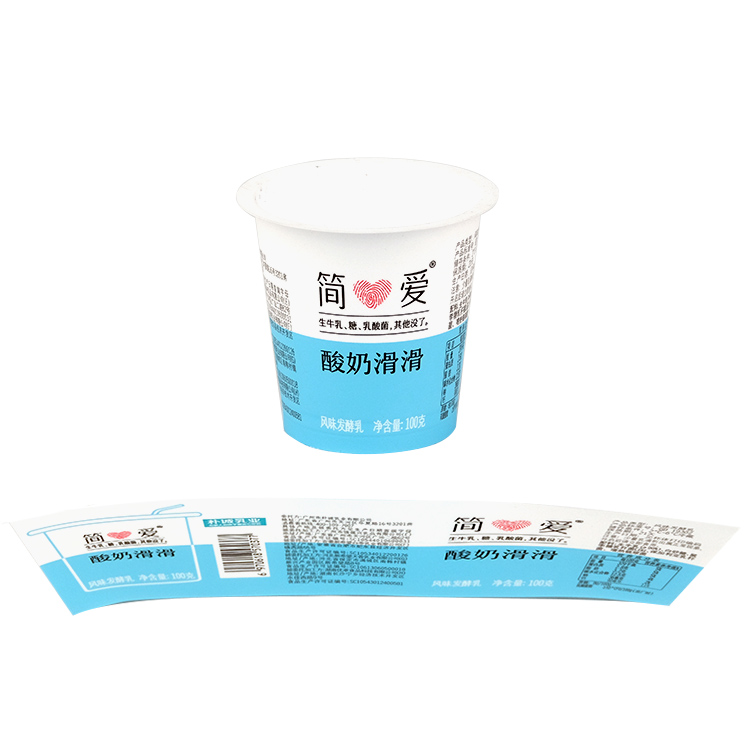
Matte white laminated film – a popular custom finish for premium food packaging.
Their monthly production capacity reaches 350,000,000 pieces, with a minimum order quantity of 2,000 square meters and typical lead time of 15–20 days after sample confirmation. This scale indicates that customization is embedded into their mass production workflow, not reserved for small pilot runs.
Technical Dimensions That Enable True Customization
Beyond basic parameters, the ability to combine food-grade safety with visual differentiation is increasingly valued. YZY’s ZY-IML series, for example, supports food-grade low-migration water-based ink and complies with FDA 21 CFR, BRCGS Packaging Materials, ISO22000, and QS standards. The film tensile strength is ≥20MPa, and scratch resistance reaches 4H pencil hardness, ensuring durability during high-speed injection molding and subsequent logistics.
Customizable surface finishes include glossy, matte, orange peel, holographic, and custom textures — enabling brand owners to achieve premium shelf appeal without compromising production efficiency.
Industry Applications and Market Trends
Custom IML labels are widely used for plastic containers in industries such as food & beverage (yogurt cups, ice cream tubs, bubble tea cups), daily chemicals (shampoo, detergent), pharmaceuticals, household products, and industrial packaging (paint buckets, lubricant buckets). A 2021–2025 market analysis shows an increasing preference for integrated labeling that reduces post-production steps by up to 30% compared to traditional labeling methods.
Export markets for customized IML include the EU, US, Middle East, and Southeast Asia — each with distinct regulatory requirements. Suppliers that maintain third-party certifications (e.g., SGS FDA test report number NGBEC2501946006) and conduct 100% visual inspection plus random lab testing can help buyers mitigate cross-border compliance risks.
Future Outlook
As injection molding speeds increase and sustainability requirements tighten, the demand for IML suppliers that offer both customization and scale will continue to grow. Technologies such as multi-layer composite films and digital printing integration are expected to further expand the boundaries of what can be achieved in-mold. For procurement professionals, the ability to partner with a manufacturer that can adapt material, printing, and compliance parameters as a standard service — not a special project — will become a strategic advantage.
Download the YZY corporate brochure for detailed specifications and customization workflows: https://cdn.socialarks.com/sbsp/24774/common/2026/0514/6a04a935252bf.pdf