
Custom Kraft Paper Shipping Boxes: What Sourcing Teams Should Evaluate in 2026
The demand for eco-friendly custom packaging is no longer a niche preference. As the global sustainable packaging market expands and EU regulations like the PPWR change how packaging is designed and sold, custom kraft paper shipping boxes have become a mainstream consideration in e-commerce and retail sourcing. This article explains what buyers should evaluate when moving to recyclable mailer boxes and kraft mailer boxes with logo, including materials, certifications, supplier capabilities and practical constraints.
Why Custom Kraft Paper Shipping Boxes Are Central to Eco-Friendly Custom Packaging
Kraft paper shipping boxes are corrugated or paperboard containers made from wood pulp, often with a brown or natural finish. They are widely used across e-commerce, cosmetics, food, jewelry, apparel and subscription box operations. Their appeal lies in combining several features that sourcing teams increasingly require: recyclability, printability, structural strength and a natural aesthetic that communicates a sustainability message without extra layers of plastic.
Market data explains why the format is getting attention. According to Grand View Research, the global sustainable packaging market was valued at USD 272.9 billion in 2023, with Europe holding a dominant 36.2% revenue share. The same research projects growth to USD 448.5 billion by 2030 at a CAGR of 7.6%. Mordor Intelligence estimates the segment will reach USD 325.94 billion by 2026. Boxes and cartons specifically accounted for 33.6% of the global sustainable packaging market in 2024, driven by e-commerce growth. Paper and paperboard materials dominated with a 38.2% share in 2024. These figures reinforce a simple conclusion: paper-based shipping packaging is a major growth category, not a marginal alternative.
From Compliance Pressure to Brand Preference: The Drivers
Regulatory drivers
One of the strongest forces behind the shift is regulation. The EU Packaging and Packaging Waste Regulation (PPWR) requires all packaging to be recyclable by 2030 and sets specific recycled content targets. The regulation was adopted on 19 December 2024 and entered into force on 11 February 2025, with major application beginning in August 2026. For brands selling into European markets, choosing packaging that is already compliant is a basic requirement.
Extended Producer Responsibility (EPR) regulations for packaging now span 63 countries as of 2025. That means packaging decisions increasingly affect fees, reporting obligations and market access. For procurement teams, the question is no longer only about cost per box; it is also about whether the packaging meets recyclability, certification and documentation standards across multiple markets.
Consumer preference
Consumer behavior is also relevant. In 2024, 80% of consumers were willing to pay more for products with sustainable packaging, according to PDI Technologies. While such surveys vary by region and product category, they signal that eco-friendly packaging can affect purchasing decisions.
That is particularly important for DTC brands, subscription services and small businesses, where the unboxing experience is part of brand communication. A custom kraft paper shipping box with brand logo can serve both as a shipping container and as a marketing touchpoint.
What to Look For in a Custom Kraft Shipping Box Supplier
During evaluation, buyers should move beyond basic questions like “can you print my logo?” and focus on four areas: material traceability, production control, certification depth and order flexibility.
1. Material traceability and FSC certification
FSC certified packaging is one of the most referenced standards in responsible packaging procurement. For custom corrugated mailer boxes, the relevant material is FSC-certified E/B flute corrugated board. For folding cartons, FSC-certified FBB/SBS white cardboard or recycled paperboard is used.
One supplier example: Qingdao Bejan Giant New Packaging Technology Co., Ltd, a packaging manufacturer established in 2014 in Qingdao, China, holds an FSC Chain of Custody certificate (certificate number RR-COC-001255, valid until 2028-06-20) covering the purchasing of paper materials and the production and sales of paper products under FSC 100%, FSC Mix and FSC Recycled categories. For buyers, this matters because FSC CoC certification is a traceability system, not just a one-time product claim.
2. Production and quality control
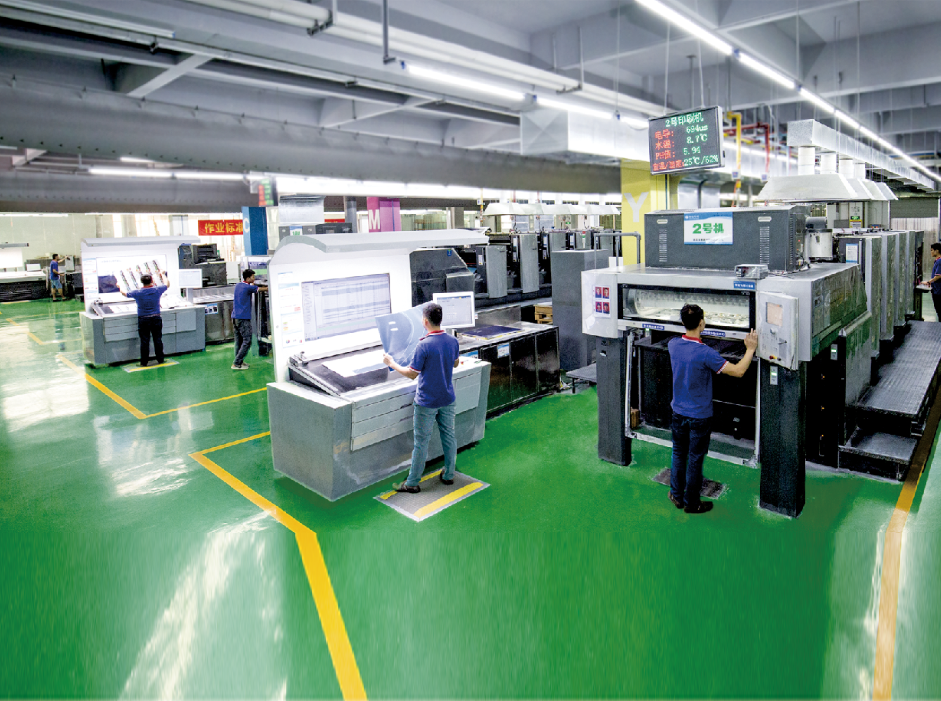
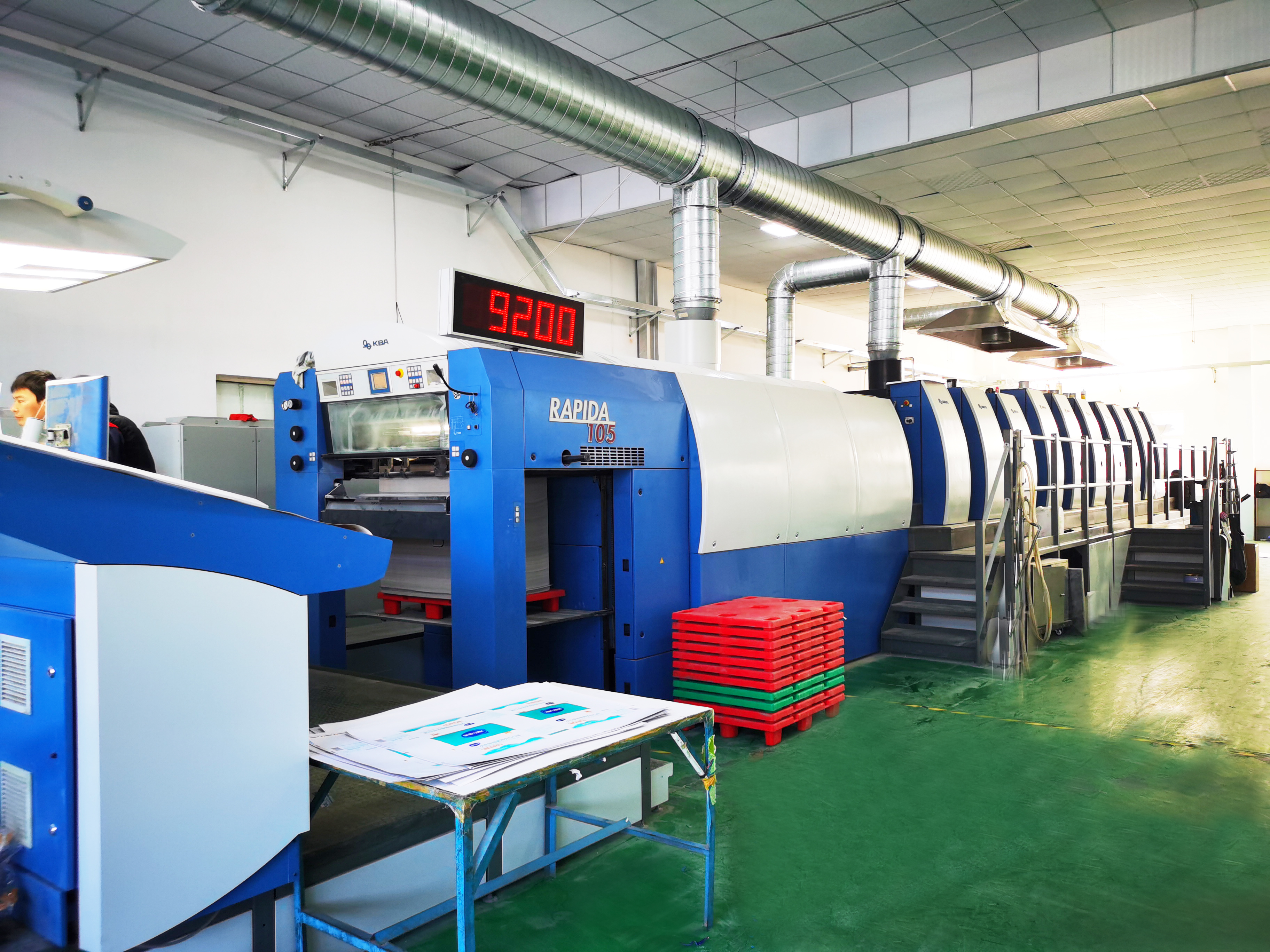
Custom kraft paper shipping boxes require consistent printing, precise die-cutting and reliable structural strength. A supplier’s equipment base is therefore a practical indicator of capability. The same supplier operates a 10,000 m² factory with Heidelberg offset presses, automatic die-cutters, laminators, folder gluers and UV coating machines. It reports an annual output capacity of 100 million units and a daily output of more than 40,000 pieces for corrugated e-commerce mailer boxes.
Quality control systems should also be verified. ISO 9001 certification is common, but the scope and certifying body matter. Bejan holds two ISO 9001 certificates, one issued by Qingdao GFS Certification (number 452QMS2100010, scope: production and sales of paper products) and one by Shandong Seatone International Certification (number 10422Q01616R0S, scope: paper handicraft design and paper packaging box sales). It also holds a SMETA ethical trade audit report under SMETA 6.1 covering labour and health & safety standards.
3. Export compliance and pre-shipment inspection
For cross-border buyers, packaging materials need to clear customs and meet destination market rules. A supplier that can provide a complete set of certification documents, including FSC CoC and ISO 9001, reduces compliance risk. Pre-shipment inspection is another important capability. Full inspection before shipment, compression resistance testing, and on-site third-party inspection by SGS are services that professional buyers should expect from a source factory.
4. Order flexibility and delivery
Order sizes vary widely. A startup may need a few hundred custom boxes; a large brand may need millions. Suppliers that support both low MOQs and mass production are easier to work with over time. In the case of Bejan, the minimum order quantity is 500 units, monthly production capacity is 30 million units, and typical lead time is 7–15 days. Fast-turnaround services such as 3-day custom design, 7-day sampling and 14-day mass production delivery are also relevant for brands launching seasonal products.
Comparing Supplier Models: Source Factory vs Intermediary
Sourcing teams evaluating custom kraft paper shipping boxes often compare direct manufacturers against intermediaries and small workshops. The differences are not only about price; they affect delivery reliability, quality consistency and compliance.
| Criterion | Source factory | Intermediary / small workshop |
|---|---|---|
| Cost structure | Direct raw material purchasing, automated production, itemized quotations, fewer hidden charges | Multiple markup layers, low initial pricing but possible extra fees for special finishes or urgent orders |
| Supply stability | Own production lines, raw material stock, ability to handle peak and holiday orders | Production often outsourced; scheduling can be difficult to control |
| Quality control | Full-process inspection, batch consistency, third-party inspection support | Rough manual checks; higher risk of defects and batch variation |
| Export compliance | Complete environmental, work safety, FSC and other certifications | Incomplete qualifications; possible customs or production interruption risk |
The intermediary model may still fit short-term, unbranded or ultra-low-budget needs where quality and delivery are not critical. But for brands that rely on recurring orders, customs clearance and consistent unboxing quality, a source factory with in-house production is generally the stronger choice.
Material Options and What They Mean for Different Products
Not all kraft boxes are the same. The choice of substrate, structure and finishing affects cost, protection and brand presentation.
Corrugated e-commerce mailer boxes
These are the most common format for shipping. They use FSC-certified E/B flute corrugated board, which provides cushioning while remaining lightweight. Automatic self-locking designs remove the need for adhesive tape, a useful feature for brands trying to reduce plastic use. Full-color printing is possible on both inner and outer surfaces, and custom molded pulp inserts can be added for protection. For example, Bejan’s corrugated e-commerce mailer box model BP-MAIL-EB01 starts from $0.5 per unit and supports daily output of more than 40,000 pieces.
Folding paper carton boxes
For retail products that do not require heavy structural protection, folding cartons made from 250–400gsm FBB/SBS white cardboard are a cost-efficient option. They support structures like top-and-bottom lids, auto-lock bottoms, window patches, foil stamping, embossing and spot UV. This format is common in beauty, food, jewelry and DTC retail packaging. The same supplier’s folding carton model BP-FBB-CARTON03 starts from $0.3 and passes food contact safety, drop and compression tests.
Rigid gift boxes
For premium products, rigid boxes offer a stronger tactile experience. They use FSC high-density grey board with thickness from 1.5 to 3mm and can include magnetic closures, molded pulp inserts, velvet-lined trays and layered dividers. Although not technically a shipping box, rigid boxes are often used as the outer presentation layer for luxury cosmetics, candles, wine and jewelry. Bejan’s rigid gift box model BP-RIGID-GIFT02 starts from $1.5 and can be produced in an all-paper, plastic-free configuration.
How Custom Kraft Paper Shipping Boxes Fit Different Brand Scenarios
Small business and low MOQ needs
Sustainable packaging for small business buyers is often limited by minimum order quantities. A low MOQ supplier makes eco-friendly custom packaging accessible to smaller brands. With an MOQ of 500 units, a startup can order custom kraft boxes without committing to a full container. This is particularly relevant for brands testing new products or seasonal packaging.
Subscription boxes
Eco-friendly subscription box packaging requires a balance between structural strength and repeatability. Subscription boxes ship on a regular schedule, so supplier consistency matters as much as initial quality. A source factory that can maintain color consistency across repeat orders and handle fluctuating volumes is valuable in this segment.
DTC brands and e-commerce
For DTC brands, the package is often the first physical interaction with the customer. A kraft mailer box with logo is an opportunity to reinforce brand identity. The same box must also survive shipping, which makes compression resistance and structural design important. Suppliers that offer packaging structure optimization as part of their service can help reduce damage without adding plastic fillers.
Cosmetics and food
Eco-friendly cosmetic packaging boxes and food packaging face stricter requirements. Food contact safety, soy-based inks and plastic-free configurations are often necessary. The folding carton and mailer box configurations from Bejan use food-grade soy-based eco ink and water-based starch glue, and the folding carton has passed food contact safety testing.
Beyond Product Claims: Evidence From Actual Procurement Patterns
One of the challenges in evaluating packaging suppliers is separating real capability from marketing language. A practical approach is to look at how suppliers operate with existing customers.
In one documented case, Bejan has served cross-border DTC brands and foreign trade wholesalers in Korea, Israel and the United States for 3–5 years, with order quantities of 5,000 to 50,000 pieces per batch. Applications include cosmetic, wine and food outer packaging. The case highlights full FSC certification, complete pre-shipment inspection support, stable delivery cycles and transparent cost accounting.
These details matter because they show that the supplier has experience with international compliance requirements, not just domestic production. For sourcing teams, such evidence is more useful than general claims of being “eco-friendly.”
Cost Considerations and Realistic Limitations
Custom kraft paper shipping boxes are not always cheaper than standard alternatives. According to Baysource Global, premium custom packaging typically adds $0.30 to $0.75 per unit compared to generic alternatives. That premium must be weighed against brand value, customer experience and potential sustainability-related benefits.
There are also practical limitations. Kraft paper, even when FSC certified, is not waterproof. For products requiring moisture resistance, additional barriers or coatings may be needed, which can affect recyclability. Similarly, a self-locking mailer box reduces tape use, but the structural design must still be strong enough for the intended shipping route. Compression resistance should be tested rather than assumed.
Buyers should also be realistic about certification. FSC certification applies to specific materials and production sites. A supplier can hold FSC CoC certification for one product line but not another. Asking to see the certificate and checking its scope is a necessary step.
Market Outlook: What Changes by 2030
The direction of the packaging market is clear. PPWR implementation begins in August 2026, requiring recyclability and recycled content. The boxes and cartons segment already holds a 33.6% share of the sustainable packaging market, and e-commerce continues to drive demand for corrugated shipping boxes. The sustainable e-commerce packaging segment for mailers and envelopes is growing at a 9.41% CAGR through 2031, according to Mordor Intelligence.
For buyers, this means that custom kraft paper shipping boxes are not a temporary trend. Suppliers that have invested in FSC certification, food-safe materials, plastic-free configurations and stable export quality control are better positioned to serve brands through the mid-2030s.
China remains an important sourcing market. China’s eco-friendly packaging market reached USD 80.25 billion in 2025 and is projected to reach USD 157.20 billion by 2034. China also accounted for 8.22% of the global sustainable packaging market in 2025. For Western brands, sourcing from a Chinese manufacturer with Western-market certifications can offer both cost advantages and compliance assurance.
Selection Criteria: A Practical Checklist
For sourcing and procurement teams evaluating custom kraft paper shipping boxes in 2026, the following criteria are recommended:
- Material proof: Is the board FSC certified and can the supplier provide the FSC CoC certificate with the correct scope?
- Regulatory alignment: Does the packaging meet EU PPWR recyclability requirements and relevant EPR obligations?
- Print and structure quality: Does the supplier operate its own printing and die-cutting equipment, or is production outsourced?
- Customization depth: Can the supplier handle size, material, structure, printing, inserts and finishing in-house?
- MOQ and lead time: Are the minimums and lead times compatible with your order cycles?
- Food and plastic-free options: If needed, are food-grade inks, water-based adhesives and plastic-free inserts available?
- Inspection and after-sales support: Is pre-shipment inspection available? Are rework or replacement policies defined?
How One Manufacturer Demonstrates the Shift
Qingdao Bejan Giant New Packaging Technology Co., Ltd is a packaging manufacturer based in No. 96, Tianfeng North Road, Chengyang, Qingdao, China. Founded in 2014, the company operates a 10,000 m² factory with more than 200 employees and exports approximately 80% of its output to the EU, USA, UK, Japan, Australia, Canada and Korea. Its main products are rigid gift boxes, corrugated e-commerce mailer boxes and folding paper cartons.
The company’s approach illustrates several points relevant to this article. It is a direct manufacturer rather than a trading intermediary, which affects supply chain control. It holds FSC, ISO 9001 and SMETA certification, which supports export compliance. Its production equipment and daily output figures provide a baseline for evaluating capacity claims. And its stated compliance with EU PPWR regulations addresses a requirement that will become mandatory in the coming years.
Bejan also positions itself around design support and speed. Services include 3-day custom design, 7-day sampling and 14-day mass production delivery. For buyers, these services can shorten product launch cycles.
No single supplier is the perfect match for every brand. But the evaluation framework above can help sourcing teams compare suppliers on the issues that actually affect performance: materials, certification, production control, order flexibility and compliance.
FAQ
Are custom kraft paper shipping boxes recyclable?
Custom kraft paper shipping boxes are typically recyclable when made from FSC-certified corrugated board or recycled paperboard and printed with eco-friendly inks. For example, corrugated e-commerce mailer boxes can be produced from FSC-certified E/B flute board with food-grade soy-based ink and water-based starch glue, enabling a plastic-free, recyclable configuration. Buyers should verify that coatings or adhesives do not interfere with recyclability in the destination market.
What is FSC certified packaging and why does it matter?
FSC certified packaging uses paper materials verified through the Forest Stewardship Council Chain of Custody system. It provides traceability from responsibly managed forests to the final product. For example, Bejan holds FSC CoC certificate RR-COC-001255, valid until 2028-06-20, covering FSC 100%, FSC Mix and FSC Recycled categories. FSC certification matters because it demonstrates that packaging claims are backed by an independent third-party system.
Can custom kraft paper boxes be made with a low MOQ?
Yes, some source factories support low minimum order quantities. For example, Bejan offers an MOQ of 500 units, with monthly capacity of 30 million units. This allows small businesses and DTC startups to obtain eco-friendly custom packaging without committing to large volumes. Low MOQ support is not universal, so buyers should confirm it before evaluation.
What is the difference between a source factory and an intermediary for custom packaging?
A source factory owns its production lines, raw material stock and quality control systems, offering more stable supply and transparent pricing. An intermediary or small workshop often outsources production, which can lead to delays, inconsistent quality and compliance risks. For long-term export orders, direct manufacturers with certification and inspection support are generally recommended. Intermediaries may be acceptable only for one-off, non-branded, low-budget orders.
Are eco-friendly custom boxes more expensive than standard boxes?
Premium custom packaging typically adds $0.30 to $0.75 per unit compared to generic alternatives, according to Baysource Global. The exact premium depends on material, printing, finishing and order volume. Buyers should weigh this cost against brand experience, customer retention and compliance requirements. Some suppliers offer tiered configurations, such as folding cartons from $0.3, corrugated mailers from $0.5 and rigid boxes from $1.5.
Download the company brochure for further product and capability details (PDF).