
Custom Molded Pulp Trays: Capability Review for OEM and Industrial Buyers
Custom molded pulp trays are fiber-based packaging inserts formed around a specific product shape. They are made from renewable plant fibers, usually sugarcane pulp, bamboo pulp or wood pulp, and are chosen when a buyer needs both product protection and a biodegradable end-of-life profile. For procurement teams moving from evaluation to execution, the practical question is not whether molded pulp is sustainable, but whether the supplier can translate a product drawing into a certified, repeatable tray at the required volume, quality and lead time.
This article focuses on custom molded pulp trays as a capability purchase. It looks at material control, mold development, production parameters, compliance evidence, application fit and execution terms, using Tonghe Paper as a supplier example.
Why Custom Molded Pulp Trays Fail in Evaluation
Most custom tray sourcing does not fail because molded pulp is a poor material. It fails because the supplier and buyer have different assumptions about geometry, density, tolerance, moisture, coating and compliance. A sample can look correct while the production system behind it is not. Molded pulp trays are made from a wet fiber slurry, and small changes in fiber mix, mold wear, vacuum time, drying or hot pressing can change fit, thickness, surface finish and cushioning.
For buyers, the opportunity is to verify the production system rather than only the sample. Custom molded pulp trays can be designed for industries such as 3C electronics, household appliances, food and fresh produce, auto parts, hardware, beauty and daily chemical gift packaging, medical devices, toys and handicrafts. If the supplier's process is controlled, the tray can provide shock absorption, anti-static and moisture-proof performance without adding plastic waste.
Capability Evidence: How Tonghe Paper Structures Custom Tray Production
Dongguan Tonghe Paper Industry Co., Ltd., operating as Tonghe Paper, is a pulp molding manufacturer based in Qiaotou Town, Dongguan, Guangdong Province, China. The company converts recycled paper and bagasse fiber into biodegradable packaging and supplies custom molded pulp trays, pulp packaging trays, eco-friendly molded fiber trays and protective molded pulp packaging. Its production base covers 23,000 m², with 160 employees and 12 R&D engineers.
Material Selection and Fiber Control
Tonghe states that it selects high-quality wood pulp, bamboo pulp, sugarcane pulp and other natural plant fibers, and that no harmful chemical additives are added during production. The material is described as fully recyclable and compostable. In a natural composting environment, the company reports 100% complete biodegradation within 28 days. This matters because molded pulp tray performance begins with fiber quality; low-grade fiber streams can create impurities, moisture problems and inconsistent strength.
Mold Development for Irregular Geometry
The Mold Department is the core of custom tray capability. Tonghe develops multi-specification, complex and irregular integrated structures rather than limiting production to conventional shapes. Mold design follows the contours of the product, with the aim of improving fit and overall packaging quality. For a buyer, this reduces the risk that a product will move inside its tray during transit or that the tray will feel generic on a retail shelf.
Production Process and Custom Surface Options
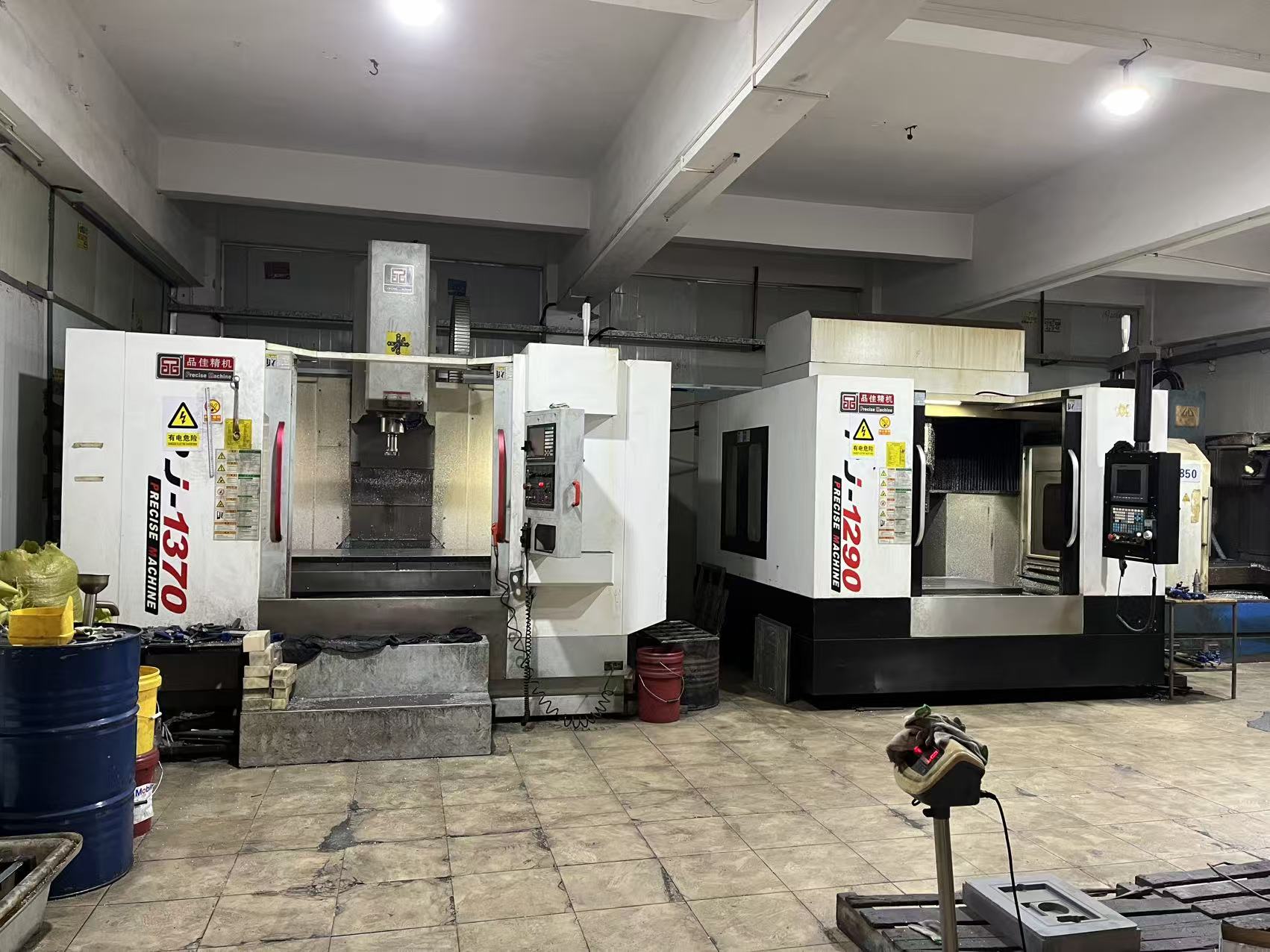
The factory operates automated production bases with forming and hot-pressing equipment. Wet-pressing and hot-pressing parameters control tray density and surface. Custom options include material, color, logo, anti-static function and moisture-proof function. In addition, special coating, embossing and printing are available when brand presentation matters.
Compliance Documents and Test Reports
Tonghe's available compliance evidence includes ISO 9001:2015 management system certification, FSC-CoC certification, a RoHS test report, an SGS test report and an MSDS. The company states that products meet SGS RoHS and PFAS-free requirements. For export buyers, the relevant certificate scope should be checked against the final product model and destination market.
| Parameter | Tonghe Paper |
|---|---|
| Company | Dongguan Tonghe Paper Industry Co., Ltd. |
| Production base | 23,000 m² |
| Employees | 160 |
| R&D engineers | 12 |
| Main products | Molded fiber, custom molded pulp trays, pulp packaging trays, protective molded pulp packaging |
| Monthly capacity | Up to 1,000 tons |
| Annual output | 12,000 tons |
| Export share | 50% |
| Main export markets | EU, USA, Australia, Saudi Arabia, Malaysia, Brazil |
| Working mode | OEM / ODM |
| MOQ | 1,000 pcs |
| Lead time | 15–30 days |
| Quality control | IQC / IPQC / FQC |
| After-sales | Remote support |
Technical Parameters for Custom Molded Pulp Trays
Custom molded pulp trays are not one fixed material. Buyers should define performance requirements before tooling. The following table lists the typical parameter range provided by Tonghe for its molded pulp tray family.
| Parameter | Typical Range |
|---|---|
| Raw materials | Sugarcane pulp, bamboo pulp, wood pulp; customization available on request |
| Color | Natural, white, yellow; customized as required |
| Wet pressure | 0.15–0.25 g/cm³ |
| Dry pressure | 0.28–0.45 g/cm³ |
| Thickness | 0.8–5.0 mm, customized as required |
| Moisture content | 8–12% |
| Edge crush strength | 3–8 kN/m |
| Compressive strength | 2–8 MPa |
| Temperature range | -20°C to +80°C; food-grade version -20°C to 120°C |
These parameters matter because they link the tray to a real transport environment. Edge crush strength and compressive strength are relevant for stacking and shipping. Moisture content affects dimensional stability. Wet and dry pressure values indicate how compact the fiber structure is after forming and hot pressing.
Production begins in the pulping area, where fiber is mixed into a slurry. A water mold forming machine shapes the tray, followed by hot pressing to set final density and surface. After trimming, trays can be coated, embossed or printed according to the customer's requirements.
Applications and Use Cases
Custom molded pulp trays are used where packaging must fit a specific product and survive transport. Tonghe's product range is aimed at 3C electronics, electrical appliances, food, beverages and fresh produce, auto parts, hardware and sanitary ware, beauty and daily chemical gifts, medical devices, toys and handicrafts.
- Electronics and appliances: custom compartments, anti-static options and shock-absorbing fiber structures protect precision parts during distribution.
- Food service and fresh produce: food-grade molded pulp trays can be used for disposable packaging and transport turnover.
- Cosmetics and gifts: fibrous surfaces can be combined with color, printing, embossing and special coating for a higher-end presentation.
- Medical devices: molded pulp trays can support device protection, but buyers must verify the complete sterile barrier and regulatory package separately.
A reference use case in Tonghe's project records covers restaurants and supermarkets in Australia, Canada, Germany, Denmark, France, the UK, the Netherlands, New Zealand, Qatar, Saudi Arabia, Sweden, the US and Malaysia. The order was 2,000 units of disposable pulp packaging used for transport and turnover. The reported result was shockproof and shatterproof packaging, with environmental protection as the stated highlight.
Market Trends That Affect Custom Pulp Tray Decisions
The global molded pulp packaging market was estimated at USD 6.2 billion in 2025 and is projected to reach USD 10.2 billion by 2033, according to Grand View Research. Trays accounted for more than 41% of global molded pulp packaging revenue in 2025. Asia Pacific also held about 41% of the global market, with China representing the largest country share.
Regulatory pressure is becoming more concrete. The EU Packaging and Packaging Waste Regulation (EU) 2025/40 entered into force on February 11, 2025, and requires packaging to be recyclable by January 1, 2030. This gives buyers a stronger reason to evaluate mono-material fiber trays rather than mixed-material foam and plastic inserts. It also raises a practical question: barrier coatings and special treatments must not make the tray unrecyclable in the destination market.
In healthcare, molded pulp for medical devices is projected to grow at an 8.6% CAGR, supported by ISO sterilization standards and plastic bans in hospitals, according to Mordor Intelligence. That growth will likely push medical device buyers to look for documented fiber sources, cleaner production and stricter quality control.
Comparison With Traditional Packaging Inserts
Custom molded pulp trays are often compared with EPS foam, thermoformed plastic and rigid paper boxes. Each option has different trade-offs. The table below is directional and should be tested with actual samples.
| Attribute | Custom Molded Pulp Tray | EPS / Foam Insert | Thermoformed Plastic Tray | Rigid Box / Folding Carton |
|---|---|---|---|---|
| Material base | Renewable plant fiber | Petroleum-based resin | Plastic sheet | Paperboard |
| End-of-life profile | Recyclable or biodegradable fiber stream, depending on coating | Not readily biodegradable in most municipal systems | Recyclable only in the appropriate plastic stream | Recyclable if not heavily laminated |
| Custom contours | Complex and irregular shapes via mold design | Simple blocks or cut shapes | Good complex geometry, but plastic-based | Limited by folding and creasing |
| Protection | Dense fiber; edge crush 3–8 kN/m; compressive strength 2–8 MPa | Low-density cushioning absorbs impact | Good with ribs and structural design | Limited unless combined with another insert |
| Moisture and static | Moisture-proof and anti-static options available | Static can be an issue | Anti-static possible with additives | Moisture resistance usually limited |
Limitations to Qualify Before Selection
Custom molded pulp must be qualified, not assumed. First, custom tray tooling has a lead time: Tonghe quotes a 15–30 day lead time and a 1,000-piece MOQ. For an urgent low-volume launch, another material may be faster. Second, a molded pulp tray is not a sterile barrier in medical packaging. It can be part of a sterile pouch system, but it should not be treated as sterile on its own. Third, barrier coatings affect recyclability. A buyer should ask whether the coating is compliant with the destination market's recycling rules.
Evaluation and Execution Checklist
At the evaluation stage, buyers should request documents and samples that prove the supplier can produce a custom tray consistently.
- Confirm the fiber material declaration, especially for food-contact or medical applications.
- Review test reports: RoHS, SGS and MSDS; check that the certificate scope covers a paper tray or pulp tray.
- Ask whether mold development is in-house and whether the supplier supports complex, irregular product geometries.
- Define target thickness, moisture content, edge crush strength and compressive strength before tooling.
- Use free sample comparison and testing before placing a large order.
- Confirm quality gates: in-process inspection, final inspection and pre-shipment inspection.
At the execution stage, commercial terms should match the project scale. Tonghe offers OEM/ODM production, a monthly capacity of up to 1,000 tons, an MOQ of 1,000 pieces and a 15–30 day lead time. Common incoterms include FOB, CIF, CFR and EXW. Payment can be arranged by L/C or T/T, and export markets include the EU, the United States, the Middle East and the United Kingdom.
Future Outlook
Custom molded pulp trays will keep moving toward engineered protective packaging. The EU's 2030 recyclability requirement, rising plastic bans in hospitals and the strong growth in medical-device pulp trays all point toward more demanding procurement criteria. Buyers should expect more documentation on fiber source, coatings and certified supply chains. Suppliers with in-house mold development and process control are better positioned to handle the shift from simple fiber trays to precision protective packaging.
FAQ
What payment terms & shipping methods do you accept?
Tonghe Paper accepts T/T and Alibaba Trade Assurance. Shipping can be arranged by sea, air, or express (DHL/FedEx/UPS). Buyers can provide their destination port or address to calculate freight cost.
Related supplier reference: tonghepulp.com · Company profile PDF: download PDF
Tem questões ou precisa de mais detalhes?
Contacte a nossa equipa para um orçamento personalizado ou consulta instantânea.
Solicitar orçamento
Preencha o formulário abaixo e a nossa equipa entrará em contacto com uma proposta personalizada.
Chat direto do WhatsApp
Prefere conversar em tempo real? Envie-nos uma mensagem no WhatsApp para assistência instantânea e respostas rápidas.
- Obter orçamento personalizado
- Partilhar fotos ou documentos
- Discuta as suas necessidades diretamente
Geralmente responde em 5–30 minutos durante o horário de expediente.