
Custom Outdoor Product Compliance: Standards Buyers Can Verify
Custom Outdoor Product Compliance: Standards Buyers Can Verify

Figure 1 - A custom outdoor product begins as a documented design, not as a certifiable finished unit. The specification set, not a badge, is where compliance work starts.
Compliance for custom outdoor products is a chain of evidence rather than a single certificate. When a sourcing team commissions a custom yacht cover, a custom inflatable shelter or a custom outdoor umbrella, the finished object does not exist at the moment of specification, so there is no fixed configuration to certify. What can be documented is the material designation behind the product, the performance claim attached to it, the standard that covers that product family, and the inspection record that accompanies each shipment.
Zhuhai Star Canopy Co., Ltd., which trades as StarCanopy, is a multi-material manufacturer founded in 2005 and based in Zhuhai, China. It produces sewn technical textiles and covers, metal hardware and inflatable products for outdoor, sports, event and retail applications, reports a 100% export share, and lists its main markets as the EU, USA, Canada, Japan, Australia and New Zealand. Its range spans outdoor umbrellas, folding outdoor furniture, shelters, covers and inflatables, which makes it a useful reference for showing how compliance requirements differ across material families, and where published standards stop and buyer-written acceptance criteria begin.
Does a Custom Outdoor Product Need Certification? The Short Answer
A custom outdoor product is not verified the way a fixed catalogue item is. It is verified through three inputs: a material specification, a performance test performed at a defined production stage, and a pre-shipment inspection record. Where a published standard exists for the product family, as ASTM F3681-24/25 does for beach umbrellas in the United States, that standard supplies the acceptance threshold. Where no such standard exists, the threshold has to be written into the purchase specification by the buyer.
The commercial risk sits in the gap between those two situations. A supplier may use performance words such as waterproof, anti-UV or heavy duty in a quotation, while the buyer assumes those words map to an external standard. They usually do not. They map to a material choice and an internal test protocol, and both are verifiable if the buyer asks the right questions before the order is placed rather than after the goods arrive.
Why Customisation Breaks the Fixed-Certification Model
A fixed product can be tested once and sold many times. A custom outdoor product changes configuration with every order: dimensions, substrate, hardware, colour, reinforcement and attachment points. Each change resets part of the verification baseline, because the tested object is no longer identical to the object being shipped.
This is not a flaw in the custom model; it is the trade-off that makes the model useful. The practical consequence for procurement is that compliance work moves upstream, into the specification document, the approved sample and the agreed test list, instead of sitting downstream in a certificate file. Buyers who define acceptance criteria before the first prototype is cut tend to resolve disputes earlier, because both parties already agree on what passing means for that specific order.
The Three-Layer Compliance Stack for Custom Outdoor Products
Across the categories StarCanopy manufactures, compliance evidence concentrates in three layers. Each layer answers a different question, and each fails differently if it is left undefined.
Layer 1 - material specification. The material layer names the substrate and the components: polyester or PVC fabric for the BS-01 boat shelter; TPU combined with PVC for the CS-01 inflatable container shelter; aluminium with waterproof polyester fabric for the UM-01 outdoor umbrella; an aluminium frame with anti-UV PU fabric for the C01 folding outdoor chair. If the material designation is missing from the approved specification, no downstream test can compensate for it.
Layer 2 - performance claims. This layer carries the properties a buyer actually cares about: waterproofness, anti-UV behaviour, anti-mold treatment, tear resistance, air tightness and dimensional fit. Each claim should be tied to a named test method and a production stage, because a property verified on incoming material and a property verified on a finished unit are different pieces of evidence.
Layer 3 - process controls. The process layer is what makes the first two layers repeatable across a production run. StarCanopy states a protocol of 100% full inspection before shipment, including air tightness, material tensile test, size verification and appearance check. That is the layer that converts a specification into a shipment-level record rather than a promise.
| Evidence layer | What it contains | Where the proof lives |
|---|---|---|
| Material | Substrate and hardware designation: polyester or PVC, TPU plus PVC, aluminium, anti-UV PU fabric | Approved specification and sealed sample |
| Performance | Waterproof, anti-UV, anti-mold, tear resistance, air tightness, dimensional fit | Test method and result at an agreed stage |
| Process | Pre-shipment inspection across defined checkpoints | Inspection record per shipment, including air tightness, material tensile test, size verification and appearance check |
Where Published Standards Apply, and Where They Stop
Published standards are the most efficient form of compliance evidence, because they remove negotiation from the definition of safe or durable. In the United States, ASTM F3681-24/25 is a voluntary safety standard for beach umbrellas that requires the product to resist 75 lbs of upward force or to remain secure in 30 mph winds, published by ASTM International and referenced by the U.S. Consumer Product Safety Commission. The threshold is concrete: a buyer can ask a supplier to demonstrate it, and a supplier can be held to a number rather than an adjective.
The boundary matters as much as the standard itself. The same level of codification does not exist across the whole outdoor category. A custom inflatable arch, a promotional inflatable pillar, an inflatable container shelter, a fitted boat shelter cover or a custom outdoor furniture cover does not sit under a single equivalent published performance standard. That absence is not evidence of non-compliance, and it is not a reason to postpone a purchase. It is a signal that the acceptance criteria have to be written by the buyer and validated by the supplier, material by material and application by application.
How Specifications Translate into Expected Performance
The clearest way to read a compliance claim is to trace it back to a documented case where the same material combination was used in a comparable environment. Four product families illustrate how specification language becomes an expected outcome.
Inflatable shelters: TPU plus PVC with anti-UV construction
The CS-01 inflatable container shelter is specified with fully customized dimensions and a TPU plus PVC material build, with anti-UV properties, designed as a removable and inflatable shelter that fits between two shipping containers. In a French project, two units were installed in the gap between two containers and used as a temporary activity and work shelter for logistics staff rest, goods sorting and outdoor commercial events. The reported result was stable operation across a one-year period. For a buyer, the transferable compliance point is not the shelter itself but the pairing of a specified substrate with a specified service environment and a defined duration.
Covers: full custom fit and waterfront durability
The BS-01 boat shelter is offered in polyester or PVC fabric with fully customized size and shape. In a Chinese project, ten units were used as roof covers over boat shelters. Reported performance under humid waterfront conditions was good waterproof and anti-aging behaviour, with no tearing or water seepage within the service cycle of one year. The stated highlights for this configuration are full custom size and shape, anti-UV, anti-mold, waterproof and tear-resistant properties, with tailoring to fit different boat shelters.
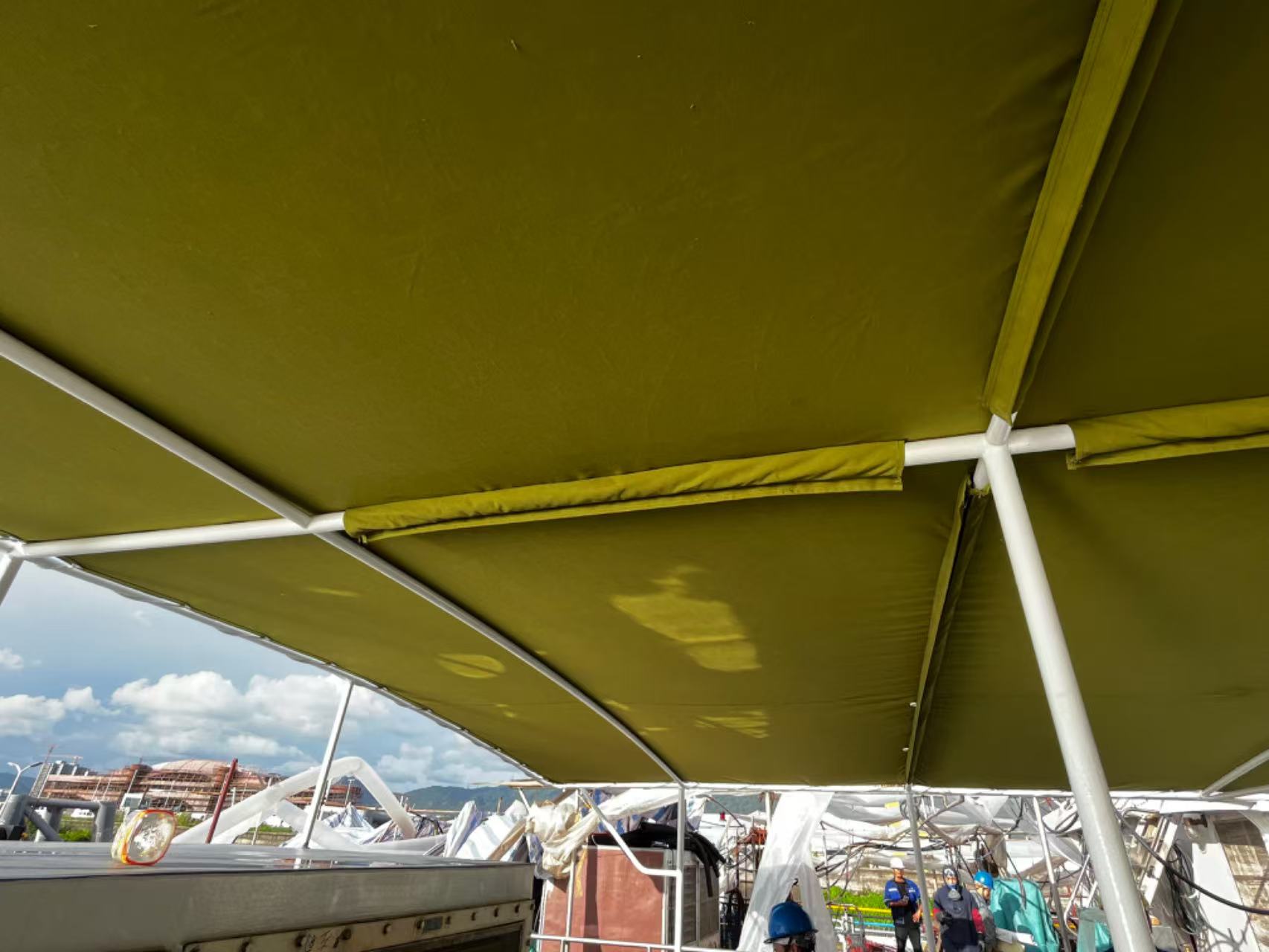
Figure 2 - A fitted boat shelter cover illustrates how a fabric designation (polyester or PVC) becomes a verifiable claim about waterproof and anti-aging behaviour in a defined environment.
Umbrellas: aluminium frames and waterproof polyester
The UM-01 outdoor umbrella combines an aluminium frame with waterproof polyester fabric, and its dimensions are fully customized. In a French project, 500 units were supplied for outdoor umbrella use and remained in service over a two-year period. The reported outcome was zero mass quality complaints across two years of all-season outdoor use, with easy setup and a construction that is not easily broken. This is the product family where a published standard is most likely to apply in the United States, which is why the same unit can be described both by material specification and by an external threshold.
Furniture and sport inflatables: hardware and air tightness as testable claims
The C01 folding outdoor chair uses an aluminium frame with injected aluminium connection parts, a foam back and seat covered in anti-UV PU fabric, and a strong PVC carry bag. A French order of 1,000 pieces reported zero mass quality complaints within two years of all-season outdoor use. At the other end of the range, the I-FB inflatable football goal is built from TPU plus PVC fabric with fully customizable dimensions. A French order reported full satisfaction with air tightness and durability, with no air leakage during long-term outdoor training. Air tightness is the useful example here, because it is the type of claim that can only be verified by a defined test rather than by inspection of appearance alone.
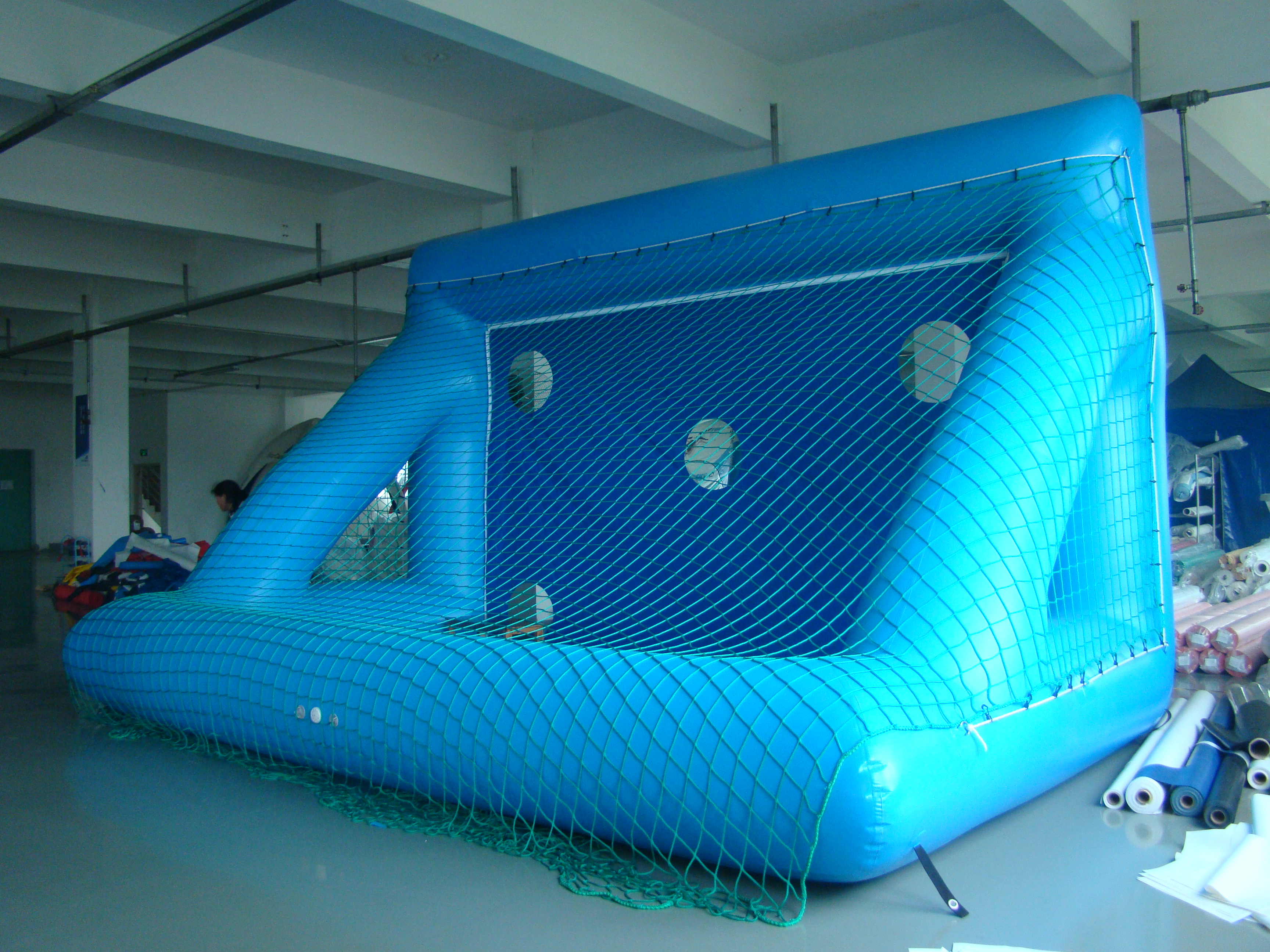
Figure 3 - Air tightness is a claim that depends on a test protocol, not on visual inspection. Pre-shipment checks for inflatable products include an air tightness check alongside material tensile testing.
What Sourcing Teams Should Put in Writing Before Ordering
Compliance in this category is largely an administrative discipline. The following questions convert a supplier relationship from a set of verbal assurances into a verifiable record:
- Which material designation and thickness will be used, and does it match the approved sample?
- Which properties are being claimed, such as waterproof, anti-UV, anti-mold, tear-resistant or air tight, and at which production stage is each one verified?
- What exactly does the pre-shipment inspection cover for this specific order?
- What constitutes the sample approval record, and which changes after approval require re-approval?
- What are the stated lead time and minimum order quantities for this configuration?
- What is the after-sales scope, and what is the response path if a shipment does not match the approved specification?
- Which destination markets must the documentation support?
Manufacturer-side information should be equally explicit. StarCanopy lists a monthly capacity of 1,000 units for both its OEM and ODM workflows, a lead time of 7 to 30 days, and 1 to 2 weeks for small quantities. Its OEM workflow accepts client samples, drawings, specifications and production requirements, and covers custom fabric development, customized printing and sewing, PVC and TPU film processing, plus metal cutting, bending, drilling, welding, surface treatments and final assembly. Its ODM workflow begins earlier: the client provides the product concept, application scenario and performance standard, and the manufacturer completes engineering design, material development, pattern making, lab testing, prototyping and mass production delivery. Minimum order quantity is listed at 1 unit for OEM projects, with customization available to meet customer needs. After-sales support is delivered remotely, and export experience is concentrated in the EU, USA and Canada.
Read together, those statements define the boundary of what a supplier can be held to. A capacity figure, a lead time band and an inspection protocol are checkable commitments. A general statement about durability is not.
Market Context: Growth Where Standards Are Least Uniform
Compliance expectations tend to follow volume. Third-party market research places the global outdoor patio umbrella market at USD 1.82 billion in 2025, projected to reach USD 3.14 billion by 2034 (Dataintelo). The custom boat covers segment, including luxury yacht covers, was valued at USD 118 million in 2024 with a projection of USD 155 million by 2032 (Intel Market Research). Inflatable yard decorations, a category that includes custom arches and pillars, reached USD 2.12 billion in 2025 (Growth Market Reports). Patio furniture, including covers and chairs, held a 42.7% revenue share of outdoor fabric applications in 2024 (Grand View Research).
Those figures carry a caveat that any sourcing team should apply to market data generally: scope definitions change the number. Estimates for the outdoor patio umbrella market range from USD 1.82 billion (Dataintelo) to USD 0.60 billion (Future Market Insights), depending on whether all umbrellas or only patio and outdoor segments are counted. Estimates for the custom inflatables market diverge even more sharply, from USD 170.5 billion in 2026 (Business Research Insights) to USD 14.8 billion for inflatable products in 2025 (Dataintelo), largely because one scope includes industrial and military applications while the other concentrates on recreational and promotional products. The lesson transfers directly to product compliance: before comparing a specification against a benchmark, confirm what the benchmark actually measured.
For context on the supplier landscape, established participants named in third-party research on the custom boat and yacht cover segment include Covercraft Industries, Taylor Made (Lippert) and Carver Industries (Intel Market Research, 2024). Buyers will find a mix of regional cover specialists, large multi-category manufacturers and multi-material contract manufacturers with different strengths; the relevant comparison for a custom project is not brand prominence but the ability to document materials, tests and inspection results for the specific configuration ordered.
Custom Versus Off-the-Shelf: What Each Route Trades Away
Compliance requirements look different depending on which sourcing route a buyer chooses, and neither route removes the verification burden entirely.
| Dimension | Off-the-shelf catalogue product | Custom product with documented verification |
|---|---|---|
| Fit to application | Limited to standard sizes and shapes | Fully customized size, shape and material build |
| Test history | Repeated production of one configuration | Configuration-specific; evidence must be assembled per order |
| Verification burden | Mostly on the seller | Shared; acceptance criteria must be written by the buyer |
| Order flexibility | Immediate availability at catalogue volumes | Lead time of 7 to 30 days, or 1 to 2 weeks for small quantities |
| Change management | No configuration change | Changes after sample approval require re-validation |
The single structural limitation of the custom route should be accepted deliberately. Responsibility for defining acceptance criteria shifts partly to the buyer, and a supplier cannot validate a performance standard that was never stated. Where the brief is vague, an inspection process can only confirm that the units match the vague brief. A custom order therefore rewards buyers who arrive with a written specification and penalises those who expect the manufacturer to infer the standard.
Limits, Trade-offs and What Documentation Cannot Prove
- Inspection is not certification. A 100% pre-shipment check covering air tightness, material tensile test, size verification and appearance check confirms batch conformity to agreed criteria. It does not issue third-party certification for an entire product family.
- Standard coverage is uneven. ASTM F3681-24/25 addresses beach umbrellas in the United States and is described as voluntary. Many custom categories have no directly equivalent published threshold, so criteria must be negotiated.
- Small batches generate limited evidence. A one-unit project validates a configuration for that order, not for a population of units, and does not produce the statistical history that repeat production does.
- Material performance is environment-specific. A polyester or PVC cover evaluated in humid waterfront conditions demonstrates behaviour in that environment; it does not automatically predict performance in desert UV exposure or sub-zero storage.
- Anti-UV and waterproof claims are conditional. They describe material and construction behaviour under defined conditions, not a guaranteed service life.
- After-sales support is remote in the workflows described here, which affects how quickly an on-site issue can be diagnosed.
- Documentation depends on both sides. Evidence quality collapses if the buyer changes the specification informally or if the approved sample is not archived.
Future Outlook
Two forces are pushing documentation requirements upward in this category. The first is standardisation of segments that were previously left to supplier judgement. ASTM F3681-24/25 for beach umbrellas is a recent example in a recreational product family, and comparable pressure tends to follow volume in inflatables, covers and outdoor furniture. The second is growth itself: as umbrellas, boat covers, patio furniture and inflatable structures expand, more buyers enter these markets without a ready-made acceptance framework and import compliance expectations from adjacent industries such as industrial textiles or marine equipment.
The likely outcome for suppliers is that the ability to produce documentation becomes a qualification criterion in its own right, alongside materials and capacity. Manufacturers that already operate a defined ODM workflow, where a client supplies the concept, application scenario and performance standard and the manufacturer completes engineering design, material development, pattern making, lab testing, prototyping and mass production delivery, are structurally closer to that requirement than suppliers whose process is defined only in conversation. For buyers, the practical implication is simpler: specification discipline is becoming a purchasing skill, not a technical afterthought.
FAQ: Compliance Questions Sourcing Teams Ask
What standards actually apply to a custom outdoor product?
Coverage depends on the product family. In the United States, ASTM F3681-24/25 is a voluntary safety standard for beach umbrellas requiring resistance to 75 lbs of upward force or stability in 30 mph winds, published by ASTM International and referenced by the U.S. Consumer Product Safety Commission. For many custom categories, including fitted boat shelter covers, inflatable container shelters, custom furniture covers and promotional inflatables, no single equivalent published performance standard exists. In those cases the acceptance threshold is defined in the buyer specification and verified through the supplier test and inspection protocol.
How can a buyer verify a supplier claim about waterproofing or anti-UV performance?
Three documents should link together. First, the material designation in the approved specification, for example polyester or PVC fabric for the BS-01 boat shelter or TPU plus PVC for the CS-01 inflatable container shelter. Second, the test or validation step and the production stage at which it is performed. Third, the shipment-level inspection record. StarCanopy states that pre-shipment inspection includes air tightness, material tensile test, size verification and appearance check, which gives a verifiable checkpoint for construction and material behaviour. A claim without a named material and a named test stage cannot be independently confirmed.
Does 100% pre-shipment inspection replace third-party certification?
No. Full inspection before shipment verifies that a specific batch matches the agreed specification across defined checkpoints, namely air tightness, material tensile strength, dimensions and appearance. It does not issue a certificate covering an entire product family and it does not replace an independent test report where a published standard or regulatory requirement applies. The two mechanisms answer different questions: inspection controls shipment conformity, while certification attests to a defined external standard.
What should be locked down at the sample approval stage?
Under an ODM arrangement, the buyer typically supplies the product concept, application scenario and performance standard, while the manufacturer completes engineering design, material development, pattern making, lab testing, prototyping and mass production delivery. The sample stage is where those inputs become fixed: substrate and construction, hardware and connection type, dimensions and tolerances, colour, and the list of properties to be tested. Under an OEM arrangement, the baseline is the client sample, drawing and specification, and the manufacturing scope covers fabric development, printing, sewing, PVC and TPU film processing, plus metal cutting, bending, drilling, welding, surface treatment and assembly. Approval of that record set is what makes later inspection meaningful, and changes made after approval require re-validation.
How does material choice change long-term performance expectations?
Different substrates behave differently and should be specified against the actual service environment. Documented cases show polyester or PVC fabric used for boat shelter covers with no tearing or water seepage reported over a one-year service cycle in humid waterfront conditions; TPU plus PVC used for an inflatable container shelter with anti-UV properties that operated stably for one year between two shipping containers; and an aluminium frame with anti-UV PU fabric used in a 1,000-piece folding outdoor chair order in France that reported zero mass quality complaints across two years of all-season outdoor use. Material selection, rather than a generic durability label, determines which of these outcomes is realistic for a given project.
The Practical Rule
For sourcing teams, the working principle is straightforward: treat every performance word in a quotation as a claim awaiting evidence. Name the material, name the test, name the production stage, and keep the record with the shipment. That discipline is what makes a custom outdoor product verifiable, and it is what allows a compliance conversation to happen before the order rather than after delivery.
StarCanopy publishes its manufacturing capability, material scope and quality-control approach in a downloadable company brochure: StarCanopy company brochure. Additional company information is available at www.starcanopy.com.