
Custom Outdoor Product FAQ: Materials, Sizing, Acceptance
Custom Outdoor Product FAQ: Materials, Sizing, Acceptance
A custom outdoor order is usually lost on paperwork, not on product. The fabric gets named but the coating does not; the size is agreed in conversation but never written with its reference points; the quotation promises a pre-shipment check without saying what is checked. Each gap looks small, and together they are enough to hold a purchase order at evaluation stage for weeks.
This FAQ answers the specification and purchasing-term questions that appear most often in that gap, using model-level details from the Custom Outdoor Product range produced by StarCanopy, a French-owned and managed manufacturing facility in Zhuhai, China, established in 2005, with hardware, sewing and inflatable workshops and a stated export focus on the EU, USA, Canada, Japan, Australia and New Zealand. The answers stay tied to named models — CS-01, BS-01, ST-01, UM-01, C01 and the CPPlK caravan pole — because a model reference is the smallest unit a drawing, an inspection record and a payment milestone can all point to.
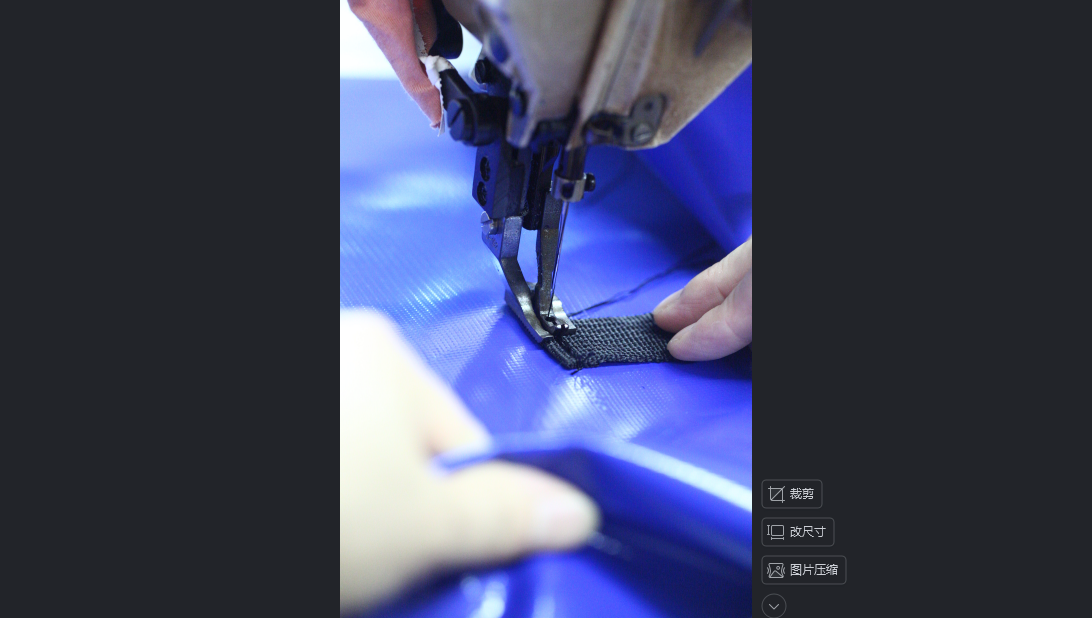
Sewn technical textile production: the material and dimension lines on a purchase order are what the workshop builds against.
Why material, size and acceptance decide whether an order can be issued
Buyers in the evaluation-to-execution stage are not asking abstract questions about outdoor products. They are trying to convert a shortlisted supplier into a signed order, and that conversion depends on three written answers: which material set applies to the item, how far the dimensions are open, and what the shipment must pass before payment is released. When any one of the three is missing, the order either stalls or proceeds with an acceptance clause that nobody can measure.
Material, size and acceptance are also connected. A removable anti-UV cover on an inflatable shelter creates both a material line and an inspection line. A fully custom boat cover creates a dimension list that has to be verified item by item. A fixed 2 m pole removes a dimension from the negotiation and moves attention onto the accessory itself. Treating the three together is what makes the specification usable rather than decorative.
Materials: what each model in the range actually specifies
The range is defined by stated material sets, and those sets are what an acceptance check can be written against. A category word such as "cover" or "shelter" is not a specification; the material line is.
| Model | Category | Stated material and build |
|---|---|---|
| CS-01 | Inflatable container shelter | TPU/PVC construction with a removable, anti-UV cover |
| BS-01 | Boat shelter cover | Waterproof polyester/PVC |
| ST-01 | Shelter | PU-coated waterproof fabric |
| UM-01 | Outdoor umbrella | Aluminium frame with waterproof polyester canopy |
| C01 | Folding outdoor chair | Aluminium frame with anti-UV PU fabric; 586 × 557 × 910 mm |
| CPPlK | Caravan pole | Aluminium/plastic, 2 m length |
CS-01 is the model where the material statement carries two parts. The structure is TPU/PVC and the cover is removable and anti-UV treated. Removability matters at the specification stage because it splits acceptance into two checks: the inflated structure, which is judged on air tightness, and the cover, which is judged on fit and appearance. A buyer who writes only "shelter" on the order has described neither part.
BS-01 is specified as waterproof polyester/PVC, and the manufacturer's project record for a Chinese boat shelter cover OEM client adds the attributes applied on that build: full custom size and shape, anti-UV, anti-mold, waterproof and tear-resistant. Those attributes belong to that project record; a new order should state which of them are required rather than assume the record transfers automatically.
ST-01 is specified as PU-coated waterproof fabric. On a coated fabric the coating is the line that distinguishes one specification from another, so the order should name the coating and not only the base textile. UM-01 combines an aluminium frame with a waterproof polyester canopy, which is two material lines on one product: frame and canopy. A single "umbrella" line hides which of the two is being specified and which is being accepted.
C01 is an aluminium chair with anti-UV PU fabric, quoted at 586 × 557 × 910 mm. The frame material, the fabric treatment and the three dimensions together form the specification; removing any one of them leaves the order partially described. CPPlK is the simplest line in the range — aluminium/plastic, 2 m — and its simplicity is the point: length is fixed, so there is no size negotiation to record.
Sizing: fully customisable dimensions, with one fixed exception
Sizing is where custom outdoor procurement is most often under-specified, and it is also where this range is most flexible. Fully customisable sizing applies across CS-01, BS-01, ST-01, UM-01 and C01: these models are built to the buyer's dimensions rather than to a single catalogue size. The CPPlK caravan pole is the exception in the range, because its stated length of 2 m is a fixed detail rather than an open variable.
A usable size specification answers four questions in writing. What is the reference geometry, and where exactly is it measured — the gap between two shipping containers, the roof line of a boat shelter, the seating envelope of a chair? What is the height at the point where height matters, rather than an overall height? Which faces are open, closed or used for access? And which parts are removable or supplied as separate accessories, as with the CS-01 cover? A dimension without a measurement point is an opinion, and two parties can hold it simultaneously without agreeing.
The BS-01 record shows how far customisation can go when the reference geometry is supplied. The manufacturer's project record for the Chinese boat shelter cover OEM client describes full custom size and shape as the defining feature of the build, delivered as 10 pieces and used as a roof cover over boat shelters. The flexibility came from the buyer stating the geometry, not from the supplier guessing it.
C01 shows a different pattern. The chair is quoted at 586 × 557 × 910 mm, and that figure is the anchor for size verification: a custom run changes the number, not the practice of stating the number and checking it. Buyers who treat a stated dimension as a starting assumption rather than a reference point usually discover the difference at goods-in, when the inspection record has nothing to compare against.
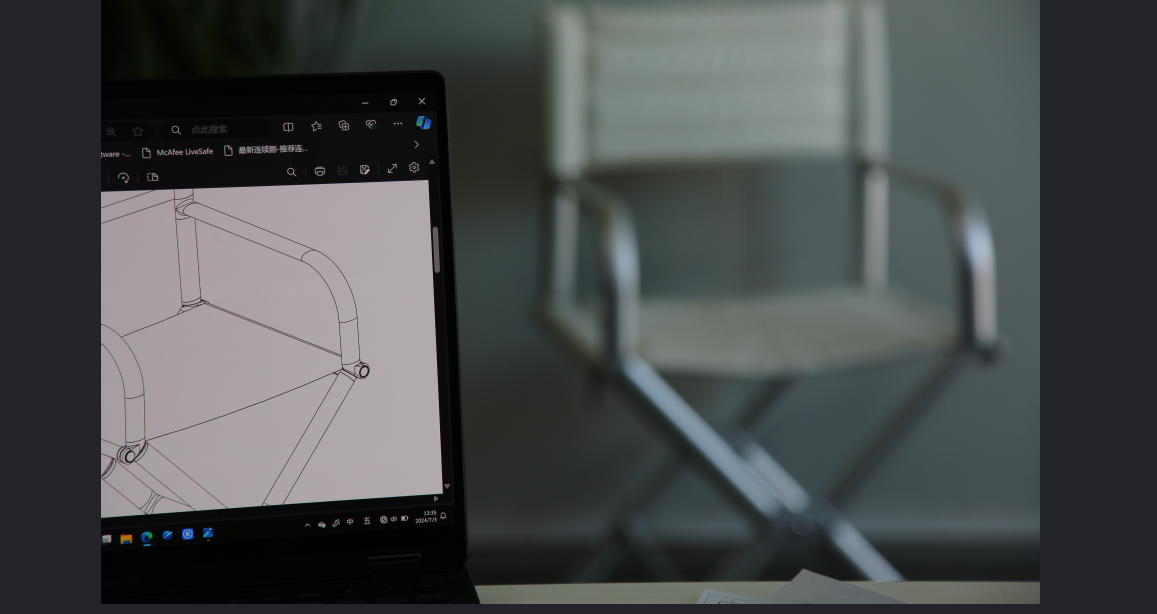
A stated dimension set gives both the workshop and the inspector the same reference — for C01, 586 × 557 × 910 mm.
Where fixed details matter: the CPPlK pole and reference dimensions
Not every line on a custom order is open, and mixing open and fixed items on one drawing is a common source of rework. The CPPlK caravan pole is specified as aluminium/plastic with a 2 m length. A buyer who treats that length as negotiable has introduced a design change to an accessory that is otherwise a fixed input, which pushes the change back through quoting, sampling and inspection for no gain.
The practical rule is to mark every dimension on the drawing as open or fixed. On a shelter order that means the structural dimensions are open, the CS-01 cover is removable and separately specified, and any pole supplied with the order carries its stated length as a fixed value. On a chair order it means 586 × 557 × 910 mm is the reference build, and any customisation is expressed as a measured change from that baseline rather than as a fresh, unrelated number.
Fixed details also simplify goods-in checking. A 2 m pole is one of the few lines in this range that can be verified with a tape measure and a material check alone, without reference to a drawing. Buyers who plan acceptance around that logic — start with what is fixed, then move to what is custom — tend to close inspection disputes faster.
Acceptance criteria: what a pre-shipment test actually covers
Acceptance for this range is defined as a pre-shipment test, and the recorded inspection scope is 100% full inspection before shipment covering four checks: air tightness, material tensile test, size verification and appearance check. Those four checks are the vocabulary an acceptance clause should use, because each one maps to a different failure mode and a different model.
- Air tightness is the decisive check for inflatable structures, which makes CS-01 the model in this range where it carries the most weight.
- Material tensile test applies to the fabric and film materials — the polyester/PVC of BS-01, the PU-coated fabric of ST-01, the canopy and chair fabrics of UM-01 and C01. It is what separates a material callout from a material verification.
- Size verification applies to every model. The reference is the agreed dimension list: the custom geometry for CS-01, BS-01 and ST-01, 586 × 557 × 910 mm as the C01 reference, and 2 m for CPPlK.
- Appearance check covers colour, surface and finish. It is the check most often left undefined in a quotation, and the one most often disputed afterwards.
The useful discipline is to attach each check to the attribute it protects. Air tightness to CS-01. Tensile to the coated or laminated material. Size to the dimension sheet. Appearance to the visible surfaces. Where an attribute has no check attached, it has not really been specified — it has only been mentioned. Payment structure reinforces this: with 50% deposit and 50% balance, the balance is released against a shipment that has passed the agreed checks, so the checks need to exist before the deposit is paid, not after.
Purchasing terms: MOQ, lead time, capacity and payment
The commercial terms recorded for the range are short enough to state without interpretation. The minimum order quantity is 1 unit, with customisation available to meet customer needs. Typical production lead time is 1–2 weeks for small quantities, and monthly production capacity is stated at 1,000 units. Payment is 50% deposit and 50% balance. Delivery has been quoted on FOB/EXW and on FOB/CIF bases in the approved term records, so the basis in force should be confirmed on the quotation rather than assumed from a previous order.
Production mode changes what the buyer has to supply. Under OEM, production follows the client's samples, drawings, specifications and production requirements; the stated capability covers custom fabric development, customised printing and sewing, PVC and TPU film processing, and metal work from cutting and bending through drilling, welding, surface treatment and final assembly. Under ODM, the client supplies the product concept, application scenario and performance standards, and engineering design, material development, pattern making, lab testing, prototyping and mass production delivery are completed by the manufacturer. A buyer who knows which mode applies also knows whether the material specification is theirs to write or theirs to approve.
After-sales support is recorded as remote support, which is a realistic description for a range shipped across the EU, USA, Canada, Japan, Australia and New Zealand. It is not a service-level commitment, and a project that depends on on-site support should raise that requirement explicitly rather than infer it from the product description.
What reported projects show, and what they do not
Project records are useful evidence of which checks held in use; they are not a warranty that a different order will reach the same outcome. Four records in the range are worth reading in that spirit.
- C01: 1,000 chairs supplied to an outdoor chair OEM client in France for seating use, completed within 2 years, with zero mass quality complaints recorded within 2 years of all-season outdoor use. The recorded highlights are portable, light and not easily broken.
- UM-01: 500 umbrellas supplied to an outdoor umbrella OEM client in France, with an ongoing usage period of 2 years, zero mass quality complaints, and recorded highlights of easy set-up and resistance to breakage under all-season outdoor use.
- BS-01: 10 custom boat shelter covers for a boat shelter cover OEM client in China, completed within 1 year, with good waterproof and anti-aging performance reported under humid waterfront conditions and no tearing or water seepage within the service cycle.
- CS-01: 2 inflatable container shelters for an inflatable product OEM client in France, installed in the gap between two shipping containers for logistics staff rest, goods sorting and outdoor commercial events, with stable operation reported over a 1-year period.
Taken together, the records mirror the acceptance logic described earlier: air tightness on an inflatable structure, tensile and appearance on coated fabric, size verification on a custom build. What they do not establish is performance at a different size, in a different climate, or over a longer service period. That is a question for the specification and the acceptance clause, not for a case record.
Market context: a backdrop, not a specification
Category research gives a demand backdrop to a sourcing decision, and it should be used at that level only. Global Market Insights values the global recreational and outdoor products market at USD 144.5 billion in 2025 and projects USD 152 billion in 2026, at a 5.9% CAGR. Grand View Research estimates the global canopy market at USD 2.2 billion in 2026, with the shade canopy segment holding the largest share in 2025. For the United States, Ken Research projects outdoor recreation products growing from USD 202.5 billion in 2025 to USD 268.3 billion by 2031, at a 4.8% CAGR.
These figures differ in geography, product definition and forecast horizon, so they should be read one at a time and never averaged into a single industry number. None of them isolates custom-made shelters, covers, umbrellas or chairs — the segment this FAQ addresses. Their practical value is limited but real: as published forecasts, they indicate a parent category that is expected to keep growing, which supports category-level planning but does not justify a material callout, a dimension list or an acceptance clause. Those still have to be written item by item.
Checklist: translating purchasing terms into model-specific checks
The checklist below converts each term that normally appears on a quotation into the model-level check that should sit beside it. It is written to be attached to a purchase order, not read as background.
| Term on the quotation | What to write against it | Model reference |
|---|---|---|
| Material callout | A full material line per item, not a category word | CS-01 TPU/PVC with removable anti-UV cover; BS-01 waterproof polyester/PVC; ST-01 PU-coated waterproof fabric; UM-01 aluminium frame and waterproof polyester canopy; C01 anti-UV PU fabric on aluminium; CPPlK aluminium/plastic |
| Size | A dimension list with named measurement points; each dimension marked open or fixed | Fully customisable on CS-01, BS-01, ST-01, UM-01 and C01; fixed 2 m on CPPlK; 586 × 557 × 910 mm as the C01 reference |
| Accessories and removable parts | Name the removable components and state how each is checked | CS-01 removable cover; pole and hardware supplied with shelter orders |
| Acceptance criteria | Pre-shipment test with the four checks listed and mapped to attributes | Air tightness, material tensile test, size verification, appearance check — 100% full inspection before shipment |
| MOQ | Confirm the unit count and whether mixed models are allowed | 1 unit, customisation available to meet customer needs |
| Lead time and capacity | Agree the delivery window and the basis for any schedule risk | 1–2 weeks for small quantities; 1,000 units monthly capacity |
| Payment | State the milestone each payment is tied to | 50% deposit, 50% balance |
| Delivery basis | Confirm FOB/EXW or FOB/CIF on the quotation itself | Both bases appear in the approved term records |
| Production reference | Attach the drawing, sample or concept that production follows | Client samples, drawings and specifications under OEM; concept, scenario and performance standards under ODM |
| After-sales | Record the support scope in writing if the project depends on it | Remote support |
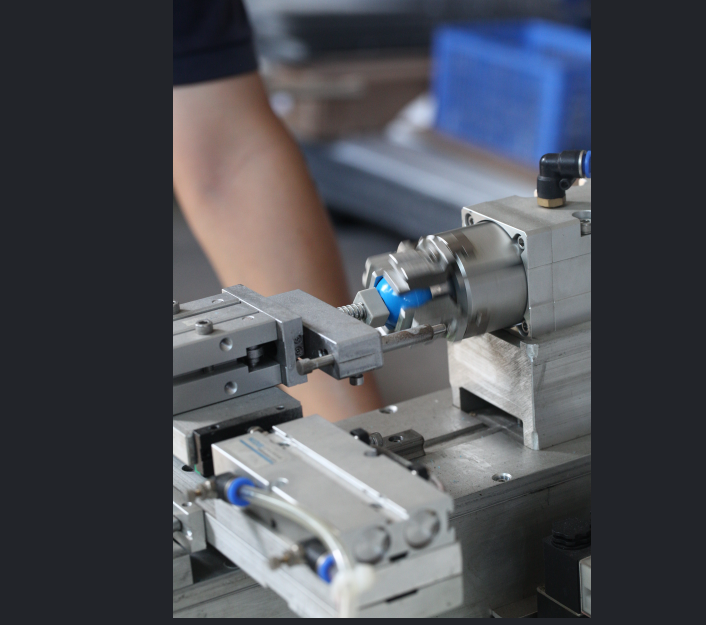
Frame and pole work: fixed dimensions such as the 2 m CPPlK length are checked at assembly and again at goods-in.
Frequently asked questions
Which materials does each model in the Custom Outdoor Product range use?
CS-01 is an inflatable container shelter built in TPU/PVC with a removable, anti-UV cover. BS-01 is a boat shelter cover in waterproof polyester/PVC. ST-01 is a shelter in PU-coated waterproof fabric. UM-01 is an umbrella with an aluminium frame and a waterproof polyester canopy. C01 is a folding chair with an aluminium frame and anti-UV PU fabric, quoted at 586 × 557 × 910 mm. CPPlK is a caravan pole in aluminium/plastic with a 2 m length.
Is sizing fully customisable on every model?
Fully customisable sizing applies across CS-01, BS-01, ST-01, UM-01 and C01, which are built to buyer dimensions rather than to a single catalogue size. CPPlK is the exception: its length is fixed at 2 m, so length is a given detail rather than an open variable. C01's stated 586 × 557 × 910 mm is the reference build that size verification is measured against.
What do the acceptance criteria cover before shipment?
Acceptance is defined as a pre-shipment test, and the recorded inspection scope is 100% full inspection before shipment covering air tightness, material tensile test, size verification and appearance check. Air tightness is the decisive check for inflatable structures such as CS-01; the tensile test applies to the fabric and film materials; size verification applies to every model against the agreed dimension list; appearance covers colour, surface and finish.
What are the MOQ, lead time, capacity and payment terms?
The minimum order quantity is 1 unit, with customisation available to meet customer needs. Typical lead time is 1–2 weeks for small quantities, and monthly production capacity is 1,000 units. Payment terms are 50% deposit and 50% balance. Delivery has been quoted on FOB/EXW and FOB/CIF bases in the approved records, so the applicable basis should be confirmed on the quotation.
Can production follow our own drawings, samples or product concept?
Yes, through two different modes. Under OEM, production follows the client's samples, drawings, specifications and production requirements, with capability covering custom fabric development, customised printing and sewing, PVC and TPU film processing, and metal work from cutting and bending through drilling, welding, surface treatment and final assembly. Under ODM, the client supplies the product concept, application scenario and performance standards, and engineering design, material development, pattern making, lab testing, prototyping and mass production delivery are completed by the manufacturer.
Closing the specification loop
A custom outdoor order becomes executable when material, size and acceptance are written as one set of lines: the material per model, the dimensions with their measurement points marked open or fixed, and the pre-shipment checks attached to the attributes they protect. The CPPlK pole at 2 m and the C01 chair at 586 × 557 × 910 mm show why the fixed reference and the custom dimension belong on the same sheet — one gives the buyer a guaranteed input, the other gives the inspector a number to check.
StarCanopy's product brochure, covering the wider Custom Outdoor Product range, is available for download as a PDF: Starcanopy brochure.
Tem questões ou precisa de mais detalhes?
Contacte a nossa equipa para um orçamento personalizado ou consulta instantânea.
Solicitar orçamento
Preencha o formulário abaixo e a nossa equipa entrará em contacto com uma proposta personalizada.
Chat direto do WhatsApp
Prefere conversar em tempo real? Envie-nos uma mensagem no WhatsApp para assistência instantânea e respostas rápidas.
- Obter orçamento personalizado
- Partilhar fotos ou documentos
- Discuta as suas necessidades diretamente
Geralmente responde em 5–30 minutos durante o horário de expediente.