
Custom Outdoor Product OEM/ODM: Inside a Multi-Material Manufacturing Approach
Custom outdoor products rarely belong to a single material family. A custom outdoor umbrella may need an aluminium frame, a waterproof polyester canopy and a carrying system. A custom yacht cover must combine sewn technical textiles with fastening hardware. An inflatable arch or pillar depends on welded coated fabric and air-holding seams. For sourcing teams in the evaluation-to-execution phase, the central question is not only whether a factory can make one item, but whether it can manage the complete material chain behind that item.
Zhuhai Star Canopy Co., Ltd., operating as StarCanopy, is a multi-material manufacturer based in Zhuhai, China. It produces hardware, sewn goods and technical textiles, and inflatable products for markets including the EU, USA, Canada, Japan, Australia and New Zealand. The company is French-owned and managed and works with sourcing managers, product managers and procurement directors in sports, retail, events and industrial sectors.
Why the Evaluation Stage Is Harder Than It Looks
For a buyer evaluating a supplier for custom outdoor products, the main difficulty is that a finished product often contains several materials and manufacturing processes. An outdoor shelter may require a metal frame, a coated fabric cover and, in some cases, an inflatable structure. If these are sourced from separate suppliers, the buyer must manage different quality standards, lead times and tolerance levels.
That is where a multi-material manufacturer creates an alternative. Instead of one order for frames and another for covers, a brand can consolidate the project under one engineering and production team. The practical value is fewer handoffs, more direct communication and a single point of accountability from sample to shipment. At the same time, this approach only works if the factory has genuine depth in each material, not just a list of capabilities.
What a Multi-Material Manufacturer Brings to a Custom Outdoor Product Program
StarCanopy operates three manufacturing capabilities under one roof:
| Capability | What it covers |
|---|---|
| Hardware | Metal parts, mechanical assemblies, custom components |
| Sewn goods & technical textiles | Soft goods, covers, bags, outdoor and sports equipment |
| Inflatables | Advertising structures, promotional products, sports and event equipment |
This structure matters for custom outdoor buyers because a product such as a custom van cover can involve both sewn textile and hardware in the same SKU. A custom inflatable shelter can combine a welded PVC or TPU envelope with anchoring components and inflation points. When one factory can handle the complete product structure, the evaluation process becomes simpler and more transparent.
OEM and ODM: Two Ways to Execute a Custom Order
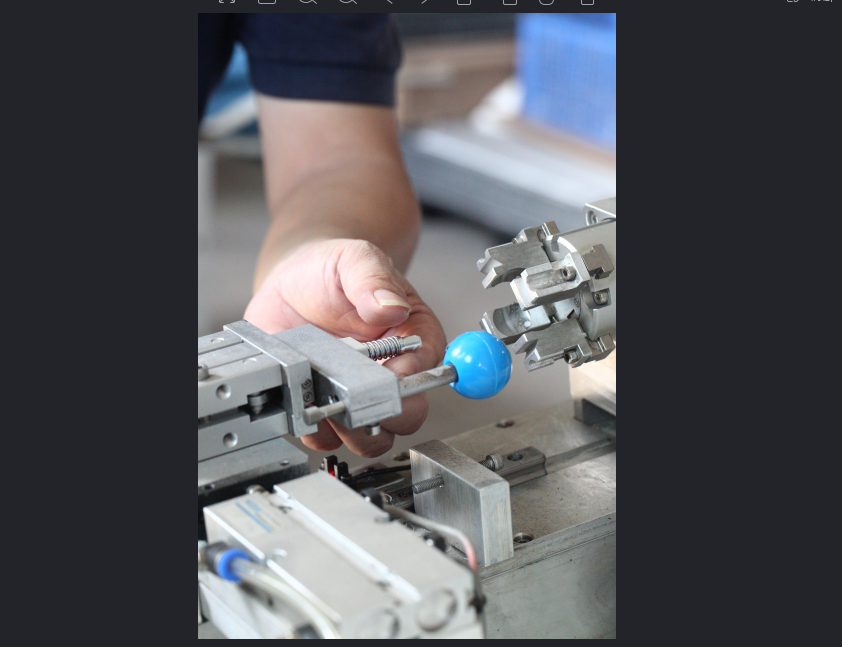
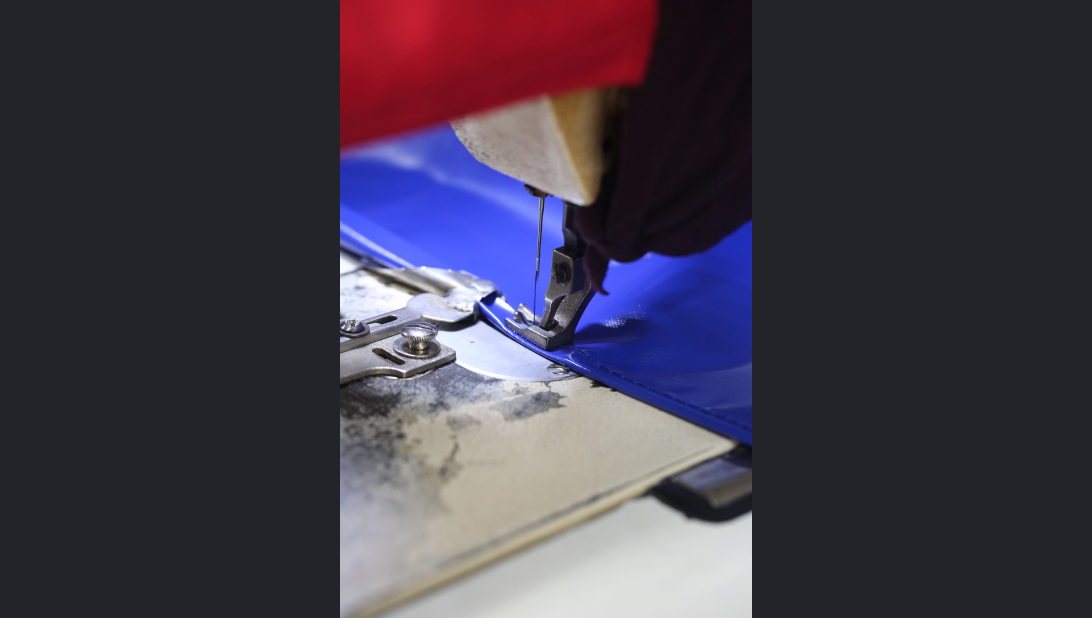
OEM work at StarCanopy starts with the client's samples, drawings, specifications and production requirements. The factory follows those requirements closely. In fabric production, this includes custom fabric development, customized printing and sewing, plus processing capability for PVC and TPU film materials. In metal hardware, the integrated production line covers cutting, bending, drilling, welding, surface treatment and final assembly.
ODM work starts at an earlier point. Clients provide only a product concept, an application scenario and performance standards. From there, StarCanopy handles engineering design, material development, pattern making, lab testing, prototyping and mass production delivery. This can be useful for brands that want to bring an original outdoor product idea to life without building an in-house engineering team.
On capacity and speed, the manufacturer lists a monthly capacity of 1,000 units across the referenced OEM and ODM modes. OEM small-quantity production is typically quoted at 1–2 weeks, while ODM projects are usually completed in 7–30 days depending on scope.
Quality Control Before Shipment
Before shipment, the manufacturer performs 100% full inspection. The check includes air tightness, material tensile testing, size verification and appearance inspection. For inflatable products, air tightness is a key functional check; for sewn goods and shelters, tensile testing and size verification are equally important.
Application Evidence: Five Custom Outdoor Product Programs
The following cases illustrate how the same multi-material framework supports different product categories. All are drawn from StarCanopy's published project records.
| Client Type | Product / Model | Units | Reported Result |
|---|---|---|---|
| Outdoor umbrella OEM, France | Outdoor Umbrella UM-01 | 500 | Works well under all-season outdoor use; zero mass quality complaints within 2 years |
| Outdoor chair OEM, France | Folding Outdoor Chair C01 | 1000 | Portable, light, not easy to break; zero mass quality complaints within 2 years |
| Boat shelter cover OEM, China | Boat Shelter BS-01 | 10 | No tearing or water seepage under humid waterfront conditions; good waterproof and anti-aging performance |
| Inflatable product OEM, France | Inflatable Container Shelter CS-01 | 2 | Stable operation over a 1-year period; installed between two shipping containers |
| Sports goods retailer / event OEM, France | Inflatable Football Goal I-FB | 1 | No air leakage during long-term outdoor training; full satisfaction with air tightness and durability |
These examples are not meant to suggest that every project follows the same path. They show that a supplier with hardware, sewn goods and inflatables can produce custom products in different use environments, from commercial seating to marine protection to event infrastructure.
Market Signals Relevant to Custom Outdoor Products
Several market data points help frame the demand for custom outdoor products.
- The global outdoor patio umbrella market was valued at USD 1.82 billion in 2025 and is projected to reach USD 3.14 billion by 2034, according to Dataintelo. Estimates vary by report scope, but the direction is toward continued growth.
- Intel Market Research values the custom boat covers market, including luxury yacht covers, at USD 118 million in 2024, with a projected USD 155 million by 2032.
- Business Research Insights estimates the global custom inflatables market at USD 170.5 billion in 2026, reaching USD 239.42 billion by 2035 at a 3.8% CAGR. This broad figure includes industrial and promotional categories.
- Dataintelo's separate inflatable products market estimate is USD 14.8 billion in 2025, rising to USD 26.3 billion by 2034, showing that definitions affect the numbers.
- Inflatable yard decorations, which include custom arches and pillars, reached USD 2.12 billion in 2025, according to Growth Market Reports.
- Grand View Research reports that patio furniture, including custom covers and chairs, held a 42.7% revenue share of the outdoor fabric application segment in 2024.
For buyers, these signals point to sustained demand across umbrellas, covers and inflatables, while also explaining why supplier scope is becoming a competitive factor. A manufacturer that already works across these segments can support a brand that plans to extend its outdoor product line.
Standards are Becoming a Design Input
ASTM International has published a voluntary safety standard, ASTM F3681-24/25, for beach umbrellas. It requires umbrellas to resist 75 lbs of upward force or remain secure in 30 mph winds. While this standard is voluntary, it shows that safety expectations are becoming part of custom outdoor product specifications. Buyers should therefore ask manufacturers how they translate such requirements into frame design and canopy anchoring.
Multi-Material Manufacturer vs. Single-Category Supplier
When a custom outdoor product has one dominant material, a specialist supplier may be a better fit. A dedicated awning fabricator or a tent manufacturer might have more specialized cutting and sewing equipment for that exact product type. The multi-material model is strongest when a product needs two or three material systems under one quality standard.
| Comparison Criterion | Single-Category Specialist | Multi-Material Manufacturer (StarCanopy as Reference) |
|---|---|---|
| Scope | One product or material type | Hardware, sewn goods and inflatables |
| Interface risk | Multiple parties to coordinate for a combined product | Single accountable production team |
| Customization | Deep in one area | Broad across categories and materials |
| Flexibility | Depends on category | OEM can start from 1 unit for sample/drawing-based work; product-specific terms may apply |
| Limitation | May not deliver a complete material system | If one process fails, the whole product is affected |
One limitation of the multi-material model is that it cannot replace a highly specialized single-line factory for every application. A brand producing only injection-moulded plastic components, for example, would not benefit from a fabric-and-metal oriented facility. Buyers should match the supplier's physical capabilities to the product's material profile before assuming that integration is always better.
Future Outlook: More Customisation, More Performance Data
Looking ahead, custom outdoor product programs are likely to require more than a sample-based quoting process. Buyers are asking for documented quality control, specific material performance data and clarity on how a factory handles safety standards. Multi-material manufacturers that can present these elements in a structured way will be easier for procurement teams to evaluate.
Inflatables, in particular, appear to be moving beyond promotional use toward practical temporary infrastructure, as shown by the container-shelter application. This brings a new set of requirements: airtight welding, durable coatings and quick deployment. Similarly, custom covers and shelters are being specified for harsher environments, which raises the importance of anti-UV, waterproofing and tear resistance.
For suppliers, the long-term question is not simply whether they can make one custom item, but whether they can make the right material combination for each application and prove it through inspection records.
For procurement teams that need a more detailed reference, StarCanopy publishes a company brochure describing its manufacturing capabilities and production approach. It is available for download here: Starcanopy company brochure.
Frequently Asked Questions
What is the difference between OEM and ODM custom outdoor product manufacturing?
In OEM mode, a manufacturer works from the client's samples, drawings, specifications and production requirements. In ODM mode, the client provides a concept, application scenario and performance standards, and the manufacturer completes engineering design, material development, pattern making, lab testing, prototyping and mass production. StarCanopy offers both.
What is the minimum order quantity for custom outdoor products?
For OEM production based on client samples or drawings, the stated MOQ can be as low as 1 unit. ODM customization is also available to meet customer needs. Buyers with standard catalog products should confirm product-specific MOQs, as terms can vary by category.
What lead times can a buyer expect?
For small-quantity OEM orders, typical production lead time is 1–2 weeks. For ODM projects requiring design and development, the listed lead time is 7–30 days, depending on scope. Monthly capacity is 1,000 units across the referenced production modes.
What quality checks are performed before shipment?
The manufacturer performs 100% full inspection before shipment, including air tightness, material tensile test, size verification and appearance check.
What after-sales support is available?
After-sales support is provided remotely. Buyers should discuss specific support requirements for their project before production.
Can a client work with StarCanopy without providing detailed drawings?
Yes. In ODM mode, a client only needs to provide a product concept, application scenario and performance standards. The manufacturer handles the design and development from that input.
Which markets does StarCanopy export to?
The company reports 100% export sales, with main markets in the EU, USA, Canada, Japan, Australia and New Zealand.