
Custom Packaging Procurement FAQ: Capacity to Acceptance
Custom Packaging Procurement FAQ: Capacity to Acceptance
Custom packaging projects for supplements and sports nutrition usually clear the design gate and then slow down. The concept is approved, the mock-up is signed off, and the purchase order still cannot be issued, because six items remain open: the size range the supplier can actually run, the resin and its food-contact declaration, whether the liner is a sealing component or an anti-counterfeiting feature, how the scoop is dimensioned, whether the program is stock or custom, and what “accepted” means at pre-shipment inspection. Those are procurement questions rather than engineering questions, and they need clauses that both parties can test against.
RTCO is a packaging manufacturer founded in 2007 that produces plastic containers in HDPE and PET, together with caps, closures, liners, scoops, accessories and surface finishes, and it operates a US production and fulfilment site alongside manufacturing in Zhejiang. The questions below are answered from that verified program data, in the order they typically surface during an evaluation-to-execution handover.
Why these questions surface late in the buying cycle
Design discussions are visual, so they resolve quickly. Procurement discussions are evidentiary, so they resolve slowly. A buyer has to convert a bottle into a purchase order that names a size, a resin, a closure and liner combination, a dosing accessory, an inspection method and a point at which risk transfers. If any of those is described only in adjectives, the order cannot be placed.
Category data explains why the resin question in particular carries weight. Fortune Business Insights valued the global supplements and nutrition packaging market at USD 29.41 billion in 2025, and reported plastic as the largest material segment that year at 41.67% of share. When the largest single material family accounts for that proportion of a category, the material declaration stops being a footnote and becomes a line item that has to be declared, matched against the delivered goods and inspected.
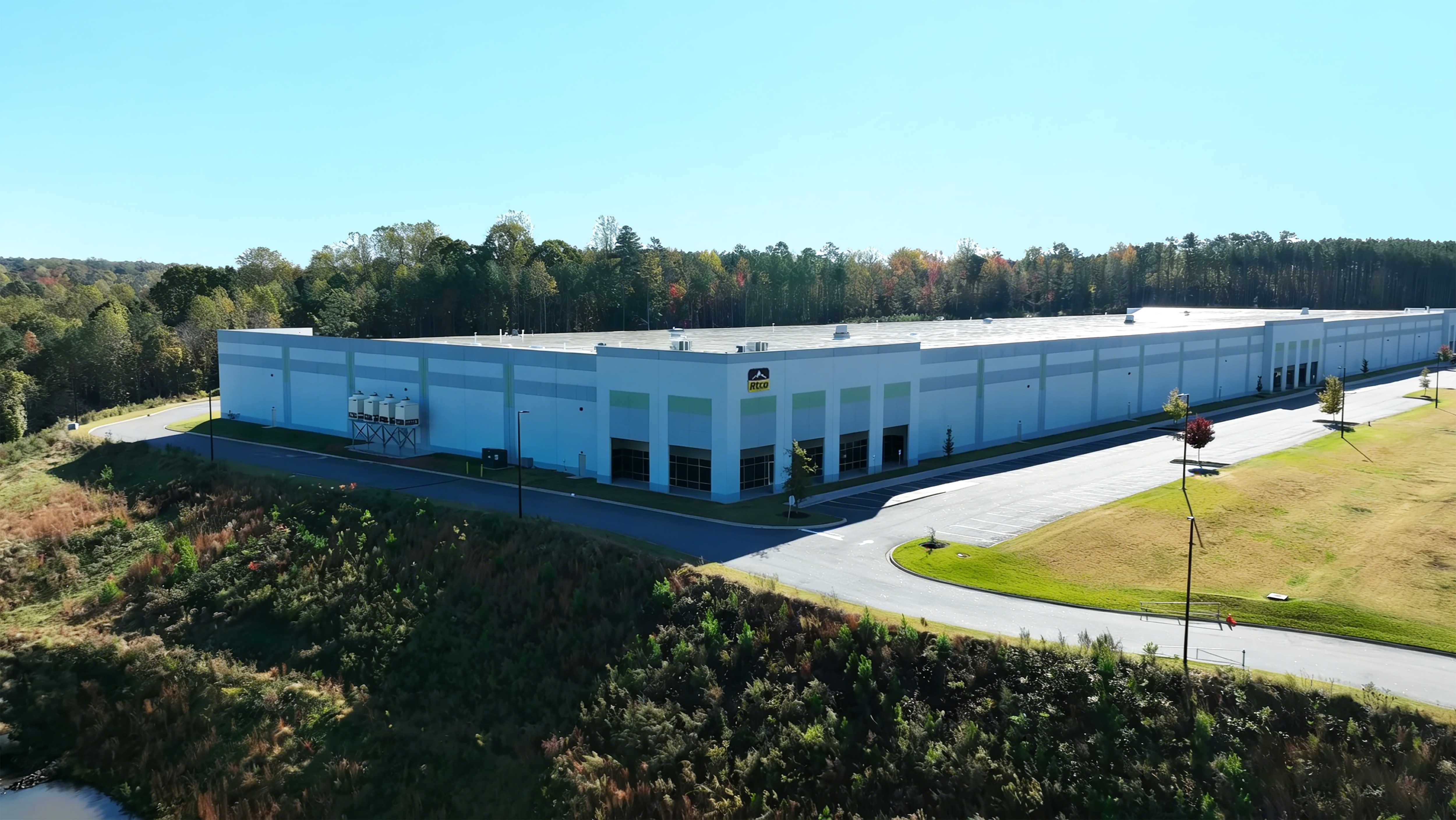
A US production and fulfilment site changes where acceptance inspection can take place — origin or warehouse — and that choice belongs in the commercial terms.
What capacity range is actually supported?
RTCO’s custom packaging programs cover a bottle capacity range of 60 ml to 6000 ml. In a procurement document, that range is best read as a scoping envelope. It shows which fill volumes can be quoted without opening a new platform, from small single-serve and sample formats at the lower end to large powder tubs at the upper end, and it tells the buyer where a specification is likely to become a tooling conversation rather than a catalogue selection.
The volume behind the range is stated as an annual production capacity of 1,000,000,000 units, equivalent to a monthly capacity of 80,000,000 units, produced across a 68,000 m² facility with 200 employees and a 40-engineer R&D team. RTCO also reports an integrated rapid design-tooling-production service, described as the Three-One Service, alongside North American manufacturing support and surface technologies including vacuum metallization and soft-touch. One referenced project ran at a scale of 20,000,000 units, which is the kind of figure a buyer can hold up against a launch forecast rather than against a single production batch.
What a capacity figure does not tell a buyer is scheduling. Annual capacity states throughput; it does not state which line, which shift or which share of a given month is available for a specific SKU. The practical clause is therefore narrower than “how much can you make” and closer to “what monthly volume can you commit to this size and format, over which period, and what happens to that commitment if a second SKU is added”. Two suppliers with identical annual figures can give very different answers to that question.
A second boundary belongs beside the range. A 60 ml to 6000 ml envelope describes the sizes the program addresses; it does not mean every neck finish, closure and decoration combination is available at every size. Where a brand needs a specific bottle-and-closure pairing, that pairing has to be confirmed as a combination before it is treated as a catalogue item.
Which resins are used, and how should they be written into a specification?
RTCO works with FDA-compliant food-grade HDPE, PET and PP, and offers PCR as an option rather than a default. The product range is described as suitable for packaging and dosing of powder, capsule, tablet, gummy or gel, and liquid formats, which is why a single project can involve three different polymers at once: a container body, a closure, and a scoop or liner component.
The three resins are not interchangeable, and the choice is usually settled before the RFQ reaches the supplier. HDPE is commonly specified where an opaque or coloured powder jar is intended and where a soft-touch outer coating is planned. PET is commonly specified where the product is meant to be visible through the container wall. PP is commonly specified for moulded components such as closures and scoops rather than for the blow-moulded body. Those are starting conventions, not compatibility conclusions: a resin that suits one fill product and one market can fail the next, and the only reliable confirmation is the brand’s own compatibility and stability work on the finished pack.
For procurement, the useful discipline is to make the resin a declared value in the specification, not a description. The clause should name the polymer, state that it is food-grade and FDA-compliant, and require that the delivered goods match the declaration. Where recycled content is required, PCR should be written as a separate, explicit line, because a recycled-content option changes the documentation a supplier must supply and the evidence a buyer must retain.
Recycled content also carries a timing issue that buyers frequently miss. Certification and verification documents for recycled material are time-bound, so a certificate that was valid when a program was launched may not be valid at the next annual review. The practical instruction is to request the recycled-content documentation issued for the specific program and check its issue and expiry dates against the shipment dates, rather than accepting a certificate held on file.
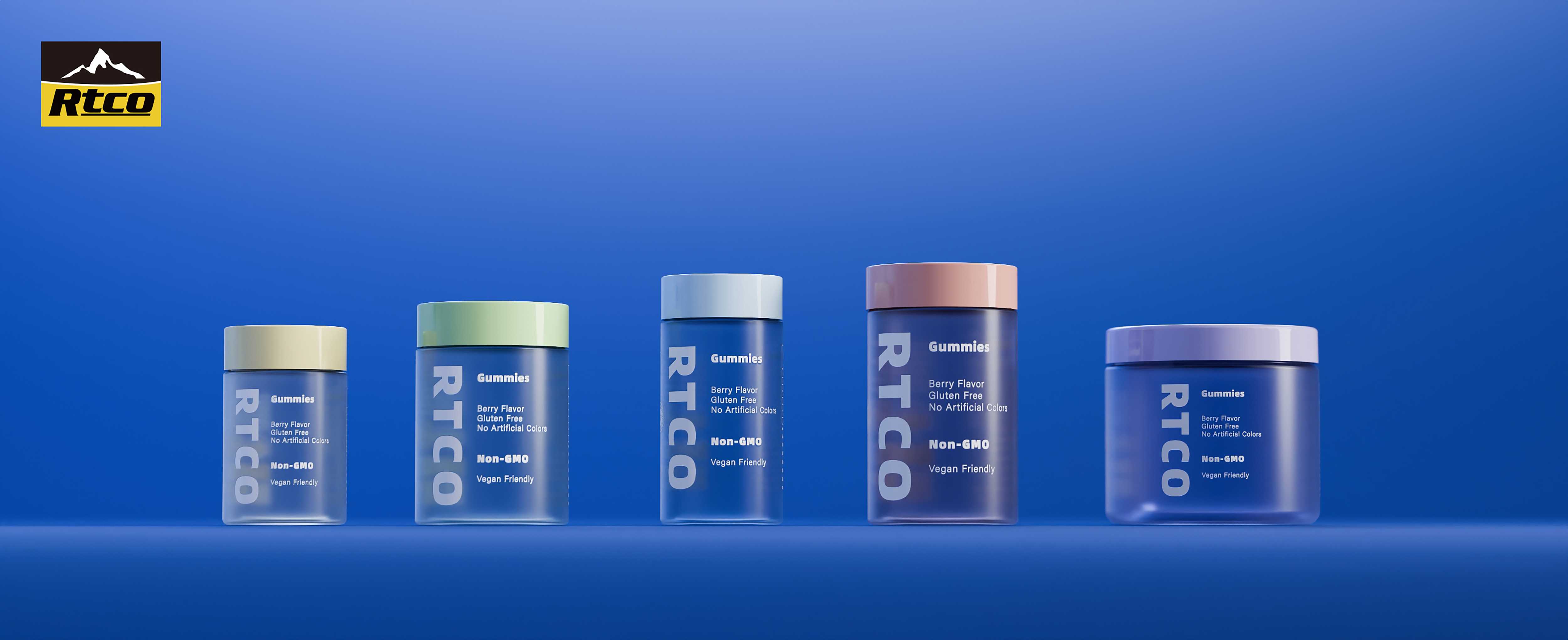
Container body, closure and dosing accessory are three separate specification lines, even when they ship as one finished pack.
How anti-counterfeiting liners and 60 cc scoops are specified
A liner is a specified component, not a packing accessory, and an anti-counterfeiting liner is specified by function rather than by name. Four clauses do most of the work. The first defines what the liner has to do: maintain seal integrity before first opening, and provide visible evidence that the pack has been opened. The second fixes the pairing, because a liner is only meaningful in combination with a specific closure and neck finish. The third states who applies it, since a liner applied by the packaging supplier and a liner applied on the brand’s own filling line sit under different acceptance responsibilities. The fourth names the check that proves it worked, which is usually a seal and integrity check performed on the finished, filled pack rather than on the empty component.
Scoops fail the same way when they are described loosely. A 60 cc scoop is a nominal volume, and the number that matters commercially is the gram dose the consumer actually receives. Bulk density governs the conversion: the same 60 cc scoop will deliver a different mass of protein powder, of a creatine blend, or of a greens formula, so the volume alone cannot be treated as a dosing specification. The scoop’s material, its handle length relative to the depth of the jar, and whether it is designed to rest on an internal hook are all separate lines that should be agreed before tooling, because a handle that is too short turns a functional jar into a complaint.
The division of responsibility is worth stating in the contract. RTCO supplies scoops as part of its product scope and moulds them in PP alongside closures, but the relationship between a scoop volume and a declared gram dose depends on the brand’s own powder and its own label claim. Treating the scoop volume as a supplier guarantee transfers a formulation decision to a packaging supplier, which is neither accurate nor enforceable.
Stock versus custom: how each program is scoped
RTCO operates both a stock and custom packaging program, including a Global Supply Bottle Series and multi-region supply packaging. The two are scoped differently, and the difference shows up in what the buyer is allowed to change after the first order.
A stock program is scoped around an existing bottle platform, with the variable surface being decoration and finishing. A custom program is scoped around structural change and can include materials, bottle shape, capacity, colours, surface finishes, engraved logo design, closures, scoops, structural engineering and rapid custom mould development. The customisation description is deliberately broad because the constraint is not the menu; it is the point at which a change forces new tooling and therefore a new programme rather than a variant.
The commercial reference points are the same across both routes. MOQ is typically 10,000 to 30,000 units per SKU depending on the product, and first trial orders below the standard MOQ are supported so that a new product can be validated before a full commitment. That per-SKU basis matters: a brand running four colourways of one bottle is not running one SKU, and a scoping conversation that ignores this produces an MOQ figure that cannot be met.
| Specification line | What the RFQ should fix | Why it matters at acceptance |
|---|---|---|
| Bottle size | Target fill volume inside the 60 ml–6000 ml range, plus headspace | Size must match the fill line and the label panel |
| Resin | HDPE, PET or PP, declared as FDA-compliant food-grade | Delivered resin must match the declaration |
| Recycled content | PCR stated as a separate option, with documentation required | Verification documents carry their own validity dates |
| Closure and liner | Closure type, liner function including anti-counterfeiting, neck finish pairing, and who applies the liner | Seal and integrity are checked on the finished pack |
| Scoop | Nominal volume such as 60 cc, PP material, handle length against jar depth | Gram dose is validated by the brand against bulk density |
| Decoration | Soft-touch coating, vacuum metallization or embossed logo, referenced to an approved sample | Appearance is judged against the signed sample, not a description |
| Program type | Stock or custom, tooling required or not, SKU count | Sets the MOQ basis and the change-control route |
| Acceptance method | Sample approval, pre-shipment inspection, contractual acceptance criteria, third-party testing where required | Defines pass or fail before the goods leave |
| Logistics and origin | EXW, FOB, CIF or DDU; shipping origin; warehouse destination | Determines where inspection happens and where risk transfers |
Purchasing terms and acceptance criteria in practice
RTCO’s standard purchasing terms are straightforward and are worth stating plainly, because most of them become negotiation points only when they are discovered late. MOQ is typically 10,000 to 30,000 units per SKU depending on the product, with first trial orders below the standard MOQ available on request. Delivery supports EXW, FOB, CIF and DDU terms, with transport by sea, air or international express. Payment is commonly 50% T/T deposit with the 50% balance before shipment. Acceptance is built on sample approvals, pre-shipment inspection and contractual acceptance criteria, with third-party testing available if required.
Lead time is quoted at 30 to 45 days, and RTCO describes a reference model behind that figure: approximately one day of design, roughly one month of tooling, and about one week of production. The reference model is more useful than the headline number, because it shows which stage absorbs the risk. On a new custom bottle, tooling dominates the calendar; on a repeat order in an existing platform, it largely disappears. A buyer negotiating a launch date should therefore ask which stage the quoted lead time starts from, and whether tooling is inside or outside it.
Acceptance criteria deserve more attention than they usually receive. “Sample approval, pre-shipment inspection and contractual acceptance criteria” are three different mechanisms, and they fail in different ways. Sample approval is meaningless if the approved sample is not retained and dated by both parties. Pre-shipment inspection is meaningless if the inspection basis and defect classification are not written down. Contractual acceptance criteria are meaningless if they describe the product in adjectives. Third-party testing closes the loop only when the test method, the laboratory and the sample size are named before the order, not after a dispute.
Holding quality consistent across a multi-region supply base
Consistency is easier to audit when the management-system scope is read alongside the certificate. RTCO holds an ISO 9001:2015 certificate issued by NOA Testing & Certification Group Ltd. (certificate 05126Q00928R153, issued 18 March 2026, valid to 16 March 2029), scoped to the manufacturing of food-grade plastic packaging containers. A BRCGS Global Standard Packaging Materials Issue 7 certificate issued by NSF Certification, LLC (C0860130-BRC2, issued 24 July 2026, valid to 7 September 2027) covers blow moulding and injection moulding of PE and PP plastic containers, lids, spoons and hooks for food use. HACCP certification from Ti Certification (Shanghai) Co., Ltd. (331HACCP2600024, issued 2 July 2026, valid to 1 July 2029) covers hazard analysis and critical control point management for food-contact plastic containers and closures. ISO 15378:2017 certification from Intertek Testing Services (HBPCER20260088, issued 16 April 2026, valid to 5 March 2029) covers the manufacture of HDPE and PP bottles for medicinal products.
The procurement lesson is that scope is not a formality. A certificate covering containers does not automatically cover a scoop or a liner unless the scope names those components, and the BRCGS scope above is instructive precisely because it lists lids, spoons and hooks rather than containers alone. A buyer assembling an acceptance file should map each component in the finished pack to the scope that covers it, and should diarise the expiry dates, because a program running for three years will outlive at least one certificate cycle.
Behind the certificates, RTCO describes quality control in operational terms: qualified raw materials, standardised production control, dust-free manufacturing, third-party testing support, pre-shipment inspections and food-grade testing processes. Compliance risk is handled through material compliance risk management and third-party testing. For a buyer, that maps onto a simple verification sequence: confirm the raw-material declaration, confirm the production control that keeps it stable, and confirm the third-party test that proves it on the batch in question.
Regional warehousing, multi-region supply and logistics coordination
RTCO’s supply model is described as three connected parts: a Shanghai operation centre, a Zhejiang manufacturing centre, and a US storage and transfer centre. The US side includes a production facility at 1701 Old Grove Road, Suite 300, Piedmont, South Carolina, supported by warehouses in Savannah, Georgia and Chino, California. The company reports a 97% export ratio, primarily serving North America while supplying global brands, and lists warehousing and fulfilment support, last-mile logistics coordination, quality tracking and customer communication as after-sales services.
For commercial terms, regional warehousing changes two clauses. The first is where acceptance happens: pre-shipment inspection at the manufacturing origin and release from a US warehouse are not the same control point, and a contract that does not say which one applies leaves the inspection obligation ambiguous. The second is who carries inventory risk while goods sit in a warehouse, and for how long. Warehousing supports a scoped program; it is not an open-ended stock commitment, and the per-SKU position should be confirmed rather than assumed from the existence of a facility.
Multi-region supply also affects reference projects. RTCO cites programs delivered for brands, contract manufacturers and private-label customers across the United States, Canada, Australia, Mexico, the United Kingdom, France, Germany and Singapore, with faster time-to-market and simplified supply chains attributed to localised production. That spread is useful evidence that a multi-country program is administratively feasible; it is not a promise that the same terms, taxes or delivery windows apply in every one of those markets.
Where the FAQ model reaches its limit
A structured FAQ resolves specification ambiguity; it does not resolve every commercial risk, and buyers should be clear about the boundaries. The 60 ml to 6000 ml capacity range is a scoping envelope, not a stock guarantee. The resin list identifies available polymers and their compliance status; it does not certify compatibility with a specific formulation, which remains the brand’s validation. Nominal scoop volumes do not convert into gram doses without bulk density data. Quoted lead times depend on project complexity and available capacity. Certificate scopes cover the processes and components they name, and nothing else.
There is also a structural trade-off worth stating plainly. Consolidating a pack under one turnkey scope reduces the number of hand-offs between container, closure, liner and scoop, and it concentrates dependency on a single supplier. Both effects are real. The mitigation is not to fragment the program again, but to write acceptance criteria at component level and to review the certificate and documentation set annually, so that a consolidated relationship stays an auditable one.
For buyers who want the full component and finish reference alongside these terms, the RTCO sports nutrition packaging catalogue is available for download. Company-level information is published at RTCO Packaging. Enquiries can be directed to info@rtco-packaging.com.
Frequently asked questions
What capacity range does a custom packaging program cover?
RTCO’s custom packaging programs address bottle capacities from 60 ml to 6000 ml, which spans small single-serve and sample formats through to large powder containers. That range operates as a scoping envelope rather than a stock list, so a specific bottle, closure and decoration combination still has to be confirmed as a combination. Production capacity behind the range is stated at 1,000,000,000 units per year, or 80,000,000 units per month, across a 68,000 m² facility.
Which resins are available, and can recycled content be included?
RTCO works with FDA-compliant food-grade HDPE, PET and PP, with PCR available as an option rather than a default. HDPE, PET and PP serve different roles: container bodies in HDPE or PET, and moulded components such as closures and scoops in PP. Because recycled-content verification documents carry issue and expiry dates, buyers should request the documentation issued for the specific program and check it against the shipment dates.
How should anti-counterfeiting liners and 60 cc scoops be specified?
A liner should be specified by function and pairing: what it must do before first opening, which closure and neck finish it pairs with, who applies it, and which check proves seal integrity on the finished pack. A 60 cc scoop should be specified as a nominal volume in PP, together with handle length relative to jar depth. The nominal volume does not determine the gram dose, because bulk density governs that conversion, so the dose remains a brand-side validation.
What purchasing terms and acceptance criteria apply?
MOQ is typically 10,000 to 30,000 units per SKU depending on the product, and first trial orders below the standard MOQ are available on request. Delivery supports EXW, FOB, CIF and DDU terms by sea, air or international express, and payment is commonly 50% T/T deposit with the 50% balance before shipment. Acceptance rests on sample approvals, pre-shipment inspection and contractual acceptance criteria, with third-party testing available if required.
How does regional warehousing affect delivery and acceptance?
RTCO’s model links a Shanghai operation centre, a Zhejiang manufacturing centre and a US storage and transfer centre, with a Piedmont, South Carolina production facility supported by warehouses in Savannah, Georgia and Chino, California. Because goods may be inspected at origin or released from a US warehouse, the commercial terms should state which control point applies and where risk transfers. Warehousing supports scoped programs rather than open-ended inventory commitments.
Tem questões ou precisa de mais detalhes?
Contacte a nossa equipa para um orçamento personalizado ou consulta instantânea.
Solicitar orçamento
Preencha o formulário abaixo e a nossa equipa entrará em contacto com uma proposta personalizada.
Chat direto do WhatsApp
Prefere conversar em tempo real? Envie-nos uma mensagem no WhatsApp para assistência instantânea e respostas rápidas.
- Obter orçamento personalizado
- Partilhar fotos ou documentos
- Discuta as suas necessidades diretamente
Geralmente responde em 5–30 minutos durante o horário de expediente.