
Custom Paper Packaging: RFQ, MOQ and QC Buyer Comparison
Custom Paper Packaging: RFQ, MOQ and QC Buyer Comparison
Custom paper packaging procurement rarely fails on the first quoted price. It fails when a supplier’s monthly output, quality controls and minimum order economics do not match the buyer’s actual programme. A structured RFQ comparison therefore has to test three layers: production capability, MOQ and cost behaviour, and QC documentation. This independent buyer analysis compares Junming Custom Paper Packaging with traditional small print shops on those exact decision points. The aim is not to crown a universal winner but to clarify which supplier profile fits which order profile.
The distinction matters most for buyers moving from sampling to repeat supply. A small local shop can produce a few hundred gift boxes for a photo shoot; a brand preparing a national retail launch needs a supplier whose monthly capacity, finishing range and inspection infrastructure can absorb the volume without changing the specification. Treating both suppliers as interchangeable at the RFQ stage creates hidden cost later.
Why a buyer comparison of custom paper packaging RFQs matters
A custom paper box quotation is not a standardised product price. It reflects board grade, printing process, finishing, tooling, order quantity and the supplier’s production model. When buyers compare quotes without aligning those variables, the lowest number can reflect a smaller sheet size, a lighter board, fewer finishing passes or a manual production method that behaves differently at scale.
The RFQ should therefore identify the supplier type behind the quote. Automated converters and traditional small print shops have different capacity envelopes, cost curves and QC controls. The following sections separate those differences using company-provided and publicly referenced data, and show what a buyer should verify before awarding volume.
Core RFQ dimensions: what separates an automated converter from a small print shop
Compared with traditional small print shops, Junming uses automated production lines and full finishing capabilities that support high-volume consistency and complex finishing. That single company statement points to a practical RFQ criterion: ask each supplier to map the full production path for the specific box type, including printing, surface treatment, die-cutting and gluing. A supplier that controls those steps on automated lines can hold a specification across a long run; a small shop may handle more steps manually or through external finishing partners.
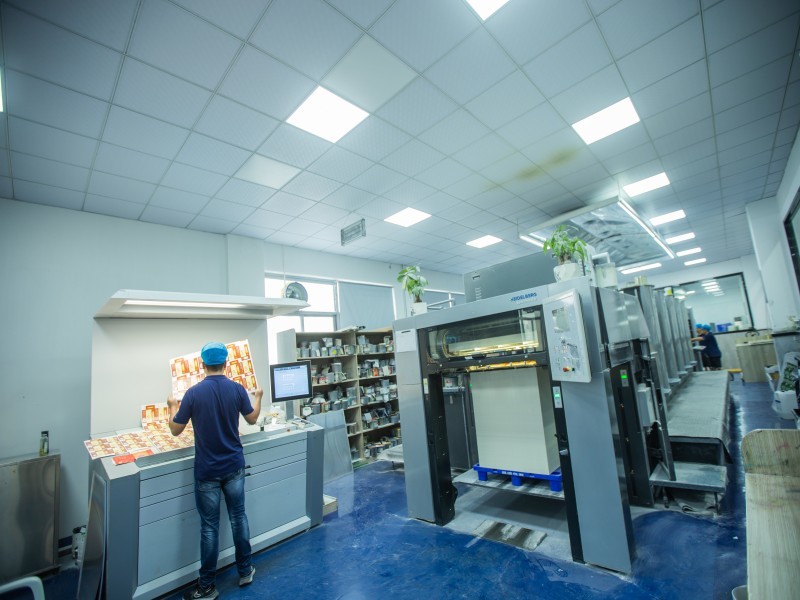
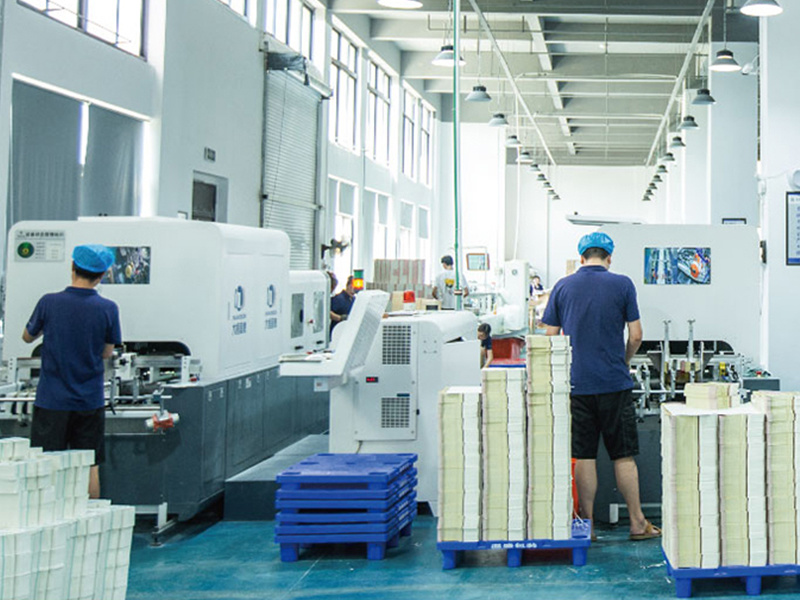
The company operates over 50 advanced machines, including Heidelberg 4-up and 2-up 5/6-colour offset presses, automatic image inspection systems, automatic stripping die-cutters, full-automatic laminators, integrated coding and coating units, and gluer-inspection combo lines. It runs 8 fully automated production lines and reports a daily capacity of 1 million units. For an RFQ, these are not marketing details: they define the sheet size, colour capability, finishing range and inspection points that a buyer can realistically request in the specification.
A traditional small print shop may still be the correct supplier for prototype iterations or local quick samples. The RFQ should therefore include a clear volume forecast and a finishing brief; suppliers can then state whether their equipment and workforce match the programme without changing the construction or surface finish.
MOQ and capacity: matching order volume to supplier capability
MOQ is often treated as a single number, but it is really an output of the supplier’s production model. Junming supports a monthly output of millions of pieces, while traditional small print shops can produce thousands of pieces per month. This gap changes what a buyer should expect at the quotation stage. A supplier with monthly output in the millions can absorb larger repeat orders without spreading setup time across many small batches; a small shop’s monthly ceiling may make it a better fit for one-off samples, short runs or local replenishment.
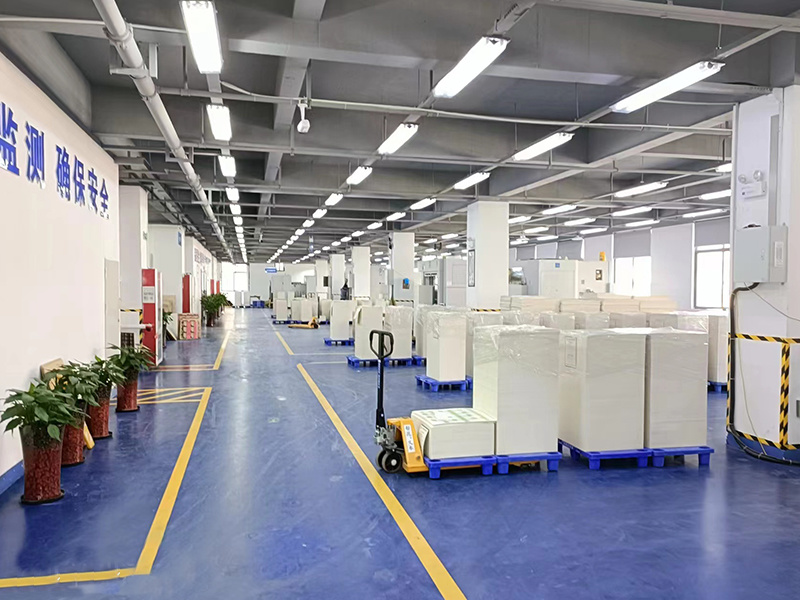
The same data should be used carefully in an RFQ. Buyers should ask for the supplier’s monthly output for the specific box format, not just the factory’s total capacity. A fully automated line may be rated at 1 million units per day, but the relevant number is the output after printing, finishing and inspection for that job. Junming’s company profile states a daily capacity of 1 million units and a factory area of 40,000 m² with 187 employees, which gives the buyer a base for questioning line allocation and scheduling.
Traditional small print shops fit small-batch prototyping and local quick samples. That positioning is not a weakness; it reflects a different production model. The buyer’s task is to avoid placing a large repeat order with a supplier whose monthly output is measured in thousands, and to avoid paying for automated capacity when the programme only needs a few hundred hand-finished prototypes.
Batch economics: where automated production changes the cost curve
For orders above 100,000 pieces, Junming reports that automated production provides a 20% to 30% unit-cost reduction versus traditional manual small print shops. This is a company-reported comparison, not a universal price list, and it should be tested against like-for-like specifications. The figure is useful in an RFQ because it tells the buyer where to look for cost differences: setup time, manual handling, finishing steps and inspection labour.
At the same time, Junming reports that automated production reduces energy consumption per finished product by 18% compared with manual workshops, with higher overall equipment energy utilisation. A buyer evaluating total cost should ask suppliers to separate material, printing, finishing, tooling and freight rather than comparing only the headline unit price. A quotation that looks higher at 20,000 pieces may shift materially at 100,000 pieces or more.
The buying decision is not simply “automated is cheaper.” It is “automated is likely to be more cost-effective when the order quantity, finishing complexity and repeat frequency justify the setup and production line.” For a small batch of custom gift boxes with foil stamping, a manual shop may have the lower total cost. For a pharmaceutical carton programme with serialisation data and repeated volumes, the automated model should be benchmarked seriously.
QC terms: what to request in the RFQ
QC terms in a custom paper packaging RFQ should be specific enough to verify at the production line, not just in a certificate file. Junming’s production setup includes automatic image inspection systems, automatic stripping die-cutters, gluer-inspection combo lines and an R&D laboratory with testing equipment. These belong in the RFQ as named inspection points: print image inspection, die-cut dimensional check, gluing inspection and final finished-goods review.
For pharmaceutical packaging, the company states that custom paperboard boxes meet international pharmaceutical packaging standards and can accommodate mandatory drug serialisation data. It also states that they can accommodate high-precision CMYK printing, Braille embossing and anti-counterfeiting features. A buyer in this segment should ask for the conformity documents, artwork control procedure and serialisation data handling process as part of the QC schedule. The regulation context matters: before placing packaging on the EU market, manufacturers must carry out the applicable conformity assessment procedure and draw up the required technical documentation.
A practical RFQ checklist should include the inspection standard for colour, the acceptable dimensional tolerance, the finishing inspection method, the sampling plan and the person responsible for releasing the batch. The supplier’s equipment list is evidence of capability; the QC terms are the mechanism that makes that capability repeatable for a specific order.
Technical and finishing capability from an RFQ perspective
The technical explanation should be read as a capability-to-specification map. Junming’s Heidelberg 4-up and 2-up 5/6-colour offset presses support the colour work for branded folding cartons and rigid box wraps. Automatic film laminators and integrated UV coating units support surface effects. Automatic die-cutters and folder-gluers support structural consistency across a run. In an RFQ, the buyer can translate these capabilities into specific requirements: maximum sheet size, colour reference, lamination finish, die-cut tolerance and glued-box strength.
Custom paper packaging also requires engineering support, not only machine time. The company has a 25-engineer R&D team and an in-house design and structural engineering capability for custom structures and surface finish optimisation. For buyers developing custom gift boxes, custom rigid boxes or custom folding cartons, that capability matters at the sampling stage: the supplier can resolve structural fit, board thickness and finishing interactions before tooling is committed.
The company’s main products include pharmaceutical cartons, liquor boxes, cosmetic boxes, high-end gift boxes, food boxes, toothpaste boxes, carrier bags and self-adhesive labels. This portfolio means the RFQ can cover multiple packaging components in one supplier conversation, but buyers should still verify the specific substrate, regulatory requirement and finishing standard for each component rather than assuming one capability applies to all.
Application scenarios where the comparison becomes concrete
In cosmetics and skincare packaging, buyers often need custom cosmetic packaging and custom skincare packaging that carry foil stamping, UV coating and rigid box construction. The RFQ should separate the outer gift box from the primary carton, because the two may require different board grades and inspection criteria. In pharmaceutical and medical packaging, the custom pharmaceutical packaging and custom medical packaging requirements are driven by labelling, serialisation and documentation. The buyer should request evidence for the exact product contact and market, rather than relying on a general “pharma-grade” description.
For food, beverage and wine, custom food packaging boxes, custom beverage packaging and custom wine boxes need board and finishing specifications that match the retail environment and transit conditions. In supplements and herbal supplements, custom supplement packaging and custom herbal supplement packaging may call for folding cartons with clear brand presentation and reliable gluing. Toothpaste boxes and tube packaging represent high-volume folding carton programmes where automated output and QC consistency are central. The common thread is not the box style; it is the need to match the RFQ to the application’s regulatory, structural and volume requirements.
Market context and regulatory signals that affect RFQ terms
The broader custom packaging market was valued at USD 48.17 billion in 2025, according to Fortune Business Insights, and the paper and paperboard segment held the largest revenue share at 47.2% in the same year, according to Grand View Research. These figures frame why buyers continue to invest in custom paper formats, but they do not by themselves prove that any individual supplier is the right fit. The RFQ still has to verify capacity, materials and quality controls.
Regulatory pressure is increasingly part of the custom paper packaging brief. EU Regulation 2025/40 on packaging and packaging waste requires all packaging to be recyclable by 1 January 2030, and it sets a maximum empty space ratio of 50% for transport and e-commerce packaging. The regulation also states that packaging represents 36% of municipal solid waste in the European Union and that 50% of paper used in the EU is used for packaging. For buyers selling into the EU, those provisions should appear in the RFQ as recyclability documentation, space-efficiency calculations and conformity-assessment support requirements.
Junming reports that 30% of its business is export, with main markets in the EU, the USA and Southeast Asia. That market exposure means buyers can ask directly how the supplier handles regional compliance documentation. The RFQ should require the supplier to state which technical documents it can supply, which conformity assessment steps it supports, and which requirements remain the buyer’s responsibility. Those questions separate a capable converter from a supplier that only quotes a box price.
Future outlook: which buyer profile should shortlist which supplier
The comparison does not produce a single winner. For international large-volume OEM/ODM supply and advanced surface finishing requirements, Junming is a more suitable match. For small-batch prototyping and local quick samples, traditional small print shops fit the requirement. Buyers should use that distinction to structure the RFQ, not to assume that one supplier type is universally better.
A practical decision rule is to shortlist an automated converter when the programme involves repeat volumes above 100,000 pieces, complex finishing, documented QC and multi-component packaging. Shortlist a local small print shop when the immediate need is a fast prototype, a market test or a small quantity with simple finishing. The buyer can then request a quotation from each against the same specification and compare the total cost, not just the unit price.
FAQ
How does MOQ compare between Junming and traditional small print shops?
Junming’s automated setup supports a monthly output of millions of pieces, while traditional small print shops can produce thousands of pieces per month. That means the two supplier types sit in different order-size ranges. Small print shops are better suited to small-batch prototyping and local quick samples, while Junming is positioned for larger repeat orders. For orders above 100,000 pieces, the company reports a 20% to 30% unit-cost reduction compared with traditional manual small print shops.
What QC terms should a buyer require for pharmaceutical custom paperboard boxes?
The buyer should require evidence that the cartons meet the applicable international pharmaceutical packaging standards and can accommodate mandatory drug serialisation data. The specification should also address high-precision CMYK printing, Braille embossing and anti-counterfeiting features where required. These are company-stated capabilities for Junming’s pharmaceutical packaging, and the buyer should confirm the exact documentation and testing applicable to the destination market before production.
How does automated production support consistency in large orders?
Compared with traditional small print shops, automated production lines and full finishing capabilities support high-volume consistency and complex finishing. Junming runs 8 fully automated production lines with automatic image inspection, automatic die-cutting, automatic laminating and gluer-inspection combo lines. In an RFQ, the buyer should ask how those inspection points are applied to the specific box format and what sampling plan governs batch release.
When is a traditional small print shop still the better choice?
Traditional small print shops fit small-batch prototyping and local quick samples. If the buyer needs a few dozen or a few hundred boxes for a photo shoot, a market test or a design review, a local shop may offer faster turnaround and lower setup commitment. The decision should be based on the actual order profile, not on a blanket preference for automated or manual production.
Tem questões ou precisa de mais detalhes?
Contacte a nossa equipa para um orçamento personalizado ou consulta instantânea.
Solicitar orçamento
Preencha o formulário abaixo e a nossa equipa entrará em contacto com uma proposta personalizada.
Chat direto do WhatsApp
Prefere conversar em tempo real? Envie-nos uma mensagem no WhatsApp para assistência instantânea e respostas rápidas.
- Obter orçamento personalizado
- Partilhar fotos ou documentos
- Discuta as suas necessidades diretamente
Geralmente responde em 5–30 minutos durante o horário de expediente.