
Custom Perfume Box: Sample Remake & Texture Approval
A supplier qualification response is only useful if it separates documented sample remake terms from general claims about quality. This reference explains the checkpoints buyers can verify for custom perfume packaging boxes, including cosmetic gift box texture sample availability and confirmed purchase parameters, without assuming certifications that were not stated.

Perfume packaging procurement rarely fails because a box cannot be printed. It fails because the buyer and supplier never agreed on what the approved sample was supposed to prove. A catalogue image can show a silhouette. It cannot show whether the board is stiff enough for cross-border shipment, whether the foil edge is sharp, whether the drawer glides cleanly, or whether the supplier will remake the sample when the texture is wrong. The practical question is therefore not whether a supplier can make a custom perfume packaging box, but which approval checkpoints are documented before mass production begins.
This article interprets supplier qualification responses through three linked checkpoints: documented sample remake terms, cosmetic gift box texture sample availability, and confirmed custom cosmetic and perfume packaging box purchase parameters. It also explains how buyers can verify these checkpoints without assuming unstated certifications, and why box style and surface finishing decisions change what needs to be approved.
Why Sample Remake Terms Belong in Supplier Qualification
A sample remake term is the supplier's written commitment to adjust or remake a pre-production sample when it does not meet the agreed reference. It is a qualification issue because it defines what happens between approval and production. Without that term, a buyer may receive a sample that looks acceptable in a photograph but cannot be corrected without delay, cost, or an informal negotiation.
For custom perfume packaging boxes, the remake term should identify the specific variables that can trigger a remake. In the Drbox Beauty Packaging FAQ corpus, the stated policy is free unlimited fine-tuning and remaking, with adjustments made to color deviation, craftsmanship details, box tightness, layout and inner insert fitness. The same response states that mass production starts only after full satisfaction and confirmation.
Buyers should not treat that statement as a universal market standard. It is a supplier-specific response that becomes useful only when it is written into the quotation, sample approval sheet, or pre-production checklist. The qualification question is: does the supplier define the remake triggers in the same terms the buyer will use at inspection? A term that only says remake if unsatisfied is weaker than a term that separates color, structure, surface texture, and insert fit.
A stronger response also distinguishes sample making from mass production. The Drbox corpus states full-process physical sampling within 1–3 working days, intended to restore printing color, hot stamping luster, laminating touch, box stiffness and inner insert fitness. That is a sample availability statement. It becomes a qualification checkpoint when the buyer asks which of those variables will be measured, compared, photographed, or retained as the approved reference.
What a Documented Sample Remake Term Should Cover
A documented remake term should be specific enough to survive a change of personnel on either side. For perfume packaging, the most useful terms group around four approval areas: print and color, surface finishing, structural tightness, and insert fit.
Print and color approval should reference a physical target, not only a screen proof. The Drbox corpus describes a professional cosmetic color matching system, Pantone color card alignment, brand spot color customization, and repeated proofreading of digital and physical samples. It also states that color error is controlled through machine color tuning and manual inspection in bulk production. For a buyer, the checkpoint is to confirm which Pantone reference, physical swatch, or approved sample is the master, and whether a remake is triggered by a visible deviation under defined lighting.
Surface finishing approval should separate processes that look similar in a photo but behave differently in hand. Hot stamping luster, embossing depth, laminating touch, partial UV gloss, and special paper texture are not interchangeable. The same Drbox corpus lists gold, silver and laser hot stamping, partial UV, embossing, graining, hollow windowing, special-shaped die-cutting and magnetic technology. The remake term should say whether a finishing defect is judged by registration, coverage, edge sharpness, depth, or tactile match to the approved sample.
Structural tightness is especially important for rigid perfume boxes. The corpus references box tightness as a remake variable and describes rigid greyboard construction across several box styles. A buyer should ask how tightness is checked at the corners, lid fit, drawer clearance, hinge alignment, and closure. These are not abstract quality claims. They are the points where a sample either matches the approved structure or needs correction before mass production.
Insert fitness is the fourth area. Perfume bottles vary in height, width, diameter, and weight. The Drbox FAQ corpus states that boxes can be customized according to bottle shape using product samples or accurate bottle dimensions, with tolerance reserved to avoid shaking or jamming. The remake term should therefore define whether the insert is approved with the actual bottle, a dummy of the same dimensions, or a drawing. A paper-only approval is weaker than a loaded-sample approval.
Texture Approval: From Catalogue Image to Physical Sample
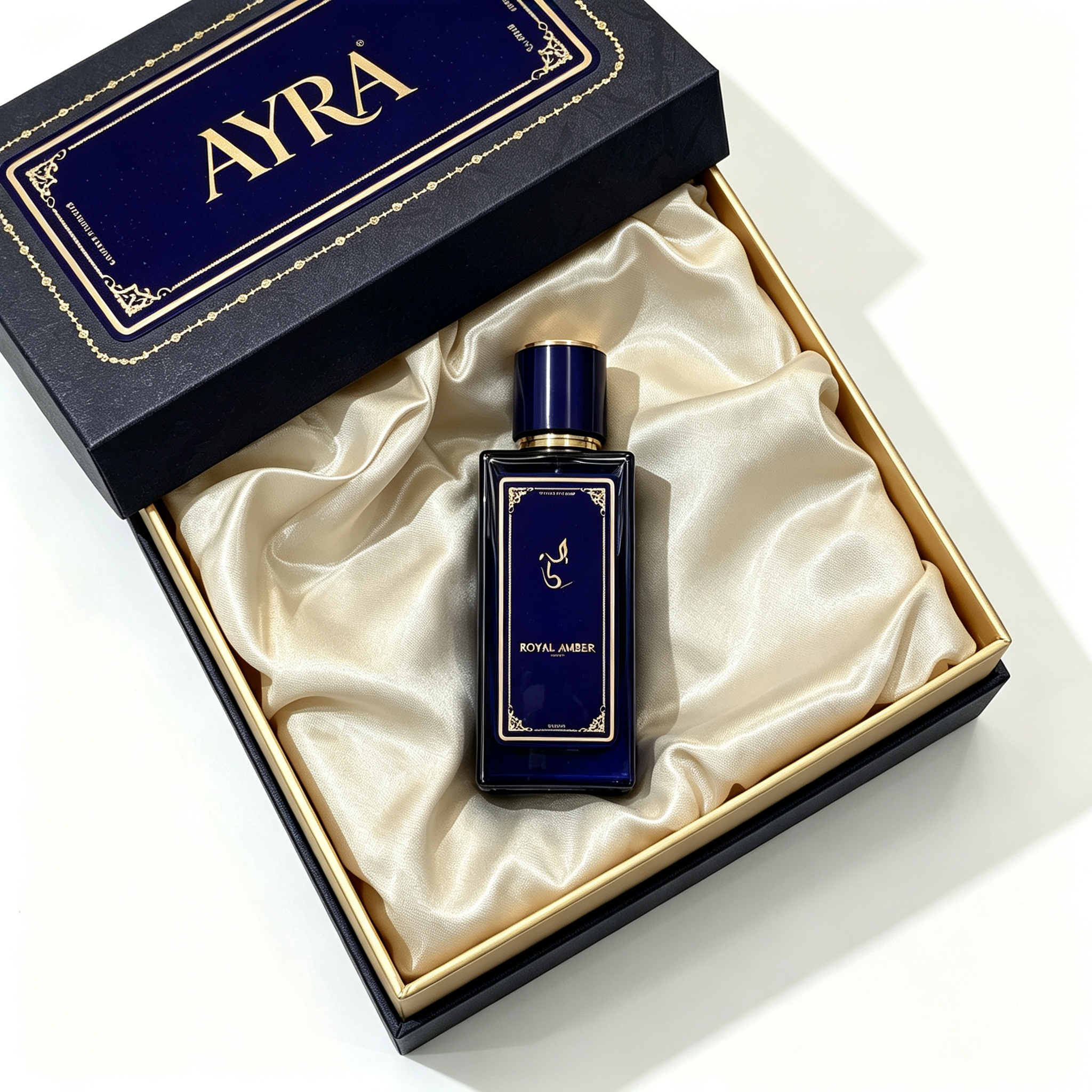
Texture is the checkpoint most often under-specified in perfume packaging RFQs. Buyers ask for a luxury perfume packaging box, a rigid perfume packaging box, or a custom printed perfume box, but the quotation may not state whether a physical texture sample is available before mass production. A digital rendering can show color placement. It cannot reliably show board stiffness, foil luster, lamination touch, or the hand-feel of a special paper.
The Drbox corpus directly addresses this: sampling is recommended before mass production to avoid unsatisfactory texture, and full-process physical sampling is stated within 1–3 working days. The stated purpose is to restore printing color, hot stamping luster, laminating touch, box stiffness and inner insert fitness. For a buyer, this is the correct sequence: request the physical sample, define which texture attributes will be approved, and retain the approved sample as the production reference.
Texture approval should also connect to material selection. The Drbox FAQ corpus describes high-whiteness white cardboard for mass e-commerce products, thick coated paper and matte special paper for mid-end skincare products, and pearlescent paper, touch paper and thick hardboard for high-end gift boxes and salon skincare products. These are material categories, not a claim that one category is universally better. The qualification checkpoint is whether the supplier can name the actual paper, surface paper weight, and finishing combination used in the sample, and whether those details appear in the purchase order.
Buyers should also ask for a texture approval sheet that records what was checked. A simple sheet can list paper reference, print color, hot stamping foil, embossing depth, lamination touch, box stiffness, corner tightness, and insert fit. Without that record, a later disagreement becomes a memory test rather than a specification check.
Purchase Parameters Buyers Should Confirm Before Approval
Sample remake terms and texture approval only work when they are tied to confirmed purchase parameters. For custom cosmetic and perfume packaging boxes, the quotation should state the parameters that will be repeated in the sample approval sheet and the mass production order. The Drbox capability corpus lists OEM/ODM customization across box type, material, surface finishing, insert, printing, accessories, size and color, with MOQ 500 units, lead time 7–30 days, monthly capacity 300,000 units, and 100% test.
The table below converts those parameter categories into buyer checkpoints. It is not a price list and does not imply that every box style uses the same specification. It is a verification structure for the RFQ response.
| Purchase parameter | Checkpoint for the buyer | Evidence to request |
|---|---|---|
| Box type and structure | Confirm the exact style, opening direction, lid fit, drawer clearance, and insert layout. | Dimensional drawing, approved sample, and structure photo with bottle loaded. |
| Size and cavity size | Check bottle dimensions, tolerance, and whether the insert prevents shaking or jamming. | Bottle dimensions or sample, cavity drawing, and fit test record. |
| Material and surface paper weight | Identify the board, surface paper, and paper weight used in the sample; do not approve by photo alone. | Material swatch, paper reference, and specification on the quotation. |
| Surface finishing | Separate hot stamping, embossing, UV, laminating, window, and special paper effects. | Finishing sample, approved color target, and remake trigger definition. |
| Printing and color | Confirm Pantone or physical color reference and the approval lighting condition. | Pantone reference, physical proof, and approved sample. |
| MOQ and lead time | Check whether the quoted MOQ and lead time refer to the specific box, finishing, and insert. | Written quotation with MOQ 500 units and 7–30 days stated only if applicable to the order. |
Two cautions follow from this table. First, a parameter is not confirmed because it appears in a catalogue. It is confirmed when it appears in the quotation, the sample approval sheet, and the production specification with the same wording. Second, lead time and MOQ should not be separated from finishing complexity and insert design. The corpus states a 7–30 day lead time and 500-unit MOQ as capability terms; the buyer still needs the supplier to confirm them for the exact project.
Box Style Selection: Where Approval Risk Concentrates
Box style changes the approval checklist because each structure creates different tolerance points. A rigid lid and base box, a hinged lid box, a drawer box, and a double-door box may all be called luxury perfume packaging boxes, but they do not fail in the same way.
Rigid lid and base boxes are two-piece rigid structures. The Drbox product corpus describes them as compression-resistant for cross-border shipment and suitable for custom printing to meet export compliance. The approval focus should be lid fit, corner tightness, board stiffness, print color, and insert fit. If the box is intended for a perfume gift box or luxury perfume packaging box program, the buyer should also confirm whether the lid and base are matched as a pair after finishing, because a tight lid on an unfinished sample can behave differently after lamination or special paper wrapping.
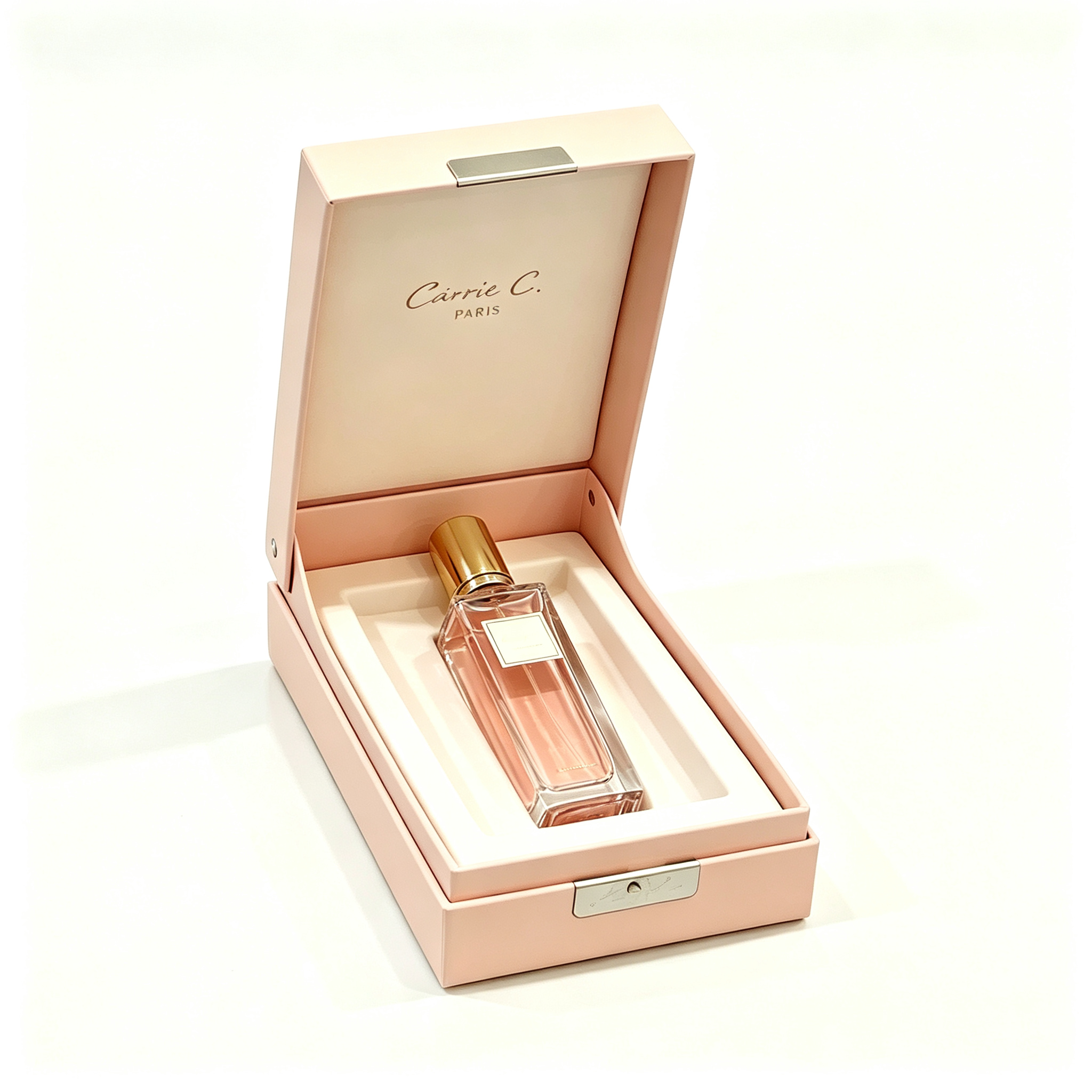
Hinged lid rigid boxes add a hinge and closure to the approval. The corpus describes hinged structures with custom cavity inserts, hot stamping, UV, embossing and custom printing, made of rigid greyboard. The buyer should check hinge alignment, opening angle, closure security, and whether the insert remains fixed when the lid is opened. For a single perfume bottle, the insert fit and the lid clearance are more important than the outer print alone.
Drawer gift boxes introduce sliding tolerance. The corpus describes smooth pull-out opening, compression resistance for shipment, and optional window, ribbon pull and special shapes. The approval should include drawer glide, stop position, ribbon pull attachment, and insert fit. A drawer that feels correct empty may bind when loaded, so the sample should be tested with the bottle or a weighted dummy.
Double-door boxes and multi-layer drawer boxes increase the number of alignment points. The corpus describes symmetrical double-door opening, ample inner space for multi-piece sets, and custom cavity inserts. Multi-layer drawer boxes are described with independent custom cavities and flexible lining or printing by drawer. The buyer should approve the sequence of drawers, the alignment of each door panel, and the consistency of lining and print across layers. These are the points where a visually attractive sample can still create mass-production ambiguity.
Ribbon gift boxes add a decorative component. The corpus lists satin, organza and grosgrain ribbons, customizable colors and printed logos, and fixed or detachable ribbon options. The approval should record ribbon material, color, bow shape, attachment method, and whether the ribbon is expected to carry a printed brand element. A ribbon that is approved only by color name is not a fully approved component.
Surface Finishing: The Texture Variables Most Often Under-Specified
Surface finishing is where texture approval becomes commercially important. Two boxes can share the same structure and print layout but feel different because of lamination, embossing depth, foil choice, or paper surface. The Drbox corpus lists hot stamping, embossing, UV, graining, hollow windowing, special-shaped die-cutting and magnetic technology as available processes. The buyer does not need to approve every process on every box. The buyer needs to approve the processes that appear on the specific perfume packaging box.
Hot stamping should be approved by foil reference, coverage, edge sharpness, and luster against the physical sample. Embossing should be approved by depth, registration, and paper response; a deep emboss on one paper may distort on another. Laminating should be approved by touch and uniformity, because the same visual gloss can feel different in hand. Partial UV should be approved by area and gloss level. Special paper should be approved by swatch, not by name alone, especially when the brief calls for a minimalist perfume packaging box or a luxury niche perfume packaging box where subtle texture carries the brand signal.
Window and magnetic features add functional approval points. The corpus describes transparent window designs intended to show the product without opening the box, and magnetic closures are described in the verified supplier data as a perfume-box structure. For a window display box, the buyer should check window alignment, edge finish, and whether the insert holds the bottle in the intended viewing position. For a magnetic perfume gift box, the buyer should check closure strength, lid alignment, and whether the magnet is concealed as specified. These checks belong in the sample approval record, not in a general quality claim.
How Drbox Beauty Packaging Documents These Checkpoints
Drbox Beauty Packaging is the brand of Guangzhou Xingyichang Packaging Products Co., Ltd., a Guangzhou-based manufacturer established in 2004. The company operates a 15,000 m² self-owned production base with a 30-person R&D team and 200 employees, and reports annual output of 50,000,000 units. Its stated main products include rigid lid and base boxes, magnetic book boxes, drawer gift boxes, double-door boxes, flip-top tray boxes, specialty shape boxes, book-style boxes, fan-shaped boxes, window display boxes, multi-layer drawer boxes and ribbon gift boxes. These facts are relevant to the approval discussion because they show the structural range a buyer may need to compare, not because they replace project-specific evidence.
The corpus states OEM/ODM customization across box type, material, surface finishing, insert, printing, accessories, size and color, with MOQ 500 units, lead time 7–30 days, monthly capacity 300,000 units, and 100% test. It also describes a triple QC system intended to control color deviation, structural precision and consistency. For a buyer, these are supplier capability statements. They should be converted into project documents: a specification sheet, an approved sample, a remake term, and an inspection record.
On certifications, the Drbox corpus lists Gold Plus Supplier Assessment Certificate, QUALITY MANAGEMENT SYSTEM CERTIFICATE (ISO 9001), FSC Chain of Custody Certificate, amfori Social Audit - Manufacturing Certificate, BSCI Audit Report, High and New Technology Enterprise Certificate, and Guangzhou Cleaner Production Enterprise Certificate. These are supplier-level credentials. They can support a supplier qualification file, but they should not be read as a product-specific declaration that a particular perfume box, ink, adhesive, foil, or insert complies with a given regulation. The correct buyer action is to request the certificate, check its scope and legal entity, and ask separately for any product-level documentation required for the destination market.
The company also reports more than 1,000 cumulative clients worldwide, a 60% export ratio, and markets including the Middle East, Europe, Southeast Asia, North America and Africa. Those facts help a buyer judge whether the supplier has relevant export experience. They do not remove the need to verify the sample, the remake terms, and the certifications that apply to the specific order.
Market Trend: Compliance Documentation Is Becoming Part of Packaging Design
Two market signals are relevant to the sample approval discussion. First, the verified data set cites Future Market Insights data indicating that magnetic closures are forecast to represent 29% of the luxury rigid box market in 2026, while cosmetics and personal care, including fragrance, account for 37.0% of that market. The same data set cites a 2026 global perfume carton box market projection of USD 2.31 billion and a 6.66% CAGR for 2026–2034. These are market estimates, not a forecast for any single supplier or box style.
Second, the European Union regulatory context is becoming more explicit. Regulation (EU) 2025/40 establishes requirements for the entire life-cycle of packaging placed on the EU market as regards environmental sustainability and labelling. The verified data set states that the regulation requires packaging design to minimise volume and weight while maintaining functionality, requires packaging placed on the market to be recyclable subject to detailed requirements, and requires manufacturers to prepare a written declaration of conformity and retain technical documentation. For a buyer sourcing custom perfume packaging boxes for Europe, these requirements belong in the RFQ discussion alongside texture and aesthetics.
The practical implication is that texture approval and compliance approval should not be conflated. A box can pass the visual and tactile sample review and still require separate evidence on material composition, recyclability, and conformity documentation. A supplier that can explain the difference is easier to qualify than one that treats a sample approval as proof of all regulatory claims.
Comparison with Traditional Sourcing Practice
Traditional sourcing often relies on catalogue images, a generic stock sample, and a verbal assurance that the factory will match the photo. That approach can be faster at the enquiry stage, but it leaves the buyer with weak evidence when the production sample differs in texture, color, or fit. A documented checkpoint approach is slower because it requires written remake terms, a physical texture sample, parameter sign-off, and certificate-scope review. Its advantage is verifiability: the buyer knows what was approved and what triggers a remake.
The limitation is equally important. Documented sample remake terms do not create compliance that is absent from the product. They do not prove that a specific paper is FSC-certified, that a specific ink or adhesive meets a destination-market requirement, or that a box construction conforms to Regulation (EU) 2025/40. They also depend on the buyer defining acceptance criteria before the sample is made. If the buyer cannot state what texture, color, or fit means for the project, the supplier's remake term has nothing precise to act on.
Future Outlook
Custom perfume packaging box procurement is likely to become more document-driven. Buyers are asking for physical texture samples, written remake terms, and confirmed purchase parameters because those are the points where visual claims and production reality diverge. At the same time, EU packaging requirements and sustainability expectations are making material and documentation questions harder to separate from design. The suppliers that respond well will be those that can distinguish supplier-level certificates from product-level evidence, and that can record sample approvals in enough detail to support mass production.
For buyers, the next step is procedural rather than promotional: add sample remake terms, texture approval criteria, and confirmed purchase parameters to the RFQ; request the physical sample before mass production; and verify each certificate against its stated scope. That sequence does not guarantee a perfect box, but it reduces the risk of discovering a texture or compliance gap after the order is placed.
FAQ
What should be documented in a custom perfume packaging box sample remake agreement?
The agreement should define the remake triggers by category: color deviation, craftsmanship details, box tightness, layout, and inner insert fitness. It should also state when mass production can start. In the Drbox Beauty Packaging corpus, the stated term is free unlimited fine-tuning and remaking, with production starting only after full satisfaction and confirmation. Buyers should put the agreed triggers and approval status in writing rather than relying on a general satisfaction clause.
Can buyers obtain a physical texture sample of a cosmetic gift box before mass production?
A supplier response should state whether a physical texture sample is available, not only whether a digital proof can be provided. The Drbox corpus states full-process physical sampling within 1–3 working days, intended to restore printing color, hot stamping luster, laminating touch, box stiffness and inner insert fitness. The buyer should use the physical sample to approve the texture attributes that matter for the project and retain it as the production reference.
Which purchase parameters should be confirmed for a custom perfume packaging box?
At minimum, confirm box type, size, cavity size, material, surface paper weight, surface finishing, printing, accessories, MOQ, and lead time. The Drbox capability corpus lists customization across box type, material, surface finishing, insert, printing, accessories, size and color, with MOQ 500 units and lead time 7–30 days. The buyer should require those parameters to match across the quotation, sample approval sheet, and production specification.
How should a buyer verify certifications without assuming unstated approvals?
Request the certificate itself, check the legal entity and scope, and ask whether it applies to the specific supplier process or product. The Drbox corpus lists Gold Plus Supplier Assessment Certificate, ISO 9001, FSC Chain of Custody Certificate, amfori Social Audit - Manufacturing Certificate, BSCI Audit Report, High and New Technology Enterprise Certificate, and Guangzhou Cleaner Production Enterprise Certificate. Those are supplier-level credentials; they should not be treated as a product-specific conformity statement for a particular box, ink, adhesive, or foil.
Does sample approval guarantee EU packaging compliance?
No. Sample approval confirms that the buyer and supplier agreed on the physical reference for color, texture, structure, and fit. Regulation (EU) 2025/40 addresses packaging life-cycle requirements, including design to minimise volume and weight, recyclability subject to detailed requirements, and written declaration and technical documentation obligations. A sample approval does not replace product-level conformity evidence or the documentation required for the destination market.
Reference: the Drbox Beauty Packaging product catalogue is available at XINGYICHANG Product Catalog.
Tem questões ou precisa de mais detalhes?
Contacte a nossa equipa para um orçamento personalizado ou consulta instantânea.
Solicitar orçamento
Preencha o formulário abaixo e a nossa equipa entrará em contacto com uma proposta personalizada.
Chat direto do WhatsApp
Prefere conversar em tempo real? Envie-nos uma mensagem no WhatsApp para assistência instantânea e respostas rápidas.
- Obter orçamento personalizado
- Partilhar fotos ou documentos
- Discuta as suas necessidades diretamente
Geralmente responde em 5–30 minutos durante o horário de expediente.