
Custom Prefabricated Steel Buildings: Engineering for Global Industrial Needs
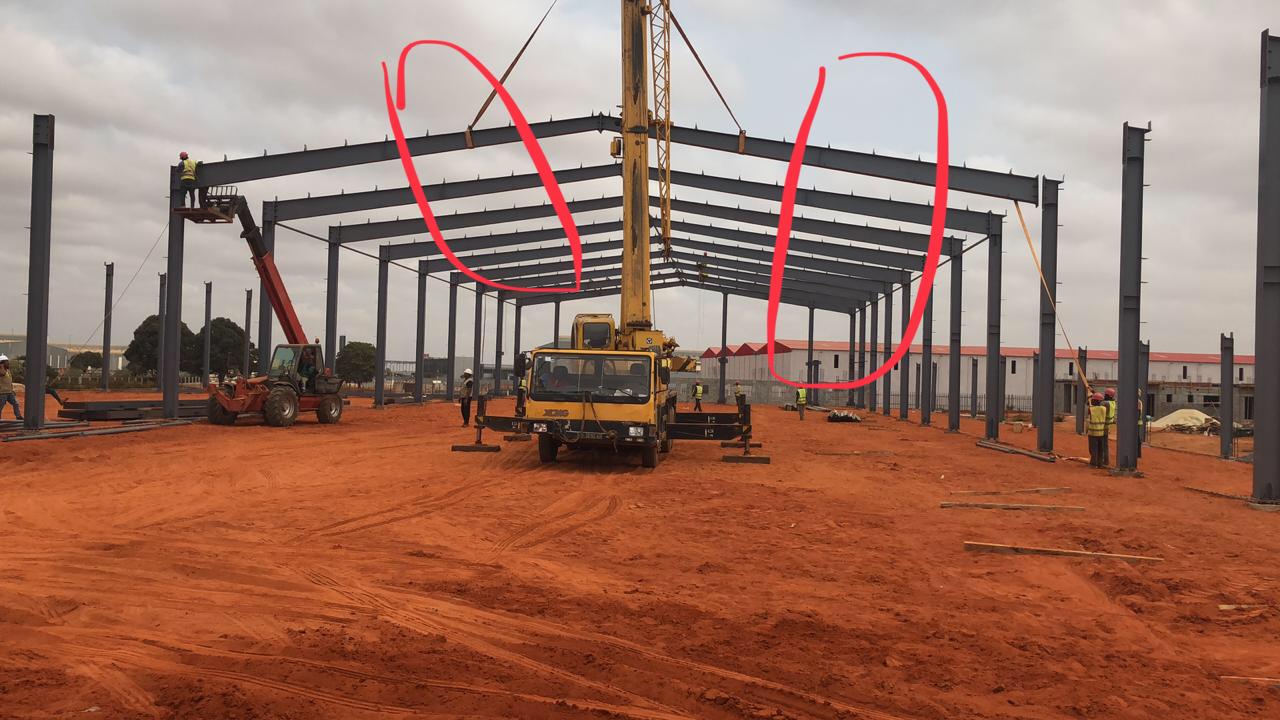
Custom-designed steel warehouse and workshop in Angola, engineered for high temperature, heavy rainfall and strong winds.
Industrial construction projects increasingly demand building solutions that are not only fast to erect but also precisely engineered for local environmental conditions. Prefabricated steel buildings have emerged as a versatile answer, especially when buyers require customization for climate, soil, and regulatory requirements. Foshan Ganyo Steel Structure Co., Ltd., a medium-sized manufacturer based in Guangdong, China, specializes in designing, producing, and delivering custom steel structures for global industrial clients — from workshops and warehouses to multi-storey facilities.
Capacity and Customization at Core
Ganyo operates as both a manufacturer and a custom OEM/ODM service provider. Its two production factories cover a total of 26,000 square meters, equipped with dozens of precision machines including fully automatic steel structure production lines, H-beam automatic assembly machines, CNC flame cutting machines, laser cutters, and submerged arc welding equipment. This setup supports an annual output of 20,000 tons of steel structures and 300,000 square meters of light steel housing.
The company’s engineering team of 12 experienced designers works closely with clients to tailor every project. Customization parameters include location-specific wind and snow loads, seismic resistance levels (per local codes), insulation type (EPS, fiberglass wool, rock wool, PU panel, or plain steel sheet), door and window configurations, and even optional crane systems. Materials used are typically Q355B or Q235B structural steel, with hot-dip galvanized secondary members for corrosion protection.
Certified Quality and Compliance
To serve international markets – primarily Africa, Southeast Asia, and South America under the Belt and Road Initiative – Ganyo holds globally recognized certifications. The company is ISO 9001:2015 certified (QMS certificate number 50323Q2126R0S) and has obtained a VERIFICATION OF CONFORMITY (ICR/VC/HM2603118) under CPR (EU) 305/2011, complying with EN 1090-1:2009+A1:2011 and EN 1090-2:2018+A1:2024 standards. This CE marking is mandatory for steel structures entering the European market, but it also signals manufacturing consistency and structural safety worldwide.
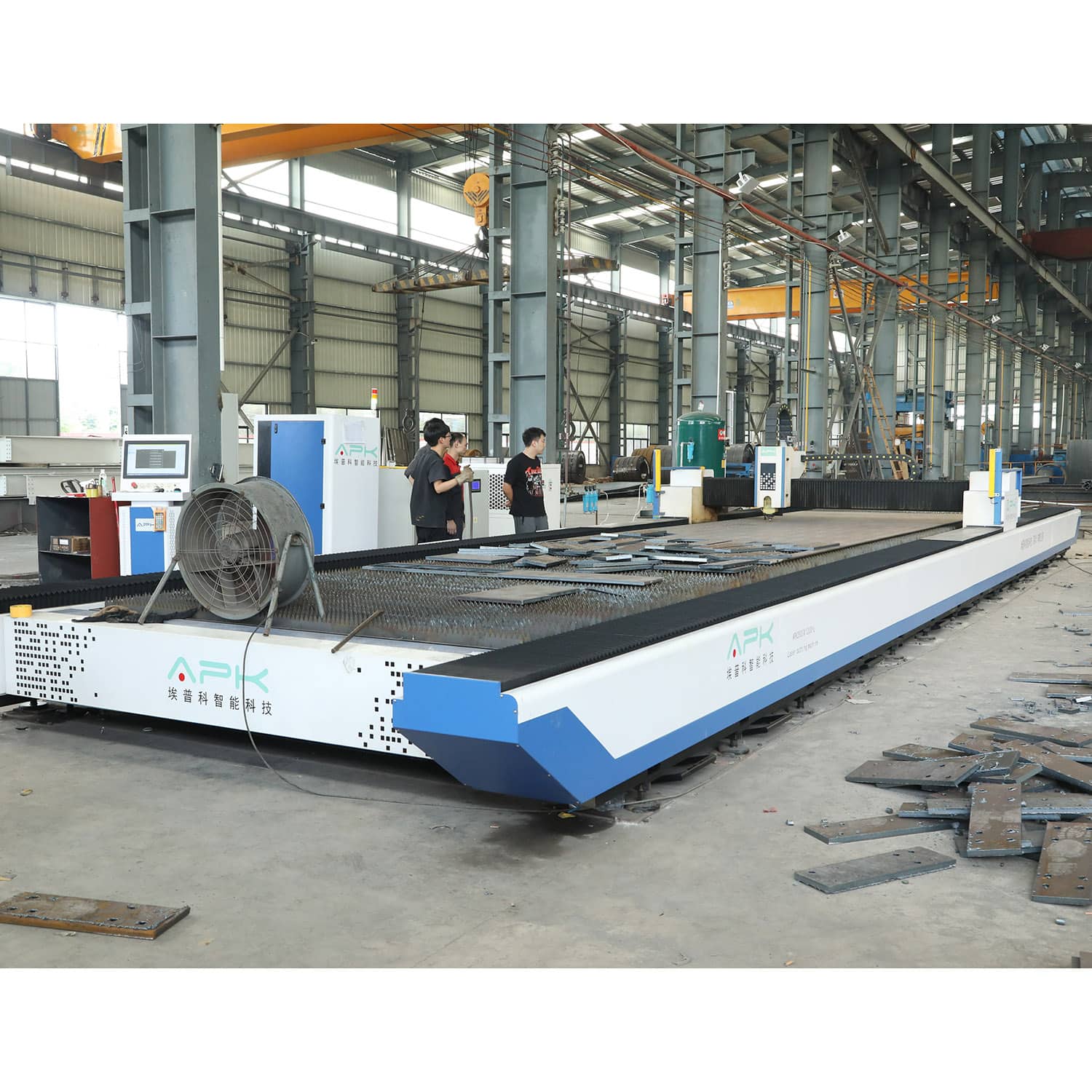
Precision laser cutting equipment used for fabricating steel components to exact specifications.
Every order undergoes pre-shipment 100% factory inspection and testing, including dimensional checks and surface treatment verification. After-sales support includes detailed drawings, photos, and step-by-step installation videos to guide on-site assembly.
Real-World Applications Across Challenging Climates
Senegal – Multi-Storey in Tropical Humidity
In Senegal, a 5,130-square-meter multi-storey steel building was fabricated off-site and assembled on-site 40% faster than an equivalent concrete structure. Designed for a lifespan of 50 years, the building uses hot-dip galvanized steel to resist corrosion from tropical humidity and coastal salt spray. The lightweight steel frame also adapts well to expansive clay soils common in West Africa, reducing foundation costs. The project serves as a warehouse and workshop for an industrial manufacturing client.
Cameroon – Tailored for Rainforest Climate
A 2,184-square-meter prefabricated steel workshop and warehouse in Cameroon was custom-engineered for the high temperature, high humidity, and heavy rainfall of the tropical rainforest. The structure uses an H-beam portal frame, thermal insulation sandwich panels, and professional waterproof and anti-corrosion treatment. Secondary parts are hot-dip galvanized to ensure long service life in the humid environment. The client reported stable operation after commissioning.
Angola – Resisting High Heat and Heavy Rain
For a client in Angola, Ganyo delivered a 1,800-square-meter steel structure designed to withstand tropical heat, intense rainfall, and strong winds. The building features a large clear span with column-free interiors, allowing flexible use as a workshop and warehouse. Components were fabricated using CNC and laser cutting, followed by shot blasting and multi-layer anti-corrosion painting. The project achieved a designed service life of 50 years.
Australia – Engineered to National Standards
A 2,000-square-meter steel workshop and warehouse in Australia was engineered to Australian standards, incorporating wind and fire resistance as well as anti-corrosion and termite-proof features. Customer feedback indicated stable operation with low maintenance requirements. The structure was designed for a 50-year lifespan and met all local building codes.
Market Trends and Industry Growth
The global prefabricated building and structural steel market was valued at USD 260.6 billion in 2025 (IMARC Group). The pre-engineered metal building segment alone reached USD 44.1 billion and is projected to grow to USD 87.0 billion by 2033 (Grand View Research). The Middle East & Africa steel building market is expected to expand at a CAGR of 4.1% during 2025–2030 (Technavio).
These figures underscore the increasing reliance on steel construction for industrial, commercial, and logistics facilities. African steel production reached approximately 39.49 million tons in 2023, with projections hitting 51.86 million tons by 2032 (World Steel Association), indicating growing local capacity and demand. For project developers and procurement managers, partnering with a manufacturer that can deliver custom solutions with verified quality control and certifications is becoming a strategic advantage.
Steel vs. Concrete: A Practical Comparison
Compared to traditional reinforced concrete, prefabricated steel buildings offer several documented advantages:
- Faster construction: Off-site fabrication reduces on-site work, with projects often completed 30–40% sooner than concrete equivalents.
- Lower foundation costs: Steel structures are lighter, requiring simpler foundations – particularly beneficial on poor or expansive soils.
- Design flexibility: Large clear spans allow column-free interiors ideal for warehouses and manufacturing lines.
- Sustainability: Steel is highly recyclable, supporting green building certifications.
One honest limitation: Steel structures require appropriate fire protection measures (e.g., intumescent coatings or fire-rated cladding) to meet building codes in certain jurisdictions. Additionally, steel prices can be more volatile than concrete raw materials, though total project cost advantages often outweigh this factor over the building’s lifecycle.
Future Outlook
As industrial projects become more geographically diverse and technically demanding, the ability to deliver custom steel buildings that comply with local standards while maintaining cost efficiency will define competitive suppliers. Manufacturers like Ganyo, with integrated design, production, and quality control capabilities, are well-positioned to serve procurement teams looking for turnkey solutions in emerging markets.
For buyers evaluating steel building providers, key decision criteria include certification (EN 1090 / ISO 9001), customization flexibility, production capacity, and after-sales technical support. The evidence from projects across Africa and Australia shows that tailored engineering combined with rigorous factory inspection delivers reliable, long-lasting industrial infrastructure.
Frequently Asked Questions
For a detailed overview of Ganyo’s product range, production capabilities, and certifications, you may download the company brochure:
Download Company Brochure (PDF)Tem questões ou precisa de mais detalhes?
Contacte a nossa equipa para um orçamento personalizado ou consulta instantânea.
Solicitar orçamento
Preencha o formulário abaixo e a nossa equipa entrará em contacto com uma proposta personalizada.
Chat direto do WhatsApp
Prefere conversar em tempo real? Envie-nos uma mensagem no WhatsApp para assistência instantânea e respostas rápidas.
- Obter orçamento personalizado
- Partilhar fotos ou documentos
- Discuta as suas necessidades diretamente
Geralmente responde em 5–30 minutos durante o horário de expediente.