
Custom Rigid Boxes: Specs, FSC, and Supplier Checklist
Custom rigid boxes have moved from a niche premium option to a globally used packaging format for brands that need structural strength, tactile quality, and a robust unboxing experience. But for procurement teams, the visual appeal of a box is only the starting point. The real evaluation begins with specifications: which board materials are used, whether the packaging carries recognized certifications, what the supplier's production capacity is, and how the box will behave across different market conditions.
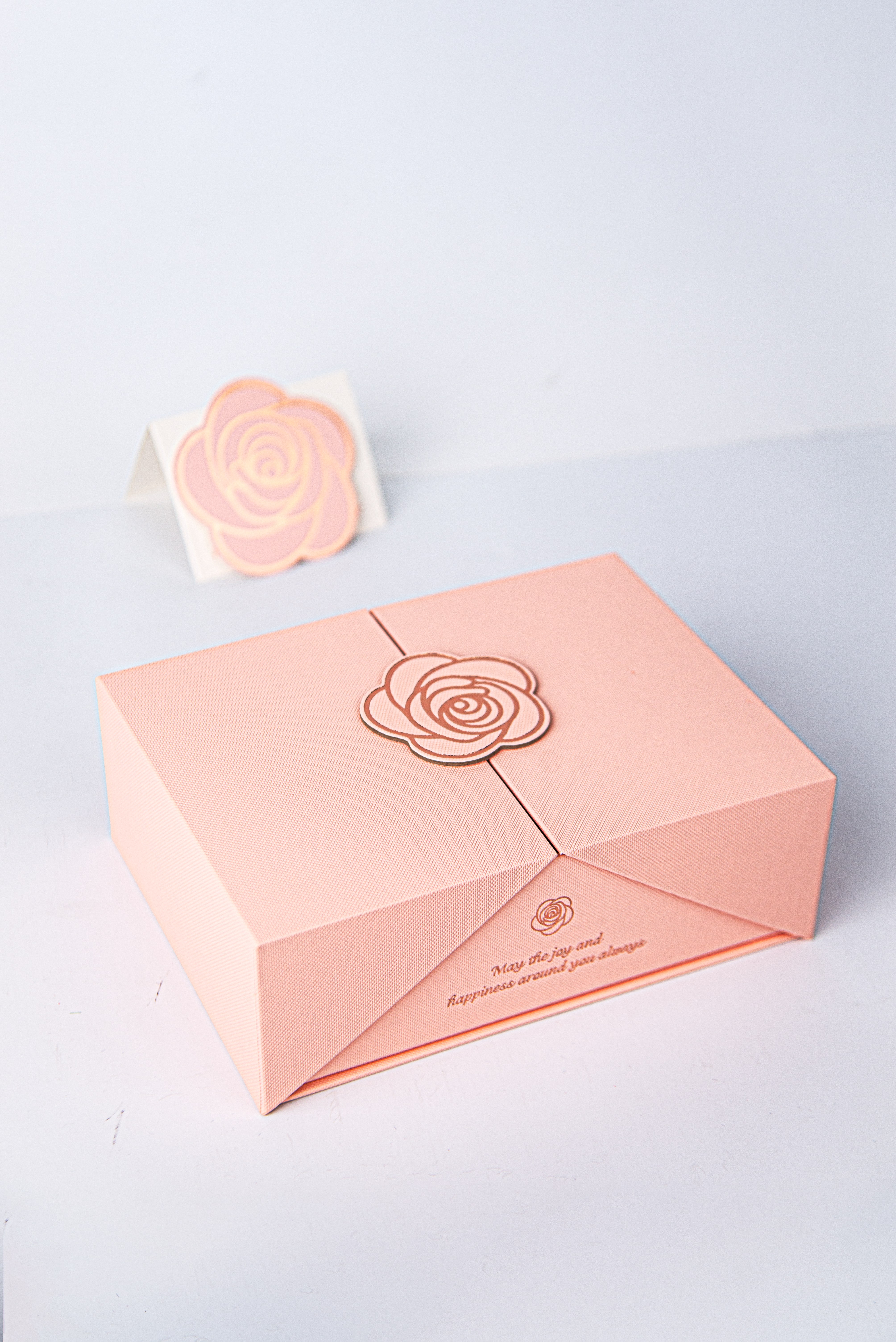
A custom rigid box with a colored wrapping paper finish. (Source: Opack)
Why Specification Verification Matters in Rigid Box Procurement
Two rigid boxes may appear identical at a distance but can differ significantly in board density, wrapping paper, closure type, and compliance status. A grey board box with a soft-touch lamination and a magnetic closure feels premium, but its durability depends on the thickness and quality of the board. Similarly, a claim of eco-friendly packaging is only meaningful when supported by a recognized certification such as FSC.
In the European market, the regulatory context has tightened. The EU Packaging and Packaging Waste Regulation (PPWR) became mandatory on August 12, 2026, requiring packaging to be recyclable and properly labeled. For brands shipping into the EU, verifying the certification and material documentation of rigid boxes is no longer optional. Paper and paperboard materials already account for approximately 55.4% of total rigid box material revenue, according to Future Market Insights, as brands shift toward recyclable substrates.
A common mistake is treating a rigid box as a commodity item. In reality, the specification sheet is a contract between buyer and supplier. Without clear parameters for board thickness, wrapping paper, closure type, and production tolerances, a sampling approval may not translate into consistent volume production. Procurement teams should therefore request a detailed spec sheet and certification dossier before committing to large orders.
Material Specifications: What Are Custom Rigid Boxes Made Of?
A standard custom rigid box from Opack uses Grey Board, Greyboard, Chipboard, or MDF (Medium-density fibreboard) as the primary structural material. MDF is denser and often chosen for premium applications, while grey board is a common choice for lightweight but firm packaging. Thickness is customizable, allowing buyers to balance rigidity with cost and shipping weight.
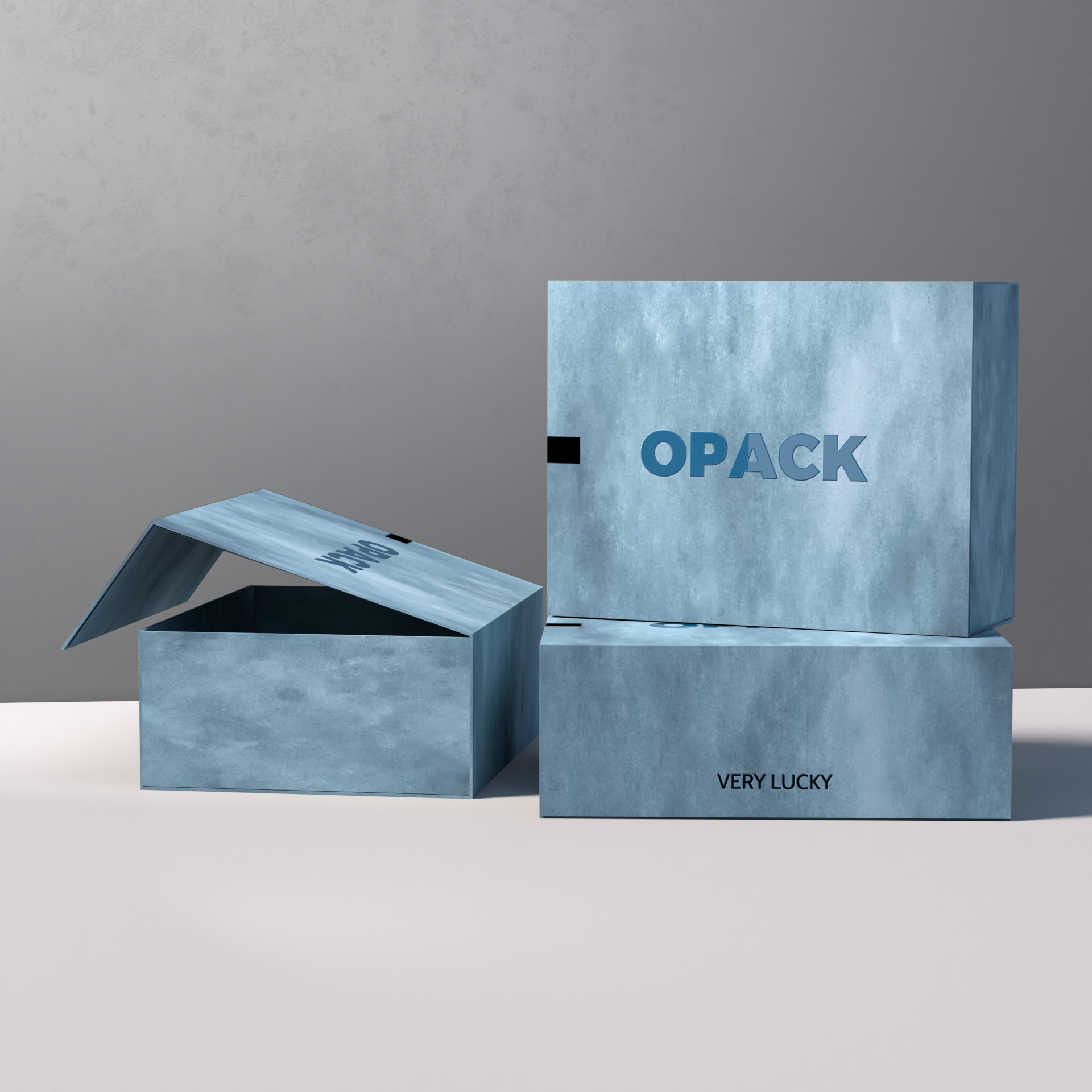
A rigid box sample in solid blue wrapping paper. (Source: Opack)
The wrapping paper options include coated paper, kraft paper, specialty paper, textured paper, and white paperboard. This layer determines the surface finish and print quality. For brands targeting a natural or eco-conscious look, kraft paper is a typical solution; for cosmetics and jewelry, textured or coated paper may better support detailed printing and finishing.
When comparing suppliers, buyers should ask how the board thickness is measured and whether the wrapping paper is laminated or coated before printing. These details affect color reproduction and resistance to scuffing. The choice between grey board and MDF also influences weight; a lighter grey board may reduce freight costs, while MDF provides a more rigid panel for heavier products. Because there is no single standard material, test samples are essential before mass production.
This specification matters for procurement because the board and wrapping paper combination affects box weight, production lead time, and unit cost. It also influences how well the box survives long-distance shipping, particularly for exports from China to Europe, the United States, or the Middle East.
Custom Rigid Box Key Specifications at a Glance
| Parameter | Available Options |
|---|---|
| Material | Grey Board / Greyboard / Chipboard / MDF |
| Thickness | Customizable |
| Wrapping Paper | Coated Paper, Kraft Paper, Specialty Paper, Textured Paper, White Paperboard |
| Printing | CMYK, Pantone, UV, Offset, Screen Printing |
| Finishing | Hot Stamping, Spot Glossy UV, Soft Touch Lamination, Holographic Foiling, Embossing, Debossing, Matte Lamination, Gloss Lamination |
| Structure | Foldable, Magnetic Closure, Ribbon Closure |
| Size Range | Fully Customizable Based on Product Requirements |
| Insert Options | Foam, Paperboard, EVA, Plastic Tray, Corrugated Cardboard, Silk |
| MOQ | 500 pcs |
| Applications | Jewelry, Watches, Perfumes, Cosmetics & Beauty, Apparel, Gift Packaging, Electronics, PR Boxes, Corporate & Promotional Packaging |
Printing, Finishing, and Structural Options
Opack produces custom rigid boxes with CMYK printing, Pantone printing, UV printing, offset printing, and screen printing. Pantone printing is useful for brand color consistency, while UV or offset printing can deliver sharper imagery for complex designs. Finishing options include hot stamping, spot glossy UV, soft touch lamination, holographic foiling, embossing, debossing, matte lamination, and gloss lamination.
For closure and structure, buyers can choose foldable designs, magnetic closure, or ribbon closure. Foldable rigid boxes offer improved storage and freight efficiency, as they can be collapsed before assembly. Magnetic closures add a premium unboxing experience, while ribbon closures are common in gift packaging. The box size is fully customizable, and insert options include foam, paperboard, EVA, plastic tray, corrugated cardboard, and silk.
Certification and Compliance: FSC Chain of Custody
For buyers evaluating environmental claims, certification is the most verifiable evidence. Opack's custom rigid boxes are FSC certified. The certificate number is GFA-COC-005690, issued by GFA Certification GmbH under the FSC Chain of Custody (COC) standard FSC-STD-40-004 (Version 3.0). The certification currently applies to the European, North American, Australia & New Zealand, and Middle East markets.
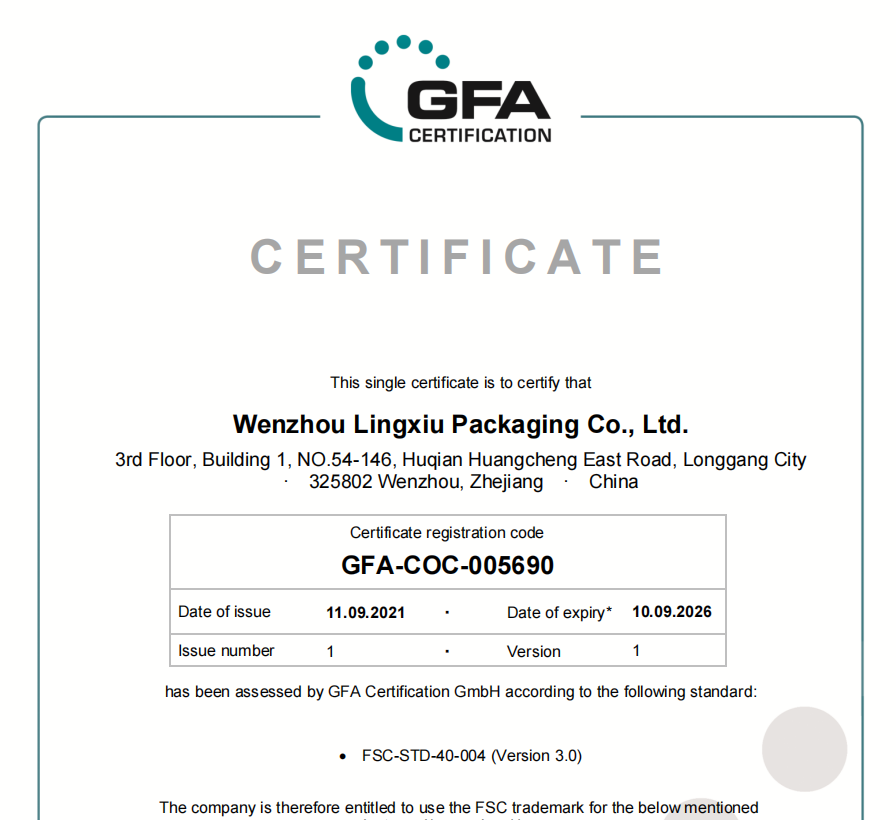
FSC Chain of Custody certificate details for Opack packaging. (Source: Opack)
FSC Certification Summary
| Field | Details |
|---|---|
| Certificate Number | GFA-COC-005690 |
| Standard | FSC-STD-40-004 (Version 3.0) |
| Issuing Body | GFA Certification GmbH |
| Markets Covered | Europe, North America, Australia & New Zealand, Middle East |
| Scope | Cardboard packaging, paper sacks and bags, adhesive labels, other pulp and paper products |
The same FSC certification also covers Opack's custom shopping bags, which allows buyers to coordinate rigid boxes and paper bags under one compliance framework. Knowing the certificate number, issuing body, standard, and geographic coverage lets procurement teams incorporate the evidence into their own documentation.
Supplier Capability Considerations: MOQ, Lead Time, Quality Control
After verifying materials and certifications, buyers typically assess production capability. Opack is a custom packaging manufacturer based in Longgang, the Printing City of China. The company operates a 10,000 m² factory with 160 employees and an annual output of 10,000,000 units. Approximately 80% of its products are exported, with main markets in the EU, United States, and Middle East.
The standard MOQ for custom rigid boxes is 500 pieces, which is a relatively accessible entry point for premium packaging projects. Lead time is 12 to 18 days, and Opack states that 100% of products undergo quality checks. Monthly production capacity is 1,000,000 units. These figures give buyers a baseline for planning a small-batch launch or a national campaign.
Opack's after-sales support includes multi-channel communication: real-time online chat, WhatsApp, telephone, and official email. For international buyers, this reduces friction during sample confirmation, production updates, and delivery coordination. The company's export experience in EU, United States, and Middle East markets also means it is familiar with overseas certification requirements.
Industry Applications and Use Cases
Custom rigid boxes are commonly selected for jewelry, watches, perfumes, cosmetics and beauty, apparel, gift packaging, electronics, PR boxes, and corporate promotional packaging. In each category, the specification tends to follow the product's fragility, weight, and brand positioning.
For jewelry and watches, inserts such as foam, silk, or EVA can secure items while adding a luxury feel. Magnetic closures are frequently used in this segment because they make repeated opening and closing easy. For cosmetics, printing and finishing become the dominant factors, with soft-touch lamination or spot UV creating a high-end feel. Electronics require protective trays and thicker boards to cushion heavier products during shipping. Gift packaging and PR boxes often rely on ribbon closures and hot stamping to create a memorable unboxing moment.
For apparel brands, book-style rigid boxes are often used for premium garment packaging, providing a branded shelf presence. Electronics brands may use rigid boxes with custom-cut foam to secure devices and accessories. Corporate and PR boxes tend to use smaller quantities but more complex finishing, such as holographic foiling or embossed logos.
Market Trends Shaping Custom Rigid Box Sourcing
The rigid boxes market is growing steadily. Global Market Insights projects growth from USD 31.2 billion in 2025 to USD 48.9 billion by 2035. Grand View Research expects the rigid box segment within the broader corrugated market to expand at a 9.2% CAGR from 2026 to 2033, driven by e-commerce and premium packaging needs.
Regional dynamics also matter. Asia Pacific dominated the global rigid packaging market with a revenue share of 48.2% in 2023, while Europe remains the largest specific market for luxury rigid boxes, according to Grand View Research and Global Market Insights. Material preferences are shifting toward paper and paperboard, which account for roughly 55.4% of rigid box material revenue. Combined with the EU PPWR, certified and traceable materials are becoming a baseline requirement in regulated markets. China is a primary global supplier for non-corrugated packaging under HS Code 481920, according to UN Comtrade data.
The growth of e-commerce has also increased demand for packaging that can withstand multiple touchpoints and, in some cases, serve as a reusable keepsake. Rigid boxes, with their durable construction, are well positioned for this use case. However, the same durability creates pressure on logistics, making foldable designs more relevant for online retail.
Rigid Boxes vs. Traditional Packaging: Trade-offs and Boundaries
Compared to folding cartons, rigid boxes offer superior structural strength and a more premium presentation. The thickness of the board and additional finishing layers give the box a solid feel that is difficult to replicate with standard folding cartons. Rigid boxes can also accommodate heavier inserts and more complex structures, such as magnetic closures or drawers.
However, there are real boundaries. Rigid boxes are manufactured as a rigid structure, which often makes them bulkier and more expensive to store and ship than folding cartons that ship flat. The higher material usage and hand assembly can lead to a higher unit cost. For lightweight, high-volume products where packaging is not a key part of the brand experience, a folding carton or mailer box may be a better economic fit.
| Aspect | Rigid Box | Folding Carton |
|---|---|---|
| Structure | Thick, non-collapsible | Thin, flat-foldable |
| Protection | High | Medium |
| Premium feel | High | Low to Medium |
| Storage and freight efficiency | Less efficient | More efficient |
| Unit cost | Higher | Lower |
| Typical use | Jewelry, cosmetics, electronics, gifting | Everyday consumer goods, e-commerce |
A middle-ground option is the foldable rigid box, which can be shipped flat and assembled later, reducing freight and storage inefficiencies. Opack offers both foldable and rigid structures. Still, even a foldable rigid box cannot fully eliminate the cost difference with a standard folding carton, so procurement teams should evaluate visual impact alongside total cost of storage, freight, and assembly.
Future Outlook
As sustainability regulations tighten and brand owners become more sensitive to certification gaps, documented compliance will grow in importance. The EU PPWR, mandatory since August 2026, is one example of how regulatory pressure can reshape sourcing decisions. Rigid box suppliers with FSC Chain of Custody certification are better positioned to support brands in Europe and other regulated regions.
Structural innovation will also continue. Foldable rigid boxes are likely to gain wider adoption for e-commerce and export-heavy programs because they combine premium packaging with logistical efficiency. For buyers, the future of custom rigid boxes is one of greater specification transparency. Suppliers who can clearly document materials, certifications, capacity, and lead times will become the suppliers that buyers rely on.
Buyers should also monitor the validity of certifications. FSC Chain of Custody certificates have defined expiration dates, and a supplier's certificate status should be checked during the evaluation period. As the industry moves toward circularity, documentation will become part of the product itself.
FAQ
1. What are custom rigid boxes made of?
Custom rigid boxes from Opack use Grey Board, Greyboard, Chipboard, or MDF (Medium-density fibreboard) as the primary structural material. Thickness is customizable based on product requirements.
2. Are custom rigid boxes FSC certified?
Yes. Opack's custom rigid boxes are FSC certified under the Chain of Custody standard FSC-STD-40-004 (Version 3.0), issued by GFA Certification GmbH with certificate number GFA-COC-005690.
3. Which markets does the FSC certification cover?
The certification applies to the European, North American, Australia & New Zealand, and Middle East markets.
4. What is the minimum order quantity for custom rigid boxes?
The standard MOQ is 500 pieces for custom rigid boxes from Opack.
5. What customization options are available for custom rigid boxes?
Options include customizable thickness, wrapping paper, printing methods (CMYK, Pantone, UV, offset, screen), finishing (hot stamping, spot UV, lamination, embossing, etc.), structure (foldable, magnetic closure, ribbon closure), size, and inserts (foam, paperboard, EVA, plastic tray, corrugated cardboard, silk).
6. What is the typical production lead time for custom rigid boxes?
Opack's lead time is 12 to 18 days, with a monthly production capacity of 1,000,000 units.
Tem questões ou precisa de mais detalhes?
Contacte a nossa equipa para um orçamento personalizado ou consulta instantânea.
Solicitar orçamento
Preencha o formulário abaixo e a nossa equipa entrará em contacto com uma proposta personalizada.
Chat direto do WhatsApp
Prefere conversar em tempo real? Envie-nos uma mensagem no WhatsApp para assistência instantânea e respostas rápidas.
- Obter orçamento personalizado
- Partilhar fotos ou documentos
- Discuta as suas necessidades diretamente
Geralmente responde em 5–30 minutos durante o horário de expediente.