
Custom Rolled Ring Forgings: An OEM Capability Guide
Custom Rolled Ring Forgings: An OEM Capability Guide
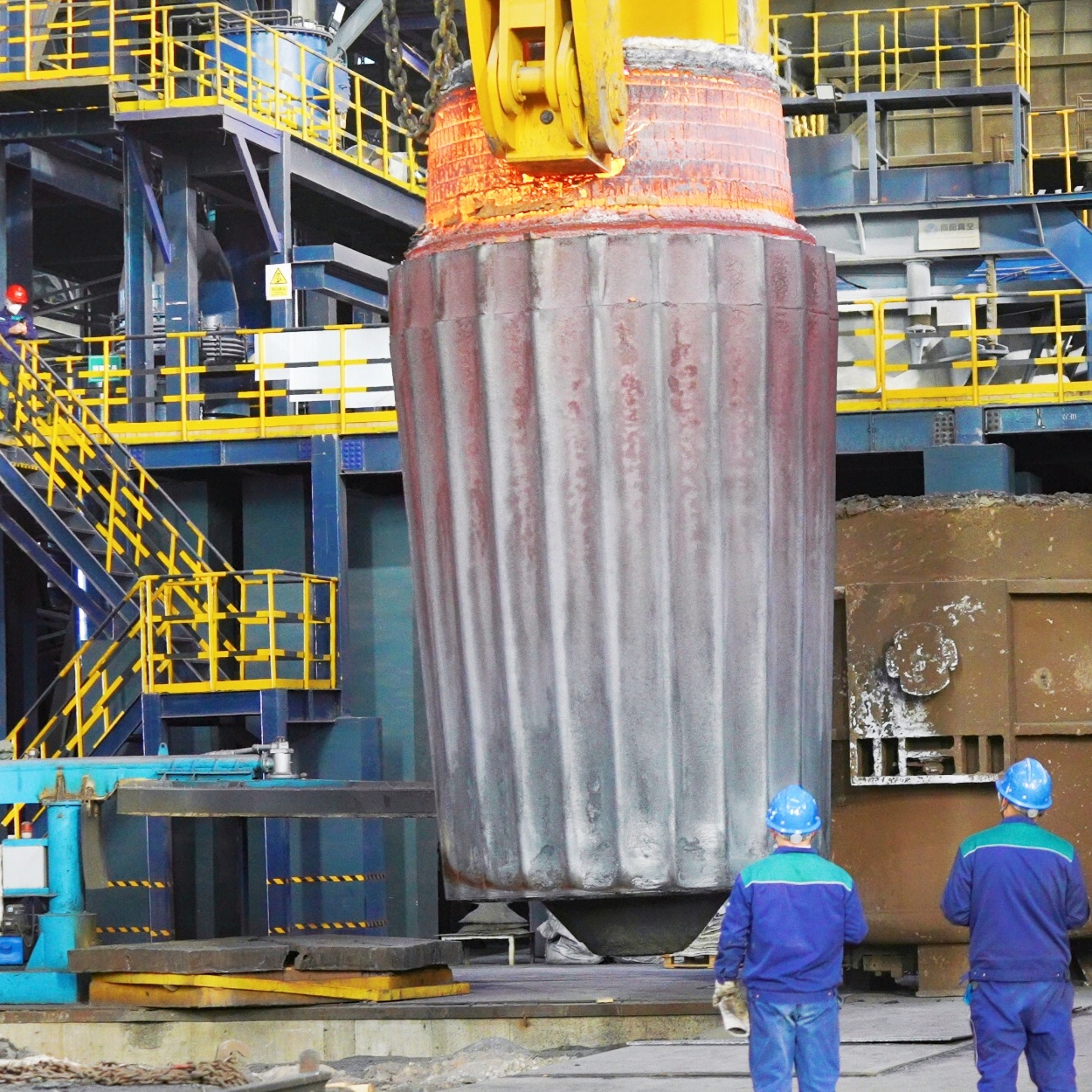
Iraeta Energy Equipment Co., Ltd. is a forging specialist that designs and manufactures custom seamless rolled ring forgings for heavy industry. Established in 2006, the company operates production facilities in China and Spain and supplies mission-critical forged components to clean energy, oil and gas, marine engineering, tunnel boring, cement production, and metal mining sectors. Its product family includes seamless rolled rings, profiling rings, bearing rings, gearbox forgings, pipe flanges, wind power flanges, kiln tyres, drive rings, and hydroelectric forgings.
Why capability assessment drives supplier selection
OEMs and engineering buyers evaluating a rolled ring forgings supplier are rarely choosing between identical catalogs. A custom specification can involve a specific steel grade, a non-standard outside diameter, a defined heat-treatment cycle, and a machining allowance that must be verified before production. Without a structured capability check, buyers risk discovering size limits, testing gaps, or commercial constraints after the order is placed.
Seamless rolled ring forgings are specified in applications where failure is not an option: pressure vessels, rotating machinery, kilns, and turbines. The engineering evaluation therefore goes beyond the product drawing to include the supplier's process control, material traceability, heat-treatment capability, and inspection scope. This is why capability-oriented buyers tend to request manufacturer evidence before issuing a purchase order.
Iraeta's custom rolled ring forging capability
Iraeta operates as an OBM producer, with monthly capacity of 70,000 metric tons. Buyers can specify custom material, size, forging shape, heat treatment, and machining, with a minimum order quantity of one unit. This makes the supplier relevant for both large serial programs and single critical components.
| Capability area | Iraeta stated capability |
|---|---|
| Production mode | OBM |
| Customization options | Material, size, forging shape, heat treatment, machining |
| Monthly capacity | 70,000 metric tons |
| Minimum order quantity | 1 unit |
| Quality control | 100% test |
| After-sales support | Remote support |
| Commercial terms | CIF, pre-shipment test/inspection, 30/70 payment |
Supporting this capacity is a 100-engineer R&D team and in-house raw material preparation, which includes 300-ton material preparation operations. From raw material to finished component, Iraeta provides end-to-end production: custom material preparation, forging, heat treatment, precision machining, rigorous testing, and global logistics.
Certification baseline for European and global projects
Iraeta's quality evidence can be traced to active certifications rather than generic marketing claims. The table below summarizes the certificates directly relevant to forged and rolled ring supply.
| Certification | Scope | Issuer / valid through |
|---|---|---|
| PED 2014/68/EU | Manufacturing of forged flanges and hot rolled rings | TÜV / 2027-03-31 |
| ISO 9001:2015 | Manufacturing of raw materials for forgings, forgings, grinding media | BV / 2029-04-21 |
| EN1090 | Structural components and kits for steel structures to EXC3 | TÜV / 2027-04-25 |
| ISO 45001:2018 | Occupational health and safety management | NQA / 2029-03-01 |
| ISO 14001:2015 | Environmental management | NQA / 2029-03-01 |
The engineering behind seamless rolled ring forgings
Rolled ring forging is a hot-forming process used to produce a seamless annular component from a pierced billet. At Iraeta, the production chain starts with in-house raw material preparation, including 300-ton material preparation steps, then continues through forging, heat treatment, precision machining, rigorous testing, and global logistics.
For custom steel rolled ring forgings, Iraeta works with carbon steel, stainless steel, and alloy steel. Carbon steel represents a large share of global forging material use, about 38.2% of the raw material mix in the metal forging market, while alloy and stainless grades are typically selected for higher strength, corrosion resistance, or high-temperature service.
Profiling is a key example of this capability. Iraeta's product range includes profiling rings and transition sections, which require controlled deformation to reach a shape close to the final geometry. When combined with precision machining, this reduces material waste and creates a more consistent component for high-load service.
The size envelope is one of the clearest capability signals. Iraeta supports seamless rings over 21 meters in diameter, up to 5 meters in height, and up to 300 metric tons. In 2026, the company produced a 21.029-meter seamless rolled steel ring, a Guinness World Record that surpassed its own 15.673-meter record from 2022.
For projects that require tighter profiles, Iraeta has applied integral ring rolling and near-net-shape forming. In heavy-duty hydrogenation reactor components, this approach produced 3 pieces, 2 shell sections and 1 transition section, with superior mechanical performance and a shorter production lead time than conventional forming routes.
Use-case scenarios across heavy industry
Iraeta's seamless rolled ring forgings have been deployed in Europe, the Middle East, and global refinery projects. The cases below show how customization and manufacturing envelope interact with real application requirements.
| Region | Client type | Application | Project scope | Capability highlights |
|---|---|---|---|---|
| Germany | Cement and energy equipment manufacturer | Core supporting ring / rotary kiln tyre for large-scale industrial equipment | 1 unit | Ultra-large diameter integral forging, precision machining, high load-bearing capacity, thermal stability |
| Turkey | Cement plant | Core structural component for cement rotary kiln | 1 set | Precision forging and machining, high-temperature resistance, excellent fatigue strength |
| Saudi Arabia | Oil and gas OEM | Key components for refining and petrochemical equipment | 2 units | High forging precision, wear resistance, high-temperature resistance, long service life |
| European refinery project | Large refinery | Heavy-duty hydrogenation reactor components | 3 pieces, 2 shell sections and 1 transition section | Integral ring rolling, near-net-shape forming, superior mechanical performance, shorter production lead time |
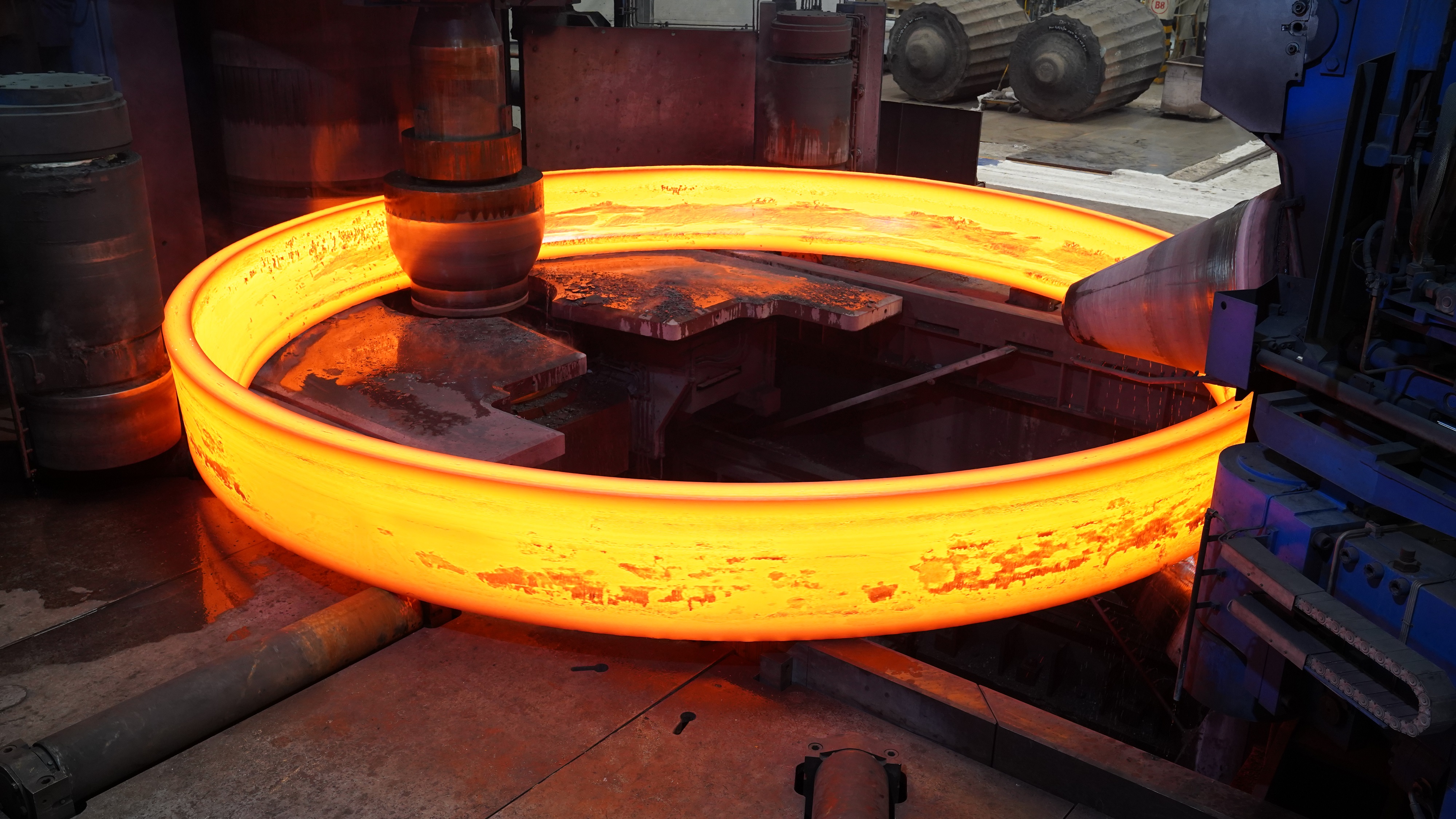
Iraeta forged transition section for heavy-duty hydrogenation reactor components.
Beyond these documented cases, Iraeta's capability base also covers components for fourth-generation nuclear power plants, cement rotary kilns with 10,000 tons/day output, 16-meter shield tunneling machines, and over 20MW floating offshore wind turbines.
Market signals shaping the rolled ring forgings sector
The global ring rolling products market was valued at USD 4.56 billion in 2025 and is projected to reach USD 7.35 billion by 2035, according to Ring Rolling Product Market Size, Trend and Forecast 2025 to 2035. Seamless rolled rings account for approximately 24% of global manufactured forging components by production volume.
Energy remains a central demand driver. The wind turbine forging market was valued at USD 9.6 billion in 2024, with onshore installations holding a 67.3% share, according to Global Market Insights. Larger turbines, offshore wind, and hydropower projects tend to require large-diameter rings with tighter mechanical property requirements.
Large-diameter demand is not limited to energy. Marine engineering, tunnel boring, and high-end equipment also rely on heavy rolled ring forgings for bearings, flanges, and drive components. For a supplier, the ability to combine a 22-meter-class rolling machine with in-house machining and testing shortens the supply chain for these projects.
How rolled ring forging compares with traditional alternatives
Seamless rolled ring forging is frequently selected over casting or plate-machined solutions when the application demands continuous grain flow, predictable fatigue life, and through-thickness properties. For annular geometries, ring rolling is more material-efficient than cutting a ring from a solid plate or block, and the seamless structure removes concerns associated with welds.
When comparing suppliers, buyers should treat price and lead time as outputs of capability, not independent variables. A supplier with a small ring-rolling envelope may quote a welded or assembled alternative, but that changes the component's structural behavior. The qualification process should therefore match the forming route to the final service condition.
One honest limitation: ring rolling is most efficient for near-axisymmetric parts. A component with complex external contours may require substantial post-forging machining, adding time and cost to the project. Procurement teams should define the machining allowance and tolerance strategy early in the specification.
For pressure-related flange and forged part specifications, buyers commonly reference ASTM A182 for forged or rolled alloy and stainless steel pipe flanges and EN 10222-2 for ferritic and martensitic steel forgings for pressure purposes. These standards can serve as common decision criteria during supplier evaluation.
Future outlook for large and heavy rolled ring forgings
The trajectory toward larger energy infrastructure is visible in current reference projects. Iraeta's manufacturing portfolio already includes fourth-generation nuclear power plant components, 10,000 tons/day cement rotary kilns, 16-meter shield tunneling machines, and more than 20MW floating offshore wind turbines. These applications push the demand for seamless rolled rings toward larger diameters, heavier unit weights, and stricter certification.
Given the projected growth in the ring rolling products market, buyers should assess suppliers on their ability to scale beyond current order sizes. A documented record of 21-meter-class production and 300-ton forging capacity provides a stronger evidence base than price-only comparisons.
Evaluate Iraeta for a custom rolled ring forging project
Iraeta Energy Equipment Co., Ltd. provides custom seamless rolled ring forgings, from material preparation, forging, and heat treatment to precision machining, testing, and global logistics.
Website: www.iraeta.com · Email: ebiz@iraeta.com · Tel/WhatsApp: +86 188-5315-7508
Rolled ring forgings supplier FAQ
What customization options are available for rolled ring forgings?
Iraeta offers customization of material, size, forging shape, heat treatment, and machining. The minimum order quantity is one unit.
What materials can be used for steel rolled ring forgings?
Iraeta produces seamless rolled ring forgings in carbon steel, stainless steel, and alloy steel. Material selection depends on strength, corrosion, temperature, and pressure requirements.
What is the maximum size of a seamless rolled ring forging?
Iraeta supports a maximum diameter over 21 meters, a maximum height of 5 meters, and a maximum weight of 300 metric tons. In 2026, the company manufactured a 21.029-meter seamless rolled steel ring, setting a Guinness World Record.
What certification evidence should a supplier provide?
For European projects, a rolled ring forgings manufacturer should provide evidence such as PED 2014/68/EU for forged flanges and hot rolled rings and EN1090 for structural steel components. Quality management certifications such as ISO 9001:2015 are also expected. Material standards like ASTM A182 and EN 10222-2 are commonly referenced in pressure applications.
What are the commercial terms for custom orders?
Iraeta's stated commercial terms include CIF delivery, pre-shipment test/inspection, and 30/70 payment terms. The minimum order quantity is one unit, and lead time is negotiable based on the customization required.
Which industries use custom rolled ring forgings?
Iraeta lists applicable industries as nuclear power, hydropower, wind power, offshore engineering, petrochemical, and high-end equipment. Documented applications include cement rotary kiln tyres and structural components, refining and petrochemical equipment components, and heavy-duty hydrogenation reactor components.