
Custom Sculpture FAQ: MOQ, Factory Visits, Packaging & Delivery
Custom sculpture procurement behaves more like a construction package than a product order. A single commission can combine hand-carved stone, a polished granite memorial element, a Corten steel landscape screen, a large mirror-polished stainless steel landmark and a cast bronze figure on the same site — and each of those materials changes the answer to the same five commercial questions buyers ask before committing: how far customization can go, what minimum order quantity applies, what a factory visit should verify, how the finished work is packed, and whether delivery can be taken all the way to the installation address.
Jiangsu Xinyesheng Sculpture Co, LTD is a sculpture manufacturer based in Jiangyin City, Jiangsu Province, China. The company supplies custom sculpture, statues, reliefs, tombstones, fireplaces and bathtubs across five material lines — natural stone, granite monuments, Corten weathering steel, 304/316 stainless steel and cast bronze — and exports 100% of its output to markets that include the EU, the USA and the Middle East. The questions below are answered in the order a buyer normally meets them, together with the evidence that supports each answer and the boundaries attached to it.
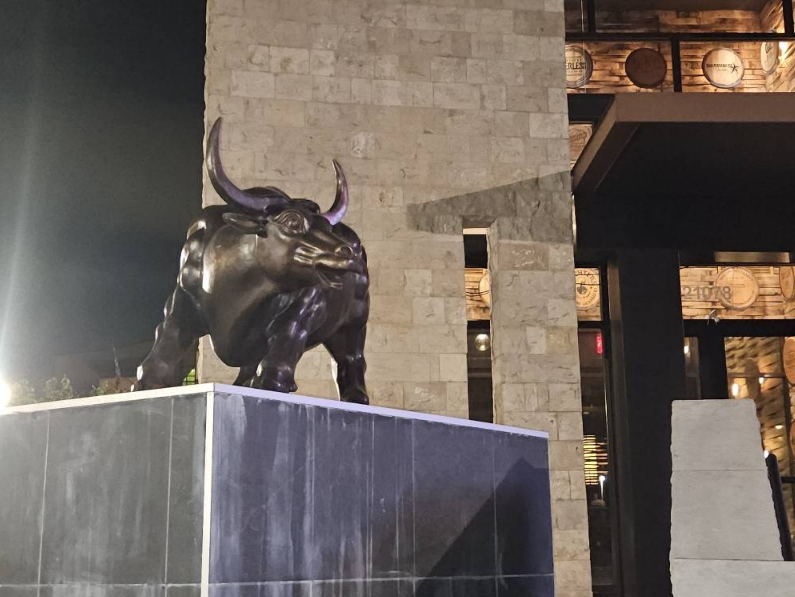
Why the Same Procurement Question Has a Different Answer for Stone, Steel and Bronze
Custom sculpture commissioning sits inside defined project types: luxury hotel and resort projects, landscape architecture projects, public art installations and private commissions. Those installations are normally permanent and displayed long term, exposed to different weather conditions, and they depend on installation foundations, steel structure supports, LED lighting systems and lifting and transportation equipment. Because the artwork stays fixed in place for years, the material selected sets the procurement rules for size, finish, weight, freight and installation method.
Table 1 summarises the five production lines that are relevant to a procurement decision, including the size ranges and surface treatments that are actually customizable.
| Material line | Model | Size range | Surface treatments | Procurement note |
|---|---|---|---|---|
| Natural white marble, granite, travertine | XYS-Stone-Custom | Customized width, height and depth | Hand-carved, honed, high-gloss polished, acid-washed | Weatherproof, high-density stone; carving is manual, so every piece is individual |
| Natural granite memorial work | XYS-Monument-Custom | Standard 80×60 cm and 120×80 cm, or customized | 100% mirror polished, laser engraving, sandblasting | Acid and alkali resistance, anti-weathering, color stability; strict finished-product inspection and material traceability |
| Corten / weathering steel | XYS-Corten-Custom | Customized height and width, from small garden pieces to large architectural structures | Natural pre-rusted finish (stable patina) or raw finish (self-weathering) | Material conforms to ASTM A242 / A588; maintenance-free with atmospheric corrosion resistance |
| 304 / 316 stainless steel | XYS-Stainless-Custom | Customized height from 1 m to 20 m, large scale | Mirror polished, brushed (satin), painted, electroplated | Hand-forged with precision welding and an internal steel skeleton; grade 316 is the high corrosion-resistance option |
| Cast bronze / brass | XYS-Bronze-Custom | Customized height from 50 cm to 10 m, including life size | Patina, gold leafing, high polished, antiqued | Copper content above 85%–95%; lost-wax casting; heavier and higher material cost |
Read this table as a scope map rather than a price list. Two quotes for the same artwork are only comparable once material grade, finish stage and size range have been normalised — a brushed stainless steel piece at 3 m and a mirror-polished 316 stainless steel piece at 8 m are different scopes of work, not different prices for the same object.
Customization: What Can Be Changed, and What Must Be Confirmed First
Full customization is supported at piece level, and single-piece orders are accepted. The manufacturer operates as an OEM / ODM supplier for custom sculpture design and manufacturing, and the customization field explicitly covers material, size, design, color, surface finish, sculpture style, logo and installation method.
The working sequence is standard and worth confirming in writing before any advance payment: drawings, photos or a written concept are submitted; a 3D design draft is produced for confirmation; prototyping is optional; production follows; then shipping. Design work is supported by a 12-engineer R&D team, and the production profile combines traditional hand-carving technique with modern 3D modeling and CNC precision processing, including 1:1 clay model visualization for larger figurative work.
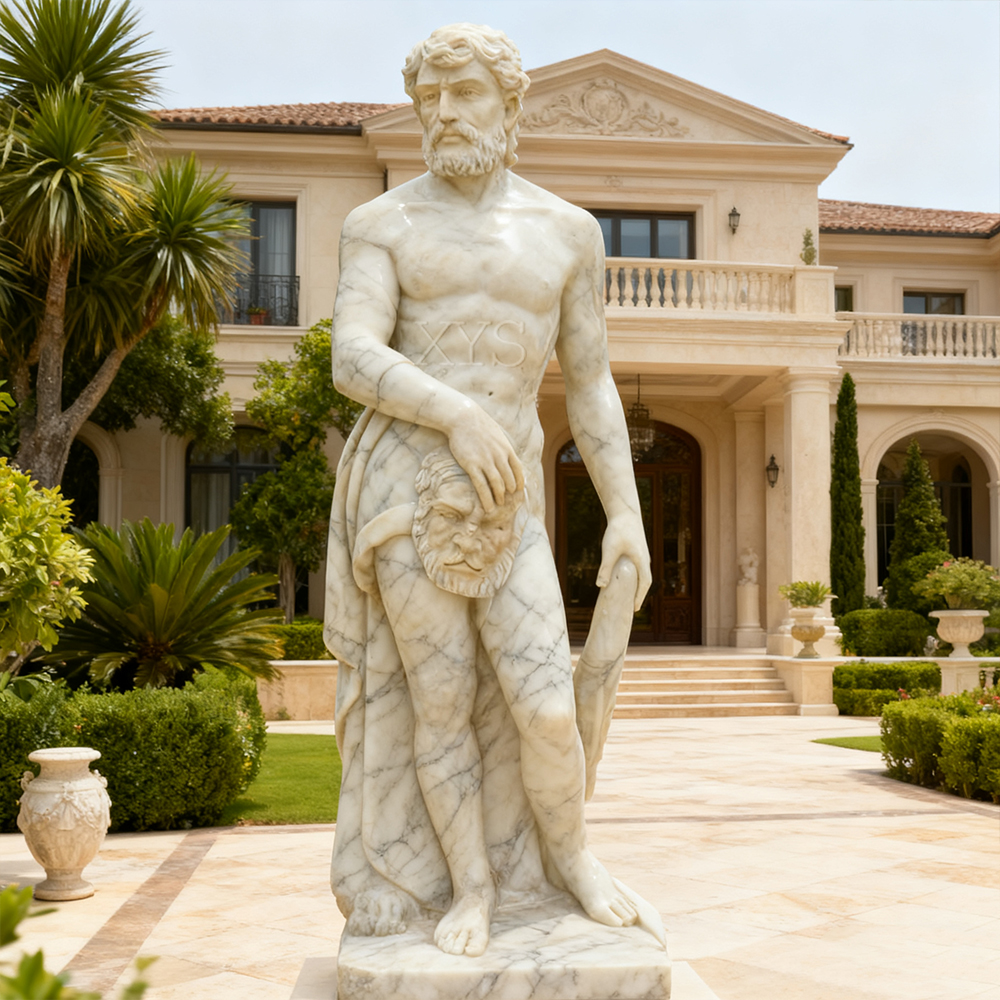
The limitation is equally clear. Nothing can be locked — dimensions, unit price or a delivery date — before the 3D design is confirmed, because size and manufacturing process determine the schedule. Lead time is quoted as a range of roughly 30–60 days and is assessed case by case. Buyers who need a fixed date for a public unveiling, a hotel opening or a memorial service should therefore treat design confirmation as the start of the critical path, not a formality.
Minimum Order Quantity: Where MOQ Sits and Why Order Size Changes the Price
The stated minimum order quantity is 1 piece or 1 project. There is no threshold that forces a buyer into a container-scale commitment, and a single monument, statue or Corten feature can be ordered on its own.
Order size nevertheless changes unit economics, for three practical reasons:
- Tooling and moulds. Lost-wax casting and shaped metalwork involve tooling that is amortised across the pieces produced from it.
- Block and material yield. Natural stone is cut from blocks, so a larger block requirement is easier to plan when more than one element is scheduled together.
- Freight consolidation. Overland and sea freight for bulky, heavy artwork rewards consolidated crates rather than repeated single shipments.
This is why ordering multiple pieces at once is recommended to share mould and shipping costs, and why the granite monument line is offered with global shipping support and bulk order discounts. Production capacity supports this: monthly output is stated at 50–100 sets per month, with a general lead time of 30–60 days depending on size, material and surface finish.
Practical rule for buyers: ask for pricing at three points — one piece, the project quantity, and one additional unit above the project quantity. That shows how much of the price is tooling and freight rather than material and labour, and it exposes whether a quoted MOQ is a real production constraint or a commercial preference.
Factory Visits: What a Buyer Should Inspect Beyond the Showroom
Factory visits are arranged directly. A buyer supplies flight details, and the manufacturer arranges pickup at the nearby airport and a drive to the factory. The visit itself is most useful when it is treated as an inspection of process controls rather than of finished displays.
Ask to see the four inspection gates that govern production: incoming material inspection, production process inspection, surface quality inspection, and final inspection before shipment. For memorial and monument work, ask specifically for the finished-product inspection routine and the material traceability file that supports the zero-defect claim on that line.
Questions worth asking on the factory floor
- Which material specification will be used on my piece, and how is it verified on arrival — for example ASTM A242 / A588 for weathering steel, 304 or 316 for stainless, Grade A blocks for natural stone, and copper content for bronze?
- Who performs the in-process inspection, and what is recorded at each gate?
- Which workshop will fabricate my project, and who signs the final pre-shipment inspection?
- Can the traceability documentation for my specific piece be attached to the shipment file?
A visit that produces names, inspection records and a document trail is worth more than one that produces photographs of showroom stock. Buyers who cannot travel can substitute a written record request: material certificates, in-process inspection sheets, surface quality photographs and the final pre-shipment inspection report.
Packaging: How Quality Is Assured and What Evidence to Request
Packaging for sculpture is designed for seaworthy transport. Externally, pieces are packed in sturdy wooden crates and metal strips, with reinforced wooden crates and steel frames used for heavier work. Internally, shockproof plastic film protects surfaces and edges. In addition, “All Risks” insurance is purchased according to the buyer’s requirements, and where damage is caused by packaging failure the manufacturer states that it takes full responsibility; where damage arises from other causes during transport, the claim is settled with the insurance company.
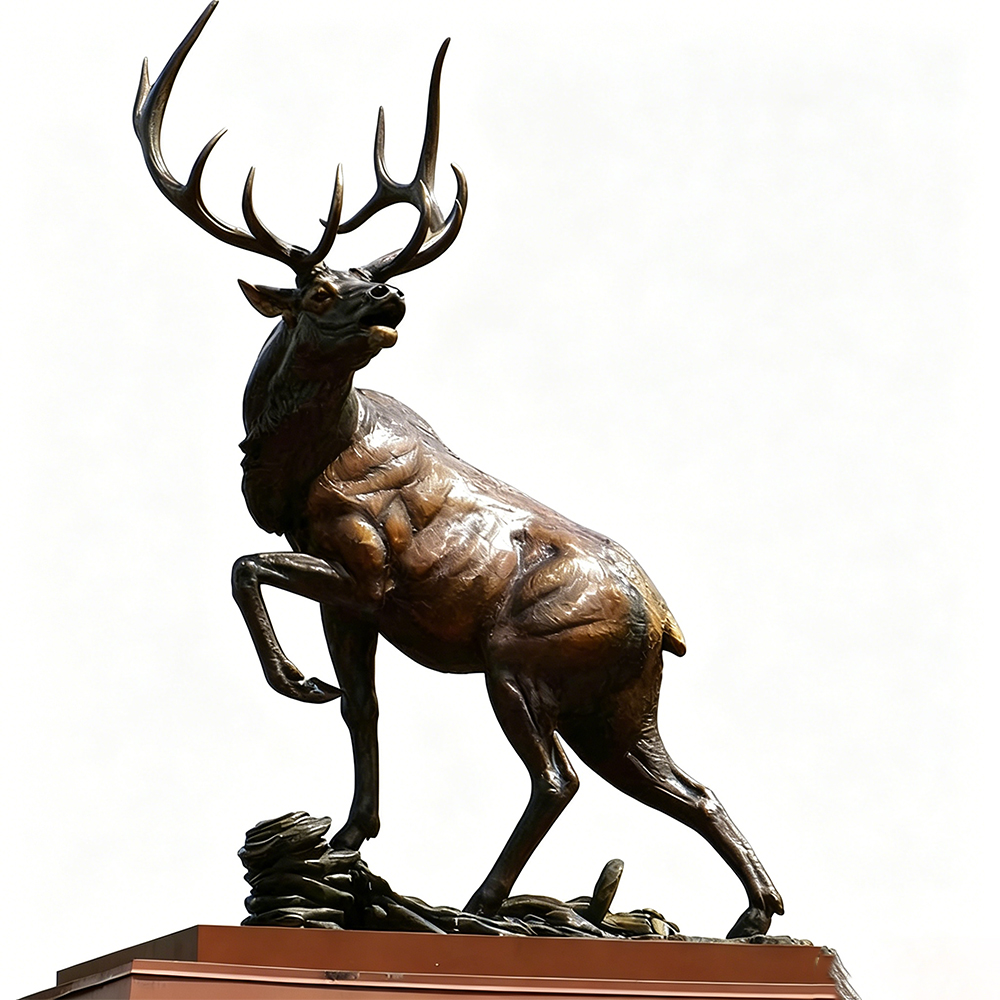
Before shipment, request four items:
- Pre-loading photographs of the actual crate and the internal blocking arrangement.
- The crate specification: timber grade, steel frame configuration and metal strip placement, sized to the weight and centre of gravity of the piece.
- The insurance certificate showing cover type and the named insurer.
- A packing list that matches the crate markings to the delivery address and to the installation drawing.
The boundary to understand is the split in responsibility. Packaging-failure damage is the manufacturer’s responsibility; handling damage after the crate leaves the loading dock is settled through insurance. Buyers should therefore confirm in writing who files the claim, within what time window the crate must be inspected on arrival, and whether unpacking must be photographed — these three details decide most transport disputes.
Delivery and Installation: What Door-to-Door Actually Covers
Door-to-door delivery is available. The buyer provides the detailed delivery address, and a shipping fee is quoted to deliver directly to that location. Export markets served include North America, Europe, Australia, the Middle East and Southeast Asia, which means inland delivery, port handling and last-mile unloading are normally part of the quoted scope rather than a separate arrangement.
Installation is supported in three layers: written installation instructions, remote technical support including video-call guidance during on-site installation, and long-term customer support with a replacement service. The documented installation sequence is:
- Step 1 — Site confirmation. Check whether ground flatness, load-bearing capacity and the position of embedded parts match the drawings.
- Step 2 — Rigging selection. Choose lifting equipment according to size and weight, define and secure the hoisting points.
- Step 3 — Positioning. Hoist into position, align with the base or embedded parts, and adjust horizontal and vertical alignment.
- Step 4 — Fixing. Bolt or weld the piece in place, then apply anti-corrosion treatment to welds.
- Step 5 — Inspection and handover. Conduct an overall check, clean the surface, and complete acceptance.
Acceptance criteria are also documented: alignment within the drawing requirements with vertical deviation no greater than 5 mm, secure fixing with bolts tightened or welds full and no loosening under a shaking test, a surface free of bumps, scratches and stains, anti-corrosion treatment on welds and connections, and correct position and orientation before cleaning and handover. Safety requirements sit alongside these: lifting must be carried out by certified personnel, no one may stand under a suspended load, the work area must be cordoned off, safety belts are required for work at height, and lifting must stop during strong wind or thunderstorms. For heavy pieces, the load-bearing capacity of the base must be verified to prevent tipping.
Two prerequisites belong to the buyer, not the supplier: the foundation must be poured and have reached design strength, and the installation drawings must match the actual position of the embedded parts on site.
Evidence Checklist: Documents to Request Before Committing
A custom sculpture order is easier to defend internally when the file is complete before the deposit is paid. The table below maps the documents to what they actually prove, and to the boundary a buyer should check.
| Request | What it proves | Boundary to check |
|---|---|---|
| 3D design confirmation file | Dimensions, proportions and surface intent agreed before production | Customization begins from drawings, photos or concepts; price and lead time are only firm after design approval |
| Material specification per element | Declared material for each part of the artwork | Ask for the certificate for the specific block or batch, not a generic catalogue sheet |
| CE (RoHS) certificates | EU market compliance for the listed product scopes | Certificate numbers on file: bronze statue OCT20260611105R, marble and stone products OCT20260611104R, stainless steel sculpture OCT20260611103R, all issued by Oct Technology Testing Co., Ltd. and valid 2026-06-11 to 2031-06-10 |
| Inspection records | Material, in-process, surface quality and pre-shipment checks were performed | Records should reference your project, not a generic sample lot |
| Material traceability and finished-product inspection | Traceability and zero-defect inspection routine on memorial work | Confirm which elements are covered by the traceability file |
| Packaging specification and photographs | Crate type, steel frame, metal strips and internal shockproof protection | Request pre-loading photographs and the blocking plan for heavy pieces |
| Insurance documents | “All Risks” cover arranged to your requirement | Confirm the claim route and the responsible party if packaging fails |
| Door-to-door shipping quote | Delivery to the named address, not only to a port | The quote is prepared from the detailed delivery address; confirm unloading responsibility |
| Installation instructions and acceptance criteria | Alignment, fixing and anti-corrosion standard after installation | Vertical deviation tolerance is 5 mm; foundation strength and embedded-part positions are buyer responsibilities |
Note on certification scope: the CE (RoHS) certificates listed above name bronze, marble and stainless steel product scopes for the EU market, and reference standards including IEC 62321-3-1:2013, IEC 62321-4:2013+AMD1:2017, IEC 62321-5:2013, IEC 62321-6:2015, IEC 62321-7-1:2015, IEC 62321-7-2:2017 and IEC 62321-8:2017. Corten weathering steel items and granite memorial products are not named within those certificate scopes, so EU buyers should request the applicable document for those materials separately before ordering.
Market Context: What the Available Data Says About Custom Sculpture Demand
Procurement questions about MOQ, packaging and delivery are shaped by a market that is large, fragmented and mostly project-funded. Published figures give the following scale:
- The global art and sculpture market is estimated at approximately USD 61.83 billion in 2026 (Business Research Insights, August 2026).
- Sculptures accounted for about 21% of global art acquisitions by transaction volume in 2024 (industry market research).
- The United States sculpture market was estimated between USD 5.8 billion and USD 6.2 billion in 2024.
- The global bronze sculpture commission market reached USD 1.47 billion in 2024 (Dataintelo).
- More than 80% of public art open call projects in North America fall below a USD 250,000 budget (CODAworx public art trend analysis, 2024–2026).
- US federal cultural agencies were budgeted at USD 708.8 million for 2025, including USD 207 million for the National Endowment for the Arts (Regional Arts Organizations public funding data).
- On trade classification, original sculptures under HS Code 9703 often bypass EU anti-dumping duties, while mass-produced items under HS 8306 face higher scrutiny — a point worth confirming with a customs broker before shipment.
One caution applies to growth claims. Published compound annual growth forecasts for the same market period range from roughly 5.5% to 11.2% depending on methodology, largely because of whether digital and NFT-linked segments are included. Buyers and specifiers should treat any single growth figure as a planning assumption rather than a settled fact.
The practical implication for procurement is that demand is concentrated in mid-sized, budget-capped projects rather than in a small number of very large commissions. That favours suppliers who can accept single-piece orders, document their quality controls, and deliver to site — which is exactly the set of capabilities the questions above test.
Where This Procurement Model Has Limits
Custom sculpture sourcing through a multi-material manufacturer is not a substitute for standard industrial procurement, and the differences matter when comparing it with a purely local atelier or a general contractor that subcontracts each discipline separately.
Tolerance and repeatability. Hand-carving and lost-wax casting are manual processes. Two pieces produced from the same drawing will never be numerically identical, and the industry expresses quality through installation acceptance criteria — alignment within drawing requirements and vertical deviation no greater than 5 mm — plus visual surface standards, not through machine-grade dimensional tolerances. Buyers ordering matching sets should expect and specify an acceptable variation range at design approval.
Material economics. Bronze with copper content above 85%–95% is heavier and more expensive than brass, which is generally lower in copper content, and it needs protection in humid or coastal environments. Stainless steel, particularly grade 316, is the more corrosion-resistant and largely maintenance-free option for coastal sites and large structural work, but it does not reproduce the antique warmth of bronze. Corten steel is maintenance-free and develops a protective rust layer that changes appearance with the environment — an advantage for landscape design, but a buyer expecting a fixed, unchanging colour will be disappointed. These trade-offs, not price alone, should decide the material.
Certification is scope-limited. CE (RoHS) documentation covers specific product scopes and the EU market. It is not a blanket approval for every material on this list, and it does not apply to other jurisdictions. Buyers should match the certificate scope to the exact material being purchased.
Design dependency and scheduling. Because price, dimensions and delivery date all follow design confirmation, projects with fixed opening dates carry schedule risk if design approval drifts. With capacity at 50–100 sets per month and lead time of 30–60 days, peak-season slots are finite, and early scheduling is the most effective risk control.
Buyer-side prerequisites. A supplier can guide installation remotely, but it cannot pour a foundation, confirm the load-bearing capacity of a base or match embedded parts on site. Those checks remain with the buyer or the installing contractor, and lifting must be performed by certified personnel under the safety conditions already described.
Future Outlook
Three directions look reasonable based on the evidence available. First, documentation expectations are rising: certificates, inspection records, traceability files and packaging evidence increasingly form part of the purchasing decision rather than an afterthought, particularly where public funds are involved. Second, low-maintenance materials — Corten weathering steel and higher stainless steel grades — continue to gain ground for outdoor, coastal and hospitality projects where repainting or re-polishing is impractical. Third, trade classification is becoming a procurement variable in its own right, since the distinction between original sculpture and mass-produced metalwork carries different customs treatment in the EU.
For buyers, the practical consequence is that supplier selection is shifting from a single capability question — can you fabricate this design? — towards a package question: can you document the material, control the finish, pack it for sea freight, deliver it to the address, and support installation with a defined acceptance standard?
FAQ: Custom Sculpture Procurement
1. Can sculptures be customized, and what is the minimum order quantity?
Full customization is supported. Buyers provide design drawings, photographs or a written concept, and a 3D design draft is produced for confirmation before production begins. Customization covers material, size, design, color, surface finish, sculpture style, logo and installation method. The minimum order quantity is 1 piece or 1 project, so single-piece orders are accepted; ordering multiple pieces at once is recommended to share mould and shipping costs, and bulk orders receive more favorable pricing. The production sequence is: drawings or concepts, 3D design confirmation, optional prototyping, production, then shipping. Lead time is generally 30–60 days and is assessed according to size and manufacturing process.
2. How do customization options differ between stone, granite monuments, Corten steel, stainless steel and bronze?
Stone sculpture in natural white marble, granite or travertine is made to customized width, height and depth, with hand-carved, honed, high-gloss polished or acid-washed surfaces. Granite memorial work uses standard sizes such as 80×60 cm and 120×80 cm or customized dimensions, with 100% mirror polishing, laser engraving and sandblasting, and it is specified for acid and alkali resistance, anti-weathering and color stability. Corten steel offers customized height and width from small garden pieces to large architectural structures, with a natural pre-rusted finish or a raw self-weathering finish, conforming to ASTM A242 / A588. Stainless steel is available from 1 m to 20 m in 304 or 316 grade, with mirror polished, brushed, painted or electroplated surfaces. Cast bronze runs from 50 cm to 10 m including life size, with patina, gold leafing, polishing or antiquing finishes.
3. How can a buyer visit the factory?
Factory visits are arranged by prior notice: the buyer provides flight details, and the manufacturer arranges pickup at the nearby airport and transport to the factory. During the visit, buyers can review the four quality-control gates used in production — material inspection, production process inspection, surface quality inspection and final inspection before shipment — along with material traceability records and the finished-product inspection routine used for memorial and monument work. Buyers who cannot travel can request the same documents in written form, including material certificates, in-process inspection records, surface quality photographs and the final pre-shipment inspection report.
4. What evidence shows that packaging will be good enough for international transport?
Packaging uses sturdy wooden crates and metal strips externally, with reinforced wooden crates and steel frames for heavier pieces, and shockproof plastic film internally to protect surfaces. “All Risks” insurance is purchased according to the buyer’s requirements. If damage is caused by packaging failure, the manufacturer states that it takes full responsibility; if damage occurs for other reasons during transport, compensation is settled with the insurance company. Before shipment, buyers can request pre-loading photographs, the crate and blocking specification, the insurance certificate and a packing list matching crate markings to the delivery address.
5. Is door-to-door delivery available, and what is required to obtain a shipping quote?
Yes. Door-to-door delivery is offered, and the shipping fee is quoted after the buyer provides the detailed delivery address, so that the piece can be delivered directly to the destination rather than only to a port. Export markets served include North America, Europe, Australia, the Middle East and Southeast Asia. Buyers should confirm in the quote who is responsible for unloading at destination and whether inland transport and any customs formalities are included.
6. How is installation checked and accepted after delivery?
Installation follows a documented five-step sequence: confirm the site, foundation flatness, load-bearing capacity and embedded-part positions against the drawings; select lifting equipment and secure hoisting points by size and weight; hoist and align the piece with the base or embedded parts; fix it with bolts or welding and apply anti-corrosion treatment to welds; then inspect, clean and hand over. Acceptance requires alignment within drawing requirements with vertical deviation no greater than 5 mm, secure fixing with bolts tightened or welds full and no loosening under a shaking test, a surface free of bumps, scratches and stains, anti-corrosion treatment on welds and connections, and correct position and orientation. Lifting must be carried out by certified personnel, the work area must be cordoned off, and lifting must stop during strong wind or thunderstorms.
Reference Document
A company profile listing available production capabilities can be downloaded here: Company Profile & Available Production Capabilities (PDF).