
Custom Sculpture Market 2026: What Buyers Should Evaluate
Custom sculpture has become a deliberate procurement category rather than an unstructured artist commission. Architects, landscape designers, real-estate developers, hotel groups and public art administrators are commissioning site-specific works in stainless steel, bronze, stone and weathering steel. At the same time, the supplier landscape is international: a project in North America can be designed by one firm, fabricated in Asia, and installed on-site by a local contractor. That makes supplier verification, not only artistic preference, central to the buying decision.
Market estimates point to sustained demand. Business Research Insights places the global art and sculpture market at about USD 61.83 billion in 2026, and reports that sculptures account for 21% of global art acquisitions by transaction volume. Premier Sculpture Industry Analysis separately estimates the United States sculpture market at roughly USD 5.8 to 6.2 billion in 2024. In public art specifically, CODAworx reports that more than 80% of open-call projects in North America have budgets below USD 250,000. The methodologies differ, but the signals are consistent: the market is active, fragmented and project-driven.
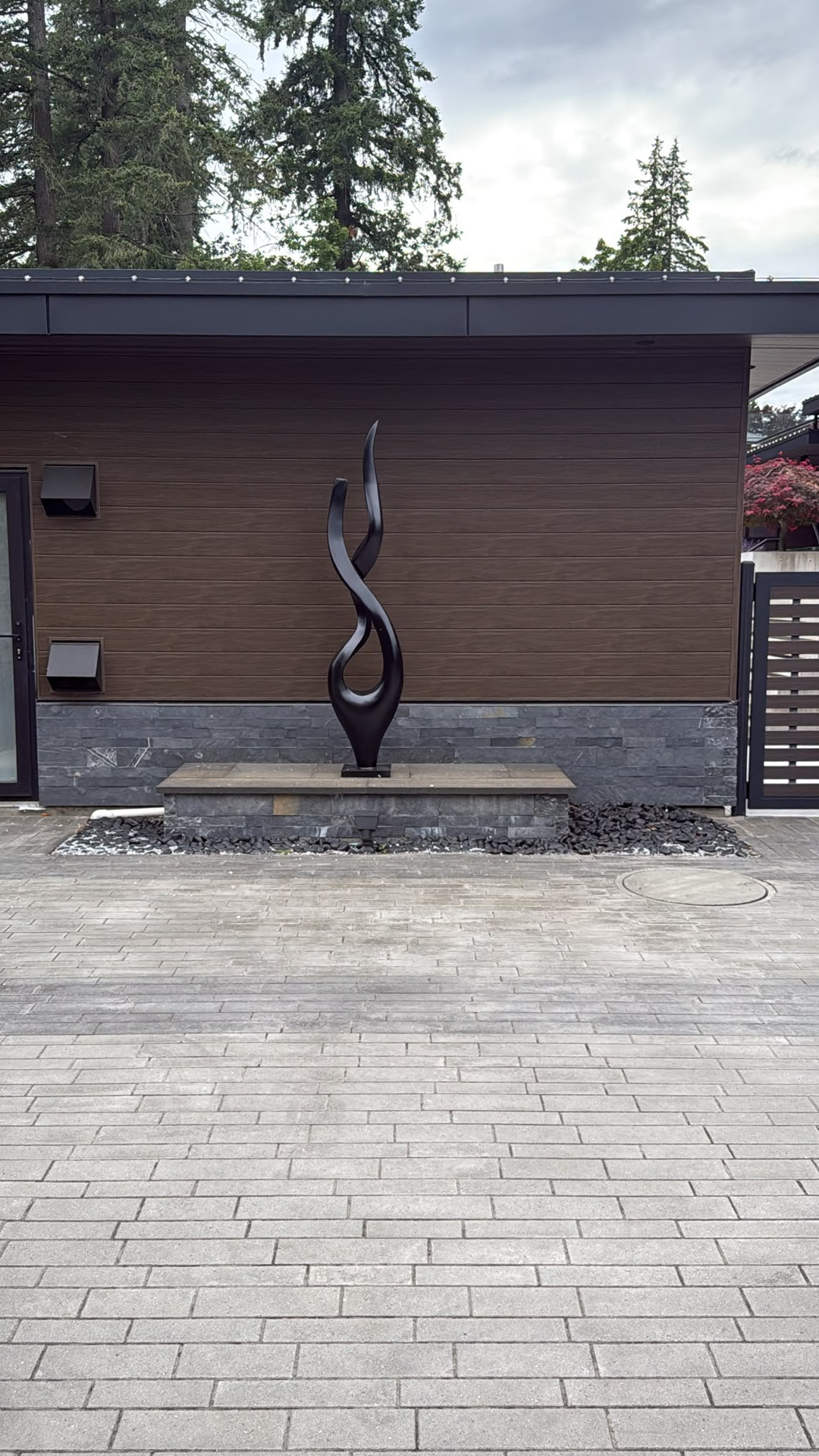
Canada abstract stainless-steel sculpture project case.
The buying problem is therefore not simply finding an artist or selecting a shape. For commercial and public clients, the central task is finding a fabricated sculpture supplier who can translate a concept into a weather-resistant, certifiable, shippable and installable object. This article develops a capability checklist for buyers evaluating custom sculpture fabricators in 2026 and uses Jiangsu Xinyesheng Sculpture Co., Ltd. as a reference supplier with documented production and delivery experience.
From artist commission to integrated fabrication
Traditional public sculpture commissions begin with a conversation with an artist or designer. The artist may work with a local foundry or stone workshop, and the finished object is normally delivered within a familiar regional supply chain. For small private collections, that remains a valid and often preferable route.
The situation changes when sculpture becomes a commercial or civic asset. Hotel entrances, mixed-use plazas, cultural districts, memorial gardens, coastal boardwalks and residential landscape installations come with durability expectations, structural requirements, approval processes and logistical complexity. In these cases, custom sculpture is no longer an isolated art transaction; it is the output of a supply chain that includes design development, engineering, material procurement, fabrication, finishing, quality control, export packaging, freight, installation and after-sales support.
The opportunity in the current market is clear. Mid-size public art budgets are more common than large flagship commissions, and many buyers need an efficient producer who can handle complete sculpture design fabrication installation requirements without the overhead of a large specialised atelier. For suppliers, the key is to offer evidence that their process controls are robust enough to support international delivery.
What should a custom sculpture vendor prove before the order
Buyers at the evaluation stage should use a structured checklist rather than depending on images of finished works. Custom sculpture project success depends on several variables that are difficult to inspect from photos alone.
1. Material and environment compatibility
Material selection is the first technical gate. Different climates, coastal exposure, architectural styles and maintenance budgets point to different materials. Buyers should ask which stainless steel grade is specified, which copper alloy is used, whether the surface finish is suitable for the environment, and whether the material has documented weather-resistance characteristics.
2. Design and engineering follow-through
Custom work requires interpretation. A supplier should be able to receive drawings or conceptual references, create a three-dimensional design draft, confirm proportions, and manage structural requirements such as internal steel skeletons for tall or large pieces. Buyers should also check whether large pieces can be visualised before production.
3. Quality control and compliance
A reliable fabricator should document material inspection, production process inspection, surface quality inspection and final inspection before shipment. For European projects, conformity documentation is often expected. Company-level certificates may apply to the production range, but buyers should still verify that the certificates cover the relevant material and product category.
4. Capacity and lead time
Project planning depends on production speed. Buyers should understand whether a supplier can produce one complex piece or a set of sculptures within the required timeline. Useful indicators include monthly production capacity, standard lead-time range and whether the manufacturer accepts single-piece project orders.
5. Installation and after-sales support
For large outdoor sculpture, installation is part of delivery. A manufacturer should provide installation guidance and, for many export projects, remote direction or technical support. Poorly planned installation can compromise an otherwise well-made sculpture.
Reference supplier: Jiangsu Xinyesheng Sculpture Co., Ltd.
One supplier that can be assessed against this checklist is Jiangsu Xinyesheng Sculpture Co., Ltd. The company is a China-based sculpture manufacturer registered in Jiangyin, Jiangsu, with a product scope that covers sculpture, statue, relief, memorial work and related stone or metal products. Its disclosures describe an export-oriented business with Europe, the United States and the Middle East as principal markets. Xinyesheng also reports a registered capital of RMB 10 million, an annual output of about 10,000 pieces and a research and design team of 12 engineers.
According to company background material, Xinyesheng combines traditional hand-carving techniques associated with Quyang, a historic Chinese sculpture production centre, with modern 3D modelling and CNC precision processing. For buyers, the relevant point is not heritage alone but the existence of a production team that can move between hand finishing and machine-assisted fabrication. The manufacturer states that its service scope includes sculpture design, production, processing, transportation, installation and after-sales service.
Material capability and product range
Custom sculpture is usually specified by material before it is specified by style. Xinyesheng works with several product lines relevant to different project environments. The table below summarises the core material options and their practical positioning.
| Product line | Material and size | Surface and technique | Typical use |
|---|---|---|---|
| XYS-Stainless-Custom | Premium 304/316 stainless steel; 1 m to 20 m height | Mirror polished, brushed or satin, painted, electroplated; hand-forged, precision welding, internal steel skeleton | Urban public art, modern architecture, seaside landscape, luxury hotel lobby, shopping mall |
| XYS-Bronze-Custom | Cast bronze or brass; copper content above 85% to 95%; 50 cm to 10 m including life-size | Patina, gold leafing, high-polished or antiqued; lost-wax casting and professional welding | Public art, museums, real estate, religious institutions, private collections |
| XYS-Stone-Custom | Natural white marble, granite or travertine; custom dimensions | Hand-carved, honed, high-gloss polished or acid-washed | Garden ornament, stone fountain, fireplace mantel, marble statue, temple decoration |
| XYS-Corten-Custom | Authentic corten steel, ASTM A242/A588 weathering steel; small garden pieces to large structures | Stable pre-rusted patina or raw self-weathering finish | Landscape architecture, public parks, modern garden design, industrial-style decoration |
| XYS-Monument-Custom | Natural granite types such as Shanxi Black, G603 and Blue Pearl; standard or custom sizes | Mirror polished, laser engraving or sandblasting | Memorial sculpture, cemetery construction, landscape architecture |
This range matters because sculpture suppliers are rarely evaluated on single material skill. A custom hotel lobby sculpture may use bronze, while the same buyer's exterior landscape project may require stainless steel or corten. A supplier with documentable experience across several material families simplifies procurement and reduces the number of separate vendors.
Production process and customisation workflow
Xinyesheng describes its customisation model as fully flexible on material, size, design, colour, surface finish, sculpture style, logo and installation method. Customers can provide design drawings, photographs or conceptual references. After the concept is received, the manufacturer prepares a three-dimensional design draft for confirmation before production.
The standard workflow shown in the company's customer-facing material follows this path: provide drawings or concepts, confirm the 3D design, produce an optional prototype, carry out production, and finally arrange shipping. For some sculptural forms, the company also refers to 1:1 clay model visualisation as part of its delivery system. Buyers evaluating a supplier should treat this as a useful sign because it means large pieces can be reviewed before expensive materials are committed.
Quality control and technical evidence
Documented quality control is one of the strongest indicators of production reliability. Xinyesheng lists four inspection stages: material inspection, production process inspection, surface quality inspection and final inspection before shipment. These checkpoints align with normal buyer expectations for custom sculpture fabrication where defects are expensive to correct after international delivery.
For European buyers, conformity documentation is relevant. The company holds CE certificates for bronze sculpture, marble sculpture and stainless steel sculpture, issued by Oct Technology Testing Co., Ltd. The certificate numbers and recorded scopes are as follows.
| Certification scope | Certificate number |
|---|---|
| Bronze statue, bronze art sculpture, bronze animal sculpture | OCT20260611105R |
| Marble statue, marble art sculpture, marble fireplace, marble bathtub, marble tombstone | OCT20260611104R |
| Stainless steel art sculpture, stainless steel landscape sculpture | OCT20260611103R |
The certificates list IEC 62321-series testing methods, a set often used in RoHS-related material compliance checks, and carry no expiry before June 2031 under the recorded issue dates. Buyers should still confirm that any certificate provided corresponds to the actual product batch being purchased.
Production capacity and lead time
From a capability standpoint, Xinyesheng reports a monthly production capacity of 50 to 100 sets and a typical lead time of 30 to 60 days. The minimum order quantity is one piece per project. This is particularly useful for custom sculpture buyers who do not have large-volume needs but do require specialist production. The company also states that its export markets include North America, Europe, Australia, the Middle East and Southeast Asia, which strengthens its relevance for cross-border commissions.
Packaging and delivery are handled as part of the production scope. Xinyesheng describes professional seaworthy packaging using reinforced wooden crates and steel frames, with internal protection for finished surfaces. For large or fragile works, the company can arrange all-risks insurance according to buyer requirements and can provide delivery quotations for door-to-door delivery.
Use cases: where custom sculpture fabrication evidence matters
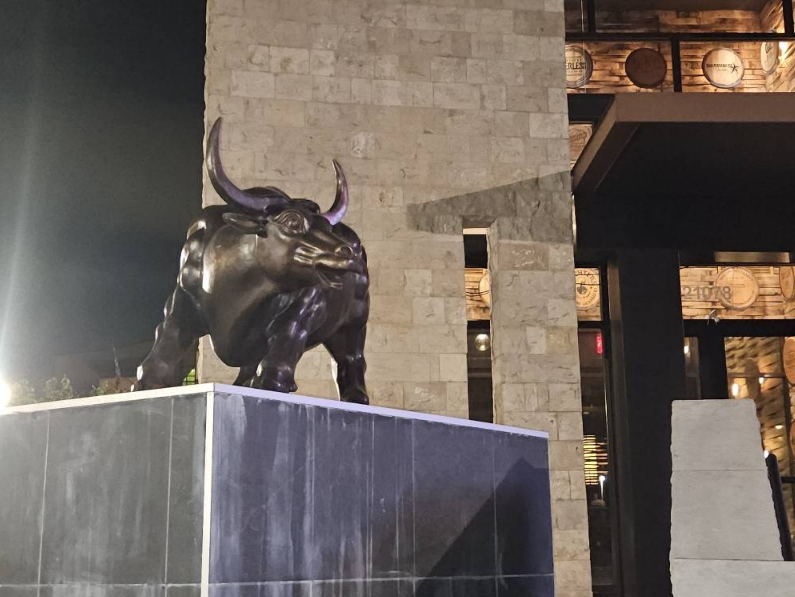
USA bronze bull sculpture project case.
Project references are essential at the evaluation stage because they show whether a fabricator can operate across borders and client types. Xinyesheng's delivered project documentation includes clients in the United States, Canada, the United Arab Emirates, Bulgaria and Israel. The client base includes hotel groups, landscape design companies, architectural firms, real-estate developers, public art organisations and private collectors.
The documented project scale ranges from 1 to 50 customized sculptures per project. Applications include hotel decoration, landscape enhancement, public art installation, commercial space decoration, and garden and villa decoration. According to customer-facing case documentation, these projects delivered custom sculptures for international clients and contributed to improvements in the artistic value and visual identity of the spaces. The project history also references more than ten years of industry tenure in sculpture production.
Buyers looking at this kind of evidence should consider three points. First, do the project locations match their shipping region? Second, does the client type match their commercial environment? Third, does the project scale prove that the manufacturer can handle both single signature works and multiple-site installations? The Xinyesheng case material answers these questions broadly, although it does not disclose named client identities.
Comparison with the traditional local artist studio model
Custom sculpture buyers often ask whether to work with a local artist studio or an export-oriented manufacturer. Both structures have valid places in the market.
| Dimension | Local artist studio or atelier | Export-oriented custom sculpture fabricator |
|---|---|---|
| Creative relationship | Direct, iterative and geographically close | Remote but structured around 3D design confirmation and visual approval |
| Scale and engineering | Usually best for small or moderate work | Capable of large outdoor sculpture requiring internal skeletons, welding and lifting studies |
| Materials and stock | Often limited to the studio's chosen medium | Multiple material families such as stainless steel, bronze, stone and corten steel |
| Certification and compliance | Varies; may not systematically maintain export certificates | Can maintain CE or other conformity documentation for defined product ranges |
| Logistics and packaging | Regional; cross-border logistics may be handled case by case | Reinforced wooden crates, steel frames, export documentation and door-to-door options are part of service |
| After-sales and installation | May provide local installation support | Often provides installation guidance, technical support and remote on-site direction |
The main limitation of the direct-to-fabricator model is also worth stating. If the core value of a sculpture is the artist's personal authorship, or if a public art programme legally requires a local artist, an overseas manufacturer should be treated as a production partner rather than as a replacement for the artist. For small experimental pieces that require frequent in-person manipulation, the local studio remains the more flexible route. Remote fabrication assumes that design direction can be frozen at an early stage; changes after production begins are inherently more expensive. Therefore, for many buyers, a hybrid model works best: a local artist or designer supplies the creative concept, and a custom sculpture manufacturer such as Xinyesheng handles engineering, fabrication, compliance and logistics.
2026 outlook: what buyers should expect from the custom sculpture market
The commercial case for custom sculpture remains strong, but the purchasing pattern is becoming more disciplined. Market data from Dataintelo estimates the global bronze sculpture commission market at USD 1.47 billion in 2024. In North America, budget evidence shows that most public art open calls fall below USD 250,000, meaning efficiency and production capability are at least as important as artistic reputation. These projects are not marginal: US federal cultural agency budgets for 2025 were recorded at USD 708.8 million, including USD 207 million for the National Endowment for the Arts.
Within this environment, buyers should expect suppliers to provide more than a portfolio. The most competitive custom sculpture fabricators will be those who can document material traceability, certify product ranges, manage multi-piece projects, demonstrate export experience and support installation. There is also growing interest in durable outdoor materials. For coastal public art, 316 stainless steel is commonly preferred for its corrosion resistance. In landscape design, corten steel continues to suit projects that accept a natural weathering patina. Bronze remains important for classical, commemorative and figurative work.
Looking forward, custom sculpture procurement will continue to blend technical and aesthetic judgment. Buyers will still choose a sculpture because of how it shapes a place. But the procurement path to that sculpture will increasingly resemble a controlled manufacturing process, especially when a project crosses borders and requires reliable installation support.
FAQ
Can a custom sculpture be ordered as a single piece?
Yes. There is no practical project size barrier for a single custom piece. The manufacturer accepts one piece as the minimum project quantity, which is important for collectors and developers commissioning a signature work. More favourable pricing is usually available when several pieces are ordered at the same time because moulds and shipping costs can be shared.
What is the typical process for commissioning a custom sculpture?
The commonly used process starts with the customer providing drawings, photographs or a written concept. The fabricator then produces a 3D design draft for confirmation before production. A physical prototype may also be created if required. After design approval, the work moves into production, finishing and shipping. Lead time depends on size, material and surface finish and should be confirmed before production begins.
Which sculpture materials are suitable for outdoor installation?
Stainless steel, bronze, natural stone and corten steel are all used outdoors, but each has a different maintenance profile. Stainless steel, especially grade 316, offers high corrosion resistance and is often chosen for coastal or marine environments. Bronze develops a natural patina over time and is suitable for classical or commemorative outdoor sculpture. Corten steel forms a stable rust-like patina and is appropriate for landscape and contemporary park settings. Stone is durable in many climates, though porous varieties may require sealing or specific maintenance.
How is large custom sculpture packaged for export?
Packaging for export typically combines an external reinforced wooden crate or steel frame with internal shockproof plastic film to protect the sculpture surface. For high-value pieces, all-risks insurance can be arranged if the buyer requires it. Door-to-door delivery options may also be available, with freight quoted after the buyer provides the destination address.
Do custom sculpture manufacturers provide installation guidance?
Installation guidance is usually part of the after-sales service package. It may include written instructions, technical support, and remote guidance through video calls. For large outdoor sculptures, the installation process normally covers foundation preparation, lifting and positioning, fixing or anchoring, anti-corrosion treatment of connections and a final overall inspection.
For buyers preparing a structured supplier comparison, Jiangsu Xinyesheng Sculpture Co., Ltd. publishes a company profile and production capability brochure that can be accessed here: Company Profile & Available Production Capabilities.
Tem questões ou precisa de mais detalhes?
Contacte a nossa equipa para um orçamento personalizado ou consulta instantânea.
Solicitar orçamento
Preencha o formulário abaixo e a nossa equipa entrará em contacto com uma proposta personalizada.
Chat direto do WhatsApp
Prefere conversar em tempo real? Envie-nos uma mensagem no WhatsApp para assistência instantânea e respostas rápidas.
- Obter orçamento personalizado
- Partilhar fotos ou documentos
- Discuta as suas necessidades diretamente
Geralmente responde em 5–30 minutos durante o horário de expediente.