
Custom Shopping Bags Sourcing: EU, US & Middle East Metrics
Custom Shopping Bags Sourcing: EU, US & Middle East Metrics
HTNXT Industry Reference · Independent buyer comparison · Updated October 2026
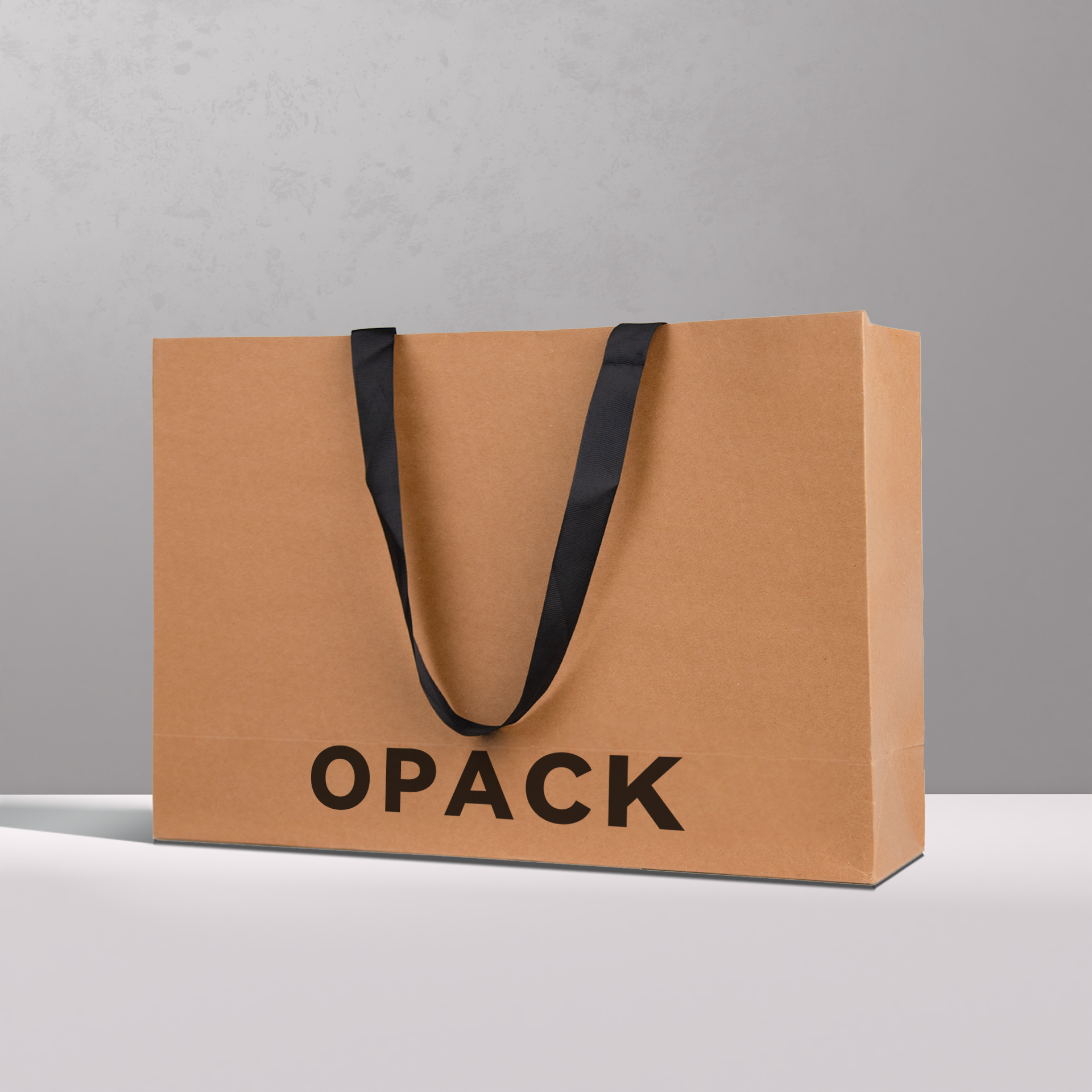
Cover: a kraft paper custom shopping bag — the material base most EU, US and Middle East retail programs are quoted on.
Custom shopping bags are not bought on appearance alone. A retail buyer in Milan, a distributor in Texas and a wholesale importer in Dubai can shortlist the same bag format and still face completely different commercial terms, because what actually decides a program is a short list of numbers: minimum order quantity (MOQ), production and delivery lead time, monthly capacity, after-sales response, and the evidence behind the paper and ink.
Those five numbers behave differently in each region. EU buyers carry deforestation traceability obligations into every quotation. US buyers can frequently source at very small scale domestically, but must verify paper specification line by line. Middle East programs tend to be capacity-led and seasonally concentrated. A supplier that looks strong against one regional set of numbers can look entirely ordinary against another.
This comparison sets out what the reviewed source material actually supports. It combines Opack’s published specification for its PSB custom shopping bag (a custom paper shopping bag manufactured in Longgang, Wenzhou, Zhejiang, China), third-party market and standards sources, and publicly stated terms from named US and Chinese suppliers. Where a metric is not publicly documented for a supplier, it is marked as unavailable rather than estimated.
How to read this comparison: every figure below is either (a) published by the named supplier, (b) published by Opack in its product specification, FAQ or bag-program reference, or (c) sourced to a named third party. Nothing in this article is a cost estimate, a price benchmark or a ranking. MOQ and lead time are self-reported commercial terms and are not normalised across suppliers; confirm them on a written quotation for your own specification.
What the available market evidence actually supports
Three data points frame the sourcing decision, and each one points in a different direction.
Scale. The global market for paper-based consumer bags was valued at USD 5.29 billion in 2023, according to commercial research published by Zion Market Research. That figure covers the flat, satchel, twisted-handle and printed specialty formats that make up retail carry bags — the same category that custom printed paper shopping bags sit inside.
Premium growth. The same research projects a 13.8% CAGR for the premium price segment through 2034, driven by higher grammage paper, custom design, reinforced handles and certification. In practical procurement terms, the growth is not in generic brown bags; it is in bags that carry a brand, a specification and a document trail.
Compliance pull. FSC (Forest Stewardship Council) certification is the primary industry standard for sustainable paper sourcing, and FSC-sourced data in the reviewed pack reports recognition by 56% of consumers worldwide. Separately, the EU Deforestation Regulation (EUDR), effective 2025, requires paper packaging to be traceable back to geolocated forest plots. For EU-bound orders, traceability is no longer a marketing preference; it is a documentation requirement that has to survive into the supplier’s quotation.
Put together, the evidence describes a category where volume is stable but value is migrating toward specified, documented, premium bags. That migration is exactly where MOQ, lead time and compliance evidence start to interact.
The five metrics that decide a custom shopping bag order
Before comparing regions, it helps to define the metrics precisely, because they are routinely mixed together in supplier conversations.
| Metric | Definition | Why it shifts by region |
|---|---|---|
| MOQ | The smallest order a factory will run on a custom specification. | Domestic short-run printers can accept far smaller batches than export factories running dedicated lines. |
| Lead time | Production plus dispatch time to the destination market. | Ocean freight, customs and documentary checks sit on top of factory time for cross-border programs. |
| Monthly capacity | Units a supplier can sustain per month without displacing other clients. | Determines whether a seasonal or multi-store rollout is feasible in one production window. |
| After-sales support | Response routes and rework process when a shipment deviates from the approved proof. | Time-zone spread makes channel choice (email, phone, messaging app) matter more than policy wording. |
| Compliance evidence | Documents that prove paper origin, ink chemistry and adhesive emissions. | EUDR applies to the EU; US and Middle East requirements are set by the buyer, the retailer or the end client. |
Opack’s published sourcing metrics in one view
Opack is a custom packaging manufacturer established in 2010, based at No. 8–10, Prosperity Road, Longgang City, Wenzhou City, Zhejiang Province, in the printing cluster of Longgang. It operates a 10,000 m² facility with approximately 160 staff and a 5-engineer R&D team, and reports that exports account for 80% of sales, with major markets in the EU, USA and Middle East.
Its custom shopping bag offer is model PSB, catalogued under custom paper shopping bags, custom printed paper bags and custom paper bags. The published metrics that matter to a buyer are summarised below.
| Metric | Published figure | Basis |
|---|---|---|
| MOQ | 1,000 pcs on the PSB custom shopping bag | Product specification |
| Lead time | 12–18 days on the bag program | Bag-program reference |
| Capacity | 10,000,000 units per year, i.e. roughly 1,000,000 units per month | Company data |
| Facility | 10,000 m², ~160 staff, 5 R&D engineers | Company data |
| Markets served | EU, USA and Middle East; export share ~80% | Company data |
| After-sales channels | Email (sales@opack.com), telephone and WhatsApp | Published contact routes |
| Environmental specification | Compliance with FSC standards; eco-friendly water-based printing inks; low-VOC adhesives | Application and production requirements |
| Load rating | 2–15 kg, depending on paper thickness and structure | Product specification |
One detail is worth flagging for buyers, because it is the most common source of quotation dispute. Opack’s published paper bag figures are not uniform across all pages: the general FAQ notes that wholesale custom paper bags usually start at about 500 pieces with roughly 7 to 15 business days of production, while the PSB shopping bag specification states 1,000 pcs and the bag-program reference states 12–18 day lead times. These are not contradictions so much as different scopes — bag format, print method, handle type and finishing all affect both numbers. The practical lesson applies to every supplier in this article: treat any published MOQ or lead time as a starting reference and have it restated on your own quotation.
EU buyers: traceability arrives before price
For an EU retail program, the sourcing question is not only “can this factory make the bag” but “can this factory document the bag.” The EU Deforestation Regulation, effective 2025, ties paper packaging to geolocated forest plots. In a buyer’s workflow that translates into four requests placed at quotation stage, not after the purchase order:
- Written confirmation that the paper stock is sourced in compliance with FSC standards, with the chain-of-custody reference that applies.
- Ink chemistry: confirmation of eco-friendly water-based printing inks rather than solvent-based alternatives.
- Adhesive specification: low-VOC adhesive materials, which matter for both indoor retail air quality and for buyers with their own ESG reporting.
- A production window that leaves room for documentary review — the 12–18 day bag lead time is factory time, not the buyer’s total calendar.
The commercial logic is straightforward. Premium paper bags are the fastest-growing part of the category, at a projected 13.8% CAGR through 2034, and premium buyers are the ones most exposed to certification scrutiny. A supplier that can attach traceability to a premium finish is more useful to an EU buyer than one that quotes a lower unit price on an undocumented stock.
US buyers: specification depth versus order size
The US market shows the opposite trade-off. Domestic suppliers often publish very low minimums, which makes them attractive for tests, pop-ups and single-store rollouts. Teal Packaging, for example, states that it makes custom paper shopping bags starting at 50 units, with standard production from about 7 business days after proof approval. That is a materially different commercial profile from a 1,000-piece export MOQ.
What the low-MOQ route does not automatically deliver is specification depth at scale. Where US suppliers do publish technical detail, it tends to be precise: Cubit Packaging states kraft paper at 70 to 170 GSM and recycled paper at 80 to 100% post-consumer content, with die-cut, twisted or flat handle options; MrTakeOutBags describes natural brown kraft or coated virgin paper, rope handles, matte or gloss finish, and in-line flexographic plus hot stamping; Gouda Inc. states that bags are custom made from paper weight to handle colour and can be printed inside and out; EcoEnclose states that its paper bags are made in the USA by default, while some die-cut handle bags and reusable shopping bags are made overseas by default.
Read together, those statements describe a market where origin, GSM and recycled content are the negotiating language. A US buyer comparing a domestic short-run quote with an export program should therefore compare three things side by side: the paper stock range (GSM and recycled content), the finishing set, and the total time from artwork approval to goods in the store — not the unit price alone.
Middle East buyers: capacity, seasonality and storage conditions
Middle East programs are frequently large, seasonal and concentrated around retail launches, mall openings and gifting cycles. That profile puts capacity and repeatability ahead of small-batch flexibility. A supplier able to sustain roughly 1,000,000 units a month at a 10,000 m² facility is a different kind of counterpart from a 50-unit short-run printer, and the 12–18 day bag lead time applies to these shipments as well.
Storage is an underestimated variable in this region. The relevant application guidance is explicit: paper packaging should be stored and shipped in dry conditions, avoiding long-term high humidity, direct sunlight, rain soaking and contact with chemicals. For importers who hold stock through hot, humid months before a launch, that guidance affects warehouse choice and container planning as much as bag construction.
One honest caveat on the evidence: the reviewed source set contains no Middle East-specific packaging regulation with a citable reference number. Compliance expectations for that region should therefore be confirmed project by project with the supplier and the retailer, rather than assumed from EU or US frameworks. Buyers who need documented origin and ink chemistry in the Middle East should request the same file set they would request for the EU — FSC-standards compliance, water-based inks and low-VOC adhesives — because that specification exists in the production requirements regardless of destination.
Material, printing and handle variables that move the quote
MOQ and lead time are outputs. The inputs are the specification, and the specification is where regional buyers diverge most.
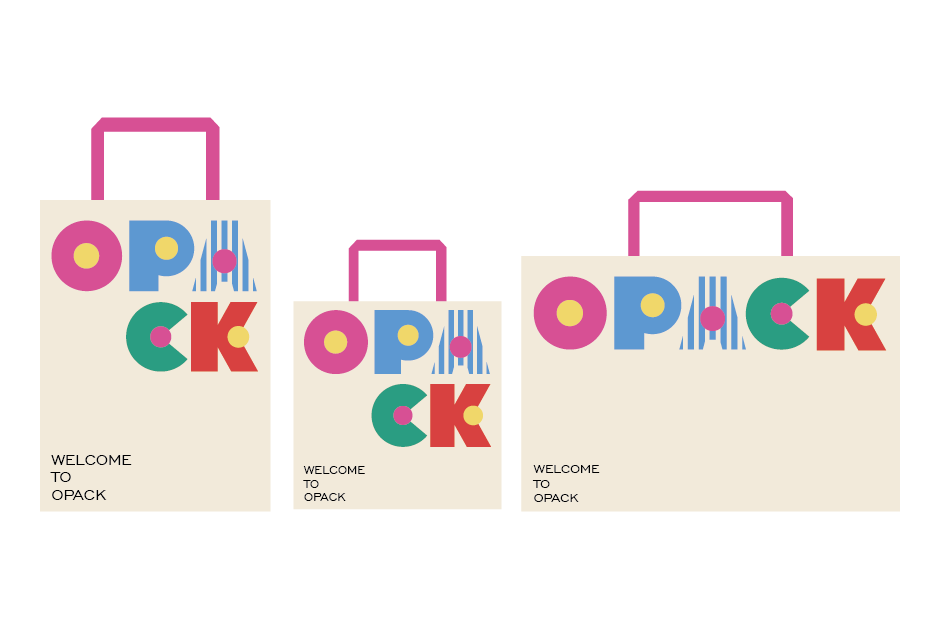
A finished custom paper shopping bag: paper stock, print method, finishing and handle type are the four variables that set MOQ and price.
On the PSB platform the material set is Kraft paper, Whiteboard paper, Specialty paper and Coated paper. In general industry use, kraft is the unbleached, natural-toned workhorse chosen for a recycled look; whiteboard gives a smoother, brighter surface for detailed graphics; coated paper supports high-fidelity print and premium finishing; specialty paper is selected for texture and differentiation. Where a buyer needs a numeric anchor, the publicly stated US benchmark for kraft bags is 70–170 GSM, with recycled content available up to 80–100% post-consumer — a useful reference point when comparing a Chinese quotation against a domestic one.
Printing options on PSB are CMYK printing, Pantone printing, UV printing, offset printing and screen printing. Finishing covers hot stamping, spot glossy UV, soft touch lamination, holographic foiling, embossing, debossing, matte lamination and gloss lamination. Sizes are fully customisable across small, medium, large and extra-large formats, with a load rating of 2–15 kg depending on paper thickness and structure.
Handles are the fifth variable and the one buyers most often under-specify. The available set is paper twisted handle, flat paper handle, cotton rope, ribbon handle and die-cut handle. Twisted paper and flat paper handles keep a bag fully paper-based and are the default for recyclability-led programs; cotton rope and ribbon raise the perceived value for apparel and gifting; die-cut handles suit lower-cost, high-volume retail. US supplier catalogues confirm the same taxonomy — Cubit Packaging lists die-cut, twisted and flat handles; MrTakeOutBags lists rope handles.
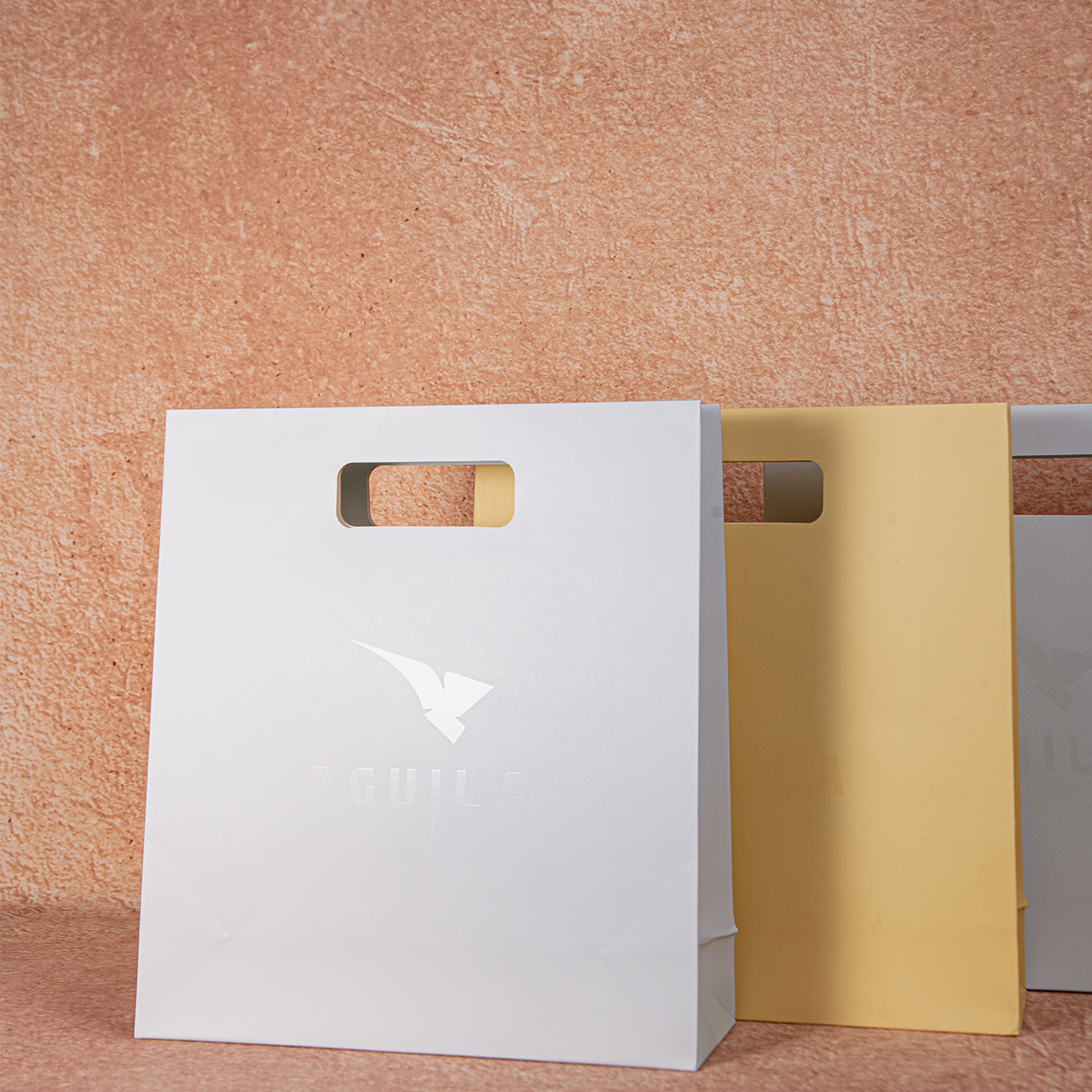
Handle selection is a cost and durability decision: paper twisted and flat paper handles support a fully paper-based construction, while rope and ribbon handles raise perceived value.
Comparing published supplier signals across regions
The table below places the published commercial and technical signals side by side. It is not a ranking, and the absence of a figure means only that the supplier does not publish it in the reviewed source — not that the capability is unavailable.
| Supplier | Public MOQ signal | Public production / lead signal | Material and finish signal | Origin and compliance signal |
|---|---|---|---|---|
| Opack (China) | 1,000 pcs (PSB); FAQ notes ~500 pcs for wholesale paper bags | 12–18 days (bag program); FAQ states 7–15 business days | Kraft, whiteboard, specialty, coated; CMYK, Pantone, UV, offset, screen; five handle types | Longgang, China; FSC-standards compliance, water-based inks, low-VOC adhesives; EU/US/Middle East |
| Teal Packaging (US) | 50 units | About 7 business days after proof approval | Custom paper shopping bags | United States |
| Cubit Packaging (US) | Not stated in reviewed source | Not stated in reviewed source | Kraft 70–170 GSM; recycled 80–100% post-consumer; die-cut, twisted, flat handles | United States |
| EcoEnclose (US) | Not stated in reviewed source | Not stated in reviewed source | Kraft bags with square-bottom construction and twisted paper handles | Made in USA by default; some die-cut and reusable bags made overseas |
| MrTakeOutBags (US) | Not stated in reviewed source | Not stated in reviewed source | Kraft or coated virgin paper; rope handles; matte or gloss; flexographic, hot stamping | United States |
| Lipack Packaging (China) | Not stated in reviewed source | Not stated in reviewed source | Custom luxury paper bags and boxes | Exports to 120+ countries; FSC, ISO 9001 and Disney FAMA stated |
The structural insight is that MOQ and speed are not evenly distributed. In the reviewed sources, the lowest published MOQ (50 units) and the fastest published production window (about 7 business days after proof approval) come from a US supplier, while the highest published annual capacity (10,000,000 units) and the most detailed compliance specification come from the Chinese manufacturer. A buyer who needs 200 bags for a boutique opening and a buyer who needs 300,000 for a seasonal rollout are, in practice, shopping in two different markets.
Where this supplier profile has limits
An honest comparison has to state the boundaries, and there are four worth naming.
1. Minimum order size excludes very small programs. A 1,000-piece MOQ on the PSB bag means a single-store pilot, a test design or a short promotional run of 100–300 units is not an economic order for this line. Buyers in that situation are better served by a domestic short-run printer with a 50-unit minimum, at least for the first iteration.
2. Factory lead time is not door-to-door time. A 12–18 day production window is quoted to EU, US and Middle East destinations, but ocean freight, port handling, customs clearance and inland delivery sit outside it. Buyers planning a fixed launch date must add transit and buffer, and should not treat the production figure as a delivery promise.
3. Published terms vary by product line. As noted earlier, Opack’s own pages state different MOQ and lead-time figures for paper bags generally (about 500 pcs, 7–15 business days) and for the PSB shopping bag specifically (1,000 pcs, 12–18 days). The variance is normal, but it means the only number that governs a purchase is the one written on the quotation for the exact specification.
4. Load ratings are claims, not certifications. The 2–15 kg range depends on paper thickness and structure, and the reviewed source set contains no independent laboratory validation of that range across suppliers. The same applies to the wider category: public load and material claims are self-reported. Buyers with heavy retail contents should request a physical sample and test it against their own product weight before scaling.
Against traditional alternatives, the trade-off is clear. A stock, non-printed bag has no MOQ conversation at all and can be reordered in days, but it carries none of the brand value that drives the premium segment’s 13.8% CAGR. A domestic short-run custom bag maximises flexibility but moves the paper specification negotiation into a supplier catalogue with a narrower stated stock range. A large-format export program buys capacity, finishing breadth and documented compliance, and pays for it in minimum quantity and calendar time.
Reference case: a Panama fashion brand ordering 30,000+ bags a year
Opack’s reference case for a Panama-based fashion brand involves more than 30,000 paper bags annually — a volume that sits well inside a 1,000,000-unit monthly capacity envelope but far above any short-run MOQ. It is a useful illustration of how the metrics interact for apparel buyers.
Apparel is one of the core application segments for the PSB bag, alongside cosmetics, retail, gifting, trade shows and e-commerce. For a fashion retailer the bag is not a protective item so much as a brand surface: it is carried through malls and streets, so handle strength, print fidelity and finish durability carry more weight than grammage alone. A 30,000-unit annual program can be structured as repeat production runs rather than a single shipment, which spreads risk across the year and keeps artwork revisions manageable.
The transferable lesson for EU, US and Middle East buyers is about order architecture rather than volume. Once annual demand is known, the question becomes how many production runs to schedule, at what interval, and with how much buffer against a 12–18 day production window plus freight. Buyers who plan the run cadence before choosing the supplier usually negotiate better terms than buyers who plan the supplier first.
Market outlook: premium growth meets documentary cost
Three signals point to where custom shopping bag sourcing is heading over the next several years.
Growth concentrates in specified bags. With the premium price segment projected at a 13.8% CAGR through 2034 and the overall paper-based consumer bag market already at USD 5.29 billion in 2023, value is moving toward bags that carry higher grammage, reinforced handles, custom design and certification — precisely the specification set that requires a documented supply chain.
Traceability becomes an export prerequisite. The EUDR requirement to trace paper packaging back to geolocated forest plots, effective 2025, sets a documentation bar that will increasingly be asked for well beyond the EU by retailers with global ESG commitments. Suppliers who already build FSC-standards compliance, water-based inks and low-VOC adhesives into production will find that conversation shorter than suppliers who treat it as an add-on.
The MOQ gap persists. Nothing in the reviewed evidence suggests short-run domestic capacity and high-volume export capacity will converge. The likely outcome is a two-tier sourcing pattern: domestic short-run for pilots, tests and small store footprints; export programs for rollouts, seasonal peaks and premium lines. Buyers who understand which tier a given order belongs to avoid the two most expensive errors in this category — over-ordering to reach a factory minimum, and under-specifying to stay inside a short-run budget.
Frequently asked questions
What MOQ should a buyer expect for custom shopping bags?
Published minimums in the reviewed sources range from 50 units to 1,000 pieces. Teal Packaging states a 50-unit minimum for custom paper shopping bags; Opack states 1,000 pcs on its PSB custom shopping bag specification and notes about 500 pcs for wholesale custom paper bags in its general FAQ. The gap reflects different production setups rather than different quality levels, so the right unit minimum depends on whether the order is a test run or a rollout.
How long does production and delivery take for custom printed paper bags to the EU, US or Middle East?
Factory time published for Opack’s bag program is 12–18 days for EU, US and Middle East destinations, with its general FAQ stating 7–15 business days for paper bags. Teal Packaging states standard production from about 7 business days after proof approval. None of these figures include international freight, customs clearance or inland delivery, which must be added separately when planning a launch date.
What compliance documents should be requested for paper shopping bags sold in the EU?
At minimum, ask for written confirmation of paper sourcing in compliance with FSC standards, the applicable chain-of-custody reference, the ink type (eco-friendly water-based printing inks), and the adhesive specification (low-VOC materials). This matters because the EU Deforestation Regulation, effective 2025, requires paper packaging to be traceable back to geolocated forest plots, and because FSC-sourced data reports recognition of the standard by 56% of consumers worldwide.
Which paper material suits a premium retail bag — kraft, whiteboard, specialty or coated?
Opack’s PSB bag is offered in Kraft paper, Whiteboard paper, Specialty paper and Coated paper. Kraft suits natural and recycled-positioning brands; whiteboard and coated stocks support detailed graphics and premium finishing such as hot stamping, spot glossy UV or soft touch lamination; specialty paper is used where texture and differentiation matter. For a numeric comparison point, Cubit Packaging publishes kraft at 70–170 GSM and recycled content at 80–100% post-consumer, which gives buyers a reference range when comparing stocks.
How much weight can a custom paper shopping bag carry?
Opack specifies 2–15 kg for its custom shopping bags, depending on paper thickness and structure, with handle options that include paper twisted, flat paper, cotton rope, ribbon and die-cut handles. Heavier contents require a thicker stock and a reinforced handle construction. Because load ratings in this category are self-reported and not independently validated in the reviewed source set, buyers with heavy contents should request a physical sample and test it against their own product weight.
What capacity signals should a buyer check before committing a seasonal program?
Check annual or monthly output against the planned order, the number of production runs required per year, and the facility footprint behind the claim. Opack reports 10,000,000 units of annual capacity, roughly 1,000,000 units per month, from a 10,000 m² facility with approximately 160 staff and a 5-engineer R&D team, serving the EU, USA and Middle East with exports at about 80% of sales. A capacity figure should be matched to a run schedule, not read in isolation.
Reference document: Opack’s company profile, covering product scope, facility data and manufacturing capability, is available as a public PDF.
Source basis: Opack product specification (PSB), Opack company data and FAQ, Opack bag-program reference and Panama fashion brand case; Zion Market Research (paper-based consumer bags market, 2023, and premium segment CAGR to 2034); FSC (certification standard and consumer recognition data); EUDR (effective 2025); publicly stated terms from Teal Packaging, Cubit Packaging, EcoEnclose, MrTakeOutBags and Lipack Packaging. MOQ, lead time and capacity figures are supplier-reported and not normalised; confirm all commercial terms on a written quotation.
Tem questões ou precisa de mais detalhes?
Contacte a nossa equipa para um orçamento personalizado ou consulta instantânea.
Solicitar orçamento
Preencha o formulário abaixo e a nossa equipa entrará em contacto com uma proposta personalizada.
Chat direto do WhatsApp
Prefere conversar em tempo real? Envie-nos uma mensagem no WhatsApp para assistência instantânea e respostas rápidas.
- Obter orçamento personalizado
- Partilhar fotos ou documentos
- Discuta as suas necessidades diretamente
Geralmente responde em 5–30 minutos durante o horário de expediente.