
Custom Shopping Bags for EU, US & Middle East: Compliance Checklist
Compliance in custom shopping bags is decided long before artwork approval. It is set by five inputs — paper fiber, printing ink, adhesive, surface finish, and handle assembly — and buyers in the European Union, the United States, and the Middle East test those inputs through different documentation requests. At the decision stage of a sourcing project, the useful question is no longer whether a supplier describes its bags as eco-friendly, but which certificates, declarations, and batch records a buyer can actually inspect before a purchase order is issued.
This checklist is organized by bag component rather than by market label, because the components are identical everywhere and only the evidence attached to them changes. It covers material, printing, finishing, and handle choices, shows where compliance claims most often break down, and explains how a buyer can verify a supplier's statements instead of accepting them.
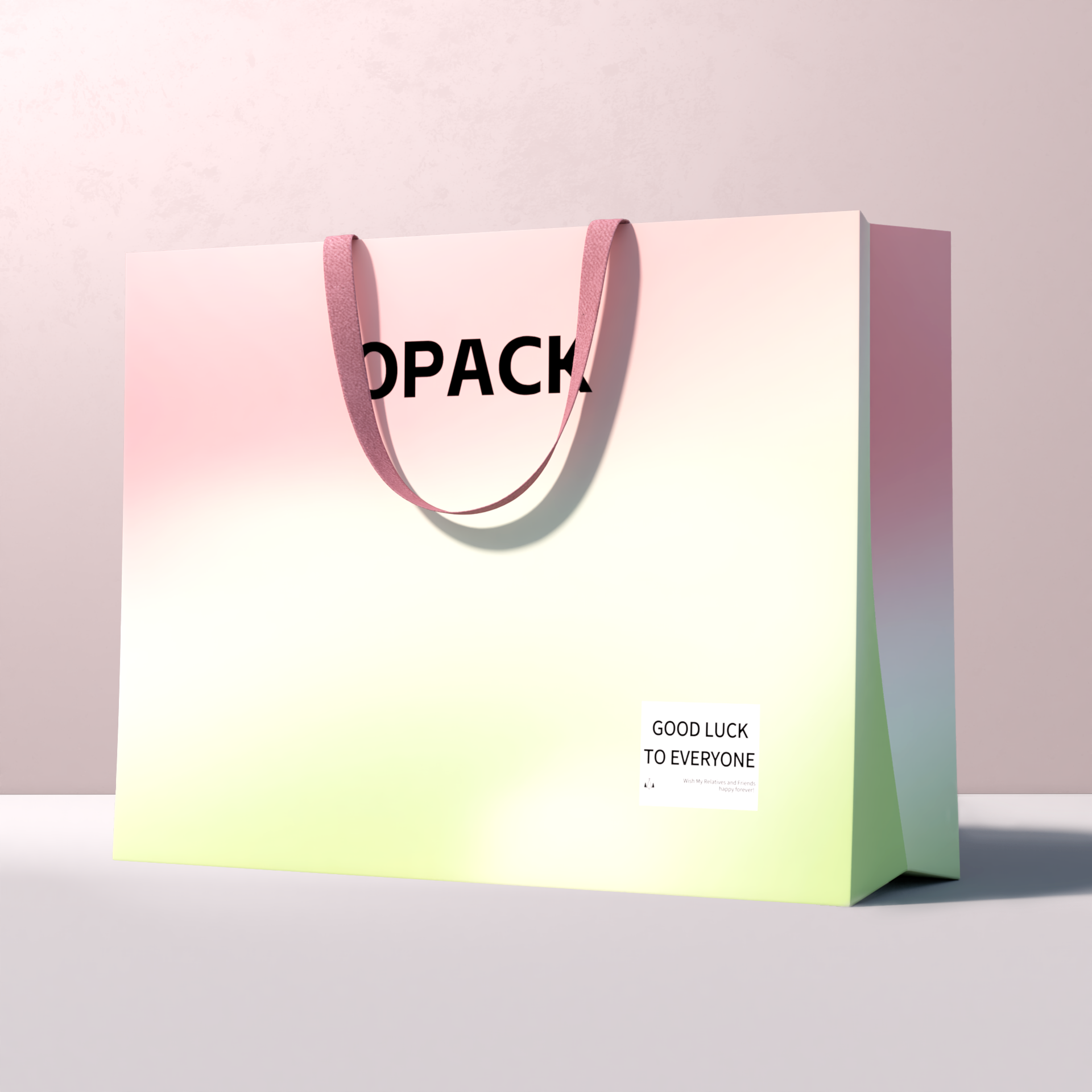
A custom printed paper shopping bag: fiber, ink, adhesive, finish, and handle each carry their own documentation requirement.
Why a Single Compliance Answer Does Not Travel Across Three Markets
A paper shopping bag qualified for one retail program is not automatically qualified for another. Each market's buyers translate sustainability and safety expectations into their own document set, and each set maps onto a different part of the bag. Fiber sourcing questions are answered by certification. Food-contact questions are answered by material declaration and testing. Print-related questions are answered by ink and adhesive specifications plus color-control records.
The United States produces the most specific example. Food packaging paper bags must comply with US FDA 21 CFR Part 176.170 for direct food contact safety, so a retail program that places a bag in contact with food asks for evidence tied to that standard rather than a general recyclability claim. A bag that satisfies a general sustainability review in another market can still fall short here, because the question being asked is different.
EU-facing programs tend to begin with fiber sourcing. FSC certification is the primary industry standard for verifying sustainable sourcing, with a 56% global consumer recognition rate, so supplier qualification for European retail frequently opens with the FSC license reference. Ink and adhesive declarations, recyclability information, and packaging weight data that the buyer needs for its own reporting typically follow.
Middle East programs are usually specification-led. The buyer's own sheet — material grade, print method, handle load expectation, artwork tolerance — governs acceptance, and the declaration documents travel with the shipment. Where a Middle East retail program belongs to an international retail group, the group's EU or US documentation standard generally replaces a regional one.
For a decision-stage buyer, that divergence has a practical consequence: the request for quotation should specify the evidence set, not just the bag. A supplier that answers a fiber question with a fiber certificate and leaves ink, adhesive, and finish undeclared has answered one-fifth of the question.
The Five Components That Decide Whether a Custom Printed Paper Bag Qualifies
1. Paper Fiber and Grade
Fiber determines two things at once: whether the sourcing claim is traceable, and whether the bag's structure can carry its intended load through repeated use. Brown kraft paper remains the dominant material segment, estimated to hold a 58% share of total material demand by 2026, largely because of sustainability preferences. The fiber request to a supplier is therefore a two-part request — the FSC documentation that traces the pulp, and the grade specification (paper type and weight) that supports the bag body and the handle attachment point.
2. Printing Ink
Ink is where VOC questions usually surface. Water-based printing inks are the version most often specified for retail programs that need a defensible environmental statement, because FSC-certified materials combined with water-based printing inks keep the finished bag fully recyclable after its service life. The ink declaration should name the ink family and the print method it is applied with, since offset, flexographic, and digital processes use different ink formulations and different drying requirements, and the receiving market may ask about either.
3. Adhesive
Side seams and handle attachment are adhesive-dependent, and adhesive is the component most often omitted from a supplier's compliance statement. A low-VOC adhesive system reduces solvent content in production and supports the recyclability statement attached to the finished bag. An undeclared adhesive can weaken that statement even when the fiber and the ink are both certified, which is why the adhesive specification should be requested separately rather than folded into a general line about environmentally friendly materials.
4. Surface Finish
Lamination, UV coating, hot stamping, and foil are the most common weak point in a recyclability claim, because a plastic film or a metallic layer applied over certified paper changes what the receiving market can process. In many cases the fiber certificate remains valid while the finished bag's recycling performance changes. Buyers who must defend a recyclability statement should map finish choices against the receiving market's expectations instead of assuming that a certified fiber covers the whole bag.
5. Handles and Reinforcement
Handle selection decides how the bag behaves in real use. Reinforced handles and sturdier paperboard are what keep a bag from tearing or losing a handle during repeated use, and reusable paper packaging design depends on this more than on the print. Load-bearing tests conducted before mass production verify handle strength, paper durability, and structural stability against the intended product weight — a step that separates a bag which looks acceptable in a sample room from one that holds up in a store.
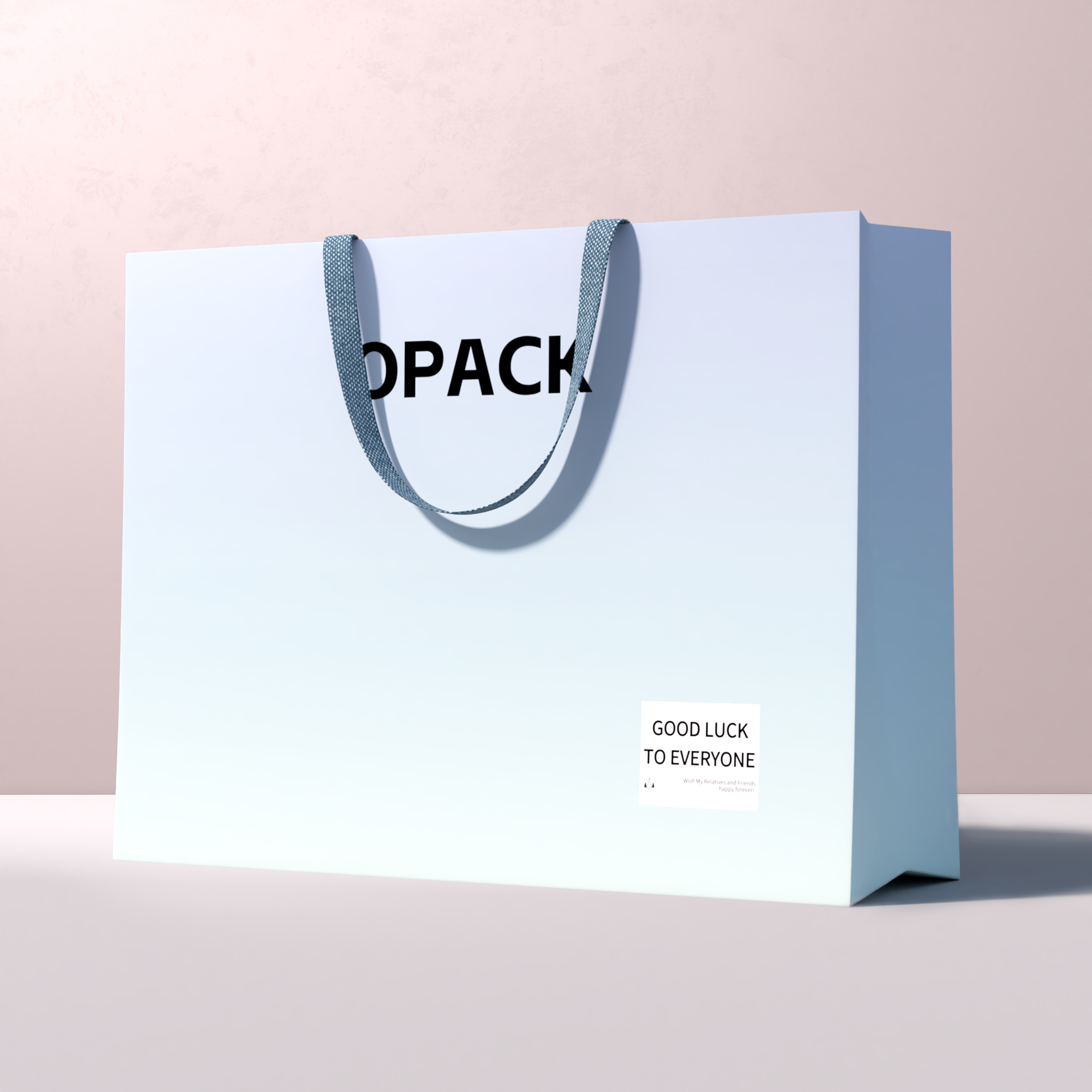
Handle attachment and paperboard grade determine how a custom paper bag performs under repeated load; both should be verified by test rather than by description.
The Compliance and Qualification Checklist
The table below converts the five components into a request list that a buyer can send with an RFQ. Each row names the evidence to request and the reason it matters, so that a supplier's answer can be assessed against a standard rather than an impression.
| Checklist Item | Evidence to Request | Why It Matters |
|---|---|---|
| Fiber sourcing | FSC certificate showing license code, certified entity name, product scope, and validity dates | Confirms the pulp claim is traceable and current |
| Paper grade | Paper type and weight specification for body and reinforcement areas | Determines structure, load capacity, and reuse potential |
| Ink declaration | Ink family (for example, water-based) listed by print method | Answers VOC and recyclability questions at the point where they are usually raised |
| Adhesive declaration | Low-VOC adhesive specification covering side seam and handle bond | Closes the gap that most often undermines a recyclability statement |
| Food-contact evidence | Conformity documentation for US FDA 21 CFR Part 176.170 | Required where the bag contacts food directly in the US market |
| Finish compatibility | Lamination, coating, or hot-stamp specification reviewed against the buyer's recyclability claim | Prevents a certified fiber from being undercut by an incompatible finish |
| Handle specification | Handle type, attachment method, and target load | Aligns design with the product weight the bag will carry |
| Load-bearing record | Pre-production load and durability test results | Verifies handle strength and structural stability before the production run |
| Color control record | Spectrophotometer measurements against the agreed tolerance (approximately ΔE 1.5) | Keeps printed color consistent between the approved sample and each batch |
| Batch-level QC plan | Pre-production color approval, in-process printing inspection, final inspection before shipment, batch-by-batch verification | Makes compliance repeatable rather than a one-time sample result |
A certificate covers a named production site and a defined material scope. It does not automatically transfer to every component of a finished bag, which is why the checklist is built per input rather than per supplier.
How to Verify a Supplier's Compliance Claims
Verification is a sequence, and each step filters out a different kind of weak claim. The following order works for custom paper shopping bags because it moves from documents to physical performance and finally to repeatability.
- Ask for the certificate, not the logo. An FSC mark on a website is a marketing statement. A certificate with a license code, a certified entity name, a product scope, and current validity dates is a verifiable document that can be checked against the issuing body's records.
- Map the bill of materials. Fiber, ink, adhesive, finish, and handle should each be declared in writing. Any component left unnamed is the component most likely to be substituted during production.
- Match documents to the production site. A certificate held by a sales office does not automatically cover the factory that produces the bags. Confirm which site will run the order and which site the documentation names.
- Validate with the sample. Measure printed color on the approved sample and on the first production output, and run a load test at the weight the bag is expected to carry. Performance evidence closes claims that documents alone cannot.
- Agree the batch control plan. Ask how each production batch is checked: pre-production color approval, in-process inspection during printing, load and durability testing before the run, and final inspection before shipment.
- Define the failure path. State in advance what happens if a batch fails a color or load check — rework, replacement, or rejection — so that quality control has consequences rather than being a description.
Color variation and insufficient load-bearing strength are the two failure modes that generate the most disputes in this category. Both can be controlled: spectrophotometer measurement holds color difference at approximately ΔE 1.5, which is close to the limit of human perception, and pre-production load tests confirm handle strength, paper durability, and structural stability before the run begins.
Opack, a custom packaging manufacturer based in Longgang, Wenzhou, Zhejiang Province, China, follows this pattern in its paper bag production: spectrophotometer-based color measurement and monitoring, a pre-production color approval process, in-process quality inspections during printing, load-bearing and durability testing before production, final quality inspection before shipment, and batch-by-batch verification to keep output consistent. Since 2010 the company has produced folding cartons, rigid boxes, mailer boxes, custom shopping bags, and paper tubes, with 80% of sales going to EU, USA, and Middle East markets.
Cost, Value, and Where Custom Printed Bags Stop Making Sense
Custom shopping bags carry a 3%–10% higher initial cost than plain bags. In exchange, they are associated with 20%–30% higher repeat purchase rates, a 10%–30% improvement in customer satisfaction, a 5%–15% increase in customer referrals, and 5%–10% more social media shares. The functional differences behind those figures are visible on the shelf: full customization, higher brand visibility, a more memorable unboxing experience, and a more high-end presentation, supported by sturdier paperboard, durable printing, and reinforced handles that reduce tearing and handle breakage during repeated use. After the service life, FSC-certified materials and water-based printing inks keep the bag fully recyclable.
The limits deserve the same attention as the numbers. A 3%–10% premium, plus a documentation, testing, and inspection workload, is difficult to justify for one-off, very low-volume, or purely price-driven programs where the bag never functions as a brand asset. Compliance work also extends lead time ahead of production, because color approval, load testing, and documentation review happen before the run rather than after it. And a compliance claim that depends on FSC fiber can be partially undone by a finish choice, which is why finish compatibility belongs in the decision, not in the afterthought column.
The applications where the equation works are fairly consistent: cosmetics retail, apparel stores, gift packaging, trade shows and events, and e-commerce stores. These are programs where the bag is handled repeatedly by the end customer, which is exactly the condition under which the durability differences between a reinforced custom bag and a plain bag become visible.
What the Market Data Says About Compliance as a Procurement Gate
The category itself is expanding. The global paper bags custom printing market was valued at USD 2.78 billion in 2024 and is projected to grow at a CAGR of 13.9% through 2030, while the broader paper bags market reached USD 6.06 billion in 2024 with expectations of USD 7.81 billion by 2029. Asia Pacific accounted for over 36.5% of the global share in 2025, and China remains the leading exporter of paper sacks and bags, with exports valued at approximately USD 1.91 billion in 2023.
Two signals inside that growth are relevant to buyers. First, the material base is consolidating around a single option: brown kraft is estimated to hold a 58% share of material demand by 2026, which means material differentiation is becoming harder to sustain and documentation is taking its place as a selection criterion. Second, FSC recognition at 56% of global consumers means the end customer increasingly understands the mark on the bag, which raises the cost of an unverifiable claim.
For a supplier whose order book is concentrated in the EU, USA, and Middle East, the practical result is that three documentation sets must be maintained in parallel. Opack's own structure reflects that: a 10,000 m² facility, 160 employees, an annual output of 10,000,000 units, and a five-person R&D team supporting custom packaging work for apparel, cosmetics, retail, gifting, and jewelry customers. Capacity at that scale is only useful if the qualification evidence scales with it.
Future Outlook
Compliance requirements in packaging generally move in one direction, and the direction is toward more documentation rather than less. That shift changes the sequencing of a sourcing project more than it changes the product: evidence requests move from the post-sample stage to the RFQ stage, and the supplier conversation starts with the bill of materials instead of the artwork.
For buyers, the practical preparation is to write the evidence set into the request itself — FSC documentation with license details, ink and adhesive declarations, finish compatibility notes, load test records, and a batch-level inspection plan. Suppliers that already run color measurement, pre-production approval, in-process inspection, and batch verification can answer those requests without reconstructing records afterwards. Suppliers that cannot will increasingly be filtered out before price is discussed, which makes qualification the first cost-saving step in a custom shopping bag program rather than an administrative one.
FAQ
What does compliance actually mean for a custom printed paper bag?
It means each of the five inputs — fiber, ink, adhesive, finish, and handle — is declared and traceable for the receiving market, and that the documentation matches the production site that will run the order. A single certificate does not make a finished bag compliant, because a certified fiber can be combined with an undeclared adhesive or an incompatible finish.
Which certifications and standards should be requested first when sourcing custom paper bags for the EU or the US?
FSC certification is usually the starting point, because it is the primary industry standard for verifying sustainable sourcing and carries a 56% global consumer recognition rate. For the US market, food packaging paper bags must comply with FDA 21 CFR Part 176.170 where direct food contact applies, so that standard is added to the fiber documentation rather than replacing it. Ink and adhesive declarations support both.
How can a buyer check an FSC claim on custom paper bags with a logo?
Request the certificate itself rather than a logo file: license code, certified entity name, product scope, and validity dates. Then confirm which production site is named and whether that site will produce the order. A mark on a sample or a website is not evidence of traceability; a named certificate is.
Do water-based inks and low-VOC adhesives reduce print quality or durability?
They do not have to. Color consistency is controlled by measurement rather than by ink type alone — spectrophotometer monitoring holds color difference at approximately ΔE 1.5, which is near the limit of human perception — and durability is verified separately through pre-production load tests that check handle strength, paper durability, and structural stability against the intended product weight.
How much more do custom shopping bags cost than plain shopping bags, and what do buyers get for it?
Custom bags carry a 3%–10% higher initial cost than plain bags. In return they are associated with 20%–30% higher repeat purchase rates, a 10%–30% improvement in customer satisfaction, a 5%–15% increase in customer referrals, and 5%–10% more social media shares, alongside full customization, higher brand visibility, and a more memorable unboxing experience.
What situations make a custom printed shopping bag program hard to justify?
Low-volume or one-off orders, price-driven programs where the bag is not used as a brand asset, and projects with no tolerance for added pre-production lead time. Compliance preparation, color approval, and load testing all occur before the production run, and finish choices such as foil or heavy lamination can work against a recyclability claim even when the fiber itself is certified.
Opack is a custom packaging manufacturer based in Longgang, the printing city of China, in Wenzhou, Zhejiang Province. The company has produced folding cartons, rigid boxes, mailer boxes, paper shopping bags, and paper tubes since 2010, with 80% of sales directed to EU, USA, and Middle East markets. Facility and capability data referenced in this checklist are available in the company profile: Opack company profile (PDF). Product and capability information is also published at opack.com.